©️ Anne-Marie Fawcett August 2023
The photographer is unknown
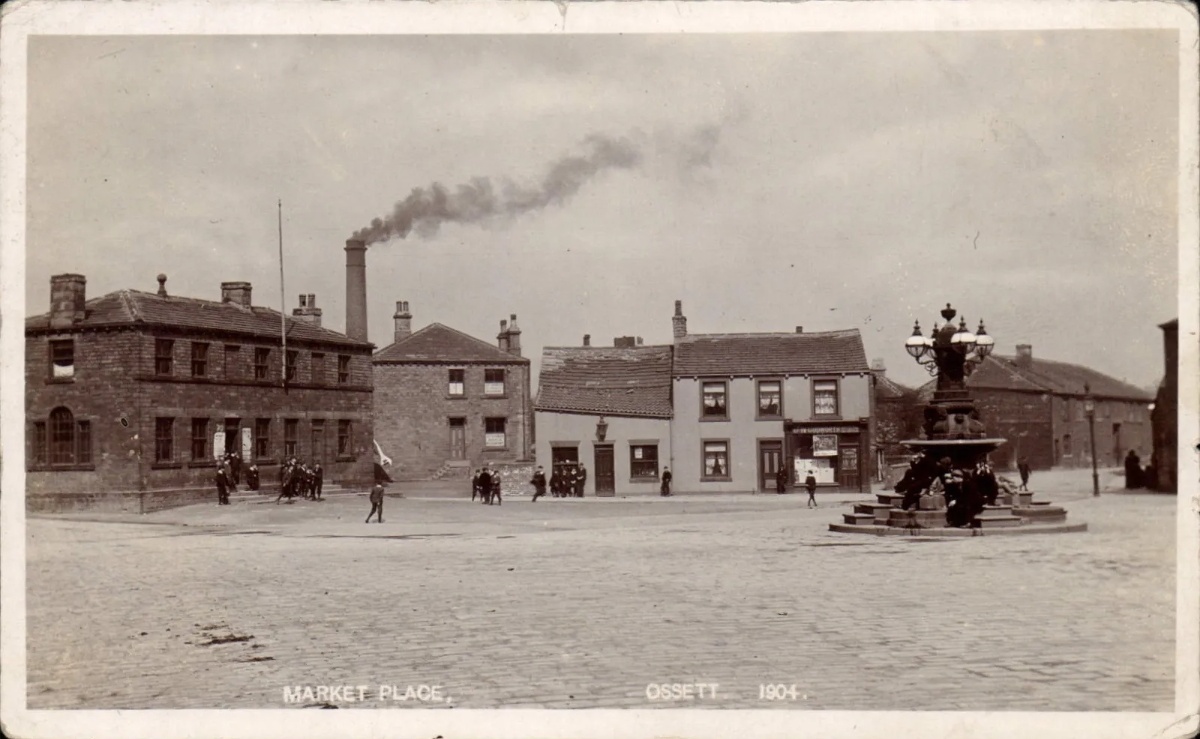
I’ve long been intrigued by the scene captured in this postcard. The Grammar School and the Pickard Memorial Fountain are familiar, but what about the shop nestled between them? Filled with curiosity, I set out to learn more about it and those who lived and worked there back in 1904.
If you are reading on a mobile device, this chapter is best viewed in landscape.
THE PICKARD MEMORIAL FOUNTAIN
To the right of the photograph stands the Pickard Memorial Fountain, a striking centerpiece that once graced the town square. There is a rich history surrounding this piece of Ossett heritage but, for the purpose of this chapter, I’ll provide a condensed account of its 130-year journey.
On August 16 1890 a Royal Charter arrived in Ossett to a huge fanfare. The charter declared that Ossett was now an independent borough of the West Riding, with a mayor, four aldermen and 12 councillors.
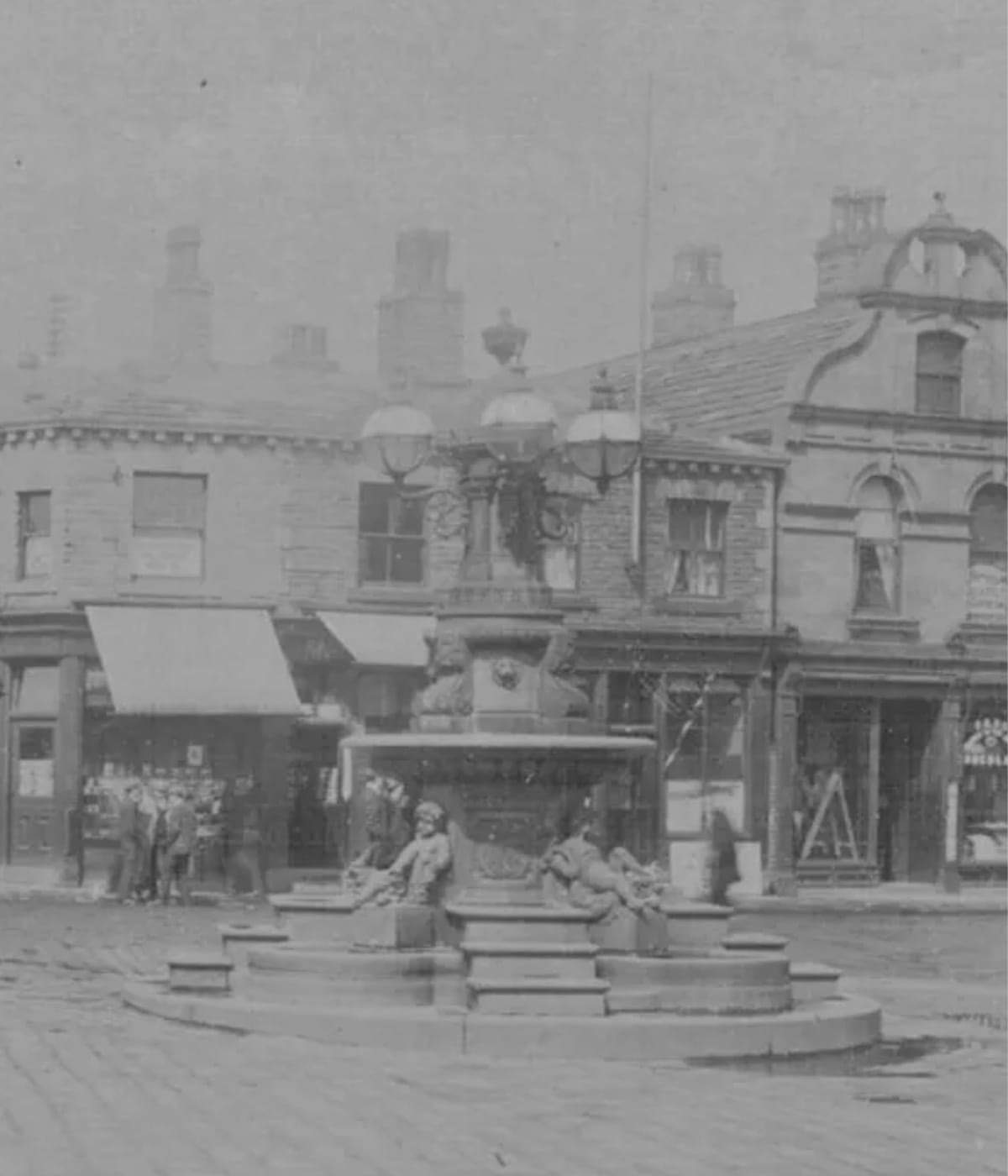
When Hannah Pickard died on June 29 1891, she left in her will provision for the installation of a water fountain to be presented to the new Corporation of Ossett, as a memorial of its incorporation. Designed by Ossett architect WA Kendall, the fountain was unveiled in the Market Place on Saturday October 21 1893 by Mayor FL Fothergill.
fountain still exist today
“Standing on a base of Aberdeen granite, it is mainly of Boltonwood stone, enriched with figures and other carving. The shaft and massive bowl are of Peterhead granite. On the shaft is carved a lion (the crest of the Pickard family), the Borough arms, and the following inscription: “This fountain is the gift of the late Miss Hannah Pickard of this town, to the Corporation of Ossett, for the benefit of the inhabitants and was erected in 1893. WA Kendall, architect.”
Ossett Observer
October 1893
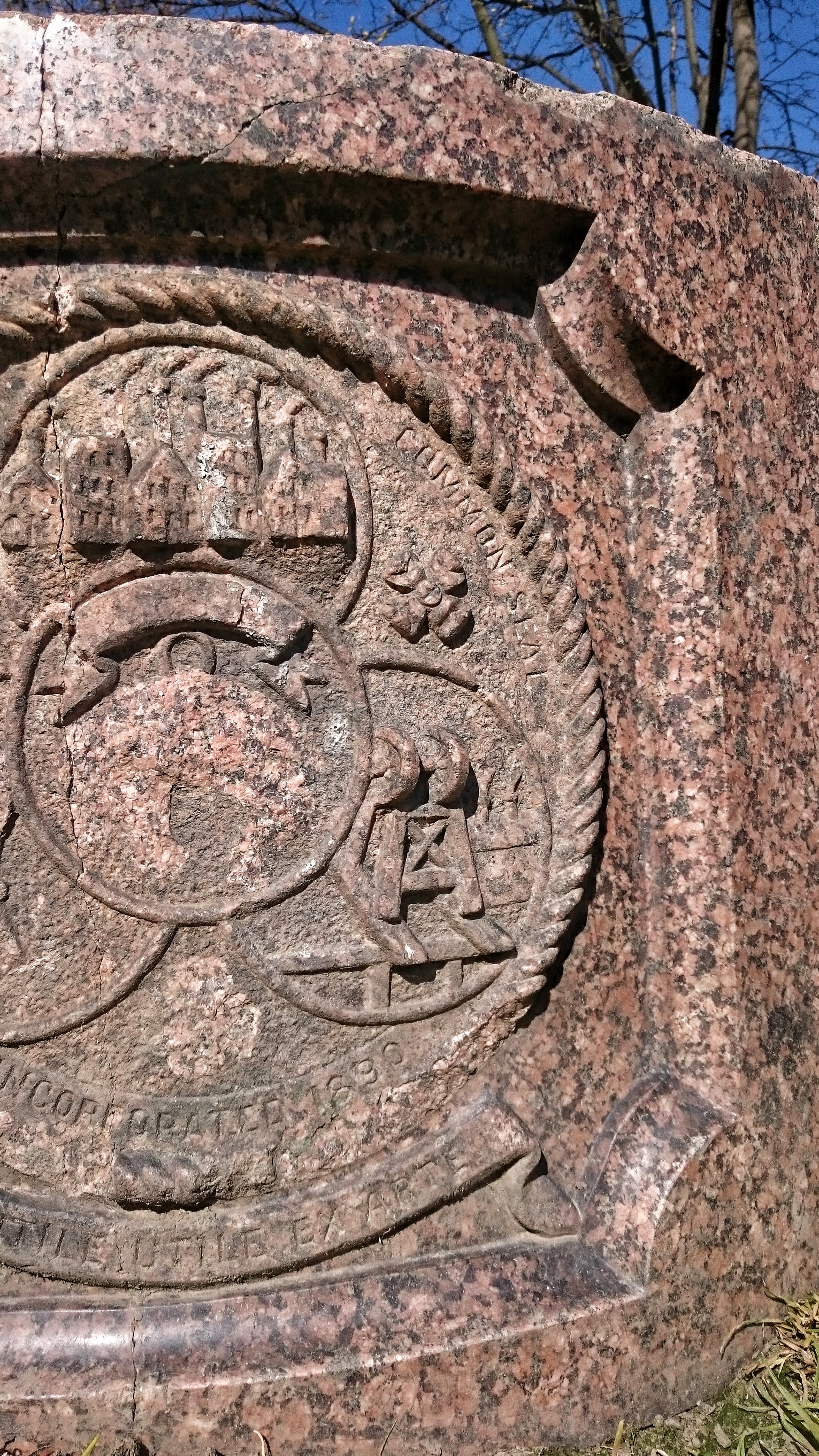
With the reorganisation of the town centre in 1958, the memorial fountain was removed and put into storage until Green Park was opened on April 23 1962. The fountain was refurbished, placed in the park and used as an ornamental flower bed; this is where it remained for the next 45 years.
In 2007 Green Park was refurbished by Wakefield Metropolitan District Council and it was decided that the fountain was not in a condition to form a part of the refurbishment project. Instead of restoring this piece of Ossett’s heritage and creating a scheme in which it would fit, most of it was given away to one of the contractors who worked on the park project.
What’s left of the fountain is the rather sad looking central column, made of pink granite, and is currently in my possession. The intention is to return the relic to the town centre.
THE OLD GRAMMAR SCHOOL
The building on the furthest left of the photograph gives us a glimpse of the Grammar School. There is much written about education in Ossett, so for the purpose of this chapter, I’ve focused on the building and its location.
Michael Frankland was the first qualified headmaster of Ossett Grammar School. In 1895 he produced a pamphlet called ‘OSSETT, PAST & PRESENT’. It included some interesting facts and statistics about Ossett. One thing I found particularly interesting was the exact location of the old Grammar School.
Mr Frankland said the Grammar School was selected by the officers of the ordnance survey as the centre of the town and “lies in longitude 1 degree 34 minutes 4 seconds West and latitude 53 degrees 40 minutes 46 seconds.”
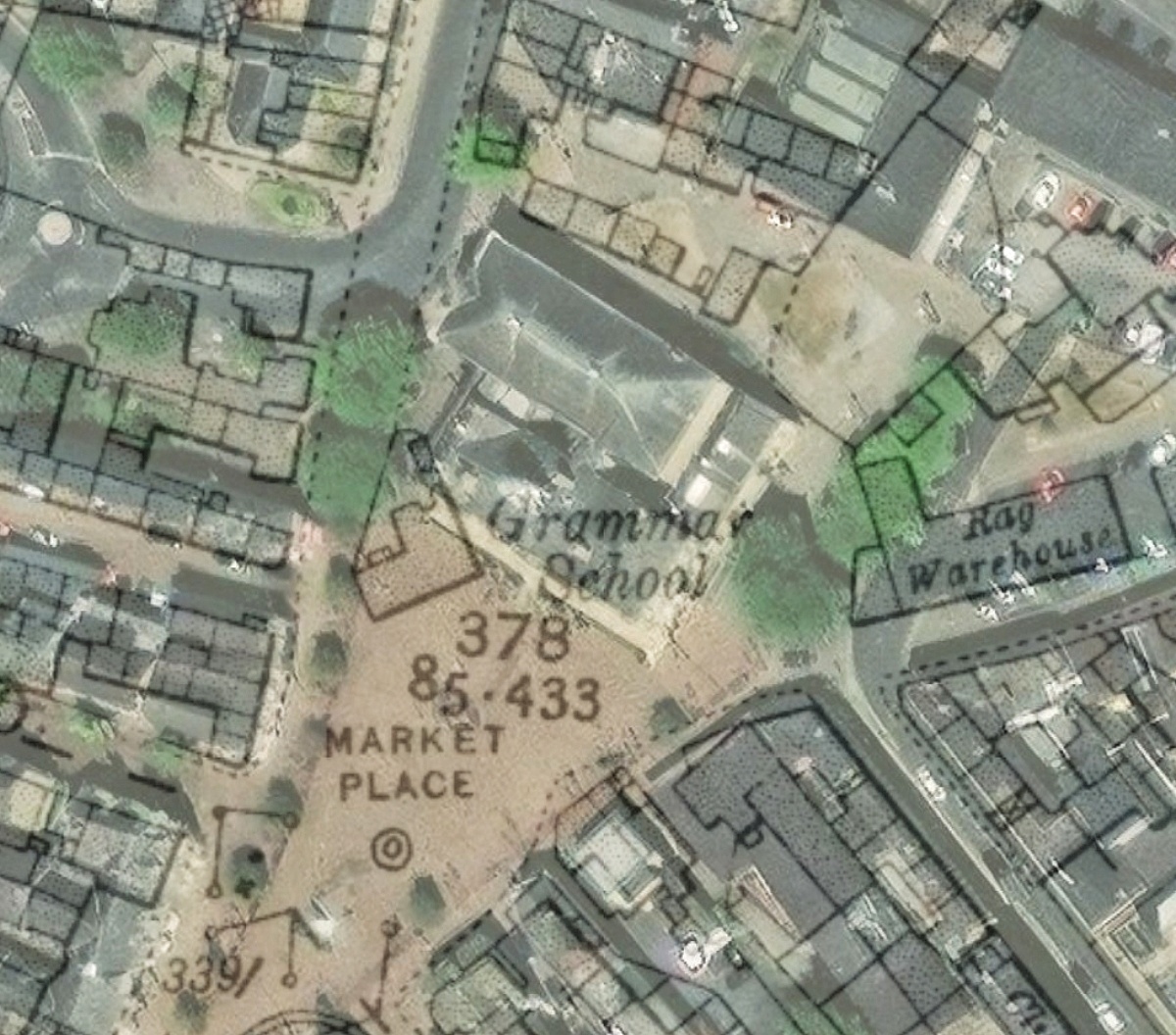
I found this particularly interesting because there are those who still maintain that the Town Hall was built on the site of the old school. By overlaying this older map (left) with a modern day one the true location soon becomes clear.
In 1895 the Royal Commission of Education instructed a number of Assistant Commissioners to report on the condition of secondary schools around the country. The report on Ossett Grammar School, and the town, wasn’t particularly favourable.
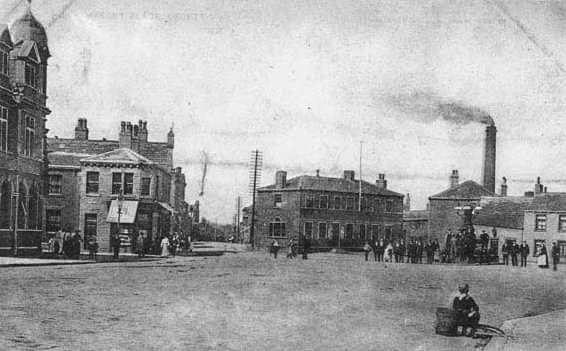
JW Cudworth’s shop on the right
Ossett was described as “a small manufacturing town devoted to the sorting and preparation of rags for the making of mungo.” It was said to be a “mean looking town” with no large mills but many small factories.
The assistant commissioner described the Grammar School as a small building consisting of a house for the headmaster – that would be Mr. Frankland – that had the “look of a regular workman’s house,” and one dirty, dilapidated classroom.

A second postcard from 1904 shows the back view of the Grammar School and a row of cottages, one of which was inhabited by George Nettleton, a butcher and farmer. I am grateful to his great-granddaughter Margaret Nettleton for providing this information regarding George’s location at this time. These cottages no longer exist.
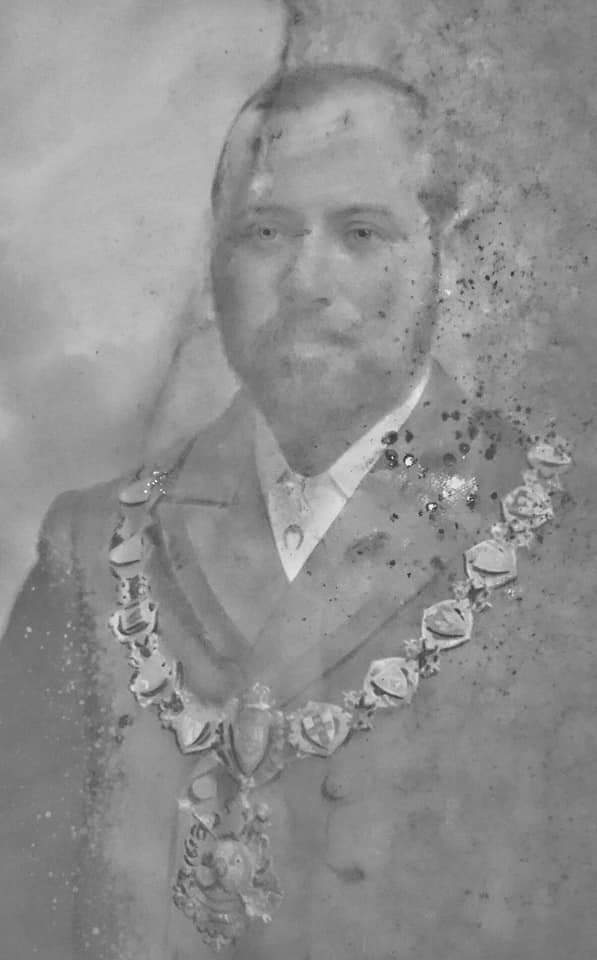
George Nettleton’s son, James Hampshire Nettleton, would later become a prominent figure in the community as the Mayor of Ossett.
This portrait of him is currently held at Ossett Town Hall where I photographed it in 2016. As you can see, it’s not in great condition.
A DISCOVERY
The name displayed on the signage above the shop in the center of the postcard appears to bear the name ‘JW Godworth’, and it is this detail that caught my attention and set me off on this particular journey.
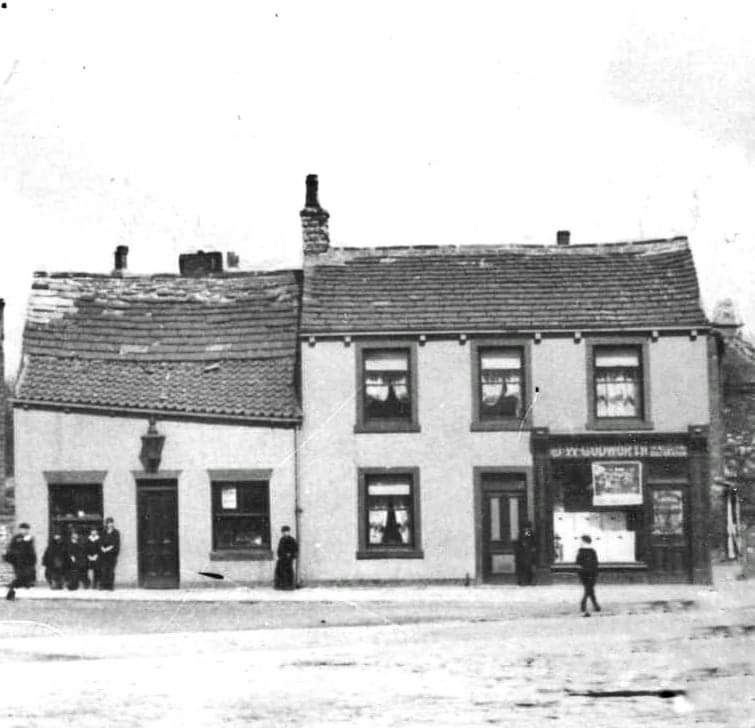
Based on thorough research and careful examination of numerous historical documents, I’m confident that when the shop was captured in this photograph in 1904, there was no one named ‘JW GODWORTH’ living in Ossett.
It has already been established that Michael Frankland was the Head Master of Ossett Grammar School, and that he had lived in the house beside it. I felt sure that if I searched for him, then he would lead me to the true occupant of the shop. He did – a house painter by the name of John William Cudworth.
Cudworth. That name rang a bell, so I dug a little deeper. The following is what I’ve learned; I hope you will find it interesting. If you have any further information, I would love to hear from you. Equally, if you spot any errors, please feel free to contact me.
JOHN WILLIAM CUDWORTH (1859-1936)
John William Cudworth was the son of Gamwell and Hannah. He was born in 1859 at Ossett Street Side, and two years later, was baptised at Christ Church, South Ossett. He had three sisters: Mary Ellen (1857-1881), Eliza (1861-1943), and Emma (1866-1942). Tragically, a fourth sister named Julia (1873-1873) died when only a few months old.
GAMWELL CUDWORTH (1834-1890)
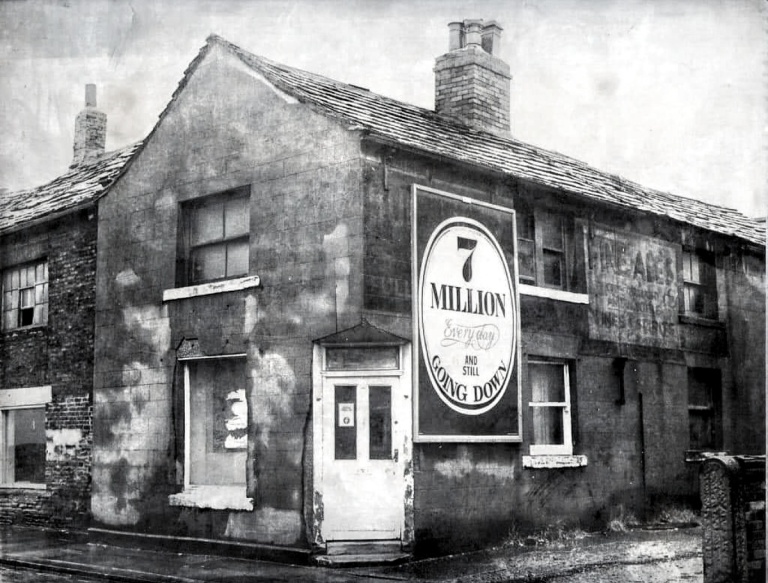
Photographer unknown
By 1865, John William’s father, Gamwell Cudworth, was the licensee of The Bull’s Head in Town. ‘Town’ was the name of Bank Street prior to the arrival of The Wakefield & Barnsley Union Bank in 1870 and The Bull’s Head stood approximately where the dental surgery is now. The license for The Bull’s Head expired in 1937, and the pub became a shop before being demolished in the 1960s.
The Cudworths remained at The Bull’s Head until 1870 when they moved to The Commercial on Dewsbury Road.
The Commercial dates back to 1827 and was initially called The Travellers or The Travellers Rest. It’s located on the old Wakefield to Halifax turnpike (toll road) which dates back to 1741. In 1827 the pub was advertised for let with a butchers and blacksmiths attached. Once the toll booths disappeared around 1866, the pub was renamed The Commercial.

Photo: Kevin Stephenson
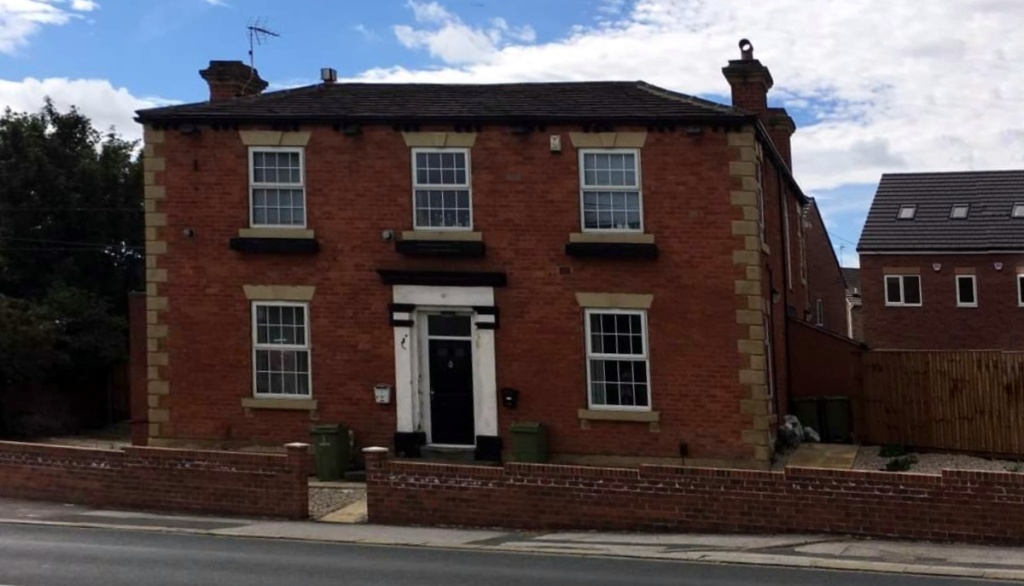
Photo: Stephen Wilson
At The Commercial there was considerable stabling, which no doubt was well used as the inn was on the main toll route from Wakefield to Halifax. The stabling survived until the 1980s when it was demolished to make room for a children’s playground. The Commercial is now residential property and additional housing has been built in its grounds.
HANNAH HEBDEN CUDWORTH née Lawrence (1837-1874)
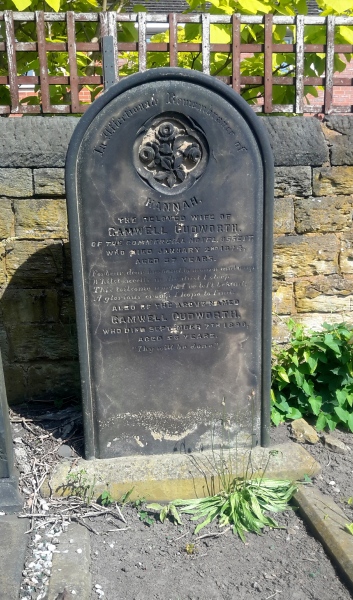
Photo: Joan P Smith
At the age of 14, John William experienced the heart-wrenching loss of his mother, Hannah Hebden Cudworth née Lawrence, who passed away when she was just 37 years old. In January 1874, Hannah was buried at Holy Trinity Church yard. Her nine month old daughter Julia died just a few days earlier yet there is no mention of Julia on her mother’s headstone.
Open the image for a closer look at the inscription.
MARY ELLEN (1857-1881), ELIZA (1861-1943) & EMMA CUDWORTH (1866-1942)
John William Cudworth turned 21 in 1881 by which time he was a painter and was living with his sister Mary Ellen and her husband, rag merchant Samuel Mitchell (1853-), at Ellis’s Yard, Dale Street. This was the name given to a group of houses adjacent to The Horse & Jockey – presumably named after Nathan Ellis (1825-1897) who was the licensee from 1872-c1896.
Eliza Cudworth also lived at Ellis’s Yard and was a boarder in the home of Mary and Alfred Kemp. Eliza worked in one of the many mills in Ossett, where she sorted rags for shoddy and mungo, which was essentially early recycling. We still have a rag mill in Ossett – Edward Clay & Sons has been manufacturing textiles since it was established in 1870! It is the last fully operational mill in Ossett. There’s a YouTube film here that’s worth a watch. Gamwell Cudworth and his youngest daughter Emma were still at The Commercial where Gamwell had begun offering a taxi cab service.
A MAY QUEEN & A WWI HERO
Yorkshire Post & Leeds Intelligencer
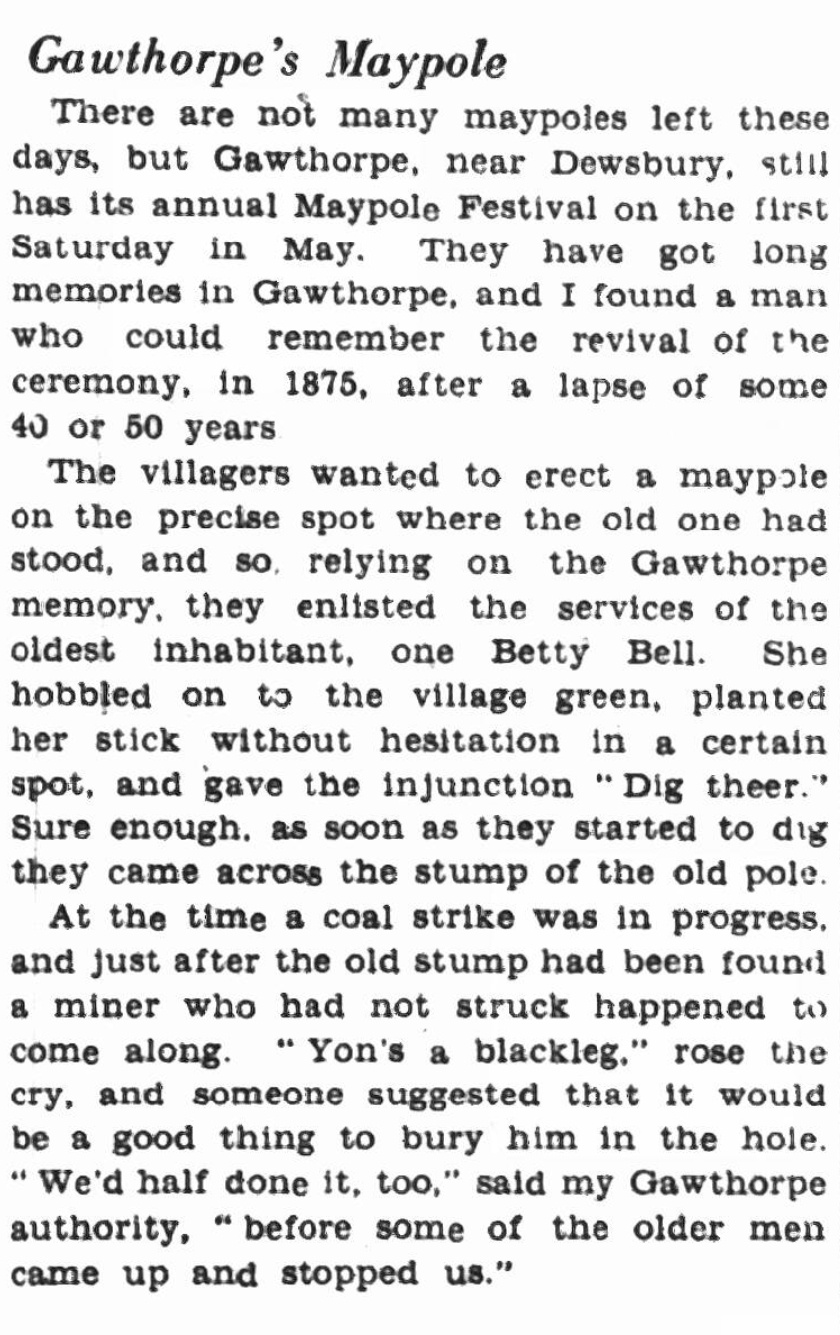
In May 1881, there was a huge celebration when 14-year-old Emma Cudworth was elected as the Gawthorpe May Queen. This tradition continues today and 2024 will see it celebrating its 150th year!
On January 9, 1887, Emma Cudworth and Thomas Atkinson were married at Holy Trinity Church, Ossett. In 1889, they took over at The Cock & Bottle where their son was born on September 15, 1890. They named him John William.
In 1892, Emma returned to her old home, The Commercial when she and Thomas became the licensees there. As fate would have it, tragedy struck in 1895 when Emma passed away at the age of 28. Thomas found solace in the arms of Mary Ann Race, and they were married the following year.
Their son, George Percival, was born at The Commercial on September 23, 1897. Sadly George died just after his 10th birthday and is buried at Pudsey Cemetery along with his father Thomas, who died in 1902.
Thomas and Emma’s son John William Atkinson was killed during World War I and is named at the War Memorial in Ossett Market Place. He has no known grave and is remembered on the Arras Memorial in France.
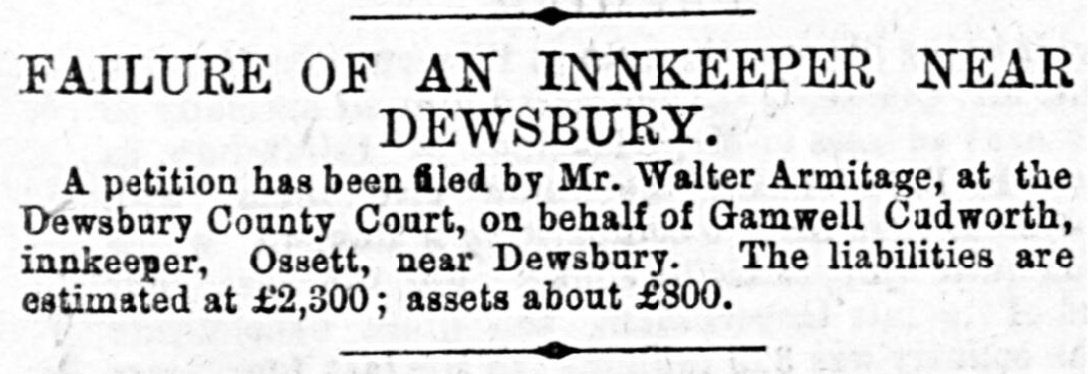
In September 1884 an announcement in the Dewsbury Chronicle and West Riding Advertiser stated that Gamwell was in debt to the tune of £2,300.
Two years later Gamwell was advertising for hire ‘cabs, wagonettes and open carriages‘ along with ‘hearses and mourning coaches‘ and, by 1890, it would seem that his debts were behind him and his cab business was a success as he was able to purchase The Cock & Bottle, through a mortgage, from mill owner Joseph Brook. Brook’s Mill was located on West Wells Road and is still there today, though it is now residential property. Soon after this deal was completed Gamwell Cudworth died. Had he had ideas to expand his cab business by transferring it to a more central position in the Market Place?
ANN HUBY (1857-1929) & VICTOR NORBURY (1860-1927)
In 1881 Ann Huby and her sister Martha (1860-1938) were ‘living in’ at The Commercial where they both worked. After the death of Gamwell Cudworth, Ann took over as licensee of The Commercial and the mortgage for The Cock & Bottle was transferred to her. A year later Ann Huby married Victor Norbury and the licence for The Commercial was transferred to him. The Cock & Bottle was subsequently repossessed by Joseph Brook. A taxi cab company was formed in 1894 when Benjamin Pawson (1858-1915) became the licensee.
ELIZABETH HALL CUDWORTH née Riley (1860-1887)
In 1883 John William Cudworth married 23 year old Elizabeth Hall Riley. Elizabeth died in August 1887 followed just days later by her six month old son, Cyril. A notice published in the Wakefield and West Riding Herald on Saturday 13 August 1887 gave their address as “Wakefield Road.” I suspect that this was The Commercial.
ANN CUDWORTH née Lodge (1859-1950)
John married again; his second wife was Ann Lodge and they said their vows at Holy Trinity Church in April 1890. They had three children: Hannah (1891-1983), *Arnold (1893-1966) and Joshua Lodge Cudworth (1899-1904).
*Arnold provides a connection to an individual who is familiar to a significant number of people in Ossett and is recognised nationwide.
REFUSE DESTRUCTOR & NORTHFIELD ROAD

In May 1905 work on clearing the town hall site was progressing rapidly. A number of old buildings had been pulled down and the materials removed for the use of constructing a road from Church Street to the refuse destructor. Ossett Corporation, true to its town motto of Inutile Utile Ex Arte (Useless Things Made Useful Through Skill), used the materials from the demolished buildings to build a new road to the refuse destructor. This was Northfield Road which, over time, became Northfield Lane.
The minutes of the Sanitary Committee from December 12 1902 show that, at a cost of £1200, Ossett Corporation had bought a field in Church Street from the trustees of the estate of dyer and colliery owner William Gartside (1814-1876). He had an extensive estate that wasn’t sold off until almost 30 years after his death. The intention was to use Gartside’s field as a site for the refuse destructor and electric lighting station. The town’s refuse would be disposed of in specially constructed furnaces, and the heat that it generated would then be used to produce power to run the lighting station. Trustees of Holy Trinity School said it would be filthy and stinking, with slime laying in the roads over which children would have to cross. The area was becoming more and more residential and there was considerable opposition to the idea; a year later the council was still debating the issue.
At this time, the only way to rid Ossett of its refuse was to take it by cart to a tip at Horbury. Horbury Council weren’t too impressed by this arrangement and complained of the mess left behind. Eighty eight tonnes of refuse each week, mostly nightsoil, had to be disposed of. Nightsoil was the human waste transported by night from privies, pail closets, middens and septic tanks. It was proposed that a machine costing £3,700 would be sufficient to meet the needs of the town. But where to put it?
Other sites were suggested – Spring Mill (which was then the refuse tip) and a site at Healey. There was also a suggestion that a site on Runtlings Lane should be found. That is until the Mayor, Alderman Walter Townend (1853-1918), reminded them that that was where he had just had a house built!!! The house was named ‘Glenholme’ and was a large, imposing, detached house overlooking the valley. It was demolished in the late 70s or early 80s and housing association flats were built on its site.
The Church Street location was central to the town, and considered to have plenty of space for the refuse destructor whilst leaving room to erect a ‘slaughterhouse, tram sheds and houses for the working classes‘. The destructor itself would be surrounded by trees, or something ornamental. Engineers were consulted and it was decided that there was no better site than the field on Church Street and so, in 1905, the refuse destructor was erected.
The slates, woodwork, etc., of the buildings already demolished for the Town Hall site were sold at auction. Some of the standing buildings were sold whole, on the condition that the purchaser removed the buildings and materials within 14 days. The demolished buildings included the old Grammar School and a variety of shops, including the shop owned by JW Cudworth.
JW CUDWORTH – house painter
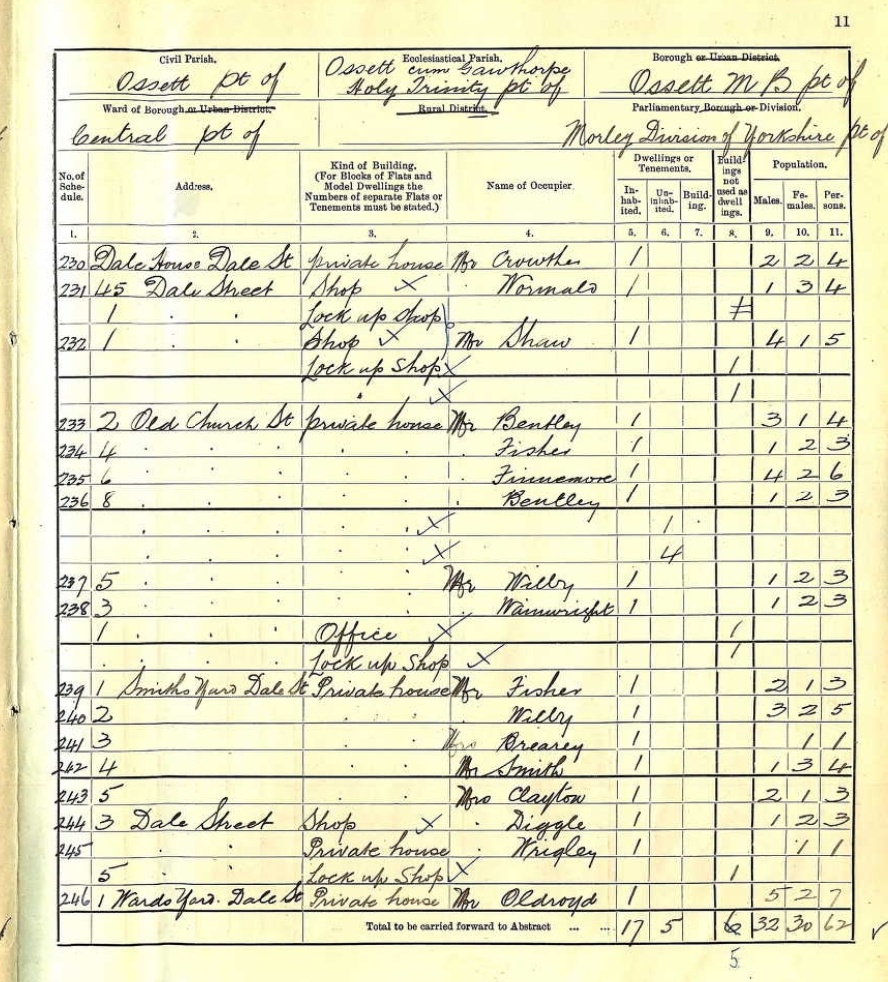
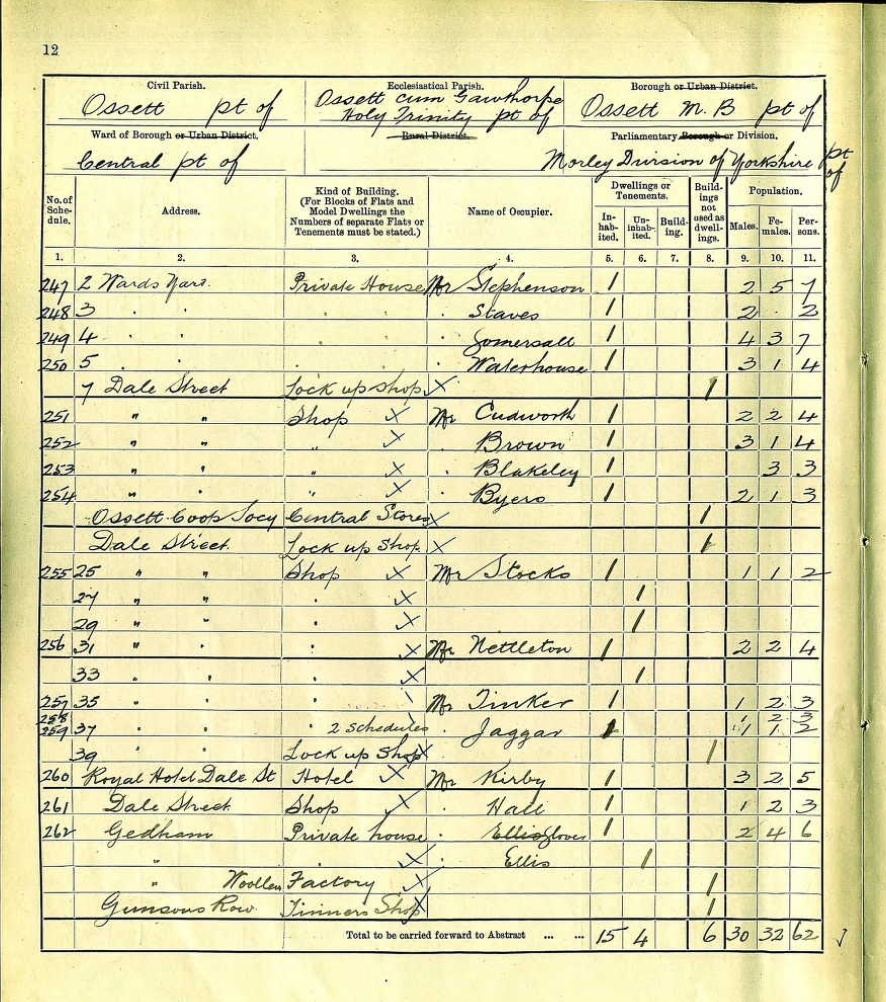
The 1911 Census Summary Books provide the name of the head of each household, and how many people were living in that household. They also reveal the type of property our ancestors were living in (such as a house, flat or shop). Ann and John William Cudworth, with their two surviving children, lived above their shop at 9 Dale Street. (We have to remember that Dale Street didn’t stop at the Co operative Store as it does now.)

National Archives
The 1910 Valuation Office Survey confirms John’s location as Dale Street, whilst also providing further insight into his circumstances as well as those of his neighbours. The survey took place as a result of the 1909-1910 Finance Act which imposed a tax on land based on its increased value due to public investments in infrastructure.
There are around 95,000 Valuation Office Survey field books and although not all of the survey survives, it’s certainly worth checking for your area of interest.
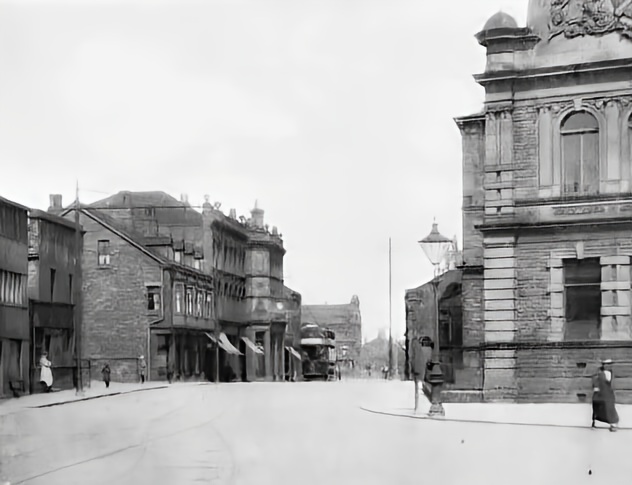
Could the Cudworth’s home and shop have been demolished when Kingsway was built in 1927-28? Was it a part of Ward’s Yard? Or did it become a part of the Co operative Society central store building? Was Cudworth’s one of the shops with an awning, shown here?
Follow the enumerator, using the above pages from the census summary books and see what you think. Let me know!
When the 1921 census was taken on June 19, the enumerator recorded that John William, Ann, and their son Arnold were still living at Dale Street, and that Arnold had joined his father in the family business. Their daughter, Hannah, left home after her marriage to engineer Hedley Ashton Larrad (1887–1962) in 1915, and they lived in Horbury before moving to Nottingham.
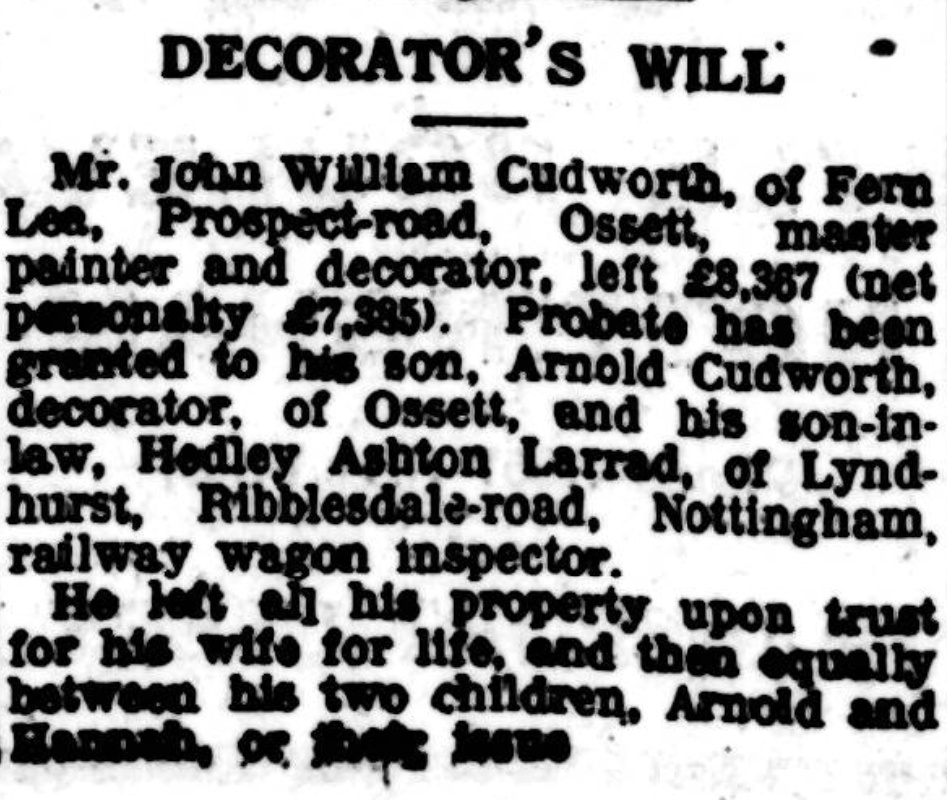
Newspaper: Nottingham Journal
When John William Cudworth passed away in February 1936, his address was ‘Fern Lea, Prospect Road, Ossett‘.
I was absolutely stunned when I discovered this piece of information. It reminded me of the incredible experience I had had in 2016 when I had the privilege of exploring this house when it was for sale at public auction.
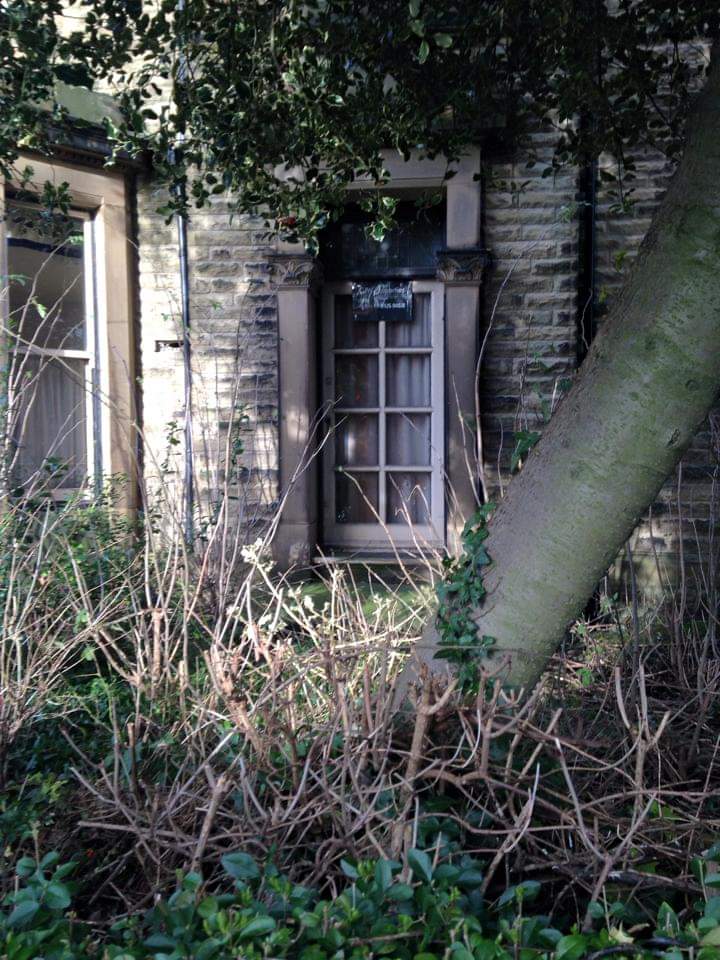
More about that.
ARNOLD CUDWORTH (1893-1966)
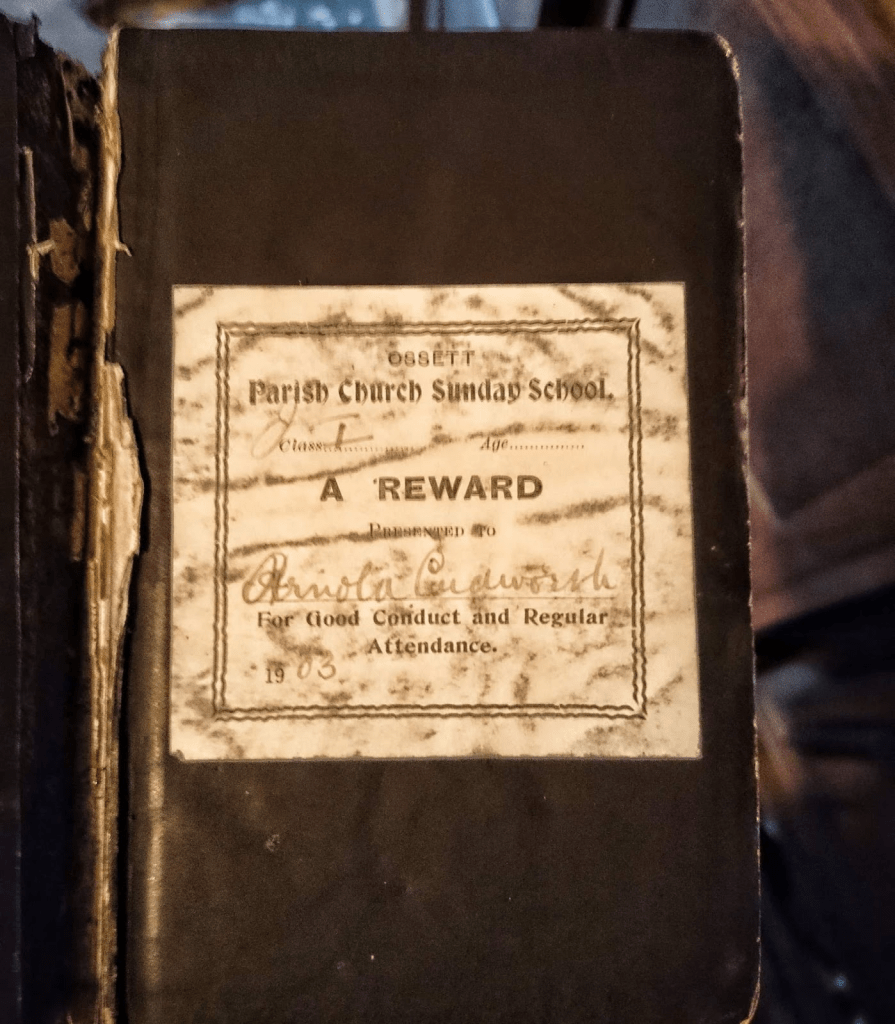
Arnold Cudworth married Ida Redfearn in 1923 at St. Paul’s Church, Alverthorpe. Their son, John, was born on July 5, 1927.
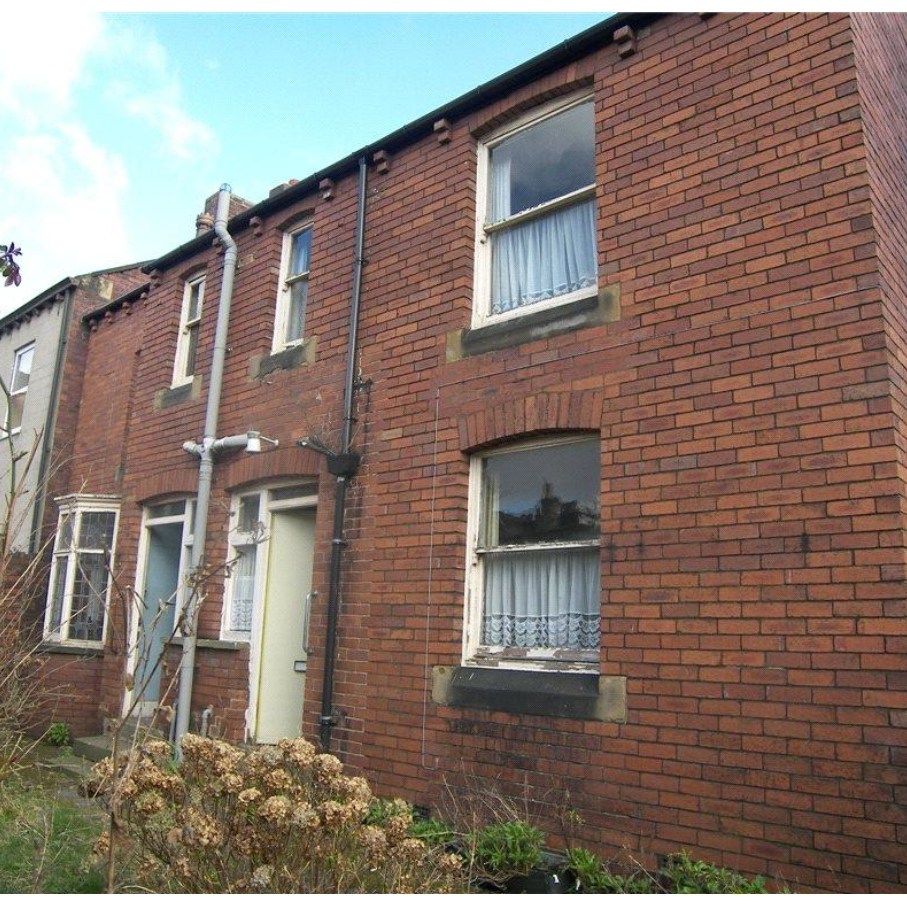
Arnold and his new family lived at 17a Prospect Road, while his widowed mother, Ann, lived at number 17. The 1939 Register confirms this, and it is evident that Fern Lea was divided to provide Arnold and Ann with their own private residence.
The two separate entrances at the back of the house can be seen on these photographs from the sales catalogue issued by Right Move in 2016.

The photograph below was provided by Jennifer Bragg, who fondly remembers her childhood days spent living closeby to Fern Lea. Fern Lea is the house across the road, with the large tree in its grounds.
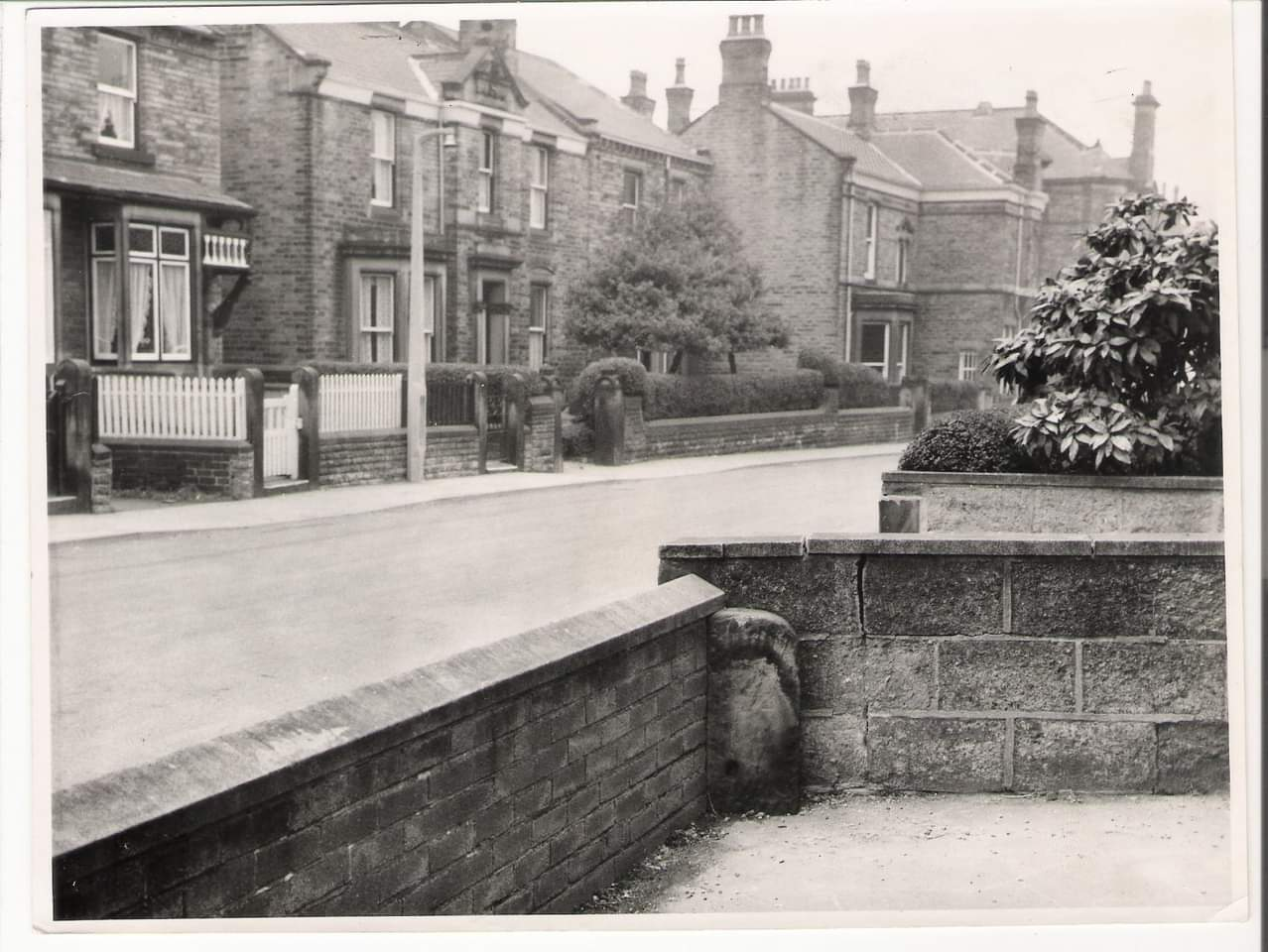
The marker behind the wall of the Coach House (on the opposite side of the road to Fern Lea) was removed when the adjacent building was extended. It marked a ginnel that went south-east, crossing over the railway line via a wooden footbridge.
Nev Ashby
Ossett historian
JOHN CUDWORTH (1927-2016)
John was educated at Wakefield Grammar School, where his school report described him as ‘an excellent pupil, being very good not only in the English language, but also at French, Greek and Latin’.
Between 1945 and 1948 he served his time in the Armed Forces in the Royal Air Force, and was posted to Cairo, Egypt, as an administrator. From there he went on to attend Leeds School of Architecture from 1948 to 1951. Following the School of Architecture he gained a post with the West Riding County Council, where he became a fully qualified architect. After local government reorganisation John was employed by the Wakefield Metropolitan District Council, a post he held until taking early retirement.

The man in the blue shorts has been identified as John Russell Smithson.
If you recognise anyone else, please get in touch.
Away from employment he had become strongly interested in birds. In 1948, at the age of 21, he became a member of the Yorkshire Naturalists’ Union (YNU), and by 1951 was leader of the Wakefield Naturalists’ Society Ornithological Section.
His interests, however, took him to the East Yorkshire coast, where he discovered Spurn Point. Bearing in mind that he did not, and never was, a car driver, (he claimed that his desire to look for birds at all times would make it too dangerous) he nevertheless made regular visits to Spurn which, when he first visited, was owned by the War Department. He made friends with Henry Bunce and Bob Dickens, the three of them visiting Sweden and Iceland together. By then he had become a member of the British Ornithologists’ Union.
In 1954 John became a member of the YNU Birds Protection Committee, upon which he served until 1957. He also gained a ringing permit from the British Trust for Ornithology, continuing to hold it until 1999. At county level he became VC63 recorder in 1960, a position he held until 1967. At Spurn he had become a member of the Observatory Committee.
John Cudworth was a great personal friend of mine and my brothers, Roger and David Glover. He would go to work in Wakefield and walk all the way back to Ossett. He preferred the feathered type of bird rather unlike the rest of the gang. A confirmed batchelor, great fun to be with, plenty of stories could we tell. A very good sort, not many of ’em left now unfortunately.
Richard Donovan Glover
Ossett historian
In 1960 the peninsula was sold by the War Department to what was then the Yorkshire Naturalists’ Trust (now the Yorkshire Wildlife Trust). Spurn now became a nature reserve! The Spurn Bird Observatory (SBO) continued to lease Warren Cottage, something which Ralph Chislett had previously funded out of his own pocket. Chislett was by 1962 in poor health and felt unable to carry on as Chairman of the SBO, and John became Chairman, a position he held until 1999.
As well as his very frequent visits to Spurn, John travelled widely. He travelled to many parts of the African continent, including Ethiopia. There were no Arctic trips, but Siberia was another favourite. His last trip was to Texas and Arizona. Who knows what his world list was!

Photo: Anne-Marie ©️2016
His correspondence was phenomenal. He kept every piece of post. He was in touch with all the big names of those eras. He was West Yorkshire’s co-ordinator of the Wetland Bird Survey (WeBS) which monitors non-breeding waterbirds. He was a member of over 30 wildlife organisations and a British Trust Ornithology member from 1955.
John never married, never owned a car, a television or a fridge (until David Proctor pushed him to buy the latter in his later years). He had no time for anything but birds and the Times crossword!
When he was working, travel to Spurn on Friday evenings involved a bus to Ossett from work in Wakefield, a bus from Ossett to Leeds, a train from Leeds to Hull, a bus to Easington (with a stop for fish and chips) and taxi to Spurn, arriving at Spurn at 21.00 hours!
Later in his Chairmanship he found himself in a changing world. There were so many visitors to Spurn and he was not happy in crowds. His visits to Spurn tended to be in mid-week, no weekending any more. For a man who did not like changes he oversaw many.
His contribution to Spurn was immense. His passion for the area was total. John’s final illness in 1999 was debilitating and brought his time at Spurn to an end. For Spurn it was the end of an era too.
David Proctor
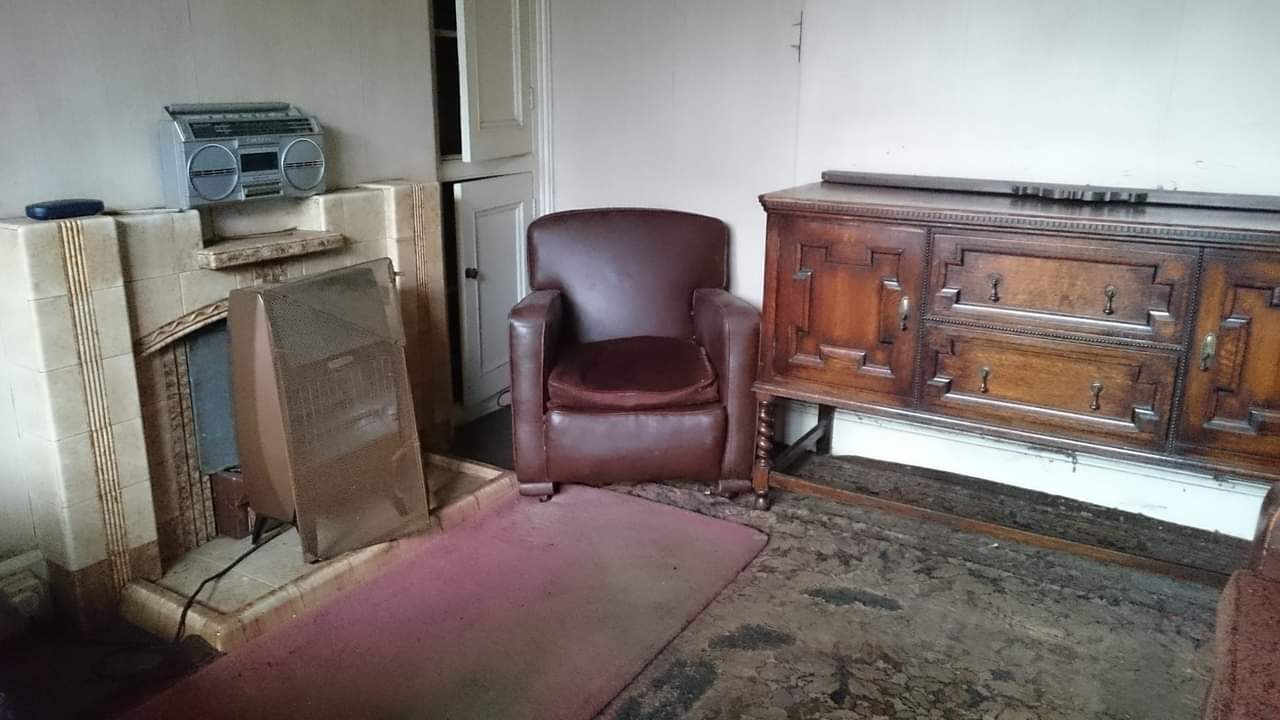
The house had been empty for almost two decades.
In 1999 John was admitted to a care home. He stayed there for two years before returning to Prospect Road. However, it was difficult for him to manage on his own, and he had no choice but to re-enter the care home where he would spend the remainder of his life. Although never officially diagnosed as such, he firmly believed his health problems were the result of Lyme’s disease, contracted on visits to Texas and Arizona.
His unfortunate withdrawal from active involvement in 1999 meant that, sadly, during the last years of his life, he was unknown to the younger generation.
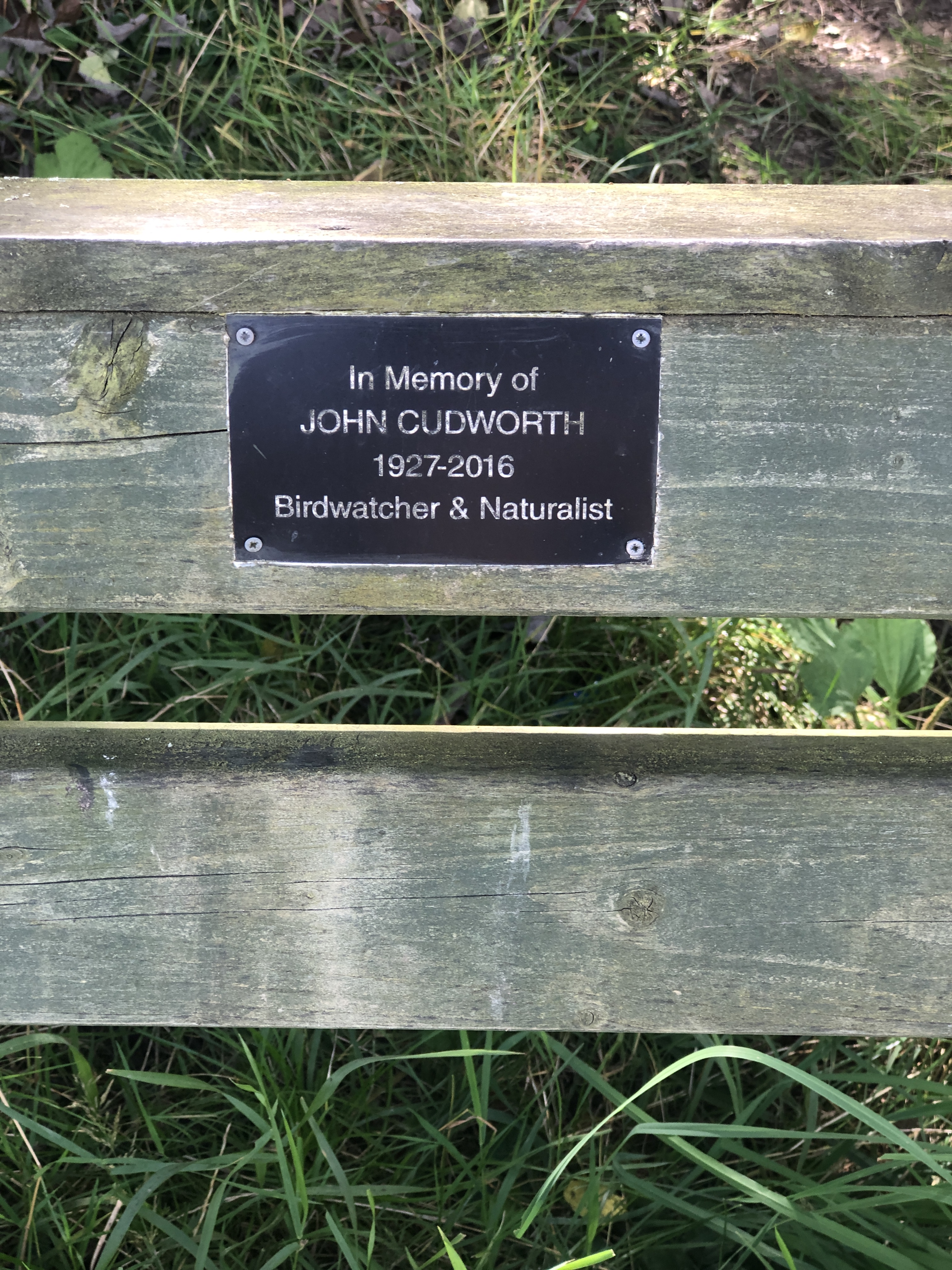
Photo: Angela Burton
The tremendous amount of work he undertook as a recorder, ringer, and example to all for so many years that made Spurn Bird Observatory so successful, and with which his name was synonymous, cannot be overstated.
He died peacefully at the care home on January 18 2016 and his funeral took place at Wakefield Crematorium attended by just 24 friends and colleagues.
John Cudworth asked that his ashes be scattered at the Narrows at Spurn on a day with a south-westerly wind.
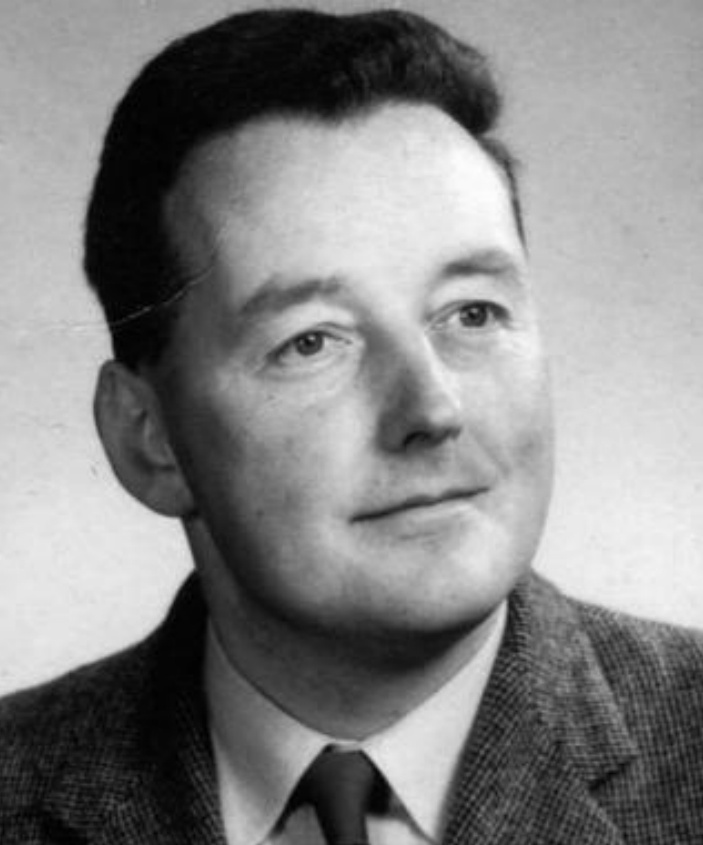
With his passing, Yorkshire lost one of its most important and dedicated ornithologists, whose potential was never fully realised and the like of which we will never see again.
John R. Mather BEM
Much of this information about John Cudworth is from my own private correspondence with his friend David Proctor in 2016. The remainder is from his obituary written by John R. Mather BEM.
I reached out to David upon discovering that Fernlea was filled with John’s cherished notebooks, studies, records, and collections. Witnessing the sight of all these belongings, left behind and forgotten, was truly heartrending. However, prompted by David Proctor, the RSPB kindly came to the rescue, assisting in the removal of a significant portion of the items.
With the passing of John Cudworth, Fern Lea passed out of the family’s possession, having been their home for three generations.
Anne-Marie Fawcett ©️2023
 HORBURY & OSSETT FAMILY & LOCAL HISTORY
