Discovering Ossett’s history through Francis Cockburn’s sketches
The book of sketches by Francis Charles James Cockburn was published by Ossett Historical Society in 1987. The following is from the society’s website.
For over forty years the Ossett Historical Society fostered an interest in the history of Ossett, and that of the surrounding area. This was accomplished through lectures, publications and exhibitions. Sadly, as a result of declining membership, an Extraordinary General Meeting on 26 September 2022 reluctantly decided to wind up the Society.
I’m grateful to David Hoyle for digitising the book, which is offered here, with additional images and information from Ossett Through The Ages (OTTA), and my own original, copyrighted research.
Anne-Marie Fawcett December 2024
INTRODUCTION
Frank C. J. Cockburn, who made most of these drawings of Ossett scenes and buildings during the last two decades of the 19th Century, was a son of the first Stephen Cockburn who purchased the Ossett Observer from the Beckett Brothers in 1873. They first appeared, reproduced as woodcuts, in the ‘Ossett Almanacs’ published annually by Cockburn’s until the early 1900’s. A number of drawings of churches, including Ossett, South Ossett and Thornhill, were used for years afterwards on the title pages of church magazines, which Cockburn’s printed. Frank Cockburn emigrated early this century to New Zealand where he became principal of the Art College in Nelson, New Zealand, where descendants still live. His eldest brother Stephen was second editor-proprietor of the Observer and was succeeded on his death in 1903 by the late Mr. S. E. Cockburn, the last owner of the Observer before it was acquired in 1956 by the ‘Wakefield Express’ series. Another brother, Herbert, emigrated to Ontario, Canada, where he started a local weekly paper. He was a bachelor and had no descendants.
S. F. Armitage Ossett 1987
Pauline & Jennifer (niece and daughter of S.F. Armitage), outside Northbourne House. Photo: Anne-Marie Fawcett 2017
FRANCIS CHARLES JAMES COCKBURN
Francis Charles James Cockburn was born in Ramsgate, Kent in 1869. He was the youngest of the six children (five sons and a daughter) of Stephen Cockburn (1830–1900) and Marianne Pettman (1830–1893) who were married in Kent in 1854. Their only daughter (also named Marianne) died in 1870 at the age of 12, and three years later Stephen Cockburn moved his family from Ramsgate to Ossett.
By the time of his marriage to tailor’s daughter, Jessie Irene Coldwell Shaw (1879–1914), in Wakefield in June 1900, Francis was the.Assistant Art Master at Halifax Technical School. Their daughter, Frances Irene, was born in Halifax on April 13 1902. By 1905 Francis, Jessie, and their daughter had left Yorkshire and were living in Thames, a town at the southwestern end of the Coromandel Peninsula on New Zealand’s North Island. (I found this information in the membership registers (1751-1921 ) from the collection of the United Grand Lodge of England held by the Museum of Freemasonry ).
Jessie died in 1914 at the premature age of 35. In 1917 Francis married Mary Quartley Melhuish (born in Devon in 1869) in Nelson.
Headstone Transcription: In memory of JESSIE wife of F.C. J. COCKBURN passed to her rest Aug 21 1914. Aged 35 years. Thy will be done.
In loving memory of FRANCIS CHARLES JAMES COCKBURN, born June 4 1869, died June 14 1947.
Also of MARY QUARTLEY COCKBURN born May 14 1869, died Dec 4 1948. Resurgam.
And their daughter FRANCES IRENE KING 13-4-1902 – 25-10-1995.
STEPHEN COCKBURN 1, 2 & 3
Stephen Cockburn moved to Ossett to take over as the editor and proprietor of The Ossett Observer newspaper. He and his family lived next door to TheBull’s Headon Bank Street, in the old home and offices of the Beckett brothers (the founders and original owners of The Ossett Observer). In the 1881 census Stephen Cockburn was described as ‘a journalist and master printer, employing five men and four boys‘. In 1890 The Borough Works, at the junction of Station Road and Prospect Road, was built to house his print works and the Ossett Observer newspaper offices.
From The Ossett Observer Jubilee Supplement, printed on July 4 1914 to celebrate the newspaper’s first 50 years.
Stephen and his family were still living at Bank Street when the the 1891 census was taken. Also living with them ,and employed to work in the Cockburns stationary shop, was Marianne’s 17 year old niece, Harriet Jane Pettman (1873-1913).
East Kent Times and Mail – Wednesday 09 May 1900
The Cockburns named their new home, ‘Northbourne House‘ and it formed part of the Borough Works. It was unoccupied in 1891: an indication that it was still in the course of construction.
In 1895 Harriet’s mother Diana died and Harriet returned to her father’s house in Northbourne, a village in the Eastry district, Kent.
Stephen Cockburn (1830-1900) died on May 1 1900 at 87 Cambridge Place, Siddal, Halifax. One of his sons, the eponymous Stephen Cockburn (1856-1903) was also born in Kent and a journalist. In 1881 he was living at Westfield Terrace, (Headlands), Ossett. In 1891 he had a Headlands Road address, but by 1901,(by then a newspaper proprietor, printer and journalist), he was recorded at Station Road. He died in September 1903. His address was Northbourne House, 44 Station Road, Ossett.
Brentwood in 2017 Photo: Anne-Marie Fawcett
After his death the Ossett Observer was owned and run by his son, Stephen Ellis Cockburn (1877-1959). In 1901 he too was living at Northbourne House, and he was recorded as a journalist and author. By 1911 he was living at the same address with his widowed mother, his aunt and his sister. By 1927 he was living at Brentwood, Station Road, which is immediately opposite Northbourne House.
Stephen Ellis Cockburn’s sister, Harriet Kate Pettman Cockburn, of Northbourne House died in 1927 and his mother, Alice Jane of the same address, died in January 1932 thus ending the Cockburn occupancy of Northbourne House, 44 Station Road, Ossett. At the time of his death in 1959 Stephen Ellis Cockburn was living at Croftlands on Lime Street.
○~○○○~○○○~○○○~○
CHARTER DAY AUGUST 16 1890
Never within the memory of the oldest inhabitant or previously has Ossett been the scene of such a striking and unanimous demonstration of popular rejoicing”.
This was the day when Ossett received the Charter of the Borough.
The Royal Charter was granted on June 30 1890. Which is correct? The charter arrived – by train – to a huge fanfare on August 16 1890. Ossett was now self administering with a mayor, four aldermen and 12 councillors. A public holiday was declared and the streets were festooned with bunting, banners and balloons. Lampposts were decorated with flags and shields. A grand procession of 5000 people took place and a public luncheon was served. 4000 schoolchildren sang in the streets and each child was fed cake and tea. All day long the bells of Holy Trinity rang. The day also included a military tournament and a firework display was provided by Rileys of Flushdyke.
Charter Day. The Market Place & Station Road (with the original Cussons Chemist on the left)
Dewsbury Chronicle and West Riding Advertiser – Saturday 30 August 1890
The building on the right is the Grammar School
1897. Although not the best quality (due to water damage incurred whilst in storage at Wakefield) I find this picture fascinating, so I’ve included it here.
○~○○○~○○○~○○○~○
COCKBURN & SON BOROUGH WORKS
These modern day photos shows just how much of the Borough Works was demolished.
Northbourne House Photo: Anne-Marie Fawcett2017
The former site of Borough Works, with Brentwood just in sight (behind the white van) Photo: Anne-Marie Fawcett 2017
○~○○○~○○○~○○○~○
OSSETT’S RAILWAY STATIONS
Flushdyke Station was the first station to be opened in Ossett in 1862 as a temporary terminus of the Bradford, Wakefield and Leeds railway. The line extended to Ossett and then on to Batley in 1864 when the line was doubled throughout. By 1883, Ossett had three railway stations: at Flushdyke, Ossett and Chickenley Heath, all on the Wakefield, Batley and Bradford branch of the Great Northern railway. Flushdyke station finally closed in 1941.
Flushdyke Railway Station in 1904
There are very few persons who, having had the good or ill fortune to pay a visit to Ossett, will not have been struck with the inadequacy of its station accommodation as compared with the size and importance of the town. For many years Ossett has been growing steadily both in population and the extent of its manufactures, and this growth has been marked on the part of the inhabitants themselves by the erection of more commodious and imposing public offices than had heretofore existed. But there has been no corresponding improvement in the station accommodation or the approaches to the town, which are now, the former as small and inconvenient, and the latter as dangerous, as ever they were.
In 1884 the first real move towards an improvement of this state of things was made when the manufacturers, merchants, and others interested in the scheme held a meeting, at which the present station was condemned as ‘inconvenient, dangerous, and generally inadequate’ and a committee was formed to wait upon the directors. This step had the effect of drawing an acknowledgment from the company that a grievance existed, and they promised to remedy it as soon as they saw their way to deal with it in an effectual manner.
On the 22nd of December, 1884, the Local Board received a letter from the secretary to the company which stated that the directors had sanctioned the reconstruction of the station, and that the engineer was then engaged in preparing plans. The company were evidently in earnest, for at their next half-yearly meeting, two months later, the sum of £17,618 was voted for the undertaking; and, in fact, a considerable extension of the goods shed, sidings, &c., was carried out. Some correspondence took place regarding the plans, and eventually the company’s chief engineer met a deputation of gentlemen representing the Chamber of Commerce and the Local Board. At this meeting it was suggested that the approaches to the station were dangerous and inconvenient, and a more suitable road should be constructed, to lead direct from the Market-place, through an intervening field, and straight on to the station, a distance of about 1,050 yards.
The levels of the adjoining land were all favourable to this scheme, and the engineer said that there would be no difficulties to be coped with which would require his skill. The question was merely one of cost, and a letter was sent to the company by the President of the Chamber of Commerce, which contained an offer from several members of the Local Board to try and induce the board to make, flag, and sewer the road, on condition the owners would give the land and build the fence walls, if the company would make a 12-yard bridge instead of a foot-bridge, in continuation of the road. A town’s meeting was held, and it approved of the construction of the street by the Local Board on the above provisoes. The directors then offered to modify their plans for the reconstruction of the station, they to build and maintain a bridge 30ft. wide across the station, on condition the board would provide and maintain the footway over the same, the approach from the bridge to the platform to be provided by the company. The Local Board negotiated with the landowners through whose property the proposed street will pass, and arrangements are now almost completed which will allow of the work being commenced.
The street will begin in the Market-place, and, as at present arranged, terminate in Park-square – though there is no doubt it will eventually be continued to Horbury – and the company have agreed to erect a bridge over the station 90 yards long by 10 yards wide. The Local Board has now an application before the Local Government Board for power to borrow £4,000 for the commencoment of the work, and there is every probability that about spring the work will be entered upon. The entrance to the station is intended to be from the bridge, and it will be easy of access both for foot passengers and vehicles. A covered incline about 140 feet long will lead down to the booking-offices and the platform. This latter will be on the island principle, 450 feet long, and upwards of 30 feet wide, the up and down lines running on either side. In addition to the booking-offices, there will be extensive waiting-rooms and the other requisites, while the platform will be covered with a roof of glass.
Tenders for the work were invited twelve months ago, and the contract actually let; but at the request of the Local Board the operations were suspended to allow of the arrangements for the new approaches. On the south side, the company have purchased a piece of additional ground way for extra sidings, and by their completion of this scheme they will not only benefit the town, but themselves most materially.
Leeds Mercury – Wednesday 26 January 1887
An important public improvement was inaugurated on Saturday at Ossett, which is expected to accelerate the development of the town, and in a measure to remove the straggling appearance which it presents at present. By the joint action of the Ossett Local Board and the Great Northern Railway Company a new thoroughfare is about to be formed, which will afford much more direct and convenient communication between the centre of the town and the large area lying to the south and south-east of the railway. The company [will] build a bridge over the end of the Town Station – at the same time entirely reconstructing the station itself – and in consideration of this the Local Board have acquired land for, and undertaken to construct, a street upwards of 1,000 yards long. The latter runs in a south-easterly direction from the Market-place to Park-square (Manor-road), and will give excellent approaches to the station, beside being advantageous for general traffic; the contract for one section of it has been already let, and the remainder will be in the course of a few days. The bridge is to be about 90 yards long and 10 yards wide, chiefly of iron, and the railway company’s contractors commence their work almost immediately.
Image source: ‘The West Riding of Yorkshire in the Opening of the Twentieth Century’ by W. Herbert Scott. Published by W.T. Pike & Co, Grand Parade Brighton in 1902.
The ceremony of cutting the first sod of the street was performed on Saturday afternoon by Mr. William Paterson, Chairman of the Local Board, in the presence of an assemblage of interested spectators. The board and officials walked in procession from their offices to the appointed spot on the north side of the station, headed by the Ossett Brass and Reed Band playing a marching tune.
Mr Patterson, having cut the sod and removed it in a new wheelbarrow, made a short speech. He remarked that he did not recollect any scheme of a public character in Ossett which had been surrounded by so many difficulties; -and to these had been due the delay an carrying out this improvement.
Leeds Mercury – Monday 28 May 1888
The Great Northern Railway Company is now building a new town passenger station at Ossett in place of the existing one, which is inadequate to meet the requirements of the traffic. In conjunction with the Ossett Local Board, the company is also forming new approaches to the station, which will have the effect of making the latter much more accessible and convenient. The new station will be on the island principle. It will consist of a central platform, 160yds long by 31ft wide.
The buildings thereon will be of wood and glass, and more than half the length of the platform will be under cover, a glazed roof being supported by iron pillars, with ornamental brackets. The platform will be 3ft high, and formed of concrete, with stone edging. The entrance will be by a covered passage, on a gentle incline from a road bridge which is intended to carry a new thoroughfare over the station premises. The bridge itself is a substantial structure of iron, 250 ft long and 30ft wide, divided into four spans, with piers and abutments of solid brickwork. Over this the Ossett Local Board is about to carry the new thoroughfare already mentioned, which will be upwards of 1000yds long, and, except on the bridge, 36ft wide throughout. The whole of the land has had to be acquired by the Local Board for the purpose.
Commencing at the Market Place, the new road, which is to be called Station Road, will be as nearly as possible straight, running across the railway station, and terminating for the present at Park Square (Manor Road) until arrangements are made with the Horbury Local Board for carrying it forward. It will shorten the distance by road from Horbury to the station and Ossett Market Place by nearly half a mile, besides avoiding the heavy gradients of the existing road. The works of the railway company and of the Ossett Local Board are now making fair progress, and are expected to be completed in the early part of next year.
The contractors employed by the Company are Messrs W. Nicholson and Son, builders, Leeds, and Messrs J. Butler and Co., Stanningley, under the direction of the district engineer, Mr W. Kell, of Leeds; and those of the Local Board are Messrs Aliffe and Mr E. Ellis, under the supervision of Mr Hirst, the Board’s Surveyor.
Dewsbury Chronicle and West Riding Advertiser Saturday 15 September 1888
The Ossett Town Station. An open air meeting was held in the Market Place, Ossett, on Friday evening, for the purpose of taking steps to secure an additional entrance to the Town Station of the Great Northern Railway Company. There were between 500 and 600 persons present. Mr Bennet Brook, the chairman, moved a resolution declaring the present means of access to the station to be inadequate, and asking for a subway entrance from The Green to the platform. Mr W Patterson seconded, and the speakers in support included Messrs. H Westwood, E Clay, JS Wilby, Allan Mitchell, Alfred Ellis and J Thwaite. The resolution was carried unanimously.
Leeds Mercury June 30 1890
STATION ROAD, THROUGH THE AGES
When Ossett Had a Railway Station ~ Patricia Adams
Mike and I first arrived in Ossett in 1959 when the town still had a railway station. Newly married, we moved into a new small bungalow on Spa Croft Road which was called Lynda Avenue in those days. In 1961 our firstborn arrived and we had a beautiful large carriage built pram for her – no folding buggies then. A trip to Wakefield to visit family therefore involved a journey on the train so I would push my pram up Manor Road and along Station Road to the railway station. A journey of possibly a mile.
There was usually two or three of us with prams and when the train arrived, the guard would help each of us to lift the pram and baby into the guards-van and off we would go on the ten minute journey to Westgate Station in Wakefield. The return journey was a similar arrangement.
In October 1964, Ossett Railway Station and the line became a victim of Dr. Beeching so our trips on the train came to an end. It was at this time that a new road from Queen’s Drive into town was being developed and as our little bungalow in Spa Croft Road became too small for our growing family, we bought a larger house on the new road which is now known as Towngate. However, before the road could be completed, the railway bridge which carried the line no longer in use had to be demolished. So one Sunday morning the Army arrived to blow it up!
We must have returned home as the back door is open! Pat Adams
Our house was the last one before the bridge so we were told to leave the property and large army lorries were placed all around the house to protect the windows, etc. After watching the explosion from afar we returned some time later relieved to find the house still standing but the railway bridge was no more.
YARNS is a project led by Leeds University. Ossett and Gawthorpe Community Archive collected and shared yarns about the locality of Ossett and Gawthorpe, West Yorkshire. The yarns are contributed by local (and ex-pat) people of all ages in the areas of heritage which interest them. Ossett Through The Ages (OTTA) is proud to be one of the partners in this project.
Raymond Davies told us that the houses on Longlands Road, by the petrol station, are built on the old railway embankment. He was told of this by Malcolm Asquith, the builder (and a former Mayor of Ossett). Raymond’s house was the first semi to be completed and, he said: “People still used the original footpath which ran at the bottom of the embankment, even after the passage and path was completed from Tumbling Close. We still get the weeds etc that are usually found by railways.”
○~○○○~○○○~○○○~○
WA KENDALL’S ARCHITECTURE
William Arthur Kendall 1857-1937
William Arthur Kendall was born in the village of Leadenham in Lincolnshire in April 1857, the eldest son of eight children of school teacher Stephen Holliday Kendall and his wife Emma, née North. The couple married in Leeds in August 1853. William was named after his grandfather William Kendall, whom, like his son Stephen, was a school teacher.
In early 1862, Stephen Kendall, his wife Emma and their four young children moved from Tadcaster to Ossett.
○~○○○~○○○~○○○~○
CUSSONS’ CHEMIST (the Imperial Leather connection)
Cussons’. Pickard’s. The Yorkshire Bank.
Built in 1893 this building, on the corner of Station Road and Prospect Road, opened in March the following year for John William Cussons, postmaster and chemist. Marjorie, the daughter of JW’s brother Alexander, was responsible for developing Imperial Leather, an achievement that some in Ossett believe JW to have been responsible for.
In 1900 Samuel Norman Pickard purchased the business from Cussons. In 1924, when he moved to new premises on Wesley Street, the Yorkshire Penny Bank moved in.
John William Cussons with his two children and his wife, Catherine (nee Wilby) to our right.
In November 1890 Samuel Norman Pickard placed an advertisement in the Ossett Observer to the effect that he had purchased the business of Mr J.W. Cussons, in Ossett. His name and address read: “S. N. Pickard, Member of the Pharmaceutical Society, Dispensing and Family Chemist, Station Road, Ossett”. He set up his business in Galen House, Prospect Rd., renting the property from the Yorkshire Bank.
In November 1900 an advertisement appeared in the Ossett Observer.
Mr. S. N. Pickard begs to announce that he has purchased the business of chemist and wine & spirit merchant, carried on successfully for many years by Mr. J. W. Cussons. Having had a large experience of the dispensing of medicines, analyses and pharmacy, he hopes to be accorded a fair share of the patronage from his many Ossett friends, and the public generally.
The purest drugs and chemicals only employed. Patent medicines at lowest London prices. Note the address: S. N. Pickard, Member of the Pharmaceutical Society, Dispensing and Family Chemist, Station Road. In 1924 the Observer reported: Change of premises: S. N. Pickard, chemist & optician, begs to announce that owing to expiration of lease he is transferring the business to larger and more commodious premises in Wesley Street, Ossett, which he hopes to open on Wednesday next, August 5th.
For almost half a century Pat Bennett (née Harrop) worked in the Ossett Branch of The Yorkshire Bank. I took this photo of her in 2017, not long before the bank closed.
○~○○○~○○○~○○○~○
THE LIBERAL CLUB
Wakefield Free Press Saturday 31 January 1880
The corner stone of Ossett Liberal Club on Station Road was laid in October 1893 by Liberal Politician, Earl Compton. The contractors were: R. Oldroyd, mason and bricklayer; R. Stubbs, joiner; A. Lucas, plumber and glazier; RW Clegg, plasterer; G Hargreaves (Dewsbury), slater; and J Snowden, painter. The architect was WA Kendall.
The following is an excerpt from an article in The Leeds Mercury, dated Thursday 11 April 1895.
The building, situated in Station Road, is externally a substantial and handsome stone structure, one of the best architectural features of the town. Considering how strong the Liberal party is in this section of the Morley Division, the probability is that the accommodation within may not long suffice. But it is at present adequate, comprising a reading room, a smoke room, two billiard rooms, and smaller apartments, all comfortably, if not luxuriously, furnished.
At the official opening on April 10 1894 a procession was led from the Temperance Hall by Thomas Lister, 4th Baron Ribblesdale. On his arrival at the building Lord Ribblesdale was presented by the secretary, Mr. JF. Hainsworth, with a gold key. After a few words, he opened the door, and led the way to the large billiard room, in which a short meeting was held. Mr. J.E. Glover, president of the club, conducted the proceedings, and there were also present Mr. Harold J. Reckitt (formerly M.P. for Pontefract), the Mayor of Ossett (Ald. G H. Wilson), Mr. W. Wilson (president of the Morley Division Liberal Association), Mr. O. Myers, Mr. R. E. Phillips, Ald. Clay, Mr. H. Westwood. Mr. Albert Mitchell, and others.
The President, in opening the proceedings, said that the thanks of the Liberals of Ossett were due to the ladies of the town for the assistance they had rendered in connection with the furnishing of the club. The sewing class organised two years ago had done excellent work, and no less than £700 had been raised by the bazaar held last year. The club, he was glad to say, was to be managed upon temperance lines, and as long as the gentlemen who were at present responsible for the management continued to be identified with it, it would be managed union temperance principles. Sufficient temptations existed for young men already, without drink being placed before them in every spare hour.
In 1972 Ossett’s Liberal Club was getting set to close. Mr WF Ford, president for the previous 13 years and Ossett’s Mayor from 1947-49, said that the members’ decision to sell the building was unanimous. In recent years only the upstairs had been occupied by the club – the ground floor was a restaurant owned by Mr Eric Ross. The club had been running at a loss for some time and with the expected expenditure to comply with new fire regulations, due to the opening of the restaurant on the ground floor, it was decided to call time. Assets were distributed among the 25 paid up members. A proposal that proceeds should go to charity was voted against by six members who asked for their names to be recorded. They were Mr D Secker (who said his share would go to the National Liberal Association), Messrs Brian Wilson, B Fitton, E Ross, D Proctor and WF Ford. Mr Cyril Mountain abstained.
During its last 20 years the club functioned almost entirely as a social club, with snooker tables and a reading room as its only facilities. The building was sold to Mr Ross, of Park Square, who intended to convert the top floor into a large banqueting room with a dance floor and a stage for cabaret.
○~○○○~○○○~○○○~○
THE MECHANICS INSTITUTE
On the afternoon of Friday 12th December 1890 the new Mechanics Institution and Technical School was opened. The ceremony was performed by Mr Swire Smith of Keighley, a recognised expert on technical education.The mayor and other dignitaries met at the Temperance Hall along with invited guests, and at 3:00pm they walked in procession to the new premises.
On arrival Mr Swire Smith was presented with a silver key, which he used to unlock the building. They then went upstairs into the central classroom where he gave a long speech.In the evening a reception took place. A number of potted plants were used to decorate the steps to the building and the entrance. Outside the front door and in the main room upstairs were large electric lamps, powered by a dynamo worked by steam power, which was on the premises of Messrs Whitehead, joiners, Bank Street. A couple of telephones had also been lent.
The Public Library was officially opened by Alderman Allen Mitchell on Monday May 8 1899. The building was designed by WA Kendall and was also the Mechanic’s Institute. It housed a dyeing room, lecture room, classrooms, physics room, a chemical laboratory and an art studio.
On October 25 1935 Ossett’s new Public Library was opened. Alderman JH Knowles was the Chairman of Ossett Public Library Committee and in his speech he said he had hoped to erect an entirely new building, but the cost was excessive. When the County Council transferred some of the evening classes from the Mechanics’ Institute and Technical School to the Grammar School, the Library Committee was left with a more or less derelict building.
The gas showrooms which, until then, had been housed in the basement of the Town Hall, came to the rescue and agreed to rent part of the building. The estimated cost of the reconstruction was £3,000 which is more than £150,000 today.
Ossett Library is now housed at the Town Hall and this building is empty (2024). I hope that whoever buys it decides to reinstate the front door.
.
.
○~○○○~○○○~○○○~○
THE PICKARD MEMORIAL FOUNTAIN
When the waterworks had been established in the town in 1875, and piped water provided, a number of cast iron water fountains were ordered for the use of the public for filling water carts etc. But the local Board of Health objected to the idea. The fountains weren’t used and were sold as scrap some years later.
Hannah Pickard’s fountain in 1901, where the mayor reads out the proclamation of Edward VII.The Grammar School can be seen in the background.
When Hannah Pickard died in 1891 she left £500 in her will for the erection of a drinking fountain.
An excerpt from the will states: “I direct my executors to erect a drinking fountain and water trough combined, for the use of cattle and dogs, in the market place, Ossett, or in some other suitable situation, at a cost of about £500, to be presented to the Corporation of Ossett as a memorial of the incorporation of Ossett, and of the donor”.
c1910
c1930
In July 1893 work started on the fountain, the site being surrounded by a wooden hoarding, and was officially opened on Saturday 21st October 1893. It was described as: “Standing on a base of Aberdeen granite, it is mainly of Boltonwood stone, enriched with figures and other carving.”
The design was prepared by Mr. W.A. Kendall, under whose superintendence it was executed by R. Tolson and Sons, masons, and Mr. F. Wills, sculptor, all of Ossett.
The shaft and massive bowl are of Peterhead granite. On the shaft is carved a lion (the crest of the Pickard family), the Borough arms, and the following inscription: “This fountain is the gift of the late Miss Hannah Pickard of this town, to the Corporation of Ossett, for the benefit of the inhabitants and was erected in 1893. W. A. Kendall, architect”.
The whole is about 15 feet high and four gas lamps are attached to the upper portion. The water flowed into the bowl and then into four drinking troughs for cattle, and as many smaller ones for dogs.
The fountain was officially opened by the mayor, Mr F. L. Fothergill. A procession was formed at the Temperance Hall, which then walked to the fountain headed by the Borough band. The fountain was surrounded by a crowd estimated to number between two and three thousand. A couple of letters were read from Miss Pickard’s executors, and then part of Miss Pickard’s will. The band then played Auld Lang Syne.
After a speech by the mayor, the water was turned on and he filled one of the drinking cups and drank to the prosperity of the town. After the speeches the band played the national anthem, and the procession returned to the Temperance Hall, were about 30 gentlemen were entertained at tea by the mayor.
This has to be my favourite photo of the Fountain, as the people present bring it to life and it is evident it was a central focus for the town and much used and loved by those who were able to appreciate and enjoy it. It’s a shame those who came after that generation didn’t have the same appreciation and vision for preserving the town’s heritage in the name of progress.
Cllr Duncan Smith 2024
The date and occasion of the photo above is unknown. it was donated to me by Mary Welburn.
With the reorganisation of the town centre in 1958, the memorial fountain was removed and put into storage until Green Park was reopened on April 23 1962. It was decided that the fountain should be refurbished, placed in the park and used as an ornamental flower bed. This is where it remained for the next 45 years.
The dismantling of the fountain in 1958. Another photo donated by Mary Welburn.
In 2007 Green Park was refurbished and it was decided, by Wakefield MDC and Friends of Green Park, that the fountain was not in a condition to form a part of the refurbishment project. Instead of restoring the fountain and creating a scheme in which it would fit, it was simply given away to one of the contractors who was working on the project. According to the Wakefield Express, without this man the fountain would most certainly have been destroyed.
Whilst removing the fountain from the park the large bowl which sat atop of it was shattered into pieces. The base of the fountain was restored and subsequently advertised for sale at a price of £5,000. Its whereabouts are still unknown. The Peterhead granite shaft remained in the park where it slowly began to deteriorate. Vandalised and weather damaged, the remains of the Hannah Pickard Memorial Fountain lay forgotten by all but those few who visited this part of the park. With no information attached to it, how were those who saw it to know of its huge significant value? Where else is there anything tangible which commemorates this momentous occasion in Ossett’s history?
All that remains of the fountain.
This is in my possession but, despite many attempts to see it returned to the Market Place, I can get no interest from Wakefield Council.
If you think you can help to find a suitable site to display this tangible piece of Ossett’s heritage, then do please get in touch. Email me.
○~○○○~○○○~○○○~○
THE TEMPERANCE HALL
The 19th century temperance movement was a reaction to the widespread and growing abuse of alcohol and in November 1885, in the lecture hall of the Assembly Rooms, The Green it was unanimously resolved that steps be taken to provide a Temperance Hall for Ossett.
Initially the Temperance Hall was going to be built on a plot of land near the junction of West Wells Road with Queen Street and Bank Street. Ossett Temperance Society bought this piece of land but they couldn’t raise the funds they needed to achieve their plans. Anyway, Ossett Local Board of Health was against the plans and thought that the building would be too large for the site, leaving a narrow entrance into West Wells. Subsequently the trustees of the land exchanged it with the Local Board of Health for a plot on the corner of Illingworth Street and Prospect Road. The new Temperance Hall was built at a cost of £1,500 in 1888 to a design by architect W.A. Kendall.
Part of the temperance movement’s success was the formation of Cocoa Houses, where people were offered non-alcoholic beverages as an alternative to the lure of the many inns and alehouses. Ossett had a Temperance Cocoa House on Dearden Street, fronting Bank Street and Queen Street. The proprietor of the Cocoa House was Charles Hallgath who, with his wife Ann née Turner, were natives of Lincolnshire. The Hallgarths were living in Ossett by 1871 and by 1879 they were running the Temperance Cocoa House.
It would appear that it continued in the family until at least 1911, when the census for that year records May Squires, the 20 year old granddaughter of Charles and Ann, as a boarding house keeper of the seven roomed house at 78 Bank Street. Charles and Ann still lived there along with May, her husband George (a blacksmith at Charles Roberts) and their two year old son Charles Edward Squires.
By the way, in 1914 Ossett had 34 taverns or pubs. It would seem that not everyone in Ossett fancied cocoa, even if it did come with a hot dinner and a well aired bed …
○~○○○~○○○~○○○~○
MORE ARCHITECTURE
In 1894 the Ossett Observer reported: Good stone buildings have arisen along both sides, and such is the impetus given to the adoption of a more ornamental style of architecture in the erection of new business premises that the appearance of the centre of the borough is altogether changed for the better.
THE LONDON CITY & MIDLAND BANK
The London City & Midland Bank was built in 1891 – just a year after Ossett received its Charter of Incorporation. Founded in August 1836 as the Birmingham and Midland Bank, it became the London City & Midland Bank in 1891. It became the Midland Bank in 1923 and less than a decade later it was the largest deposit bank in the world. In 1999 it became part of the HSBC group.
On September 27th 1958 the Ossett Observer reported: “Work started this week on the removal of the dome on the Midland Bank, which dates to 1891. The interior structure is breaking up. Recently some stone from the inner core of the dome fell in through the roof into the living accommodation of the bank. The work is expected to take a few days.”
The image is from David Utley’s scrapbook.
Some photos I took in 2016 when the original signage was uncovered.
○~○○○~○○○~○○○~○
THE WAKEFIELD & BARNSLEY UNION BANK
The directors of the Wakefield and Barnsley Bank have at length succeeded in obtaining an eligible site for a new branch bank with manager’s house, in Town Street, and have lost no time having the design prepared, and contracts let. The new building will have a frontage of forty feet to Town Street, and fifty feet to a new street running at right angles therefrom. The design is classic, and will be carried out in hard Huddersfield stone. The bank entrance is in the centre of the front elevation, wide and spacious, circular beaded doorway, and right and left are two circular headed windows. Above runs an elaborate cornice and frieze, on which will be inscribed ‘Wakefield and Barnsley Union Bank’. Over on the first floor to the front are five circular headed windows, and above them moulded strings and cornices, which is surmounted by ornamental blocking and moulded coping. The side elevation having the entrance to the manager’s house will be similar in character. The whole building will be faced with stone, giving it an appearance of strength and substantiability. The banking room will be twenty-one feet by twenty feet, and thirteen feet high, and adjoining will be the strong room, and the directors private room. The house is of good size, having ten rooms, good cellars, end every other accommodation. The bank will be fitted with patent shutters, and every other modern appliance requisite for a building of such a character. The cost of the building will be about £2,000. Messrs. Eastwood and Tolson have entered into a contract for the whole of the work, under the superintendence and from the designs of Mr. W. Watson, architect, of Wakefield.
Wakefield Express – Saturday 16 April 1870
The Wakefield & Barnsley Union Bank was established in 1832 in Wakefield as the Wakefield Banking Co. In 1840, after acquiring Beckett, Birks & Co of Barnsley, its name changed to the Wakefield & Barnsley Union Bank. In 1884 the bank was registered as a limited company and remained independent until 1906 when it was absorbed by the Birmingham & District Counties Banking Co. In 1916 it became a part of Barclays Bank Ltd.
Watson insisted that “all timber to be of the best red Baltic produce and should be clear of sap, shakes, large or loose knots, wavy edges or other defects”. Elland sandstone was used for the walls with a roof of Bangor countess slate.
This building bears some fascinating sculpted figure heads on the keystones. None more so than this one.
He reminds my of my big brother. Which is great as my brother lives on the other side of the world. I’ve not seen him for years but every time I pass the old Barclays I look up and I’m reminded of him!
There’s also the mystery of the two different figure heads over the front door. Evidently, a portico was a later addition. Some of the heads are the classical deities, Minerva, Venus, Mars, Diana, Hebe and Mercury.
Photos: Phil Waud for Ossett Through The Ages (OTTA) August 2021
The whole of the building shall be ready for the roof on or before the 15th day of August 1870, and be completed and finished on or before the first day of December 1870, under penalty of £10 per week for each and every week beyond the period during which the said building shall not be completed as aforesaid. In case there should arise a strike or combination among any of the workmen of the said contractor, for the purpose of obtaining higher wages or other privileges, the said contractor shall be entitled to such an extension of time for the completion of the said contract beyond the time herein stipulated as shall be reasonable under such circumstances as the architect shall decide.
The bank is shown here in the centre of this c1906 postcard.
Notices in the Ossett Observer:
January 22nd 1870: The old smithy, dwelling house and land adjoining in upper Dale Street were purchased on behalf of The Wakefield & Barnsley Banking Company, who propose to erect a bank and manager’s house on the site.
April 16th 1870: The directors of The Wakefield & Barnsley Banking Company Ltd have accepted the tender of Messrs Eastwood & Tolson of Ossett for the erection of the new bank, at a cost of £2,000.
August 12th 1871: The new Wakefield & Barnsley Union Bank was opened in Ossett on August 8th with Mr W. Hunter as manager. Mr Eli Mitchell, solicitor, was the first customer to transact business.
In 1879 Stephen H Kendall (the father of Ossett architect WA Kendall) was advertising for contractors for alterations to The Halfway House at Horbury. Stephen H Kendall, with his wife Emma and their four children, came to live in Ossett in around 1862. He took a job teaching at the Grammar School which was once in the Market Place.
In February 1880 Emma died and was swiftly followed only a few weeks later by their 21 year old son. Did grief send Stephen mad? Perhaps.
In 1881 Stephen was wanted on warrant for embezzlement of the Wakefield & Barnsley Banking Co. Apparently he’d gone away with a lady and wasn’t expected to return. He had left household furniture to the value of £100 and also shares in The Halifax Building Society. I can find no evidence to suggest that he was ever caught!
.
Photo courtesy of the Ossett & Gawthorpe Community Archives.
Barclays became part of Ossett in 1916 when it absorbed the Wakefield and Barnsley Union Bank.
Claire Bellenis 2018: My dad, Eddie Briggs, elegantly leaning against a chair! And some members of the long gone century club, which was above Barclays Bank.
Martin Dearnley 2020: There was a gentleman’s club called “The Century Club” of local mill-owners, businessmen and professionals. Join by invitation only. They met/owned the top floor of Barclays Bank. Named as such because there were 100 members.
Although the bank is now closed, there are still signs of it – if you know where to look.
○~○○○~○○○~○○○~○
THE GRAMMAR SCHOOL
In 1733 a fund was raised by public subscription and used to build the grammar school in the centre of the town; it opened two years later. In July 1754 the school was enlarged so that it could teach reading, writing and accounting. In 1805 it was enlarged again and in 1837 a two storey building was built. (NB The dates in the original publication are a little out).
I’m curious as to why there would be a chimney above a window …
The fees were £3 a year for boys under 12 and £4 a year for those over 12. There were no girls in the school. For an extra fee the boys could learn Latin, Greek, German, chemistry, algebra and trigonometry.
This was the only school in the West Riding to charge an extra fee for Latin and Greek.
The headteacher, Mr Frankland(left), had to take all these lessons himself, as well as the ordinary school work. There were four boys taking Latin, one taking Greek and five taking chemistry. Mr Frankland must have had his work cut out for him!
When Hannah Pickard died in 1891 she left the Grammar School provision for scholarships, totalling £4,200 (around £344,607 today), for the education of boys from Ossett. I wonder how many boys, who otherwise would have been denied an education, attended the school on a Pickard scholarship.
In 1895 the Royal Commission of Education instructed a number of Assistant Commissioners to report on the condition of secondary schools around the country. The report on Ossett Grammar School wasn’t particularly favourable. Mr AP Lowrie, the assistant commissioner, described the Grammar School in the Market Place as a small building consisting of a house for the headmaster that had the ‘look of a regular workman’s house’, and one dirty classroom.
The Grammar School 1904
Relying on private donations, the school struggled for many years and, as other schools around the country improved, it became obvious to all connected with it that the old grammar school was no longer sufficient for modern requirements.
It was decided that it was impossible to do anything with the existing school buildings and, when the 1902 Education Act reorganised the administration of education and placed it under the control of the county borough councils, Park House came into the hands of the corporation and became the solution to the problem. The old school was demolished in 1905 and for a while it was housed in the Central Baptist schoolroom in old Church Street.
○~○○○~○○○~○○○~○
THE OSSETT INDUSTRIAL CO-OPERATIVE SOCIETY
C1954
These images were captured by members of Ossett Through The Ages (OTTA).
OSSETT CO-OPERATIVE SOCIETY TEA PARTY. On Tuesday, Wednesday and Thursday a tea party was given in connection with the above society, to celebrate the completion of its 25th year and also the opening of new stores. Free tickets were issued to the members, about 600 for each evening. Mrs. Ellis, confectioner, Bank-street, provided a substantial knife and fork tea in the Assembly Rooms, the trays being presided over by lady members of the society. Tea was followed by a musical entertainment and speeches in the Wesley-street schoolroom. On Monday evening there was a crowded audience, the chair being occupied by Mr. Daniel Godley, president of the society.
Mr. Holmes of Leeds, spoke of Co-operation as a remedy for the present unequal distribution of wealth. He advised working men to take a pattern from what the capitalists had done. They had some nice snug houses in Ossett, and some wretched holes. He did not want to pull down the former, but to build up the latter. It was labour which made wealth, and the produce of labour which paid wages. Co-operation was a means of doing good and making the world better
The Secretary, Mr. George Illingworth, read a report, giving a short account of the growth of the society from its commencement in February 1861, it having just completed its 25th year. During the first half-year or so the founders were collecting funds to make a start with. The first balance-sheet was issued in November, 1861, and showed a membership of 81. On looking over the list many and varied reflections were awakened. 51 of the 81 were now passed away.
When business was first commenced it was only in a small way in cottage houses, but in 1864 the society felt itself strong enough to buy land and build a store, now used as the No. 1 Boot and Shoe Store [Dale Street]. Immediately afterwards it built the No. 2 store at South Ossett [Manor Road], and in 1871 it was felt that the time had come to extend again. During the last five years the society had built, at South Ossett [ManorRoad], new stores for the butchering and shoe trades; and last, but not least, premises for the drapery, millinery, chemist’s, and butcher’s departments at the Central Stores [Dale Street], the completion of which this gathering was to celebrate.
Ossett Observer – Saturday 10 April 1886
.
In 1898, Moses Clapham, a man upwards of 70 years and a pensioned ex constable of the West Riding, was charged with assaulting Arthur Mitchell, rag merchant. Both were members of Ossett Industrial Co-operative Society (Ltd) and had attended the annual meeting at the Temperance Hall. As they were leaving the hall by a narrow staircase Clapham was said to push Mitchell, causing him to fall head first down the steps. Clapham said it was an accident and that he had put out his hand to steady himself on the narrow steps. He was fined £5.
Author’s photo
Co op number 2, Manor Road, South Ossett.
Author’s photo.
Eric Robinson: I think Mr Gregson was manager at No 2 store on Manor Road. I was doing a job on the tower clock and he forgot that I was up there and he closed the shop and went home. I managed to escape through the double doors on the first floor, using a length of rope which I found among the junk in the upper room.
I lowered my toolbox to the ground – about 20 feet ,I stood on the ledge outside the door and was able to lock the door using a piece of string passed under the door and attached to the bottom bolt, by pulling up hard on the string which did the trick. I then put the rope through the metal bars which were leaded into the stonework surrounding the doors and was able to lower myself to the ground. I pulled the rope out of the metal bars and left it behind the shop.
Mr Gregson was surprised when I turned up at his house ! No mobile phones in those days and the internal doors were locked – no access to the shop telephone I could have been there all night but for a little reasoned thought. We do see life, It’s all part of the Tapestry !
Co Op number 3 opened in 1871 on Dewsbury Road, Streetside (aka Leeds Road End).
Paul Laycock: Clifford Laycock (my grandfather) is the right hand chap of the three stood in the centre of this photograph.
Tim Ward: Leeds Rd End (above and left). I was the butcher’s lad, late 60s/70s. Albert Wilkinson was the butcher and Donald Sanderson was the manager of the Co-op. As it was the main road, you got a lot of passing trade.
On the way to Batley Variety Club was Eartha Kitt and she stopped at the butchers. Albert recognised her straight away. ‘Give me some of your finest steak minced up, for my poochy’, she said. He minced up all the rubbish you could think. Next day, she called back in. ‘Darlink, that was the finest my poochy has ever had’. So he minced her some more rubbish. True story.
Co op number 4, on Junction Lane. Built in 1896.
Paul Laycock: My grandfather Clifford Laycock (centre) pictured outside one of the Ossett Co-Op branches, I’m afraid I don’t know which one (he worked at Streetside and Central at various times)
NB This is Co op number 4, Junction Lane. The roofline of St Aidan’s can be seen in the reflection of the window.
Co op number 5 at Flushdyke was opened in 1901 by the President of the Co Op, Alderman FL Fothergill.
Co op number 6 by the Maypole Green, Gawthorpe
The original buildings on Dale Street were built in 1873 & 1884. They closed on Saturday 10 April 1993. Following reconstruction, using much of the original stone, the West Yorkshire Co-operative Supermarket was opened on Monday 21 September 1998.
This decorative beehive is on the Co-op building on Dale Street and is one of several pieces from the original Co-op building. The beehive is an emblem of the Co-operative movement. Co-operative societies across the UK have been using the beehive as a symbol of working together for the common good.
○~○○○~○○○~○○○~○
THE REST
○~○○○~○○○~○○○~○
THE WESLEYAN CHAPEL
According to the deeds of a piece of land purchased in 1781 for the building of a large chapel, Wesley Street was once known as Oxley Lane, the highway leading from Ossett to Dewsbury. The men who purchased the land were John Harrop, William Ellis, John Milner, John Phillips, Timothy Fozard, David Mitchell, Benjamin Hallas, Joseph Megson and James Fozard. There is no record of a chapel being built until 1798.
In 1825 another chapel was built. The builders were Tolsons of Ossett and the architects were Bulmer & Holton from Wakefield and Dewsbury. Said to be the third largest Methodist Chapel in England, it cost £6,000 to build and it seated 1,427 people. Described as having a fine classical facade, which faced out on to Wesley Street, the three remaining sides had rather a plain appearance. This became the Sunday school when the “new” Wesleyan Methodist Chapel was built between 1866 and 1868.
Batley Reporter and Guardian – Saturday 31 December 1892
Steve Wilson: The Church decided to provide it with a burial ground and this was done. It was used chiefly in its earlier years, although there was an internment as late as 1879. However, some details are important. In total, 360 people were buried there and details are known of 342 of them. Their average age at death was 30.6 years; the life expectancy of a newly-born child of white ethnicity in 2004 was about 76 years for a male and 81 for a female. The bodies were not disturbed during the building and road-making works of recent years. Many of those interred in the burial ground are believed to lie under parts of Wesley Street and Ventnor Way. (This refers to the chapel built in 1825.)
David Simmonds: Charging for Sittings and Pews seems archaic to us, but it gives a good idea of how churches used to be funded and of the impact there must have been on church income since such charges were abolished. A charge of 4/- a Sitting in 1890 equates with £25 today. Thus, the income in 1890 from the 36 Sittings in the ‘back row’ of the Chapel alone – Pews 28, 28, 64, 65, 100 and 101 – would be £7 4s 0d; £900 today. Albeit some attracted a lower charge than those I’ve referred to, the income from the 128 Pews must have been considerable.
On Monday November 14 1921, the dedication and unveiling of a War Memorial Tablet occurred. Crafted from alabaster and marble, it was designed by W.H. Fraley & Sons Ltd of Birmingham. Inscribed upon it wee the names of 23 brave men from Ossett who lost their lives in World War I. What has become of this memorial? Where is it located today?
The reasons behind the demolition of the Wesleyan Methodist Church on Wesley Street have frequently been questioned. This statement originates from Charles Wilson (left), Superintendent Minister in 1935.
“The financial burden resting upon those who are responsible for the upkeep of a suite of premises such as ours at Wesley Street is as everyone must realise, a very heavy one. Our Church has always had to depend upon the free will gifts of the members and friends, and we have never had cause to be disappointed. We therefore confidently appeal to all those who love the House of God, and especially those who have a particular affection for Wesley Street, to support us liberally. We are deeply grateful to all who have helped us generously in the past.”
The Wesleyan Methodist Chapel closed its doors on January 2 1954 and was demolished in 1961. On Saturday 14 July 1962, after a service in the Dale Street Church conducted by Rev.Edward J Prentice (the Chairman of the District), there was a procession to the site of the new church, where the foundation stone was laid by Dr.Marjorie Lonsdale. At this time, £3000 was still needed to open the new buildings free from debt.
On Saturday August 31 1963, at 3pm the New Church, designed by Barker & Jordan of Bradford and built by Harlow & Milner of Ossett, opened its doors and welcomed its congregation. In September 2001 the United Reformed Church joined with the Ossett Methodist Church to become the King’s Way Church and Christian Centre at Wesley Street.
The plaque was erected to celebrate peace in the Napoleonic Wars and it now features in the wall that surrounds the current church. Look at the date – 1814. Napoleon escaped from Elba in 1814 and this led to the Battle of Waterloo in 1815.
A blend of two images, showing how the old church would fit in to today’s Ossett. Created by Julian Gallagher for Ossett Through The Ages (OTTA)
How many of you remember Shaw Peace in the Market Place? It was long gone by the time I arrived in Ossett in 2007, but I’ve seen several photos of it. It never occurred to me that ‘Shaw Peace’ wasn’t the name of two people in business together. It isn’t. Though it is the name of two people. I’ll explain …
Shaw Peace Printers when they were located in the former original Wesleyan Methodist Chapel
Priscilla Shaw and William Peace were married in Kirkburton in 1866. Together they had eleven children and their third son, born at Brooks Yard, Thornhill Edge on November 9 1870, was named Shaw Peace. Shaw, like his brothers and his father, became a miner, whilst his sisters worked in the local mills. Just after Shaw turned 18 his father was in an accident at Ingham’s Pit. He was crushed when the roof fell in and was taken by ambulance to Dewsbury Infirmary where he died soon after his arrival. An inquest into the tragedy was held at The Rose & Crown, Dewsbury and returned a verdict of ‘accidentally injured’. Priscilla was pregnant at this time and her daughter Lillian was born a few months later in June 1889.
When he was 23 Shaw married Clara Halstead (also 23). By the time they were both 30 they had two sons – Charles and Armitage – and Shaw was a self employed printer. In 1903 their daughter Mary was born in Thornhill and in 1904 Shaw was listed in Kelly’s Directory of Printers with the address ‘Market Place, Ossett’. The West Yorkshire Tax Valuation of 1910 shows that Shaw Peace rented a house and a warehouse on Wesley Street from the trustees of the old Wesleyan Chapel. Shaw Peace died aged 77 in 1948.
○~○○○~○○○~○○○~○
HOLY TRINITY CHURCH
The history of this church, and some of its people has been covered elsewhere on this website. You’ll find it here.
○~○○○~○○○~○○○~○
THE CONGREGATIONAL CHURCH
Likewise, some of the history of this church, and its people, can be found here.
○~○○○~○○○~○○○~○
THE OLD STORRS HILL HOSPITAL
Nev Ashby: In the early 1880s Ossett Local Board of Health bought a second hand wood & iron church.
It was brought from London to Ossett by rail to be used as a temporary smallpox hospital and was located to the south east of the current building.
When the new hospital was finished this old church was taken down, and burned at 3 o’ clock in the morning under the watchful eye of various members of the board. The aerial photo (above) shows roughly where it was located.
Steve Wilson: The last smallpox epidemic in Ossett was back in 1930 and those suffering from this terrible disease were treated at the Isolation Hospital on Storrs Hill. Over the years, Ossett has seen a good number of smallpox epidemics. At the end of 1892, a man named Shaw from Greatfield in Ossett was admitted to the hospital along with two other patients, all suffering with smallpox. At around 6:40 the next morning, Mr Shaw was so distressed about his condition that he left the hospital and committed suicide by running in front of a train at the foot of Storrs Hill. One of the most serious smallpox outbreaks occurred in Ossett in 1904 when Park House, later to become Ossett Grammar School was bought by Ossett Borough Council to serve as a hospital for smallpox patients. The Isolation Hospital at Storrs Hill was so full that temporary tents had to be erected to house the massive influx of new patients.The Isolation Hospital at Storrs Hill started off originally in 1881 as an iron building and was replaced later in 1896 by the new brick built building that is still there today. Eventually, after smallpox was eradicated in the UK, the Isolation Hospital was converted in 1951 into three houses. Nev Ashby has researched the history of the Storrs Hill Isolation Hospital(s) and has written a detailed article which you can read on ossett.net
○~○○○~○○○~○○○~○
CALDER VALE MILLS
Steve Wilson: Calder Vale Mills at Healey, was run at one time by the firm of Fawcett and Firth, mungo and shoddy manufacturers. This photo shows their wagon containing large barrels of human urine parked outside Wheatroyd Terrace on Healey Rd. Due to its high ammonia content, urine was used back in the day to clean wool.
In 1840 the Manchester and Leeds Railway company were extending their line between the two cities and wanted to divert the Calder at Healey. Being confident of getting approval they built the five arch stone bridge which is behind the Calder Vale. The owners of Healey New Mill objected to the diversion and, after quite a while, obtained an injunction which was later overturned. In the interim the Railway Company wanted to get on with laying the rail track and had built a temporary wooden bridge to carry the track over the Calder. The intention then was to demolish the wooden bridge and build an embankment to divert the river under their new five arch stone bridge.
I took these photos in 2017.
Having spent £3000 (£300,000 today) on this new stone bridge the Rail Company changed its mind (!) in the early 1850’s and replaced the temporary wooden bridge with a stone bridge with three arches which is the one over the Calder today near the footbridge. So almost two hundred years on the five arch bridge behind Calder Vale Mill, built to span the Calder, has never seen a drop of moving water.
The 1843 Tithe Map here shows what was intended and named the proposed diversion Healey New Canal.
WILLIAM GARTSIDE & HEALEY HOUSE/ DUNDALK/ DUNKELD
William Gartside’s Dye Works were built in 1864 on the site of the Healey New Canal, which was partly filled in by the late 1850s. Part of the old canal was then used by the dyeworks and later Calder Vale Mill, as the dyeworks were to become, as a mill dam. In 1887, the dyeworks were sold to Fawcett, Firth and Jessop, rag merchants and mungo and extract makers.
William’s business was highly successful and concentrated on producing dyes for wool. Dundalk House was built for William Gartside who was a drysalter and, at one time, was the owner of a colliery and many acres of land in Ossett. A drysalter dealt in chemicals such as glue, varnish and dye. The land on which the pinfold now stands had also belonged to William Gartside. On April 17 1871 Ossett Board of Health agreed to exchange the original pinfold of 144 square yards for William Gartside’s plot adjacent to the West Well (120 square yards). It was agreed that he would pay £50 towards the building of a new pinfold – it was to be 3 yards high with pitch faced walls.
The census returns of 1851, 1861 and 1871 record William as being resident at Dewsbury Lane. Prior to this, the road was called Oxley Lane. By 1876 it had been given the name that we’re more familiar with:- Wesley Street. Wesley House was built in the early 1870s for William Gartside but he only lived there briefly. Probably because he had another house built. Ossett mungo manufacturer and Ossett’s first mayor, Edward Clay purchased the Wesley House estate and the Clay family have now lived there for over 100 years. It wasn’t only the road which had several changes of name. The house did too. Whilst we know it now as ”Dundalk House”(or ”Dundalk Court”), before this it was called ”Dunkeld”. As you might know, Dundalk is in Ireland, whilst Dunkeld is in Scotland. When William Gartside lived there, he gave his new home another name:- ”Healey House”. There are those who believe that this house was actually at Healey and I can see why as, in 1864, William had built his extensive dyeworks on the site of Healey new canal. See what you think.
William Gartside died in November 1876 and was buried at Holy Trinity Churchyard. On the burial register his address was ”Healey House”. William’s obituary in the Ossett Observer stated that he died at home. On Wesley Street. At Healey House then?
By 1881(and possibly earlier) Healey House was a doctor’s surgery occupied by 35 year old Dr John Greaves Wiseman. Dr Wiseman, whose father William Wood Wiseman, was also a doctor, was admitted to the Royal College of Surgeons in 1867 and appears to have begun his career at Guy’s Hospital in London. The 1871 census records him at Dearden Street. This would then imply that the doctor’s practice was established at Dunkeld between 1871 and 1881.
Using the electoral role I learned that, in 1891, keeping his surgery on Wesley Street, Dr Wiseman moved to Wakefield Road, not far from The Red Lion. This move was no doubt prompted by the arrival that year of Dr George Symers Mill who came to Ossett as an assistant to Dr Wiseman. Dr Mill was born in 1865 in Arbroath in Scotland. Just a few miles away is Dunkeld, on the north bank of the River Tay. I suspect it was a favourite place of Dr Mill. Described as the “Gateway to the Highlands”, I can’t fault him. Dr Mill moved into Healey House. He married Alice Mary Harrop of Green House, The Green at Holy Trinity Church in September 1897 and their only child, Constance, was born the following year. When Dr Wiseman retired, Dr Symers succeeded him and, by 1905, the house had been renamed Dunkeld. Dr Wiseman died in 1934. He was 88. His address on his probate record is “Stranraer”, St Peter’s Road, Middlesex. Seems he too dreamed of Scotland.
Dr Mill became the first School Medical Officer in Ossett, and for 26 years was on the honorary medical staff at Dewsbury and District Hospital. He served, with the rank of major, in the 4th battalion King’s Own Yorkshire Light Infantry and was associated with the Territorials for many years. He also conducted classes for the St John Ambulance Association which was founded in 1877. During WW1, at the age of 51, Dr Mill served in France with the Royal Army Medical Corps (RAMC). Wounded, he returned home and later took charge of the medical division of Staincliffe War Hospital. When he died, at the age of 59 in January 1925, his funeral was held at Holy Trinity Church. It was filled to capacity by the general public, which his obituary stated “was a striking testament to the esteem and respect in which the doctor was held”.
Five months after the death of her father, Constance married Dr William Simpson. Dr Simpson had qualified in 1923 and, after a brief spell in Obstetrics at the Royal Maternity and Women’s Hospital in Glasgow, he moved to Ossett to work with Constance’s father at Dunkeld. Following in his father in law’s footsteps, Dr Simpson became the School Medical Officer for Ossett and was involved with the St John Ambulance Association. Like his father in law, he also held a position at Dewsbury and District Hospital. By 1927 Dr Simpson was joined at Dunkeld by the newly qualified Dr William Donald Mitton. By 1939 the Simpsons had left Ossett for Preston where Dr Simpson worked as an obstetric surgeon. Dr Mitton was by this time running the practice at Dunkeld.
During WW2 Dr Simpson joined the RAMC (just like his father in law had done in WW1). In 1944 he died from a heart attack which he suffered whilst on active service in Jamaica. He is one of 47 Commonwealth service personnel, who lost their lives in WW2, buried at Kingston (Up Park Camp) Military Cemetery, Jamaica.
Dr Mitton continued to work at Dunkeld until his death, in Switzerland in 1964, at the age of 62. Dr Mitton’s wife, Helen, died in early 1998 and, in that same year, an application was submitted to WMDC for development of the house and land. What became of the house in those intervening years? I believe Dr Mitton had a partner, Dr Cole. Did he continue to practice out of Dunkeld?
As for Dundalk … Would you believe it is thought to have been a simple administrative error? A misinterpretation? A typo? I wonder if that’s correct … Could be. Or maybe someone was dreaming of Ireland.
○~○○○~○○○~○○○~○
TEMPERANCE MILL
Yorkshire Factory Times Friday 26 July 1889
Francis Lumb Fothergill was the Mayor of Ossett three times. During his third tenure, there was a terrible tragedy.
OSSETT’S MAYORESS FOUND DROWNED
An inquest was held at the Temperance Hall, Ossett, yesterday, touching the death of Mrs. Rebecca Fothergill, wife of Ald. F. L. Fothergill, the Mayor of Ossett, who was found on Tuesday morning in the dam of her husband’s mill. Ald. Fothergill identified the body as that of his wife, who was seventy years old. They had been married forty-two years. His wife had enjoyed good health until a few years ago, when her mother and sister were asphyxiated by gas in Leeds. On Christmas Day of 1901, their eldest son died after an illness of five hours; and about last Christmas her sister and several other near relatives died within two or three days. These circumstances naturally depressed her very much, and in addition she underwent a severe illness at the commencement of the present year, from which she was not expected to recover.
Shortly before eight o’clock in the morning, after finishing breakfast, she went out of the house, but, as she appeared to be in her usual state health, no particular notice was taken of the fact. As she did not return a few minutes later, Mr. Fothergill asked his niece to see where his wife was, and upon going outside she was informed that the body of a woman had been taken out of the dam. Examination showed that the body was that of Mrs. Fothergill. Great sympathy is expressed on all hands with Ald. Fothergill in his trouble. At the inquest, on Wednesday, the jury returned a verdict of “Suicide while temporarily insane,” and expressed their sympathy with Mr. Fothergill.
Leeds Mercury – Saturday 24 October 1903
TEMPERANCE VILLA, CHURCH STREET, THE FORMER HOME OF FL FOTHERGILL Photo: Judy Pain
NORTHFIELD MILL
Church Street was once known as Field Lane. In an Ossett Observer dated June 2nd 1872, Field Lane is referred to as Northfield Lane.
Northfield Mill. Church Street is stiill standing. This is the third mill to have been built at this site. The first burnt down in 1853. The second in 1888.
Abraham Pollard was a mungo manufacturer at Northfield Mill on Church Street. He had been in partnership with his father in law, John Speight, but after a dreadful fire in 1888 which destroyed the four storey mill and left them with damage adding up to £15,000, John left the business and Abraham became the sole owner.
DESTRUCTIVE MILL FIRE! At about 7 o’clock yesterday evening a fire broke out at Northfield Mill on Church Street, belonging to Messrs. John Speight & Sons, mungo manufacturers. The main building, four storeys high, fifteen windows long and five windows broad, was completely destroyed. Portable fire extinguishers were unreachable due to dense smoke. The yard was equipped with a powerful steam fire engine. Unfortunately, due to the lowness of the water in the dam from which it was fed, this could not be made to work. Hose pipes were affixed to the town’s mains but the fire was ferocious and spread rapidly. The Fire Brigade at Victoria Mills, belonging to Messrs Ellis Bros, received the alarm at twenty to eight and proceeded to turn out their manual engine. When they arrived the mill was already doomed. Within an hour the roof had fallen in, quickly followed by one of the end walls. The damage is estimated at £15,000. Much sympathy is expressed for Mr Abraham Pollard of Longlands, who is now the sole partner in the firm.”
Ossett Observer- October 23 1888
A couple of old and a bit tatty pictures of Church Street (previously called Field Lane) circa 1900 – 1910, showing the mill chimneys of Northfield Mills and Temperance Mill in the background. First picture taken from (1) on the map and the second from position (2).
Steve Wilson
The Pollards lived at Longlands, Flushdyke. Built in the 18th Century, with its twelve rooms and its own plantation, it was the largest house in Ossett. For more than a hundred years Longlands had been occupied by the Haighs who were said to be one of the town’s richest families. When the last of the Haighs died in the late 1850s the ownership of the house passed to wealthy landowner Charles Wheatley and subsequently Abraham Pollard became his tenant.
A 1950s aerial shot of Longlands donated to Ossett Through The Ages (OTTA) by Jennifer Duckett
George Pollard was the eldest son of Abraham and Sophia who had married at Dewsbury Parish Church on November 1 1862. At that time Ossett’s new Parish Church was just starting to take shape. Reverend Thomas Lee had laid the foundation stone of the church on June 30 1862 and in May 1865 he also placed the final stone on top of the steeple. George was baptised at the newly built Holy Trinity Church on April 13 1865. Almost four years later his brother; William Ernest, was also baptised at the new church by Reverend Lee.
George was educated at Bramham College in Wetherby where he was a boarder. The college once attracted the sons of many leading Yorkshire families but in 1869 there was a severe epidemic of cholera and the popularity of the college began to decline. Still, Abraham chose to send his eldest son, and George was there in 1881. The headmaster at that time was Edward Oldroyd Haigh; the son of Dr Benjamin Bentley Haigh who had opened the school in 1842. Could they have had a connection to the Haighs of Longlands? The college eventually closed and, after laying derelict for some years, in around 1907 it was dismantled entirely so that its stone could be used in the rebuilding of Bramham Park. In 1881 George’s brother William was also in school, yet the preparatory school which he attended – Gresford Lodge in Clifton, Bristol – was brand new, having opened a year earlier. On completion of his studies in Wetherby, George joined his father in the family business. William later studied law but he too went on to join his brother and their father in the textile trade.
On June 13 1888 George married Ellen Sykes at St Peter’s, Huddersfield. Their first daughter, Margaret Sophia was born in March 1889 and baptised at Holy Trinity Church the following July. The address on her baptism record is South Ossett, though later the family lived at Church Street. Following the death of his father in 1891, George and his family moved to Longlands where William was already resident. On February 18 1892 a second daughter, Dorothy, was born to George and Ellen.
Holy Trinity Churchyard Photo: Stuart Ibbotson for Ossett Through The Ages (OTTA)
In September 1908 George Pollard died in Copenhagen and William became the head of the household at Longlands. William died in April 1921 and probate was granted to his sister in law, Ellen.
By 1923 Ellen was living at “Glendene”, Station Road with a servant. “Glendene” was a half of a large house – the other half being “Pont Y Garth”. The house is still there, although the names on the gateposts were sandblasted off as recently as 2013!
Photo of the two houses, taken by Helen Bickerdike for Ossett Through The Ages (OTTA).
Let’s go back to the daughters of Ellen and George Pollard. Margaret married 28 year old Frank Fearnside at Holy Trinity Church in July 1914. Like Margaret’s father and her grandfather, Frank was a mungo manufacturer and he lived at “Lyndhurst”, Station Road. After their marriage, Margaret joined him at “Lyndhurst” and together they had four children; Margaret, Joyce, Sheila and William Henry Pollard Fearnside. Margaret died in 1959, aged 70.
Dorothy Pollard was 31 and living at “Glendene” when she married in April 1923. Her groom, 30 year old John Francis Carter Braine, lived at Wimpole Street, London, and was a Fellow of the Royal College of Surgeons. Perhaps they met when Dorothy was serving during WW1 as a Nursing Sister in the Voluntary Aid Department (VAD) at St John’s Auxiliary Hospital at Wentworth House in Wakefield. Wentworth House was built in 1802-1805 for John Pemberton Heywood, a barrister. In 1878 the house and its grounds were bought for £8000. It became Wakefield Girls’ High School. Dorothy and John made their home in Kent. Dorothy died in 1974, aged 83.
Longlands was demolished in the early 1970s.
Photos: Ruth Nettleton c1971
○~○○○~○○○~○○○~○
ROYDS MILL
The Leeds Intelligencer. Saturday March 24 1860
HENRY WORMALD
OSSETT’S NEW MAYOR. Broad-shouldered, well built, robust, and of middle age, such is the personality of councillor Henry Wormald, of Gawthorpe, Ossett’s new Chief Magistrate. A native of Gawthorpe, as was his father. Mr. Joseph Wormald, the Mayor, as a boy, received his education at the Gawthorpe Church day school, that being the only school in the neighbourhood at that time. Those studies, however, were supplemented by attendance at a night school, but the budding Mayor had to rely on his own efforts at home during his leisure moments.
At an early age he commenced work as a piecener at Royds Mill, little dreaming, no doubt, that he was destined to become the owner. Leaving here when he was about 18 years of age, the youth transferred his services to Messrs. Stockwell, Barran and Co., Morley, where, his merit being recognised, he became foreman.
The Leeds Mercury. Saturday December 7 1878
In 1873 he joined in partnership with the late Mr. George Hanson, in the mungo and rag trade, premises being rented at Chickenley Heath. In 1880 Royd’s Mill was purchased, and the business transferred to those premises, where a disastrous fire seven years later resulted an a loss of between £6,000 and £7.000. His partner, Mr. Hanson, who was then Mayer of Ossett, died in 1893, and Mr. Wormald, with Mr. Hanson’s widow as sitting partner, took over the mungo and rag trade at Royds Mill.
In 1865 Mr. Wormald took Miss Sarah Ada Illingworth, a Gawthorpe young lady, as a partner of his joys and sorrows, but he was bereaved of her companionship twenty-five later, and had to bear the blow alone, there being no children.
Mr. Wormald was first elected to the Council in 1893 as a representative of North Ward, his candidature berg unopposed, and he was similarly returned in 1885. and last year. ln him the gas purchase movement has a strong supporter, his views in municipal matters being progressive, blended with moderation. Congregationalist in religion, and president of the Gawthorpe Free Church Council, he is a worshipper at the Zion Church, Gawthorpe, where he has officiated as deacon, having also acted in a similar capacity at The Green Congregational Church. For two years (1901-2) Mr. Wormald was president of the local Chamber of Commerce; in 1895 he occupied a similar position with regard to the Ossett Liberal Association. and still retains the presidency of the North Ward Liberal Club.
Batley Reporter and Guardian – Friday 10 November 1899
GEORGE HANSON
Dewsbury Chronicle and West Riding Advertiser – Saturday 08 October 1892
George Hanson died in April 1893 at Southport and was buried at the Holy Trinity Churchyard. The towns people showed their respects by a general cessation of business, shops being closed and blinds drawn. The long funeral procession comprised the band of the 1st Volunteer Battalion King’s Own Yorkshire Light Infantry, G Company, a detachment of West Riding Constabulary, the members and officials of the Ossett Corporation, the Mayors of Dewsbury, Wakefield, and Batley, magistrates, Chamber of Commerce, Tradesmen’s Association, Mechanics’ Institution and Technical School, Hospital Committee, ‘Temperance Society, Women’s Temperance Union, Chairmen of neighbouring Local Boards, and many others. Its progress through the streets was witnessed by thousands of spectators. The first part of the funeral service was performed at Zion Congregational Church, and the remainder at the graveside. It was conducted by the Rev. E. Goodison (Congregational), of Earlsheaton, and E. Greenwood (Baptist). senior Nonconformist minister in the borough. Mr. Hanson left a widow, a son (Mr. Charles Edward Hanson), and two daughters (Mrs. Cliffe, wife of the Rev. C. W. Cliffe, of Gawthorpe, and Miss Julia Hanson).
Royds Mill 1972
○~○○○~○○○~○○○~○
WESTFIELD COLLIERY
This colliery and its owner, Henry Westwood, is mentioned here . Steve Wilson also offers his research into the colliery, on his website ossett.net
I first featured this connection on Ossett Through The Ages (OTTA)
Ernest Wilby 1868-1957
Ernest Wilby was a designer and architect who worked for various architects in London, Toronto, New York City, and Detroit. He was the originator of the concrete pier and steel sash type of industrial construction, the fundamental development that led to the construction of sky-scrapers, first exemplified in the Ford plant at Highland Park, built about 1910..
The Ossett Connection
The Wilbys lived in Ossett for hundreds of years, and continue to do so, establishing deep roots in the community and contributing to its rich history through various means, including local businesses and civic service. Their stories have been passed down through generations, creating a legacy that still resonates today.
Ernest Wilby was born on June 6 1868, in Ossett. His father, Oliver Wilby (1838-1904), was born at Giggal Hill (now Manor Road), South Ossett. The family’s roots in this area ran deep, as evidenced by Ernest’s grandfather, George Wilby (1792-1879), a well-known woollen manufacturer who played a significant role in the local economy.
Canadian Pioneers
Ernest left Ossett when only a small boy and in 1873 he sailed for Canada with his mother Martha (née Wilson 1842-1930), his older brother Wilson Wilby (18671910) and his brother Percy (1870-1943). Their journey was filled with anticipation, as they were following in the footsteps of their father, Oliver, who had left for Canada in 1871, seeking new opportunities in a land filled with promise.
Oliver Wilby became a partner in a water-powered blanket weaving mill nestled in the picturesque village of Weston, about eight miles from Toronto. His partner withdrew from the concern in 1879, leaving Oliver the sole proprietor. Business was good, until the mill burned down. It was rebuilt but burned down twice more, leaving Oliver bankrupt and devastated. Unable to recover from the relentless setbacks that plagued his once-thriving enterprise, he is said to have drunk himself to death, seeking solace in the depths of a bottle. Not much else was ever said about him by members of the family.
Along with their son Donald (1877-1962), Martha Wilby migrated to Heatherdown, Alberta, after Oliver’s death in 1904 and took up a homestead.
A homestead, in its simplest definition, is a home and the adjoining land on which a family makes its primary residence. The practice of living off the land and being self-sufficient on a piece of property has its roots in the Dominion Lands Act of 1872, a significant piece of legislation that was passed by the Parliament of Canada to encourage the settlement of western Canada by offering free land to settlers who were willing to improve it.
Homesteading was not without its challenges, as settlers faced a harsh and unpredictable climate and limited resources. Martha and Donald, determined to make a life for themselves, spent the first winter on their homestead living in a tent, braving the biting cold and fierce winds that swept through the area.
Ernest’s Career
Having returned to England to continue his education, when he was 17 Ernest graduated from Wesley College in Harrogate. In 1887 he returned to Canada and, with the family weaving business in ruins, he joined the firm of Langley & Burke. In 1890, he became a draftsman at Knox, Elliot & Jarvis, but left later that year for Darling & Curry.
In 1891 he returned to England to work with Thomas E. Collcutt, one of the most influential late-Victorian and Edwardian architects. Responsible for designing several well-known London buildings, including the Savoy Hotel, Wigmore Hall, and the Palace Theatre, Cambridge Circus, in 1877 Thomas E Collcutt won a competition to design Wakefield Town Hall. Another local connection.
Ernest was back in Toronto in 1893, where he designed St. John’s Anglican Church in Weston, West Toronto (1894).
By 1895, he had moved on again, this time to the United States where, in Buffalo, N.Y., he formed a partnership with one of the city’s leading designers, Carlton Strong. In 1897, Ernest relocated to New York for a job in the office of Turner & Killian.
.
The Ford Motor Company Connection
In 1902 Ernest moved to Detroit and it was here that he met Albert Kahn. It is reported that the firm of Albert Kahn & Associates, at the time, hired designers with good reputations and an ability to work as a team with other designers. Ernest became Kahn’s chief designer, a position he held from 1903 until 1918. During this time he was associated with at least three stunning homes in the Grosse Pointe community between 1905 and 1911. Sadly all three homes have now been demolished.
During his fifteen years as Albert Kahn’s right hand man. Ernest collaborated with Kahn on many key projects in Detroit and Windsor. It was Ernest Wilby who supervised the construction of the Highland Park, Michigan Plant in 1910 where Ford Motor Company helped to put the world on wheels. I’m stunned by this Ossett connection!
Of the many buildings he designed in association with the Kahn office, Ernest listed his favourites as the Hill Auditorium in Ann Arbor and The Detroit News.
The University of Michigan, an Encyclopedic Survey
In 1920 Ernest sailed from Québec to Southampton. Less than a year later (17 March 1921), at the age of 53, he married 30 year old Kathleen Olga Hirst (1891-1982) in Harrogate and together they returned to Canada.
In 1922 Ernest joined the faculty at the University of Michigan School of Architecture, serving there until 1943. He was said to be an outstanding faculty figure, influencing both students and staff. In 1941 he was awarded a fellowship in the Royal Architectural Institute of Canada where he received the citation, “For his achievement in design, science of construction, education and literature. His successful efforts to obtain originality and avoid the commonplace, where opportunity offered in the use of modern materials and modern methods of construction, have been notable in their resultant beauty of form and proportion. From 1924 to 1929 he was successively Teacher and Professor of Architecture, University of Michigan. Upon his retirement from teaching, he was honored by the University by appointment as Lecturer, as a token of appreciation. In 1936, he was appointed a Fellow of the Royal Society of Arts and Science, London, England.”
One of the best investments I made early in my professional career was the engagement of Ernest Wilby. I flatter myself at having had the courage to engage him at a salary considerably higher than what I expected to earn for myself—but it proved a wise move. For some fifteen years we remained associated—Mr. Wilby’s influence playing an important part in the work of the firm. Possessed of the highest ideals, excellent judgment and a rare sense of the practical, such acclaim as our work subsequently received was in a large measure due to Mr. Wilby. We were doing residential work mainly at the time, though his first work with us was in connection with the old Engineering Building at Ann Arbor. Presently we entered the industrial field which gradually brought us the Evening News Building—perhaps our most successful structure of the kind, in the design of which Mr. Wilby played an all important part. It was quite natural, with a man of his strong convictions, that differences of opinion would arise occasionally. Most of them we were able to iron out—but it did happen one day that we failed to see eye to eye on a detail which to both of us appeared important at the time, with the result that Mr. Wilby decided to withdraw from the firm . I confess I am somewhat stubborn about some things. I have been accused by others that I dominate the office too much, but be that as it may, I am very proud of the continued friendship that has existed between us. Mr. Wilby’s connection with our office during the many years evoked the highest regard of every member of the organization, warmest admiration for his rare talent and real affection for his kindly and helpful personality. What was our loss proved to be a real gain for the Architectural Department of the University of Michigan, where his fine work among the students has been such an inspiration. ” I am happy at the Fellowship in The American Institute of Architects about to be conferred upon Mr. Wilby. The Institute is honoring itself in so doing.” ALBERT KHAN MAY 20 1941
Ernest Wilby died on December 10 1957. His obituary stated that he died at his home at the age of 89. It also credits him with designing and building his house on Ouellette Avenue in 1930. Although the house was placed on the Windsor Municipal Heritage Register in September 2010, in 2011 Windsor City Council approved its demolition.
Ernest was buried in St. Mary’s Church Graveyard in Walkerville, a building he personally supervised the construction of.
After his death, Kathleen Olga Wilby gave provision in her will to the Royal Architectural Institute of Canada for the Ernest Wilby Memorial Scholarship to be awarded annually as a memorial to her late husband.
A man with roots in Ossett.
More Wilbys
Oliver’s brother, Mark Wilby, was born in 1827 and baptised at Holy Trinity Church on June 10 that year. On March 20 1851 he married Martha Clegg. Manor Villa (often referred to as Manor House) was built in the late 1860s for the Wilbys, and was close by to Manor Mill, where Mark was in business with David Pickard.
Manor Mill has long since been demolished and replaced by housing, but Manor Villas still exists and is now divided into apartments. You’ll find it at Cavewell Gardens where, if you look closely, you’ll see ‘MW’ carved above the grand doorway. Is it Mark’s monogram or is it Martha’s?
Another of Oliver’s brothers, Charles Henry Wilby was baptised on September 30 1832 at Holy Trinity, Ossett. Charles Henry was 44 when he married Ann Briggs 45, on February 13 1877 at South Ossett Church.
By 1901 Charles and Ann were living at Canadian Villas on Station Road. I’ve often wondered how it got its name. A connection to the Wilbys in Canada seems likely.
Louisa Hanson is said to have been the first Ossett woman to serve overseas during WW1.
During WW1 Louisa Hanson served as Acting Sister for the Red Cross Society in France. She also served in the Civil Hospital Reserve. On June 25 1920 she was decorated by King George V at an investiture at Buckingham Palace.
EARLY YEARS
Born in Bradford on August 31 1887, Louisa was the eldest child of Emma Kendall of Ossett and her husband William Brotherton Hanson.
By 1901 Emma had returned to Ossett to live with her brother, William Arthur Kendall, at his home on Station Road: The Gables. Louisa’s father, William Brotherton Hanson, appears to have vanished from all known records. Did he die? Or did he abandon his family, perhaps leaving them destitute? William was born in Bradford on February 4 1860 to Sarah Ann Brown and her husband Daniel Hanson. Perhaps you know more about him.
A popular postcard of the time, showing The Gables
At this time Louisa didn’t join her family in Ossett and instead she stayed with her maternal aunt in Leeds. Louisa would have been almost 14 years old at this time. Could her stay in Leeds be significant? Could she have already begun to train as a nurse? I’ve been unable to locate Louisa on the 1911 census. Could she have been working as a nurse?
We know Louisa lived in Ossett before 1914 as that year, on Christmas Eve, The Ossett Observer included ‘Nurse Louisa Hanson, The Gables, Station Road; Red Cross Society in France’ on a Roll of Honour of Ossett and Horbury men (!) who were serving their country.
So much has been written about the men of our town, yet little seems to have been recorded of our women. But I think I may have found a little more about Louisa’s war service.
LOUISA’S WAR SERVICE
Prior to the outbreak of WW1 hospital matrons were already in possession of military contracts of service, and records show that many nurses were mobilised within a week of the outbreak of war. The move from comfortable, well-organised civil hospitals to the early ramshackle arrangements in France and Flanders must have been a great shock but they rose to the challenge in style. Of the approximate 600 nurses who were sent out to France with the British Expeditionary Forces(BEF), 374 were awarded the 1914 Star; an award for service in France and Flanders prior to November 22 1914. The early days. I believe I’ve found Louisa Hanson among those nurses listed on the 1914 Star medal roll held at The National Archives.
HANSON, LOUIE, 17/08/1914, BEF France
The National Archives (WO329/2512)
I suspect that this is a transcription error. Could this be Louisa Hanson? There is no other record of a nurse named ‘Louie Hanson’.
Louisa was one of the 600 nurses sent to France just days after Great Britain declared war on Germany on August 4 1914. No nurse left England with the British military nursing services prior to the night of August 14 1914. Individual records strongly suggest that the dates refer to the date of mobilisation and the signing of a War Office contract at their civil hospital.
Louisa Hanson served at the No2 Stationary Hospital in France and in June 1918 was awarded The Royal Red Cross 2nd Class.
Photo taken at No 2 Stationary Hospital, Abbeville. From Sheila Macbeth Mitchell’s Scrapbook (1890-1920), who served as a nurse during World War One.
The Royal Red Cross decoration is awarded to army nurses for exceptional services, devotion to duty and professional competence in British military nursing. In November 1915 a second class of the Royal Red Cross was instituted.
Transcribed from the War Office: Registers of Recipients of the Royal Red Cross National Archives (WO145)
The WW1 Medal Index shows that Acting Sister L Hanson served at the Derbyshire Royal Infirmary, Civil Hospital Reserve. Could this be where she met her future husband?
AFTER THE WAR
Louisa was 34 years old when she married Thomas Allan Robertshaw on October 27 1921 at Holy Trinity Church. Her address at this time was The Gables, Ossett. Her brother William, acted as a witness to her marriage. Thomas was from Fairweather Green, a hamlet in the Allerton township, Bradford.
After marrying, the Robertshaws relocated to Derbyshire before making their home in Marple Bridge, Stockport. Their first child was born on December 9 1922 and, in tribute to her mother’s family, they named him Derek Kendall Robertshaw. A second child, Colin Rowan, was born on June 22 1927.
Louisa Robertshaw (née Hanson) died on May 2 1981 at home in Marple Bridge. I wonder how many knew of herstory.
A BLUE PLAQUE – BUT NOT FOR LOUISA!
In 2021 a Blue Plaque was installed on Louisa’s former home, commemorating her uncle: William Arthur Kendall, as well as her cousin: Charles Kendall. Louisa was excluded from this record of the family’s history.
Although this plaque gives reference to ossett.net, it was installed without the permission of the website owner. I feel sure had he been consulted then Louisa would have been included.
I am thankful to Chris Robinson for donating this remarkable, historical record by Cyril Tyler, offering valuable insights into Ossett during the early 20th century.
Cyril Tyler was born in Ossett on January 26 1911. What follows is a look at his life: his family, chapel, coal-mining, the places he grew up and the people he knew. His often humorous narrative paints a portrait of an Ossett now long gone.
I’ve included additional information and images, many of which were first shown on Ossett Through The Ages (OTTA). I’ve also included census records and more.
All errors are my own.
Anne-Marie Fawcett
May 2024
SLIDESHOW
INTRODUCTION My three children were all born in Reading into a middle class home, while I was born in the industrial North into a working class family. I have therefore set down for their instruction and occasional amusement a description of my life in the North in the early part of this century and, by contrast, life in Cirencester in the late 1930s. The year 1939 gives a natural break to my story because in that year Moyra and I were married, we moved to Reading and the war began. One day I may find time to continue the story.
Occasionally my memory may have misled me, but the general picture is accurate.
CYRIL TYLER September 1980
1. FOREBEARS!
On the main Ipswich to Norwich road there is a small Suffolk village known as Stoke Ash. Like so much of Suffolk it remains unspoiled and out of the main stream of life. In 1972 I stood in the old churchyard of that village and the years rolled back as I pictured my paternal ancestors toiling in the surrounding fields and walking those quiet lanes, for it was here that they lived and died.
In the churchyard there is a gravestone with its inscription still clear and readable, Charles Tyler, born 1803 died 1853. He had a son, Robert John, and he, in turn, had two sons, the elder Charles Ephraim; the younger John.
John stayed in East Anglia, ultimately farming in the village of Bressingham near Diss, at Clay Hall and later at High House. Charles, on the other hand, moved away from the area and from farming to the railway and journeyed north to work on the old Great Northern line.
Charles married Mary Jane Todd, a true Yorkshire woman from the area around Halifax, but that is all I know about her and I have been unable to trace her forebears.
[Mary Jane Todd was the daughter of Henry Todd and Hannah Hassle. She was born at Wortley, Leeds in 1857. She was one of four children, the others being: Richard, Clara and Anne.She married George Charles Tyler (formerly Charles Ephraim Tyler) on November 25 1875.]
CHARLES TYLER & MARY TODD
This couple spent their married life in Ossett, a small town about half way between Dewsbury and Wakefield. They had a number of children, one of which was John, my father.
[John Tyler was born on September 8 1886and baptised at Holy Trinity Church, Ossett on November 8 1886. The family address on his baptism record is ‘Intake Lane’ and his father’s occupation is recorded as that of ‘gate keeper GNR’.]
Aunt Hannah was the oldest. She was married to Johnnie Scorah and had no children. He was a great Socialist, but had not the brains to carry it off, so all his talk was regarded with amusement by the rest of the family.
[Hannah Todd was born in Leeds on September 21 1874 to Mary Jane Todd. She married John William Scorah on 18 May 1901. In the marriage register, Charles Tyler is named as her father.]
The next child was Robert, a miner in Featherstone, married to Jane, with a daughter, Blanche, about 10 years older than me. They visited Ossett very infrequently and I remember going there only once when I was grown up and Uncle Robert already dead.
[Robert married Jane Teall of Little Town End on February 22 1896. Their daughter Blanche was born in 1902.]
Next came Aunt Jinny [Sarah Jane], who was married to Arthur Goodson, a railway worker, living in Leeds with their two daughters, Lily and Edie. They too only rarely came to Ossett and I have no recollection of visiting them.
[Arthur Goodson was the son of Clara Todd and Benjamin Goodson. Clara was Jinny’s maternal aunt. Jinny and Arthur were married on July 27 1907.]
Rachel, I believe, came next, but she died before I was born. There were two childen, Daniel and Alice, children of Fred Ward, whom I do not remember meeting although he lived long after his wife died. Daniel and Alice lived in Ossett and Daniel worked in the pit with others of my relatives.
[Rachel Ward née Tyler died in 1910 when Daniel was 9 and Alice was about a year old. Fred Ward was a Territorial Soldier (4th KOYLI) and enlisted in 1908. He was mobilised on August 4 1914 – the day that Britain declared war on Germany. He was discharged from the Army in 1916 with chronic nephritis caused by his war service. He died in 1919; he is commemorated at the Ossett War Memorial.]
[There was another sibling of whom Cyril appears to have been unaware. Alice Tyler was born in 1884 but died aged just 19.]
Bainbridge’s on Dale Street 1940s. Source unknown.
John, my father, came next, then Emily. She married John Bainbridge and was considered to have moved up in the world, since he was in the family firm of wholesale and retail confectioners. Their children were Mary and John and they lived fairly close to us in the later years that I was at home.
[John Tylerbecame the Mayor of Ossett!Emily Tyler was 27 when she married John Bainbridgein 1920. She died in 1938. The Co-op on Dale Street, Ossett now stands on the former site of Bainbridge’s shop.]
Uncle Charlie was next and he too worked in the same pit as father [Westwood’s]. He married Florence Robertshaw, who was the mother of Marjorie, and after her death he married her sister, Doris. Uncle Charlie was always a bit different from the rest. He painted in oils and he tried to educate himself, but conditions were against him and he never escaped. His painting ceased and although he read widely that was as far as he got.
Finally came Florrie, never Auntie Florrie. This caused a great deal of mystification and even when I was in my forties I put my foot in it by asking for my cousin at a neighbour’s house. Florrie was the daughter of Jinny before marriage but was reared with the rest. She married Willie Robinson, a boiler maker and later a railwayman. They had one son, Albert.
[Florrie Tyler was born on March 6 1899. When she married on Christmas Eve 1921 she gave the registrar no details of her father.]
ELI RADLEY & MARIA WALSHAW WHITE
My maternal grandparents (Radley) are even more mysterious in their origins and there is little to tell. My grandmother (Maria) came from ‘across the water’ or more correctly ‘across t’watter’. In Ossett this did not mean from abroad, but simply from the other side of the dirty mill-soiled river known as the Calder. I know even less of my grandfather (Eli).
[Maria Walshaw White was born in Horbury. She was the third of six daughters of John White and Clara Walshaw who were married in 1840. Maria was 18 years old when she married Eli on February 26 1870. Eli signed the marriage register as ‘Eli Farrar’ and his father’s name was recorded as ‘Benjamin Farrar’. The 1871 census records Maria and Eli Farrar, with their 10 month old daughter Ellen, at Fosters Mill Yard in Horbury. By the time the next census was taken in 1881, they have added ‘Radley’ to their surname and have four more children.]
These grandparents were both of Yorkshire stock and their truly Yorkshire children included Annie who was the youngest. She was my mother.
The remainder of the family comprised Ellen, John Arthur, Fred, Clara and Lydia.
Ellen was married to Joe Thurlow, who worked in the pit and they had two daughters, Elsie and Alice, the former being nearly as old as my mother. Elsie was quite a heroine when she joined up as a WAAC in the first world war and she repeated this in the second world war, on both occasions as a cook. She lost her boy friend in the first war, but later married Eddie Hargreaves who worked in the offices of a timber firm. Again, because he was not a pitman the family regarded him as much superior, but this was not his doing, for he was a friendly and happy man. Alice did not marry until late in life [she was 26!] and then she married Jack Steele. He was from a genteel Scottish family, had been in the Grenadier Guards but ended up as a grave digger! An amusing character.
[Elsie Thurlow was awarded the Victory and British Medals as she served in a Theatre of War during WW1. Official records show that she served with the Queen Mary’s Army Auxiliary Corps on the Western Front in France and Flanders from January 30 1918 to May 17 1919. I dont know her WW2 service. Alice Thurlow married gardener John Allison Steele (Jack) in 1922. Before his marriage, Jack did join the Grenadier Guards but was discharged ‘within three months of enlistment, considered unfit for service’. In March 1916 he re-enlisted, this time with the KOYLI. He filled out his attestation papers, stating that he had recovered. Three months later, he was discharged again as ‘unfit’. His service record has revealed that he had lost his hearing due to ‘middle ear disease’.]
John Arthur was married to Emily Salisbury, daughter of a man with a wooden leg. They had three daughters, Edie [Edith], Nellie [Mary Ellen] and Freda. Nellie, the oldest, never married [she was a bookbinder by profession], Edie married Norman Hancock, a plumber, and Freda married Stuart Wilson. She was the beauty of the family and a playmate of mine.
[When John Arthur Radley died in 1951, this notice appeared in The Yorkshire Post: “The death has occurred of Mr. John Arthur Radley, Colliery House, Ossett, who spent 53 years in the service of collieries formerly owned by the Westwood family, Ossett. He was 76. He was under manager for 26 years at Greatfield pit, which he helped to sink. He was a member of Queen Street Methodist Church choir for 50 years, a local preacher, and superintendent and secretary of the Sunday school. He leaves a widow and three daughters.“]
Then came Fred, married to Mary Ellen Brook, and very much henpecked. Their adopted daughter was Eva, another beauty.
[Fred was a wheelwright at the same pit. The 1911 census recorded Fred and Mary Ellen at 9 Marlborough Street, Headlands. The couple had been married for 8 years. Living with them was 62 year old Hannah Brook (née Dews): Fred’s mother in law.]
Lydia was a war widow, having been married to Harvey Wainwright. Then she married Bob Sims, a ginger-headed tearaway whom she tamed. She had no children.
[Harvey Wainwright died, aged 36, after being wounded by a shell. He is commemorated at Ossett War Memorial. OnDecember 29 1917The Ossett Observer printed this obituary for Harvey Wainwright:A well-known Ossett man, Private Harvey Wainwright (36), whose home was at 15, Westfield-street, Headlands, Ossett, was killed on December 8th, somewhere on the Italian front, within a little over a month from leaving the country. The news was contained in a letter received from an officer, who said that Private Wainwright’s death was caused by a shell. Before joining the forces in May last, deceased had worked for many years at Messrs. Eli Townend’s mill at Healey. He was actively associated with the Primitive Methodist Church, Queen-street, being a member of the choir and a Sunday school teacher, and at one time, secretary of the Christian Endeavour Society, Interested in ambulance work, he had also been a member of the Ossett Ambulance Brigade.]
[Benjamin Robert Sims (Bob) was 44 years old when he married the 45 year old widowed Lydia. At the time of their marriage, Bob lived at Holly House on Queen Street. The house was demolished c1966.]
Finally came Clara, widow of Allan White. Previously her two children had died young. Of all these Auntie Clara was closest to me, because a while before I was born she lost her husband in a tragic accident and she seemed to find some comfort in me. She was simple-minded in the best sense of the term, shy and retiring with a fund of harmless jokes and riddles. When roused she could get very cross as my father occasionally found if she thought that he was punishing me unfairly.
[Clara Radley married Allan White in the the spring of 1896. Born in Ossett, Allan was the son of William White and Alice Sykes. He died in 1908and Clara returned to the family home. She never remarried. In later years she lived with her sister Annie and her husband, John Tyler.]
Like so many Yorkshiremen I am proud of this crown or brand, whichever it is, but my true full-blooded Yorkshire friends regard me as only three-quarters of a Yorkshireman. In mathematical terms this is the upper limit, because it must be admitted that each of the three Yorkshire grandparents may themselves not have been pure bred Yorkshire people. But what does it matter? My qualification would be sufficient to satisfy the definition used by Yorkshire County Cricket Club. Indeed, I can claim that this was put to the test and proved in 1935 when I was invited to the Headingly nets to appear before those immortal gods who at that time scoured the Broad Acres for cricket talent.
My paternal grandfather, Charles Ephraim, was an awkward, frightening character. Awkward, as I discovered later because for some reason only known to himself he always used the names George Charles, a pleasantry which led to considerable problems when he died and it was found that his birth certificate bearing the names of Charles Ephraim failed to tally with the many legal documents on which his name appeared as George Charles. Frightening, because he had lost an arm in some accident on the railway and from the empty sleeve there protruded a vicious-looking steel hook. For some time he was gate-keeper at a level crossing in Ossett and my father was born at the gatehouse, but later he had a different post at the railway headquarters in Leeds.
Photo of a train passing over the level crossing at Intake Lane towards the goods yard. Taken around July 1963 from Station Road bridge looking towards Wakefield.
From time to time, even as now, goods waggons became lost in sidings and it was my grandfather’s business to travel the goods yards as far south as Peterborough, searching for the lost waggons. In those days of religious fervour it is not surprising that he was known as ‘The Good Shepherd’. Such is life that my own son, Jonathan, did a little of this work when he first joined British Rail.
I know nothing of what my paternal grandmother did before she was married so I must now turn to my other grandparents.
My mother’s father was already frail when I knew him and he died when I was six years old. He had been what we called in that part of the world a teamer: a man who drives a horse or horses with a cart or waggon. It was my ambition for many years to be just this, but the motor car stole away my livelihood before I could even start on it. I remember that one of my favourite toys was a beautiful horse and two-wheeled cart. The horse had harness and the cart tipped up. I suppose I grew too big to play with such things but one day I came home from the Grammar School, so I must have been over eleven, to my find that my mother was burning the old horse and cart. I cried my heart out.
This grandfather too had a physical defect, namely a glass eye, so neither grandfather was entire, but fortunately the missing parts were not such as to prevent my own later procreation. It was said of this grandfather that he would leave his glass eye on the table when he went out, so that the children continued to behave, knowing that they were still being watched. Another thing I recall about this grandfather was that he seemed to live on pigs’ trotters and cockles and there was quite a lot of **** and smells in the street outside their house. This was only possible because they lived in the last house in a cul de sac and the road was merely beaten earth at that time. I wonder if in the distant future some archaeologist will find these remains and build some wonderful theory of an ancient village.
The only positive thing which I know about my maternal grandfather’s interests was that he kept rabbits. In the early part of the century he was a rabbit fancier and once won a prize at the Crystal Palace Show with a rabbit named ‘Ossett King’. I remember seeing the silver medal **** he won and also the notepaper which my grandmother still had after his death. It was yellow, blue or pink and, in addition to the heading showing his name and address, there was the picture of the prize-winning rabbit.
I was six when he died and I remember my cousin, Freda, and I running down Runtlings Lane to meet Freda’s sisters coming home from work. As we ran we shouted ‘Grandad’s dead, Grandad’s dead!’ After all, exciting news. A few days later I was taken to the funeral but all I can recall is riding in a horse-drawn cab: the horse had a large black plume on its head.
The most dominant, most loved and most colourful of my four grandparents was my mother’s mother. Tall and handsome, not pretty, with a full ranging knowledge of the Bible and the ways of her own little world, she was unofficial midwife, layer-out of the dead and general friend to all and sundry in the district and greatly trusted by the doctors. I remember her so well, dressed in her long black frock and blouse, glistening with beads or sequins, a short cape on her shoulders reaching to her waist and a bonnet tied with ribbons beneath her chin. Black **** head to foot but with a regal walk that would put a queen to shame.
When not dressed up she wore a long, heavy grey skirt and a grey blouse and when going out she draped a heavy shawl about her head. She had many old sayings and spoke the true Yorkshire dialect. A saying of which she was very fond was ‘A whistling woman and a crowing hen would flay (frighten) the devil out of his den’. I wonder if this had anything to do with the fear of sexual aberrations? Her conversation was peppered with such words as minny-non (snack), peff (a little niggling cough), chuff (pleased), tew (toil), thoil (afford), rispands (wrist bands – shirt cuffs) and shakles (wrists). Thus she would say ‘Roll thi rispands up an’ wash thi shakles’.
One of her favourite little songs which she sang to us children was as follows. I have only been able to write it phonetically.
Coimi naro killed cock caro, coimi
Am stam stiddle with an ar upon a ring
With a ring dong bully dim a coimi.
I believe that this may have been the chorus of a song, because I also have a vague feeling that ‘a lily white duck’ came into the song somewhere. My son, Jonathan, has kindly searched for and found the origin of this song. Briefly, it is based on the frog and mouse courtship first mentioned in 1549 and the “coimi naro’ is a nonsense chorus. My attempt of a childhood song compares well with a fairly recent version which Jonathan found.
It’s difficult to read the occupation of 14 year old Mary Jane Dodd, seen here on the 1871 Census. Please get in touch if you’re able to decipher it! Contact me.
The 1881 census shows the family living at the Gate House at ‘Kaye Lane’.
Yorkshire Post and Leeds Intelligencer – Thursday 15 October 1885
In 1885 Charles Tyler was mentioned in the local press, providing further evidence of the family’s whereabouts. Note that ‘Kaye Lane’ has been renamed ‘Intake Lane’.
1891 Census. The Tylers have arrived at The Green
1901 Census. The Tylers’ address is Radley Street.
1911 Census. The Tylers were still at Radley Street.
Although these photos of Intake Lane, the level crossing and the goods sheds, were taken in the 1960s, they offer an insight into this part of Ossett where the Tylers once lived.
My father was born in 1886 and from the photographs of him when he was young it is evident that he was small and thin, but in all my memories he was fat, with a great paunch. His arms and legs were like steel and even as a young man I found that in a friendly tussle I was weak and like putty in his iron grip. This grip of his thumb and forefinger applied just above the knee or elbow made me scream. He was almost bald, often went without a hat when this was regarded as a strange quirk of fashion, and was rarely seen without a walking stick, except when going to or coming from work. He had no skill at games, but neither had any of my relatives on either side. Occasionally, when I was aged around 12-15, he would play cricket with me in the yard for a short time during a Bank Holiday, but his bowling and batting were very ordinary. He was always too busy at other times to pay much attention to us. He worked in the pit and studied at night school in Batley, which meant a journey of some three or four miles by train after work, on two or three evenings per week. Presumably he carried out the usual tasks in the pit of digging out the coal at this time, since his purpose in attending night school was to qualify as a deputy.
Once he became a deputy he was put in charge of some sixty men underground and he had to be there first in the morning to make sure that the workings were safe and then he had to allot the daily tasks to the men. This meant that he had to be up at 5.00 a.m. and off to work at 5.30 a.m. When he got up he always brought my mother a cup of tea, then she went back to sleep again. My Uncle Fred, mother’s brother, lived about 50 yards away and he came and whistled to make sure that my father was up and they went off together. Father always took bread with pork fat, never butter or margarine which turned rancid with the heat of the pit, and a bottle of cold tea for his mid-morning snack and these were prepared the night before by my mother. He carried the parcel and the bottle in the capacious pocket of the old coat he wore.
When he came home at about 2.30 p.m. he had his dinner first with mother hovering over him, then he sat on a tiny stool or on the floor with his head against the wall and fell asleep. Some- times he fell asleep in his chair, immediately after dinner. Finally he woke and washed his arms, face and body and then changed; his dirty pit clothes being bundled into the cupboard, or in our second house into a large box kept under the kitchen table and used specially for this purpose.
If he was going out about tea time he dressed fully and was away to his meeting, but if he was not due out until the evening he remained without collar, tie or coat and slept again. Then after tea he dressed and went to his meeting. He was a busy man and was out nearly every evening and often on Saturdays at some meeting or another.
Most of the time which I can remember he was a deputy and, to the best of my knowledge, he was a good one. The men respected him for his ability and his authority but I do not think that they loved him. In this respect my father’s attitude to strikes is of interest. He would not strike even when all the men were out in the whole district or nationally. He maintained that the deputies had a duty to see that the pit remained safe in readiness for the return of the men, but he also believed that strikes were wrong. This attitude made him wery unpopular and he was labelled as a blackleg. However, this did not have any repercussions on us children, as it had in some other areas.
Meetings claimed a great deal of my father’s time as long as I can remember. He was a great committee man and delighted in being chairman and talked a lot about points of order. Perhaps it was all this that was to come out in me later. He went to a number of meetings connected with the local chapel and was also concerned with work for the Band of Hope Union, but his great love was the Independent Order of Rechabites. He became Secretary of the Work and Win Tent (name of the Ossett Branch) on the day I was born and I was his first member, unable to protest at this infringement of my rights. I was to remain a teetotaller for nearly 25 years, after that I tried all kinds of alcoholic drinks and found them unpleasant so I am still almost teetotal. I wonder if the unpleasant taste of these drinks to me is still a fear of my father’s wrath? He gradually rose up through the ranks of Rechabite officers and in the 1920’s occupied the most senior office of the Bradford District of the Order, when he became District Chief Ruler, an office held for a year. I remember his regalia consisting of a long V-shaped silk collar with gold tassel and painted on it various emblems of the Order. These emblems were part of my life for not only did my father, but other members of the family, have great framed scrolls indicating service rendered as a Rechabite. In my own little way I too served the cause by getting new members and being given a scroll and miniature silk collar with tassel. On one occasion I walked through the streets of Wakefield in procession, carrying one of my own paintings designed to show the dangers of drink and the merits of being a little Rechabite.
The Rechabites were a registered friendly society who for small weekly subscriptions offered funeral benefits, sickness benefits, maternity benefits and endowment policies at good rates because their members, being teetotal, were statistically longer-lived. Now that there is the welfare state with its National Health Service the Rechabites and other similar societies have gone into a sad decline, but there can be no doubt that in their day they did splendid work. We may laugh at their temperance principles and their insistence that all alcoholic drinks, however small in quantity, are dangerous, but with drinking at the level it is now and alcoholism being worse than drug addiction, were they wrong?
Father was an absolute fanatic as the following stories will show. Long after I was married I asked about an old acquaintance of mine and he reported that the man had gone to the dogs: running off with his firm’s money and another man’s wife. He shook his head over these and other horrors, yet ended his story by saying ‘But whatever he might have done he is still a teetotaller’. The final blessing! One evening my father met one of his Rechabite members carrying a large jug. This could mean one of two things, either the man was going for beer or for some hot peas which were sold in shops at that time. My father was very strict because he believed that members who got good terms on their endowment policies because they were teetotal, should in fairness remain teetotal, so he followed the man, who went to the pea shop. This process occurred three times in the next few weeks and finally the man turned on my father and said ‘I am resigning from the Rechabites, I cannot eat any more bloody peas.’
Nevertheless, there was considerable misunderstanding about alcohol. One of the great teetotallers in the town was accustomed to brew his own very potent wine from nettles, rhubarb and similar homely materials. He stoutly maintained to the end that these were non-alcoholic because he only added sugar and yeast!
The other great interest in my father’s life was hospital charities. This was in the days before the National Health Service when hospitals had to rely on charity. My father was for a long time Chairman of the Ossett Hospital and Convalescent Association (OHACA) Committee, which was a body of about twenty people drawn from all sections of the community who schemed for the week-long Ossett Carnival.
This comprised water galas, concerts, operettas- on-water and many other money raising efforts culminating in a mile- long procession of bands, scouts, guides, floats, comic characters and anything and anyone else. The local bands were of two types: Ossett Borough Gawthorpe Brass Band and Ossett Military Band, which included woodwind. In addition, there was a comic band made up of unemployed men, dressed in bizarre costumes and mostly playing tommy-talkers. My father was the marshall and he ruled the show with a rod of iron, always boasting that as the Town Hall clock struck two the leaders of the procession moved off: it was never once late. The other side of this coin is the remark of one lady in the procession to another apropos of my father: ‘Brussen bugger’. (Brussen = full of over- weaning pride: bursting with it.)
These enormous labours produced a lot of money, but expenses were heavy so that the net gain was poor. In fact, it was scarcely worth it except for the sense of power or the fun which was got out of it. However, my father began a new scheme in which he visited all the local pits, mills and factories and finally persuaded each worker to pay a penny per week into a fund. By this means far more money was collected with practically no effort and the carnival slowly died. The advent of the National Health Service finally removed any need for such contributions.
Henry Westwood was born in Horbury in 1842. He was the son of Thomas (1817-1901) and Mary nee Armitage (1822-1890) In 1864 Henry married Sarah Parker (1843-1907)
My father worked in three pits in Ossett and as one closed he was transferred to the next owned by the same firm. They were all small pits and were very close-knit concerns. Old Henry Westwood owned them when my father started working and he also owned about twenty houses where many of his workpeople lived. Mr Westwood was a pillar of the Primitive Methodist Chapel which we attended and I vaguely remember him as a rather frail old man. When he died the pits passed to his three sons and the houses to his two daughters, one of whom was married to a bookkeeper and the other to a representative of a flour firm. It was the latter, a spruce, dapper gentleman named Eli Lucas, who collected the rents.
Batley Reporter and Guardian – Friday 02 August 1901
The three sons who owned the pits were a mixed lot. Thomas and Harvey worked in the pit offices, the former outgoing and cheerful, participating in the affairs of the town as a Councillor, practising as a lay preacher, and growing his beloved roses. The latter, pleasant but quiet and staying at home most of his time. The youngest son was Edwin: he shared with my Uncle Fred the task of engine winder at the pit. Every morning he went to work and every afternoon he came home and he was never seen outside again, summer or winter, until next day. It was said that his war experiences in Egypt had so upset him that when he returned home he had no wish to go about again.
Many of the congregation of the chapel worked at these pits and I could claim as workers in the Greatfield pit my father and his youngest brother as deputies, my mother’s two brothers, John Arthur as under-manager, that is the manager underground, and Fred as one of the winders, who lowered and raised the cages. In addition, my mother’s brother-in-law, Joe Thurlow, was a collier and a nephew of my father, Daniel Ward, dealt with the tubs at the bottom of the pit. So coal was my life and I knew little of those mills which seemed relatively clean, safe and even effeminate.
My mother, born in 1887, was small in height, but on the basis of comparison her family always said that she was tall for the simple reason that her brothers and sisters were puny. She had fair hair when young and was considered to be good looking, but by the time I was old enough to notice, her hair was mousy, her good looks had gone and because of much toil her body was tired and her face had taken on those lines of hardness drawn there by the unending battle against everything. As a young woman she had followed the trade of rag- sorter like so many women of the district, but after getting married she stayed at home.
Money was always in short supply and the battle against dirt was unending for those like mother who refused to give in. Each week she had to put money aside for the rent or mortgage, for the gas and rates, for the insurance and for the clothing club, and hope to have enough left for food. Her working week was carefully mapped out: washing on Monday, baking on Tuesday, cleaning on Wednesday, baking and cleaning again on Thursday, cleaning outside the house on Friday morning, shopping on Friday afternoon and general tidying up on Saturday morning. Then a rest until Monday morning except for cooking the Sunday dinner. Further, each of these days started at 7.00 a.m. and rarely finished before 10.00 p.m., including no break except for meals. So she struggled under the burden and in so doing she developed a grimness which was almost unbelievable. Many are the examples of this. She considered that any young married woman who dressed well and went out in the afternoon must be a slut in the house, summed up by ‘fur coat and dirty finger nails’. She disliked certain hymns and if one of these was sung in chapel she stood there in full view of everyone with book and lips tightly closed.
She once went to chapel and outside met an acquaintance from another chapel. She enquired why he was there and he replied that he had come to preach as a substitute for the expected preacher who was ill. She replied ‘Well, if that is the case, I am off home’, and she went. On another occasion she answered the door at Christmas and the man standing there touched his cap and said ‘I am the man who empties the dustbins and she replied, closing the door, ‘I’m the woman who fills them’. My mother was physically tough and I do not remember her ever having a serious illness, but she did suffer debilitating headaches at regular intervals, perhaps five or six in a year. When mother was not up early, we knew what was wrong, she had a splitting headache and, at intervals, was violently sick. These affairs always terrified me, but gradually as the day wore on she improved and by the time she asked for soda water and a cream cracker biscuit we knew that recovery was not far away. The following morning she would be about her work as if nothing had happened. The pattern was always identical and she never developed a headache during the day.
My parents went to the same dame school as tiny children, then to the same local day school in the old Wesleyan Chapel Sunday School where the headmaster was Mr Howden, and to the same local Primitive Methodist Chapel. They were married at this chapel, known as Queen Street, on Christmas Day 1908 at eight o’clock in the morning and their celebration meal had as its main dish a ‘beastart’ (beast or cow’s heart). I never knew why this was selected but it led to a tradition which was kept up until their silver wedding 25 years later.
At Christmas we never knew the taste of turkey, the glory of a goose or the fineness of a foul for many years, but always the everlasting heart. The cardiac muscle never seemed so tasty as the muscle of a true joint and the fat was of such a consistency that it congealed around the inside of the mouth. At the time I could not describe this phenomenon, but now I know that it felt just like the mouthful of material that the dentist puts into the mouth when taking a cast for a new dental plate. So the whim of that Christmas wedding breakfast led to the annual fat-bound mouths of our family for many years.
Father and mother could not move into their own home immediately so they spent a few years with my mother’s parents in a largish house on the outskirts of the town. It was one of a number in a leafy lane, Runtlings by name, which led to the fields and the river Calder.
I was born there but can remember nothing of it.
However, I always looked with interest at this almost palatial house in which I had been born and which was so much beyond what I had ever known afterwards.
The 26 January 1911 was my birthday and at birth I weighed 12 lbs and some ounces. This was not due to any abnormal size in my parents, who were both quite small, but I suspect arose from the fact that some ‘old wife’ had told my pregnant mother to take a table-spoon full of olive oil every day. The result was that I must have been more like a porpoise than a baby.
Despite this I prospered and became a normal-sized youngster with very fair hair and a neat white jumper and skirt: all the outward apparel of a little girl.
ADDITIONAL INFORMATION
The 1911 Census shows a full house at Runtlings Lane!
Source Citation: The National Archives of the UK (TNA); Kew, Surrey, England; Census Returns of England and Wales, 1911
Runtlings Lane from Stephen Armitage’s Family Archives
I have a particular fondness for Runtlings Lane where my grandparents (Frank & Elsie Armitage), lived at ‘Maple Villa’ before they retired to York in the mid-1950s. By the time I was three, I knew the way to their home so well that one day I ‘took off’ on my tricycle from our Brook Street home and pedalled happily via Prospect Road, Queen Street and West Wells Road turning up unannounced in Runtlings Lane. My mother had been frantically seeking my whereabouts, whilst I couldn’t understand what all the fuss was about! Here are some photographs taken over the years showing the changes. The barley twist gas lamp bases and the old railway bridge at the bottom of Westfield Road are of fond memory.
STEPHEN ARMITAGE 2018
○~○~○~○~○~○~○
3. OSSETT
Westwood Colliery A sketch by F. Cockburn
To many the West Riding of Yorkshire, it will never be West Yorkshire to me, spells beauty; the beauty of the lovely dales and to others it spells filth; the filth of the pits and the mills. Until I was an adult I never saw the dales and even then only rarely so I must concentrate on what I knew for the first 24 years of my life: the pits and the mills and the engineering works. It is true that there are all these things in my part of the West Riding, but this is not entirely true of Ossett, my home town. Here the pits were not large and deep, but small and not very deep. In fact, some were known as ‘day oils’ (day holes) and did not have vertical shafts but merely a sloping tunnel in a hillside, so shallow that the old workers talked of miners having their hats knocked off when the farmer working above ploughed a little too deep.
In Ossett the mills were not turning out their miles of cloth but instead were slowly tearing old dirty rags to pieces, destroying their adulterating cotton with sulphuric acid and winning back the original wool fibres to be used over again as shoddy, a name with unfortunate connotations, a trade dependent upon the price of new wool, for if new wool was cheap, shoddy was not worth recovering and the mills lay silent. If new wool was expensive the mills once more sprang to life. There was a supporting trade, essential for the working of the shoddy mills. This was the rag trade. From all corners of the country and from abroad, rags, filthy and flea-ridden, came to Ossett and, in innumerable dark and dirty warehouses, the women worked. It was their job to sort out the never-ending stream of discarded clothing into piles of different qualities before they were passed to the mills and, equally important, to cut off all buttons and other gadgets which might constitute a danger to the machines. For the cutting work they used shears, which were sharpened every week and I remember taking Auntie Clara’s shears to be sharpened by Walt (?) Moss who lived opposite to us.
Runtlings Mill Photographed in the 1920s/30s by Norman C Gee
The women usually stood at benches with a wire mesh top, known as riddles. The dirt fell through to the floor and the rags were thrown into large sacks according to their properties. These sacks when filled and sewn up were bales. Huge piles of these were carted on flat four wheeled wagons drawn by one horse. Sometimes when the load was very heavy a second horse, the trace horse, was in front. It was chiefly from this reclamation of the wool from rags that Ossett Borough got its motto: Inutile utile ex arte. In Ossett there were no large engineering works but only one or two small ones.
Any young person reading this paragraph will regard us as utterly filthy but it is important to remember that to us it was a fact of life which had to be accepted because nothing could be done about it. I refer to fleas. I have just mentioned that a large number of the local women worked as rag-sorters in flea-ridden conditions. Inevitably fleas got on to them and they were brought home or into concerts or the cinema. We were not immune and I rarely went a week without having at least one flea up to the time I left home. If it was day time the flea moved about and raised lumps as large as old sixpences all over the body. These itched intolerably and it was almost impossible to maintain the social respectabilities. Once home, garments were taken off one at a time and thoroughly searched. If the flea struck in bed it was rather simpler. As a small child I remember that often in the night I called for my mother and she came and literally stripped me and the bed until the offender was found. It then met its fate by being squeezed between my mother’s thumb nails. The result was a dead flea and surprisingly large amount of one’s own blood with which it was engorged.
So Ossett was in some ways a place apart. The pits fed the coal to the mills, the rag warehouses fed the rags to the mills and this was Ossett. Any other work paled into insignificance beside these labours. Of course, the tall chimneys of the pits and mills belched out their smoke but in addition there were the sulphuric acid fumes from the carbonising process which destroyed the cotton in the rags. This quickly destroyed the vegetation in the vicinity of the mills and trees and hedges looked like fossilised remains. Further from the mills where the acid fumes were less concentrated there was still soot and to climb a tree meant that one would be covered with it. It also meant that all clothing and even indoor linen and curtains required very frequent washing.
The town of Ossett had a population of about 15,000 and has grown very little in the past 60 years. There are no pits left and most of the mills are closed or used for other purposes. However, at the time of which I write there was a main street opening half way along into the market place which was triangular in shape and on one side of which was the Town Hall. The first part of the main street was Bank Street and beyond the market place another main street, Dale Street, led past the side of the Town Hall. The only other road with any number of shops was Station Road, which led from the market place at right angles from the other roads. Of course, there were dozens of small shops all over the town, particularly at street corners. The shops in general were reasonably good, but for better shopping one went to Dewsbury or Wakefield or even occasionally to Leeds or Bradford.
Ossett Town Hall on the day of its opening on June 2 1908
The Town Hall was a typical Victorian structure with a central clock tower sticking up like a bandaged thumb. On Fridays the market place in front of the Town Hall was filled with stalls lit by kerosine flares after dark. Here every conceivable bargain could be obtained and every deceit practised, but on the whole it served the people well.
The Hannah Pickard Memorial Fountain and the entrance to the underground public conveniences
The centre of the market place was occupied by a large marble fountain. The fountain no longer worked but the rain kept the four basins below the plinth full of water. Horses no longer drank there and in any case the surface was usually covered with floating tram tickets, cigarette packets and other flotsam. Beneath the fountain were public conveniences.
The talented Julian Gallagher shows how the trams might fit in to today’s Ossett.
Transport at this time was good. Trams ran between Ossett and Dewsbury, with a branch line to Earlsheaton, and between Ossett and Wakefield but because there were two companies there was no through service although there was a continuous track.
The ride to Wakefield, despite the frantic swaying of the tram, was uneventful, but travelling by tram to Dewsbury was an adventure. Part of Ossett stands on a hill overlooking the valley in which Dewsbury lies, so that the last quarter mile of the journey led down a steep incline in a cutting of jagged rocks ending in Dewsbury market place. The tram track also ended here. More than once a tram has careered down this incline, continued beyond the end of its track and usually finished up with its front end embedded in a shop.
The old Great Northern Railway also served the town, the line running from Wakefield via Ossett to Dewsbury and on to Bradford. To get to Leeds it was possible by selecting the right train to go in either direction from Ossett, one line branching off before reaching Wakefield and the other branching off just after passing Dewsbury. There was also a little-used branch to a colliery, which earlier had supplied a passenger service to Chickenley.
Ossett possessed a Public Library, various schools, including a Grammar School, and many churches (chapels). Because of its division into two parishes, there was a North and a South Ossett Parish Church, but I can scarcely recall anything about them because I so rarely went inside.
There was also a Congregational Church, a Baptist Church and three Methodist Churches, Wesleyan, Primitive and United. Add to this a Temperance Hall and a Gospel Hall, and there was ample gratification for any kind of soul. Most churches had outlying units on the fringes of the town too. Public houses abounded and the wealthier class patronised the Liberal or the Conservative Club. There were also two Working Men’s Clubs.
In my childhood Ossett boasted a cricket club which played in the Heavy Woollen League and competed for the Heavy Woollen Cup: a never failing source of amusement to my own southern-born children who found it difficult to visualise the texture of such a utensil. How were they to appreciate that it signified a textile district?
Despite the industrial nature of the district there were plenty of open spaces near at hand with their trees and hedges and rather poor grassland. We could therefore go for walks in a variety of directions. Birchin Hills was fields at the top of Headlands Lane but beyond that was Love Lane leading to more fields, which being on a steep slope were made accessible by a set of wooden steps, twenty-six in number, which were always known, for obvious reasons, as the ABC steps.
Tumbling Close prior to demolition in the 1960s. The sheds on the left are where Littlefield Grove was built.
At the other side of the town were the golf links and these were approached past Greatfield pit, where my father worked, down a very uneven, narrow lane known as Tumbling Close and under the railway arches. This was a very pleasant walk ending in Flushdyke, an outlying part of Ossett. There were also fields running from Runtlings right down to the riRver Calder.Our gang of boys played cricket in the fields down Runtlings as well as those on Birchin Hills. We also caught sticklebacks, frog spawn and newts in the cattle ponds often found in such fields. However, we had always to be on guard when playing in or wandering about these fields because we were liable to be chased by angry farmers. Thinking about this now I find it rather surprising because all the fields were tumble-down grass with rarely much stock in them and they were so large that we were never likely to disturb this stock. Was it a sense of selfish ownership or just sheer cussedness which led farmers to do this?
The Feast at Gedham as portrayed by Douglas Brammer
One of the highlights of the year in Ossett, as in other towns, was the Feast. This was the annual fair and was held in a large field known as Gedham. Later, the field was cut through by the new road known as Kingsway, but by then the fair was smaller and the remaining part of the field could still hold it. The equipment began to arrive on the Thursday after Whitsuntide and by Friday evening everything was ready. Saturday and Monday were the big days and things began to peter out on the Tuesday. This was the weekend when relatives and friends came for their annual visit and great high teas were prepared: it did not necessarily follow that the visitors went to the fair. There were always cricket matches for the Ossett Xl on the Saturday, Monday and Tuesday and the crowds in my childhood days were very large. I am not quite sure, but I believe that Wakefield were always the visitors on the Saturday and that Sheffield United came on the Tuesday.
The fair itself consisted of galloping horses, helter-skelter, crukswalk (?), chair-o-planes and swings, with bumper cars coming later. The cacophony of sound from the various organs, the roar of the diesel engines and the shining mirrors and multicoloured equipment left theses numb but happy. In addition, there were side shows for trying one’s skill at knocking over coconuts, shooting at balls supported on jets of water, darts and a game that always fascinated me: cover the circle. A red circle was painted on a table and the player was given five circles of tin, each the same size, but smaller than the red circle. To win you had to place these circles so that when all five are down none of the red circle was visible. It was possible, as the stall holder repeatedly showed, but I never saw any player do it.
The other class of side show were circuses in miniature with varying degrees of skill, daring or naughtiness. My childlike mind was always Intrigued by Lulu who, for sixpence, offered to let you see her teddy bear! I was forbidden to go into such shows. Finally, there were stalls selling a variety of foods, the main delicacy being brandy snap.
There was always an air of danger about the feast, because the fair ground people were considered at best to be disreputable or at worst gypsies. I was never allowed, as some of my friends were, to go to watch the fair being erected nor dismantled: this was the time when little boys disappeared. It may be that in our family this was due to two experiences which my mother had when a little girl. The first concerned a negro who ran a side show and he apparently took a fancy to the little girl with flaxen hair and wished to buy her. The second arose when a monkey in one of the shows bit my mother. I suppose it was not surprising that she was nervous of the feast.
I, too, was nervous for an entirely different reason. Although I loved the noise and bustle and glitter I was unable to enjoy a turn on the various roundabouts and swings for I always lost not on one but on both. I was always sick!
No town is complete without its odd characters and Ossett was no exception. Alfie Chapman was a tiny man who came round with a horse and cart selling firewood. From time to time he disappeared because he went to prison for not paying his rates. This was deliberate policy on his part for when he came out he always said that he had had a nice rest, good food and a bath. Another character was Dan Berry, a simple-minded deliverer of newspapers. One of the jokes played on him was to offer a sixpence and a penny and he always took the penny, much to the amusement of the superior joker. One day someone asked him why he took the penny and his not-so-simple reply was that if he took the sixpence people would cease to make the offer. Finally, there was John Willy Whittle, a poor lad with a twisted face and badly deformed legs. He was an errand boy who delivered groceries on a large two-wheeled sack-cart. Somehow or other, despite his deformity, he would run with this loaded cart at an incredible speed. It was a familiar Ossett sight to see him tearing along with ungainly legs flying in all directions, dodging pedestrians and traffic and never coming to grief. On winter Saturday evenings he put his speed to good effect by running to the outskirts of the town selling ‘Sports Echoes’: for there were no radios then.
Another annual event was the Maypole procession on the first Saturday in May, when it always rained. Gawthorpe, an outlying district of Ossett, boasted a maypole and on the great day children danced an intricate dance around it. In addition, the elected May- queen rode on horseback at the head of a procession through the town. I remember, many years after I had left home, the local newspaper reported that the current year was to see a great coincidence for the May-queen and her horse came from the same family, meaning that the horse belonged to the May-queen’s father.
Such is a brief description of my background: this was my territory, my playground, my life until I was twenty-four years old. Now I can turn to a more detailed account of my home.
4. WESTFIELD STREET AND HEADLANDS ROAD
Ultimately, when I was about two years old, we moved into Westfield Street, which was no more than about 400 yards from the house in Runtlings Lane. This, like every other street in the town, was known to the residents as t’street and many years later when we moved away it was still referred to as t’street. In fact, mother, when remarking about my sister’s birth, always said that she was ‘born on t’street’. My first wife, on hearing this, thought quite seriously that mother had been caught out and had given birth before she could get indoors: but my wife was not a northerner. We lived at Number 13, but superstition never raised its head, such fatalistic numbers were not omitted from the sequence of street numbers in those days as they so often are in these days of wider education and greater enlightenment.
At this stage it might be as well to pause and consult the diagram of our little area of the town, otherwise any description of the layout of the houses and their significance will become interminable.
The main collection of houses of which I shall write consisted of four blocks arranged in the form of a letter E and attached to the end of the top arm was a stable in which two horses were kept which drew the coal carts for Westwood’s pits. The houses too were all owned by Westwoods. All the houses were connected by a continuous space, the underdrawing, which ran between the bedroom ceilings and the roof proper. Nowadays we would refer to this as a loft and use it for storage, but it would have needed a gymnastic feat to get up there because the rooms were so high. The houses facing on to the road had stone fronts with the backs of brick and those facing into the yards were all brick. At one time the stables were infested with rats, which could make their way along the under-drawing for the whole length of this continuous run of houses, but they could not descend into the houses themselves and, in any case, all the food they needed for their ample stomachs was in the stables. Nevertheless, either through perversity, boredom, or for sheer fun, these rats ran the full length of their territory and skipped and fought. Often I have lain awake at night and heard the scuttling of the hordes. A Hamlin without a Pied Piper.
At intervals between the houses were gaps at the ground floor level and these were known as entries which gave access to the yards, or if the yard was private the entry was blocked up, but the passage behind it remained. These entries made it possible for the house on one side to have an extra bedroom over the entry and naturally enough this was always known as the entry bedroom. Thus while most of the houses had one downstairs room and two bedrooms, the favoured few had a third bedroom. At one stage a lean-to, single storey kitchen was built on to each of three of the houses projecting into one of the yards. This took their occupier another step up the social ladder.
At the upper angle of the letter E two houses, one with an entry bedroom, had been knocked into one and made into a shop, Armitages. There was John, the father, and Frank, the son, when I first knew it and they sold confectionary and groceries. They were helped by a girl in the shop, Ethel Jowett, and a man, Clifford Ellis, who drove the white horse and cart delivering groceries. One house was the shop and the other the warehouse and since it was only about 20 yards from my home I knew it well. I remember the rows of sweets in bottles, the open tins of biscuits: with the broken ones sold to us children when the tin was nearly empty, the shining bacon slicer, the sacks of flour and hen corn. What a lovely smell and so many spice (sweets) for a penny.
The delivery of supplies was fascinating. Horse-drawn vans, chain-driven vans (Trojan?), early lorries and, finest of all, the great steam lorries with their sacks of flour, puffed and grunted up the road to the shop. They did puff and grunt in those early days for Headlands Lane at that time consisted of a narrow pavement at one side, and hedgerow at the other and in parts the lane was two feet below the pavement and the hedge. The lane had two parallel sets of paving stones, originally to take the cart wheels, and cobbles between to give a grip for the horses’ feet. It was deep in mud in winter and so marrow that carts and lorries could not pass.
We bought most of our spice at this shop. These included aniseed balls and gob stoppers which, on sucking, changed from one colour to another so that it was necessary to remove the ball at intervals with sticky, dirty fingers to enjoy the pkaleidoscope. Another type of spice still available today were mint imperials. These were also bought by adults and were known to us as chapel spice because they were purpose-built to slip quietly into the mouth during the sermon. The adults sucked theirs quietly, but we children were sometimes in disgrace because we ‘champed’ them and created a noise which could be heard over most of the chapel. Preachers have been known pointedly to draw attention to the lack of reverence implied by the eating of sweets in chapel. We children also bought a kind of lozenge, which was rectangular and about the size of a postage stamp, but each corner was cut off. It was khaki in colour and contained, I believe, coltsfoot and chlorodyne, which were dangerous when eaten in large quantities. The forerunner, I suppose, of the various things which children eat and sniff these days. We also bought sherbert with a liquorice tube for sucking it up. If one sucked too hard one choked. Liquorice was also available as boot laces and straps. If the boot lace was tied in numerable knots it lasted longer when chewed.
Ossett was not very far from Pontefract and occasionally we would buy the roots of the liquorice plant in greengrocers’ shops. This was excellent for chewing but when all the flavour had gone the mouthful of fibre had to be spat out. Liquorice in another form was made into hard sticks about 6 inches long and 1 inch or so in diameter. This was known to us as Spanish juice, but I cannot say why. We smashed it up with a hammer, for it was hard but brittle, put the pieces into a medicine bottle and filled the bottle with water. By vigorous shaking for hours a black liquid was obtained which from time to time was drunk.
Occasionally we could buy carob or locust beans at the greengrocer’s and these were like flattened, wrinkled black bananas. The brown flesh was exceedingly sweet and tasty, but the hard seeds constituted a hazard because, according to our elders, if eaten they would block the intestine. In fact they would resist the digestive processes but would pass right through without causing any harm. Another health danger was chewing gum which, if swallowed, wrapped around the heart and caused death. At that time I was too young to know that chewing gum or anything else that was a lump of material would find it impossible to get from the digestive tract to the outside surface of the heart. Tiger nuts, whatever they were, could sometimes be bought. They were little wrinkled nuts with a sweet taste.
Finally, mothers could be persuaded at times to mix oatmeal and sugar and put this mixture into a bag. The method of eating was to dip a moistened finger into it and suck off the material, before returning the finger for another load.
Mother shopped at Armitage’s for most of her groceries. Earlier she had shopped at the Co-op, but on buying a pound of sugar which was yellow with cat pee she decided to change her grocer. She never tired of telling this story.
I shall not describe all the other houses in the area, but those on the opposite side of Westfield Street to us and those further down the street were mostly larger and grander, though a few were smaller and meaner. A few were detached and stood in splendid isolation. Of these, three in Headlands Lane are worthy of note. Immediately below the stable was a pair of large iron gates, painted green, and inside was a short drive. On the right of the entrance was a railed off area, perhaps 10 yards by 3 yards, in which stood a few trees of different sizes but quite mature. Then came a large house butting on to the stable, with a railed off garden and coach house, used for washing and storage. At the other side of the entrance was a railed off area about 30 yards by 15 yards, consisting of badly worn grass and a few trees around that part of the perimeter away from the drive, which opened out at the end to a large space in which stood two other detached houses. Their backs faced on to this space but everyone visiting went to the back. A gap between the two houses led to a garden which must have been 150 – 200 yards long and 30 yards wide. The fronts of the houses faced this garden but I doubt if the doors were ever opened. Henry and old Harvey Westwood together, and Thomas Westwood separately, the owners of the stables, the other houses and the pits, occupied these two detached houses, the third being occupied by the Mottrams, the manager of the local gas works and his family, and later by Dr Chapman, the Headmaster of the Grammar School and his family. I remember Mr Mottram as a well dressed man and his wife wore large hats, fine frocks with high lace collars and white gloves.
The area of gardens and the three houses was known to all and sundry as ‘Greengates’ and was one of our playgrounds when no one chased us away. Here we climbed the trees and did somersaults over bars pulled from the railings and supported in the forks of trees, or hung head downwards, gripping the bar with the backs of our knees. Across the road at the end of Westfield Street was another strip of trees known as the Plantation, and again we climbed these and played our games, so we were not short of space.
Westfield Street where we lived from about 1913 to 1922 was one of the strangest and most exciting streets I have ever known, despite the many claims of the north in this respect. It started off from Headlands Lane at right angles and horizontal in the direction of its course but one side was some four feet lower than the other even though it was only about 20 feet wide. Thus it was necessary to walk up hill when crossing the street! Just beyond our house it began to slope down its length and the cross slope disappeared, while further on still it became so steep that it was truly dangerous for horses and carts. Its surface in those early days consisted of loose, green stones, shiny when fractured, but now it is surfaced just like a thousand other streets. At the bottom of the hill the street ended. Then came a railway bridge. At this bridge the line branched, one branch to Dewsbury, the other to a colliery. Then came Runtlings Lane where I was born, and so to the fields. Thus, despite our industrial town, there were plenty of places to adventure into.
Headlands Lane (later Headlands Road), off which Westfield Street ran, and where we were later to live, was bordered by houses and gardens on one side, but on the other, as already mentioned, there was a border of trees at the top end, while lower down was a field, later to become allotments and finally to be built on. Down Headlands Lane led to the town and the shops, but up the lane the trees and houses finally petered out and gave way to extensive fields, known as Birchin Hills. But, of course, there is nothing but houses now, where in our childhood we watched the horses and the cows, picked flowers and played our games. It was from Birchin Hills we could see a great stretch of the Calder Valley from Horbury to Dewsbury and beyond the hills of Emley and Thornhill and Flockton. The valley was pincushioned with dozens of tall chimneys, little toy trains ran on the old Lancashire and Yorkshire railway and almost at our feet we could watch the trains toiling up the curving gradient from Earlsheaton to Ossett on the old Great Northern Railway. There were many church spires and a polka- dot green handkerchief on Saturdays when the Chickenley cricket ground was in use. Yet, despite all the industrialisation, the smoke blew away, the view was marvellous and the wind was strong. But whatever its stark charm it was an industrial panorama, of which we were so proud, but oh so different from the Cotswolds which God did not create for me until many years later. So we lose beauty and gain wealth, but unfortunately not all of us share that wealth and thus some double their loss: having no beauty left to them and no money with which to go to find the end of the rainbow where it still exists: not even a few shillings to get to the Yorkshire dales. Thus out of grim surroundings are grim men. Can it be wondered at that we turn a game of cricket into a fight?
Our immediate neighbour on one side was Aunt Lydia with Uncle Harvey before he went to the war, and on the other side was a very old couple with a daughter, the Gawthorpes. Next to the Gawthorpes lived Uncle John Arthur and Aunt Emily with their daughters, Nellie, Edie and Freda, so it was quite a family affair. John Arthur played the violin and kept rabbits.
The house in which I lived for about nine years was one with an entry bedroom. Downstairs one stepped straight off the flags (Flagstones = pavement) into the house. If the door was locked then no fancy yale key on a delicate ring was produced but a great, heavy key, fit for the Tower of London, a key which if carried regularly in the pocket would have given one a permanent limp.
Immediately on entering the house and closing the door one was in an area about three feet square, behind was the back of the street door with coat hooks, in front was the door, up two steps, leading to the rest of the bedroom stairs, to the left was a blank wall with more coat hooks and to the right was a thick red plush curtain hanging from bamboo rings threaded on a bamboo pole. The space was considerably diminished by the fact that here was one of the few places where regularly used outdoor clothes could be hung, but in addition to coats at present in use, there were coats recently discarded and even coats which everyone had forgotten. Indeed, looking back I get the impression that nothing was ever thrown away. This arrangement produced two problems. The first arose when a member of the family who had been in the house for some time wished to go out. It was then necessary for him to remember which hook his coat was on, because it could not be seen and then, having remembered or guessed, to peel off the upper coats until, at last convinced of his error, he proceeded to attack the layers on another hook. Hats and caps and scarves perched precariously on the top of this sartorial excrescence only added to the fun. Of course, this problem was small when the family was small, but it grew as the family grew. The second problem was one presented to the postman who had to fight hard to push the letters through the letter box, so effectively was it blocked by coats at the other side. It was easier to knock and deliver. This gave the opportunity for our postman to report on his deliveries, as when one day he handed my mother a postcard, saying ‘I see that your visitors won’t be coming’. Of course, this was only possible when we had the same postman for years and far more interesting than the present anonymous and ever-changing postmen.
The second stage of entrance to the house was the drawing aside of the veil of the temple for, once that was done, you were in t’ouse. In other words, there was revealed the single downstairs room, which is worthy of a full description. On the same side as the door was the window, large and of the sash type. On the next side, moving in an anti-clockwise direction, was the wall which carried first the sink, then the set-pot, then the fireplace and finally the cupboard. The third side was blank and so was the fourth, apart from a single door next to the third side, which led to the cellar. Under the window was a bamboo table and standing on this was the only possible plant that could ever occupy such a position: an aspidistra. Its leaves shone with the weekly wiping over with milk, but its purpose was not to bring beauty into the house, nor to show mother’s skill with house plants. No, it served to allow the inmates to peep out without being seen, but prevented outsiders from seeing in. The window itself was draped with lace curtains swept back in their centre with bows and at night a roller blind was lowered.
Between this table and the sink was the washing machine: a device of such gigantic proportions that it took a strong man, or woman for they come like that in Yorkshire, to lift its front end and so to push or pull it a few inches on its two back wheels. The machine itself consisted of a pair of rollers, turned by a large iron wheel with a handle and this part rested at the back of a square tub which gave the whole device a grotesquely pregnant appearance. A device consisting of two long handles with cross-pieces at the top and bottom and another a third of the way up, had in addition vertical rods between the two lower cross-pieces, forming a gate-like structure! This device was suspenned by two metal lugs in grooves at each side of the tub and by pulling the top part forward it was so pivoted that the bottom part, the gate, moved backwards and by pushing the handles backwards the gate moved forward. The tub was filled with hot, soapy water, dirty clothes were put on either side of the gate and the act of pushing and pulling the handles began. This allowed water to pass through the gate with some force and agitated the clothes: it was known as ‘swilling’. When the clothes were heavy and dirty and needed a lot of swilling it could be a very exhausting job. Mother generally did this, with sometimes help from me, but I do not remember father being enrolled for it. In this he was no different from the other men and indeed the women themselves would pour scorn on a husband who helped his wife in this way. After the clothes had been swilled enough they were passed between the rollers of the mangle and mangled so that the excess water was squeezed out and ran back into the tub. After mangling the clothes were thoroughly rinsed in cold water, at the sink, then mangled again with an enamel bowl set above the tub to catch the cold water and thus prevent it from cooling the hot water in the tub.
When all the clothes, perhaps half a dozen tubs full, each swilled separately, had gone through the mangle and been rinsed, the tub was emptied, by means of a tap at the bottom into a bowl which then had to be lifted up to the sink and the water thrown away. No one thought of hoses for filling or emptying the tub. Finally the wheel was taken off the machine, the gate was taken out and a lid put on the tub and a cover on the part holding the rollers. The top above the rollers then became a shelf while the top of the tub was a side table. Soon both were filled with newspapers, jugs, jars and cups so that the machine almost disappeared until once more it reappeared on wash day and was stripped ready for action.
After drying the clothes on a ‘wintredge’ or winter-hedge (clothes horse) or on a creel (laths suspended from the ceiling) capable of being raised or lowered, they were ironed and put away.
Continuing on our tour, we now come to the sink, not, repeat not, the wash basin. It was of stone and shallow and possessed only a crude cold tap and a drain hole, but no plug, which led the water straight out into the ‘saar oil’ (sewer hole) by the outside wall of the house. I doubt if there was a trap in the pipe. The sink was not glazed and its rough surface was sometimes as good as pumice for getting stains off the fingers. At the sink we washed ourselves in an enamelled bowl, washed up the dirty crockery in the same bowl, filled pans and kettles as needed, and the wash tub. Here we poured all liquids which could be poured, including stinking cabbage water, dirty washing up water and our own washing water. Next to the sink was a brick contraption into which was set a metal pot rather like a war time mine on the outside, with its top cut off. The pot was firmly cemented into the brick casing, hence it was a set-pot as distinct from a free pot. Under the pot, which held about 10 gallons, was a small cavity with a grate and a door. A fire could be lit in this and thus the water was heated. This was used for boiling clothes which needed more attention than just swilling. At the appropriate season it was also used for boiling Christmas puddings, which were boiled in cloths for hours until all their goodness went into the water, later to be discarded. When not in use the fire was cleaned out, the water removed with a piggin (a large enamel pot, shaped like a pint pot, but holding about a gallon) and a painted board put against the front and a lid on top. This lid was covered with oil-cloth and its surface provided a stand for a gas-ring, the soap-dish (an old plate), the dishcloth, the floor cloth, the flannel and sufficient space on which to drain washed crockery. The flannel was the equivalent of the modern face-cloth, but there was only one for the whole family and it was made from an old towel.
Above the sink and set-pot was a shelf holding pots and pans, stores of soap, washing soda, salt and the like. Beneath the shelf was a row of hooks for cups and pots.
At the other end of the wall having the sink and set-pot was the cupboard, occupying the same length. It stood about 3 ft high, was about 2 ft deep and about 6 ft long. It had a flat top, doors and a shelf in each half. The top shelves were used for food storage and crockery and the bottom of the cupboard contained toys and games in one half and father’s dirty pit clothes in the other. On top of the cupboard was usually a fancy, embroidered ‘runner’ cloth and there stood hideous ornaments, photographs of relatives and, very occasionally, a book.
In the centre of this wall, between the sink and the cupboard, which were really built into alcoves, was the fireplace, or range, the front being flush with the cupboard and the set-pot and sink. The fireplace consisted of three sections, all of iron, polished to mining blackness with black lead. In the centre was the fire grate itself, with an ash pit below and a ledge at the front for kettle and pan. At one side was the oven, which when not in use had no fire under it, and a vertical metal plate prevented fire from getting under. On days when the oven was required the metal plate was lifted by pushing the poker into a hole at the top and the coal-rake was then used to push live coals into the space under the oven. Baking under these conditions meant more than reading a recipe and adjusting an oven setting. It meant being an expert in knowing one’s own oven, because each one had its own characteristics. When cooking was finished the fire was raked out from underneath and the metal plate put back in place. At the other side of the grate was a deep metal box with lid and the top of this could be used for pots and pans not in immediate use on the fire. I believe that its riginal purpose was to produce a constant supply of warm water, but I never saw ours used for anything except for drying kindling wood.
The fire itself rarely went out, even on the hottest day, because heating water and cooking food on it, as well as using the oven, had to go on. At night the fire was ‘raked’, that is to say, fine coal and coal dust were put on to it to keep it smouldering all night, then a good poke in the morning quickly brought it back to life. The kettle and pans, when requiring full heat, had to be precariously balanced on the live coals of the fire and when merely to be kept hot they sat on the plate at the front. The fire was the sacred centre of the home and anyone who let the fire go out was regarded as having sinned.
About once a year the chimney sweep came. The fire was out the whole range cold so he started by putting sacks over the walls. The brush head was screwed to a rod about four feet long which he then pushed up the chimney, leaving only an inch or two projcting from a small hole in the sacking. He then screwed on another rod, pushed this up and so continued until we children in great excitement reported that the brush was out at the top of the chimney. (Always a chimley.) He then withdrew the rods and unscrewed them one by one, collected up the soot and departed. Occasonally he could not come when wanted so mother took matters into her own hands by putting a squib (fire-work) up the chimney, lighting it and hoping for the best.
Over the whole length of the fireplace was the mantleshelf, five feet from the ground. It was usually decorated with an inch deep layer of velvet complete with pom-poms hanging down the edge of the shelf. On the shelf was a clock, a vase or urn, tapers, our scanty correspondence, a box of matches, and various other items awaiting another home.
On the side of the fireplace nearer the sink was a hook carrying towels; the harding towel for handling hot things, the towel for wiping the crockery after washing up (not a tea towel) and the towel used by all the family on which to dry themselves after washing. All three usually lasted a week between washings: and we were not by the usual standards of the day, a dirty family.
Suspended underneath the mantleshelf was a cord and small items of washing, especially socks, hung there to dry. Empty stockings were put there on Christmas Eve so that Santa Claus would spot them as soon as he came down the chimney and before depositing the bigger presents he filled the stocking with a new penny, a few nuts, an orange and a spice (sugar) pig. I acquired one of these recently (1977) and shared it with my sister: we found it sickly and revolting, but we ate them happily as children. Perhaps our habits and tastes change more than we imagine because in the last few years I have tried as an experiment to chew gum and that too I found nauseating, whereas, as a child I enjoyed it.
The next wall was almost filled with an ornate sideboard, whose drawers contained smaller things like handkerchiefs and ties and larger things like table cloths. This sideboard belonged to Auntie Lydia. In addition, the rent book and small piles of money for different payments were kept there. The cupboards held our best china. Ornaments adorned its top and tiny mirrors reflected the rest of the house, which was too poor to be worthy of this duplication. An upright chair, upholstered in coarse cloth, with too much wood for comfort stood on each side of the sideboard.
On the fourth wall was the sofa, not the settee: big brother to the upright chairs and equally uncomfortable, having wooden rails at the back.
In the centre of the room stood a square table, its polished legs belying its coarse deal top, covered by a faded oilcloth and on special occasions by a velvet table cover which, like so many other articles at that time, could not be bought without pom-poms round the edges. The polished legs were covered with footless woollen stockings, which modern psychologists tell us had some symbol of sexual shame about them, but I prefer to believe the simpler explanation that our mothers preferred to protect their beloved furniture from the hob-nailed boots of their ruffianly offspring.
On either side of the table was an arm chair to complete the suite: an arm chair because it had arms, not one of the modern variety which engulfs the body in a sea of ease, but one whose wooden parts were a constant reminder that elbows should be kept well in and that a head allowed to fall too far back received an almighty crack, softened only by the dainty lace cover and bow which adorned the ornate wooden top of the back.
The floor was of uneven stone flags which would have ruined a carpet in no time, even if my parents could have afforded one. So, instead, there were sundry bits of carpet, linoleum (oil-cloth) and hand-made rugs. These were made by stretching canvas on a wooden frame and threading ‘lists’ through. Old clothing of every colour was cut up by means of special rag-sorter’s shears into strips about an inch wide and four inches long, but with cross-cut rather than square ends: these were the lists. A hole was forced between the threads of the canvas with a brodder (skewer) and the list pushed half way through from below. A second hole about an inch from the first was then made and the upward projecting list was pushed down through it. The two ends now projecting downwards were adjusted to the same length and pulled tight. So gradually the whole canvas was filled and a rug was made. Rugs were about 4ft by 3ft and anything smaller was a mat.
It is interesting to note that the basic system for rug-making has now developed into a booming trade with multicoloured wools, patterned canvasses and special cutting and threading gadgets for the lists. The factory of Readicut is in Ossett.
So we come to that mysterious door in the fourth wall. Open it and turn sharp left and you fall down eight dark stone steps. Enter with caution, accustom your eyes to the dim light or, betterstill, take a candle and then you will see what there is to be seen. On the right is a set of four or five shelves acting as a larder with food on open plates, or cakes and biscuits in an assortment of tins. The higher shelves contain things that are rarely, if ever, wanted. On the floor, under the lowest shelf is a metal pail (round bucket) for slops, a metal skep (oval bucket) for coal and an old wooden box for potatoes, turnips, swedes, carrots or any other earthy vegetable. Hanging on the wall facing you is an old fashioned bill-filer: a round wooden base with a metal rod, curved at the top, rising from it. Paid bills were speared on to this. Ours always seemed to be full of bills which were years old, covered with the grease and dirt of ages, quite unreadable and never thrown away. This arose because of the fear in the working classes that someone years later would demand payment of an already paid bill. I have to confess that even now I harbour this worry and am disturbed by the modern system where receipts are rarely given.
Downwards from the left led about eight damp stone steps and as I grew older it was necessary to stoop as one went down or else one’s head bumped against the underside of the stairs leading up to the bedrooms. The right hand side of the steps were flanked by the wall of the house next door so at the bottom one could only turn left under our own house. The clothes props were kept against the right hand side of these steps when not in use. The cellar itself was a semi-circular tunnel about 5 ft high. To the right was a long stone slab, always cold and damp and here lay in earthenware bowls or on plates all those foods which would now be stored in a refrigerator. Under the stone slab was junk; empty jam jars, bottles, innumerable spiders and occasionally a mouse. The only light came from a small window partly over the stone slab and with its lower ledge about 3ft from the stone flagged floor. Since it was below ground level, the window had a rectangular wall outside it, about three feet by one foot and about three feet deep. The opening on the pavement outside was protected by a strong barred, iron grating. Plants grew in this well, stones and paper fell down it and occasionally money or keys. It was only possible for a small person to get down the well and invariably a child had to retrieve money or the keys or just clean it out.
On the opposite wall to the slab was a small recess which was was filled with empty bottles, but, being in a temperance household, I ever knew whether or not this recess was supposed to be used for bottles of Satan’s brew. Before Christmas the Christmas puddings were hung from a walking stick held horizontal in the cellar.
At the far end of the cellar was a brick wall, in the centre of which was a door about four feet high. This led into a further short continuation of the tunnel, but here was complete darkness. A candle revealed this to be the ‘coil oil’ (coal hole) and here the coal was stored and fetched up in the coal skep as the need arose. The coal hole had a sloping shute which led to the pavement outside and normally this was closed by a solid grate with a chain on the inside. This chain led down the shute and was firmly fixed to a hook in the wall of the coal hole, otherwise this could be an easy means of access for petty thieves.
When a load of coal was delivered, not in dainty hundredweight bags but a ton at a time in a two-wheeled, horse-drawn cart, the grate was removed, the cart backed on to the pavement and near to the wall, then it was tipped up and the coal shovelled, pushed and levered down the hole. And woe-betide the driver who left too many valuable bits of coal on the pavement. On the occasion of a delivery it was necessary to bar the door of the coal hole so that the dust and even lumps of coal did not get into the cellar itself.
Incidentally, we received miner’s coal at a cheap rate once a month because father worked in the pit. It was not the best house-hold coal graded by size, but a mixture of every size from dust to pieces twice as big as a football. It also contained pieces of ‘slate’ (stone) and if one of these evaded mother’s eagle eye and got on to the fire it heated up and finally shattered with a loud crack, sending pieces of hot stone and burning coal over the hearth and into the room itself.
These cellars were filthy places at the best of times but the housewife did her best and once a year they were ‘whitewashed’ all over. As a schoolboy in my teens I earned 2/- per cellar and became quite an expert. Of course, we did not use the modern gentle whiteners, but real slaked lime which was fetched from the yard of a builder and plasterer. This was mixed into a thick cream which burnt the hands but also shrivelled up the spiders and other insects at a touch. So for a few weeks the cellar looked and smelled bright and clean.
The bedroom stairs, as already indicated, led off from behind the house door. There were two steps then a door, then the rest of the stairs, about fifteen in all and very steep. At the top a left turn led directly into the ‘entry’ bedroom, that is the extra bedroom over the entry to the yard. It was of medium size containing one bed, one broken chair, sundry boxes, an orange box on end for a cup- board and an old chest of drawers.
A right turn led to the large bedroom containing a glorious brass double bed, with knobs at each corner and mother-of-pearl inlays. Occasionally one of the knobs fell off during the night, but I was too young to understand the significance of this. The room also contained a wardrobe and a wash-hand-stand with water jug and basin, but these were very rarely used. In the cupboard underneath were various gadgets and books on health which I was forbidden to look at. There was also a dressing table and one or two chairs. The floor was covered in linoleum, plus a mangy sheep skin rug by the tiny fireplace, which as I recall never had a fire in it. If, on reaching the top of the stairs, one made a right hand U-turn one passed between the wall of the large bedroom and a bannister which protected the stair well. This ‘corridor’ gave access to the little bedroom, which contained a bed, a chest of drawers and a chair. If the drawers were open you could not get into bed and if you were a big lad your feet rested on the window ledge.
The outside of all the houses in our part of the row looked alike: one door and one downstairs window and two windows upstairs, or three for those with an entry bedroom. As already indicated there was a cellar grate, a coal cellar grate and a sewer grate for each house. My mother, like all her neighbours, washed the ‘flags’ (pavement) to a width of about two feet from the house. These were ‘ours’ and the rest of the pavement was for passers-by. Anyone who walked on ‘our flags’ was in for trouble, not only because he might dirty them, but also because he might look through the window! The grates were black-leaded and the edge of the door step and window sill rubbed with a white stone to give them a neat white edging, standing out from the remainder of the stone which was almost black, a colour which was supposed to be maintained by rubbing in a little milk. An alternative to white was ochre, commonly known as ruddle, but my mother thought this common and unrefined.
On warm days the upstairs windows were opened a little way, but no matter how hot, the downstairs window was never opened: the aspidistra might die! Indeed, it was impossible to open this window without a hammer and chisel because successive layers of paint had sealed up all moving parts and made it not only water- tight, but air-tight as well.
Having a bath was a difficult operation in this kind of house. After all, the tin bath was in the cellar and had to be brought up: a feat of some complexity. Then, pan after pan of water had to be boiled on the open fire in order to fill the bath and when one large pan provided only about an inch of water it is not surprising that this was almost cold before the next one was ready to make it two inches. Never has Newton’s law of cooling been so well illustrated. To achieve any depth of water at all took a long time and this incon- venienced the rest of the family who had to go out or go to bed to prevent them seeing the nakedness of another. Even father, working in the pit, was only able to wash down to his waist each day and the rest had to wait for a longer period. All this bother amazes me now when I think that my first wife and I and the children never made any attempt at hiding our nakedness and so the children grew up with far less inhibitions about sex than I had.
Because of the inconvenience we were occasionally sent to my maternal grandmother’s for a bath because they had hot water and even in my teens I had baths there in a large tub or barrel. By standing on a stool I could lower myself into it and the rim came up to my middle, but I could scarcely bend my knees. However, by a series of contortions it was possible to have a successful bath.
The reader will have noted my failure to mention a toilet.
In the first place I must plead that at that time I did not know the word toilet: the word was ‘nesse’ (the necessary) or just closet, and the process was known as ‘going across t’yard’. This I will now explain. The houses possessed no dustbins and no indoor lavatories so the buildings for the receipt of human waste of all kinds had to be built in the yards formed by the branching rows of houses.
Each building usually consisted of two lavatories with a dividing wall and the seat was simply a wooden board with a hole in it. Behind the two lavatories was a further single chamber separated from the lavatories by a wall which reached down to the level of the seat, but then was supported at intervals by brick pillars. The front wall of this chamber had a door divided horizontally, the bottom half kept shut and the top half open.The occupants of at least two, and often more, houses shared one lavatory and twice this number shared the other section into which was thrown all kinds of household waste from tins, bottles, food, ashes from the coal fires and slops from the nights’ excretions, for one did not go ‘across t’yard’ in the middle of the night.
On receiving a call, the procedure was as follows: pick up an old newspaper, the more interesting the better, collect the key suspended by string and complete with old cotton reel (bobbin), from the nail beside the door and sally forth. It was obvious to everybody where one was going so there was no false modesty: if it was fine you walked, if it was raining you hurried, if it was diarrhoea you ran.
All this was well organised but on arrival at the door, twenty yards away from the house, there might well appear the sign of enemy occupation: not a neat ‘Engaged’ sign, but an identical key, a similar cord but a different cotton reel. It was amazing how one could tell which household was in occupation by the slightly different shapes and sizes of the cotton reels and with growing experience one could tell how long one might have to wait. Even so, it was not done to hang about, so back to the house and another attempt five minutes later, sometimes to find that yet another cotton reel was in occupation and one had been pipped at the seat.
However, assuming that the trouble was not diarrhoea one could hang on and ultimately get a turn. If the closets had recently been emptied things were not too bad, but if they were due for emptying the pyramid of excreta and paper reached nearly to the level of the seat and suitable manoeuvres were necessary.
Similarly, the other compartment, known as the ash pit, filled up at intervals and had to be emptied. The first sign of this was the arrival of two dustmen who opened the bottom half of the ash pit door, stepped inside in boots, not Wellingtons, and proceeded to shovel the accumulated filth into the yard; as they progressed they reached the holes in the back wall, which enabled them to deal with the human excreta and this was thrown out too. Their job done, they moved on to the next edifice and they were later succeeded by two more men with a horse and cart. The pile of muck was shovelled into the cart, a dirty tarpaulin fastened over it and off they went to the local destructor (incinerator?), after sprinkling a thin layer of pink disinfectant powder where the heap had been. Within minutes the yard was in use again and we were playing around the unpleasant area, quite oblivious of, and I believe impervious to, any questions of dangerous bacteria and general hygiene.
These lavatory blocks were nearly always built facing a blank wall so that one went up a passage to reach the door and in this way the door was not visible from the houses, instead the houses overlooked the ash pit door.
The yards, which have already been mentioned, formed the focal points for our games, but we roamed the streets and fields as well. The yards, however, did produce difficulties because the adults had adopted a system whereby one belonged to the yard which housed the lavatory one used. This was the territorial sign and it was with much misgiving that one dared to play in a yard which was not one’s own. Our house was on the street and not actually in the yard and this produced difficulties of definition: could we use the yard for play if our lavatory, but not our house, was in the yard?
Another purpose of the yard was a place for drying clothes. My descriptions will have made it clear that there were few facilities inside the house except on a wet day or for the final airing. There facilities consisted of a creel: a contraption of four six- or seven- foot rods in parallel which could be festooned with damp clothes and hauled up to the ceiling. Even so, they wiped one across the face. A second facility was a piece of cord stretched below the mantle-piece and capable of taking socks, handkerchiefs and other small items. The third facility was a ‘wintredge’ (winter-hedge or clothes horse): a gadget much used on wash days, which, standing in front of the fire, successfully cut off all heat to the room, filled the air with dampness and made life miserable.
On fine days the wet clothes were taken outside. The yard had a number of clothes posts firmly fixed in the ground, standing about seven feet high and with four pegs projecting horizontally and at right angles near the top. There were also hooks in the walls of the houses and the lavatory blocks. Each household had a definite territory for its run of clothes line: from this hook to that post, back to another hook, then across to a second post end so on. Thus the line crossed and recrossed like a giant cat’s cradle. There was hell to play [sic.] if any woman used the wrong hooks or posts, or overstepped her territory. Similarly, some women did their washing on Mondays and some on Tuesdays and they were expected to keep to their own day. Another problem arose on washing days when a load of coal arrived for one of the houses. The coal cart could not be driven under the clothes without dirtying them and in any case coal dust would fly everywhere, so the alarm was raised and the women with washing out had to come and take it all in until the coal had been delivered and the cust had settled. This, not surprisingly, did not help tempers.
1916. John Armitage (1861-1942) with his father Joseph (1833-1925) to his left. To his right is his son (my grandfather) John Frank (1888-1975) and on his lap is my father Sidney Edward (1916-2002). My father ran our other family shop in Station Road and was a founding member of Ossett Rotary club.
Stephen Armitage 2017
5. 1911 – 1922 EARLY YEARS
As already remarked, I was born on 26 January 1911 in the house of my maternal grandparents in Runtlings Lane, Ossett: area known to all locals as ‘down Runtlings’.
The Royal Visit in 1911 Ossett Market Place
I can remember nothing whatever of the first two years of my life, but I understand that King George V and Queen Mary visited Ossett when I was six months old. Not, of course, specifically to see me. Neither do I remember much about the next few years when we first lived on our own in the house at 13 Westfield Street. There is a vague memory of a row with a visiting little boy over some toy, but it is so vague that it could well have been in some previous incarnation.
In 1915 when I was four my mother produced her second child, Phyllis, who had some defect in her throat at birth and who died after about three months of useless and hopeless existence. I remember little of this either, except for the whispers, the tears and a tiny wooden box.
Between my fourth and fifth birthdays I was sent to school. Two friends of my own age, Aldred Nichols and Edgar Graystock, and I one day found our way into the stables near where we lived and climbed the Jacob’s ladder into the hay loft above. To climb such a ladder, which was a single, vertical plank with foot holes, was no mean feat for children of four, but the next stage of our adventure was even more gratifying to us. In the loft was a chaff cutter consisting of a trough into which long hay or straw was fed and at the end of which two wheels gripped the hay and squeezed it into a tight mass, at the same time propelling it through a narrow opening.
As the hay emerged it was met by a razor-sharp knife attached to a spoke of a wheel turning across the line of the hay and so the hay was cut into short pieces: chaff. A second knife on another spoke repeated the process so that as the wheel was turned by hand the blades flashed and the chaff fell into a basket. So three little boys merrily fed in the hay and turned the wheel and only a miracle guaranteed our safety from decapitation, de-arming or at least defingering by these whirling scimitars, which delighted our little hearts. Such is innocence.
When we were finally discovered and our respective mothers realised the potential danger of our play they acted promptly and as soon as possible we were sent off to school. So my education began and as I write this over sixty years later the process of learning still goes on.
The school was known as Southdale Council School, usually just Southdale. I suppose it was about half a mile from home, but the last 100 yards was up a very steep hill; marvellous for sliding when it snowed. One day going up this hill in the snow I slipped and fell on my face, breaking off a front tooth level with my gum. It was years before my parents did anything about this despite the fact that the exposed nerve gave me agony when anything too cold or too hot touched it. Nor did my gappy appearance worry them. Finally, I was taken to a dentist by my father. I had ‘gas’ which was a great adventure, the offending stump was removed and at a very early age I acquired a plate with a false tooth. Later this was broken and I did not have another for many years.
The school consisted of an infants’ section and an elementary section, both of which were mixed, but the boys had one playground and the girls and infants shared the other; the two playgrounds being separated by the school itself. I believe also that the infants and girls kept to their own areas of their playground.
As befitted my age, I was in the ‘baby class’, a class devoted to play under the gracious eye of Miss Goldsmith. She had ginger hair, wore a white blouse and dark skirt and was very old, at least 25 I would guess. We played with toys, we had a sandpit in the classroom and school was wonderful. The one incident and the only one which I can clearly remember was one that amazed me. A little girl wet her knickers. She grew up to be a very beautiful and charming girl, whom I knew for many years. There should be a moral here but I am not sure what it is.
I graduated over the next few years through the various classes of the infants’ school but again my memory is dim. The war was on and we made models for war charities, we subscribed to the war effort and we behaved patriotically under the guidance of our teachers, but I can recall little else. Miss McAdoo was the headmistress, tall, gaunt and very old, but probably short, pleasant and well under forty, such is the unseeing eye of childhood, The only other teacher I can recall was ‘little Miss Gledhill’, so called because she really was a midget, but she could put the fear of God into the toughest child and used a big, thick stick when God was not about.
During this period I began to attend Sunday School regularly, from the age of about five, I suppose. In the mornings I went from 9.30 until about 10.20, then when small I went home, but later I attended Chapel from 10.30 until about mid-day. We went to Sunday School from 1.30 until 3.00 in the afternoon. When very young I did not go to the evening service in Chapel, but stayed at home with my father, who helped me to build models with my Meccano set and to play with my Hornby clockwork train while mother went to the service. In the mornings father went and mother cooked the Sunday dinner.
All the children in Sunday School sat in pre-determined rows of forms, the youngest at the front and boys and girls were segregated, also going in at separate doors. We had hymns and prayers, then filed into our respective classrooms, where untrained but kindly teachers listened to us reading from the Bible and followed this with a brief and simple discourse. Sometimes we were naughty and were punished by being sent back into the main hall, there to be admonished by the Superintendent. When older boys were ill-behaved their teachers, usually older men, punished them physically. The Sunday School closed with a general homily from the Superintendent and a hymn. One day I went home and asked who was Silas. I had further to explain that the Superintendent had kept us in and had said that he was waiting for Silas (silence). We each had small attendance cards known as ‘Star cards’ because twice each Sunday they were stamped with a star (asterisk) in the appropriate squares. Those obtaining above a certain percentage of possible stars during the year received a prize of a book at the great Prize Day distribution in January.
For its day our Sunday School was very modern with a main hall, flanked by classrooms and with other rooms used for a variety of purposes. During the first world war the Sunday School was taken over to house Belgian refugees, but I do not remember much about them. We then had to use the ‘old’ Sunday School which was actually the ground floor of the Chapel. This was very poor in facilities compared with the ‘new’ Sunday School. One of the most charming features of the ‘new’ school which I recall vividly is that every spring about half-a-dozen crocuses loomed in a tiny strip of garden in front of the school: it was like something out of another world.
The Chapel and Sunday School stood on opposite sides of an unmade road with a steepish incline, known as Queen’s Terrace, but for some unknown reason everyone referred to it as Monkey Terrace.
I couldn’t resist photographing a winter’s evening view of Queens Terrace. I was on my way to play snooker at the Cricket Club back in about 1967. The setting sun, the cobbles and the old railway embankment were the attraction! Steve Armitage
I continued to attend Sunday School, finally as a teacher, up to the to the time I left home. In those days and particularly in the 1920’s Chapel was the centre of our lives for nearly every Saturday in winter there was some event or other. Sometimes it was a service in the Chapel taken by a famous preacher, sometimes it was a concert in the Sunday School, but in each case preceeded by a tea. These teas were great affairs with mountains of food, all home made by the women of the Chapel. We sat at long trestle tables with about 20 on each side and three or four such tables. The younger women waited on, the older women attended to the tea urns at the end of the tables and about half a dozen women cut and buttered bread and tea cakes in a vestry which was always known as the buttering vestry: an indication of clear priorities. To be a butterer was the height of achievement, striven for by the tea pourers and waiters and only attainable when a butterer died.
The only occasion when tea was not served at long tables was at our bazaars when classrooms were thrown open and tea was served by waitresses at tables for four, with proper menus for ordering what looked cheapest but most tempting. For obvious reasons this sort of tea was referred to as ‘café style’.
The concerts were typical of the time; songs and duets by our own members or members from other Chapels, the singing of part-songs and glees by the choir and occasionally a humorous monologue.
The average performance was not high, but there were highlights from an occasional good singer, but we enjoyed it and what else was there to do on a Saturday evening? Occasionally there was a Social, when it was permissible to let the hair down, and as a small boy I remember staid members of the Chapel playing kissing games with surprising relish.
When a bazaar was on we often had one-act plays as a side-show and later these were given as the second half of a concert. They were very corny but great fun to prepare for. As I reached my late teens I took part in a number of these and thoroughly enjoyed giving more than a stage kiss to a girl who was otherwise unattainable at that time. Later she proved to be less unattainable.
During my time in Sunday School I was expected to take part in local examinations on Biblical topics and once won a prize for getting 96 per cent on questions relating to the Journeys of St Paul. I had an unfair advantage here because I was doing the same subject at the same time at the Grammar School. I also won a ‘Lord Wharton Bible’, which I still possess, for being able to recite certain passages of the Bible as prescribed by Lord Wharton centuries before.
One of the great events of the Sunday School year was the annual School Feast or walk. All the churches and chapels had their appointed day and ours was the last Saturday in June. About a month before the event we began to practise the set of specially selected hymns on Sunday afternoons, instead of going into our classrooms. Then on the last Sunday before the walk the Gawthorpe Victoria Prize Band sent a small group of their members to practise with us so that we could get accustomed to the brass band accompaniment. What a glorious blare of sound in that confined space: what rapture for a little boy. The great day finally arrived and we gathered the Sunday School at about 1.30 pm: there the procession formed up, first the band, then the leaders of the church, then each class in order with its teacher.
Thus we marched to martial music which kept our little legs going. It is of interest to remember in this connection that it was in the next township of Horbury that Rev. S Baring Gould wrote ‘Onward Christian Soldiers’ to encourage the children to march bravely up one of the steep hills during their walk. The procession stopped at about four key points in the area, including the market place and there we sang our hymns before large crowds.
We were back at the school by about 4.00 pm and there awaiting us was the tea of the year: long buns and hot, sweet tea. A long bun was about 8″ long, 3″ wide and 1″ thick, filled with fruit and well buttered. The number of buns was unlimited and we ate in our classrooms until we were nearly or truly sick. The adults looked after us and then had a more prosaic tea. When the tea was over we made our way to a field hired from a local farmer. The band played their instruments, we played our games and the teachers organised a series of races, which we managed to run despite our full stomachs. So the evening passed and another school feast was over.
One of the week-night meetings of the Sunday School was the Band of Hope and as a member of an abstaining family I had to attend; also my parental [sic.] grandfather helped to run it. Here we sang temperance hymns and learned what alcohol could do to a drunkard’s stomach. Occasionally we had magic lantern shows, when brightly coloured slides were shown accompanied by a story read by one of the adults. These stories were always about a drunken father who kept his wife and children in poverty, and the wallpaper was always peeling off the walls. As I think back I wonder why the drink problem was always shown as a problem of the married working class. My cousin, Daniel, was older than me and had left the Band of Hope before I attended, but the story is told that on one occasion when the meeting sang ‘Dare to be a Daniel, dare to stand alone …’ he burst into tears and never wanted to go again.
Closely connected with the temperance aspect of our life was my first appearance on the stage. The local branch of the Rechabites, of which father was secretary, put on an operetta named the ‘White Cat’. I was the Spider Elf with only one line to speak, but with the key action to the whole play. The drunken giant was in command, but I slipped some potion into his drink and he became teetotal at once! I believe that after that the white cat changed into a handsome prince.
Some time during the war I was taken to a play-cum-tableau in Ossett Town Hall in aid of the war fund. The play had been written by a local lady and was called ‘Amor omnia vincit’. I had no idea what it meant, which was a foretaste of my total lack of ability at Latin, destined to show up later. During the performance it was announced that a Zeppelin was in the district so we all went quietly home in utter darkness; I trembling with a fear communicated to me by the adults and perhaps with some excitement. One of the actors was the curate of Holy Trinity Church and I was to meet him years later in Reading where he was Anglican Chaplain to the University.
In 1917 my sister, Mary, was born. At this time I knew nothing about the origin of babies and any alteration in my mother’s figure passed unnoticed. However, on a lovely September evening when the cockchafers were flying in their clumsy manner and summer was gently dying, I was told that I must sleep at my grandmother’s house that night. This arrangement was not unusual, so it gave rise to no childish speculation, but next morning I had a sister, but again I did not speculate.
My maternal grandmother lived in a bungalow with Auntie Clara and later with Auntie Lydia when the latter became a widow. It was always exciting to go there and as a small child I went often because it was only two minutes walk across the allotments. There were five bungalows, each occupied by very old people, but they were not almshouses. They were in a quiet cul-de-sac and each one consisted of a living room, bedroom and scullery. They had hot water in the living room, heated by a boiler installed at the back of the fire grate, an outside flush toilet, a small larder/scullery and a little garden back and front. All this was very superior to our house. The two aunties slept in the back bedroom together in a large bed, while grandmother slept in the ‘shut up’ bed in the living room. This bed consisted of a large wardrobe-like structure, which when the doors were opened, revealed a bed which could then be let down across the room and was held horizontal at the bottom by folding legs. Bedclothes stayed on the bed and were folded away with it in the morning. It was a great adventure to sleep in this bed with grandmother because there was a canopy over the head, wooden sides to make it cosy and two little shelves for one’s property: these for some unknown reason were known as ‘dog shelves’. The scullery had in it a large stone container holding about 4 gallons of water in its top half, the bottom half was a piece of porous stone. The water slowly trickled through this and could be drawn from a tap at the bottom. It was the coldest, most sparkling drink, even on the hottest day, that I have ever tasted.
Although I enjoyed going to grandmother’s, partly because I was spoiled by them and given sweets and money, there was nothing exciting to do except play in the tiny garden or read the ‘Christian Herald’ or the ‘Sunday Circle’. There was no daily newspaper and no books.
I scarcely ever went to my paternal grandfather’s house, partly because it was further away, but also because my father did not get on well with his father. However, when I did go there was always the excitement of watching the trains passing on the high embankment. They lived in a tiny stone cottage with one room up and one down. My grandfather, being a railwayman, knew the times of all the trains and, whenever one was due, I ran out to see it go by.
Ultimately, the war ended and as the guns fired on Armistice Day bonfires were built and we children marched up and down the street singing songs and rejoicing over something we did not understand. Perhaps there were many non-combatant adults who did not understand either.
The small town lost a number of its young men, but the only one I knew well was the husband of my mother’s sister, Lydia. They lived next door to us and I recall Uncle Harvey as a gentle soul who worked at one of the mills, sang in the chapel choir and rarely spoke. He had an enamel can for his tea, which had a lid which acted as a cup and a basket for his food with a lid on either side of the handle. He took his meals in these when he went to work and these are more clear in my mind than the quiet uncle himself. During his absence various men visited my aunt, men who gave sweets to prying children, but again my childish innocence led to no questions and it was not until many years later that questions rose in my mind.
Sometime around the end of the war I moved into what we called the ‘big school’, but again memories are vague. I can remember little about my teachers until I was well up the school. Indeed my first real memories begin when I was in Standard 5, with Mrs Hinchcliffe as our teacher. She was a large, tough woman who stood no nonsense from anyone but she was kind and she was an excellent teacher. The class consisted of all types from the very poor to the respectable, from the fit to the deformed. There were boys who terrified me with their surliness and their eagerness to fight at any moment, but they held no qualms for Mrs Hinchcliffe, who sometimes had to deal with them physically. There were also some pretty, clean girls in this class but I was not in the competition for their favours for I was a nonentity: no scholar, no good at sport, nothing to recommend me. To all and sundry I was Squash because of my supposed squashed nose.
However, it was in Mrs Hinchcliffe’s class that the first gleam of light began to show. We were able to glean marks for our performances in both mental and written work and a prize was to be awarded at the end of the year. Each week the marks were read out and to my surprise I found myself amongst the leaders. It was a breathtaking contest but in the end I won, beating Stanley Ellis, who ultimately became a carpenter in his father’s business.
Mrs Hinchcliffe gave a prize which I still have: the only academic prize I ever won at any level. So the time passed and a selected group was ultimately to be prepared for the scholarship examination, referred to as the County Minor. I was one of those favoured few and we were given special lessons in English and arithmetic by the headmaster. Mr Rusby was a small, thick-set man with a violent temper, who chewed pencils when he was cross. I suffered agonies in these classes because every question turned me to a quivering jelly and every answer became a non-event and so the accumulated fury descended on me and I was finally told that my chances were nil.
Nevertheless, early in 1922 at the age of 11 I went to school with the others and also with pupils from elsewhere and on that fateful Saturday morning we faced our future: a paper on English and one on arithmetic. Finally it was all over and the papers were sent to Wakefield where the process began of sorting us out for the whole of the West Riding of Yorkshire so that the successful ones could go to one of the various Grammar Schools.
Meanwhile we returned to school and continued our education. Only two things stand out, namely that we drew endless maps of the different regions of the world by simply copying from maps provided. What this was supposed to teach I do not know. On Friday afternoons we were allowed to make line drawings from cartoons in old copies of Punch, but again the educational purpose eludes me.
Finally the results of our almost forgotten examination were announced and I was one of the fortunate ones, despite the headmaste predictions.
As a special treat we were now introduced to the joys of algebra but I failed utterly to understand it.This may have been the teaching, because in a few months’ time I was to find it a great thrill and an easy subject.
And so in July 1922 I said goodbye to Southdale Council School and to those friends who were not going with me to the Grammar School. My friend of the hay loft, Aldred Nichols, came with me, but the other one, Edgar Graystock, did not. Already a few of the Headlands gang had gone there. The boys and girls who did not go to the Grammar School stayed on until they were fourteen, but we were leaving at eleven. It was not surprising, therefore, that we made little impression on the athletic and sporting side of the school. It was indeed little enough, consisting only of a soccer and a cricket side, with the former taken seriously. In fact there was great local interest amongst boys and adults in the local schools soccer competitions, but I was not stirred to the fervour that some achieved.
Of course I participated in the more mundane games which cast their spell at their appropriate seasons. I had the usual iron hoop with the hook to run it with, but unfortunately I lost that. I took part in games of marbles but I was never any good. In our game a given number of marbles were thrown all together at a hole dug in the ground at the foot of a wall. The boy who got most marbles in at one attempt then threw everyone’s marbles and retained all those which stayed in the hole. The second boy then had his chance until there were none left. Each year some boy would win huge numbers of marbles until his pockets burst and his mother had to make a special bag in which to carry his spoils. I never had a bag, for my one pocket was always big enough. With regular use the holes developed gulleys and special ‘knacks’ so that the sharp boys knew how to take advantage of these, but again I did not understand these things. I must have been very slow in those days.
The alternative game was played by two boys. One rolled his marble along the gutter, the second boy then rolled his and attempted to hit it. If he succeeded the marble was his, if not the first rolled his marble from where it stood and tried to hit the other one. The game continued in this way until a marble was hit and claimed by the victor. The advantage of this game was that it took a longer time to lose a given number of marbles; the disadvantage was that, although theoretical progress along the gutter was forward, it was often backwards and this led to late arrival at school, with the added crime of filthy hands and knees.
The girls played hop-scotch and skipping, sometimes joined by boys in the latter pastime. Shuttlecock and battledore, a form of badminton patience, that is for one person, was regarded as a-girl’s game, but whip top was played by both sexes I believe.In whip top a wooden cylinder tapering to a cone at one end and flat at the other was, with a nail hammered in to the point of the cons, the top. The whip had a wooden handle and a leather lash with a piece of string at the free end of the leather. To start the top spinning the lash was wrapped around the top up to its limit. The top was then placed on the ground and a sharp pull of the whip set the top spinning. At intervals a lash from the whip kept it spinning and this could be kept up for some minutes. It was possible to move the top along the pavement and in this way to cover quite a distance. Tall, narrow tops were called ‘monkey tops’. A form of rounders was known as pizeball.
We played other games; flicking cigarette cards until one dropped on another then the thrower took the rest. There was also legitimate swapping of cigarette cards to make up sets for it was only the spare and dirty ones which were used for the game. I well remember asking all and sundry for cards so that I would get my sets and I even remember the sets and the tit-bits of information at the back. In gardening hints I learned how to trap earwigs in inverted plant pots and in the ‘Do you know’ series I learned why horses get up front feet first and cows hind feet first. But I liked the series on birds best even though we saw few of these birds in our neighbourhood and it was not until many years later that I realised that house sparrows really did have some colour in their plumage.
Another game was kick out’can. Here an old tin can was placed on a brick and a circle a few feet across was drawn on the ground around it. One boy was selected as ‘it’ and another boy kicked the can out of the circle, then we all ran off to hide. ‘It’ had to replace the can and then catch one of us who, in turn, became ‘it’, but the snag was that while ‘it’ was hunting for a victim some boy would sneak up and kick the can out of the circle again. ‘It’ had then to return and replace the can before he could once more search for a victim.
Shin-pie crust was an odd game, in which two sides were selected. The leader of one side bent down and held his head against a wall as if in a rugby scrummage. The rest of the team then formed a sort of single file scrummage, one behind the other. The opposing side then in turn ran and leapt as far as possible along the line of backs, making sure they did not fall off. Obviously, the best jumpers went first, but even so it often happened the last one had somehow to leap on to the back of his own predecessor. When this phase was complete the upper layer of bodies wriggled and shook, while the bottom layer tried to stand firm until finally the whole edifice collapsed in a heaving mass of very smelly bodies.
This was also the period when a few of us told childish, vulgar stories before we graduated to dirtier, but I hope, more subtle ones. On dark nights, wet or fine, a few of us gathered at the scratching shed of a hen oil (house) owned by the father of one of us. There, in the light of a guttering candle, sitting on bits of old sacking, we repeated each night our litany of vulgarity: the black mass of a vanished childhood.
At this point it might be well to describe the gang of boys who lived in our little area. In all there were about 15 of us, varying in age from about 8 to 14. We were rarely all together at one time, but there always seemed to be a group of us. We were a mixed bag. Edgar Graystock and Aldred Nichols were nearest to me in age and were the ones who shared the adventure In the hay-loft with me at the age of four. Edgar was a chubby, red-haired, fiery-tempered boy who would be your dearest friend one minute and your deepest enemy the next. The only things I can remember about him was that it was his hen house that we sat in to tell our childish, dirty stories and that on the rare occasions when we saw an aeroplane he always referred to its ‘repeller whizzing around’. His father was a miner like mine and earned a little extra money by doing a turn at local music halls and clubs. Aldred Nichols was his opposite, quiet and even-tempered, good at all games and at school. He enjoyed the reflected glory of an elder brother who rode a powerful motorbike with a devil-may-care attitude. The Nichols were considered to be a cut above the rest of us because the father was a traveller for one of the mills and secretary of the town cricket club, while his mother was a professional dressmaker and enjoyed the patronage of some of the wealthy townspeople.
There were three sons of Edwin Westwood, but Harry, the eldest, was reaching the age where he no longer joined the gang. He was a strangely sadistic boy who giggled delightedly at anyone’s misfortunes. Donald, the next, was a boy of many talents. He was very knowledgeable on natural history, especially birds, and was a very good cricketer, but never seemed to develop it seriously. The youngest of the three was Arthur who had talents like Donald, but again never seemed to care to develop them to their fullest. A fourth Westwood, Norman, was the youngest son of Thomas, the others being far too old to belong to our gang. Norman was not very good at anything but was a born exaggerator, rather like a dilute version of Billy Liar.
Walter, the elder, and Horace, the younger, Hall were sons of a war widow. Both were good at games but my outstanding memory of them is their incredibly vicious fights with each other. These were regular occurrences and usually led to blood and tears. I never saw either of them fight anyone else.
There were three Tukes, but Jack, the eldest, was just passing out of the gang stage. When he occasionally joined us he told mystifying tales about his adventures with girls and swore until the air was Prussian blue. Frank and Fred were quieter characters.
Norman Stephenson was another member of the gang, who was a first-rate athlete but otherwise quiet. His popularity rested on the fact that his father drove one of the new lorries then gradually replacing horses.
Sidney Smith was known to all as Punch because of his nose. He possessed no outstanding qualities and was only on the fringe of the gang. The only time I ever had a fight of seriousness was with Punch. We fought for a long time with spectators and both of us were badly bruised, but I have no dea what we fought about.
Two other boys came into the picture but not as members of the gang. Harold Hall lived opposite us in Westfield Street and for a while he and I played a lot of cricket together in the street lunch time and after tea. This now seems odd because he never took it seriously after that. Harold’s next door neighbour was Jack Milner with whom I had an odd friendship. He was a scholarly boy who never played games, yet we walked to the Grammar School and back every day for years; talking seriously about what I do not know.
I cannot end this section without mention of my cousin, Freda. She was about two years older than me and in many ways we were like brother and sister. A few girls in the area joined our games from time to time, but Freda was ever-present, taking part as the heroine In our cowboy/Indian and cops/robbers fantasies. She was always being captured, tied up and rescued. She once almost reached the level of male dominance when she swore and had to have her mouth washed out with soap and water by my mother.
The parents of all these playmates, other than Westwoods and Nichols, were miners, lorry drivers or millworkers, so I grew up in a good cross-section of a northern community ranging from mine-owners to mine-workers.
The group played the games already mentioned as well as cricket or football in one of the yards described earlier and received encouragement from our parents, but not from the other neighbours who had no children or whose children were grown up. From time to time a window was broken and we collectively had to pay for it. The yard had houses on three sides and the fourth side had a wall about eight feet high with a large garden at the other side. When the ball went over this wall it was easy to climb it because of the worn sandstone blocks of which it was made, but the competition was keen as to who should go, especially when the apples were ripe. When we moved to Headlands Road I spent a lot of time hitting a ball against the wall with my cricket bat or rushing up and down the yard dribbling a tennis ball. This certainly improved my cricket and football skills.
We acted as a full gang as 5 November approached and went ‘chumping’ for wood. This wood consisted of dead branches of trees, live branches when no one was about and on one occasion a door from a house being built. All this wood was piled in the yard and so built that we could crawl into the middle of it and sit there on guard in case of a raid from another gang. To while away the hours we talked and boasted and told unbelievably dirty stories which seem now to be utterly forgotten or only slightly crude. Such a practice saved us when the owner of the stolen door suspected us and there we sat in our hideout innocently answering all his questions and flatly denying any knowledge of the door, while we sat on the very thing itself.
On the evening before Bonfire Night we celebrated Mischief Night, when we all sallied forth to plague the lives out of the neighbours with a certain sad brutality out of the more elderly ones. We ??? on windows with suspended buttons moved by cotton thread twenty yards long. We tied opposite doors together and then knocked both and so one door was opened, then the opening of the second alarmed the first. We put drawing pins daubed with mustard on latches so that when a visitor pricked his thumb the sucking of it was not too pleasant. We scrambled on to low roofs and dropped turves down chimneys. Not very funny, perhaps, but certainly not in the class of present-day vandalism.
On Bonfire Night we had our fire in the yard and let off our various fireworks: some had many and others had few and one father lacking in child psychology always argued that it was cheaper but just as good for his children to watch the fireworks of the other children. We all carried a piece of wheel-band, a piece of rope whose end burned like a cigarette and which we used to light our fireworks. I do not know what this special rope was. The fire was a roaring, leaping, sky-seeking mass of flames for a short time, before settling down into a comfortable heap of rosy red ashes. It was on these that we roasted our potatoes, the ambrosia of the gods with rich, hot mealy centre surrounded by a black and charred, thick outer crust. Our mothers always baked Parkin or moggy on 5 November.
In those days we had a proprietary interest in fireworks because there was a firework factory in Ossett: Rileys. However, there was an explosion there one day and people were killed and this was the end of Rileys. I still recall exactly where I was when the great thunder crack occurred, but of course we had no idea at the time what it was.
Writing of all these adventures on winter evenings recalls to mind the fact that our parents allowed us out to roam the streets until eight or nine o’clock at night. They never seemed to worry about us but now as I look back I find it difficult to understand. My own children were never allowed such freedom: was it because we were afraid to let them out or was there more to do indoors?
I must not give the idea that we never did stay indoors. Very occasionally we went to each other’s houses in the evening and played with what toys there were, but often I stayed in and read. My reading was not calculated to instruct, or inspire, but I believe that, within reason, it matters not what is read at that stage so long as the habit of reading is developed as much as possible. I read the schoolboy magazines, the ‘Gem’ and the ‘Magnet’, Sexton Blakes and Football Favourite and comics like Chips and Film Fun, the adventures of these people were so marvellous. I occasionally went to the Public Library but read very few of the books available there: they were too long. Further, the system of obtaining a book was such as to try one’s childish patience. First you looked in a catalogue under a particular author whom someone had mentioned. You then found a title by this author and its corresponding number. The next stage was to go to a large, glass-fronted case with column after column of numbers. Your eyes travelled down the appropriate column and as you neared the required number the mouth went dry and the body tensed. Would it have a white line under it or not? If it had it was available and so you timidly gave the librarian the number and lo and behold the white line disappeared from under your number and the book was yours.
Unfortunately, the method of choice produced as many failures as successes and many books were returned unread. The librarian at that time was no doubt a kindly man, but we always felt that he did not like children and that the last thing he wanted them to have was a book. Perhaps he belonged to that breed of librarians, now fortunately very rare, who were only happy at stock-taking when all the books were where they should be: on the shelves.
Another place of more happy memory was the Friday market in Ossett Market Place. Here was colour and life. The stalls, lit by kerosine flares which gave off an unforgettable smell, were attended by characters out of Dickens and selling everything from fruit to chamber pots, and shoes to beads. We loved to listen to one Harold Stevenson (Stephenson), a small, fat, shiny, moon-faced man given to wearing light coloured suits. He just never stopped talking as he sold one pair of shoes after another and with each sale the shoe boxes were tossed aside until they formed a mountain. I never saw anyone try on the shoes, the talk was so persuasive that so long as the shoe was the correct size the buyer seemed not to bother about a good fit.
The travelling shoe salesman always had his stall in front of the picture house, another of our haunts. We went to the Palladium usually on Saturday afternoons when for one or two pence we could get a place on a hard-seated, hard-backed bench in the front area, known for some odd reason as the ‘chicken run’. There we sat, cheering and booing and ever ready to warn Tom Mix that his enemy was behind the door. We saw Mary Pickford strapped to the railway line as the train approached and there she lay in an agony much less than our own for a whole week until the next instalment of the serial always brought relief, yet again to put us on the rack to await another week. Later I could never understand why the villains were so dim that they always fastened the heroine to the railway track beyond the points, so that a switch of the lever sent the train roaring down the other line. Why did they not fasten her to the track before the points, then nothing could have saved her? I was very susceptible to these pictures and most of all to a gruesome serial called, I believe, ‘The Hooded Terror’. I can still recall actual scenes from this film which I saw nearly sixty years ago. It fascinated me but it also frightened me badly and for years I was afraid of the darkened room and I always walked up the middle of our darkened road.
In the summer holidays the gang of boys often decided that we would walk to Coxley or to Thornhill, so we took packed meals and set off for the day. Coxley was, I suppose, about two miles along the bank of the River Calder away and our walk took us about half a mile. I was always terrified of this part of the journey, having suffered all my life from a fear of water and never having learned to swim. Coxley was a wooded valley in those days with a stream running through it. I never knew who owned it but it was free and open to the public so that it was a marvellous place for us to play in: climbing trees, damming the stream, jumping it and occasionally falling in. Thornhill was quite a different spot, but it was not part of the main Thornhill village. We again went down to the river but turned off in the opposite direction and then along the canal bank to a disused quarry beside a railway. This was private property and we were sometimes chased out but it was great fun climbing dangerously about the broken rocks still left in the quarry and it was exciting to talk to the friendly bargemen who sailed past down the Aire and Calder Canal in their brightly painted boats drawn by a horse. We always hoped that two barges would pass near us because then there was the added interest of seeing the manoeuvre to get the horses past each other without entangling the ropes. Both these walks took us past the Lancashire and Yorkshire Railway and here we were always thrilled to see goods trains of up to 100 waggons, a sight we never saw on the Great Northern Line through the town.
On Bank Holidays a more staid but longer trip was sometimes arranged by the mothers in our area: fathers very rarely went. The destination was Bretton, a tiny village about six miles away across the river, where one of our neighbours had a father who kept a farm. Not far away was Woolley Edge, an expanse of moorland covered with heather. Our means of transport were horse-drawn, flat, four- wheeled waggons, usually two or three, borrowed from a mill and normally used to carry huge bales of rags, shoddy or wool. Sunday school benches with backs were lashed to the waggon facing Inwards to form a square. The mothers sat on the seats with the bigger children and the tiny ones sat on the floor within the square. Bigger children often jumped off and walked beside the horses and it was also a thrill to be allowed a turn sitting by the driver. The seat was level with the upper legs of the horse so the view was one of steaming, rhythmically moving flanks which were almost hypnotic to watch, but the spell was broken at intervals by a bubbling, rumbling passage of wind which brought polite laughter from our mothers and red faces to us.
We usually had lunch at the farm and were allowed to run around and see the animals and whatever work was being done. These were amazing things to us but one thing sticks in my mind and that is the number of beautiful, previously never seen, swallows which threaded their way on predetermined lines of force, for ever swooping, turning and flying in gay abandon. I clearly remember one occasion when corn was being cut and the last few square yards were alive with rabbits, waited for by men with sticks and dogs, but few were caught.
Most of these trips passed off without serious incident, but on one occasion, returning down a steep hill, the iron hoop came off one of the front wheels of our waggon and preceded us down the hill. It took a long time to find the blacksmith in the next village and by the time he had repaired our waggon it was late. Many anxious fathers avaited our return.
It was on these walks and rides that we got to know a few wild birds. I have just mentioned swallows and on our walks by the water we found sand martins nesting in the banks and saw peewits and skylarks in the fields. We also knew a stretch of old railway line where yellow hammers nested. Apart from these our only birds were sparrows, starlings (known to us as sheps), blackbirds, thrushes and crows. Just once a corncrake nested infield opposite our house in Headlands Road, but I was not impressed: its nightly ‘craking’ nearly drove us all mad.
It was as a small boy during this period that I, like all my friends, believed in magic and miracles despite every failure on the part of the people who organised such things. We collected tram tickets, or fancy stones, or odd flowers and put these in a sealed jam jar in the cellar, wishing for something wonderful at the same time. It was essential that we did not look at the jar for so many months or else the spell would be broken. I never looked but my little heart felt cheated because my wishes were never fulfilled.
In addition to playing our games in the yard we found at this time an area where we had more space. Not far away there were allotments and beyond these the ground fell away steeply and then flattened out again. I never understood why this land was neither farmed nor built on but it was not so, and we took it for our own private cricket and football field where in the holidays we played matches which never seemed to end. We did not possess cricket stumps but we had two alternative kinds of wicket which were proof against any cheating and did not require any umpire’s decision. The first kind was about eight bricks piled on top of each other, giving a structure roughly the size of three wickets. They were very precariously balanced and the lightest touch of the ball set them wobbling so you were not only out but you had to move so that the bricks did not fall on you. The second wicket was one of those enamelled metal advertising sheets, long since discarded. We propped this up with a stick and if the ball just touched the edge it gave an unmistakable ping, while if fully hit it gave a resounding crash.
In those days I could already hit a ball further than most of my friends but never lasted a long innings and as a bowler I was exactly like all my pals; fast, furious, erratic and without a single idea as to what it was all about.
At this time I remember my first visits to watch the local Ossett side. They had many good players; Frank Armitage who batted with such power and grace and was like a god on Saturdays and who yet became a man and served in his father’s grocer’s shop at the corner of our street during the week; Joe Radley who bowled with an odd round arm action but who took many wickets and was renowned for his preparation of the Ossett wicket for he was the untiring groundsman: Dolly Denton, a little ball of a man, who took a few steps and with his left arm tossed the ball slowly and gently, so luring batsmen to their doom; Herbert (?) Mitchell who hit huge sixes out of the ground, further than anyone else could possibly hit them. Little did I realise that years later on that same ground I would hit sixes further than Herbert Mitchell ever did and in my own fashion would take as many wickets as Dolly Denton. It is well that the future tragedies of our lives are hid from us, but it is equally well that our future glories are also hid, for my small boy’s joy would have been nothing but ashes if I had known that one day I too would be one of the gods, as good as, or better than, those gods whom I worshipped.
The greatest hero of them all was a young man who came from miles away to play for Ossett, indeed, so far away that he was sometimes late. He bowled very fast from a very long run and he took a lot of wickets. I believe he only stayed one season and that was 1920, for the next season he was playing for Yorkshire. His name was G.G.Macauley and he proved to be a very great bowler for Yorkshire and England. Tough and uncompromising, for him the match was never lost until the winning run had been hit. For it was always possible that the whole side could be bowled out without another run being scored. Victory was always on. Not surprisingly he was one of my great heroes, but again little did I guess that, although I was never in his class, I would be the next Ossett player to achieve a place in a county side.
So, at this time, my love of cricket was born. I watched Ossett, I played morning, noon and night through the summer holidays but no one taught me anything about the game and my father and my uncles had no idea of it. I sometimes wonder what they thought about my passion because in the end I proved to be the only games player in three or four generations on either side of the family.
I played a little soccer at this time too, but it never appealed to me like cricket. Being fairly big for my age I was always put at full back and from there I booted the ball high and hard and far, but that was all. There was none of the thrill of cricket.
I was a bit of a weakling as a child, up to about eight, for I remember that every winter there seemed to be something wrong with me and I was off school with coughs and colds and the more usual childish ailments. The main treatment was banishment to bed in a cold bedroom and the fare was ‘pobs’: pieces of bread dropped into hot milk. We did not possess hot water bottles but used the oven-plate. This was a solid sheet of iron which formed a removable shelf in the oven. It was taken out, wrapped in newspaper and put at the bottom of the bed. There was no doubt about its heating properties but its disadvantage was that it was very hard and one’s ankles and heels became sore.
Apart from my childish ailments I had one accident during this period. I possessed a wooden engine with a truck which my Uncle Fred had made for me. It was quite a superior toy, having cast iron wheels and small door knobs for buffers. One of my pleasures was to lie on my tummy on the engine and paddle it along with my hands and feet until I came to the slope of the hill where it then travelled under its own momentum. On one occasion I ran over my own paddling hands and the cast iron wheels cut the first two fingers of each hand wery badly so that I carried the scars for a long time.
I also recall one hospital visit when I was about five. My tonsils and adenoids had troubled me so I was taken to Leeds General Infirmary to have them out. My mother and an aunt took me by train to Leeds for there were no buses then and at the Infirmary I found myself among dozens of other children with their attendant mothers. We sat on benches and one by one we were taken through a door. Once through that door we were given an anaesthetic and lost consciousness and our tonsils in a very short time, then out through another door where we sat again on benches in rows vomiting and recovering. When I was considered fit to go I was pushed to the station in a borrowed push chair, then home by train and so to bed for some days.
Talk of illness reminds me of our doctor, a good old fashioned family doctor by the name of Rene wood. This was an exotic name for a doctor in the wilds of Yorkshire, but I understand that his mother was French. He took great care of us when we were ill, visiting us in his small, two-seater car which I believe he drove himself. We always felt that he was closer to our family than to other families because he often sent for my maternal grandmother when a baby was to be born or a dead person to be laid out.
Dr Wood went away to serve as a soldier/doctor during the war and his substitute was a Dr Hale. I remember that he was less benign, but still a good doctor. It was during his time that my Father was ill with what was called VDH. I did not know at the time either the initials or the full name, valvular disease of the heart. Neither did I learn until many years later that my father nearly died at that time.
I have said that Dr Wood was a good family doctor and at one time he treated me for many months for a very inflamed and swollen area at the side of my knee. There was also an associated swelling ofthe lymph gland in my groin. It was treated with a variety of ointments, plasters and poultices but it showed no improvement over months and I hobbled about with it heavily bandaged. Then in the summer we went to visit my great uncle and aunt in Norfolk. My great aunt took one look at the sore on my leg and prescribed a poultice of ragwort. By the end of the fortnight the swelling in my groin had gone and the wound was clean and had begun to heal. Finally it healed up completely, leaving only a scar the size of a shilling on which no hairs ever grew again. I cannot explain why my aunt achieved in fourteen days what the doctor could not achieve in months, but the fact remains.
6. 1922 – 1929: GRAMMAR SCHOOL.
The next phase in my life covers the period at Ossett Grammar School, where I went in September 1922. A few months earlier we had moved into another house and there my brother, Arthur, was born.
The house was in Headlands Road but was actually in the same run of houses forming the letter E as was 13 Westfield Street. Once more we had an entry bedroom, but in addition this house was superior because at some date a single storey lean-to kitchen had been built on in the yard at the back and we also had a lavatory of our own, but still out in the yard. The kitchen now contained the range and the sink so that the ‘room’ was free of these and instead had a ‘modern’ low fireplace suitably tiled. The kitchen also had the table and the washing machine, leaving again more space in the ‘room’. We lived in the kitchen and although we used the ‘room’ more than most people it still did not get a great deal of use except at weekends and holidays. The upstairs rooms were an exact replica of the three at the previous house and there was still no bathroom. There was also the cellar. My father bought the house on a mortgage for £250 and this was regarded as somewhat arrogant and haughty action for a working man.
I mentioned that we used our ‘room’ more than most, because many people only used their second room a few times a year or even only at a death, as a place where the body lay until the funeral. Even those with only one room were often very careful of it, for I remember one of our neighbours had a brass fender and fire irons which were highly polished and put in place on Saturday at lunchtime. They were taken out again on Monday morning and for the rest of the week they rested on top of the cupboard covered by a layer of newspaper.
Our neighbours at 19 Headlands Road were the Fosters. Mr and Mrs Foster and their two girls, one a little younger than me and the other my sister’s age. My sister and the two girls were very good friends and remained so, but I was already a Grammar School boy and had moved on from playing with little girls. Later, they left and were replaced by George and Lilian Fox and Mrs Fox’s mother. They were a young couple without children and we got on very well with them. Lilian had a beautiful soprano voice and one of the joys of the year was New Year’s Eve when she threw open the doors, played the piano and sang appropriate hymns and songs.
I only mention neighbours on one side because our neighbours on the other side had their house door in Headlands Road, whereas ours and the Fosters’/Fox’s faced each other in the yard. We therefore rarely saw the Moorehouses except when they passed on the way to the lavatory!
In July 1922 my brother was born at home. This time I was not sent away, but stayed in my own bedroom, while mother gave birth with the usual noise and coming and going. Despite the fact that I was eleven-and-a-half I knew nothing of what was going on, nor had my mother’s change of shape attracted my attention. The result was that I was greatly surprised when I was shown my new baby brother the next morning.
As already noted I went off to my new school in early September on a wet and cold morning, walking about a mile. I came home and went back again at lunchtime and home in the evening and there were no fond parents to give me a lift or to make sure that I got there safely. Many others had a further distance than me to walk.
NBpage missing
We went for a short and innocent walk, but I was disturbed by a constant tinkling of bells. The girl ultimately told me that these were on her garters, but being backward in these matters I never found out whether this was true or not. We arranged to meet again the following day, but knowing the attitude of school staff we had to be circumspect, so we met at 6.30 a.m. when each of us went for a bucket of drinking water to a farm. In this cold, bleak early morning light I found that romance had shrivelled and so ended yet another ‘love affair’.
During the whole of this time there always seemed to be a lot of family quarrels, which I am told is not unusual in large families. My father never seemed to be on speaking terms with all his family at once, neither did my mother, but the outcasts constantly changed, and I never understood all that was going on. No doubt most quarrels arose from small beginnings but they were real. Part of the trouble on my father’s side seemed to spring from the mutual dislike of my father and grandfather and father never tired of tracing this back to the day when he told his father where he stood. My grandfather was a keen gardener and insisted that my father should help in the garden on Saturdays, both afternoon and evening. The crunch came when father started courting mother and one day he insisted that he would leave off gardening at tea time. This he did and he was never really forgiven.
Despite problems we had a family party at Christmas when a tried and trusted small group met together on Christmas Day. My maternal grandmother and aunties Clara and Lydia came for the day, starting with a huge Christmas dinner at mid-day. Florrie and Willie then came in the afternoon and joined us for high tea with ham and tongue, jellies and trifle, Christmas cake and other cakes at 5.00 p.m., then a supper of cold meat, pickled walnuts, bread and butter and mince pies at about 9.30 p.m. To ensure that we did not starve, in the intervals we ate oranges, apples, nuts, sweets and chocolate. As I look back it seems to have been a revolting orgy, but I was never once sick, nor was anyone else.
In the evening we played games, the favourite one of Auntie Clara being a game called the Minister’s Cat, requiring a choice of adjectives covering ultimately all the letters of the alphabet and applied to the minister’s cat. It was on these occasions that my aunts brought out their favourite riddles of immense subtlety which never failed to produce a great deal of laughter. What is most like half a cheese? Which of the Disciples wore the biggest hat? Why does a chicken cross the road? How innocent, how happy we were and how we cried when Auntie Clara recited ‘Little Jim’.
A word must be said about a practice which grew up when we lived at Headlands Road and which persisted for a number of years, but for which I never found a rational explanation. That was the keeping of a dog. We were fond of these dogs in our own way, but none of us could be called dog lovers and the house was too small to keep a dog in comfort. Our first dog was Mac, a thoroughbred Airedale, which father bought with money that I suspect we could ill-afford. He was large and handsome when he grew up, but he turned out to be the daftest animal I have ever known. Once he got outside the house no enticement, not even hunger, would get him back and many was the time when half the men and all the children in the neighbourhood were chasing him until finally he was caught and brought home. The only certainty about this capture was that it would lead to another escape. Sometimes the escapes were more serious and he would travel miles before being caught. Even so, he was quite harmless and appeared to laugh at all his escapades. Finally father took him to a man who claimed that he could bring to heel any awkward dog, but after a time Mac defeated him and I do not know what his final fate was.
Our next dog was a bitch: Lassie. She was a fox terrier and very well trained, the only trouble with her being that when she was on heat she had to be taken out about four times a day on the lead and this job was usually mine. We would proceed up the road into the fields, followed by all the dogs in the neighbourhood, then when out of sight of the houses I would encourage one of the dogs to approach Lassie. Just as he had reached the stage where he felt that his desires were to be satisfied I would frighten him away with my stick. No doubt this was psychological cruelty to a dumb animal, but it helped to pass the time. Later, Lassie became vicious and bit us once or twice so she had to go.
Finally we had a male fox terrier who was bright, perky and manageable and perhaps he did win our hearts, but unfortunately he was soon knocked down by a motor-cycle and killed. Certainly we all cried and that was the last of our dogs.
Mention has already been made of the start of my courtship with Florence and this progressed steadily and to the same weekly routine until October 1932. It was at this time that I was sent to St Annes to recover after my operation for appendicitis. The Convalescent Home was run by the Rechabites and, my father being a leading member in our district, it was natural that I should go there. The other inmates at the time were mostly middle-aged and elderly but there was one girl there of my own age, Laura, from Brighouse. I cannot even recall her surname now. Gradually we paired off and during the second week we began going down to the promenade shelter in the evening. Developments occurred and reached the ‘kiss and hug’ stage but certainly no more. Nevertheless, it was sufficient to make me realise that there were other fish in the sea and that I had been foolish in allowing myself to be dragooned into courting Florence.
When I returned home I did the honest thing and told Florence that I had no wish to continue our friendship. Then all hell was let loose and I must here insist that what comes next is a true account because modern youth will scarcely believe it possible. My parents considered me to be a swine and interviews were arranged between them and Florence’s parents at which all possible solutions to this problem were discussed. Florence and I were friendly with a man ten years our senior and he was brought in and spent hours talking to Florence and to me separately. The situation at home was very unpleasant and although I continued with my plan of University work it was very difficult. In desperation I decided to go to see the girl from Brighouse and finally met her at the home of a couple in Bradford who had been at the Convalescent Home with us. My father threatened to go to them and denounce them for their wicked encouragement of his evil son and the evil son himself was threatened with expulsion from home. I met the girl once more and discovered that she was nice, but not for me and left it there. However, I was given no peace at home and so, to save my sanity and my degree, I asked Florence to meet me again in February 1933. She agreed and everyone was delighted. One concession was won by me from my parents and that was that Florence and I should occasionally be allowed to be in my home alone. This was a bitter pill for my fearful parents to swallow, but swallow it they did and Florence and I did nothing which could possibly have produced ‘a baby’; the dread thought of my poor parents. The courtship of Florence once more continued smoothly until Easter 1936 but this story must be left until a later chapter.
The fear of illegitimate children was ever present with my mother and up to the time of her death she did her best to hide such sexy skeletons as existed in our family cupboard. On one occasion a relative of ours married and a baby was born seven months later. My mother bravely maintained that it was premature yet in the next breath boasted incongruously that it weighed ten pounds at birth.
It was, and still is, the custom in the Methodist Church of the 1930’s to have Local Preachers (Lay Preachers) to help the overworked Minister of a Circuit. In 1933, after acting as a completely inept and ignorant Sunday School teacher for about four years, I was prevailed upon to start training as a Local Preacher. The argument was that I attended Chapel and had a University training and so was ideal material. The fact that I knew no theology and had no skills in speaking was of no consequence. Perhaps my reconciliation with Florence was the spur, particularly since I greatly admired her father, who was a Local Preacher. The upshot was that I started going along as a trainee with him to all his services. At first I was allowed to announce the hymns, 1ter I read the lesson and once or twice I had to say an extempore prayer. There was no training: I just watched and listened. The theoretical work came from a compulsory study of all John Wesley’s sermons and one or two other books, which I cannot remember. I found Wesley’s sermons incredibly dull and theologically beyond me. Even worse, much of the wording was meaningless jargon to me.
I gradually progressed, however, until I was allowed to preach sermons and then things began to happen. The young folks found my sermons, which were chiefly social documents, helpful, but I trod on a number of old toes. However, I came at last to my examination which consisted chiefly of a set of questions which I could answer in my own time. At this distance away I cannot recall the questions except that they were of the type ‘Discuss the question of justification by grace through faith’. I’m afraid I had not developed at all along these lines despite reading Wesley’s sermons and in honesty I had to admit that this sort of phraseology was a meaningless jumble to me. The alternative would have been to give a parrot-like prepared answer.
My paper upset the examining body consisting of our Minister and three senior Local Preachers. I appeared before them and they were very kind: the Minister understood my problems but the divide was never crossed. However, they recognised that I was a successful preacher with a particular appeal to the young people and so a blind eye was turned to my theological shortcomings and I was ‘ordained’ in October 1934. At this ordination service I had to make a speech which was a cross between a sermon and a personal statement. It was fairly harmless but not sufficiently so for one of the examiners and this lay preacher followed me and in his address gave me a public warning, ending with the hope that I would soon see the error of my ways and that I would mellow with time. From then on I was a fully qualified Local Preacher in the Methodist Church and I received invitations to preach in many churches, not always Methodist, in the district as well as addressing a number of Sunday classes of various kinds.
In connection with Church and Sunday School I also helped with floats to parade in the Ossett Carnival. These were built on either lorries or flat-bottomed horse-drawn waggons and could be either simply decorative or tableaux. For the Queen Street Church I designed a scheme of hoops and poles and chains to be covered with green and gold tissue paper and with small children inside dressed in similar colours. The committee thought my design was splendid but all the mothers wanted pink and white: so dainty! I felt that green and gold was, and still is, a marvellous combination and that pink and white is gutless, but I lost: so it was pink and white. However, we won second prize in our class, but I never found out whether it was the design or the colours or both which lost the day.
For the same day I designed a tableau for the South Parade Church. This represented the parable of the Good Samaritan and I had the special job of using grease paint to depict horrible wounds on the arms and legs of the victim. This, so different, effort also won a prize.
About this time I must have had visions of grandeur in the creative sense because I also wrote a play! South Parade Cricket Club, for whom I played at the time, had an annual concert at which we received trophies and medals from the England and Yorkshire cricketer, Herbert Sutcliffe. It was for this concert that I wrote my play in the form of a series of scenes depicting the development of cricket from the Stone Age. It was full of horrible puns, Biblical references to full pitchers and the like. It must have been awful.
During this period I was also an active member of the Ossett Branch of Toc H. We were a small group and we met in an upper room of an old warehouse belonging to one of our members. The friendliness and the somewhat mystic atmosphere at the close of each meeting appealed greatly to me at the time and I never hear the words ‘They shall not grow old as we that are left grow old…’ without recalling that room. At that time, or possibly earlier, I had been deeply affected by the film of R.C.Sherrif’s ‘Journey’s End’ and I believed that pacifism was the only answer. It is not surprising, therefore, that I became a member of the Peace Pledge Union. However, I took no active part in it, once I had signed my name.
In these days we hear much about how uncultured the modern student is, but I have never been able to say much on this topic, since by so doing I would be a hypocrite. When I look back to my student days I can recall buying books for my studies and indeed all the family who bought me books for my 21st birthday kindly bought me text books. Apart from these I bought a few devotional, rather than theological books, but nothing else. Perhaps I was too busy to read more widely than this and there were few books in the house. We had a gramophone at home, but the records were chiefly good light music such as ‘In a Monastery Garden’ or comic pieces by ‘John Henry’, the Yorkshire comedian. I had never been to a theatre, except one visit as a schoolboy to Wakefield to see a Shakespearean touring company (Frank Benson?). Similarly, ballet and opera were unknown to me and remain almost so to this day. With this experience of mine, which I do not think was rare in the North, it is naturally impossible for me to condemn present-day students. Later I shall write of my education in matters of books, the theatre and music.
We did not have a wireless at home until father was presented with one in 1932, but I remember nothing about the programmes, except that my younger brother loved to have it blaring out ‘jazz’ whenever he was at home.
Before ending this section I feel that some remarks may be made about food with reference to the whole period. Althoughmy father was on the dole for a long time during the 1930’s I cannot say that we were under-nourished, but we may have been malnourished. I find it impossible to remember what our diet was like in detail over the whole period but certain facts can be recalled. My mother baked every Tuesday and Thursday and this baking consisted primarily of bread and tea-cakes. The bread was always white and in 2 lb loaves, the tea-cakes were about 6″ in diameter and 1″ thick, also white and sometimes with currants in. In addition she made ‘little buns’ by the dozen: these were a variety of small items such as macaroons, jam and lemon curd tarts and similar sweet concoctions. Occasionally she made a fruit cake, very pale in colour and unlike the dark Dundee cake, but very delicious. Then, on very special occasions, we had chocolate cake filled with cream. Mother’s greatest achievement, however, was a sponge cake: These were made in a round tin about 5″ deep and 8″ across the top, with sloping sides and a funnel in the middle. No jam or cream was put into the finished product because Mother maintained that they were too good to spoil and many people thought so because she baked dozens to sell to other people. It was always said that the secret lay in Mother’s special ability in beating the mixture. However, I must confess that I found them dry and tasteless and like a piece of flannel to chew, but then I had odd tastes. Once in a while Mother had a failure and the fruit cake or parkin or whatever collapsed in the middle: they were said to be sad. Such failures delighted me because the cakes were then very moist and sticky and I enjoyed them, much to Mother’s disgust.
In November my maternal grandmother came to assist Mother with the making of Christmas cakes (spice cake) and puddings. I have already mentioned the puddings which were boiled in water and the riches of the water thrown away. The Christmas cakes were made in 2 lb loaf tins and only one large round one for icing. About a dozen were baked and they lasted until February, usually being started on Christmas Eve, with a glass of home-made ginger wine, totally non-alcoholic.
Grandmother had her own specialities, which were common spice cake and oven cake. The former was a fruit cake made with dough and was very nice indeed: the latter was a bread dough mixture baked in the form of a rough round cake about 12″ in diameter and about 11″ thick, eaten with or without butter. When offered a piece Grandmother always said ‘Rive (tear) a piece off’. It was never cut and the piece was also riven (torn) open to put butter on.
Turning to meals; I can dismiss breakfast and tea very easily because they never varied. Breakfast was jam and bread or pork fat and bread with tea, no cereal, no marmalade, no coffee and bacon and egg, only on Christmas morning. We might have had coffee at Christmas too but it was almost certainly Camp coffee essence. Tea consisted of one of the large tea-cakes, plastered with pork fat, usually ‘mucky’ fat, that is – fat containing speckles of gravy and jelly. This tea-cake was cleaved to take the fat, then closed up again and attacked as a whole so that one’s ears were often daubed with fat which squeezed out at each bite: a ‘dish’ fit for the gods, washed down with a pint pot full of sweet tea and followed by two or three ‘little buns’, or more if Mother was not watching.
Dinner, never lunch, was at about 12 noon or a little later and on Sunday was always a roast joint, very rarely anything but brisket. We started with Yorkshire pudding, bearing no resemblance whatever to the Yorkshire pudding served in hotels and restaurants. Motherput a thin layer of batter, just enough to cover the base of a greased tin 9″ x 9″ and cooked it in a very hot oven for a very short time. It came out crisp and brown and was served with gravy before the main course. Sometimes we had currants in it, or seasoning, but it was always served first with gravy. Very occasionally it came as the third course with sliced apples in it, then we added sugar. The Yorkshire pudding when ready was cut into squares about 3″ x 3″ and we usually had two each while Mother cooked a second one. We had some of this too and Mother had what was left. This was followed by roast beef, boiled potatoes, rarely any other form, and a vegetable, which in my possibly faulty memory was nearly always soggy cabbage. Then for sweet we had rice, sago or tapioca pudding or some form of suet pudding.
On Mondays Mother was washing clothes and we had cold meat, bread and pickles which always seemed to taste of soap since the ‘dining’ table had piles of washing on it. Tuesdays and Wednesdays brought some kind of stew, using up the last of the meat, while Thursday, being a baking day, usually saw a meat (corned beef) and potato pie and possibly an apple tart. Friday and Saturday were makeshift days and we had baked beans or fish and chips or boiled ham. The evening meal, usually between 8.00 and 9.00 p.m., was supper and was a very simple, variable meal but plenty of it: sometimes fish and chips, sometimes bread and jam, sometimes tripe, followed by the ubiquitous ‘little bun’ and a mug of tea.
Most of the above description refers to the 1920’s and 1930’s but as teenagers small groups of us would go into the back room of Jock’s fish shop and have fish and chips or collops [sic.].The latter were two slices of a large potato made into a sandwich with flaked fish and fried in batter, thus we got the fish and potato for a lower price. The local fish friers always used beef dripping and not vegetable oil and I have never tasted fish and chips in the south remotely resembling those of my childhood. An alternative to fish and chips at Jock’s was hot peas and tripe at Ollie Oakes or Bentley’s. The peas were always brown and very hot, while the tripe was ice cold. I only tasted boiled tripe once and it was horrible. We ate it cold, although of course it had been boiled during its preparation. The art was to pick it up with one’s fingers, dabble it in the vinegar swimming on the plate then bite quickly before too much of the vinegar ran off.
Perhaps once every two or three years we went to a proper restaurant in Dewsbury or Leeds. There we sat in awkward splendour at a table with a clean, white cloth and were actually served by a waitress. Invariably, and like all similar visitors, we had a pot of tea, bread and butter, fish and chips and a plate of cakes. We never got beyond this despite the fact that we had fish and chips regularly at home.
○~○~○~○~○~○~○~○~○~○
Sadly, this is where Cyril Tyler’s memoirs end. However I have found a little about him that he hasn’t told us.
Published: Monday 19 July 1937 Newspaper: Gloucester Citizen
Published: Wednesday 29 March 1939 Newspaper: Gloucestershire Echo
If you find this website useful, or of interest, do please consider contributing to the running costs. Any amount would be greatly appreciated. Please click the PayPal button. You don’t need a PayPal account to help out. Thank you.
On October 4 1683, eleven Ossett people were prosecuted at Wakefield for being Dissenters. One of the latter, John Rider, refused to take the Oath of Allegiance and was fined £100 and sent to York Castle until the fine was paid. When the laws requiring attendance at the established church were eased on May 24 1689, two Ossett Dissenters, John Bradford and John Atacke, promptly applied for permission to hold meetings in their own houses and this was granted on October 8 1689.
The Toleration Act of 1689 made by the Parliament of England gave all non-conformists, except Roman Catholics, freedom of worship, thus rewarding Protestant dissenters for their refusal to side with James II. They had to promise to be loyal to the British ruler and their heirs.
Between 1691 and 1710 some 2,536 dissenting places of worship were licensed in England.
In Ossett, Richard Foster set aside part of his pressing shop for Thomas Dickenson, a nonconformist minister from Northowram, to preach. Thomas Dickenson married Hannah Foster, of Ossett, and together they had twelve children. He died on December 26 1743, having been minister forty-one years. His tombstone is still at Northowram.
These Ossett dissenters were described in ‘Two Centuries of Worship & Work’, (a book published in 1917 as a short history of the chapel), as ‘thoughtful,hard headed men in whom the emotional was not so strongly developed as the intellectual’.
Nonconformist: any English Protestant who does not conform to the doctrines or practices of the established Church of England. The word Nonconformist was first used in the penal acts following the Restoration of the monarchy (1660) and the Act of Uniformity (1662) to describe the conventicles (places of worship) of the congregations that had separated from the Church of England (Separatists). Nonconformists are also called Dissenters.
RICHARD FOSTER
Born in Ossett, Richard Foster (c.1648 – September 17 1730), was an independent dissident and cloth merchant. He was the son of Dame Foster (1614-February 2 1709) and Richard Foster (1623-September 20 1710), both of Ossett. His parents married around 1648 at a time of great change, as a result of the reign of Henry VIII of England. Richard Foster married Hannah Burnet Jackson (1658-1724) on January 23 1687 in Bilston and together they had seven children: Stephen Foster of London (1682-1719), Joseph Foster of Ossett (1693-?), Richard Foster of Flanshaw Lane (1686-1729), Hannah Foster (1674-1763), Benjamin Foster of New York (1699-1735), Elizabeth Foster (c.1685-1740) and Mary Foster (1693-1760). The Nonconformist Register, the register comprising numerous notices of Puritans in and around Yorkshire, started by Oliver Heywood (1630-1702) and continued by the Reverend Thomas Dickenson (1669-1743), describes Richard Foster as follows: Mr. Richard Foster of Ossett, my dear and honorable father-in-law, died on September 17 after suffering severe strangulation pain for a considerable time, he had been of great help as a Christian and as a merchant.’
A document that has been passed down through the generations is a letter written byThomas Dickenson, to his granddaughter in 1731 that references his father-in-law Richard Foster: ‘He feared God from his youth and over many, surpassed many others in gifts and knowledge, and God honored him by making him eminent in grace and usefulness as well. He was a solid and judicious Christian, strictly pious and devoted in his duty to God, and conscientious in his dealings with men.’
My dear child, in response to your earnest and repeated request, I have at last redeemed some time from my other necessary and urgent occasions to transcribe the sermon that I preached at Ossett on September 18, 1730, being the day my Dear and honored father-in-law, your good grandfather, was taken to the grave, having finished his career in this world, at 78 years of age. Children and grandchildren can and should consider a great and valuable blessing to be the posterity of those who feared God, occupied their time and place in the world with good purposes and were useful in their generation.
The first chapel was described in The Dewsbury Reporter as being ‘a barn like structure with stabling for the horses of the many members who travelled some distance to worship ; the benches were of the high-backed type and some were twice the size and were occupied by the older part of the congregation or by those with large families.
A deed of trust drawn up in 1737 stated: ‘the trustees will seize a piece of land on Southwood Green with the facilities erected there, with the intention and purpose that said chapel or meeting house be used and always employed as a place of worship by dissident Protestants who resort there to hear prayers, sermons and other religious duties and for the ease and necessary reception of the congregation and for no other use, intention or purpose.
A Subscription for the encouragement of the building of a Chappel on Ossett Green in the year 1733.
In 1719, Samuel Hanson agreed to be the regular pastor. He left Ossett in 1730 and was replaced in 1731 by Reverend Thomas Lightfoot of Long Houghton. In 1733 subscriptions were raised for the construction of a Congregational Chapel at The Green, Ossett.
In 1759, Rev Lightfoot was replaced by Richard Hodgson of Daventry (he wasn’t ordained until 1762). The Rev. George Haggerston of Hopton arrived in 1765 and served as a minister for twenty-two years. In 1788, the Rev. John Coulson of Yelverton became minister until 1793.
There was no minister for the two following years, but in 1795, the Reverend Thomas Taylor came to continue the work in Ossett. In 1806, Richard Foster, great-grandson of the first Richard Foster, officiated at the marriage of Reverend Thomas Taylor to Mary Rawson. Their son, Thomas Rawson Taylor, was born in Ossett in 1807. Mary and at least three of their children pre deceased Thomas and he died at Bradford in October 1853, aged 86 years.
THOMAS RAWSON TAYLOR
Thomas Rawson Taylor, son of the Reverend Thomas Taylor who was the minister at the Congregational Church on The Green, was born at Ossett on May 9 1807. The family left the area in 1808 and Thomas R was educated at the Free School, Bradford, then later the Leaf Square Academy, Manchester. From the age of 15 to 18 he was engaged, first in a merchant’s, and then in a printer’s office. Influenced by strong religious desires, he entered the Airedale Independent College at 18, to prepare for the Congregational ministry. His first and only charge was Howard Street Chapel, Sheffield. This he retained about six months, entering upon the charge in July 1830, and leaving it in the January following. For a short time he acted as classical tutor at Airedale College, but the failure of health which compelled him to leave Sheffield also necessitated his resigning his tutorship. He died March 7, 1835. A volume of his Memoirs and Select Remains, by W. S. Matthews, in which were several poems and a few hymns, was published in 1836. His best known hymn is “I’m but a stranger here”.
Many years after the death of the Rev. Thomas Rawson Taylor, his words were set to music by Sir Arthur Seymour Sullivan who was not only one half of Gilbert and Sullivan but was also the composer of the music to ‘Onward Christian Soldiers’ by Horbury Bridge curate, Sabine Baring Gould (1834-1924).
Image Source: Hymnary.org
.
In 1808 the Rev. Robert Blake from Shelley took over the ministry. He resigned in 1813 and moved to Darwen before leaving England for America. In 1814. Rev. Samuel Neale became minister. In 1819 he left Ossett for London and the following year Rev. John Reeder replaced him until 1831, when he moved to Hamburgh. In 1833 Rev. William Tyler, from Keighley became minister; he resigned ten years later and moved to Whitchurch. In 1844 Rev. Samuel Oddie came from Elland. He was succeeded by Rev. J Folshaw in 1868.
.
THE CONGREGATIONAL SUNDAY SCHOOL 1801-1973
The Congregational Sunday School at The Green commenced on Sunday April 21 1801, when the Rev. Thomas Taylor was the minister, and for 12 years the teaching was carried out in the chapel. In 1813 the first Sunday School was built, at a cost of £370 10s 2d.
The foundation stone of a new school was laid on May 24 1864 by Joseph Ellis, a former school superintendent. The total cost of the school was £294 11s 9d.
Wakefield Free Press – Saturday 12 August 1871
John Pollard and Enoch Pollard were the superintendents in 1901; Francis Giggal and George Bernard Lucas were the school secretaries. There were 26 male and 20 female teachers, and William Saberton, who was a teacher of the young men’s class, had celebrated his jubilee of service a year earlier.
This medal was for sale on Ebay in January 2022. Its whereabouts are unknown.
Source: Wakefield Libraries
THE BUILDING OF A NEW CHURCH
A third place of worship was built on this site and was in inaugurated on October 15 1883. The following is my transcription from the Batley Reporter, dated August 12 1882. (Anne-Marie)
Of the buildings in which they [the ministers] have officiated but little has been said. It is fitting, therefore, that some account should be given of them, and a description, necessarily brief, of the handsome and spacious structure which is now rising stone by stone on the old historic site.
The first was the pressing-shop, placed at the disposal of the infant Presbyterian congregation by Mr. Foster. [There is no record of the pressing shop in the church books or other documents to show what kind of an edifice it was, nor where it stood.] At the annual church tea meeting in 1881, Eli Pollard referred to it when he said: ‘‘In 1717 the first meeting place was opened. Was it a fine chapel such as we are about to build, with a spire on? No; if it had any elevation above the roof it would only be a chimney.” The building was used for nearly fourteen years, and gave place to a chapel, erected in 1733.
Described as a nearly square, somewhat barn like building – such as was common in the days when Nonconformity was struggling for existence – and had neither external architectural beauty nor internal convenient accommodation to recommend it, the chapel faced the main street, and it was bound on the north side by the path still existing, and which leads to the railway station and into the fields, and on the south by a building used chiefly for stables, a portion of which, there is reason to believe, formed the home of the Sunday school in its earliest days. At the rear was an open field, as at present, into which, by a clause in the deed of conveyance, workmen were permitted to go for the purpose of effecting any necessary repairs.
One of the aisles ran in front of the pulpit, which was placed against the wall on the north side. Underneath the pulpit was the clerk’s desk, an arrangement which at one time was very common in Congregational chapels. The singing pew was large and square, lower than the pulpit, and separated from it by the aisle. The pews were of the ordinary straight, somewhat high- backed, kind and a few of them were double the ordinary size and occupied by the wealthier portion of the congregation, or by those who had larger families than ordinary.
In front of the chapel was a small plot used as a burial ground. Interments took place within the chapel, the earliest being that of a venerable dame in 1735. The entry is in Dickenson’s Northowram registers:
July 11 1735 aged 89. Widw. Fothergill of Ossett, buried at the New Chapel.
There probably would be other deceased members of the congregation buried beneath the floor between that date and 1754, but, if so, no record exists. One for that year shows that on the 17th of February Mrs. Margaret Lightfoot, wife of the Rev. Thomas Lightfoot, the pastor, died, and that her remains lay there, he following her on November 3rd 1758. They were respectively fifty-four and sixty years.
The chapel was in use until 1849, when it was pulled down, but long before then it was found necessary to provide another place of burial, this being done by Mr. John Greenwood, in 1816. Interments were not discontinued then, as some of the monumental inscriptions show. The oldest legible in the little graveyard outside was the following, which occupied a position on the north side of the doorway of the last chapel.
Here lieth the body of Mary, wife of Joseph Hewit, of Ossett Green and daughter ofThomas Fozard, who departed this life the 8th day of October, 1736.
A loving wife, a friend most dear, A tender patient (sic) lieth here.
The rest of the inscription told that her husband and his second wife died on the same day, viz., September 30th 1826, he having attained the age of seventy-three years.
On the south side of the little area was, before the late demolition, a gravestone recording the deaths and interments of some members of the Dews family, but only these portions could be read, so decayed was the slab on which the inscriptions were cut. …
Luke Dews, who died May 24th, 1812, aged 40 years … Their son William died … 1815, aged 21 years. and their son John, died 1821, aged 20 years.
Next to this memorial, and close to the front wall of the chapel was another stone more defaced than its neighbour, so much so as to be quite undecipherable. Whether it occupied its original position may be doubted, for it had evidently been reduced in size by some mason in order to fit the place in which it was found.
In the old chapel and, it was presumed, in that which replaced it, was a monumental tablet placed in the north wall, with the following inscription carved on it:
Sacred to the memory of [the son of?] John and Jane Greenwood, of Sowood Green House, who died the 6th day of August, 1916, aged 14. He lived long enough to excite fond anticipations and to know the value of a Saviour’s biood ; then his Spirit took its flight into Eternity, to the great grief of his Relations and Friends.
Life’s a short summer. Man’s a flower, He dies alas, how soon he dies.
Also: To the memory of Grace, daughter to the above, who died the 28th day of December, 1916, aged 3 months.
Within the chapel were buried the remains of the Rev. George Haggerston, minister from 1765 to 1787, and whose death took place in 1792.
Much to the disappointment of the committee and the members of the congregation, no memorial was discovered in the shape of a foundation stone. It had been confidently expected that such would be revealed when the demolition was completed, and that within it would be found some interesting records placed there for the information of suceeeding generations, but unfortunately the builders of the edifice, and the then members of the church and congregation, were not mindful of those who had the next chapel to erect, and a valuable bit of local history is therefere wanting.
The building, like the one it supplanted, faced the main road. It was approached by a flight of steps leading across the tiny grave yard, and on entering a doorway supported by plain pilasters, the visitor found himself in a smal! vestibule, which gave access to the body chapel and the gallery, by stairs leading right and left. On the south side of the building were five square-headed windows above the gallery and four below ; and on thé north side were eleven in all, six above and five beneath. The pulpit stood near the east wall, and opposite was the singing pew of ample dimensions, The accommodation was for 700 people, includng children, many of whom were, at great inconvenience to themselves, placed in the south-east portion of the gallery. The pews, though an improvement doubtless upon those in the former chapel, were mainly constructed of the old wood, and were anything but poseful. The building was erected in 1850, and cost about £2,000, but, as has been painfully apparent during the time the workmen were engaged in pulling it down, much old material was used in its construction ; probably from motives of economy.
The reasons which led to the movement for the erection of another place of worship were thus stated by the Rev. J. P. Perkins, on the occasion of the laying of the foundation stone of the new chapel, on Whit Tuesday. “The old chapel was incommodious and inconvenient. We have often lost individuals and families, being unable to supply them with seats and sittings; and a rising school and an earnest desire to retain our young people have urged on our enterprise.” The last sermon was preached in it on the 27th of May [1882], and it thus closed a brief career of thirty-two years.
As to the building now in course of erection, it is to seat 1,200 persons, a proportion being children, and is estimated to cost £5,500. The basement will be occupied by six spacious classrooms, and above is the chapel proper, which is to consist of nave, aisles, transept, and choir. Access will be given by three flights of steps from the main road, and on a level from the footpath leading to the railway station. There are spacious vestibules from which staircases lead into the gallery. The style of architecture is the pointed Gothic, freely treated. The front has a gable seventy feet high, the chief feature in which is a spacious doorway in a projecting portal, and five lancet windows, with shafts, having carved capitals, the whole of the lights being comprised in an arch occupying most of the gable. At the right hand corner is to be a tower and spire, the point of the latter being forty yards above the level of the road. At the side of the tower, and at the opposite corner of the front of the chapel, are semi-octagonal projections, in which are the gallery staircases. The transepts project about eight feet, have double gables, and near them are double lance windows lighting the sides of the structure, which will certainly be a great ornament to the neighbourhood, and a credit to the church and congregation, who have, in the face of many difficulties, undertaken its erection.
The architect is Mr. J. P. Pritchett, Darlington, and the contractors Mr. Henry Sanderson, Messr. Horsnell and Heald, and Messrs. Hepworth and Spurr, Ossett ; Messrs. Jas. Booth and Sons, Batley ; Messrs. Taylor and Parsons, Bradford; Weeks and Co., London ; and Messrs. Pycock and Sons, Leeds,
Batley Reporter and Guardian Saturday 12 August 1882.
Dewsbury Chronicle and West Riding Advertiser – Saturday 06 November 1886
.
The Green Congregational Church feast. I think this might be looking towards Healey. Year unknown.
The Congregational Church Choir, The Green, Ossett. 1897. I’m grateful to Margaret Wilby for the loan of this photograph. The house is ‘Calder Villa’ at Healey and was built in 1882 for Eli Townend.
The Green Congregationalists in Ossett Market Place. Year unknown.
An unknown group from The Congregational Church on The Green. Please get in touch if you can identify anyone.
This popular postcard, shows the interior of the church in 1910.
In 1917 the Rev John Gomer Williams, minister of Ossett Green Congregational Church, compiled a history of his church to commemorate its bicentenary. Due to the tragedy suffered by the townsfolk of Ossett, because of the events of the Great War (1914-1918), the celebrations were curtailed, the proposed new manse was not built and the planned new choirstalls were not made.
There are plenty of familiar Ossett names on this 1917 photo.
A troop of Girl Guides from the Congregational Church on The Green. 1920. The photo was taken in the playground of Southdale School.
Please get in touch if you are able to identify anyone or have any of their family history that you’d like to be considered for this website.
.
In June 1950, Ossett Green Congregational Church held a garden fête in the grounds of Grange View, Healey Road, where a tea was provided by the owner, Mr GW Appleyard. This photograph appeared in The Ossett Observer.
Brenda Lucas was the Rose Queen, ring bearer was David Wilby and the attendants were Patricia Waring, Jennifer Whitaker, Glenys Auty, Beryl Moore, Joyce Oldroyd, Maureen Beckett, Elizabeth Foster, Carole Illingworth, Ann Riley, Pauline Smith, Kathleen Smith and Jean Tyler.
The spire of the Congregational Church looming over The Green, Ossett 1950s.
This photo shows how the church dominated the South Ossett skyline.
On Easter Sunday, April 22 1973, the last church service was attended by about 350 people, including the great-granddaughter of the Reverend George Sadler, who was the minister of this church from 1885 to 1892.
Ossett Observer June 29 1974. Demolition of the Congregational Church. The site was acquired for development by J&JM Asquith.
The demolition of the Sunday School on November 30 1974. I’m grateful to Michael McCarthy for these images from The Ossett Observer.
The Ossett Congregational Church was originally located at the NE corner of Ossett Green and Southdale Road. After it was demolished, the congregation moved to the United Reformed Church at Queen’s Terrace before amalgamating with the King’s Way Church, Wesley Street.
Around 1969 the old Burial Ground at Dimple Well, The Green, Ossett (formerly Radley Street) was bought by a builder.
According to eye witness accounts, the remains of those from the Dimple Well Burial Ground were removed and taken in a flat bed truck to the Zion Burial Ground at Gawthorpe. They were then placed in a mass pit without ceremony or marker. The burial ground at Gawthorpe is now in private ownership and horses graze between the gravestones which stand on this land.
Zion Burial Ground 2016 Photo: Anne-Marie Fawcett
NAMES OF BODIES EXHUMED & DATE BURIED
1
Samuel Mitchell
2nd March 1835
Martha Mitchell
30th March 1840
2
Nancy Riley
20th May 1837
3
Elizabeth Butterfield
20th May 1837
4
William Ellis
9th December 1826
Joseph Ellis
6th March 1828
Hephzibah Ellis
8th April 1830
Henry Ellis
24th January 1838
5
Thomas Saxton
2nd February 1822
Robert Saxton
27th January 1828
Nancy Saxton
11th October 1840
Eliza Saxton
9th September 1884
6
Robert Saxton
16th May 1849
Susannah Saxton
6th February 1859
7
Susannah Saxton
6th December 1859
Benjamin Saxton
8th May 1888
8
Mary Ellis
12th June 1840
Joshua Ellis
2nd November 1852
9
Hannah Scott
19th October 1811
Charles Scott
13th January 1826
Martha Scott
19th May 1853
Mary Scott
29th August 1833
10
Thomas Mitchell
17th November 1830
11
Joshua Mitchell
30th September 1828
Enoch Mitchell
4th December 1829
12
Mary Mitchell
14th December 1828
Thomas Mitchell
18th November 1829
Martha Mitchell
30th August 1844
13
George Pickard
7th March 1852
Sarah Pickard
14th May 1857
14
Hannah Walshaw
23rd.April 1837
15
Philip Dews
7th March 1861
16
Mary Moss
11th February 1851
17
John Archer
1st November 1822
18
Sarah Wilson
23rd September 1834
John Wilson
23rd January 1848
Nancy Wilson
2nd January 1843
19
Nancy Grace
16th February 1841
20
Frederick Mitchell Briggs
8th March 1850
21
Seth Mitchell
14th October 1839
22
Joseph Mitchell
13th January 1835
2 children in infancy
Nancy Mitchell
2nd September 1838
23
Hannah Mitchell
27th November 1845
Nathan Mitchell
10th August 1870
24
James Briggs
10th August 1839
Mary Ann Briggs
28th May 1840
25
Henry Kenyon Ambler
18th August 1877
26
Grace Wilby
4th December 1821
Judith Scott
14th May 1830
Frances Wilby
22nd February 1848
27
Eliza Ward
23rd March 1883
Henry Herbert Ward
5th October 1862
28
F. W.Clegg
7th August 1844
Mark Clegg
23rd March 1849
Jemima Clegg
13th June 1867
29
Ann Mitchell
13th March 1827
Samuel Mitchell
18th March 1833
Sarah Mitchell
7th July 1836
David Mitchell
18th March 1885
30
Philip Oakes
16th November 1853
Thomas Edwin Oakes
28th October 1881
31
Jane Oakes
31st Januaryl837
Charles Oakes
14th June 1837
32
Nathan Oakes
21st April 1830
Benjamin Oakes
22nd April 1828
Edward Oakes
4th April 1836
Benjamin Oakes
25th February 1846
Nancy Oakes
29th December 1860
33
Nancy Ellis
13th August 1874
Philip Ellis
7th January 1878
Emily Jane Ellis
4th November 1892
Eli Ellis
26th April 1894
34
Samuel Oakes
27th May 1851
Nancy Oakes
19th January 1851
Jane Oakes
27th June 1855
Alice Oakes
18th May 1858
Benjamin Oakes
23rd April 1851
35
Joshua Briggs
4th November 1858
Hannah Briggs
29th January 1874
36
? Charles
May 1858
37
Susannah Clegg
1st February 1865
Emma Clegg
14th July 1861
38
Mary Brook
26th July 1857
Thomas Brook
8th August 1857
39
Hannah Archer
2nd August 1852
Abraham Archer
21st January 1867
40
Philip Brook
1st August 1855
Eli Brook
28th March 1856
Simon Brook
9th June 1850
Sophia Brook
28th August 1862
Harriett Brook
14th August 1876
J.C. Brook
27th May 1885
41
Francis Giggal
18th May 1856
Mary Giggal
15th May 1887
42
Harriett Jenkinson
13th November 1871
Joseph Jenkinson
10th February 1873
43
Joseph Haigh
11th October 1864
Sarah Haigh
30th April 1900
44
Elizabeth Audsley
18th November 1830
Mary Audsley
29th December 1819
Hannah, Martha, Isaac & Ann – In infancy
Joseph Audsley
4th February 1862
Sarah Dews
8th January 1889
45
John Audsley
13th December 1830
Joseph Audsley
27th July 1859
46
Benjamin Banes
11th March 1830
Martha Banes
12th July 1833
47
Margaret Giggal
1st March 1830
David Giggal
16th April 1835
48
Millicent Ellis
8th May 1847
49
Sarah Ellis
29th March 1834
Samuel Ellis
7th April 1846
Mary Ellis
24th April 1856
Ann Bennett
10th July 1852
Mary Ellis
24th April 1856
Philip Ellis
17th July 1877
50
Thomas Pawson
4th February 1837
4 children in infancy
Rachel Pawson
17th December 1865
51
Joshua Moss
11th July1830
George Moss
26th May 1872
52
Benjamin Mitchell
22nd June 1844
53
John Boothroyd
30th December 1862
Susannah Boothroyd
20th June 1876
54
?
55
Jabez Radley
Hannah Radley
2nd October?
Jabez Radley
23rd March 18?
Martha Radley
17th August 1871
George Radley
23rd February 1896
56
George Saxton
21st June 1865
Martha Saxton
19th November 1882
57
Mark Pickard
7th July 1865
58
Hannah Pickard
25th April 1862
Andrew Pickard
18th September 1890
Hannah Pickard
29th June 1891
59
George Pickard
10th June 1892
David Pickard
6th July 1882
David Pickard (Jnr)
17th February 1878
60
Sarah Clafton
February 1859
? Clafton
12th April 1859
61
Mary Ellis
24th April l853
John William Ellis
18th May 1863
62
Susan Ely
1st June 1853
63
Elizabeth Ely
9th November 1851
Martha Ely
19th June 1853
Thomas ?
11th June 1879
64
Edmund Dews
7th July 1829
John Archer
17th July 1852
Ann Dews
12th May 1855
John Archer
17th July 1832
Information supplied by the late Jean Crabtree, courtesy of Lawrence, Son & Thorp (Solicitors) Ossett
Transcription of a Deed showing the purchase of the plot of land on which Park House was built for Philip Ellis.
John ELLIS, Philip ELLIS, Eli ELLIS of Ossett, Cloth Manufacturers the 1st Pt, John and Eli ELLIS 2nd Pt, Philip ELLIS 3rd Pt and Edmund TEALE of Ossett, Bookkeeper 4th Pt. of & concerning plots of land, mansion house, dwelling house, hereditaments etc comprising the 1st of 2 schedules.
Firstly, plot of land at Ossett 3a 2r 2and 1 third p. Bounded NW by Storrs Hill Rd W by Ossett Green S & E by other hereditaments of J, P & E ELLIS. Secondly that other plot of land cont. 3a 1r 21 and 1 third p. bounded NW by Storrs Hill Rd W & S ????? (illegible) partly by hereditaments belonging to John BRIGGS devisees & partly by other hereditaments belonging to J, P & E ELLIS on the SE by land & hereditaments described in the 2nd schedule & NE by land & hereditaments described in 2nd schedule and also that messuage/dwellinghouse with outbuildings upon the lastly described plot & now in the occupation of George HARRISON and John BEAUMONT all delineated on Plan (no plan survives).
Second Schedule plot of land cont 3a 1r 32p NW partly by hereditaments secondly described in First Schedule & partly by plot described on SW by other hereditaments to J, P & E ELLIS, SE side thereof by public footway and NE by land & hereditaments recently purchased by Philip ELLIS and also that MANSION HOUSE & outbuildings now in the course of erection (( “PARK HOUSE” ?)) on the said plot.
Secondly, all that other plot of land in Ossett cont. 1r 14 and 1third p NW by Storrs hill Rd SW by land & hereditaments secondly described in the first schedule on the SE by part of land & hereditaments lastly thereon before described & NE partly by land & property of David ELLIS & partly by land & hereditaments recently purchased by Philip ELLIS (Ref: 1866 ZH 95 109)
Transcribed by Joan P Smith
Batley Reporter and Guardian – Saturday 02 June 1894Published: Wednesday 13 March 1895 Dewsbury Chronicle and West Riding Advertiser
I’m uncertain where to put the following images and these recollections so I’ve added them here until I can find a better place for them. AMF 2024
“These were back to back houses. Two rooms down stairs, two rooms upstairs. I knew and visited the family in the first house at the back. This was in the 1940s. I think the houses at the back were called Ellis’s Yard. They had been built for the workers at Ellis’s Mill.” Christine jevins
“My grandma and grandad, John & Louisa Stringer, lived in the one with the half nets. The bath was in the kitchen and was covered by a folding table. The toilets were round the back. The actual address was Storrs Hill Road. Ellis’s Yard/Buildings was round the back. John was deaf. He was a regular in The Weavers.” Judith Lee
The cottages were demolished and replaced by Ellis’s Court. This, in turn, was demolished and the land is now a car park at the top of Ossett Academy (the former grammar school. )
ELLIS’S COURT. AT LEAST THE FAMILY NAME SURVIVED. FOR A WHILE …
TW BENTLEY, THE CHAIRMAN OF THE SCHOOL GOVERNORS
.
.
.
.
.
.
.
.
.
I photographed this portrait in 2016 at Ossett Town Hall. With the recent news that other portraits have been sold to The Hepworth Gallery, it is unknown whether or not this one still remains in Ossett.
Anne-Marie Fawcett 2024
EXCERPTS FROM VARIOUS GOVERNORS MEETINGS 1910
West Yorks Archive Service at the West Yorks History Centre, Wakefield (Ref: WMT/OS)
Collated by Joan P Smith
☆☆☆☆
☆☆☆☆
☆☆☆☆
☆☆☆☆
☆☆☆☆
Park House opened as a secondary school on Monday 24 September 1906 and remains an integral part of the school today.
Ossett Grammar School
Mr Frankland and the school faculty
Built in 1866 as a private house for Philip Ellis, at a cost of around £24,000 (now £1,419,100), the house was acquired by Ossett Corporation in 1904 for £2,500 (now almost 200k) and was initially used as a convalescent home for smallpox patients.
The County Council contributed a third of the cost of the school and half the cost of furnishing it. A further £2,500 was spent adapting the house into a school which the architect, FW Ridgeway of Dewsbury, said he’d had no easy task of delivering. He also said that the plan was not the original one that he advised the corporation to adopt and felt sure there would soon be a need to extend the school. He then presented a gold key to TW Bentley, the Chairman of the Education Committee, who performed the opening ceremony.
.
Did You Know … this was the first school in the West Riding to accept both boys and girls!
Mayor JH Nettleton said the school was one of the healthiest and most pleasant in Yorkshire. I suppose it was a sharp contrast to the old school in the Market Place.
Postcard c1900. The Grammar School is on the far left, with the Pickard Memorial Fountain in its prominent position in the centre of the market square.
Cllr Bentley told the large crowd that in 1733 a fund was raised by public subscription and used to build the grammar school in the centre of the town; it opened two years later. In July 1754 the school was enlarged so that it could teach reading, writing and accounting. In 1805 it was enlarged again and in 1837 a two storey building was built.
.
Stephen H Kendall, with his wife Emma and their four children, came to live in Ossett in around 1861 when he took a job teaching at the old Grammar School in the Market Place. In February 1880 Emma died and was swiftly followed only a few weeks later by their 21 year old son.
In 1881 Stephen was wanted on warrant for embezzlement of the Wakefield & Barnsley Banking Co. (Ossett’s first bank, which subsequently became Barclays.) Apparently he’d gone away with a lady and wasn’t expected to return. He had left household furniture to the value of £100 and also shares in The Halifax Building Society. I can find no evidence to suggest that he was ever caught!
Mr Frankland. This portrait is on display in Park House at Ossett Academy.
For an extra fee the boys could learn Latin, Greek, German, chemistry, algebra and trigonometry. The assistant commissioner found that this was the only school in the West Riding to charge an extra fee for Latin and Greek. The headteacher, Mr Frankland, had to take all these lessons himself, as well as the ordinary school work. There were four boys taking Latin, one taking Greek and five taking chemistry. Mr Frankland must have had his work cut out for him!
Relying on private donations, the school struggled for many years and, as other schools around the country improved, it became obvious to all connected with it that the old grammar school was no longer sufficient for modern requirements.
When Hannah Pickard died in 1891 she left the Grammar School provision for two scholarships, totalling £4,200 (around £344,607 today), for the education of boys from Ossett. Here are some of the scholarship recipients from 1936.
In 1895 the Royal Commission of Education instructed a number of Assistant Commissioners to report on the condition of secondary schools around the country. The report on Ossett Grammar School wasn’t particularly favourable … Ossett was described as ‘a small manufacturing town devoted to the sorting and preparation of rags for the making of mungo’. It was said to be a ‘mean looking town‘ with no large mills but many small factories.
M. Wilson started Ossett Grammar School in September 1896. I wonder who he was. His sketch is a good likeness of the school.
Mr AP Lowrie, the assistant commissioner, described the Grammar School in the Market Place as a small building consisting of a house for the headmaster that had the ‘look of a regular workman’s house‘, and one dirty classroom. The fees were £3 a year for boys under 12 and £4 a year for those over 12. There were no girls in the school.
Mr Lowrie reported that the ‘stuffy, dilapidated, filthy room with old benches and inferior equipment’ was enough to see the building condemned and that ‘it was far better that this school should cease to exist’ and the boys be sent to Wakefield or Dewsbury.
Ossett postcards c1904.
It was decided that it was impossible to do anything with the existing school buildings and, when the 1902 Education Act reorganised the administration of education and placed it under the control of the county borough councils, Park House came into the hands of the corporation and became the solution to the problem. The old school was demolished in 1905 and for a while it was housed in the Central Baptist schoolroom in old Church Street.
Steve Wilson has written a detailed account of the history of the school. It’s available here: ossett.net
Shown here is the old stables block at Park House. By 1909 the former stables were being used as laboratories by students of the recently moved grammar school. Information and images supplied by Nev Ashby.
The architect of the new school, Mr JW Ridgeway, was right of course. The foundation stone of the Grammar School extension was laid on March 8 1927 by Viscount Burnham.
The stone was inscribed: “This stone was laid by the Rt. Hon. the Viscount Burnham, CH., LLD., on the 8th March 1927. Chairman, Councillor W Patterson; Headmaster, HG Chapman, Esq., MA, Litt. D.”
Photo: The Daily Chronicle
School houses that some of you will remember. But were you ever taught who they were named for?
Haigh /Pickard /Marsden /Bentley
The Haighs were once the owners of 10% of the land in Ossett. They lived at Longlands House at Flushdyke. Built in the 18th Century, with its twelve rooms and its own plantation, it was the largest house in Ossett. For more than a hundred years it had been occupied by the Haighs. When Joshua Haigh died in 1836 his sister Ann, out of respect for her brother, gifted 4 1⁄2 acres of land to the trustees of the Grammar School. Ann died in 1857 and was the last of the Haighs of Longlands House. The house was demolished in the 1970s.
Photo of Longlands House: Jennifer Duckett
Hannah Pickard lived at Green Mount on Southdale Road. When she died in 1891 she bequeathed £2,100 to the trustees of the Grammar School to provide two scholarships for boys under the age of 15. This sum was invested and yielded £65 a year. The two boys received £12 each (to provide school clothing, books etc), £12 each was charged for their private tuition (they received this in the evenings) and £6 each was charged for their school fees as they also attended day schools.
Photo of Green Mount: Steve Wilson
Thomas Wilby Bentley was the Mayor of Ossett from 1909 to 1911 and, from 1905 to 1925, he was the chairman of the board of school governors. On September 24 1906 he officially opened the new grammar school at Storrs Hill. In 1926 he laid the foundation stone for a new school at Gawthorpe. He lived at Elder House near the Little Bull. The house has since been demolished.
Photo of Elder House: Brian C Davidson
John Thomas Marsden was a rag and mungo merchant who lived at Manor House on Manor Lane. He was a Justice of the Peace and the chairman of the magistrates. He was a member of the Technical School Committee and was a manager of South Ossett Church school. He too was a Mayor Of Ossett and he officially opened the Town Hall in 1908.
Manor House. Photographer unknown.
.
CLASS PHOTOS DONATED BY OSSETT ACADEMY (THE FORMER GRAMMAR SCHOOL) & MEMBERS OF OSSETT THROUGH THE AGES (OTTA)
If you’ve any names for anyone in these photos, do please get in touch!
Here is another old class at Ossett grammar School —-the Prep Dept in 1921. Mrs F Foster, of West Wells Crescent, recalled the following names.
Teachers: Miss Lumb and Miss Mellis.
Back Row: Louisa Helliwell, Marjorie Saville, Mary Glover, Louie Naylor, Mary Mitchell, Trevor Hainsworth. Second Row: Leslie Glover, Elwand Smith, Irene Wilby, Evelyn Longbottom, Marjorie Marshall, Mary Radley, Millie Beever, Ivy Mitchell. Third Row: Mary Hepworth, Mary Senior, Marjorie Wilby, Gladys Ward, Mary Leach, Connie Lawton, Lily Hepworth, Barbara Andrassy, Lydia Clark, Nancy Naylor. Front row: Sydney Smith, Oliver Myers, Stanley Wilson, John ‘Chippie’ Sayer, Arthur Armitage, Harry Smith, Horatio Mitchell.
Ossett Grammar School 1921
Leeds Mercury – Wednesday 09 December 1931 ME Knight, D Barraclough, E Walker
CLASS UPPER III IN 1949 – THE FORM MISTRESS IS MISS JACKSON Back Row L to R: Gerald Flintoff; Brian Deighton; Arnold Rose; Ian Joseph Wilson; John Thewlis; Brian Crook; David Moore; Geoff Dodgson; Barry Watson; Brian Whittell. Middle Row L to R: Christine Lee; Joan Worth (Joan P Smith) ; Jeryl Boothroyd; Mary Dunn; Avril Summers; Shirley Gomersall; Mary Parish; Kaynita Dixon; Pat Milner. Front Row L to R: Brenda West; Doreen Walshaw; Daphne Cragg; Shirley Cairns; Anne Green; Mary Hutchinson; Una Radley; Barbara Schofield; Eileen Walmsley; Betty Brearley.
Photograph courtesy of Telford Moore via ossett .net
Ossett Grammar School 1st XI Hockey Team 1949/50. Back Row L- R: Shirley Farrar (Netherton), Dorothy Bartle (Ossett), Alma Fawcett (Ossett), Dorothy Firth (Ossett), Jean Birkenshaw, Enid Sykes? Front Row L- R: Audrey Illingworth, Patricia Andrassy (Horbury), Brenda White (captain)(Ossett), Ruth Nettleton (Ossett), Maureen Moore (Flockton)
OSSETT GRAMMAR SCHOOL STAFF 1952
Back Row L-R: Miss Patten; Miss Hemingway; Mr North; Mr Rablen; Mr Banks; Mr Hughes; Mr Lucas; Mr Atkinson; Mr Moore; Mr Yates; Mr Cathcart ; Mr Salter; Miss Longley & Miss Waddington. Front Row L-R: Mr Bailey; Miss Linley; Mr Parsons; Miss Mann; Mr Axford; Mr Akehurst; Miss A Robertson; Mr Van Der Veen; Mr Clark
Supplied by Lynne Drury Slater (my Mum: Maureen Edwards)
Above. Angela Pryce née Miller: “I attended Ossett Grammar School from 1955 to 1960: I have a very battered class photo from 1958. Class 4A, our Form Teacher was Mrs Booth. I am on the front row, first left.”
Photo courtesy of Alex France Duckitt on Ossett Through The Ages (OTTA). Alex’s dad Robert France is on the photo.
Ossett Grammar School, Upper 3, 1963. Teacher: Mr Moore. “Middle row left handside is Anne O’Neil, 5th from left Geoffrey Goldthorpe, next to the end on the right is Susan Atkinson, then Hilary Bowers. Front row 3rd from the left is Susan Armitage, Margaret Scargill is on Mr Moore’s right, with Jennifer Hill next to the end on the right.” Stephen Gardner.
Above: Ossett Grammar School, Form 3T in about 1969/70. “The teacher is Doctor Taylor. I am third from left at the back, next to Chris Codd. It was the first year it became Comprehensive but the classes were kept separate the first year. I think I know almost all the persons in the photo.” Martin Dearnley.
Left: I was in Mr McGrady’s class out in the hut at the edge of the playing field in the previous year, but then it was 3A, the middle class between Upper 3 and 3B. Mr McGrady’s beard was rather unusual and someone pinned a photograph of Harry Wheatcroft, the abundantly moustachioed rose grower on the classroom wall. He also bore a resemblance to the composer Mendelssohn, which was appropriate: he was the music teacher and his room was as far a possible away from the rest of the school, overlooking the cricket square and playing field. The hut was rather basic and I remember a drawing class in the adjoining classroom in the hut being interrupted briefly when a girl spotted a rat running along the heating pipes and disappearing into the wall cavity. Someone scratched ‘Hut 29’ into the paintwork by the door, a reference to the popular ITV series ‘The Army Game’, starring, amongst others, Alfie Bass as ‘Bootsie’ and Bill Fraser as Sergeant Major Snudge. My drawing shows my friend Derek Stefaniw in the hut with Irwin Freeth in the background. And that’s Park House visible through the window.
Richard Bell
Above: Miss Eve’s class, 1E, 1963. Names supplied by Richard Bell. Back row from left: Peter Smith, Philip ‘Job’ Earnshaw, Michael Spurr (who would go on to play alongside Jules Holland!), Paul Webster (picture framer and one of the excavation volunteers at the big Sandal Castle dig in the 1970s), Teal, Adrian Littlewood, Derek Stefaniw (his dad, born in the Ukraine, had a mink farm at Crigglestone), Robert Burns (as the name suggests, he could play the bagpipes), Jones (?), Stephen Downing, Bradley, Middle row: ?, Geraldine Bowers, Kathleen Simpson, Martin Tagg (music and electronics), Me, Marsden, ?, ?, ?, Ruth McCubbin (district nurse), Linda Parkin, Front row: Bev White, Linda?, ? ?, Miss Eves (religious instruction teacher), ?, ?, Wendy Beaumont (a.k.a. Portia da Costa, our talented local erotic writer), Jeanette Berry.
Ossett Grammar School. Form 3M. 1965/66
Ossett Grammar c1965
Above: Ossett Grammar School, form 5A, 1966 or ’67. Information supplied by Richard Bell. Mr Beaumont, the woodwork teacher could turn out an impressive technical drawing, I remember one of a G-plan style sideboard that he’d designed himself when a student. Back row: lad from Shropshire who went off with a set of clubs during double sports period to play golf, Paul Copley, John Blackburn (philosophy at Lampeter), Derek Stefaniw, Keith Fernie (radio ham?), Irwin Freeth, Michael Hart, John Ogilvie, Geoff Howgate, Cuniffe, Peter Smith, ? Middle row: Geraldine Bowers, Susan Moran, Kathleen Simpson, John Butler, Wendy/Pamela Quick, Gillian Whittaker, LInda Cocking?, ? Front row: Judith Thompson (Dews), Joan Peel (infant teacher), Wendy Crowther, ?, ?, Mr Beaumont, ?, ?, ?, ?, Linda Greenwood.
Grammar School Rugby 1st XV. 1970.
Above: Susan Flintoff: This was 1968/1969 – the last OGS intake. I’m on back row.
Joan Foye: Looking at this class, I think I taught them Art on my final teaching practice, that would have been school year 69/70 and I think they were in the second form! I recognise some of the names.
Information from Catherine Neild. Back row L to R Anne Marie Caunce, Sandra Hargreaves, Ann Barker, Karen Dunford, Gail Allott, Janet Gill, Susan Flintoff, John Crook, Patrick Bonner, Robert Audsley, Michael Brough, Richard Beaumont, Nigel Booth. Middle Row Karen Emmett, Suzanne Cant, Catherine Driver, Beverley ?, Christine Bowling, Jane Daltry, Peter Barker, ?, John Barker, ?, Martin Brummitt. Bottom row – ? , Beverley Embleton, Julie Breeze, Dilys Butler, Bill Hughes, Michael Beaumont, John Clegg, Michael Crawford, ?
Deeds are often very difficult to interpret and it is always wise to check the material wherever possible. I have included references for that purpose.Unless stated otherwise all the references are for the West Yorkshire Archive Service. I am extremely grateful for the help that I have received from the staff in order to produce this work.I am tempted to call it the ‘South Ossett Jigsaw’ as there are many missing pieces!
Abbreviations: a – Acre; r – Rood; p – perch; Outbldgs – Outbuildings; Appts; – Appurtenances.
I quote the late Kenneth Bartlett, local historian of Horbury who put the following at the beginning of his work and told me many times personally – “I am not a ‘computer person“……. well I am not a ‘storyteller person’. I collect facts and figures, produce maps and leave the researcher to write his/her own story.
Joan P Smith 2017
INTRODUCTION
My original intention was to research the history of Storrs Hill house as I believed that it was built by a direct ancestor of my children, Graham, Carolyn and Alyson Carter. I remember seeing a lovely old grandfather clock in the home of Doris Carter, their grandmother, after her mother Julia (née Lister) died. This clock was very unusual as, instead of numerals on the dial, it had the letters ‘GEORGE LISTER’. She was storing it for her nephew George Lister Shires. This led me to think that George Lister must have been very prosperous. On George Lister’s gravestone it states ‘GEORGE LISTER OF STORRS HILL HOUSE’ so when I came across an old photo of Storrs Hill House on Storrs Hill Road, Ossett, I thought it was the one that he built! Hence, the decision to research its history.
Descendants of George LISTER born1798, died 1866 and his wife Martha (née OLDROYD) (They had a very large family – the following are the descendants that I am connected to):
Fred LISTER, (his youngest son)
Julia LISTER married William SHIRES
Doris SHIRES married John CARTER
Harold CARTER married Joan Patricia WORTH
Children :- Graham, Carolyn and Alyson CARTER
My research soon spread firstly to the whole of Storrs Hill Road, then across to Healey Lane and eventually back across to the boundary with Horbury at Denton Lane! However, very soon after I began my research I discovered that the Storrs Hill House shown in the photo was not built until circa 1860!
STORRS HILL HOUSE, BUILT BY DAVID ELLIS
George Lister acquired Upper Long Close (Plot 33 on 1843 Tithe Award). He was described as a ‘Fulling Miller’ at Horbury Bridge. He later built properties on this land, one of which he lived in and I assume he named ‘Storrs Hill House’. This plot of land is almost in Horbury Bridge. The houses must have been demolished some time after Martha Lister died in 1881.
HEALEY LANE TO DENTON LANE (Sowood Bend) 1790 – 1910
In order to show the researcher the site of the various plots mentioned I have created my own map for the area concerned, named Medieval Mapand1843 Tithe Maps for Ossett.
For your ease of reference, I have annotated this map from the 1843 TITHE AWARDS
SOUTHWOOD MEDIEVAL MAP JPS
Jonathan OLDFIELD Surgeon & Jane, 1st Pt; Joseph THORNS, Gent the Other Pt, Messuage/Dwellinghouse at Sowood Green & several closes of arable meadow in Ossett formerly occupied with the mess/dwell by Mr Joseph INGHAM & his undertenants but late by Mr Robert FLIGG, undertenant;. Laith Croft, Middle Croft & Low Croft & Wheatroyd; the Wheatroyd Pighill & 3 Waterside Closes. Also several pieces of ground in Healey, Healey Gate Shutt sold to Robert FLIGG (Ref: 1792 DK 87 122)
Timothy FOZARD WILL – Thomas FOZARD – devisee. 19th May Plots – Square Close or Square Brearey – 2a 1r. Also land at Healey – Plots 38 & 41? (Ref: 1795 DQ 97 95)
Thomas FOZARD – John BEATSON Square Close and 2 closes of land Upper Brearey and Far Brearey 8a 3r (Ref: 1795 DQ 97 96)
LAND CHANGES 1790 – 1795
John BEATSON & Thomas FOZARD (oldest son of Timothy), John MARSHALL Trustee & Nancy FOZARD widow 1st Pt. . John WILSON & David SCHOLEFIELD. The Other Pt. Plot- Far Brier Ing , 3a (Ref: 1798 DZ 307 409)
John WILSON to David SCHOLEFIELD (Same as Ref: 1798 DZ 307 409) ( Ref: 1798 DZ 308 410)
Thomas FOZARD, clothier, heir at law of Timothy FOZARD, who died intestate & John MARSHALL of Penistone, trustee 1st Pt. Joseph WILSON of Ossett clothier the Other Pt. And Release of 5 Pts between Thomas FOZARD, John MARSHALL 1st Pt, John BEATSON? 2nd Pt, Anthony GLOVER 3rd Pt, Joseph WILSON 4th Pt & John WILSON 5th Pt. Piece of land called Brearey Ing, late in tenure of Thomas FOZARD but now Joseph WILSON. 4a. (Ref: 1798 DZ 349 465)
1801
John SMYTH – in his Will bequeathed his land on Ossett Common End (now known as Horbury Rd.,) to his son John SMITH (sic) (Ref:1801 EK 216 292
1804
Joseph THORNES 1st Part Benjamin HALLAS the younger, William HALLAS & John PHILLIPS the Other Pt. 3 closes – Waterside Closes 6a. Late in the occupation of Joseph THORNES (Ref: 1804 EQ 295 334)
Rev. John SANDERSON of Darfield, Solicitor, Executor of the Last Will & Testament of John SANDERSON, late of Darfield dec’d 1st Pt and David WILBY the other Part. Common side Close 3a. (Ref: 1804 ER 436 601)
LAND CHANGES 1795 – 1804
.
1805
John CROWDER of Brotherton 1st Pt John GREENWOOD, Surgeon and Apothecary the Other Pt. Of & concerning those 2 closes, parcels of land in Ossett called the Over Master Closes 4a 2r 9p late occupied by John ILLINGWORTH, the younger but now in the possession of the said John Greenwood together with all rights etc. (Ref: 1805ET 479 601).
John CROWDER to David WILBY – Lane Close 6a 1r 20p, in occupation of Joseph FOZZARD. (Ref: 1805 EU 96 123)
David WILBY & Ann his wife 1st Pt. John PULLEIN of Upton the Other Pt. Lane Close 6a 1r 20p and all that close named Commonside Close now in occupation of Joseph FOZARD (Ref 1805 EU 104 134)
1807
William Jones KENDALL of Wakefield, David DEWS of Ossett clothier & George SMITH of Dewbury clothier(assignees of the estate of John WILSON of Ossett clothier) and the said John WILSON 1st Pt & John GREENWOOD of Ossett, Surgeon the Other Pt & Release of 4 pts between John SCHOLEFIELD of Horbury Gent 1st Pt William Jones KENDALL, David DEWS & George SMITH etc. the 2nd Pt & John WILSON 3rd Pt and John GREENWOOD the 4th Pt. Of & concerning that close, piece of land on Ossett Common called the Far Briar Ing 3a or thereabouts formerly the estate of Timothy FOZARD dec’d. then Thomas FOZZARD and late in the tenure of John WILSON but now John WHITAKER and his assigns. Together with all rights etc… (Ref: 1807 EZ 654 974)
LAND CHANGES 1805 – 1810
.
SOUTH OSSETT
Inclosure Award 1807- 1813
The work was not completed until 1813 because of the death of the original Commissioner. There isn’t a complete Inclosure map of Ossett, only various parts which I have merged together and many small images of ‘ancient enclosures’ like the ones shown here.
Top of Healey Lane, showing Ossett Green Road (now South Street)
HEALEY LANE TO DENTON LANE
BOTTOM OF HEALEY LANE
SUMMARIES OF DEEDS
I have included samples of some of the Deeds (shown above the translation) to illustrate the difficulties of transcribing and interpreting!
1811
John NETTLETON of Storrs Hill, Ossett 1st Pt & John GREENWOOD of Ravens Lodge, Dewsbury, Surgeon the Other Pt… Of & concerning all & so much as is freehold & held by Deed or Charter & in all those 2 closes of arable land situated in Ossett formerly known as the Upperfield but now divided in two & called Storrs Hill Closes containing 5a or thereabouts, now in the occupation of John NETTLETON or his assigns (Ref: 1811 FO 404 517 10th April). NB The Nettletons and Illingworths were connected to the Marsdens.
The Rev’d. Jonothan ALDERSON; DUKE OF LEEDS and others to John GREENWOOD – Land on Southwood Green measuring 1r 3p; Bounded by Horbury Bridge Rd; Abraham SAXTON; John GREENWOOD & Duke of LEEDS (occupied by David PICKARD, now John WILSON) (Ref: 1811 FP 14 13)
The Rev’d. Jonothan ALDERSON; DUKE OF LEEDS. And others to John WARD Land measuring 15p. Bounded by Horbury Bridge Rd & other properties of DUKE OF LEEDS & allotment of Thomas SMITH’S devisees (now occupied by Thomas ELLIS) (Ref: 1811 FP 2 2)
The Rev’d. Jonothan ALDERSON; DUKE OF LEEDS and others to David ELLIS. Cottage,workshop etc. on Ossett Green/Southwood Green. Measuring 33p. Bounded by Horbury Bridge Rd; The road leading to Healey; and allotment of David DEWS. (Ref: 1812 FR 349 363)
NB. Southwood Green or Sowood Green are shown in different places on 2 maps – at the top of Healey Rd. and the top of Storrs Hill Rd., (see Medieval Map displayed earlier)
1813
Robert RAMSDEN of Carlton in Notts. Esq. 1st Pt & John CROWDER of Brotherton the other Pt. – Near Laith Close (or Croft) 2a 1r 11p; Far Laith Close (Croft) 3a 12p; QuarryClose 6a 3r 3p; West Cinder Hill ? 4a 1r 3p East Cinder Hill? 5a 3r 3p; Low Rough Close 3a 25p; Near Rough Close 3a 25p; Low Great Close 4a 21p; Upper Great Close 5a 2r 18p; Lower Broom Close 4a 5p; Near Upper Broom Close 3a 1r; 28p; now in the occupation of …..TOTAL 64a 3r 29p (Ref: 1813 FU 315 328)
1814
John PULLEIN of Wkfd Gent, Devisee of Thomas FOZARD 1st Pt Benj BAINES, James BRIGGS, Robert SAXTON, Robert Fligg, John, David & Samuel ELLIS, James ARCHER,Thomas HARRAP, Benjamin FARRAR, Samuel SCOTT, Joshua ELLIS, Abraham ARCHER, David BRIGGS, David ILLINGWORTH, The Other Pt. Release in 17 Pts – same names plus Randolph PHILLIPS Close called Brier Ing 3a (Ref 1814 GA 458 564)
1815
John GREENWOOD, Surgeon 1st Pt. John NETTLETON of Storrs Hill, Farmer the Other Pt. 2 closes formerly 1 close named Upperfield but now divided and called Storrs Hill Close 5a now in the occupation of John NETTLETON, his assigns together with all rights etc. (Ref:1815 GH 317 359)
LAND CHANGES 1812 – 1817
1818
Jane CONINGTON relict of James CONINGTON & John LOFT & Mary his wife 1st Pt. John ELLIS of Ossett, clothier the Other Pt. 2 equal & undivided moieties of Messuage & Shop on Sowood Green, late in the occupation of Joshua ELLIS & Benjamin ILLINGWORTH. Of & concerning etc. Plot of land ‘Low Lee Croft’ 2 acres and 27 perches (Very difficult to read). (Ref: 1818 GT 415 410)
1819
James Dodgson CHARLESWORTH Gent, Thomas BAYLDON, Gent and John DENTON, Clothier – Assignees of the Estate of Francis MARSDEN. Commission of Bankruptcy. Francis MARSDEN 1st Pt, Joshua ILLINGWORTH, farmer the Other Pt and Release of four Pts (ALL RE. KIRKGATE INWAKEFIELD). AND ALSO all so much as is freehold and held by Deed of those 4 messuages/dwellings, outbldgs & appts belonging, situate at Storrs Hill, Ossett, formerly in the several occupation of Francis MARSDEN, clothier, Isaac BARKER, Martha MARSDEN & Joseph LEE, their respective assignees, also land known as Cow Pasture and Rose? Inclosure. Cow Pasture close containing 4a formerly in occupation of Francis MARSDEN, but now or late of Joseph BATTY, William MARSDEN, Joseph BARKER, John SYKES and Joseph ILLINGWORTH (Ref:1819 HB 347 404)
1822
James ARCHER of Ossett 1st Pt – Benjamin HALLAS, William HALLAS, & many names the 2nd Pt and Randolph PHILLIPS the Other Pt. 3 Waterside Closes 6a Lately in possession of B & W HALLAS but now all those names. Together with Mill House, Bldgs etc. Also land called ‘Brear Ing? 3a (Ref: 1822 HE 387 429)
Robert FLIGGS – Benj. BAINES – Part of Waterside Closes (Ref: 1822 HO 200 200)
Francis BRIGGS- Gent 1st Pt, Elizabeth HARROP, wife of John 2nd Pt and George HARROP, Cloth Manufacturer 3rd Pt. (SAME AS 1819 & 1877 DEEDS) (All those 2 closes of land arable meadow or pasture (formerly one close) situate near to & adjoining on Storrs Hill Sth Ossett, known as Storrs Hill Close, formerly occupied by Joseph ILLINGWORTH the elder, dec’d, then Wm ILLINGWORTH, dec’d, lately John ILLINGWORTH dec’d but now John HARROP and all that dwelling house, ‘shopping,’ stable or cowhouse & other bldgs erected & built on the 2 closes of land. Together with rights etc.) ( Ref:1822 HP 54 56) Plots 62 & 63 in 1843
SCHOLEFIELD – Elizabeth NETTLETON , widow – Will of John NETTLETON ( 1822 KF 595 558)
1823
Jane CONINGTON late of Kirkby now Horncastle widow, relict of James CONINGTON (& others as in previous deed) 1st Pt William DAWSON late of Lofthouse, parish of Rothwell now Outwood, yeoman 2nd Pt. William WELLFIT of Manby? In Lincoln Esq the 3rd Pt, Joseph PRIESTLEY of Wkfd Gent 4th Pt and Joshua DIXON of Leeds, Gent 5th Pt. Of & Concerning messuage/dwellinghouse/tenement with yard, stable outbldgs etc & all that cottage adjoining containing 37ps and also that close called Near Laith Croft 5a 3r 13p & Far Laith Croft 4a 1r 20p, also allotment adjoining 17p and also other allotment 2a 22p all which said premises are situated in Ossett abutting lands of John CROWDER S & W Horbury Bridge Rd. E by several tenures of Titus FOZZARD and Benjamin FOZZARD, their assigns & all that close called Upper White Close, otherwise Storrs Hill 5a 1r 8p and also close of arable land called Lower White Close otherwise Storrs Hill 4a 32p which said 2 closes lying together in Horbury abutting Horbury Bridge Road W & N and lands of Robert WALSHAW ( Ref:1823 HX 304 297)
Thomas WHITE of Wkfd. Wine Merchant & William WHITE of Wkf.d the Other Pt. 2 closes of land, arable, pasture, in Ossett – Low Master Close 5a 16p; Middle Master Close 3a 2r 34p, lately of Isaac WALTON. E by ?? W by Wm MILLS & John BOWER and S by River CALDER (Ref: 1825 IC 430 408)
1825
William MILLS to John BOWER, – ???? Surviving devisee of John CROWDER of Brotherton 1st Pt & David CHARLESWORTH of Horbury Bridge, Innkeeper the Other Pt. 3 closes of land in Ossett known as East ???? Hill (heretofore the ?????flatt Alias Sanderhill???? –( very difficult to read) heretofore Bridge Flatt alias Bridge Close 24a 20p occupied by David CHARLESWORTH, John ILLINGWORTH & Charles LEDGARTH?? – also mentions Quarry Close & Upper Broom Close ( Ref:1825 IE 682 638)
Lease- William MILLS and John BOWER (surviving devisees of John CROWDER) 1st Pt. William Walter WHITE of Wakefield, Wine Merchant the Other Pt. Release – William MILLS and John BOWER 1st Pt; John CROWDER, Rev. John Holdsworth MALLORY, John PERFECT & Thomas CROWDER the 2nd Pt. Thomas WHITE of Wakefield 3rd Pt and the said William Walter WHITE 4th Pt. Of & Concerning 2 closes of land, arable, pasture, in Ossett – Low Master Close 5a 16p; Middle Master Close 3a 2r 34p, lately of Isaac WALTON. E by ?? W by Wm MILLS & John BOWER and S by River CALDER Ref: 1825 IE 692 650)
1827
Joshua THORNS the younger, Maltster 1st Pt & Christopher? BECKETT, James BROWN, John MARSHALL & John GOTT the Other Pt. & Release between Joshua THORNS 1st Pt and John Francis CARR. & Robert CARR 2nd Pt. Christopher BECKETT, John BECKETT & John GOTT 3rd Pt and Jonathan WILDE ? 3 closes Laith Croft; Middle Croft & Low Croft ? together 9a 2r formerly estate of Wm BINGLEY, and afterwards Robert FLIGG and were part………..of Robert FLIGG or his trustees by Joseph THORNS the father of Joshua & devised to him by his father’s Will. Concerning land on Sowood Green, 1p – bounded E by Churchwardens & Overseers of the Poor, W by Ancient Premises of Joshua THORNS. N by Healey House Rd., S by Joshua THORNS 1r 10p E by Horbury Bridge Rd.W by Ossett Green Rd N by allotments awarded to David DEWS and DUKE of LEEDS & S by Joshua THORNS other allotments on Sowood Green 33p. E by Ossett Green Rd W by Ancient Premises N by Churchwardens and Overseers of the Poor S by James CONNINGTON, John LOFT and Elizabeth CODD (Ref: 1827 IZ 680 650) Plot 103 ETC?
Joseph PRIESTLEY Gent 1st Pt; Joshua DIXON of Leeds, Gent 2nd Pt William DAWSON 3rd Pt. Rev Thomas WESTMORLAND Vicar of Sandal Magna 4th Pt. Benjamin DIXON of Wkfd Gent 5th Pt. Of & Concerning All that Messuage/tenement, barn stables etc and adjoining cottage by admeasurement 37p & also the close called Near Laith Croft. 5a 3r 13p & also Far Laith Croft 4a 1r 2p & allotment 2a 22p all situated in Ossett abutting on lands of John CROWDER S & W and the Horbury Bridge Rd E & late in the tenure of Titus & Benjamin FOZZARD but now Benjamin OAKES & John WILSON. And also the Upper White Close or Storrs Hill containing 5a 1r 8p & also Lower White close or Storrs Hill containing 4a 32p lying together in Horbury (the last two closes) abutting Horbury Bridge Rd. W & N; & Robert WALSHAW S; & late in the tenure of John & William ILLINGWORTH but now John BAINES (Ref: 1827 IX 213 207)
LAND CHANGES1818 – 1827
1828
Joseph NETTLETON of Ossett, Butcher; Joseph BROOK of Ossett Clothier; John GREENWOOD Dewsbury, Surgeon & Robert NETTLETON of Batley, clothier 1st Pt. Harry Lees EDWARDS of Halifax Esq., the Other Pt. Release between Joseph NETTLETON, Joseph BROOK & John GREENWOOD 1st Pt Robert NETTLETON 2nd Pt Elizabeth NETTLETON, widow 3rd Pt, William BARKER, Sowthowram 4th Pt & Harry Lees EDWARDS 5th Pt. Of & concerning Little Common Close adjoining Great Common Close, containing 2a 30p (Ref: 1828 KG 56 60)
David CHARLESWORTH and Thomas & Joseph HEBBELTHWAITE of Netherton Hall 1st Pt. Geo TOMLINSON of Wakefield yeoman and Robert ARTHINGTON of Hunslet, Brewer the Other Pt. Of & concerning – East Cinder Hill, Low Rough, Near Rough, Lower Broom, Upper Broom closes and the north part of the Bridge Close. 24 a 20p. (Re Deed dated 21st June 1825 between Wm MILLS & John BOWER 1st Pt & David CHARLESWORTH 2nd Pt, Benjamin LOCKWOOD 3rd Pt & John CROWDER & OTHERS 4th Pt (SEE 1836 MN 29 23) (Ref:1828 KI 71 63) is this a mortgage?
1829
John KEMP of Sandal Magna & George ROBERTS of Wakefield devisees of Joshua ILLINGWORTH late of Sandal Magna deceased 1st Pt. Benjamin OAKES of Ossett the Other PT. Cow Pasture, 4a and also ?? 1r 20p, awarded to Francis MARSDEN By Commissioners of Inclosure Act. E by ancient land late of Francis MARSDEN. W by John GREENWOOD N by Horbury Bridge Rd & S by another allotment of Francis MARSDEN. And also Storrs Hill land 3r 6p E by ancient enclosure belonging to Francis MARSDEN W by John GREENWOOD N by another allotment of Francis MARSDEN & S by Joseph ILLINGWORTH which was purchased by the said Francis MARSDEN including all cottages, buildings etc. (Ref: 1829 KI 477 364)
1830
Benjamin BAINES – WILL All rights & interests in New Dyehouse at Healey. All the remainder of his Real Estate & of & concerning all his Land & Tenements vested in him or mortgaged In the presence of Thomas? Of Ossett, Gent., John DENTON, Thos. WILBY & hereby required to be registered by Samuel BAINES of Wilsden, Dissenting Minister, as Guardian of Thomas BAINES one of the Devisees named. (Ref: 1830 KT 547 513 5th February)
Lease between Joseph NETTLETON, Joseph BROOKE, John GREENWOOD & Francis NETTLETON, Innkeeper, 1st Pt. Henry Lees EDWARDS, of Halifax the other Pt. Release being – same 4 names as before- 2nd Pt and Elizabeth NETTLETON, widow 3rd Pt; William BARBER, Southowram 4th Pt; Henry Lees EDWARDS 5th Pt. Great Common & Little Common now in the occupation of William ILLINGWORTH size 2a 1r 23p (see1828) (Ref: 1830 KW 144 151)
1831
Lease between Edward HINCLIFFE of Cooper Bridge, York, Coal Merchant 1st Part and David GIGGAL the other Part, and Release between Edward HINCHLIFFE 1st Part and David GIGGAL 2nd Part and William RHODES of Horbury 3rd Part. Of and concerning all such part or parts…….close, piece, parcel of land situate at Ossett aforesaid being formerly part of the waste ground called Ossett Common and awarded by the Inclosure Act to Benjamin BAINES containing by admeasurement 1a 3r & 16p and in the tenure or occupation of the said Edward HINCHLIFFE, his assigns & undertenants (Ref: 1831 LA 304 266)
1832
William DAWSON, late of Outwood but now Stanley, Gent 1st Pt Sam’l ELLIS of Ossett clothier the Other Part & the Release between William DAWSON 1st Pt Reverend Thomas WESTMORELAND clerk 2nd Pt Benjamin OAKES of Ossett clothier 3rd Pt & Sam’l ELLIS 4th Pt, Joshua ELLIS 5th Pt Benj DIXON of Wakefield Gent 6th Pt. Of & Concerning all that messuage, dwellinghouse, yard, stables outbldgs etc. with cottage thereto adjoining. Also all that Close of Land called Near Laith Croft 6a 8p occupied by Benjamin OAKES. Also all that tenement, dwellinghouse with barn, outbldgs belonging. Also all that Close of Land called Far Laith Croft 4a 3r 31p now in the tenure of John WILSON Also all those cottages adjoining in the occupation of William LITTLEWOOD & Thomas DAWSON? Now or late of Titus FOZZARD & Benj FOZZARD, Near Laith Croft 5a 3r & Far Laith Croft 4a 1r 20p. Now or late of John CROWDER S & W and the Horbury Bridge Rd, N & E Also cottage adjoining close called the Near Laith Close 37p and close containing 5a 3r 13p Also close called Far Laith Croft 4a 1r 20p; allotment nearby containing 17p & other allotment containing 2r 22p (Ref: 1832 LI 156 154)
1833
John GREENWOOD, Ossett Surgeon 1st Pt. Thomas HEPWORTH Maltster 2nd Pt, Thomas HEPWORTH as Executor ???? 3rd Pt George GREENWOOD Surgeon and Sarah his wife (daughter of Thomas BARKER, dec’d. 4th Pt. John DIBB Pontefract, Linen Draper, Samuel HURST of Pontefract, Maltster and John TRUEMAN of same place, Banker, Trustees named in Last will & testament of Thos. BARKER dec’d 5th Pt & Roger HURST (trustee of the residue of the estate etc. (can’t read the 6th Pt) Of & Concerning all that land/meadow etc. Near Breary or Brier Ing 3a 3r 38p bounded by Wheat Royd N; Far Breary or Brier Ing S; and by Healey Lane W, late in the occupation of John GREENWOOD but now Mrs Hannah PARKER, which same close is also described in same Indenture of Release as the Brier Ing and as containing 4a. Also all that close of land called the Near Master Close cont 1a 2r 38p late in occupation of John GREENWOOD but now William ELLIS. Also all that close adjoining called the Far Master Close 3a 1r 20p bounded by the Far Brier Ing W; Pale Close NE, property of Mr CROWTHER E; property in occupation of Abraham ARCHER S also described in Indenture of Lease & Release; 9p. Also all that close called the New Close 2a 2r in the occupation of Thos DEWS but now Robt CLAY? Bounded by Dimple Wells etc. Also other land not in same area.(Ref: 1833 LK 610 558)
Isaac? LODGE late of Ossett, now Wortley cotton manufacturer 1st Pt William BATT Of Manchester, Hannah his wife 2nd Pt. David GIGGAL of Giggal Hill, Yeoman 3rd Pt & Joseph ILLINGWORTH Butcher 4th Pt. Of & concerning such pt or pts as if of freehold & held by Deed all that close of land situate at Storge Hill (sic) called Common Side Close or Storrs Hill Close 3a 2r formerly in tenure of John RAYNER but now David GIGGAL his assigns etc. (Ref: 1833 LN 505 486)
BECKETT – RHODES, Benjamin DIXON, Josh THORNS, Maltster etc. Several closes Laith, Middle, Low – and Wheat Royd 9a 2r Plots 104 & 46 or just 45 & 46? (Ref: 1833 LQ 426 437)
1834
Mary ILLINGWORTH, widow, Joshua DEWS of Ossett, Mason & Elizabeth his wife & Thomas SHAW Snr Wakefield, Ironmonger 1st Pt.Joseph BRIGGS the Other Pt. Release between Mary ILLINGWORTH, widow, Joshua DEWS of Ossett, Mason & Elizabeth 1st Pt, Thomas SHAW Snr 2nd Pt and Joseph BRIGGS 3rd Pt. Of & concerning Cottage/Dwelling with garden and allotment adjoining situate on Ossett Common containing 1r 2ps bounded by Horbury Bridge Rd and by allotment of John WILBY and also allotment at Ossett Common End 1a 36ps & described in Ossett Inclosure Award as – E by Horbury Bridge Rd & Duke of Leeds & the said John WILBY. S by David GIGGALL & which said cottages are in occupation of Joseph CLEGG & Geo PICKARD etc… (Ref: 1834 LS 337 358)
John AKED of Thornhill, Gent 1st Pt. Mary BENTLEY of Legrams, Bradford widow, 2nd Pt. & Joseph THORNES of Ossett, Gent 3rd Pt. Messuage/Dwelling, Maltkiln Engine, House, Steam Engine etc at Sowood Green, also several closes The Laith Croft, Middle Croft, Low Croft & Wheat Royd. The 3 first mentioned now forming 1 close containing 9a 2r. heretofore the estate of William BINGLEY, then Robert FLIGG. Also allotments in Ossett and also at Sowood Green 1p E by Encroachment belonging to Overseers of the Poor, W by ancient premises belonging to Joshua THORNES, N by Healey Lane Road & S by allotment awarded to Joshua THORNES. Also other allotments on Sowood Green consisting 1r 10p. E by Horbury Bridge Rd., W by Ossett Green Rd., N by allotment awarded to David DEWS & Duke of Leeds & S by allotment awarded to Joseph THORNES. Also other allotments on Sowood Green (including an encroachment containing 33p. E by Ossett Green Rd., W by ancient premises now or late of Joshua THORNES, N by encroachment of Overseers of the Poor & S by allotment. awarded to James CONINGTON, John LOFT and Eliz. CODD. Also other allotment at Ossett Common End 1r 12p E by Horbury Bridle Road, W by allotment awarded to James BRIGGS N by award of David GIGALL & S by award to Joshua THORNES THE ELDER!!! and in all that close of land/meadow called the Ox Close, formerly stated to contain 4a but since found to contain 5a 1r 10p and which last mentioned close was the estate of Robert FLIGG & purchased of him or his Trustees by Joseph THORNES, the father of Joshua and all that other close called Oldroyd Hill 3a 3r 3p (now 4a 10p) late of the estate of Samuel Bennett SMITH ( Ref: 1834 SF 712 785)
LAND CHANGES 1828 – 1834
1835
Joseph TOMLINSON 1st Pt Nathan MITCHELL of Ossett Common the Other Pt. 2 cottages, dwellings etc. belonging, adjoining Ossett Lights and sometime in tenure of Thomas CLEGG & Wm BUTTERFIELD & later converted into 3 cotttages occupied by Joseph TOMLINSON, Joseph SMITH and Benjamin BATTYE & also all that land called the Low (or Near) Croft ?containing 1 acre and ? perches & now in the occupation of Nathan MITCHELL (near plot 104) (Ref: 1835 MA 66 45)
1836
Jonathan GIGGAL of Giggal Hill clothier & Mary his wife 1st Pt George BRIGGS clothier of Ossett 2nd Pt & James BRIGGS 3rd Pt. Of & Concerning all that allotment of land on Ossett Common 3r 27p bounded E by Horbury Bridge Rd. W by allotment awarded to James? BRIGGS N by allotment awarded to John FARRER? S by allotment late of Geo. PICKARD? but now George BRIGGS etc. (Ref: 1836 ME 701 676 )
Joseph BRIGGS to William ???? 2a 20p named ‘One Acre’??? illegible ( Ref: 1836 MF 131 136 ) Is this on Ossett Common End ???
Wm MILLS & John BOWER, devisees of John CROWDER 1st Pt and Thos. WHITE the Other Pt. Release between Wm MILLS & John BOWER 1st Pt, Edwd HINCHCLIFFE,Gent 2nd Pt., Thomas WHITE 3rd Pt & John Sanderson ARCHER, Gent 4th Pt. Of & concerning Veins & Seams of Coal lying under the several closes of arable & pasture, named Low Master Close 5a 16p and Middle Master Close 3a 2r 34p, lately in the tenure and now lately David CHARLESWORTH, his assigns etc. (see 1824 IC 430 408) (Ref: 1836 MG 208 183)
John SCHOLEFIELD 1st Pt Francis NETTLETON of Wkfd Innkeeper 2nd Pt John NETTLETON of Storrs Hill Gent. 3rd Pt. Re decease of Elizabeth NETTLETON ? & also all messuages/cottages bldgs closes of land etc. situate at Storrs Hill which the said Elizabeth NETTLETON now enjoys for the term of her natural life?? the same 6th Pt which Francis NETTLETON is entitled to at the……I.can’t understand all this? (Ref: 1836 MG 232 207)
Memorial of an Indenture of Lease and Release bearing dates 3rd and 4th of August 1836 between William MILLS of York and John BOWER of Southall in the said County, Gent, Surviving trustees of the last Will & Testament of John CROWDER the Elder late of Brotherton in the said County, Esq., deceased, of the 1st Part and Benjamin MARSDEN of Storge (sic) Hill in Ossett in the said County, Skinner of the Other Part and the Release made BETWEEN the said William MILLS and John BOWER of the 1st Part, the said John BOWER of the 2nd Part the said Benjamin MARSDEN of the 3rd Part and John MARSDEN of Ossett aforesaid Clothier of the 4th Part. All and Concerning all that close, piece or parcel of land situate, lying and being at Storge Hill in the township of Ossett aforesaid called the Low Great Close, being formerly part of a close of land formerly called ‘Speight’ Close otherwise Storrs Hill Close but afterwards called Great Close and now divided into 2 closes called the Upper Great Close & Low Great Close, containing by admeasurement 4 acres and 21 perches, more or less, formerly in the occupation of Richard HOPWOOD subsequently Messrs John and William ILLINGWORTH, late of Joseph ILLINGWORTH and now of the said Benjamin MARSDEN and also a right of way or roadway ? the width of fifteen feet lately formed over and upon the northwest side of the said Close also the Upper Great Close being the remainder of the said Close called Great Close with full and free liberty to the said Benjamin MARSDEN, his heirs & assigns, servants appointees with carts and carriages, horses, asses, labourers etc., to pass & repass etc. (usual stuff afterwards about coal & other rights) (Ref: 1836 MK 415 418) 62 & 67 ??
William MILLS of York Esq John BOWER Of Southall.? York, Gent 1st Pt between John BOWER 1st Pt Benj. OAKES 2nd Pt and Samuel ELLIS of Ossett Manufacturer, trustee named by or on behalf of Benjamin OAKES of the 3td Pt. Of & Concerning; All that Allotment……..containing 3a 1r 20p known as Storrs Hill Allotment now in the tenure or occupation of Benj. OAKES & which said hereditaments & premises described as LOT 15? – E by Horbury Bridge Rd W & N by John CROWDER the elder, late of Brotherton, dec’d & S by Joseph TOLSON. (re Commissioners of Inclosure Act 1807 – 13) And also all that singular one moiety or equal half part into 2 equal parts?? (Ref: 1836 ML 497 469) IS THIS A MORTGAGE??
1838
David CHARLESWORTH to Manchester & Leeds Railway. Land in Ossett required for railway. Done by Deed Poll 1a 1r 15ps (Ref: 1838 MW 585 538)
1839
William MILLS and John BOWER Trustees of John CROWDER 1st Pt and John GAWTHORPE Cloth Miller of Horbury Bridge the Other Pt. 2 Closes formerly 1 close called the Lower Ing but now divided into 2 closes called Lower Brier Ing 1a 3r 26p and Upper Brier Ing 2a 1r 2p now in the occupation of Thomas MOSS (Ref: 1839 ND 685 651)
William MILLS and John BOWER 1st Pt and David CHARLESWORTH. the Other Pt North bank of the River Calder – now divided into 2 pts 4a 1r 14p, formerly Richard HOPWOOD later John THOMAS, but now John MOSS- The Great Peacock Close 5a; Lower Long Close 3a 3r 19p, The Gt Rough Close 6a 3r 3p and the West…. hill 4a 1r 3p late in the occupation of Michael PARKER, since of Widow Parker & now recently erected & converted from 5 cottages with stables & outbuildings & also all that close of land adjoining called the Cow Pasture 4a and also land at Storrs Hill including the encroachment 1r 20p awarded by Commissioners of Inclosure Award to Francis MARSDEN E by Francis MARSDEN W by John GREENWOOD N by Horbury Bridge Rd., S by Francis Marsden And also other allotment on Storrs Hill cont. 3r 6p awarded to Francis MARSDEN described as bounded by Francis MARSDEN W by John GREENWOOD N by Francis MARSDEN, S by Joseph ILLINGWORTH, purchased by Francis MARSDEN of the Commissioners which 5 cotts/bldgs/closes etc., mentioned in the description formerly occupied by Joseph ILLINGWORTH, Isaac BARKER, Francis MARSDEN, Sam’l AUDSLEY, Wm. MARSDEN & Joseph BATTYE – now occupied by Nancy OAKES, the elder; Messrs OAKES & David WILBY ( Ref: 1839 NE 201 185)
WESTMORELAND TO ELLIS Thomas WESTMORLAND clerk, Vicar of Sandal Magna 1st Pt. Samuel ELLIS of Ossett, clothier the Other Pt. Messuage/ tenement/ dwellinghouse with yard, shops**, barn, stable etc. Theretofore belonging with cottage thereto adjoining. Also all that close of land called (including buildings) Near Laith Croft. 6a 8ps. late in the tenure of Benjamin OAKES and now Samuel ELLIS. Also all that other messuage/ dwelling etc. belonging. And also that close of land called Far Laith Croft to the said messuage/ dwelling etc belonging containing 4a 3r 31p late in the occupation of John WILSON. Also cottages/ tenements adjoining late tenure of William LITTLEWOOD & Thomas NEWSOME all before described now or late of John CROWDER. S & W and the Horbury Bridge Rd. N & E all messuage adjoining etc. 37p and all that close called the Near Laith Close 4a 3r 13p and close called Far Laith Close 4a 1r 20p. Also allotment adjoining containing 17p and other allotment 2r 25p (Ref: 1839 NE 48 46) MORTGAGE ???? (** These are not shops as we know them, probably weaving shops etc.)
John BOWER, trustee of John CROWDER dec’d 1st Pt. George GREENWOOD the other Pt. Release between John BOWER 1st & 2nd Pt; George GREENWOOD 3rd Pt & Thomas GREENWOOD of Dewsbury 4th Pt. Of & concerning ‘Wheat Royd’ 4a 3r 20p, formerly occupied by Joseph THORNES IN 1??8 THEN Isaac & Abraham WARD W by Healey Lane E by George GREENWOOD (Ref: 1839 NH 507 447) (VERY DIFFICULT TO READ!)
Mark CLEGG of Ossett, clothier & Jemima his wife 1st Pt. Joshua ELLIS of Ossett clothier the other Pt . Close of land at Storge hill called Common side close, or Horse Close 3a 2r. Formerly occupied by John RAYNER, afterwards David GIGGALL & now the Devisees of the Will of Mark CLEGG (Ref: 1839 NI 398 455)
1840
Lease between John BOWER, Gent (surviving trustee of John CROWDER the elder, dec’d of the 1st Pt. Release between John BOWER the 2nd Pt & Geo PICKARD of Ossett 3rd Pt & George PRESTON of Horbury 4th Pt All that.???.. called the Over or Upper Master Closes (now divided into parts) containing 4a 2r 2p now in the occupation of George WARD. Together with all rights etc to and from South Corner of Lower Pale Close. (Ref: 1840 NM 512 543) (PLOT 36 )
John BOWER 1st Pt John BRIGGS the Other Pt. Release to George BRIGGS 1r – north end of inclosure adjoining SOWOOD HOUSE (Is this Sowood Farm?)1a 3p awarded to John CROWDER (Ref: 1840 NQ 147 124)
John BOWER Trustee of Will of John CROWDER dec’d. 1st Pt George GREENWOOD the Other Pt. 2 dwellings on Sowood Green, 30p. Also land containing. 1r 10p. E by Ossett Green Rd.,W by land before described, N by allotment of Duke of Leeds S by Joseph INGHAM & Elizth his wife, (awarded by Inclosure Act). Also the Croft, containing 1a 8p. Also Lower Pale Close 4a formerly in the occupation. of John Wm ILLINGWORTH ( Ref: 1840 NQ 148 126)
John BOWER Trustee of Will of John CROWDER dec’d 1st & 2nd Pt George GREENWOOD & Sarah 3rd Pt & John DIBB & Sam’l HURST 4th Pt ‘Broomcroft’ 6a 3r 14p also Upper Pale Close 7a 2r 7p in occupation of John & Wm ILLINGWORTH in 1805 but now Abraham WARD (Ref: 1841 NT 629 493)
1841
Benj. MARSDEN of Storge Hill, skinner, 1st Pt Thomas Mitchell CHARLESWORTH of Horbury Solicitor 2nd Pt David CHARLESWORTH of Horbury Bridge, Farmer & Cloth Miller 3rd Pt. Of & concerning that close of land at Storge hill in Ossett & Horbury, Low Great Common Close formerly part of a close called Speight Close or Storrs Hill Close and now divided into 2 called Upper Great Close and Low Great Close 4a 21p in the occupation of Richard HOPWOOD, subsequently Messrs, John & William ILLINGWORTH, afterwards Joseph T?? late of the said Benj MARSDEN & now T. M. CHARLESWORTH. Also right of way etc. width of 15 feet lately formed upon the NW side of the said close (Upper Low Gt Close) (Ref:1841 OD 413 325)
Benjamin MARSDEN Junr (Born 1800) died in 1844 aged 43. (Jane his wife died prior to him on 5th April 1840) leaving a daughter Sarah Ann MARSDEN (born 1833) For more information about the MARSDEN families please see my “Clarendon Villas” project on my website (horburyandossettfamilyhistory.net)
LAND CHANGES 1835 – 1842
HEALEY TO DENTON LANE 1843 TITHE MAP WITH OWNERS NAMES – JPS
1844
Mark CLEGG of Ossett, clothier & Jemima his wife 1st Pt. Joshua ELLIS of Ossett clothier 2nd Pt. Joshua ILLINGWORTH of Ossett, Butcher & Robert ILLINGWORTH clothier 3rd Pt & George PICKARD of Ossett Woolllen Manufacturer & Shopkeeper 4th Pt & George PRESTON of Horbury, shopkeeper 5th Pt. All that close of land at Storge Hill – Commonside Close or Horse Close 3a 2r formerly in the possession of John RAYNER, his assigns then David GIGALL & now or lately Mark CLEGG. (Ref: 1844 OX 128 143)
John SCHOLEFIELD of Horbury 1st Pt Robert NETTLETON of Batley 2nd Pt Joseph THORNES 3rd Pt. Messuage/Dwelling and half an acre of land at Sowood Green occupied by Joshua DEWS. Also 3 cottages in front lately occupied by John Whitaker, Grace Lodge & Rachael Giggal. Also 2 Blacksmiths Shops (Ref:1844 OY 477 458)
1845
Richard TOLSON of Bradford, Gent, Edwin GREENWOOD of Keighley & Sophia Ann BUTTERFIELD of Southport, widow 1st Pt. Joseph THORNES 2nd Pt & John AKED of Bradford & Nathan BENTLEY of Horton, Worsted Manufacturer 3rd Pt, Messuage/dwelling with maltkiln at Sowwood Green and several closes- Laith Croft, Middle Croft & Low Croft (should these be LEE, not LAITH?) & Wheatroyd 9a 2r. Also other allotment 1r 10p E by Horbury Bridge Rd. W by Ossett Green Rd & N by allotments of David DEWS. Also Allotment 1p E by Church Wardens W by Ancient Premises of Josh THORNES N by Healey Rd S by Josh THORNES. Also other allotment 1r 10p E by Horb Bridge Rd., W by Ossett Green Rd N by allotments of David DEWS & Duke of Leeds & S by .??. awarded to ..??….THORNES. Also other allotments including 33p E by Ossett Green Rd W by ancient premises of Josh THORNES N by Churchwardens & S by James CONINGTON John LOFT and Eliz. CODD. Also other allot. 1r 12p E by Horb Bridge Rd W by James BRIGGS N by allot of David GIGGAL & S by Josh THORNES the elder. Also in Ossett The Upper Ox Close 4a (but since found to be 5a 1r 10p) Also Oldroyd Hill 3a 3r 33p (but now 4a 10? p) (Ref: 1845 OZ 432 434)
Thomas CROWTHER of Liverpool. Merchant, Trustees of ….John CROWTHER Gent late of Brotherton deceased 1st Pt. John GAWTHORPE of Horbury Bridge, Cloth Miller 2nd Pt. Mary BAYLDON of Horbury spinster 3rd Pt. Land in Ossett now divided into 2 parts called ‘ Upper Cherry Tree Close’ (Plot 35 in 1843) containing 4a 2r 9p. the former estate of John CROWTHER and now in the occupation of Martha FARRER. (1843 plots 34 & 35 owned by William Mosley PERFECT (Ref: 1845 PE 429 438)
1845
Lease & Release – Thomas CROWTHER of Liverpool. Merchant, Trustees of ….John CROWTHER Gent late of Brotherton deceased – Last Will & Testament of John CROWTHER 1st Pt George LISTER of Horbury Bridge Miller 2nd Pt & John BAYLDON Gent the 3rd Part. All that close piece/parcel of land situate in Ossett called ‘The Upper Long Close’ containing 4a 29p now in the occupation of Widow FARRER together with appts, subject to a foot, horse & carriage road 15ft wide now enjoyed for all purposes over & along the S end & part of the W side of the said close saving & excepting mines etc. (Ref: 1845 PE 429 439)
BOWER Exors to CROWDER & others (made 10th April Reg. 5th May); Benj. HEMSWORTH, of Monk Fryston Hall & Elizabeth his wife (formerly Elizabeth BOWER spinster) John HEAP of Scarborough, Gent. Edward Lake HEAP of Huddersfield Gent & John Crowder PERFECT of Settle Esq. – the Executors of John BOWER late of Smeathalls, Co of York Gent. dec’d the last surviving trustee of John CROWDER, then late of Brotherton dec’d (known as John CROWDER the Testator) 1st Pt – Benjamin HEMSWORTH & Elizabeth (the only child & heiress at law of John BOWER 2nd Pt. Eliza Frances CROWDER of Cheltenham, spinster, Rev John Hutton CROWDER of Edinburgh, clerk, Edward Forster CROWDER Lieut. In Her Majesty’s 6th Reg. of Foot, stationed in Dublin, William Goodwin CROWDER of Cheltenham, Gent, Anne Julia CROWDER same place, spinster & Thomas Mosley CROWDER the six only children of John CROWDER, then late of Cheltenham, a Colonel in the Army, dec’d, one of the children of the said John CROWDER The Testator and thereafter referred to as John CROWDER the son – of the 3rd Pt Thomas CROWDER of Liverpool, Merchant, another child of John CROWDER the Testator the 4th Part Julia MALLORY of Wilton House, Chester, widow (formerly Julia CROWDER spinster another of the children of John CROWDER Testator 5th Pt The said John Crowder PERFECT, William Mosley PERFECT of Pontefract, Gent, William BROUGHTON of Cheltenham Captain in the Royal Navy and Eliza his wife (formerly Eliza PERFECT spinster, Charles PERFECT of Tickhill Co of York, Surgeon, Frank PERFECT of Leeds, Merchant, Catherine PERFECT of Settle, Spinster, Henry Goodwin PERFECT, of Bradford, Merchant, Frances Lucy PERFECT, Lucy Julia PERFECT and Emma PERFECT all of Settle, spinsters, (All children of John PERFECT, late of Pontefract, Banker, dec’d and Elizabeth his wife, also dec’d (formerly Elizabeth CROWTHER spinster & another of the children of John CROWDER the Testator) 6th Pt. The said Thomas CROWDER, Wm Mosley PERFECT & Charles PERFECT 7th Pt OF & CONCERNING Messuage/Dwellinghouse, formerly 2 dwellings, barns, stables etc., several parcels of land: The Allotment 1a 3p; The Lane 1r 19p; The Little Croft 1r 18p; The Great Croft 1a 1r 27p; The Near Park 3a 3r 10p; The Far Park 3a 1r; The Warren Close 8a 2r 2p; The Lane End Close 6a 2r 6p – All situate in Ossett, formerly occupied by John and William ILLINGWORTH but then Sam’l WARD. ALSO in Ossett Upper Cherry Tree Close – divided into 2 closes containing together 4a 2r 9p in the occupation of Martha FARRER. Quarry Close 6a 3r 38p occupied by Sam’l WARD; Near Laith Croft & Far Laith Croft together 5a 1r 23p occupied by Edward HANSON; Upper Long Great Close 5a 2r 18p occupied by Benj OAKES. (Ref: 1845 PF 190 186)
1846
Thomas CROWDER, Wm Mosley PERFECT and Charles PERFECT 1st Pt; David ELLIS 2nd Pt; Samuel OAKES Manuf. Chemist 3rd Pt & Joseph ELLIS Chemist 4th Pt. All that land called the 5 Warren Closes formerly part of Warren Close now divided into 3 – Near, Mid & Far Warren Close 3a Bounded by the Mid Warren Close sold to Samuel ELLIS on the N; by property of Mr OAKES on the S; a public highway from Ossett to Horbury Bridge on the E and by the Lane End Close, sold to Geo. PICKARD on the W, formerly in the occupation of John & Wm ILLINGWORTH, then Samuel WARD, then John HILL and now Samuel OAKES (Ref:1846 PL 655 658)
Thomas CROWDER, Wm Mosley PERFECT and Charles PERFECT 1st Pt David ELLIS 2nd Pt. Samuel ELLIS Cloth Manuf. 3rd Pt. All the south end or remainder of the large Barn Fold adjoining Little Barn, Mistal, Stable etc 3r 3p divided from the north end of the remainder of the large Barn fold yd & from messuage/dwellings, croft & other premises from Lot 1 at auction of estates of late John CROWDER the Testator. All those 3 closes called by several names – Near Warren Close being formerly part of Warren Close & now in 3 closes Near, Middle & Far Warren Closes containing 2a 2r 2p and The LANE 1r 19p all which south end of the large Barn Close situated in Ossett formerly in the occupation of John & Michael ILLINGWORTH, then Samuel WARD and now David ELLIS. together with all rights etc. (Ref: 1846 PL 656 659)
Thomas CROWDER, Wm Mosley PERFECT and Charles PERFECT 1st Pt; David ELLIS 2nd Pt. Samuel ELLIS Cloth Manuf. 3rd Pt. And David ELLIS 4th Pt. All that Close called Middle Warren Close. N by Warren Close S by Far Warren Close E by public highway from Ossett to Horbury Bridge and W by Lane End Close. (Ref: 1846 PL 657 660)
Thomas CROWDER, Wm Mosley PERFECT and Charles PERFECT 1st Pt George PRESTON Shopkeeper of Horbury 2nd Pt & Ann PRESTON Spinster 3rd Pt. Quarry Close 6a 3r 38p (subject to occupation road 15′ wideover the south side).(Ref:1846 PL 658 661)Thos CROWDER; Wm. Mosley PERFECT; & Charles PERFECT 1st Pt. Geo PICKARD Grocer, 2nd Pt Geo PRESTON of Hbry 3rd pt. All that close of land in Ossett called the Lane End Close 6a 2r 6p (Ref: 1846 PM 558 597)
Thomas CROWDER; Wm. PERFECT; & Charles PERFECT 1st Pt. Benj TERRY, Gent of Bolton Cottage, Calverley. The Other Pt. Close of land – Lower Pale Close 3a 1r 30p and also those 2 closes Near Laithe Croft 2a 1r 11p & Far Laithe Croft 3a 12p occupied by Edward HANSON (Ref: 1846 PR 391 410)
William OAKES of Flanshaw, Yarn Manufacturer 1st Pt Nancy OAKES the elder of Storrs Hill, widow 2nd Pt. The said William OAKES, Sam’l OAKES of Ossett Manufacturer,, thereafter described as the younger, Henry OAKES and Philip OAKES both of Flanshaw, Yarn Manufacturers , Hannah OAKES, Nancy OAKES the younger and Eliza OAKES all of Storrs Hill, spinsters 3rd Pt and Samuel OAKES of Huddersfield Grocer thereafter described as the Elder 4th Pt. Of & concerning all that freehold allotment etc with barn, stable foldstead etc recently erected upon part of the allotment by Benjamin OAKES situate at Storrs Hill containing by admeasurement with the said farm premises 3a 1r 29ps known as Storrs Hill Allotment, late in the tenure of Benj OAKES dec’d but now Hannah OAKES bounded E by Horbury Bridge Rd W & N by ancient Inclosure formerly of John CROWDER dec’d & S by allotment awarded to Joseph TOLSON on Ossett Incl Act. And all & singular one undivided moiety or equal half part the whole into 2 equal parts to be divided ……….. and in all that messuage/dwelling with 2 cottages etc. recently erected & converted from 5 cottages with stables & outbldgs. And also all that close of land adjoining called the COW PASTURE 4a and also allotment of land at Storrs Hill including the incroachment 1r 20p awarded by Commissioners of Inclosure Act to Francis MARSDEN E by Francis MARSDEN W by John GREENWOOD N by Horb Bridge Rd S by Francis MARSDEN W by Joseph GREENWOOD N by Francis MARSDEN S by Joseph ILLINGWORTH purchased by Francis MARSDEN of the Commissioners which 5 cottages bldgs, closes etc mentioned in the description formerly occupied by Joseph ILLINGWORTH, Isaac BARKER, Francis MARSDEN, Saml AUDSLEY, Wm MARSDEN & Joseph BATTYE – now occupied by Nancy OAKES the elder, Messrs OAKES & David WILBY (Ref: 1846 PR 397 379)
1847
Thomas CROWDER; Wm. PERFECT; & Charles PERFECT 1st Pt. Benj. TERRY the other Pt. Of & concerning Upper Low Great Close 5a 2r 18p late in the occupation of Benj. OAKES. (Ref: 1847 PX 203 195)
1848
LISTER to SCHOLEFIELD Mortgage. George LISTER of Horbury Bridge, cloth miller 1st Pt & John SCHOLEFIELD Gent the other Pt. 4a 20p- late in the occupation of Widow FARRAR but now George LISTER. All that close piece/parcel of land situate in Ossett called The Upper Long Close Together with dwellings, outbuildings etc erected or being erected (Ref: 1848 PX 628 626)
1849
George LISTER (now residing near Horbury Bridge), township of Ossett Cloth Miller 1st Pt John SCHOLEFIELD of Horbury Gent the other Pt. All that close piece/parcel of land situate in Ossett called ‘The Upper Long Close’ all that messuage & dwellings erected and all alterations and improvements thereon. Tog with appts etc. (Ref:1849 QG 542 588) (Don’t understand these two deeds!)
Richard HIRD? Of Huddersfield Gent 1st Pt Ann PRESTON spinster of Wakefield 2nd Pt & Geo. PRESTON Farmer & Geo. PICKARD 3rd Pt. All that close of land called Quarry Close in Ossett 6a 3r 38p formerly in occupation of Wm. ILLINGWORTH, then Samuel WARD, late of John HILL & now …….CROWTHER subject to OccupationRd., 15′ wide over the South side or end to be forever repaired etc., by Geo PRESTON & Geo PICKARD. their assigns etc. Other rights mentioned – lanes near Warren Close (David ELLIS) Lane End Close (belonging to Geo PICKARD) (Ref: 1849 QK 188 210)
LAND CHANGES 1844 – 1850
1850
WILL OF JOHN MARSDEN. Of Storrs Hill, Ossett, skinner. 30th day of January 1850. (Died 11th December1849). Joseph Marsden of Storrs Hill Ossett, Fellmonger, the brother of the Testator John Marsden was sworn in as Executor. “I devise all real estates vested in me as mortgage or trustee with my Brother Joseph Marsden and my sister Hannah Marsden upon such trusts and subject to such equities as shall at my decease be subsisting, concerning, the same respectively. I give and devise the Dwellinghouse, Parlour, Shop and Croft of land situate on Giggle Hill in Ossett aforesaid now or late in the several occupations of myself, my brother Joseph Marsden and Philip Briggs with rights members and appurtenances unto my sister Hannah Marsden for and during the term of her natural life and upon her decease I give and devise the same Dwellinghouse, Parlour Shop & Croft of land unto my niece Sarah Ann Marsden, her heirs and assigns for ever. I give and devise my two fifths shares in Breary Mapplewell Close in Ossett aforesaid unto my sister Hannah Marsden for and during the term of her natural life and after her decease I give and devise the same 2/5ths shares in Breary Mapplewell Close unto my nephews John Marsden Laycock and Alfred Laycock. To hold to them their heirs and assigns for ever as Tenants in Common and not as Joint Tenants. I give and bequeath unto my niece Sarah Ann Laycock the legacy of £50 to be paid to her when she attains the age of 22 yrs by my Executor and Executrix hereinafter named. I give devise & bequeath all the residue and remainder of my real and personal estate not hereinbefore disposed of (but subject to the payment of my just debts funeral and testamentary expenses and the expenses of proving and registering this my Will), unto my said Brother Joseph Marsden, his heirs executors administrators and assigns. I appoint my said Brother Joseph Marsden and my sister Hannah Marsden Executor and Executrix of this my Will and I hereby revoke all former and other Wills by me heretofore made.
Witnessed & signed 12th December 1848
Sworn Under £200
Prerogative 5th March 1850
1852
John NETTLETON of Wkfd, Gent 1st Pt Benjamin TERRY of Bradford, Gent 2nd Pt; John BAYLDON of Horbury Gent, John HAGUE of Dewsbury Esq; Edward MEYNELL Esq., Robert SCOTT of Wkfd Esq., Devisees & Executors of John SCHOLEFIELD of Horbury deceased 3rd Pt. 1/6th part or share etc. in the messuage/dwelling house situate at Storrs Hill called SOWOOD HOUSE,(Sowood Farm??) formerly in the occupation of John NETTLETON deceased then Rev. ? BAYLDON & now Benjamin MARSDEN together with Barn, yard stable etc., & also all those 7 cottages at Storrs Hill & near to the said messuage in the several occupation of William BATLEY, Thomas PYRAH, George WOOD, Thomas HUNTINGTON, James JACKSON, Wm. BROADHEAD & Charles ALLEN. and other closes in Ossett known as CALF CROFT; THE ING; THE 2 OX CLOSES and the MAPPLEWELL otherwise LIGHTS & allotments adjoining 25a in the occupation of Charles H MITCHELL (Ref: 1852 RN 213 228)
1853
WILL of David ELLIS dated 19th Dec 1850. Dwelling in Ossett, where he dwelt, with workshops adjoining. Also Square Close or Square Brearey Ing in Healey Lane Side PROBATE to David ELLIS one of the Devisees (Ref: 1853 RB 719 1123)
Scholefield to Mitchell. Exors of Thomas HAIGH of Horbury Bridge. Thomas Mitchell 2nd Pt? 2 messuages/dwellings with shop & appts, formerly estate of David PICKARD the elder deceased NO DETAILS (Ref: 1853 RT 711 822)
1854
John PULLEIN of Wkfd Gent, Devisee of Thomas FOZARD, Benj BAINES & many others. Close called Brier Ing 3a (Ref: 1854 GA 458 564)
John AKED of Thornhill, Gent 1st Pt. Mary BENTLEY of Legrams, Bradford widow, 2nd Pt. & Joseph THORNES of Ossett, Gent 3rd Pt. Mess/Dwelling, Maltkiln Engine, House, Steam Engine etc at Sowood Green, also several closes The Laith Croft, Middle Croft, Low Croft & Wheat Royd. The 3 first mentioned now forming 1 close cont. 9a 2r. heretofore the estate of William BINGLEY, then Robert FLIGG. Also allotments in Ossett and also at Sowood Green 1p E by Incroachment belonging to Overseers of the Poor, W by ancient premises belonging to Josh. THORNES, N by Healey Lane Road & S by allotment awarded to Josh. THORNES. Also other allotments on Sowood Green consisting 1r 10p. E by Horbury Bridge Rd., W by Ossett Green Rd., N by allotment awarded to David DEWS & Duke of LEEDS & S by allotment awarded to Joseph THORNES. Also other allotments on Sowood Green (including an encroachment containing 33p. E by Ossett Green Rd., W by ancient premises now or late of Josh. THORNES, N by encroachment of Overseers of the Poor & S by allotment. awarded to James CONINGTON, John LOFT and Eliz. CODD. Also other allotment at Ossett Common End 1r 12p E by Horbury Bridle Road,*** W by allotment awarded to James BRIGGS N by award of David GIGALL & S by award to Joshua THORNES THE ELDER!!! and in all that close of land/meadow called the Ox Close, formerly stated to contain 4a but since found to contain 5a 1r 10p and which last mentioned close was the estate of Robert FLIGG & purchased of him or his Trustees by Joseph THORNES, the father of Joshua and all that other close called Oldroyd Hill 3a 3r 3p (now 4a 10p) late of the estate of Samuel Bennett SMITH (Ref: 1854 SF 712 785)
(Horbury Bridle Road is now Horbury Road)
1857
Will of Charles PERFECT (made 1842) of Bawtry, Apothecary. Probate granted to Richard CHAMBERS one of the Devisees. All his lands etc. (Ref: 1857 QB 722 1107)
Probate: Last Will & Testament of John Crowder PERFECT (dated 1st Aug 1838) formerly of Pontefract but now Settle. Probate granted to Elizabeth PERFECT, widow, the surviving devisee under the said Will (Ref: 1857 TB 255 442)
1858
LISTER & Mortgagees to HIRST, John BAYLDON Gent 1st Pt. John PICKERSGILL Tavistock Sq., Middx Merchant, Frederick Robert JONES of Birk House Almondbury Land Agent & Richard BATTYE of Brazenose College, University of Oxford, Esq. 2nd Pt. George LISTER of Ossett 3rd Pt and Roger HIRST of Horbury Yeoman 4th Pt. All that close piece/parcel of land situate in Ossett called ‘The Upper Long Close’ 4a 29p, formerly in the possession of Widow FARRER now George LISTER or his tenants ALSO all those several messuages & dwellings with outbuildings erected by the said GEORGE LISTER on the said close of land or some part of thereof and now in the respective occupation of the said George LISTER and of William DEWS & Abraham HELLEWELL . Tog with appts etc. (Ref: 1858 UI 183 215)
LAND CHANGES 1850 – 1858
1859
Joseph ELLIS of Ossett, Chemist & Druggist of the 1st Pt and John, Philip and Eli ELLIS, all of Ossett Cloth Manufacturers the Other Pt. All that one undivided 4th pt that Joseph ELLIS should be entitled to: Of and Concerning Firstly, all those 2 closes called Near Laith Croft and Far Laith Croft containing together (including the site of the mill, warehouse, cottages etc 10a 3r 39p. Bounded NE by Ossett Green Rd., SE by Storrs Hill, SW by land purchased by Joseph, John, Philip & Eli ELLIS of the Trustees of John CROWDER Esq and Secondly hereinafter described and NW by other land formerly of John CROWDER (and all that messuage/dwelling situate on the said close called the Near Laith Croft and lately in the occupation of Mary ELLIS dec’d. And also all warehouses, weaving shops, burling places, stables, cottages etc. now in the occupation of Joseph, John, Philip and Eli ELLIS. And also 2 cottages at the NE corner of the said close called Far Laith Croft and now or late in the occupation of Titus SMITH and William LITTLEWOOD. And also all that Mill, Manufacturing, Engine House, Boiler, Dyehouse, Reservoir etc. used for cloth manufacturing by Joseph, John Philip and Eli ELLIS and now in their occupation and all buildings erected and conveyed to Samuel ELLIS dec’d the father of the said parties (see 23rd June 1832 LI 156 154). Secondly land known as Near Laith Croft 2a 22r 10p and also messuage/dwelling on SW side of Near Laith Croft, now in the occupation of Joseph ELLIS and barn also in occupation of Joseph, John, Philip & Eli ELLIS and also cottages adjacent, said messuage now or late in occupation of John BEAUMONT and also land situated on NW side of the last described land known as The Near Park or Middle Park 3a 3r 10p and also the other close on NW side called Far Park 3a 1r which last described 3 closes are bounded NE by hereditaments first described, E by Storrs Hill, S & SW by hereditaments now or late of David ELLIS and NW by land formerly of John CROWDER and also 5 plots of land described in a certain sale of the estate of Joseph THORNES – Lots 10,11,12,13 & 14 situate on Ossett Common called Giggal Hill (see Indenture dated 23/2/1854 between Joseph THORNES 1st Pt and Joseph, John, Philip & Eli ELLIS the other PT) (Ref: 1859 UO 566 647)
Wm. HOLT, Gent 1st Pt. Richard CHARLESWORTH, Farmer the Other Pt. Several closes in Ossett – Little Peacock Close 3a 2r 30p; Great Peacock Close 5a 1r 3p; also West Cinder Hill 6a 3r 39p, East Cinder Hill 8a 19p and Bridge Close 10a 5p; all in possession of Richard CHARLESWORTH. Also equal half part share in Close of land at Horbury Bridge “Bottom of the Storrs Hill lane Close or ‘Jonas’? close containing 1a 3r. 5 dwellings in occupation of David CHARLEWORTH, Thomas BARSTOW, Samuel LEDGARD, Richard PICKARD, Joseph BROOKE & George ADAMSON but now or lately Richard CHARLESWORTH ( Ref: 1859 UP 283 318)
John GAWTHORPE of Healey, Innkeeper 1st Pt. Wm GAWTHORPE of Horbury Bridge, Cloth Miller & Ann CLAFTON of Healey, widow the Other PT. Two closes (formerly one close called the Lower Ing now divided into 2 closes and called several names) containing Lower Brier Ing 1a 3r 26p & Upper Brier Ing 2a 1r 2p. In the occupation of Thomas MOSS. And also that messuage used as an Inn called The Millers Arms with barn, stables etc. adjoining. formerly erected by John GAWTHORPE on one of the closes some time ago in his own occupation but now his son John GAWTHORPE the younger. And also all those 12 cottages, Millwright shop & other bldgs also erected by John GAWTHORPE on one of the closes & now in several occupations of John GAWTHORPE & other tenants. And also all that other close, now divided into 2 pts Upper Cherry Tree Close 4a 2r 9p. Together with all appts etc. (Ref: 1859 UQ 127 147)(See 1862 WP 569 626 and 1862 WU 652 684)
1861
Samuel OAKES of Huddersfield, Grocer 1st Pt William OAKES of Flanshaw, Yarn Manufacturer. Henry OAKES of Flanshaw, Gent, Nancy ELLIS (formerly OAKES) 2nd Pt and Eli ELLIS 3rd Pt. All that land with barns, stable etc, recently erected by Benjamin OAKES at Storrs Hill 3a 1r 29p called Storrs Hill Allotment, formerly in the tenancy of Benjamin OAKES Dec’d, then Hannah OAKES but now Eli ELLIS. Bounded E by Horbury Bridge Rd., W & N by Ancient Enclosures, formerly of John CROWDER dec’d., S by Joseph TOLSON (awarded toJohn Crowder on 1813 Incl Award) and all messuages/dwellings, 2 cottages, warehouses at Storrs hill (partly newly erected & partly from the 5 cottages already erected and all that land called the COW PASTURE 4a and also land at Storrs Hill 1a 20p (awarded to Francis MARSDEN in 1813) E by Ancient Enclosures late of Francis MARSDEN, W by John GREENWOOD (1813) N by Horbury Bridge Rd., and S by Francis MARSDEN and all that land at Storrs Hill 3r 6p (awarded to Francis MARSDEN) (Ref: 1861 WK 339 392)
1862
John, Philip & Eli ELLIS 1st Pt John HARGRAVE, of Burley 2nd Pt and Steven WHITHAM 3rd Pt. 2 closes – Nr Laith Croft and Far Laith Croft including Mill Warehouse, messuage etc 10a 3r & 39p. NE by Ossett Green Rd. SE by Storrs Hill? SW by land of the said J, P & E ELLIS- (Ref: 1862 WO 518 553) (LOTS MORE – I THINK ITS THE SAME AS 1866 ELLIS)
John WRIGHT Gent 1st Pt John GAWTHORPE of Ossett late an Innkeeper but now a Cloth Miller 2nd Pt and William SENIOR of Wakefield, Gent 3rd Pt. Two closes (formerly one close called the Lower Ing now divided into 2 closes and called several names) containing Lower Brier Ing 1a 3r 26p & Upper Brier Ing 2a 1r 2p. And also that messuage used as an Inn called The Miller Arms with barn, stables etc. adjoining. formerly erected by John GAWTHORPE on one of the closes some time ago in his own occupation but now his son John GAWTHORPE the younger. And also all those 12 cottages, Millwright shop & other bldgs also erected by John GAWTHORPE on one of the closes & now in several occupations of John GAWTHORPE & other tenants. And also all that other close, now divided into 2 pts Upper Cherry Tree Close 4a 2r 9p. Together with all appts etc. (Ref: 1862 WP 569 626)
John GAWTHORPE of Healey Cloth Miller 1st Pt William STEWART of Wakefield, Solicitor the Other Pt. Two closes (formerly one close called the Lower Ing now divided into 2 closes and called several names) containing Lower Brier Ing 1a 3r 26p & Upper Brier Ing 2a 2r 2p. formerly in occupation of Thomas MOSS then John GAWTHORPE but now John GAWTHORPE the younger. And also that messuage used as an Inn called The Miller Arms with barn, stables etc. adjoining. formerly erected by John GAWTHORPE on one of the closes some time ago in his own occupation but now his son John GAWTHORPE the younger. And also all those 12 cottages, Millwright shop & other bldgs also erected by John GAWTHORPE on one of the closes & now in several occupations of John GAWTHORPE & other tenants. And also all that other close, now divided into 2 pts Upper Cherry Tree Close 4a 2r 9p. formerly the estate of John CROWTHER dec’d, afterwards in occupation of Martha FARRER & lately John GAWTHORPE but now John GAWTHORPE the younger. Together with all appts etc. (Ref: 1862 WU 652 684)See 1862 WP 569 626 and 1859 UQ 127 147
LAND CHANGES 1859 – 1862
1863
Wm OAKES, & Joseph ELLIS 1st Pt. Thomas Edwin OAKES 2nd Pt , Ann OAKES the 3rd Pt and Eli ELLIS the 4th Pt. Far Warren Close (pt of Warren Close) 3a bounded by Samuel ELLIS, Mid Warren Close N, by …………..S by Public Highway from Ossett to Horbury Bridge, E and by the Lane End Close (sold to Geo. PICKARD) W (formerly in the occupation of John & William ILLINGWORTH then Samuel WARD, then John HILL, late of Samuel OAKES and now Eli ELLIS. And all that messuage, coachhouse, outbuildings etc. built on part of the close now in the occupation of Eli ELLIS, which was conveyed to Samuel OAKES deceased by Indenture (9th Oct 1856 between Thos CROWDER, Wm Mosley PERFECT and Charles PERFECT 1st Pt, David ELLIS 2nd Pt, Samuel OAKES 3rd Pt and Joseph ELLIS 4th Pt (Ref: 1863 XN 324 360)
John ILLINGWORTH of Storrs Hill 1st Pt & Francis BRIGGS Rag & Mungo Merchant the Other Pt. 2 closes of land (formerly in one) near & adjoining Storrs Hill & called Storrs Hill Close, formerly occupied by Joseph ILLINGWORTH the Elder, dec’d but now Joseph ILLINGWORTH with Dwellinghouse, stables, cowhouse etc. also occupied by Joseph ILLINGWORTH (Ref: 1863 XU 61 145)
1865
John ELLIS & Eli ELLIS
WR BANKING
Firstly Middle Warren Close (including buildings!)(now in 2 closes) 2a 3r 4ps Warren Close some time ago divided into 3 – Near, Middle & Far) North by David ELLIS; partly by William ELLIS (the remaining portion of Mid Warren Close) & partly by late Philip ELLIS. E by road from Ossett to Horbury Bridge and partly by said remaining portion of Middle Warren Close W & South by said Eli ELIS; W by Messrs PICKARD (formerly occupied by Simon SCHOLEFIED but now by the said John & Eli ELLIS. And also all that messuage or dwelling house with the ‘shopping?? And other outbldgs erected on part of the said close formerly in the occupation of Mrs ROLLINSON and Messrs NETTLETON
Secondly all that messuage or tenement near to the wharf of the Calder& Hebble Navigation at Horbury Bridge with the yard, stable & gardens adjoining formerly in the tenures of John HIRST and William HIRST (See Deed 1851) Proprietors of Calder & Hebble Navigation 1st pt & Joseph GAWTHORPE
Thirdly plot of land 3a 1r 32p (Ref: 1865 YL 752 813)
1866
Nathaniel GIGGAL, widower, Weaver 1st Pt; Henry SANDERSON Painter & Decorator the Other part. Plot of land at Ossett (formerly waste ground called Ossett Common End & awarded to David BAINES (by Comm. ofInclosure Award). E by Horbury Bridge Rd. W by Property of Reps. of late Geo. PICKARD, N by other property part of said allotment belonging to Nathaniel GIGGAL and S by the other part of said allotment sold by Nathaniel GIGGAL to William ALLAT & containing on the East end 15 yds W end 19 yds 6 inches, N 40 yds 15 inches & S 28 yds 6 inches and containing on the whole 500 sq yds (Ref: 1866 ZA 713 826)
Nathaniel GIGGAL, widower, Weaver 1st Pt; Edmund WILBY weaver (married since 1834) the other Pt. Plot of land 430 sq yds. set out from part of a close of land awarded to Benjamin BAINES who subsequently conveyed the same close to Edward HINCHLIFFE,who then conveyed it to David GIGGAL who devised the same to Nathaniel GIGGAL, Bounded E by and has a frontage of 10 yds to a public road leading from Horbury. W by a close of land belonging to David PICKARD. S by land recently sold by Nathaniel GIGGAL to Henry SANDERSON & N by other piece of land lately sold to Messrs Benjamin & Henry GIGGAL by Nathaniel GIGGAL (Ref: 1866 ZG 457 509)
Stephen WHITHAM of Harrogate 1st Pt and Joseph, Philip and Eli ELLIS of Ossett the other Pt. Plot sized 3a 2r 2&1third p; NW by Storrs hill Rd., ? by Ossett Green S and E by other hereditaments belonging to J.P & E ELLIS. Secondly Plot 7a 27 & 2/3 ps. NW by Storrs hill Rd., W & SW partly by John BRIGGS Devisees and partly by hereditaments of J. P & E ELLIS. AND ALL THAT MANSION HOUSE now in the course of erection and 2 other messuages with land and buildings etc. (Ref: 1866 ZH 94 108) (PARK HOUSE PLOT 48 ???)
DEED 1866 ( Ref ZH 95 109)
John ELLIS, Philip ELLIS, Eli ELLIS of Ossett, Cloth Manufacturers the 1st Pt, John and Eli ELLIS 2nd Pt, Philip ELLIS 3rd Pt and Edmund TEALE of Ossett, Bookkeeper 4th Pt. Of & concerning Plots of land, ‘Mansion house’**, (Is this the house named ‘Sowood House’ marked on the old map, also known as the ‘Manor House’?? ) dwelling House, hereditaments etc comprising the 1st of 2 schedules. Firstly plot of land at Ossett 3a 2r 2and 1 third p. Bounded NW by Storrs Hill Rd W by Ossett Green S & E by other hereditaments of J, P & E ELLIS. Secondly that other plot of land cont. 3a 1r 21 and 1 third p. Bounded NW by Storrs hill Rd W & S ????? partly by hereditaments belonging to John BRIGGS devisees & partly by other hereditaments belonging to J, P & E ELLIS on the SE by land & hereditaments described in the 2nd schedule & NE by land & hereditaments described in 2nd schedule and also that messuage/dwellinghouse with outbuildings upon the lastly described plot & now in the occupation of George HARRISON and John BEAUMONT all delineated on Plan (NO PLAN). Second Schedule plot of land cont 3a 1r 32p NW partly by hereditaments secondly described in First Schedule & partly by plot described on SW by other hereditaments to J, P & E ELLIS, SE side thereof by public footway and NE by land & hereditaments recently purchased by Philip ELLIS and also that MANSION HOUSE & outbuildings now in the course of erection (( “PARK HOUSE” ?)) on the said plot. Secondly, all that other plot of land in Ossett cont. 1r 14 and 1third p NW by Storrs hill Rd SW by land & hereditaments secondly described in the first schedule on the SE by part of land & hereditaments lastly thereon before described & NE partly by land & property of David ELLIS & partly by land & hereditaments recently purchased by Philip ELLIS (Ref: 1866 ZH 95 109)
Park House became Ossett Grammar School in September 1907
1866
David ELLIS of Ossett, Gent the 1st Pt, Philip ELLIS of Ossett, Cloth Manufacturer the Other Pt, Near Warren Close bounded SW by another plot of land lately purchased by Philip ELLIS of David ELLIS which also formed part of Near Warren Close. E by the remaining part belonging to David ELLIS and/ or to be separated by a fence belonging to Philip ELLIS on the N by property of Messrs ELLIS Bros. and S by Middle Warren Close conveyed to David ELLIS which included that portion of the said Road 15ft wide on the northern side thereof containing 1a 1r & 3ps Together with appts. re Indenture 9th Oct 1846 between Thomas CROWDER of Liverpool, Merchant; William Mosley PERFECT late of Pontefract but then of Lancaster Gent and Charles PERFECT of Tickhill, Surgeon? 1st Pt David ELLIS 2nd Pt and Samuel ELLIS of Ossett Cloth Manufacturer 3rd Pt (Ref 1866 ZK 538 592)
LAND CHANGES 1863 – 1866
1871
Charles DIXON of Morley, Manufacturer & Ann his wife 1st Pt; Eli ELLIS of Ossett Manufacturer the Other Pt. Of & concerning all that close, piece, parcel of land called the Far Warren Close (formerly part of Warren Close now divided into 3 – Near, Middle and Far Warren Close, containing 3a bounded by Middle Warren Close (sold to Samuel ELLIS) north by property belonging to ………..(blank) South by the Public Highway from Ossett to Horbury Bridge, East by Lane End Close (sold to George PICKARD) which said close/land was formerly in the occupation of John & Wm ILLINGWORTH, afterwards Sam’l WARD, then John HILL, late of the said Sam’l OAKES and now of the said Eli ELLIS. And all that messuage/dwellinghouse, coachhouse, outbldgs etc. ERECTED on part of the said close now in the occupation of Eli ELLIS and all other hereditaments described in an indenture dated 12th June 1863 between Eli ELLIS 1st Pt and Ann DIXON (then OAKES) spinster the Other Pt. etc……..15th June (Ref: 1871 658 405 485)
1875
Memorial of a Will, George BRIGGS late of Ossett Manufacture dated 15th Nov 1869. All his third part or share in the Storrs Hill Mill, Mill yard, Stables and Warehouse etc. Also, dwellinghouse, kitchen with vacant ground in front at South Ossett occupied by his son David BRIGGS. Also third share in Public House, Beerhouse and 12 cottages, weaving shop etc. Will required by Emma RHODES (Nee BRIGGS) one of the Devisees. Will witnessed 8/3/1875 (Ref: 1875 733 231 239)
1876
Ecclesiastical Commissioners for England 1st Pt James Henry McCHEARE of Leeds Cleric in Holy Orders 2nd Pt & Joshua ELLIS, Cloth Manufacturer 3rd Pt. Land in Ossett containing 1a 7ps now in the occupation of Benjamin WILSON (No Description) AND same date & details 1st & 2nd Pt George HARROP 3rd Pt. 2a 2r 13p occupied by Messrs Jessop RUDDLESDEN (Ref: 1876 751 468 530 & 531)
1877
John HARROP of Sth Ossett & Elizabeth his wife 1st Pt. Francis BRIGGS of Ossett, Gent the Other Pt. All those 2 closes of land arable meadow or pasture (formerly one close) situate near to & adjoining on Storrs Hill Sth Ossett, known as Storrs Hill Close, formerly occupied by Joseph ILLINGWORTH the elder, dec’d, then Wm ILLINGWORTH, dec’d, lately John ILLINGWORTH dec’d but now John HARROP and all that dwelling house, ‘shopping’ stable or cowhouse & other buildings erected & built on the 2 closes of land. Together with rights etc. (Ref: 1877 793 330 380) (Harrop’s wife was Elizabeth Illingworth)
1878
WILL of Philip ELLIS late of Park House, Ossett , Woollen cloth Merchant and Manufacturer dated 26th August 1874. All messuages, dwellings, mills etc. – probate to Eli ELLIS one of the Devisees named in the Will. (Ref: 1878 807 274 326)
1879
Memorial of Indenture dated 14/12/1878 Between Thomas SENIOR? Solicitor 1st Pt, Jane GAWTHORPE of Healey, widow, Edmund BRIGGS cloth manufacturer & Joseph THORPE of Horbury Bridge, millwright 2nd Pt. Squire GAWTHORPE of Healey, Cloth Fuller 3rd Pt, Sarah GAWTHORPE, widow 4th Pt & the Local Board for the Dist. of Ossett cum Gawthorpe; hereafter called the “Local Board” 5th Pt. Piece of land at Healey 1a 3r. N by land of Ossett & Horbury Gas Co., S by Chas. WHEATLEY E by Trustees of Geo. GREENWOOD W by other land of the trustees of John GAWTHORPE the elder. The said piece is part of 2 closes formerly 1 close called Lower Ing, then divided into 2, called by several names & containing the Lower Brier Ing 1a 3r 26p and the Upper Brier Ing 2a 1r 2p formerly in the occupation of Thos. MOSS but which is now 1 close in the occupation of the Local Board (Ref: 1879 827 66 68)
LAND CHANGES 1867 – 1880
1881
Francis BRIGGS- Gent 1st Pt, Elizabeth HARROP, wife of John 2nd Pt and George HARROP, Cloth Manufacturer 3rd Pt. 2 Closes of land formerly 1 close near to & adjoining Storrs Hill in Sth Ossett & known as Storrs Hill Close in occupation of Joseph ILLINGWORTH the elder, then Wm ILLINGWORTH, then John ILLINGWORTH but now John HARROP & also that dwelling, shop, stables etc erected on the 2 closes (Ref: 1881857 448 486) see 1877 793 330380
Thos SENIOR of Bradford Solicitor 1st Pt, Jane GAWTHORPE widow, Joseph THORPE of Horbury Bridge, Millwright & Edward BRIGGS, cloth manufacturer 2nd Pt, Squire GAWTHORPE of Healey 3rd Pt. & John KING, of Horbury Bridge, Oil Distiller 4th Pt – Lands at Healey AND secondly all that close of land called Upper Cherry Tree Close formerly containing 4a 2r 9p of John CROWDER dec’d. (Ref: 1881 868 101 130)
(Incidentally I was born on King Street, Horbury Bridge in 1936. My father worked in the Office of the Oil Distillery, (owned by John Reid & Sons at that time))
Memorial to be registered of the last Will and testament of GEORGE LISTER late of Storrs Hill in Ossett Cloth Miller bearing date 1862 . Of & concerning all his (testator) real estate but as to Estates vested in him upon trust or by way of mortgage subject to the Equities affecting the same respectively. Which said Will by the said Testator was witnessed by George Moses Berry, Mary Sutton wife of Robert Sutton of Storrs Hill etc. and said will is required by FRED LISTER of Ossett the surviving trustee of MARTHA LISTER the Devisee named in the WILL to be registered……. signed 15th Aug 1881 by Fred Lister (Ref: 1881 868 59 68)
Memorial to be registered of the Probate of the last Will and testament of MARTHA LISTER late of Storrs Hill in Ossett, Widow, bearing date 19th Aug 1867. . Of & concerning all her (testator) real estate whatsoever. Probate granted to FRED LISTER one of the Devisees. (Ref: 1881 868 59 69)
LISTER TO SUTTON. David ROBERTS of Horbury, William BROOKE of Spring End 1st Pt. Fred LISTER of Ossett 2nd Pt and Robert SUTTON of Storrs Hill, Ossett 3rd Pt. The Upper Long Close (now in 2 closes) 4a & 29ps formerly in the occupation of Widow FARRER and afterwards by George LISTER, deceased but now Fred LISTER (including 4 dwellings, outbldgs etc erected by George LISTER now in the occupation of Robert SUTTON, Martha Ann DEWS, William ASQUITH, George William DEWS and Joshua GODLY (Ref:1881 868 61 71)
Thomas SENIOR of Bradford Solicitor 1st Pt, Jane GAWTHORPE widow, Joseph THORPE of Horbury Bridge, Millwright & Edward BRIGGS, cloth manufacturer 2nd Pt, Squire GAWTHORPE of Healey 3rd Pt. & John KING, of Horbury Bridge, Oil Distiller 4th Pt – Lands at Healey AND secondly all that close of land called Upper Cherry Tree Close formerly containing 4a 2r 9p of John CROWDER dec’d (Ref: 1881 868 101 130)
1883
Benjamin BUTTERWORTH of Holmfirth, Gent, Chas. Wm Frederick TAYLOR of Almondbury & Wm Henry STEWART of Wakefield 1st Pt. George HARROP of Horbury Manufacturer 2nd Pt. Plot of land 5a 16p formerly 2 closes called the Laith or Lee Croft, Middle Croft & Low Croft & Wheat Royd, formerly in the occupation of Joseph THORNES, then Joshua HARROP & Geo HARROP but now George HARROP, near Healey Lane N by Healey lane, S & W by property of the Reps. of Geo GREENWOOD. E by property of Geo. RADLEY and the said George HARROP formerly described as – “Firstly that plot of land containing 1a being the Sth West end of the close formerly in 3 closes called Laith, Middle & Low Croft but then Laith or Lee Crofts” and also plot of land containing 1a 1r 35p adjoining to part of the last described being the N.E part of Wheat Royd all adjoining Healey Lane, now or late occupied by Joseph THORNES & bounded by Healey Lane by property secondly described of Geo GREENWOOD & J ELLIS, Secondly all those 2 plots of land being the remainder of Wheat Royd 2a 2r 26p (Ref: 1883 890 641 765)
John HARROP of Ossett, Geo. RICHARDSON, Bank Manager & Abraham POLLARD manuf. 1st Pt, Geo RADLEY Manuf. 2nd Pt & Eli TOWNEND 3rd Pt. 5030 sq yds S by other Pt of the said close N by Healey Lane. E by other property of Geo. RADLEY & W by Geo. HARROP, in occupation of Eli TOWNEND (Ref: 1883 897 146 208)
George HARROP to Eli TOWNEND, Rag & Mungo Merchant Of & concerning Plot/piece of land containing 10,796 sq yds approx. N by Healey Lane S by land contracted to J W SMITH (see below) E by land late of George RADLEY but recently sold to Eli TOWNEND. W by Trustees of George GREENWOOD dec’d. Secondly all those plots being the remaining part of Wheat Royd 2a 2r 26ps Upper & Low Lee Crofts (Ref: 1883 897 148 209)
George HARROP of Horbury , Manufacturer 1st Pt and John William SMITH of Ossett Rag & Mungo Merchant, the Other Pt. Of & concerning all that plot, piece of land at Ossett containing 21,938 sq yds more or less. Bounded N by other property lately sold to Eli TOWNEND, S by Trustees of the late George GREENWOOD E by George RADLEY. Recently sold by him to John William SMITH and W by other property of the Trustees of George GREENWOOD (dec’d) all of which are part of the piece of land containing 1a being the SW end of a close of land formerly in 3 closes called Laith Croft, Middle Croft and Low Croft, but then the Laith Croft otherwise Lee Croft. And also that other plot containing 1a 1r 33ps adjoining to the last plot being the NE part of a close of land called the Wheat Royd. All which are adjoining upon Healey Lane lately in the occupation of Joseph THORNES and Bounded by Healey Lane, George GREENWOOD, George RADLEY & John ELLIS Secondly 2 plots being the remaining part of Wheat Royd 2a 2r 26p adjoining Healey Lane & late in the occupation of Joseph THORNES, Bounded by Healey Lane, George GREENWOOD and the said plot of land lately described. All of which previously described cont. 5a 16p and all that other plot 1a 1r 12ps part of plot called the Low Lea Croft (connected to the other plots) – All on Indenture dated 8th Nov 1867 between Geo RADLEY & George HARROP (1883 897 149 210 12th July – 1796 sq yds sold to Eli TOWNEND) (Ref: 1883 897 148/50 209/211)
DEED Connected to above plots George HARROP TO George RADLEY (Ref: 1883 899 213 271)
Benjamin WATSON, Wakefield, Wholesale Grocer & John Thos HALL, Bank Accountant 1st Pt. Kirk Thomas METCALF & William SISSONS & Edward OLIVER, all of Leeds Common BREWERS & WINE & SPIRIT MERCHANTS at Leeds, known as: KIRK, MATTHEWS & Co. 2nd Pt & Richard GODLEY, of Malkroyd Lane in Dewsbury, Contractor 3rd Pt. and Robert RUSH of Norristhorpe, near Heckmondwike, Publican & George RUSH of Vulcan Rd., Dewsbury, Grocer 4th Pt. Allotment of land at Ossett Common measuring 10p Bounded N by Highway from Ossett to Horbury W by land awarded to Duke of Leeds (Inclosure Act) W by Horbury Bridge Rd.,& S by John WILBY,( carrier ). Also 5 dwellings erected on said land & hereditaments occupied by William GODLEY (Ref: 1883 905 162 223) (Junction Inn, formerly “The Quiet Woman”)
1884
Memorial of Will (dated 28/7/1871) of John ILLINGWORTH of Sth Ossett. All his Real Estate. Probate to Elizabeth HARROP, Devisee (Ref: 1884 906 530 699)
Elizabeth HARROP wife of John HARROP, clothier of Sth Ossett 1st Pt, the said John HARROP 2nd Pt & George HARROP of Horbury, Manufacturer. 3rd Pt. 2 closes of land, formerly 1 close lying near land adjoining Storrs Hill – The Storrs Hill Close, formerly in occupation of Joseph ILLINGWORTH the elder, then Wm ILLINGWORTH, then John but now John HARROP and dwelling, shop, stable etc. erected on the 2 closes (Ref: 1884 906 531 700)
1885
Eli ELLIS Grantor – mentions Far Warren Close – 3a – also Charles DIXON and Ann 1st Pt and Eli ELLIS the other (Ref: 1885 1 704 393)
James William CLOSE of Leeds, accountant, Trustee of the Estate of Edmund BRIGGS, South Ossett, Manufacturer & Bankrupt 1st Pt. Oliver BRIGGS, Edmund ELLIS & Henry Castile SCOTT, cloth manufacturers the Other Pt. All that 1/14th part of J.W, CLOSE as Trustee & all that piece of land 2r 20p ((part of a close of land at Ossett Common end containing 1a 36p, formerly the estate of Joseph BRIGGS dec’d. North by Horbury Bridge Road (formerly Horbury Bridle Lane, now Horbury Rd.,), South by land formerly of George BRIGGS but now Oliver BRIGGS. West by land of the representatives of James BRIGGS but now by property of representatives of George BRIGGS, John BRIGGS & Joseph BRIGGS & East by residue of said close, formerly of Joseph BRIGGS but now Frank BRIGGS. Also scribbling Mill etc…. (Ref: 1885 10 816 434)
BRIGGS Family – re Bull Close/Croft on Ossett Common End. (Ref: 1885 10 816 433 & 4
Storrs Hill Allotment 3a 1r 29p; Cow Pasture 4a;& Far Warren Close (Ref:1885 20 24 13)
Mentions Middle Warren Close 2a 3r 4p……..Thirdly 3a 2r 2 and a third p; 1 plot 3a 1r 21p ………and a dwelling house with outbuildings and a plot of land 3a 1r 35p with the MANSION HOUSE!!!! (Ref: 1885 20 25 26)
1886
John ELLIS and Eli ELLIS 1st Pt W R Union Banking the Other Pt. Firstly all that close/piece/parcel of land (now in 2 closes) situate & being the greater part of Middle Warren Close which formed part of Warren Close (including buildings) 2a 3r 4p. Thirdly Far Warren Close (Ref: 1886 5 469 256)
Eli ELLIS 1st Pt W R Union Bank the Other Pt Storrs Hill Allotment 3a 1r 29 p Cow Pasture. Thirdly Far Warren Close (Ref:1886 5 474 257)
Mark BRIGGS Gent 1st Pt; William BRIGGS 2nd Part; Oliver BRIGGS, Edmund ELLIS & Henry Castile SCOTT, cloth manufacturers 3rd Pt. 2 undivided 1/6th parts/shares & all other parts, interests etc. of Mark BRIGGS & William BRIGGS in all that piece of land (part of Bull Close) on Ossett Common End containing (including so much of an intended New Street 10 yds wide) – re. Indenture13th Jan 1873 between Philip CRAWSHAW 1st Pt & Edmund BRIGGS, Mark BRIGGS & William BRIGGS, Oliver BRIGGS, Edmund ELLIS & Henry Castile SCOTT the other Pt. 3273 sq yds. NE by property of Philip CRAWSHAW sold to Thomas HARROP, NW partly by Oliver BRIGGS & partly by ……………. SW by Messrs BRIGGS & George DYSON & SE ……………centre of intended New Street. (Ref: 1887 8 502 272)
John HARROP , George RICHARDSON, (retired Bank Manager( and Abram POLLARD Manufacturer 1st Pt. George RADLEY, Gent the Other Pt. Buildings & Land at Sowood Green and also 3 closes called Laithe Croft, Middle Croft & Low Croft now called Laithe Croft (Ref: 1887 12 602 316)
1888
John KING to OSSETT GAS Co., land and cottages on Healey Lane. N by Healey Low Mill & other land of the Gas Co. On or towards property of the Local Board, S by Charles WHEATLEY & W by other cottages of John KING & retained by him. 9 cottages,& outbuildings. Area of 9874 sq yds (see information about Lower Ing (Ref:1881 866 101 130) (Ref: 1888 26 597 290) Very Long Deed!!
1889
Eli TOWNEND Deeds of all properties deposited with Wakefield and Barnsley Union Bank (Ref: 1889 33 537 287)
Memorial of Will of David ELLIS Gent; who Died 16th May 1889 at his dwelling house, Storrs Hill House, …………….., gardens outbldgs etc. 13 cottages nearby. Also 2 Burling Houses at Storrs Hill and also residue & remainder of his Real Estate & Personal Estate (Ref: 1889 37 22 140)
Edmund ELLIS Manufacturer 1st Pt, Arthur & David ELLIS the Other Pt. Undivided third part & all other parts of Edmund ELLIS. Firstly plot containing. 2r 20p part of a close called Ossett Common End containing 1a 36p, formerly estate of Joseph BRIGGS Dec’d Bounded N by road from Ossett to Horbury Bridle Rd. S by land formerly of Geo. BRIGGS but now Oliver BRIGGS. W by land formerly of Representatives of James BRIGGS but now to Reps of George BRIGGS, John BRIGGS and Joseph BRIGGS E by residue of said close formerly belonging to Joseph BRIGGS but now Frank BRIGGS. and all those Scribbling Mills erected with Weaving Mill, Steam Engine etc. Secondly plot of land (Bull Close) on Ossett Common End including 10 yds for New Street (13/1/1873) between Philip CRAWSHAW 1st Pt Edmund BRIGGS, Mark BRIGGS, Wm BRIGGS, Oliver BRIGGS, Emma ELLIS & H. Castile SCOTT 2nd Pt 3273 sq yds. SEE 1885 10 816433/4 (Ref:1889 38 481 258)
Henry RADLEY of Ossett, Rag & Mungo Merchant; Samuel BENNET of Horbury, Dyer; Geo Edward BRIGGS Dyer 1st Pt. John Wm SMITH of Ossett Rag & Mungo Merchant 2nd Pt and Eli TOWNEND of Ossett Rag & Mungo Merchant 3rd Pt. All those 10 plots at Sowood Green (Healey Lane) measuring 7955 sq yds in total. E by other property of Henry RADLEY, Samuel BENNET & Geo Edward BRIGGS; W by property formerly of H RADLEY and conveyed by him to J W SMITH & Eli TOWNEND (in 2 Indentures 12th July 1883) Towards the North by Healey Lane, S by Trustees of Geo GREAVES Dec’d described on Indenture coloured green (Ref: 1890 1 235 116)
John Wm SMITH 1st Pt Eli TOWNEND the Other . Land at Sowood Green measuring 2036 sq yds.(Ref: 1890 1 235 117)
LAND CHANGES 1881 – 1890
SEPARATE MAP FOR THE TOP OF HEALEY ROAD
SEPARATE MAP FOR STORRS HILL CORNER TO SOWOOD BEND
1891
Henry RADLEY of Ossett, Rag Merchant, Samuel BENNETT of Horbury, Dyer, Geo. Edward BRIGGS, Dyer 1st Pt. Frederick AUDSLEY, Rag Merchant the Other Pt. 12 cottages in Ossett in occupation of John CONYERS, Arthur SMITH, William PARKINSON, Joseph AUDSLEY, Alfred SPENCER, Judith ILLINGWORTH, Geo Edward BRIGGS, William SMITH, Geo PHILLIPS, Sam’l Newton CRAVEN, Arthur BOOCOCK & Joshua CONYERS together with stables, outbuildings etc. containing 5172 ? sq yds Bounded N by Healey Rd., S by property sold by Henry RADLEY, Sam’l BENNETT & Geo Edwd BRIGGS to Mrs Sarah MYERS; E partly by the said property of Sarah MYERS and part by ‘Glebe’ properties and W by Henry RADLEY, Sam’l BENNETT & Geo Edward BRIGGS. The estate late of George RADLEY (Ref:1891 4 232 111)
Fredk AUDSLEY of Ossett Rag Merchant 1st Pt John CROWTHER Rag Merchant the Other Pt. 12 cottages now or late in occupation of John Conyers, Arthur Smith, Wm Parkinson, Joe Audsley, Alfred Spencer, Judith Illingworth. Geo. Edw Briggs, Wm Smith, Geo Phillips, Saml Newton, Arthur Boocock &Joshua Conyers. Warehouse, stables Carriage House etc., 2172 sq yds. N by Healey Lane, S by Henry RADLEY, Saml BENNETT & Geo, Ed BRIGGS to Mrs Sarah MYERS. E by part by the said property, by certain Glebe properties. W by land of Henry RADLEY, Saml BENNEII & Geo Ed. BRIGGS, set out from part of land belonging to the late Geo RADLEY, recently of Highfield House (Healey!)Gent, dec’d (Ref: 1891 6 777 412)
Eli TOWNEND 1st Pt. Wkfd & Barnsley Union Bank 2nd Pt OSSETT GAS Co. 3rd Pt. All that land called Brier Ing or Brear Ing. Estimated at 3a but now by recent admeasurement 5a 3r. N or NW by Healey Lane S or SE by property of John KING, E or NE by Ossett Gas Co. W or SW by Road leading to Healey Low Mill (Ref: 1891 25 901 494)
Eli TOWNEND 1st Pt. Wkfd & Barnsley Union Bank 2nd Pt Lancs & Yorks Railway 3rd Pt. 2 pieces of land situate on either side of the main Railway Co. at Healey in Ossett. One on the North side containing 3a 32 and a half perches and the other 24 and three quarters perches. (Ref: 1891 27 219 111)
George Edward BRIGGS, of Ossett, Co of York, Rag Merchant 1st Part; Alfred Radley BRIGGS, of Horbury, Chemist & Druggist; Alice MEGSON (formerly BRIGGS) wife of Frank Fearnside MEGSON, of Headlands in Ossett, Commercial Traveller the 2nd Pt. Francis BRIGGS, Newfield House Ossett, Gent 3rd Pt. William BRIGGS, of South Place, Ossett Gent. 4th Pt; Henry WHITEHEAD of the Weavers Inn, Horbury Rd. Ossett, Licensed Victualler 5th Pt. John HARDMAN of Bradford Beerseller, 6th Pt. John GORDON of Bradford, Brewer 7th Pt and WALLER & Son Ltd of Trafalgar Brewery Bradford (the said Purchaser) 8th Pt. Of & concerning all that plot/piece of land at Storrs Hill containing 408 ?? sq yds approx. Bounded N by Storrs Hill Rd.,S & W by other properties of the 1st 2nd 3rd & 4th pts & E by property of the Rev’d Father HARTELL, formerly part of an allotment containing 1a 5ps awarded to James BRIGGS, dec’d. AND also all that Public House called the WEAVERS INN, standing on some part thereof and now or late in the occupation of the BRUNSWICK BREWERY Co Ltd. Together with all rights etc.. (Ref: 1892 22 186 91)
Sample so that you can see how difficult the deeds are to decipher sometimes!!
1893
John Wm GREENWOOD of Scarborough, Gent and Robert ALFORD, East Twickenham, Coach Builder ( The Vendors). MAYOR & ALDERMEN etc. of Ossett ‘The CORPORATION’ , The Other Part. Land at Storrs Hill 2a 1r 10p. E by land awarded to Francis MARSDEN & Joseph ILLINGWORTH, W by land awarded to CHURCHWARDENS of OSSETT, N by Horbury Bridge Rd., & S by the Township of HORBURY (Ref; 1893 20 192 94)
Geo M SAUNDERS, Beckett NICHOLSON 1st Pt, Richard BECKETT and Ann D BECKETT 2nd Pt, Ann D BECKETT 3rd Pt and Eli TOWNEND 4th Pt Land between the Railway and the Calder 2790 sq yds. (Ref: 1893 32408 185)
Geo M SAUNDERS, Beckett NICHOLSON 1st Pt, Richard BECKETT and Ann D BECKETT 2nd Pt, Ann D BECKETT 3rd Pt and Eli TOWNEND 4th Pt and the MAYOR & BURGEES ? of OSSETT known as ‘The CORPORATION’. Land between the Railway and the Calder 2790 sq yds ( Ref: 1893 34 440 213)
George Edward BRIGGS, of Ossett, Co of York, Rag Merchant 1st Part; Alfred Radley BRIGGS, of Horbury, Chemist & Druggist; Alice MEGSON (formerly BRIGGS) wife of Frank Fearnside MEGSON, of Headlands in Ossett, Comm. Traveller the 2nd Pt. Oliver BRIGGS of Ossett, Woollen Manufacturer 3rd Pt. All that undivided 3rd Pt or share or other the part share & interest of them the said G E Briggs; A R Briggs; & A Megson or of the said G E BRIGGS as heir of his father Geo BRIGGS dec’d. All that piece of land 4583 sq yds???. Bounded N by Storrs Hill Rd E partly by properties of Messrs Geo BRIGGS & Sons & W partly by property now or late of Rev. Father HARTILL & part by property of Messrs WALLER & son which forms part of an allotment 1a 5ps awarded to James BRIGGS Dec’d. & also 12 cottages, weaving shop etc. (Ref: 1893 41 351 179)
1894
BANKRUPTCY of Eli ELLIS trading as ELLIS BROS. – very long list of creditors (Ref: 1894 1 902 446)
WR UNION BANKING CO 1st Pt. William WILCOCK the Other PT – Cow Pasture 4a………………..also 1r 20p awarded to Francis MARSDEN (Ref: 1894 7 564 291)
Crosier HOPKINSON, Old Corn Exchange 1st Pt, Eli ELLIS of Victoria Mills 2nd Pt, WR UNION BANKING CO 3rd Pt. Mid Warren Close (in 3 closes 2a 3r 4p and lots more lands) (Ref:1894 8 974 497)
Geo. William BENNETT of Horbury Dyer and Martha Jane BENNETT Spinster 1st Pt. Geo. William BENNETT of Horbury Dyer and Martha Jane BENNETT and Lilly BENNETT spinster & Sarah Elizabeth BENNETT spinster 2nd Pt. Fredk AUDSLEY of Healey Lane, Ossett, Rag Merchant 3rd Pt. All that Plot of land containing 8077 sq yds. Bounded N by Healey Lane S by representatives of the late George GREENWOOD dec’d E part by property lately scheduled & conveyed to Henry RADLEY, the said Samuel BENNETT and Geo. Edward BRIGGS and the said Fredk AUDSLEY & partly by certain other property also recently sold & conveyed by them to Sarah MYERS. W by land conveyed by Henry RADLEY, Sam’l BENNETT & Geo Edward BRIGGS to J W SMITH (Ref: 1894 12 493 247)
WR Union Banking Co. 1st Pt., Arthur ELLIS and David ELLIS both of Storrs Hill, Cloth Manufacturers of the other Pt. part of a close called Warren Close 1A 37ps. Dwelling house, coach house etc. formerly in the occupation of Eli ELLIS but now or late of Claude GREENWOOD which said land etc constituted LOT 3 at the auction sale held on 2nd Nov.1893. Secondly all the Croft or parcel of land situated on the south side of the hereditament 2r 29p Lot 4. Thirdly all that close of pasture land on Storrs Hill adjoining, known as Storrs Hill Close 4a 1r Lot 5. (Ref: 1894 20 894 436)
STORRS HILL HOUSE BUILT ON LOT 3
(demolished post 1951)
Frederick AUDSLEY of Ossett Rag Merchant 1st Pt., Marie STANSFIELD, widow the Other Pt, Same stuff as previous Deed but 496 sq yds. Bounded N & S by property of Frederick AUDSLEY, E by Sarah MYERS and W by intended New Rd, George Street. Formerly part of a plot containing 8077 sq yds Bounded N by Healey Lane, S by Trustees of the late George GREENWOOD, E partly by property sold by Henry RADLEY, Samuel BENNETT & Geo Edward BRIGGS to Fredk AUDSLEY & part by Sarah MYERS and W by other property recently sold to John Wm SMITH (Ref: 1894 36 121 62)
LAND CHANGES 1891- 1894
STORRS HILL FEVER HOSPITAL
MAP OF FEVER HOSPITAL
Joseph SUTCLIFFE of Moss Side, Manchester, Gent 1st Pt Joseph SUTCLIFFE and Henry Daniel SUTCLIFFE, Solicitor, Manchester 2nd Pt Mayor & Aldermen of Borough of Ossett acting as the Urban Authority( hereinafter The Corporation) the 3rd Pt. All that plot of land, part of a garden & private Rd., and the cottage adjoining occupied by Joshua DEWS.situated at South Street Bounded N by the said private Rd., S by property of Geo. GREENWOOD’s Trustees E by South Street & W by other property of Joseph SUTCLIFFE & H D SUTCLIFFE containing 215 sq yds (see PLAN) (Ref 1895 12 719 373)
Sarah MYERS widow of South St 1st Pt. Mayor & Burgees of Ossett (The CORPORATION) the Other Pt. Plot ot land in South Street, N by Property of Vicar & Churchwardens of Sth Ossett Church; S by property of the late Benjamin SISWICK W by South Street and E by other property of Sarah MYERS. Containing 409 sq yds more or less. (Ref: 1895 13 336 175 )
John Wm GREENWOOD of Summersfield Villa, Scarborough, Gent & Robert ALFORD of Willoughby House, East Altrincham, Middx 1st Pt. Mayor, Aldermen etc. of Ossett (The Corp) the Other Pt. All that plot, strip of land situate on South Street 272 sq yds. (SEE PLAN) (Ref: 1895 13 585 308)
Frederick AUDSLEY of Healey lane 1st Pt. Joseph BROOK of Dewsbury Rd., Ossett, Joiner & Cabinet maker, but now Insurance Agent the other Pt. Plot of land staked out having frontage to a New Street called GEORGE STREET 12 yds wide off Healey Lane containing (including George Street) 964 sq yds. Auction of estates of Geo. RADLEY dec’d Bounded N by other property of Fredk AUDSLEY E by the eastern moiety of George Street S by property of trustees of George GREENWOOD Esq W by property of John William SMITH (Ref: 1895 24 731381)
Frederick AUDSLEY of Healey Lane 1st Pt Jervis Nettleton BROOK of Ossett ,Joiner & Cabinet Maker the Other Pt. Parcel of land staked out having frontage to a new street called GEORGE STREET 12 yds wide off Healey lane (including George Street) 860 sq yds. Auction of the estates of George RADLEY dec’d Bounded N by other properties Fredk AUDSLEY E by Reps. of Walter MYERS dec’d., S by property of trustees of George GREENWOOD Esq. W by George Street (Ref: 1895 24 734 382)
Frederick AUDSLEY of Ossett Rag Merchant 1st Pt Fredk BROOK of the Green, Butcher the Other Pt. All that piece of land 504 sq yds Bounded N or NW by Healey Lane W or SW by property of J W SMITH & then or late Wm Henry RHODES & E or NE by centre of an intended road 12 yds wide, named George Street. S or SE by property of Fredk AUDSLEY. which formed part of a larger plot containing 8077 sq yds. N by Healey Lane S by representatives of George GREENWOOD dec’d E partly by property sold by Henry RADLEY, Saml BENNETT & part by other property recently sold by them to Mrs Sarah MYERS W by land lately conveyed by Henry RADLEY, Samuel BENNETT and Geo Edward BRIGGS to John William SMITH (Ref: 1895 25 742 367)
Frederick Audsley of Healey Lane, Rag Merchant, 1st Pt. Joshua ELLIS wool manufacturer The Other Pt. Plot of land staked out with a frontage to a new street called George Street 12 yds wide off Healey Lane. 878 sq yds. S by Emma ELLIS W by J W SMITH & N by Alfred ELLIS (Ref: 1896 8 350 168)
Frederick Audsley of Healey Lane, Rag Merchant, 1st Pt.. Emma ELLIS spinster The Other Pt. S by Joseph BROOK N by Joshua ELLIS (from Frederick Audsley) W by John Wm SMITH & E by George Street 878 sq yds (Ref: 1896 8 350 169)
Frederick Audsley of Healey Lane, Rag Merchant, 1st Pt..Sophia ELLIS spinster The Other Pt 933 sq yds. S by Mark STEPHENSON, (from Fredk AUDSLEY) N by Maria STANSFIELD E by Sarah MYERS and W by George Street (Ref: 1896 8 352 170)
Frederick AUDSLEY of Healey Lane, Rag Merchant, 1st Pt and Alfred ELLIS of Healey Lane, Wool Manufacturer. The Other Pt. All that plot of land staked out situate and having a frontage to a certain new street called George Street 12 yds wide, off Healey lane containing 878 sq yds S by Joshua ELLIS purchased from the said Fred. AUDSLEY, W by Thomas WHITWORTH & Andrew ILLINGWORTH N by Fred BROOK & E by the said George Street (Ref: 1896 8 857 411)
Martha PARKIN, wife of William PARKIN Rag Merchant 1st Pt, Fredk AUDSLEY 2nd Pt William BROOKE of Horbury County Railway Office 3rd Pt. 12 cottages with warehouse, stables, outbuildings etc. containing 2172 sq yds. N by Healey Lane S by property of Sarah MYERS E partly by Sarah MYERS & part by Glebe properties W by formerly land of Henry RADLEY & others but now Joseph BROOK & others. Auction of Real Estate of the late George RADLEY dec’d 24/7/1890 (see 1896 8 851407) (Ref: 1896 37 701 338)
WKFD & BARNSLEY UNION BANK 1st Pt John Wm SMITH of Ossett Rag Merchant 2nd Pt Alfred ELLIS 3rd Pt. Plot of land cont. 788 sq yds at Sowood Green (Healey Lane) Bounded E or NE by Trustees of the late Geo. RADLEY but now Fredk. AUDSLEY. S or SE by trustees of Geo, GREENWOOD dec’d. N or NE by Wm HINCHLIFFE. W or SW by centre of New street (George St.?) 12 yds wide (Ref: 1896 47 166 86)
John WILCOCK of Newton, Nr Wakefield, Market Gardener; George Hebden WILCOCK of Park farm Nr Wakefield and David STEPHENSON, of Stanley, overseer 1st Pt. Eli WILBY of South St., Ossett Rag Merchant 2nd Pt. Mayor etc. Urban Sanitary Authority of Dist “The Corporation”. All that land with blacksmiths shop & other buildings 168 sq yds (Ref: 1897 4 636 304)
OSSETT CORPORATION 1st Pt. John CONYERS Blacksmith the Other Pt. Plot of land abutting on South Street, Healey Rd., 172 sq yds (Ref: 1897 17 662 334)
Frederick Robt HIRD of Wimbledon 1st Pt Wm GRUNDEN, of Horbury 2nd Pt Godfrey ILLINGWORTH of Healey, Farmer 3rd Pt. Quarry Close 6a 3r 38p formerly occupied by Wm ILLINGWORTH then Sam’l WARD, late of John HILL, then ……CROWTHER and now R. MARSHALL, including Occupation Rd over the south side. (Ref: 1897 29 797 391)
Geo MITCHELL of Horbury, Gent 1st Pt. Robert STUBBS of Ossett Joiner & Builder the Other Pt. Plots of land at Storrs Hill containing (including land for new street 12yds wide) (To be SOWOOD AVENUE) 1a. Bounded N by Reps of late Wm ALLOTT NE by Horbury Rd, S by Mrs BATTYE & W by other pt of the close belonging to the said Geo. MITCHELL, firstly described on Indenture dated 17/7/1894 between Robt Garside EMSLEY and Charles Letch MASON 1st Pt and Geo MITCHELL the other pt (Ref: 1897 41 586 293)
1898
Eli TOWNEND 1st Pt George TOWNEND & George SMITH 2nd Pt & Eli TOWNEND LTD. 3rd Pt. 3 Waterside Closes, formerly estimated at 6a but now by reason of a sale of a portion to the Manchester & Leeds Railway, is estimated at 5a 1r. And also the Dyeing house, Blacksmiths shop, cottages, steam engines etc. known as the Healey Low Mill. (Lots of stuff and a plan of the Mill) (Ref: 1898 13 774 368)
John Henry GIGGAL, Manufacturer; Edward CLAY 1st Pt. The said Edward CLAY 2nd Pt. The said John Henry GIGGAL 3rd Pt, Francis GIGGAL, Extractor 4th Pt, Herbert GIGGAL Extractor 5th Pt, GIGGAL & CLAY Ltd, Healey New Mills 6th Pt (Ref: 1898 43 476 223)
1899
Benjamin KEMP of Horbury 1st Pt David CHARLESWORTH of Horbury Bridge 2nd Pt Godfrey ILLINGWORTH of Healey 3rd Pt. Several closes called The Low Cherry Tree Close 3a 3r 13p, The Low Long Close 3a 3r 39p and others….Broom Close, Upper & Lower 5a 26p sit. On western side of Lancs & York Railway. Also land on the N side of L & Y Rlwy “Near Broom Close” 2a 3r 12p formerly occupied by John MARTIN, then Benj. MARSDEN & then David CHARLESWORTH The Elder dec’d (Ref: 1899 31 177 68)
1900
Julia BRIGGS of Newfield house Ossett Spinster, Agnes BRIGGS wife of Fredk Wm. BRIGGS of Birstal and James Edward BRIGGS of Newfield House 1st Pt. Fredk William BRIGGS the Other Pt. All that undivided share of the first 3 names mentioned as Trustees & Executors of Francis BRIGGS dec’d. Land at Storrs Hill 4583 sq yds. N by Storrs Hill Rd., E partly by Messsrs Geo BRIGGS & Sons & part by property of Oliver BRIGGS. S by other property of Geo BRIGGS & Sons. W partly by property now or late belonging to Rev’d Father HARTELL & part by moiety of Messrs WALLER & Son Ltd. which land forms part of an allotment on Storrs Hill containing 1a 5p awarded to James BRIGGS Dec’d. Also 12 cottages or dwellings, weaving shops etc., now standing with appts. etc..(Ref 1900 1 95 49)
Eli TOWNEND Ltd. The Vendor 1st Pt. Eli TOWNEND, George & Harvey TOWNEND, wool extractors; George SMITH 2nd Part. FITTON & Sons at Pildacre, GIGGAL & CLAY, HEALEY NEW MILLS, George HIRST of Geo HIRST & Son of Birstall, Shoddy & Mungo Manufacturers, Arthur JESSOP of JESSOP Bros. of Ossett Spa, Shoddy & Mungo; George Wm. ROPER, Herbert Hird ROPER & John Gregson ROPER of J. G. ROPER, Low Field Mills 3rd Pt and The EXTRACT WOOL & MERINO CO registered at Market Place, Dewsbury “THE EXTRACT CO” The 4th Pt.. ALL those 3 enclosures called 3 Waterside Closes, formerly 6 acres but by reason of portions being sold to Manchester & Lancs Railway and Lancs. & Yorks Railway Co’s are now 5 acres more or less; And also Blacksmith’s shop, cottages and other buildings & machinery etc. All known as “The Healey Low Mill” now or late in the occupation of the Vendor. Secondly, plot of land 279 sq yds E by Ossett Corporation, W by premises firstly hereinafter described, N by Lancs & Yorks Railway and S by River Calder. with rights etc. Thirdly All Warehouses, offices, stables etc. at Healey Rd. on agreement dated 3/1/1898 between Eli TOWNEND 1st Pt & Geo TOWNEND & Geo SMITH the Other Pt. (Ref: 1900 45 607 264)
William BROOKE, of Horbury, Bookkeeper 1st Pt. GIGGAL & CLAY Ltd, HEALEY NEW MILLS “The Vendors” 2nd pt John Henry GIGGAL and Francis GIGGAL Wool Extractors 3rd Pt. EXTRACT WOOL & MERINO Co. Ltd. Dewsbury the 4th Pt. All lands, buildings and machinery etc. (Ref: 1900 45 611 266)
John Wm GREENWOOD of Scarboro’ 1st Pt; Alice Jane GREENWOOD spinster 2nd Pt; Robert ALFORD, of East Twickenham and Georgiana his wife 3rd Pt , the said John Wm GREENWOOD and Robert ALFORD 4th Pt; John Wm SMITH, Ossett Mungo Manufacturer. 5th Pt. All that piece of land called BROOM CROFT 6a 3r 14p (Ref: 1901 3 458 219)
John Wm SMITH 1st Pt Eli TOWNEND, Mungo Manufacturer. The Other Pt SAME DETAILS AS PREVIOUS DEED (Ref: 1901 3 460 220) Mortgage?
Venerable Edward BARBER, Archdeacon, Walter de Hoghton Lee BIRCH; Walton le dale 1st Pt, the said Edwd BARBER 2nd Pt. Edith BARBER of Isle of Whyte, widow & Sam’l Horace CANDLER of London, Solicitor 3rd Pt; the said Edw’d BARBER and Louis Henry SYMONDS of Handfort, Chester Esq. 4th Pt. (all these 4pts called the Vendors) and Walter ROBERTSHAW of Sth Ossett, Butcher 5th Pt. All those 2 closes, formerly known as Upperfields & after divided and called Gt Common Close & Little Common Close and the Cross Lands but now divided into 2 closes known as Storrs Hill Closes Bounded N by centre of intended street 10 yds wide E by land belonging to George MITCHELL S by Wm WlICOCK & W by highway from Ossett to Horbury which closes formerly in occupation of Eli ELLIS but now Walter ROBERTSHAW except a small portion in extreme SW corner now occupied by William WILCOCK & containing 18,892 sq yds more or less. Tog. with rights etc. ( Ref: 1901 40 1064 486)
Walter ROBERTSHAW 1st Pt. John HARROP Green House, Manufacturer (the mortgagee) Same as previous deed. (Ref: 1901 40 1066 487)
Memorial of the Will of Joseph NETTLETON of Park St. Ossett deceased 27/6/1901 (Ref: 1901 47 276 137)
1902
Wkfd & Barnsley Bank 1st Pt; John KING of Horbury, Gent 2nd Pt; Godfrey ILLINGWORTH of Healey, Fellmonger 3rd Pt. All that piece/parcel of land situate in Ossett called Upper Cherry Tree Close 4a 2r 9p one time of John CROWDER dec’d formerly occupied by Jane GAWTHORPE , now found to contain 4a 2r 1p (Ref 1902 23 487 218)
George ELLIS, Rochdale 1st Pt; Ruth ELLIS, wife of Edwin ELLIS 2nd Pt; Eleanor STEELE 3rd Pt; Joshua Hirst WHEATLEY, Joseph WHEATLEY, Rev. STEELE & John SHEPLEY, Staincliffe 4th Pt. Close of land cont. 1a 7p lately occupied by Benj WILSON.??Ref: 1902 25 551 268) NO PLAN
Joshua Hirst WHEATLEY, Joseph WHEATLEY, Rev. STEELE & John SHEPLEY,STANCLIFFE 1st Pt and Eleanor STEELE the Other Pt .All the Real Estate of Charles WHEATLEY (Ref: 1902 43 842 385).
1903
Annie MARSDEN wife of John Thomas MARSDEN 1st Pt. Arthur HUTCHINSON of Horbury, Contractor and George HUTCHINSON of Ossett, Contractor the Other Pt, Land at Ossett Common End containing (including the Rd 10 yds wide forming the E part of a moiety 673 sq yds). N by Rd from Ossett to Horbury. S by south end of intended Rd. W by Mary & Elizabeth BOOCOCK. E by Messrs. BRIGGS Bros. (re: Deed dated 1898 between Sarah HARROP widow, J T MARSDEN and Geo.HARROP(Ref: 1903 4 271 121)
Edmund HOLT Solicitor 1st Pt. John HUTCHINSON of Horbury, Contractor and George HUTCHINSON of Ossett the other Pt. Concerning part of Bull Close (including half of a street 10 yds wide) 406 sq yds. E by Horbury Bridle Rd., N & NW by centre of said street. W & SW by other part of Bull Close & S & SE by copyhold plot to be surrendered. (Re:- Indenture 12th October 1860 between Philip CRAWSHAW 1st Pt & Mary and Elizabeth BOOCOCK the other Pt. And all 2 Dwellinghouses with Shop & other buildings formerly in the occupation of Mary OLDROYD and her tenant but now Richard MARSHALL as a dwelling and shop. (Ref: 1903 4 286 128
Very long Deed. I think it is regarding entailment of the lands ofCharles WHEATLEY – Eleanor STEELE ( Ref: 1903 12 312 152)
John HUTCHINSON of Horbury, Contractor and George HUTCHINSON of Ossett 1st Pt. Joseph SMITH of Dearden St., Ossett, Retired Innkeeper the Other Pt. (All details as Deed 1903 4 286 128(Ref: 1903 17 185 87)
Arthur MITCHELL of Emley Farm; Benjamin MARSDEN & John Thomas MARSDEN, Ossett Mungo Manufacturers the 1st Pt. Sarah Jane MITCHELL – wife of Arthur MITCHELL the Other Pt. Close of land at Storrs hill (part of the Commonside Close or Horse Close 3a 2r. N by Joseph BROOK partly by Messrs HEAPS & WILBY, partly by Wkfd & Barnsley Union Bank & partly by property of the representatives of the late William ALLOTT; East by other property of the said large plot sold by George MITCHELL to Robert STUBBS; South partly by Mrs BATTYE & part by property of the late Geo MITCHELL & West by close of land secondly hereinafter described & now occupied by MARSDEN BROS. And of & Secondly close of land adjoining to the west 3a 2r 16p N by partly Messrs George BRIGGS & Sons, partly by reps of Messrs Edmund and Mark BRIGGS & part by Joseph BROOK on the east by the close thereafter described on the Sth partly by Geo MITCHELL & part by Wm WILCOCK & West by trustees of the late H J BARBER & part by ST IGNATIOUS SCHOOL & CHAPEL grounds & now also in the occupation of Messrs MARSDEN Bros, which contains 6a 14p Lot 6 at the sale of the estate of late Geo MITCHELL 13/6/1902 ( Ref: 1903 28 461 202)
Godfrey ILLINGWORTH of Healey, Fellmonger 1st Pt. LANCS & Yks RAILWAY Co. The Other Pt (supplemental to conveyance 9/2/1902?) Narrow strip of land 121 and a half sq yds. (Ref: 1903 30 857 398)
John Wm GREENWOOD of Scarboro’ 1st Pt; Alice Jane GREENWOOD spinster 2nd Pt; Robert ALFORD, of East Twickenham and Georgiana his wife 3rd Pt , the said John Wm GREENWOOD and Robert ALFORD 4th Pt; Eleanor STEELE, wife of Adam Rivers STEELE of Liddington Hall, Kettering Esq 5th Pt; Joshua HIRST WHEATLEY of Berkwell Hall nr Coventry Joshua WHEATLEY of Hopton, Mirfield; Rev John Thornton STEELE late of Alverstoke House but now Saffron Walden, Cleric; John Shepherd STANCLIFFE, of Over Hall ? Mirfield, maltster 6th Pt. Firstly all that land, formerly Near Brier Ing or Brearey Ing but now part of a close containing 6a 2r 1p called Brier Ing, occupied by Joseph MITCHELL. N by Healey rd., formerly Healey Lane. S by the remaining portion of the said close of land, hereinafter thirdly described E by the centre of an occupation lane coextensive with & W by a private road the property of Ossett Corporation. Secondly, all that close of land formerly 2 closes known as the Near & Far Master Closes, including an occupation lane 5a 2p in the occupation of Bennett BROOK and N by plot of land hereinafter thirdly described; S & W by property of Eleanor STEELE & E by centre of occupation lane all mentioned on 7th June 1833. Thirdly all that plot of land called Far Brier Ing (Ref: 1903 48 45 22) Plots 36, 37, 40, 41& 42
Samuel WILSON, Worsted Manufacturer and Sarah HARROP of Holmfield Ossett widow 1st Pt. Joseph BROOK late of George Street, but now Manor Rd., Ossett Joiner 2nd Pt George SPENCER of George St., Mill Overlooker 3rd Pt. Land in Ossettt with frontage to George Street 12 yds wide off Healey Lane to be left open and unbuilt up. Total 964 sq yds N by Fredk AUDSLEY E by the east moiety of George St. by trustees of the late Geo. GREENWOOD & W. by John Wm SMITH. shown on plan of 19th July 1895 Indenture (Ref: 1903 51 111 55)
LAND CHANGES 1895 – 1903
MATERIAL CONNECTED TO THE FUTURE OF THE OLD GRAMMAR SCHOOL
(originally situated adjacent to where the present Town Hall is).
Obtained from West Yorks Archive Service at the
West Yorks History Centre, in Wakefield
To date I have been unable to find any Deed or Document showing proof of transfer of ownership of Park House to Ossett Corporation!!
CORRESPONDENCE 1901 ONWARDS
(some of these documents are incomplete and in poor condition)
NB. Mr Frankland was also Headmaster of the School. He features elsewhere on this website.
1905
Letter to Mr M Frankland (Headmaster of School)
Replies from Mr Frankland who lived in a house connected to the Old Grammar School
Ref: for above Documents WMT/OS/3/9/70- (BOX)
1904
John HARROP of Ossett Manufacturer 1st Pt Walter ROBERTSHAW, Butcher 2nd Pt William WILCOCK of Ossett, Rag & Mungo Manufacturer 3rd Pt. All that plot of land in Ossett forming a portion of the close known as Storrs Hill Close bounded E by a boundary wall (not included in the conveyance) separating the said plot of land from the remaining portion of Storrs Hill Close. S by other property of William WILCOCK and W by Storrs Hill Rd., and terminating in a point on the north which said plot of land contains 536 sq yds in the occupation of William WILCOCK. Together with all rights etc. (Ref: 1904 10 1082 485)
WKFD & BARNSLEY BANK LTD. 1st Pt; MAYOR & ALDERMEN etc. of Ossett (The CORPORATION) the Other Pt. All that land at Healey. 876 sq yds N by other property of the Bank. W by River Calder S & SW by FAWCETT & FIRTH LTD. SE by private Rd leading to Calder Vale Mills & E by road leading to Healey Old Mills now in the occupation of J W SMITH (Ref: 1904 30 40 20)
George LUCAS of Horbury Rd., Ossett Spinner 1st Pt and Harry Flockton DRIVER of Hall Cliffe Farm, Horbury, Farmer the Other Pt. Cottage on Horbury Rd., with outbuildings and garden & use of Well, lately occupied by Emma DRIVER (Ref: 1904 40 950 417)
FAWCETT & FIRTH Ltd (The Company) Ossett the 1st Part, MAYOR & ALDERMEN etc. of Ossett (The CORPORATION) the Other Part. Land at Healey 215 sq yds Bounded S by other property of the Company W by the River Calder and on all sides by property recently purchased by THE CORPORATION from WKFD & BARNSLEY BANK LTD . secondly all that triangulat plot at Healey containing 79 sq yds (Ref:1904 43 655 27)
Lionel R. J. Scholefield BATTYE, Capt in 13th Hussars 1st Pt THE WAKEFIELD & DIST LIGHT RAILWAY CO, the Other Pt; Close of land 2350 sq yds known as The Croft. £293. 15s. N by the late Andrew PICKARD Execs. W by George MITCHELL SE by Sowood LANE & running to a point on NW now in the occupation of Fred BROOK. (Ref: 1904 47 486 224)
1905
Catherine ILLINGWORTH wife of Albert ILLINGWORTH of Ossett Spa, Fell Monger; Elizabeth PICKERSGILL wife of Hewitt PICKERSGILL of Morley, Rag Grinder; Arthur WILBY of Howden Clough, Birstall, Dyer & Annie Jane WILBY of Ossett Spa, Spinster (The Vendors) 1st Pt. Annie Jane WILBY and Eliza PICKERSGILL 2nd Pt; Francis WILBY, Horbury Rd., Wool sorter 3rd Pt & Francis WILBY ‘The Purchaser’ 4th Pt. Cottage on Horbury Rd.occupied formerly by Septimus WILLIAMSON but now Frederick WILBY and also little shop situated behind the dwelling which was formerly the residence of Nathaniel GIGGAL dec’d & in his occupancy but now unoccupied. (Ref: 1905 17 440 199)
Francis WILBY the 1st Pt, Arthur WILBY and Nathan Hewit PICKERSGILL The Other Pt. Same details as 1905 17 440 199 (Ref: 1905 36 983 421)
1906
Sarah MYERS 1st Pt – Charles Robt GIGGAL – regarding South Street; Working Men’s Club; 5142 sq yds & dwelling called Highfield House (Healey) (Ref: 1906 42 924 379)
1907
Wkfd & Barnsley Union Bank Ltd. Re Liquidation,, Walter Herbert WRIGHT Wakefield, Bank Manager, Herbert Johnston ROPER, Assistant Manager, Liquidation of said Bank 1st Pt; Thomas NEALE of Back Hatfield St., Wakefield, County Court Bailiff the Other Pt Plot of land containing1270 sq yds and also 8 dwellings with outbuildings etc., (Deed difiicult to read…) (SEE PLAN) (Ref: 1907 24 733 290)
Eli TOWNEND (mortgagee) 1st Pt. J W SMITH, Mungo Manufacturor, Vendor 2nd Pt; Joseph BROOK of Manor Rd., Joiner & Builder (purchaser) 3rd Pt. BROOM CROFT 6a 3r 4p ( Ref: 1907 31 24 9)
Eli WILBY – INTESTATE – lawful widow Mary Ann WILBY, eldest son George Harry WILBY re: half an acre of land at South Street (formerly Sowood Green) with messuage, shop & barn, formerly occupied by Joshua DEWS also 3 cottages with land in front formerly occupied by John WHITAKER, Grace LODGE & Richard GIGGAL then Joseph JENKINSON, John WHITAKER and ….? NORTH and also 2 blacksmiths shops with plots of land in front, formerly in the possession of Ann JENKINSON (Ref: 1907 40 419 171)
1908
Ann DIXON of Gildersome, widow & John Edward DIXON, Manufacturer of Headingley, the Mortgagors 1st Pt and The YORKS PENNY BANK the Other Pt.. many closes of land – Near Laith Croft and Far Laith Croft; Far Park, Near Park,etc, including Mills, warehouses, messuages & buildings etc. land & hereditaments purchased by John, Philip & Eli ELLIS bought of the Trustees of John CROWDER. VERY LONG DEED WITH MANY PAGES. (Ref: 1908 19 728 303)
Legal Document by John Willie MITCHELL re. Joseph MITCHELL, deceased, intestate, who died 7/51905. Re. Plot of land at Healey, with 4 stone cottages, conveyed to Joseph MITCHELL 5/6/1902 (Ref: 1902 23 447 198) (Bank 1st Pt and John King 2nd pt ) (Ref: 1908 25 740 323)
1909
Henry Daniell SUTCLIFF, Manchester to Joshua Fox TAYLOR of Laurel Bank, Ossett. House on South St., in occupation of Emma POOLE & ?????? PARKER. N by private road. S by property of Fred SMITH. E by South street & W by Arthur CRAVEN with land forming to the side of messuage and gardens. (Ref: 1909 6 1225 498)
Sidney Rayner DAY, East Keswick, Architect & Mary Elizabeth DAY of Skipton Spinster 1st Pt. Edmund Henry HOLT of Horbury, Solicitor 2nd Pt John Charlesworth DAY, Harehills, Chartered Secretary 3rd Pt & Godfrey ILLINGWORTH of Ossett, Fellmonger 4th Pt. All that close of land at Storrs Hill “The Low Great Close” formerly part of ‘Speight Close’ or Storrs Hill Close but afterwards ” Great Close’ & then divided into Upper Low Close and The Low Great Close containing 4a 21p formerly Eli ELLIS but now of Thomas POSLIFFE & also a right of way or road over & along the way or road of 15ft over & upon NW side of the said Close of Upper Low Great Close being the remainder of Great Close with all rights etc. (Ref:1909 13 1176 496)
Julia LONGBOTTOM (wife of Arthur) formerly BRIGGS; Agnes BRIGGS (wife of Frederick William) & James Edward BRIGGS 1st Pt and Arthur ELLIS, David ELLIS & Samuel Castile SCOTT of the Other Pt. Re. Will of Francis BRIGGS made in 1889, (he died 29th August 1899) property devised to him by his father Joseph BRIGGS deceased, was firstly devised to his wife Sarah BRIGGS who died 30th July 1909 and after her death the messuage, dwellinghouse called Newfield House, on Horbury Rd.,in which she still resided, Stable, Coachhouse, Garden croft and 2 storied Rag Warehouse facing Storrs Hill Rd., adjoining were sold on 29th Sept. last to the forementioned. £650. (Ref: 1909 40 463 177)
Walter BRIGGS of Sydney, Australia (at present residing in Yorks) 1st PT. Arthur ELLIS and David ELLIS the Other part. This refers to a House on Horbury Rd., (Newfield?) and Storrs Hill Mill (Ref: 1909 46 593 251)
Walter BRIGGS of Sydney, Australia (at present residing in Yorks) 1st PT. Arthur ELLIS , David ELLIS and Henry Castile SCOTT, Ossett Manufacturers the Other Pt. Re. Land awarded to David GIGGAL by Inclosure Award. 3r 27p at Storrs Hill Rd.,NW partly by garden and land of Walter BRIGGS & part by Storrs Hill Mill. NE partly by said dwelling house, garden and land, part by Horbury Rd., (formerly Bridle Rd,) and part by property of Mrs Jane ELLIS & others SE partly by property belonging to the said Arthur ELLIS, David ELLIS, H.C. SCOTT & Walter BRIGGS and SW by land of Walter BRIGGS and Frederick William BRIGGS. Also warehouse & stables on said land, now in the occupation of Messrs Geo. BRIGGS & Sons,,, together with rights of carriage etc.in front of property of Mrs Jane ELLIS..See PLAN (Ref: 1909: 46 597 252)
1910
Tom MOSS of Wycliffe St, Ossett, Grocers Manufacturer and John Henry EDGAR of Rycroft St., Cloth Salesman (present Churchwardens of Parish Church Ossett) “The Vendors” 1st Pt and John CONYERS Blacksmith “the Purchaser” the Other Pt (£50) All that plot of land abutting or near to South Street and Healey Rd., 300 sq yds. Bounded N by the purchaser and S by Fredk AUDSLEY, on the E by South Ossett Working Men’s Club and W by Healey Rd., and the old building now standing thereon.
SEE DRAWING (Ref: 1910 14 639 253)
LAND CHANGES 1905 – 1910
TOP OF HEALEY ROAD
1910 VALUATION ACT
The 1910 Valuation Award for the whole of Ossett and accompanying Maps with the Owners names on are available to view on the Land Awards page of this website.
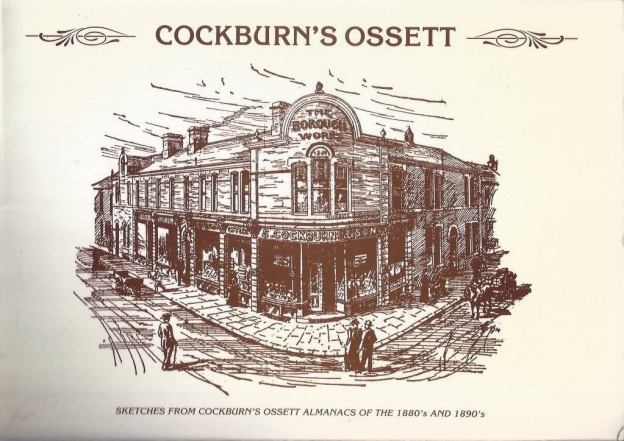
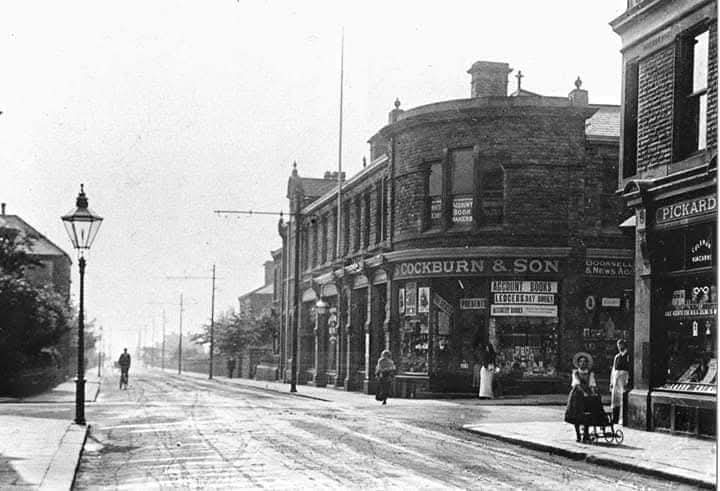
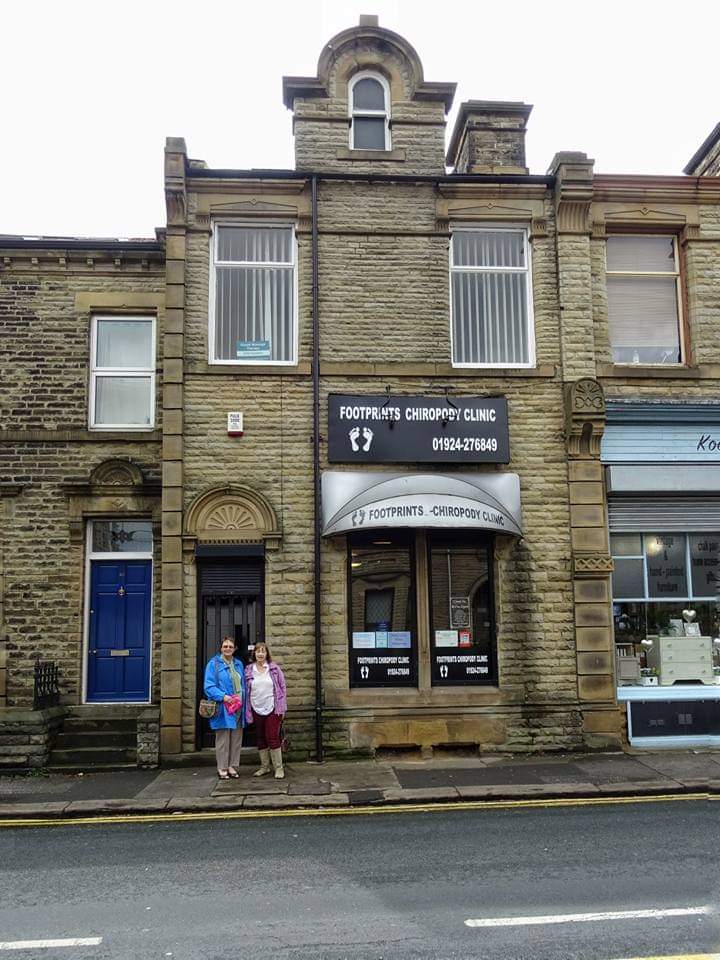

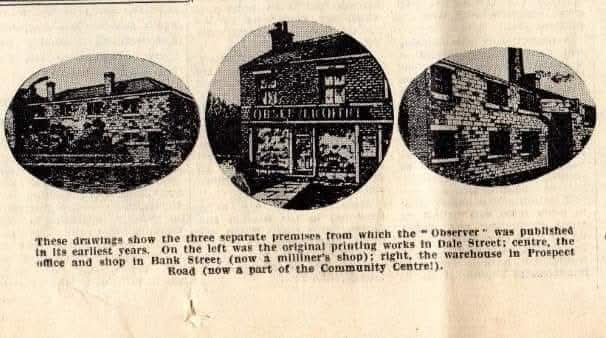
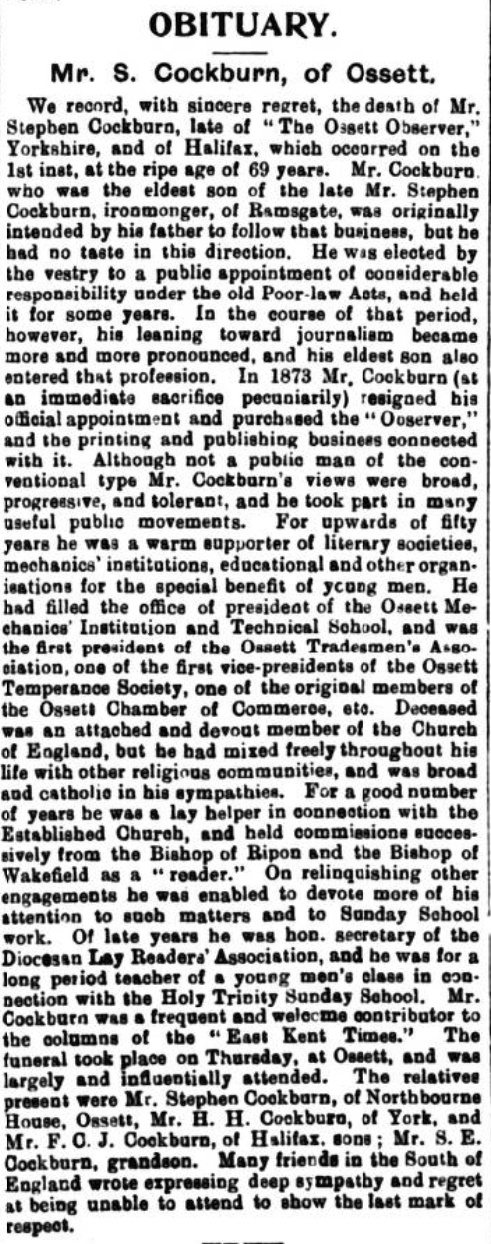

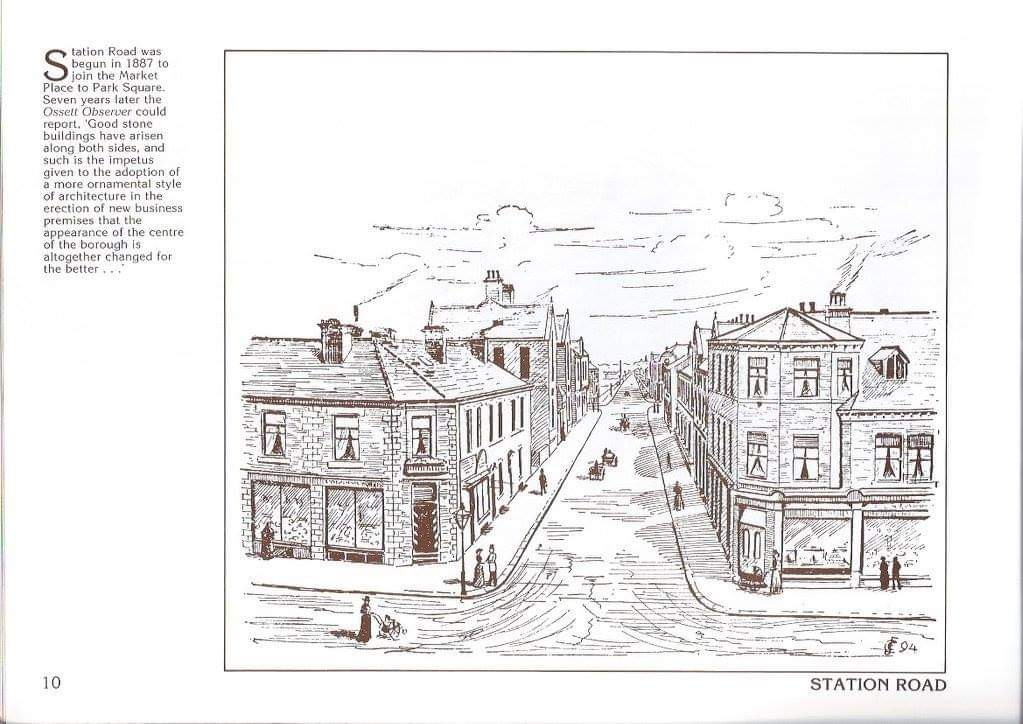
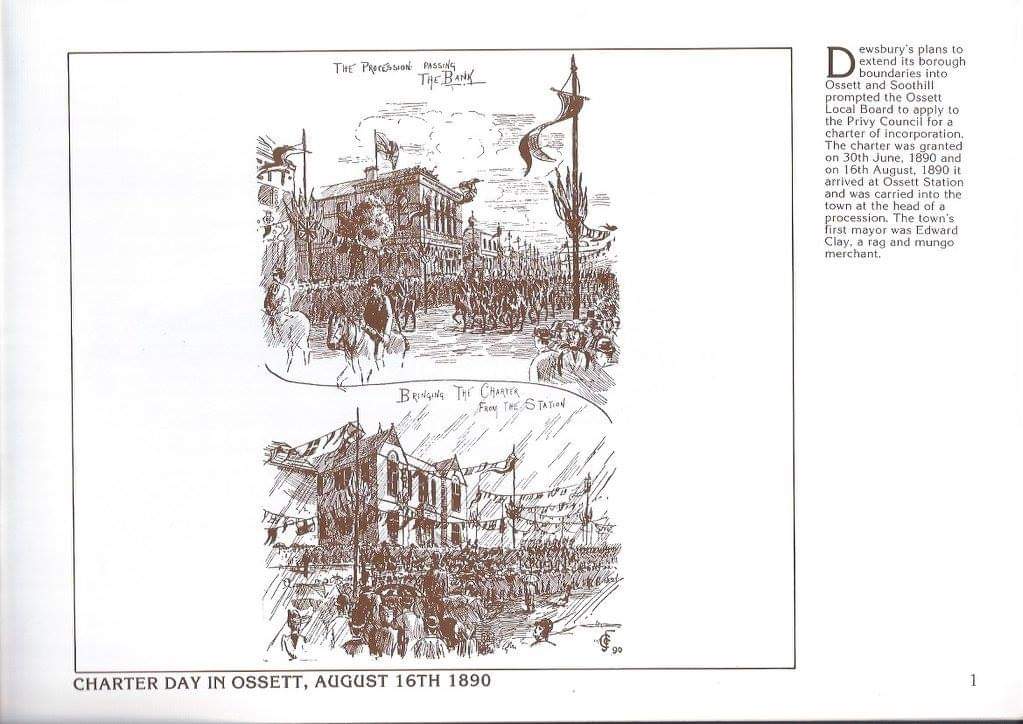
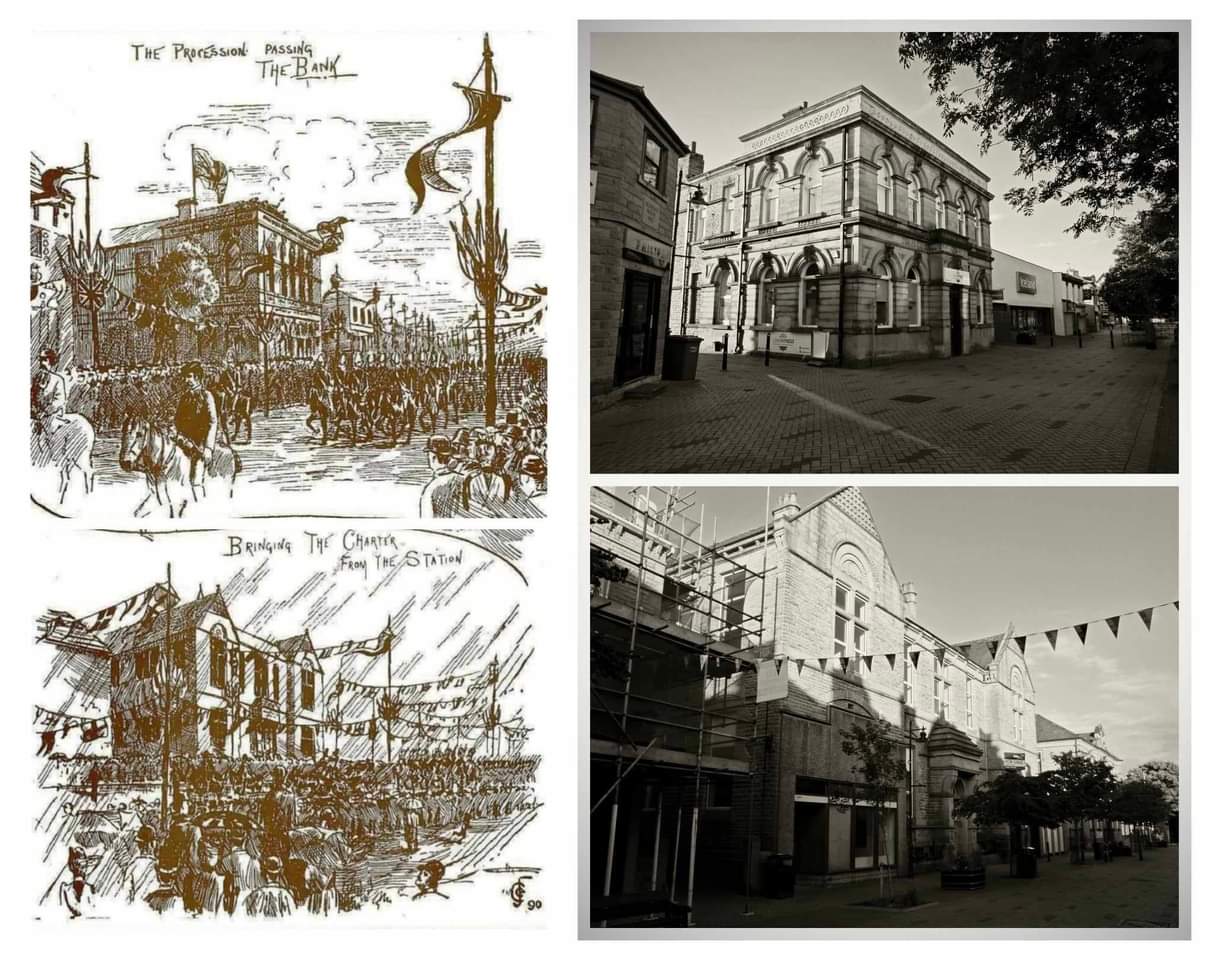
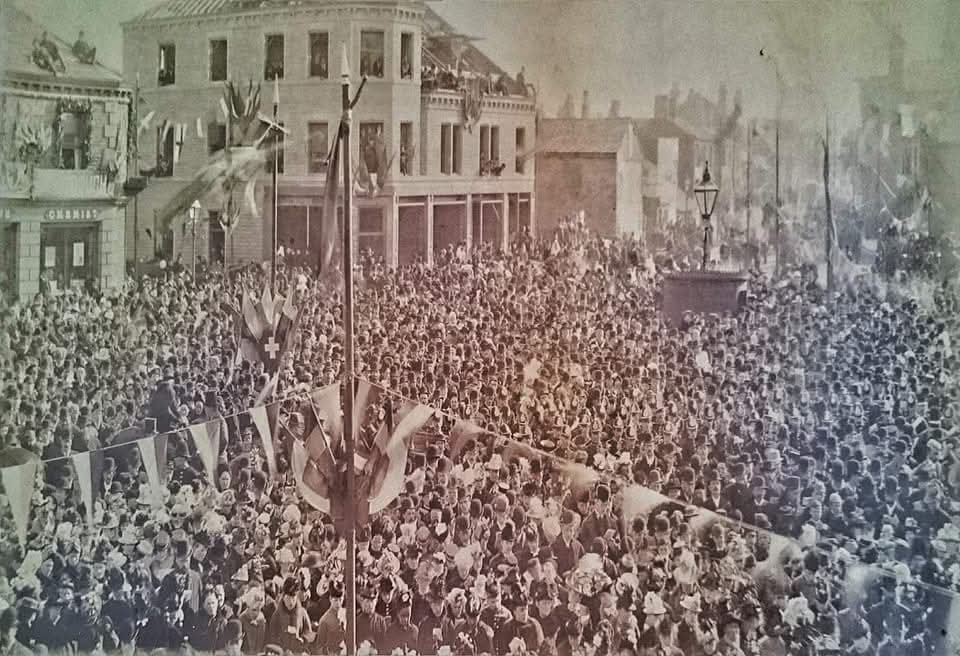

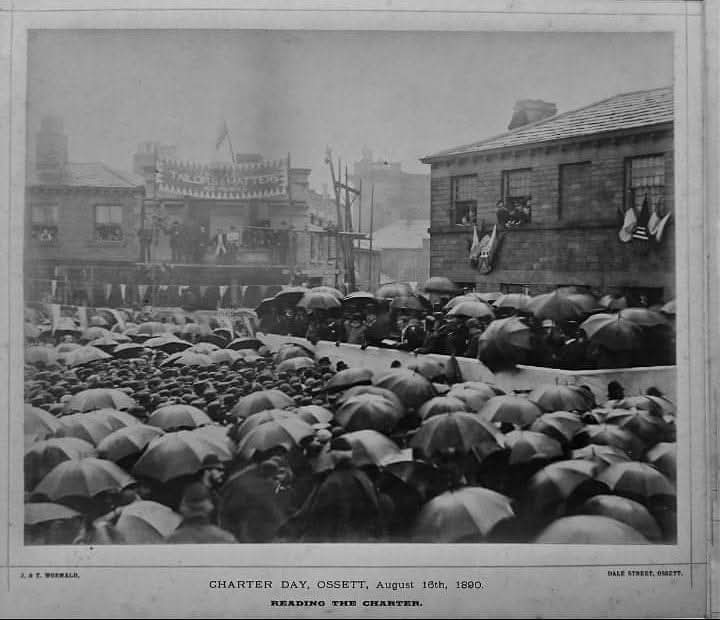
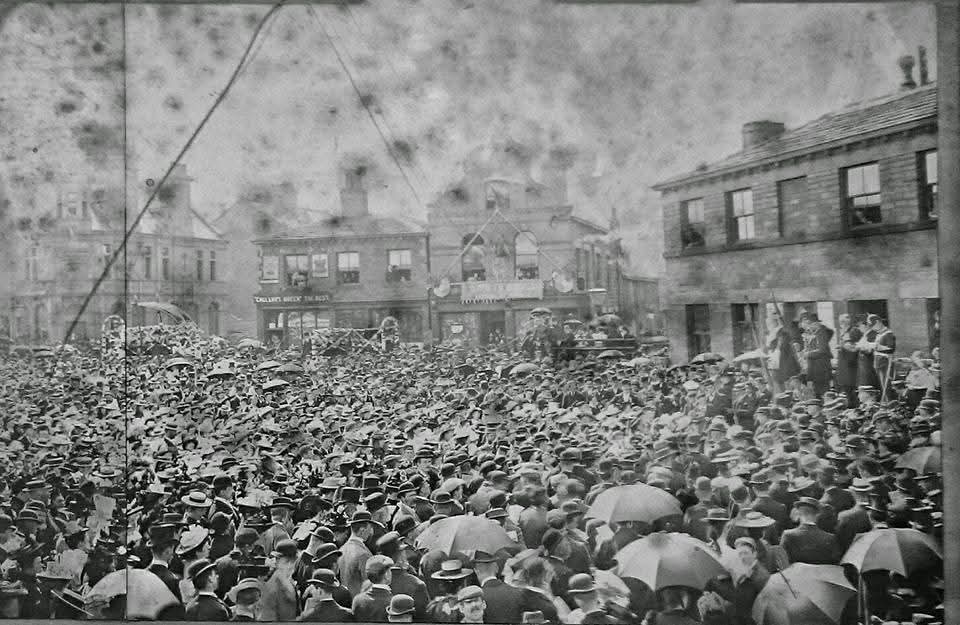
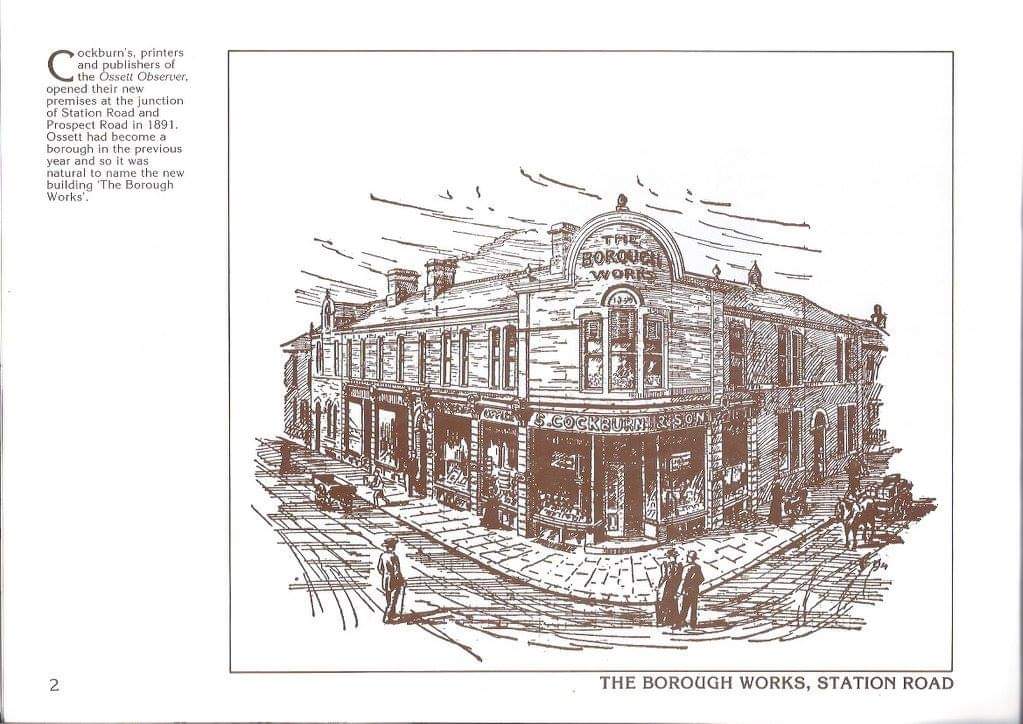
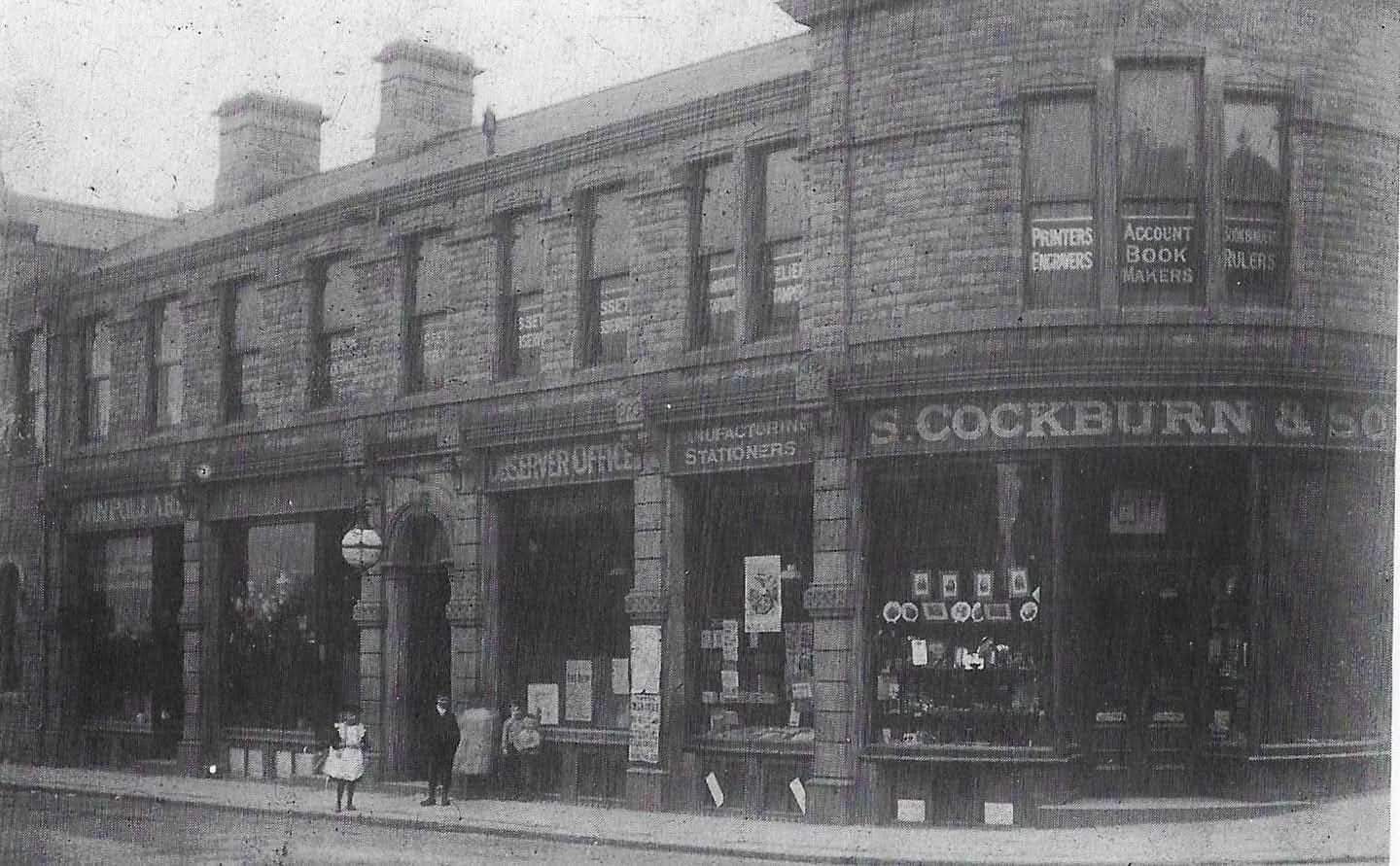
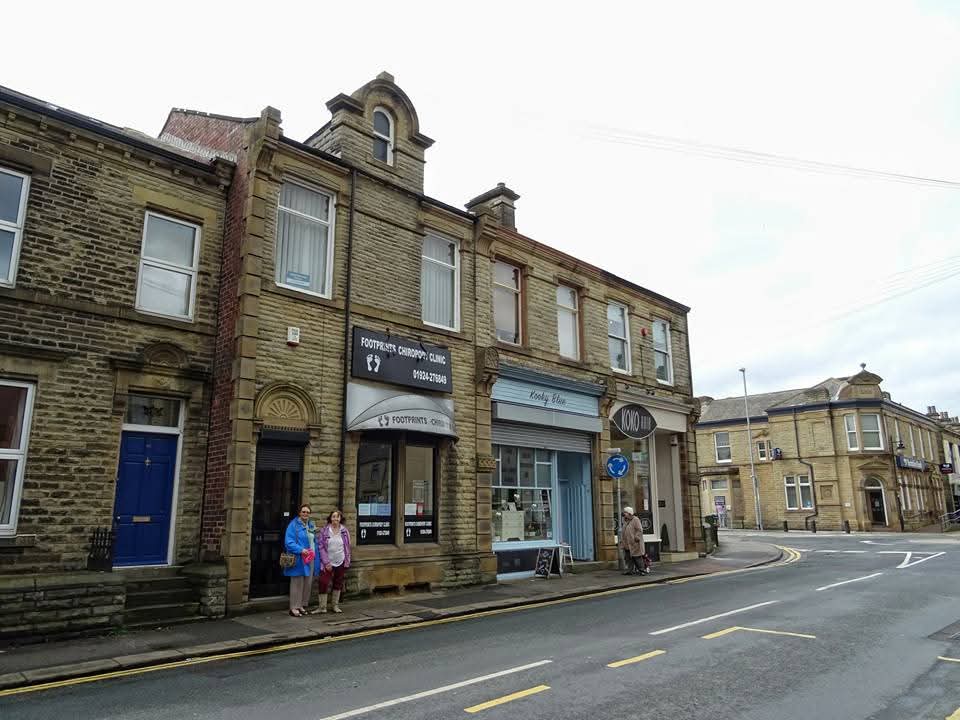
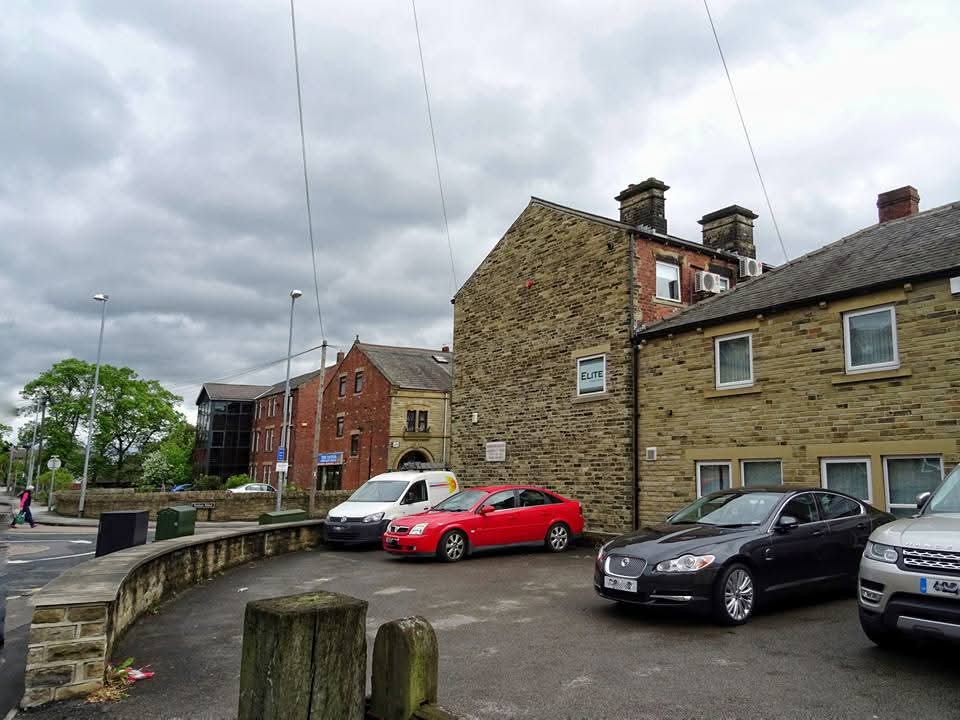
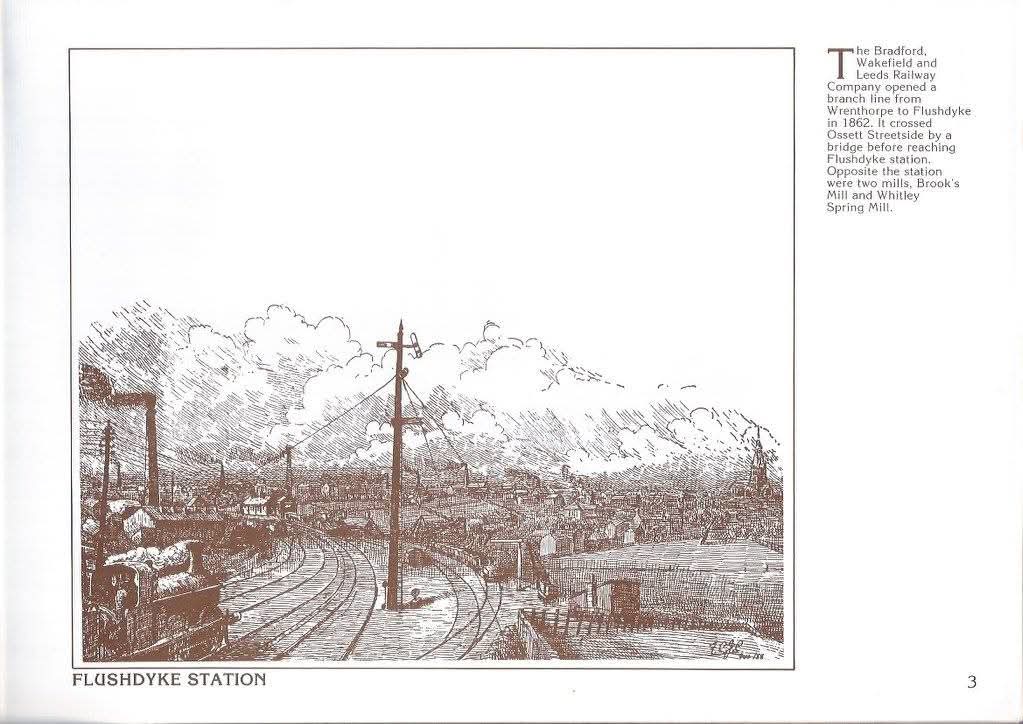
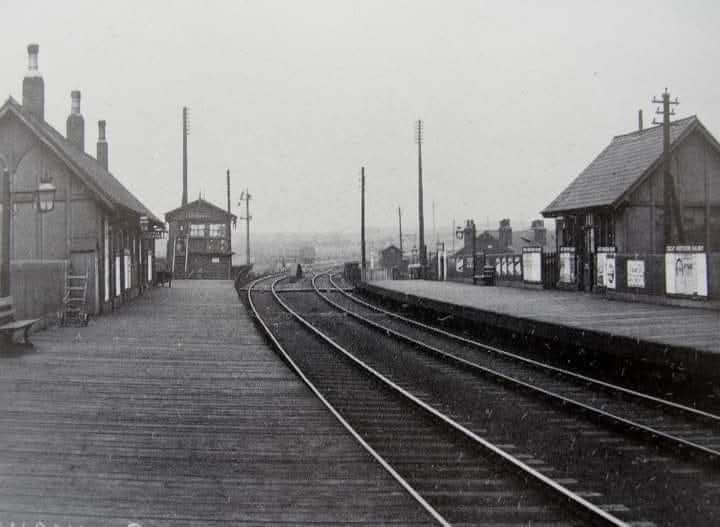
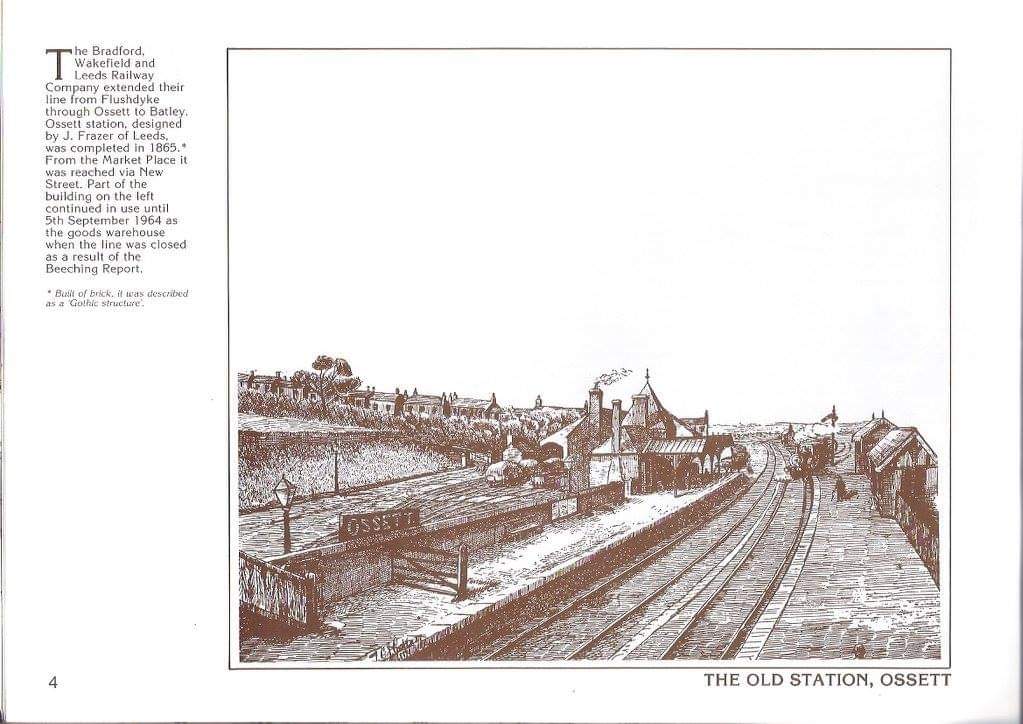


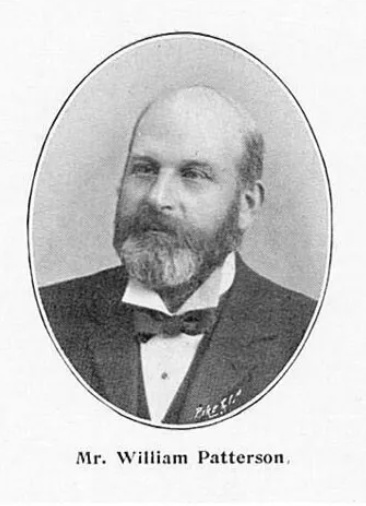

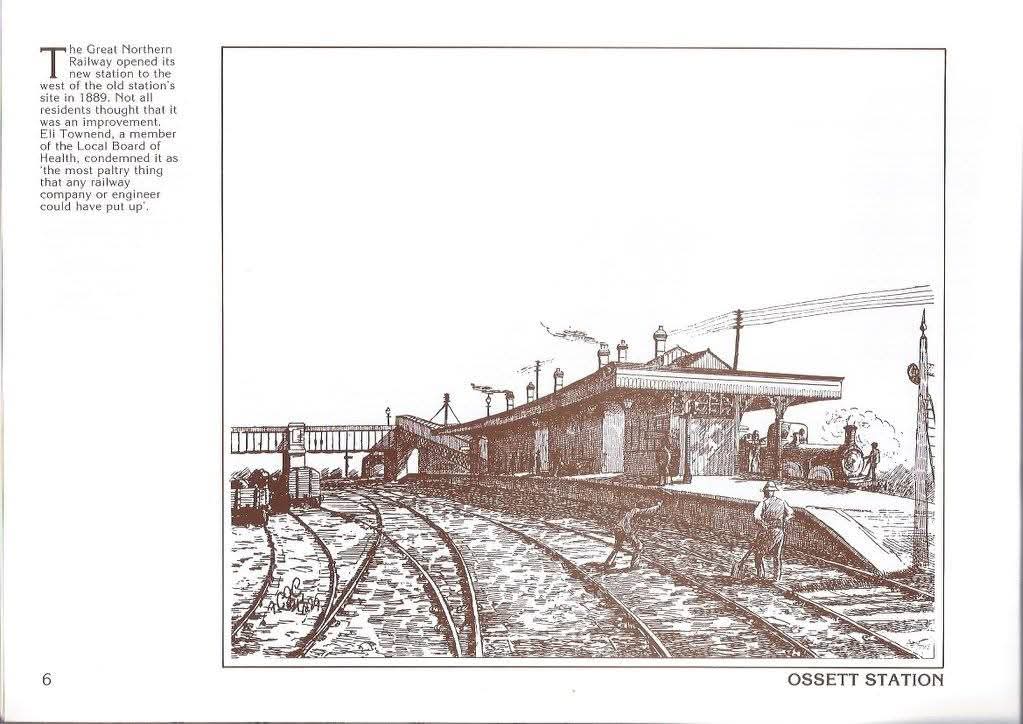
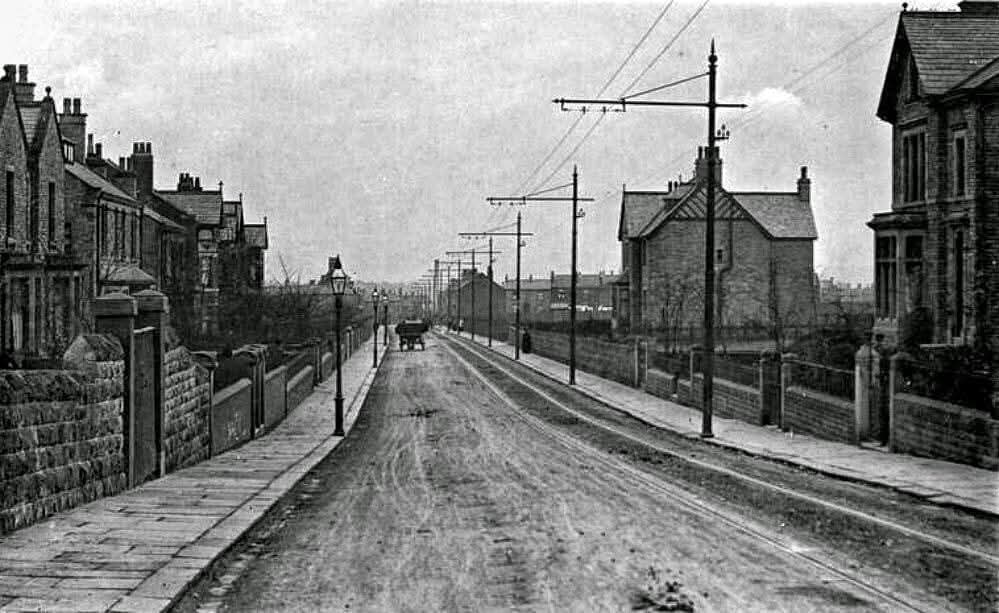
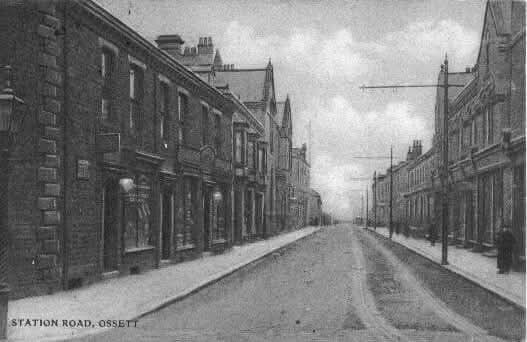
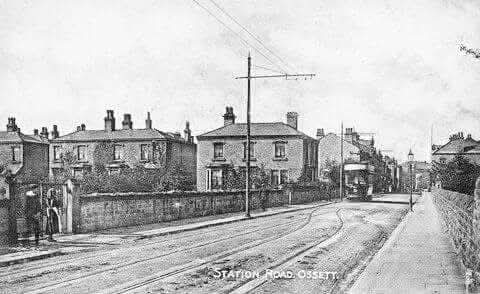
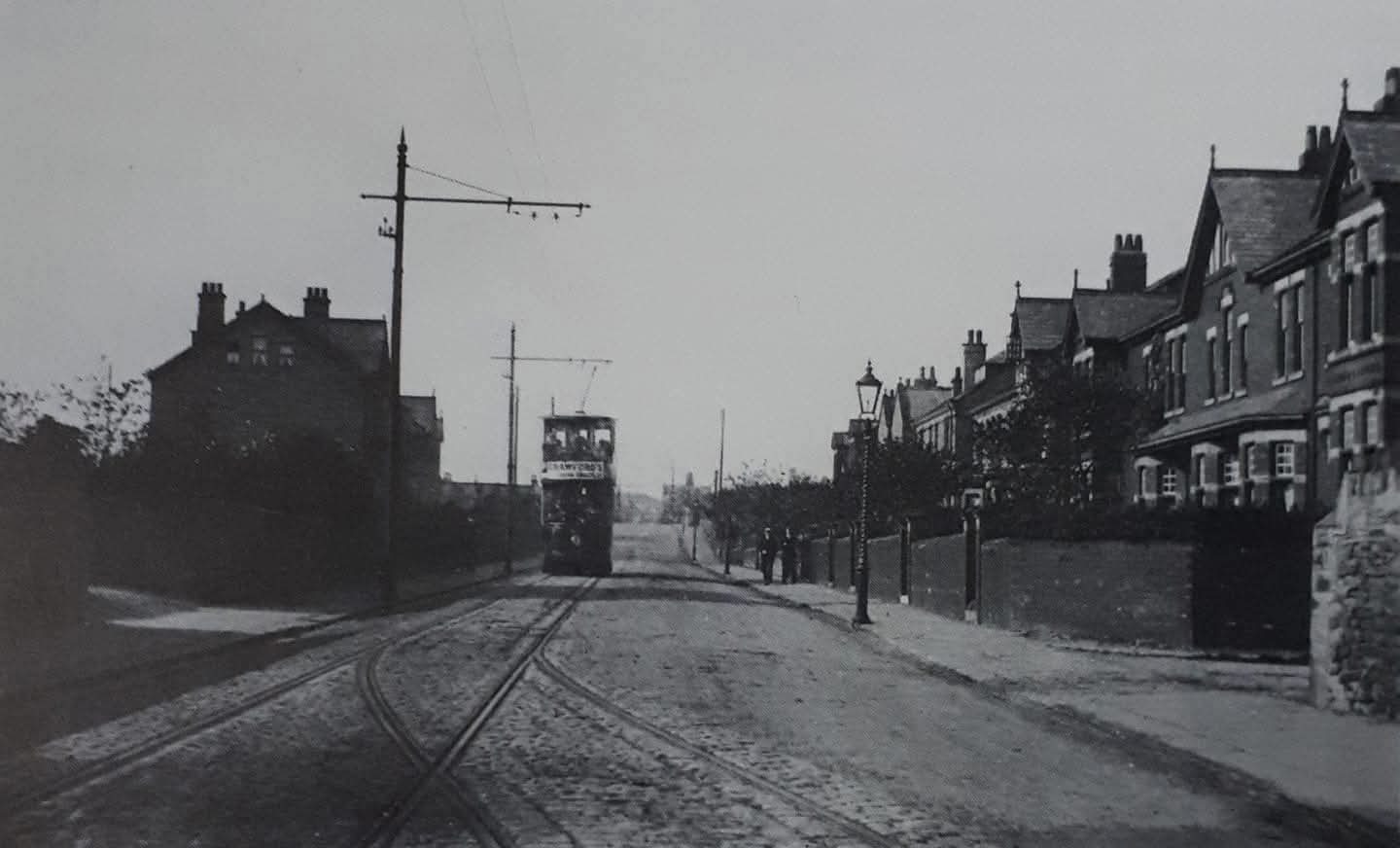
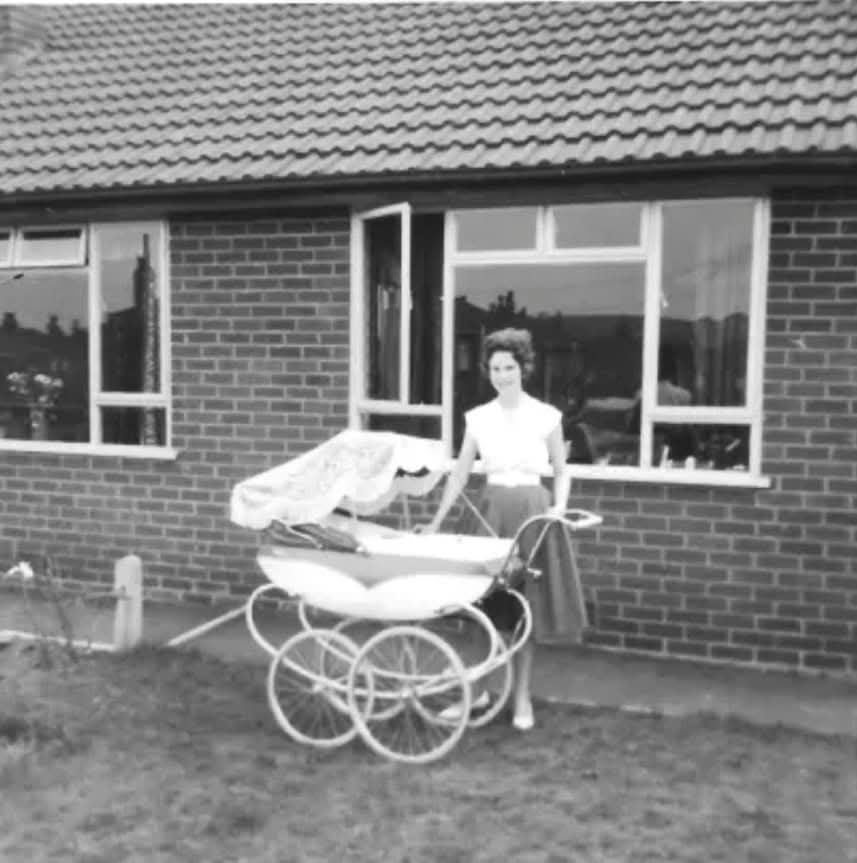
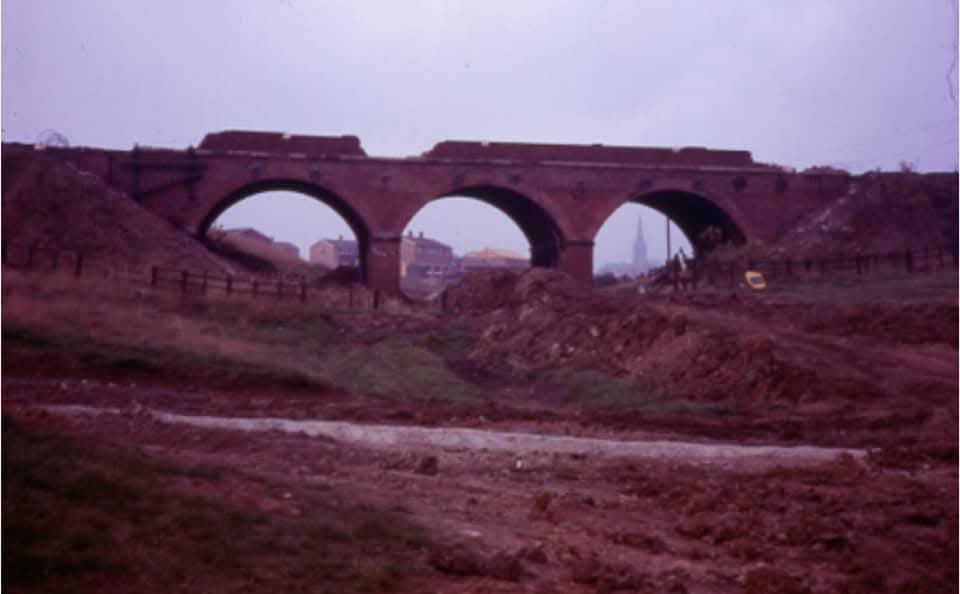
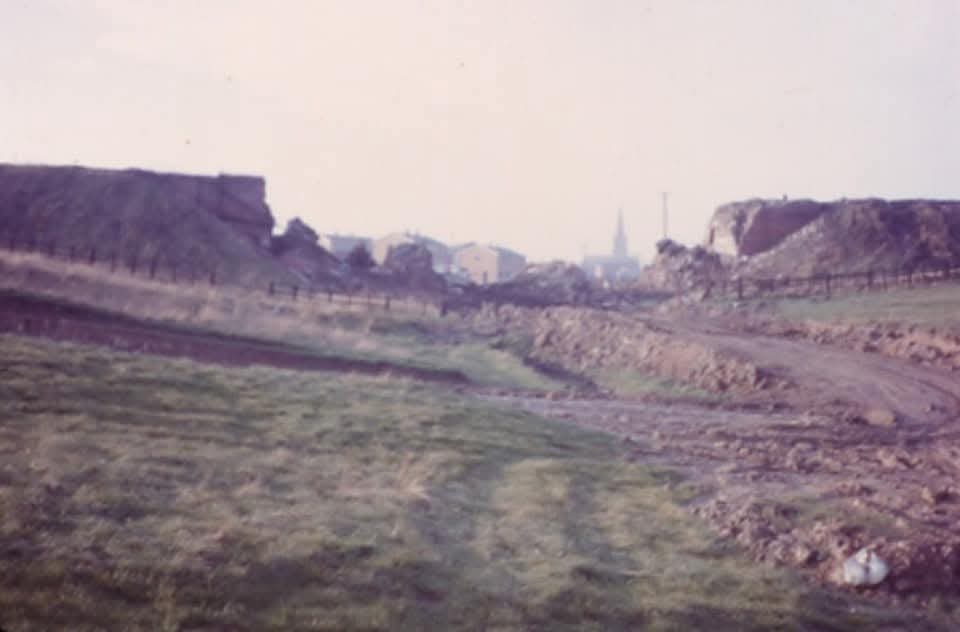
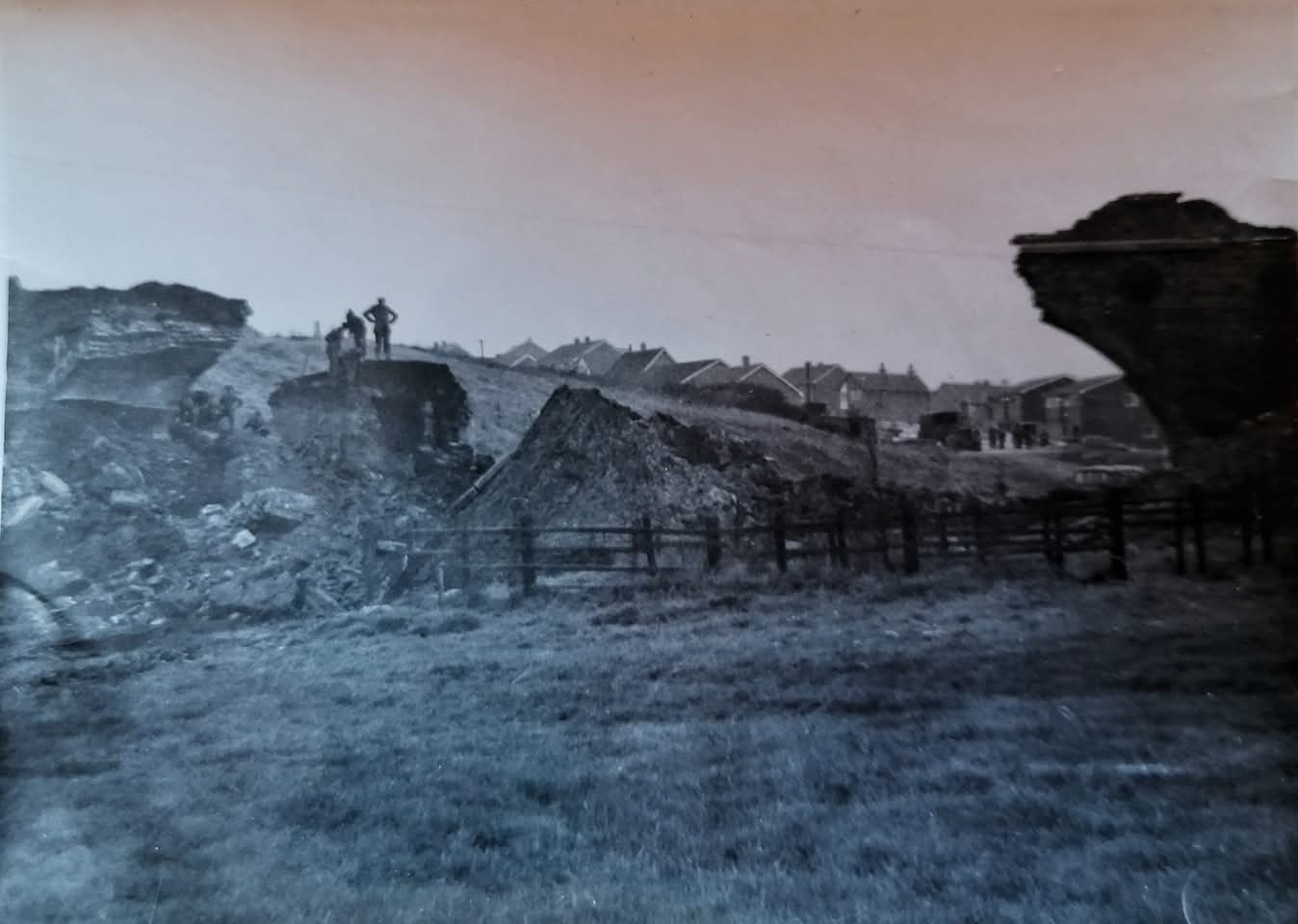

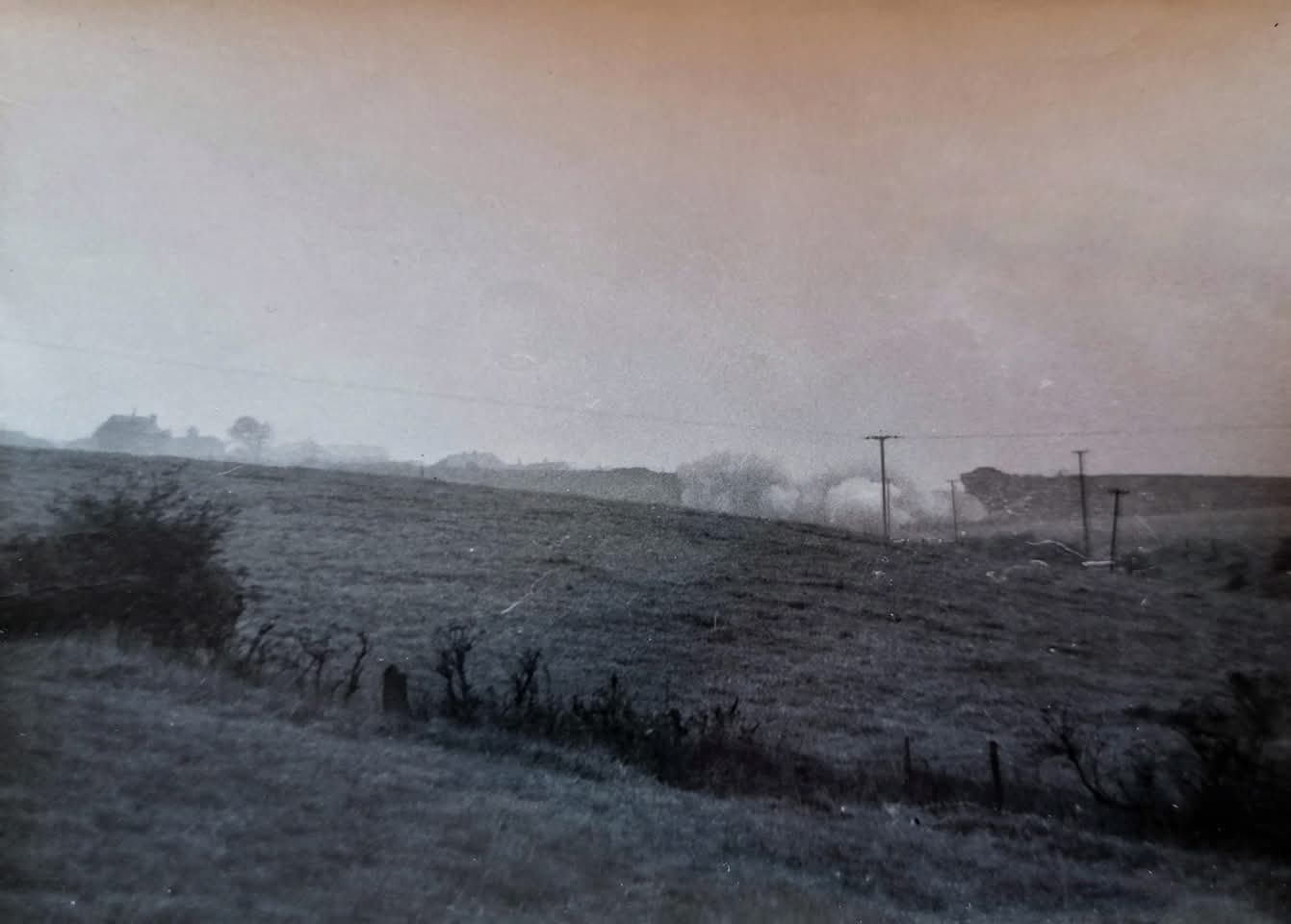
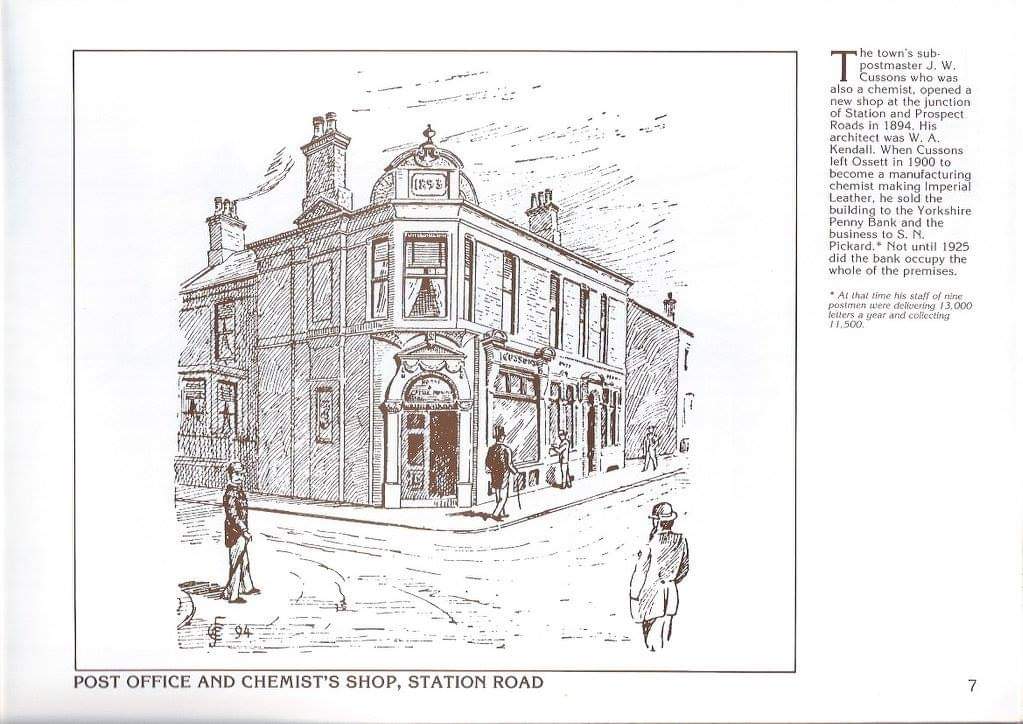
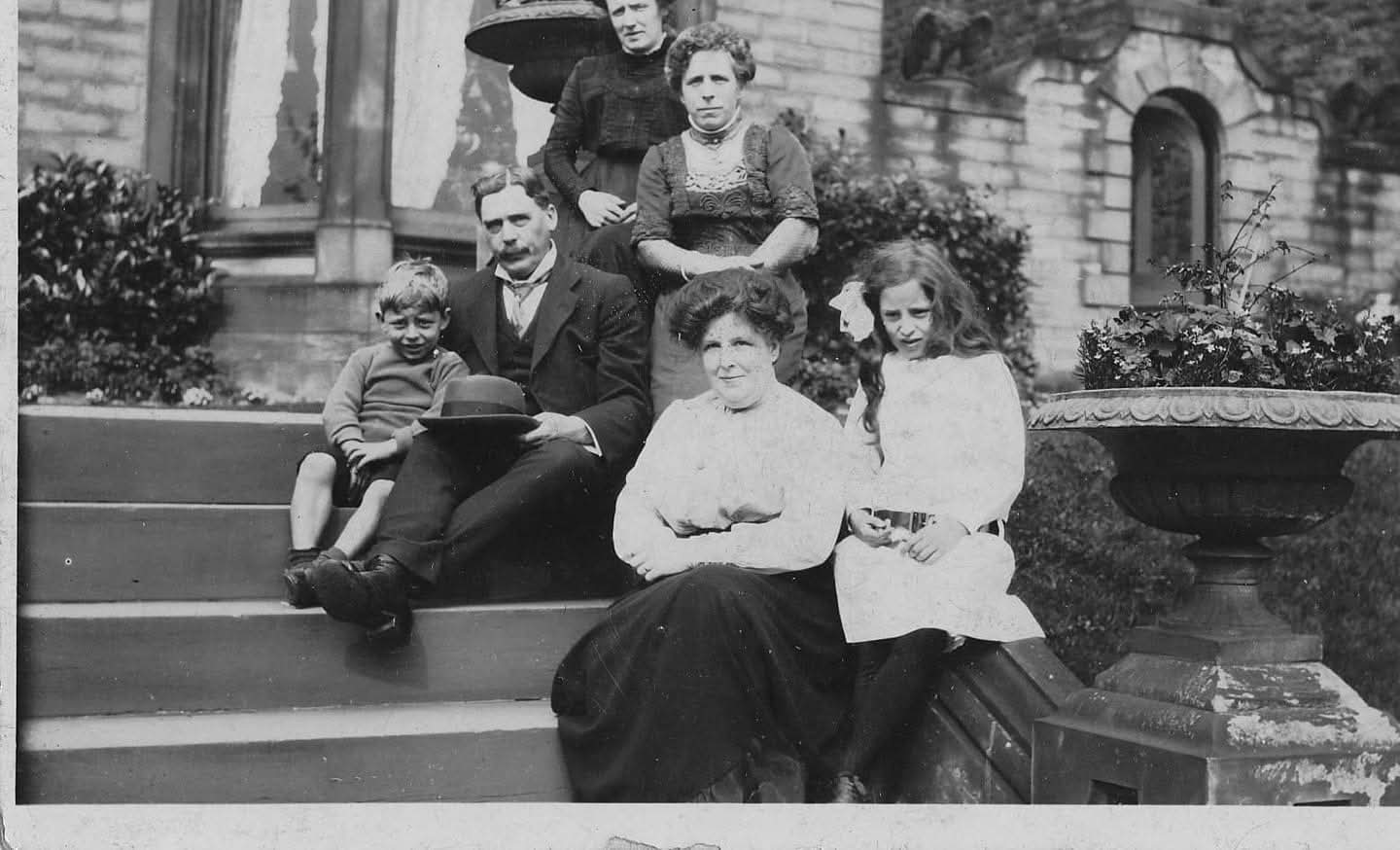
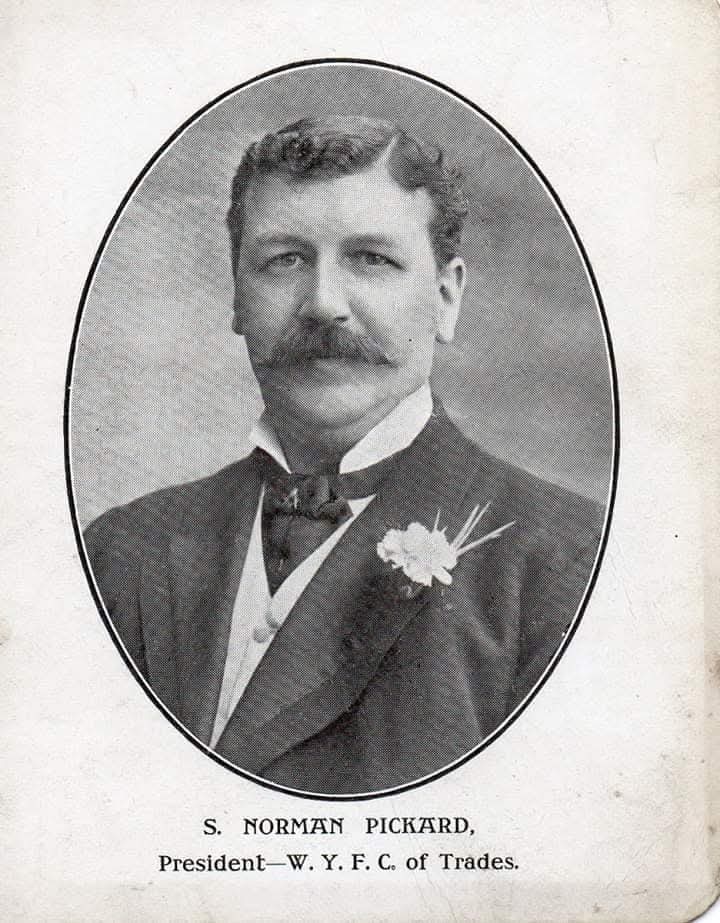
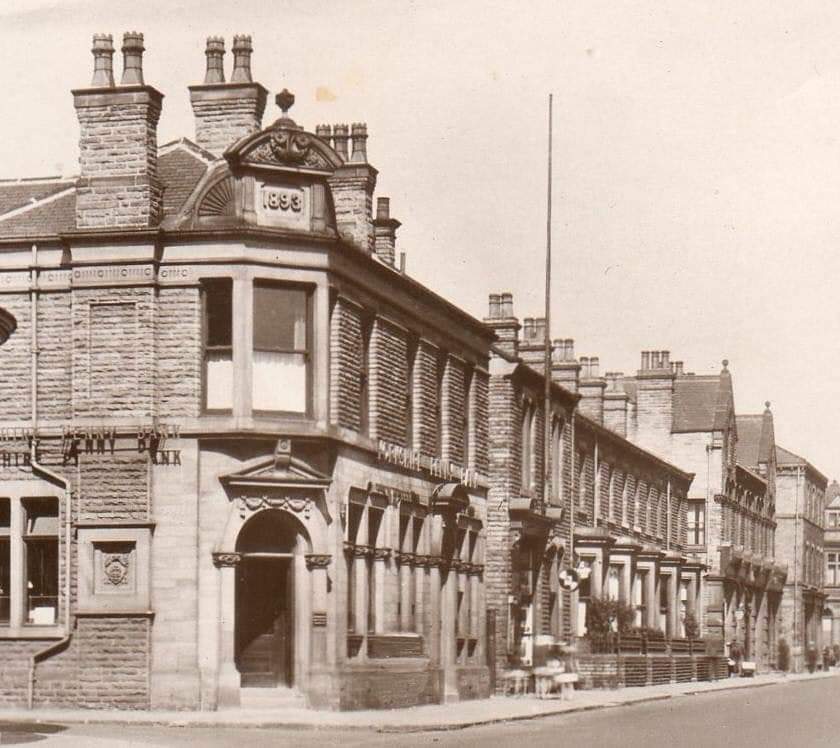
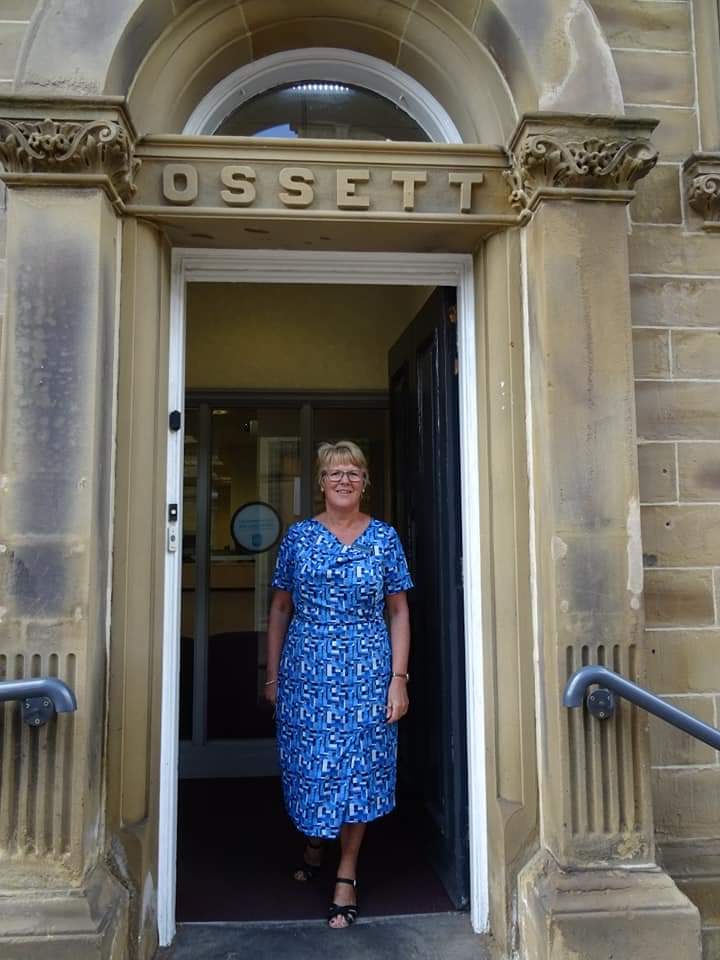
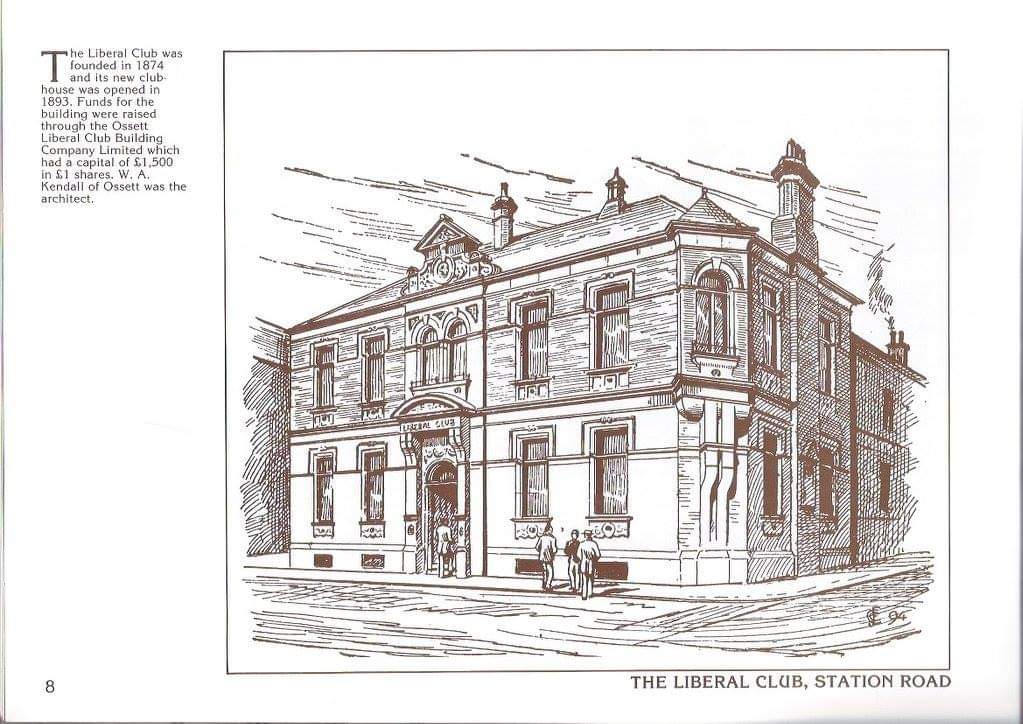
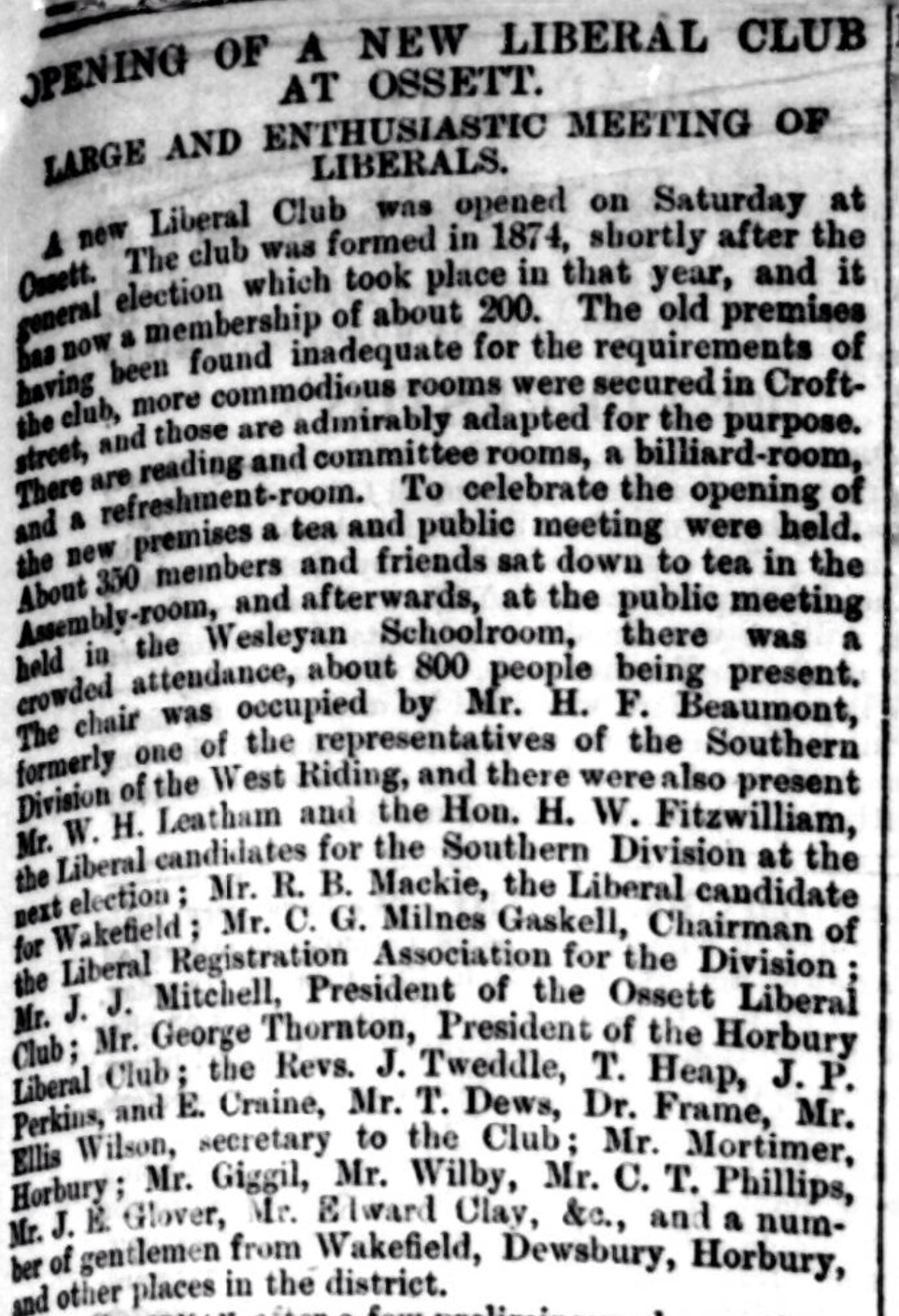
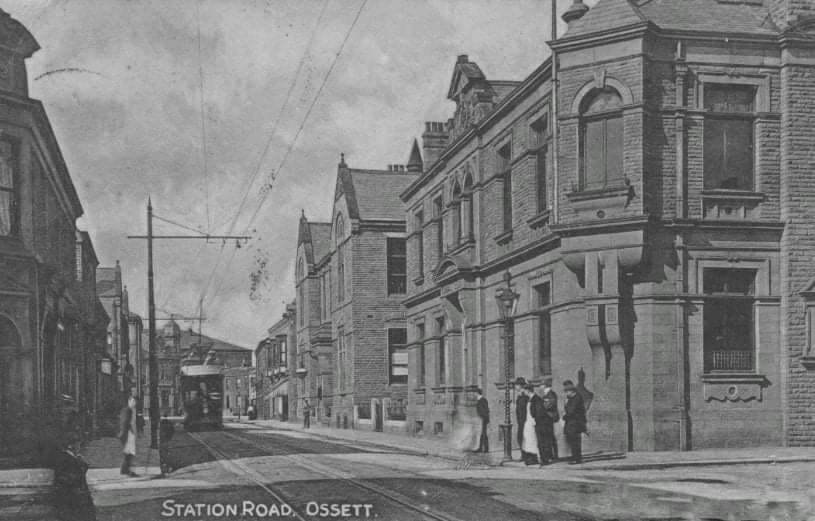

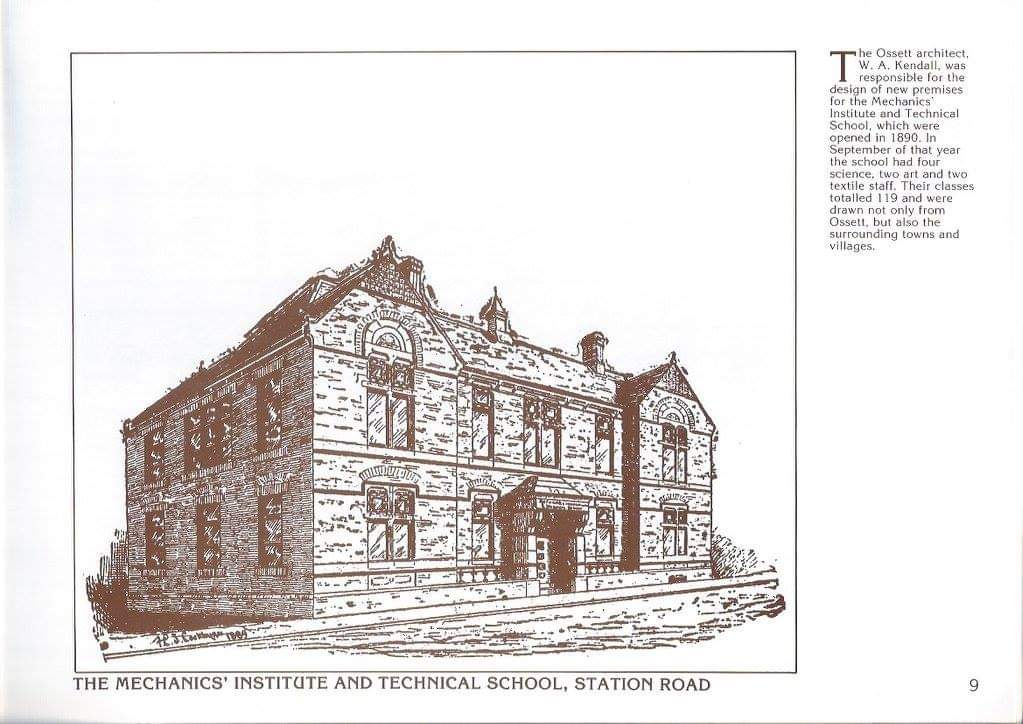
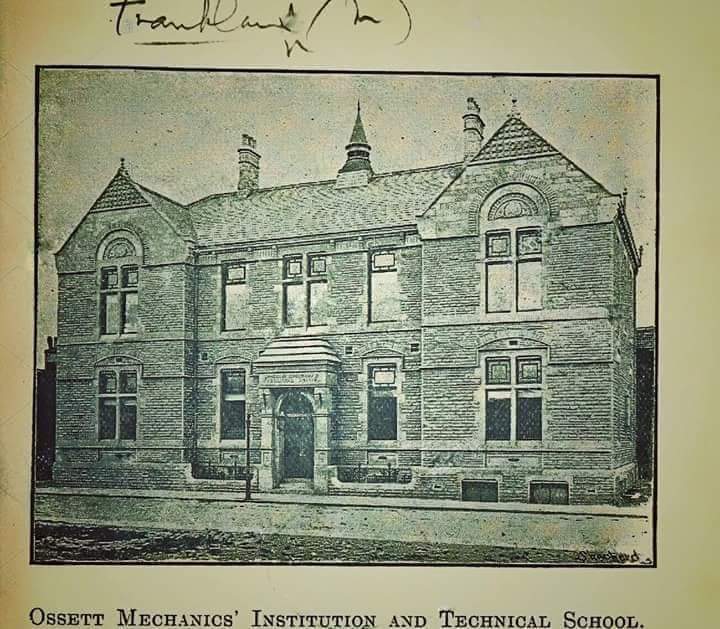
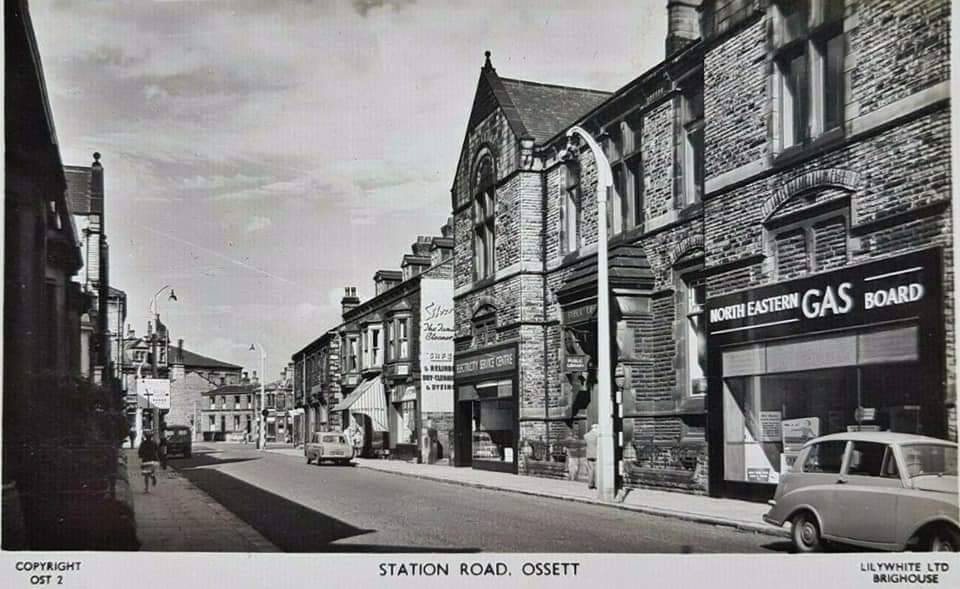

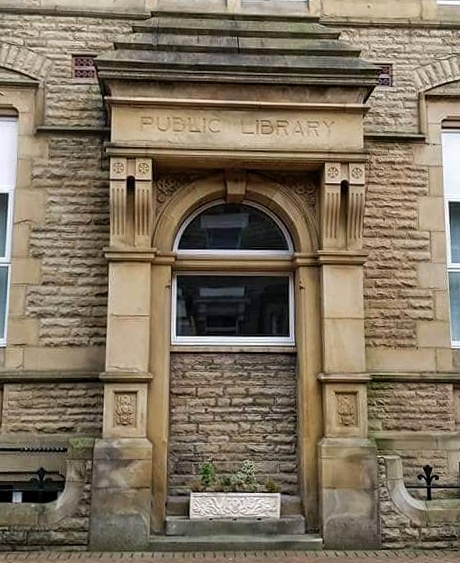
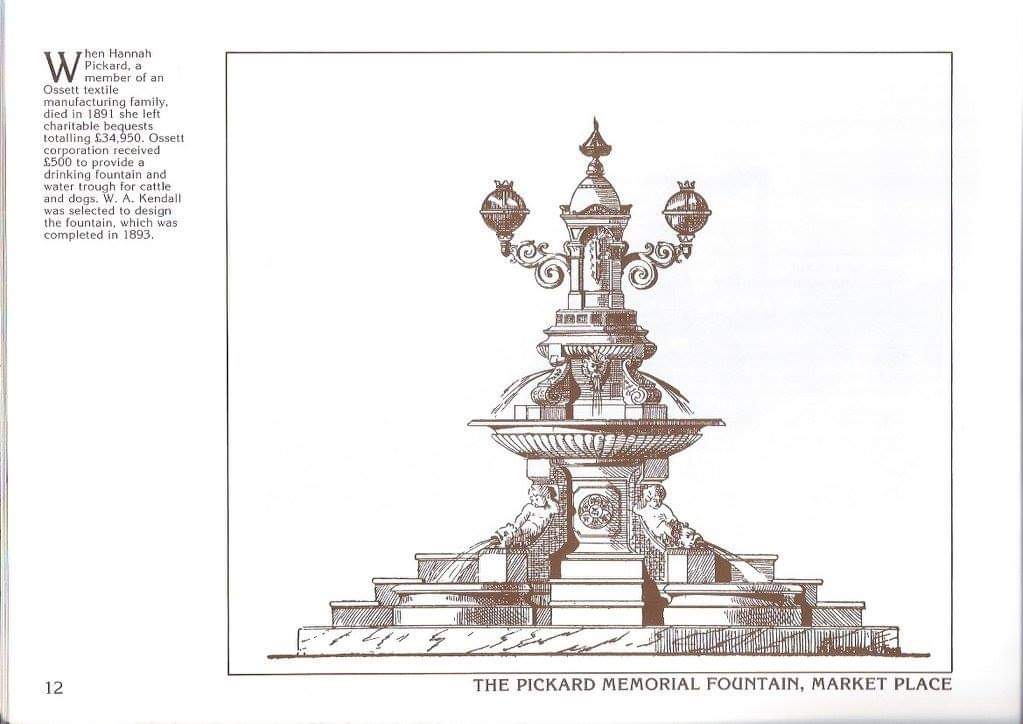
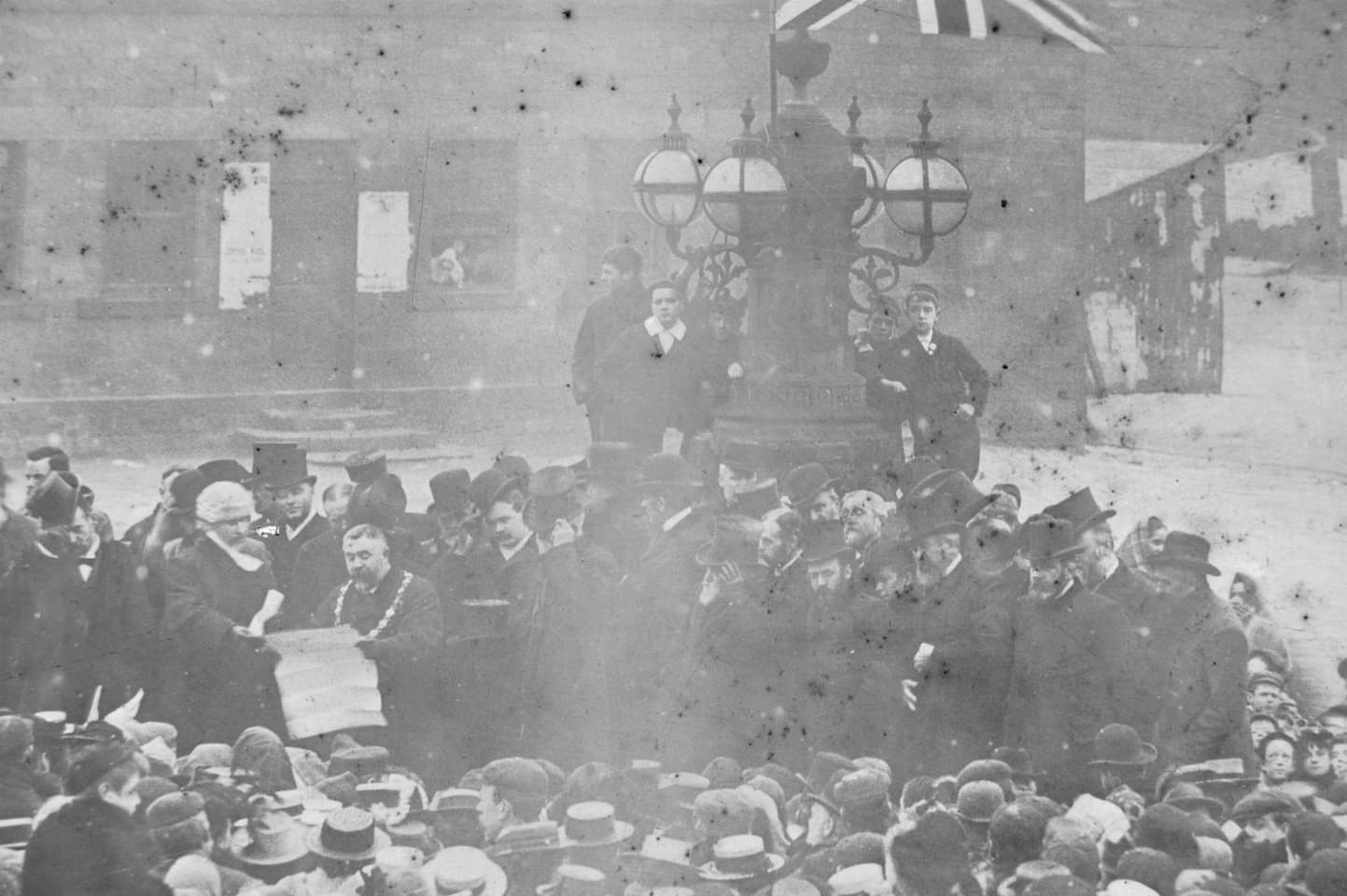
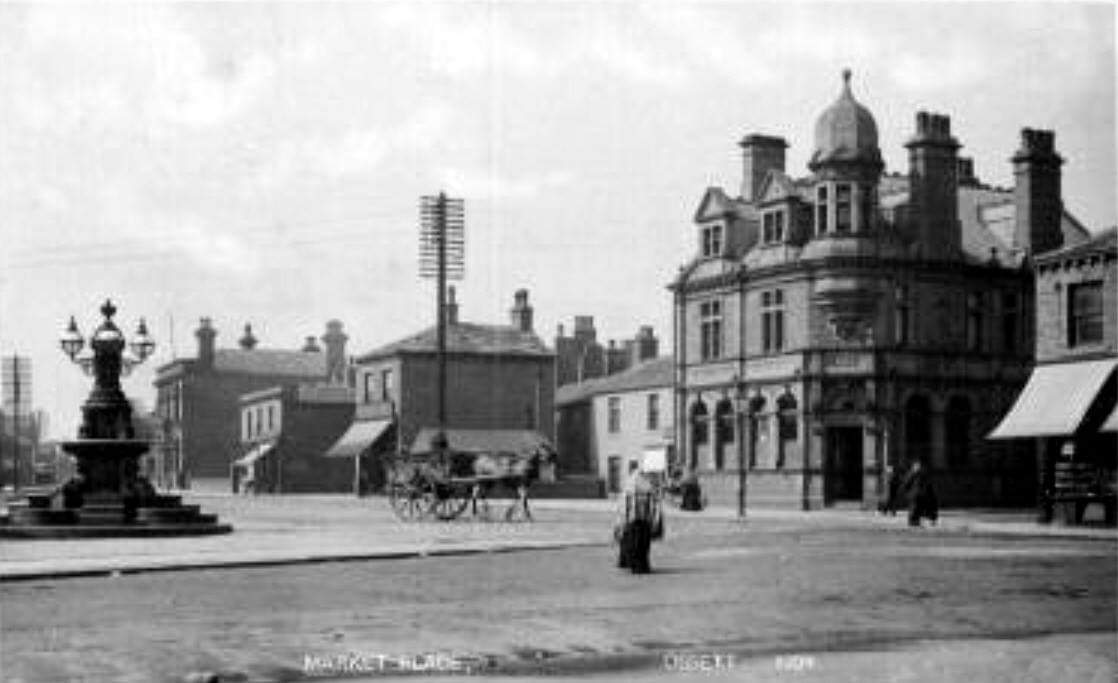

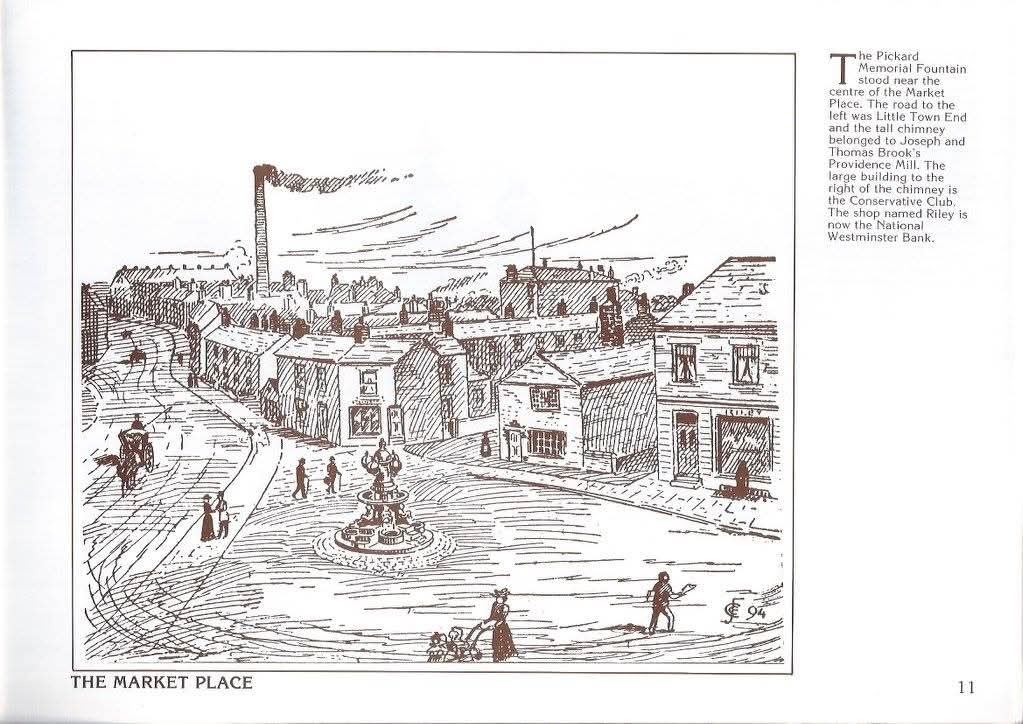

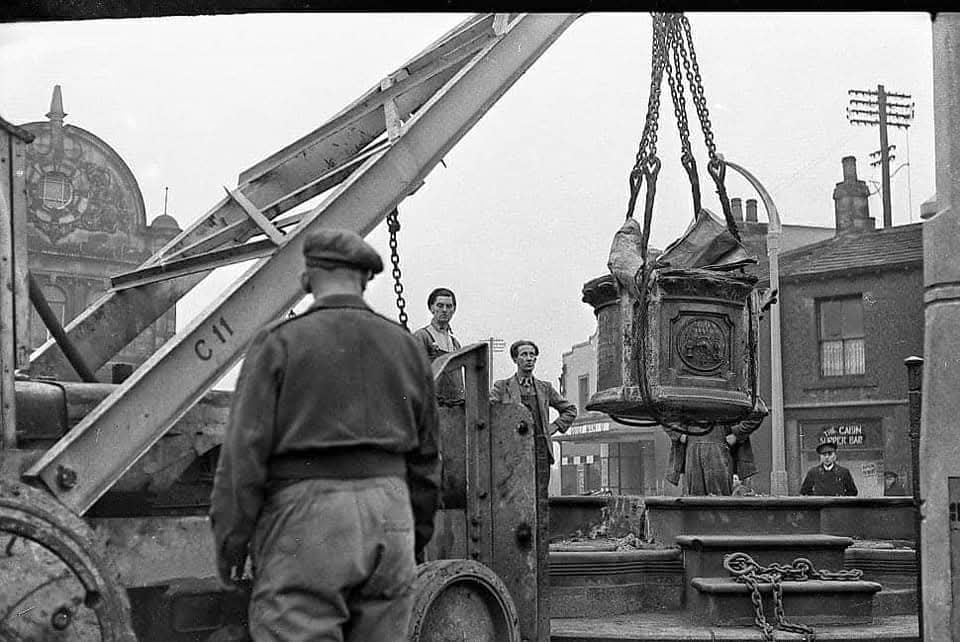


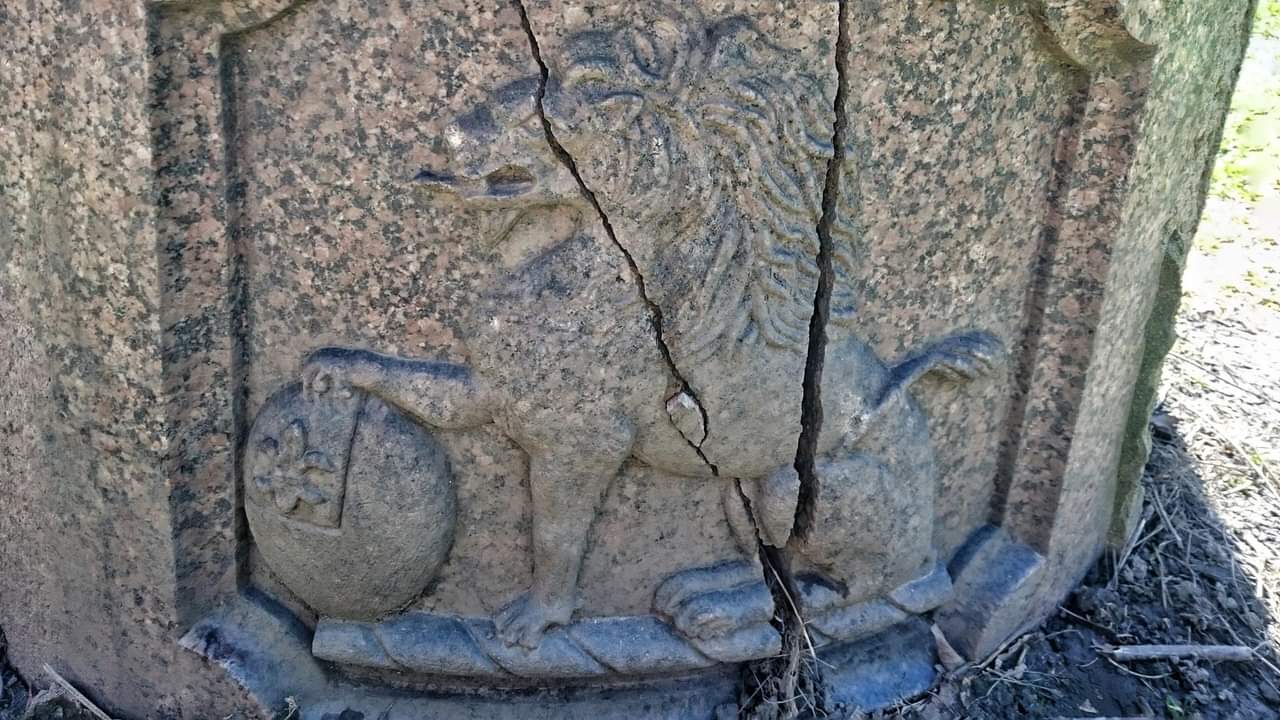

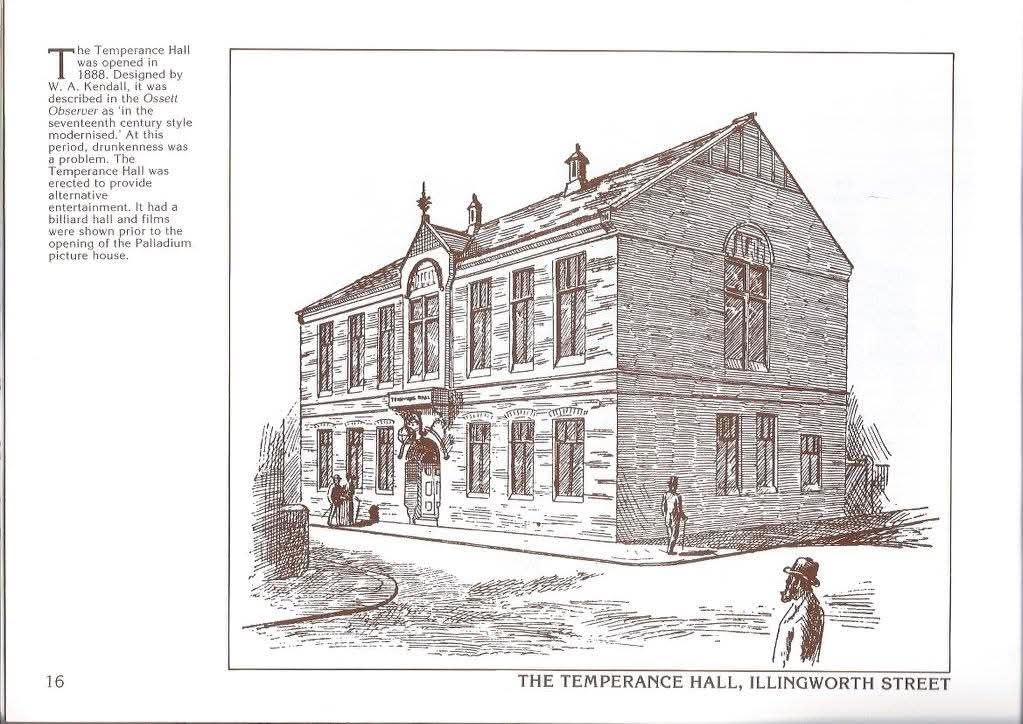

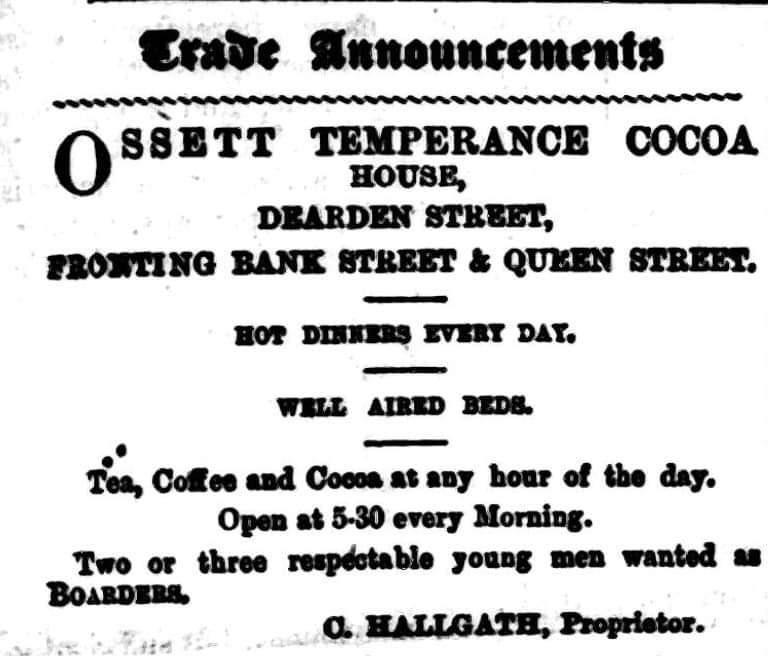
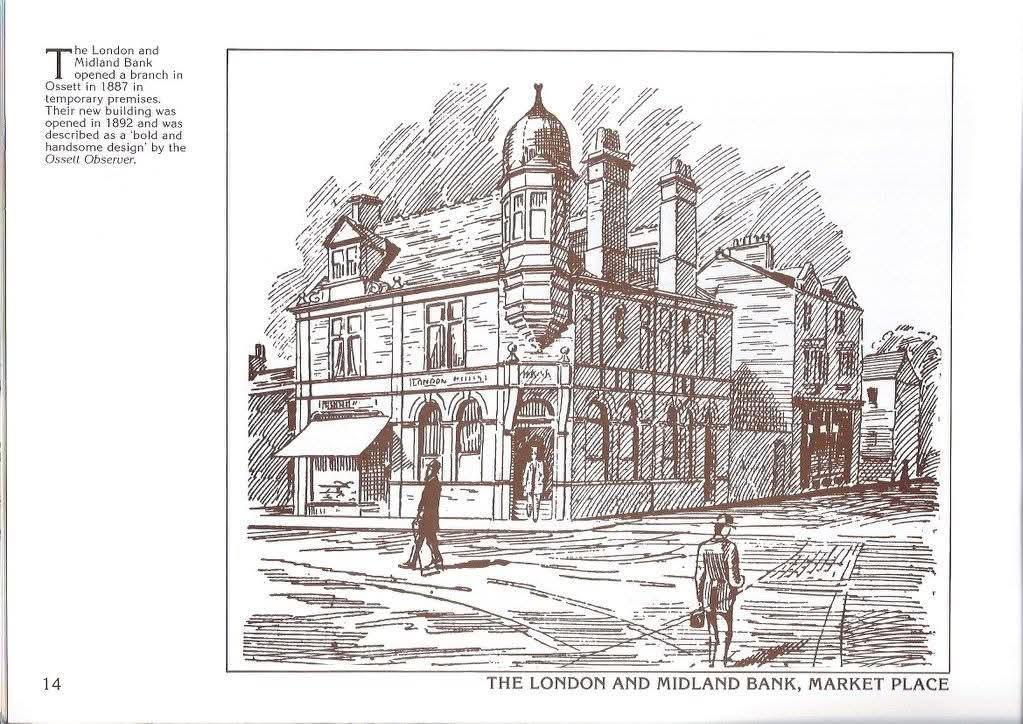
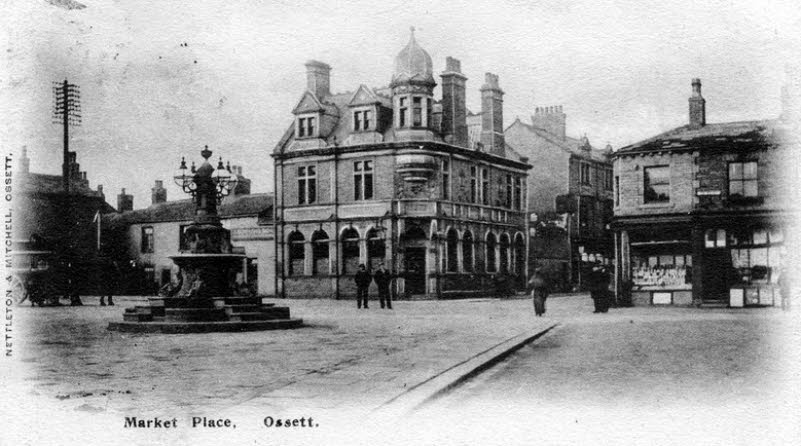
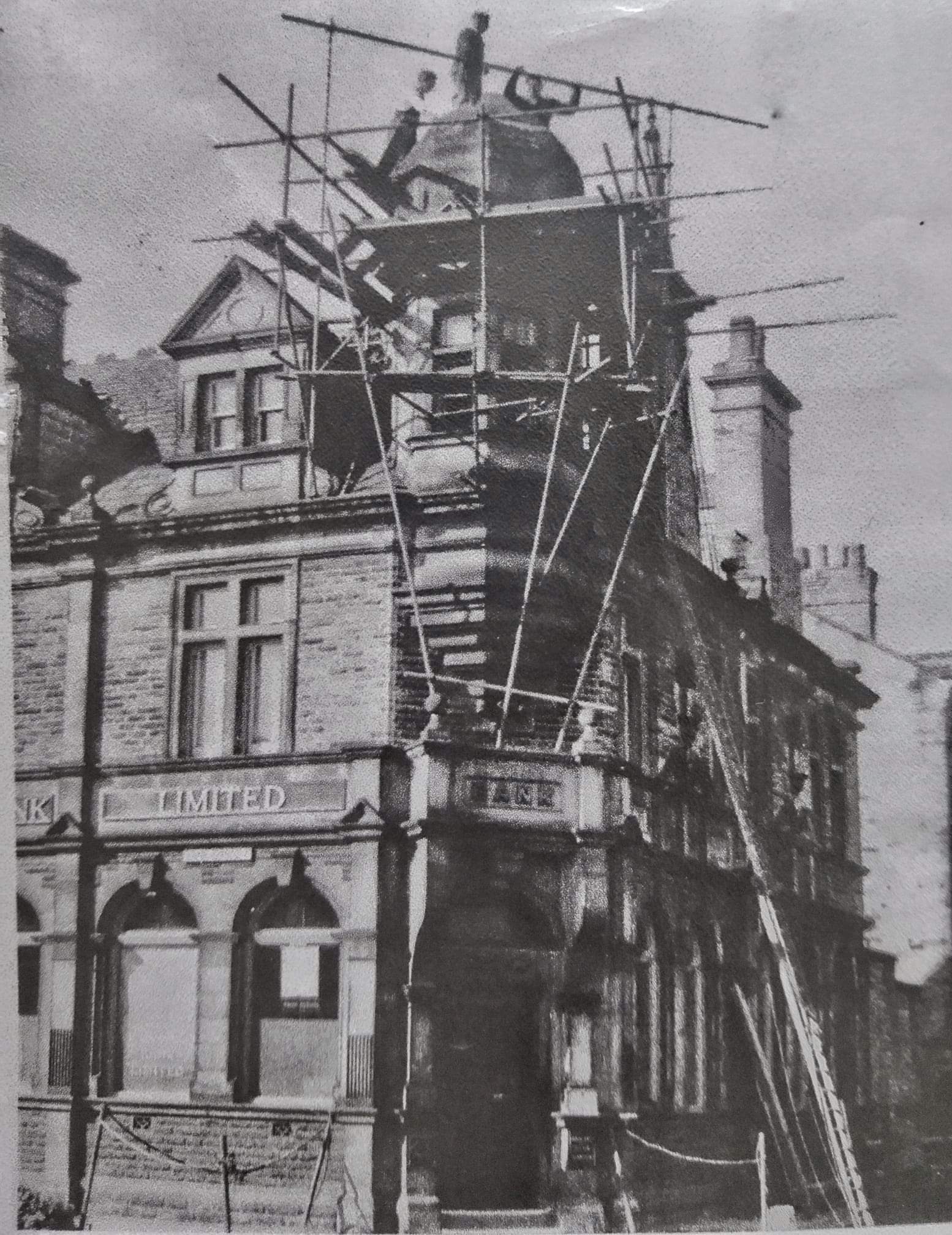
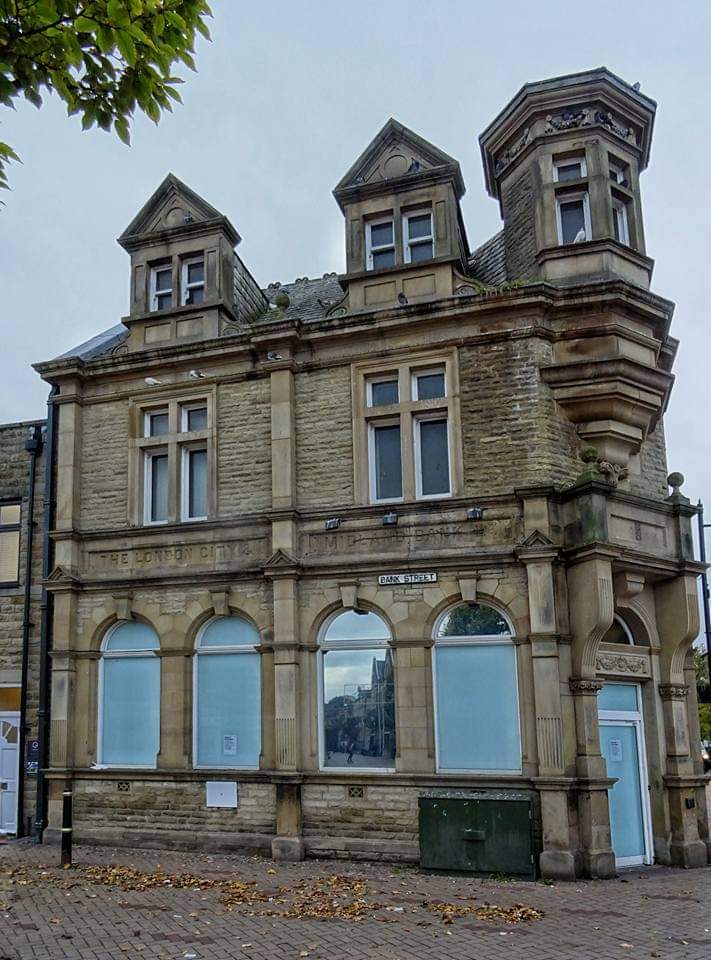
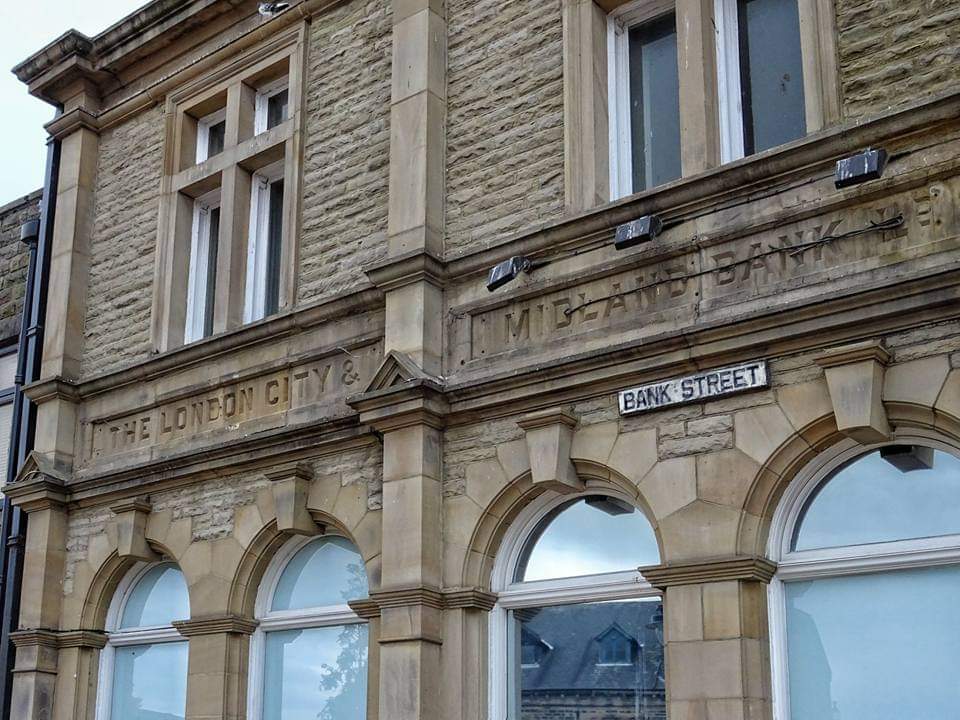
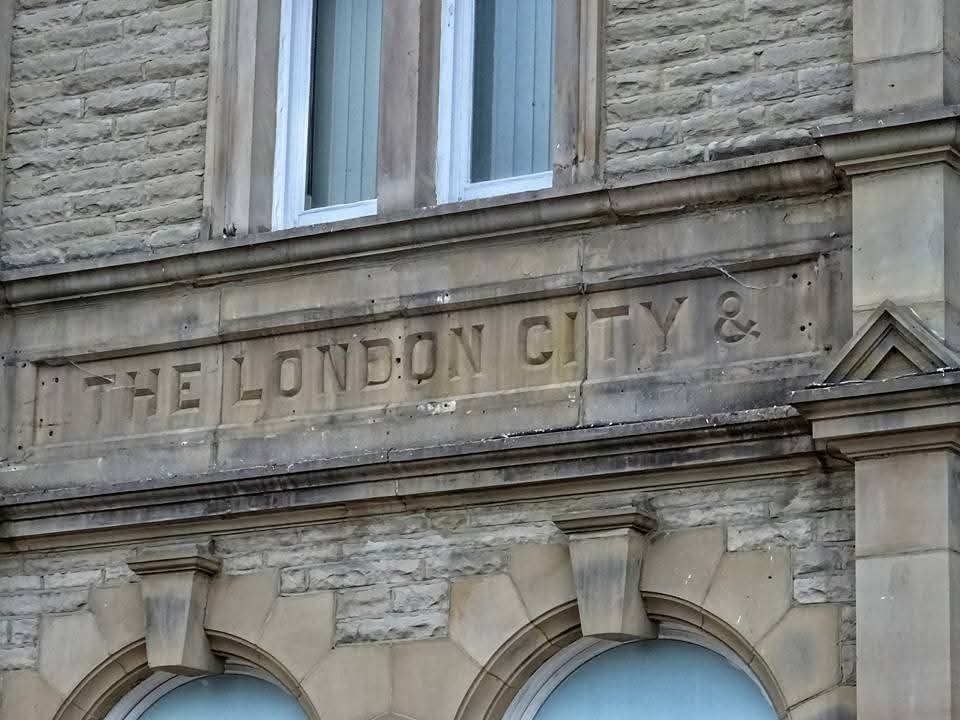
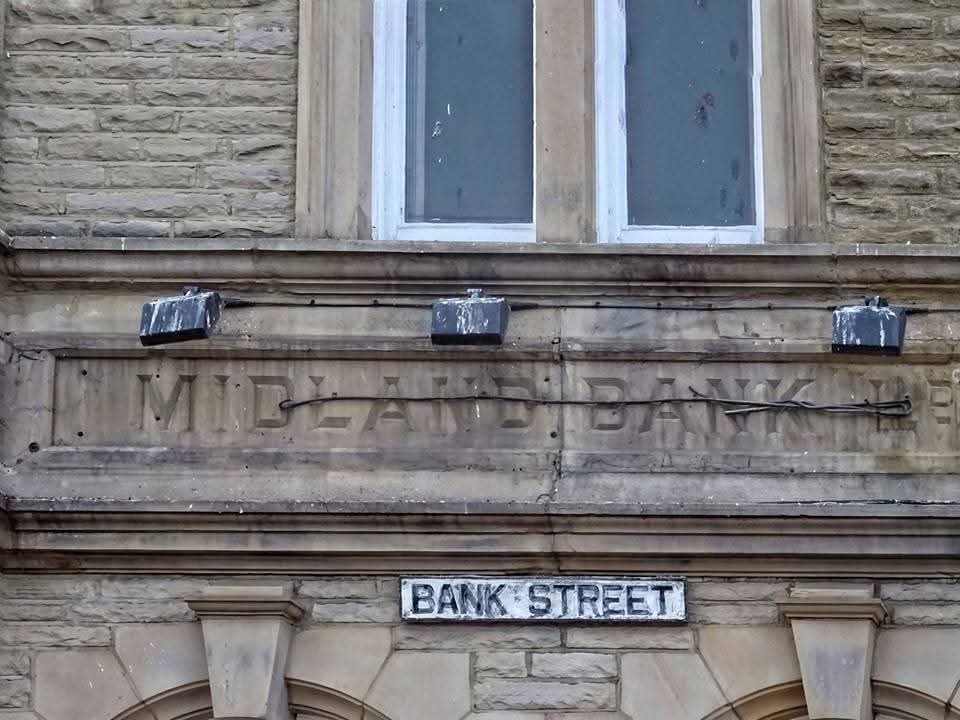


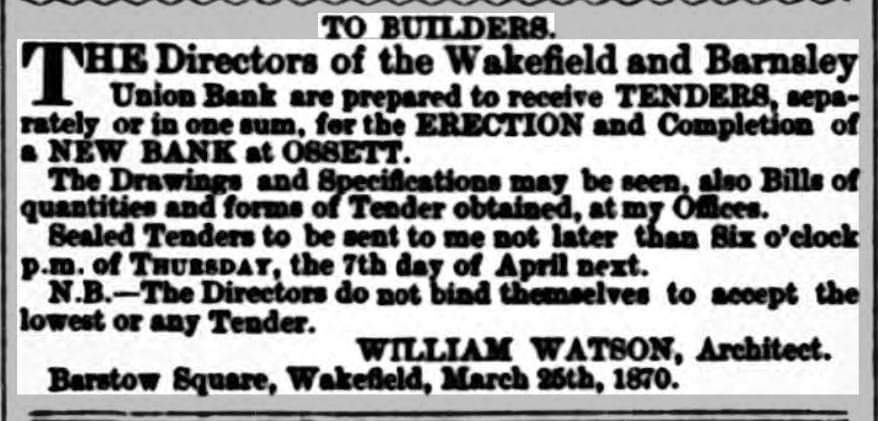
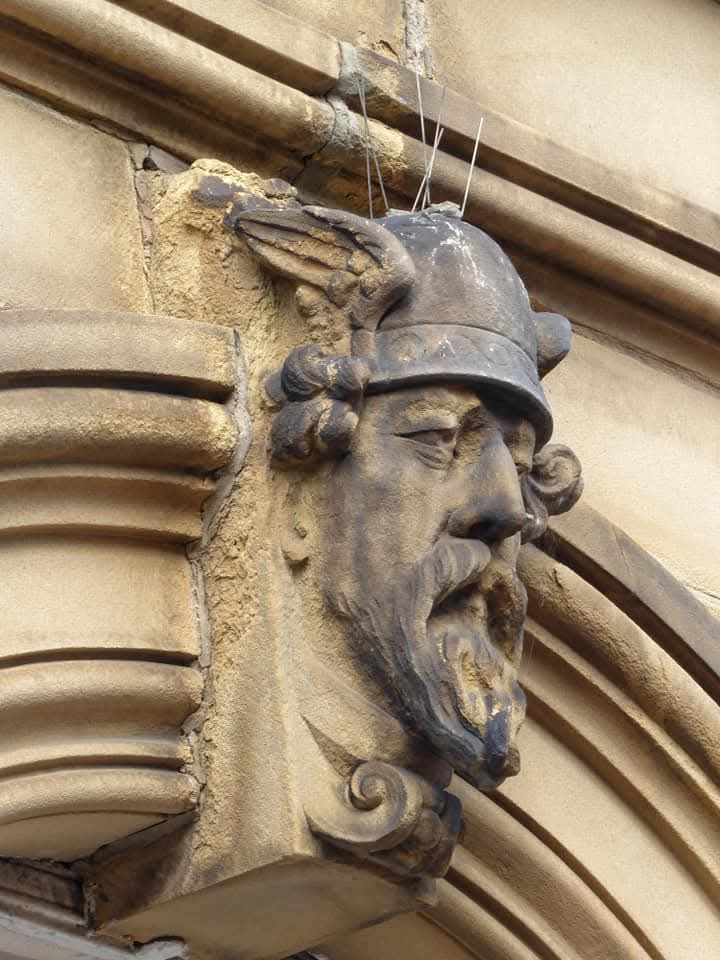
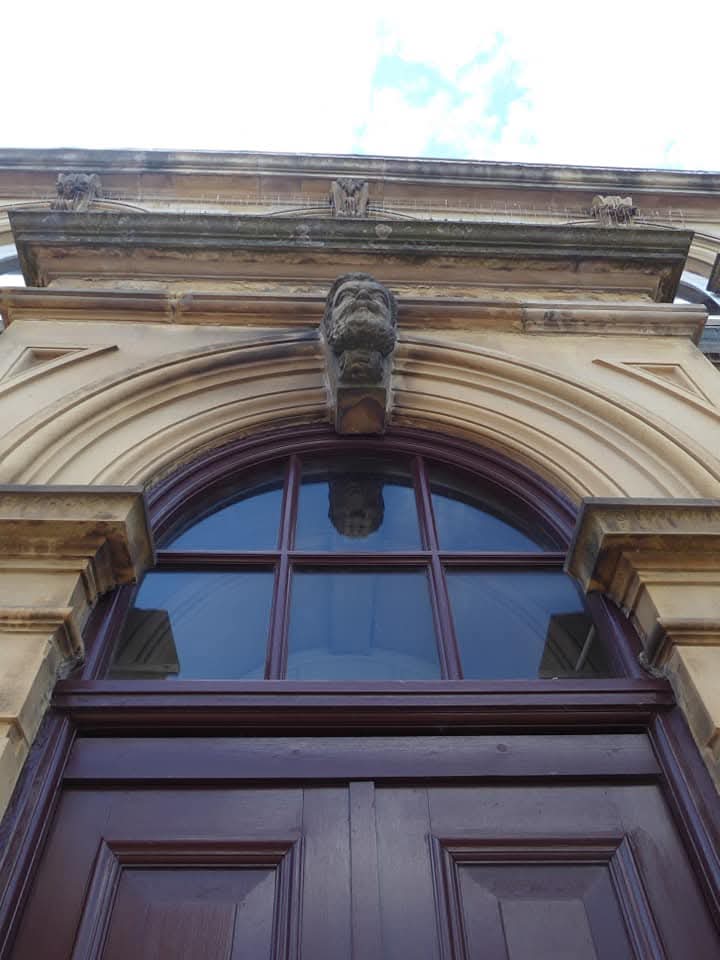
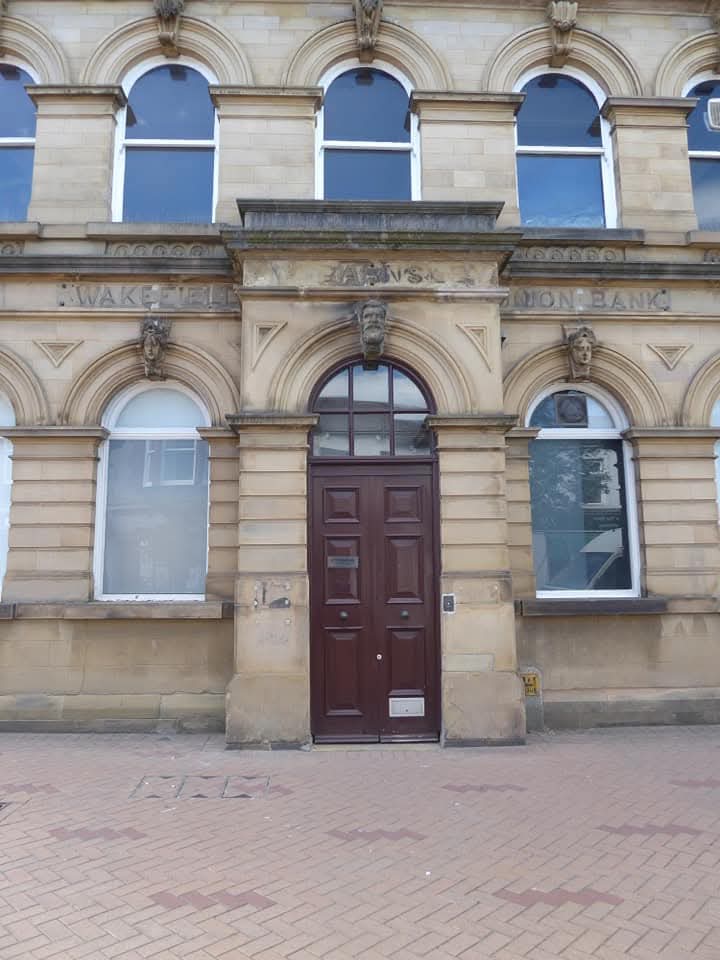
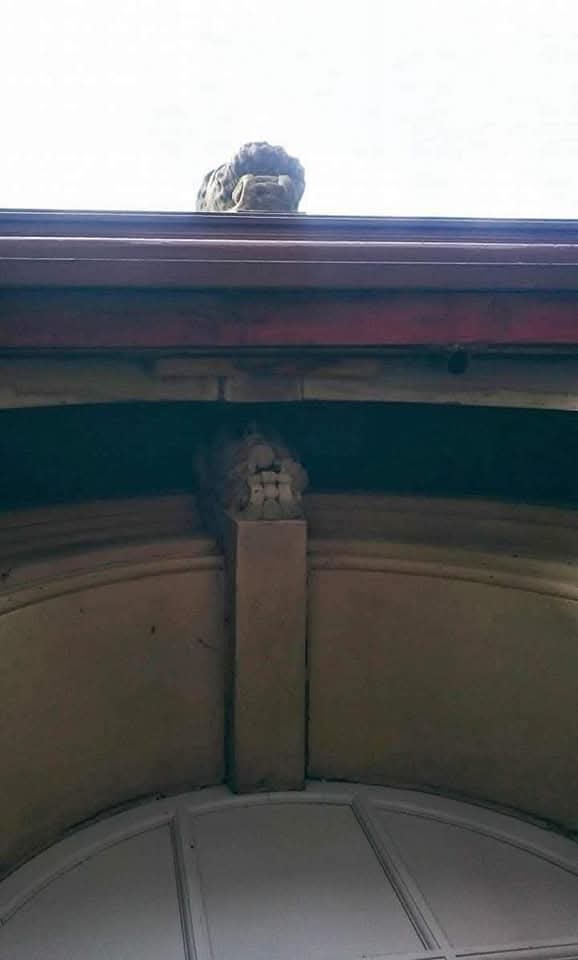
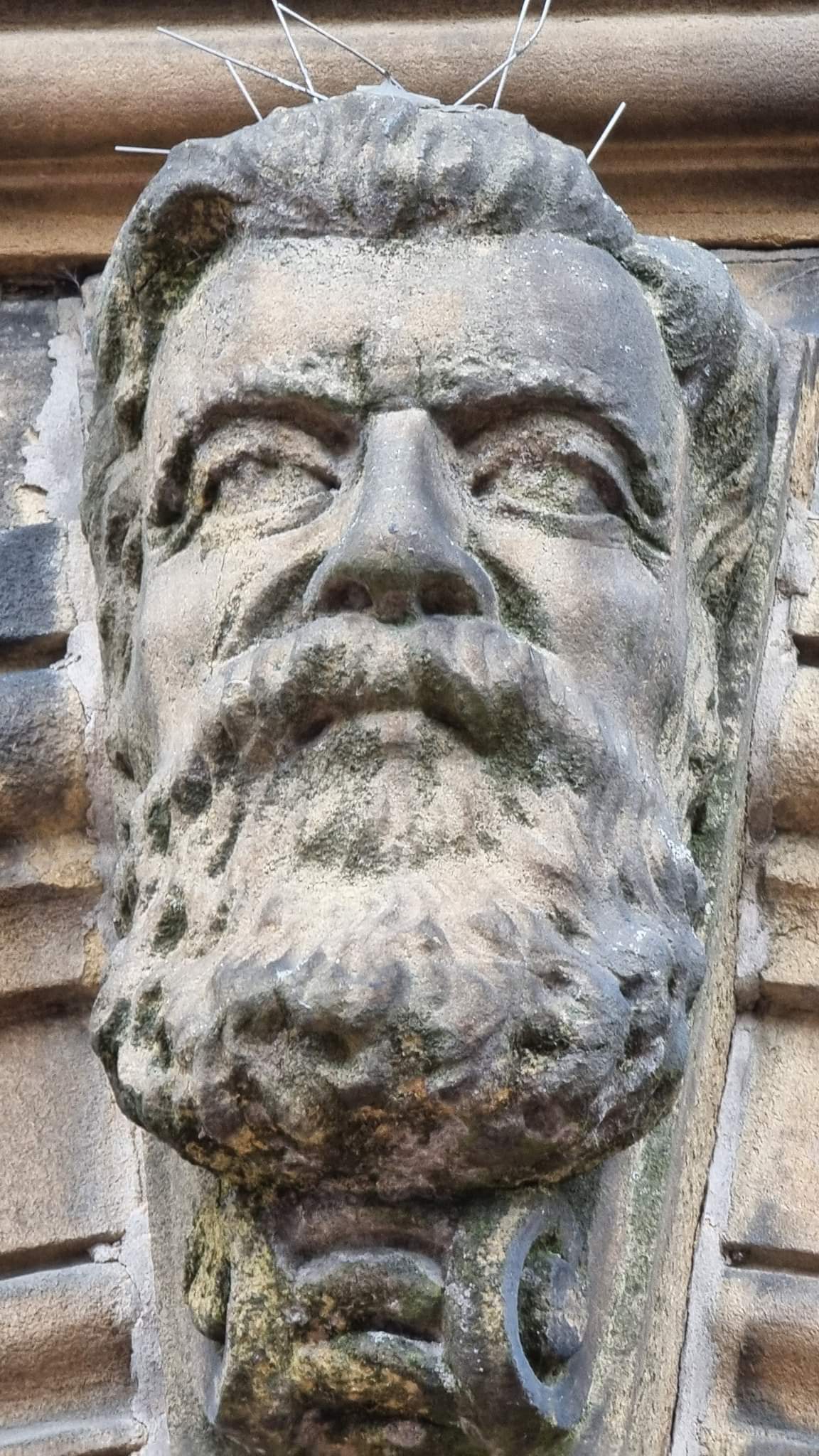
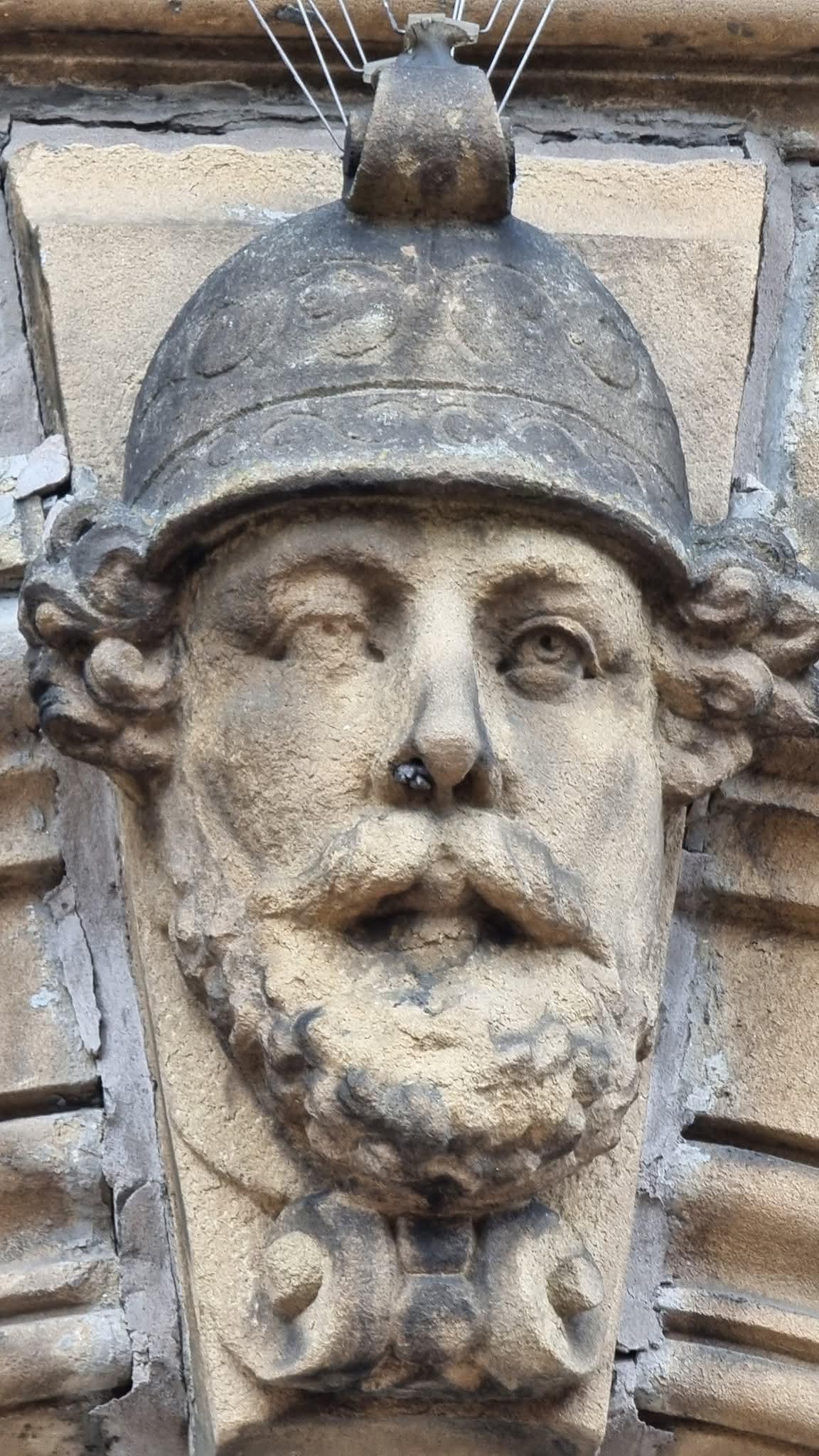
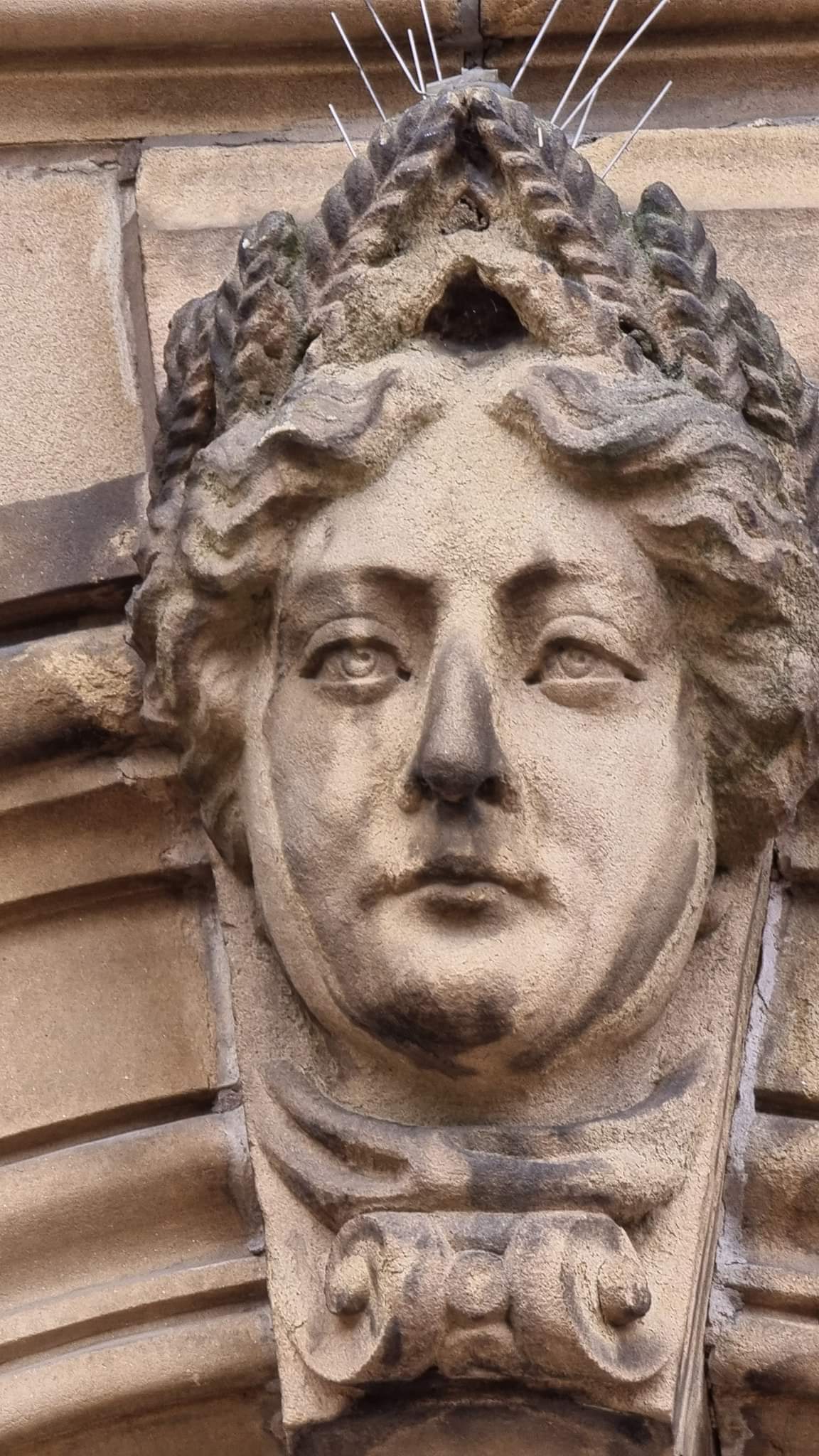
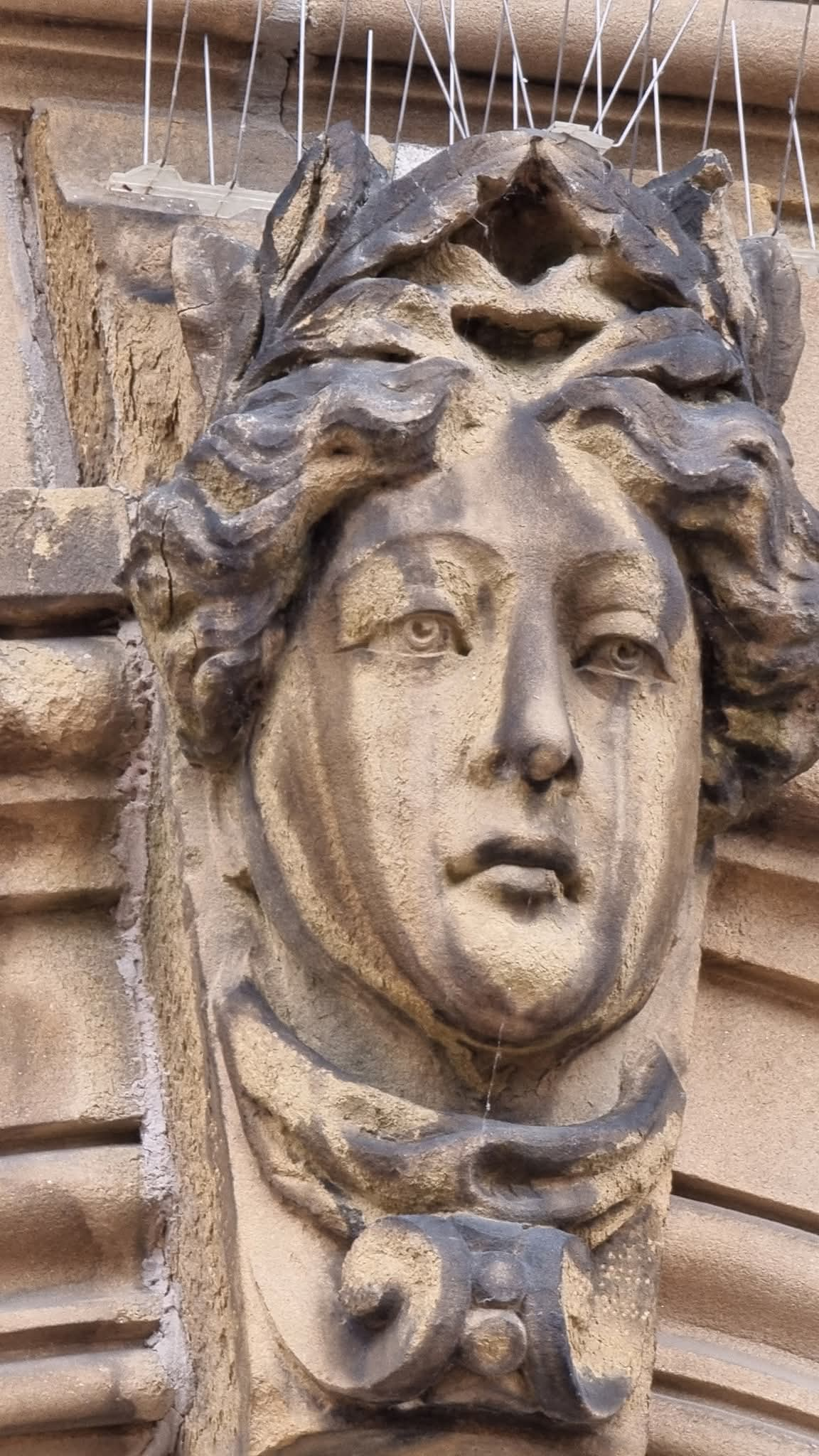
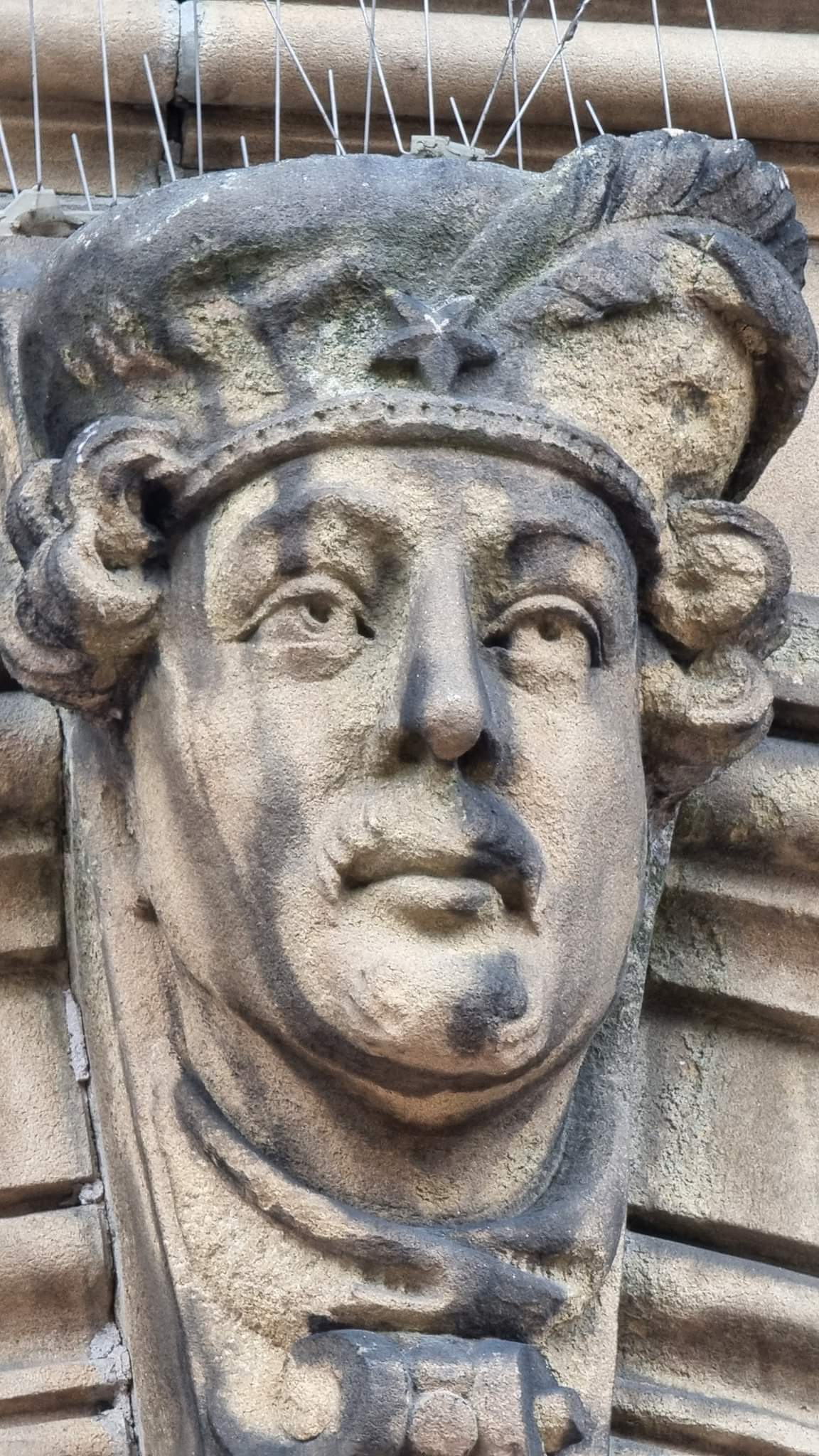
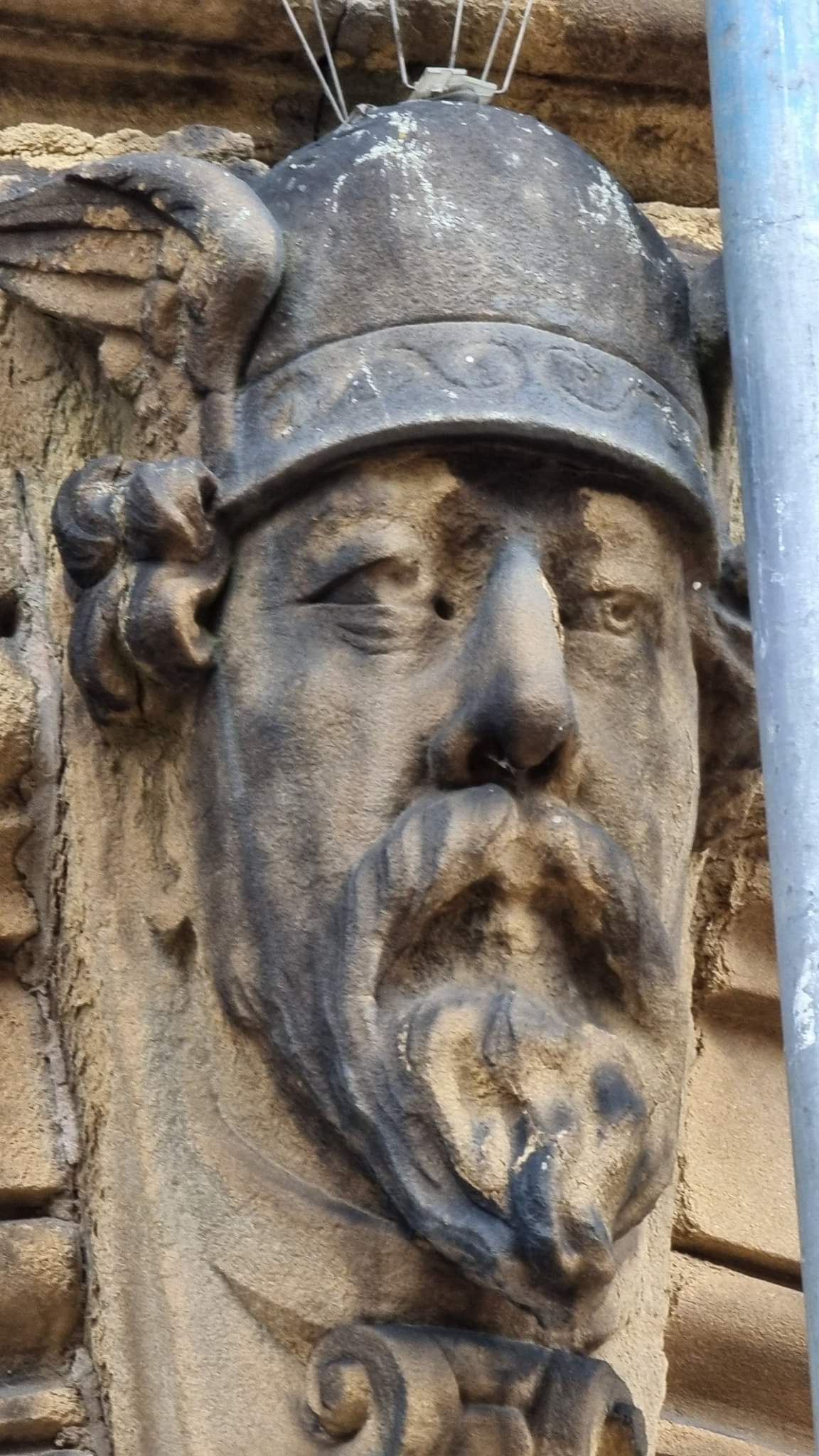
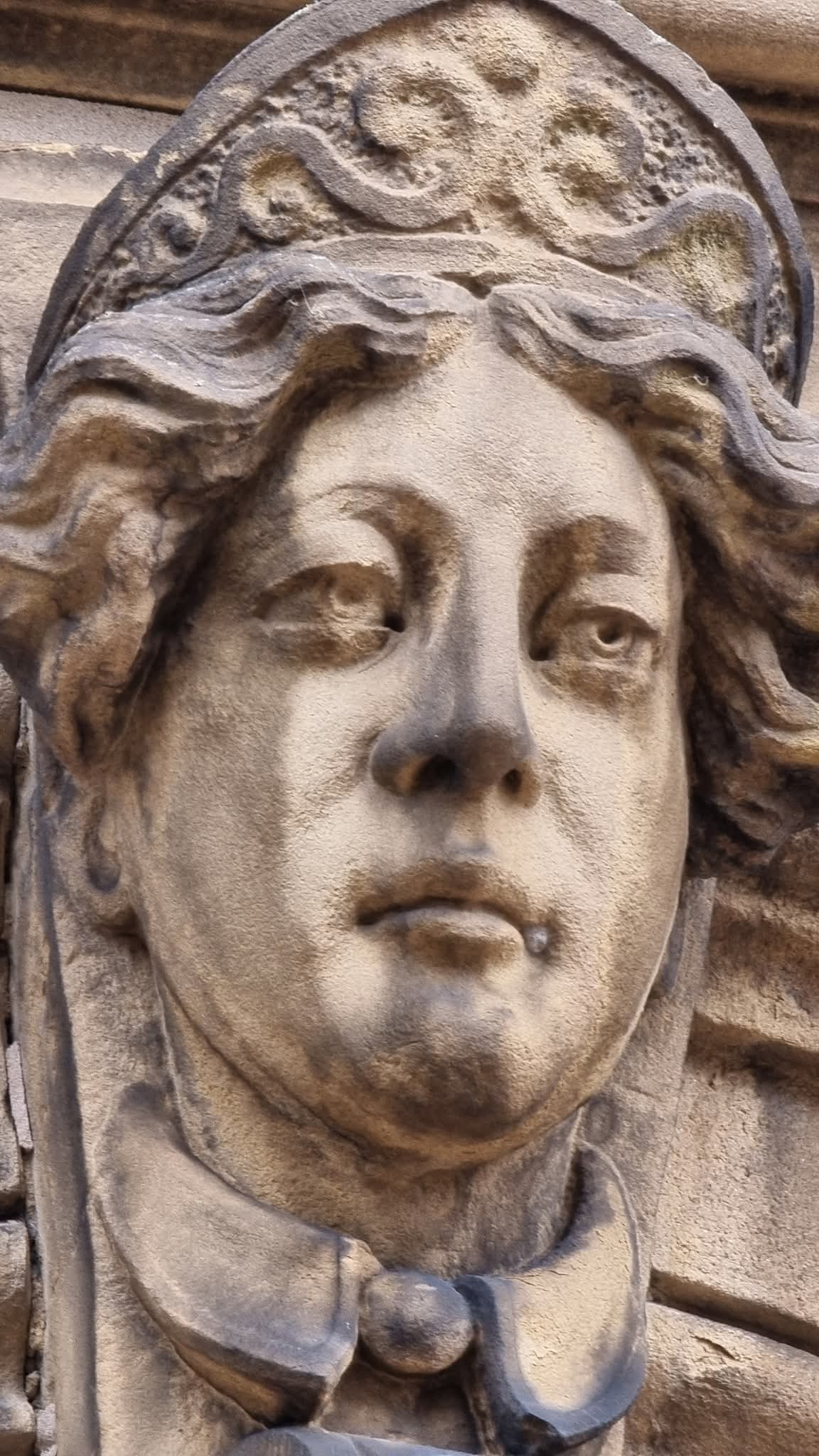

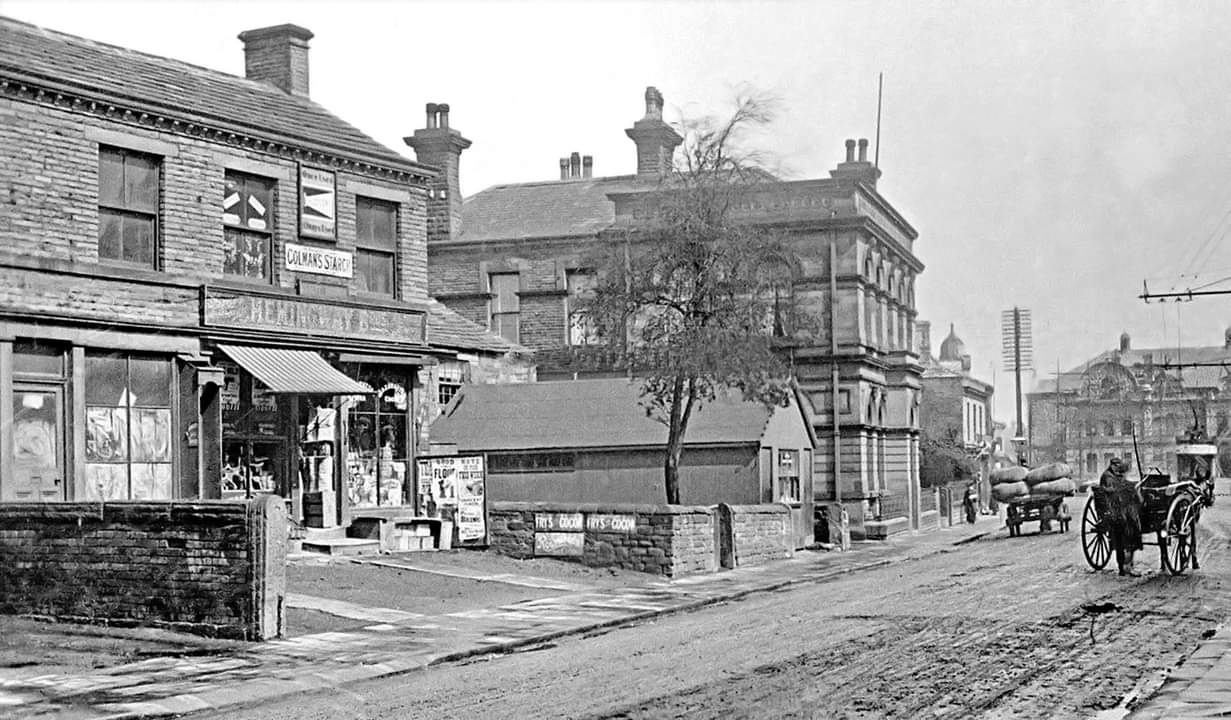
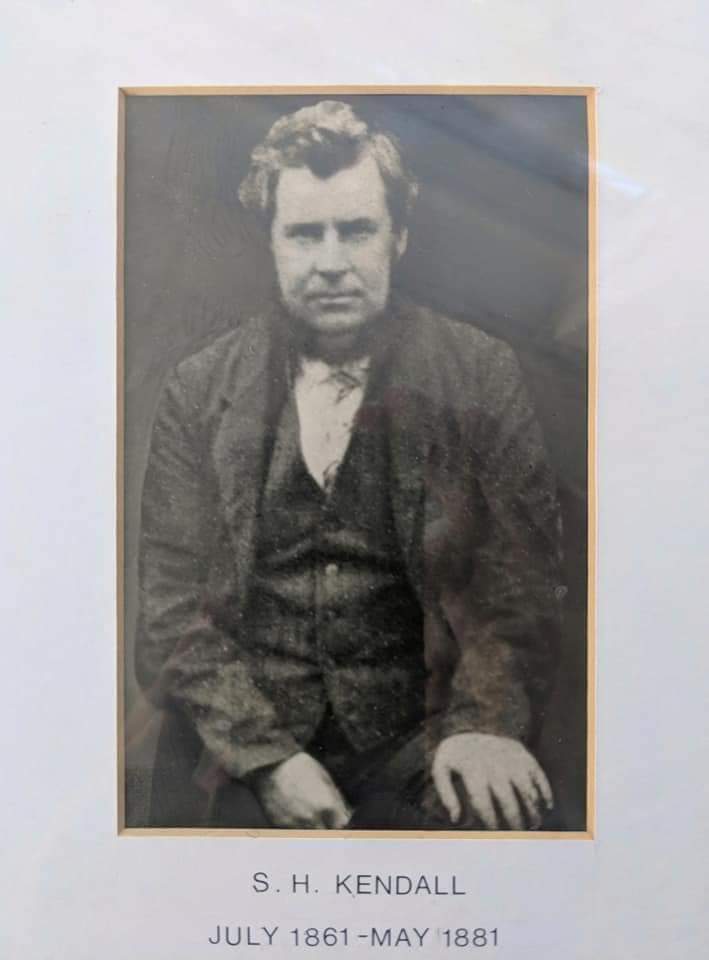
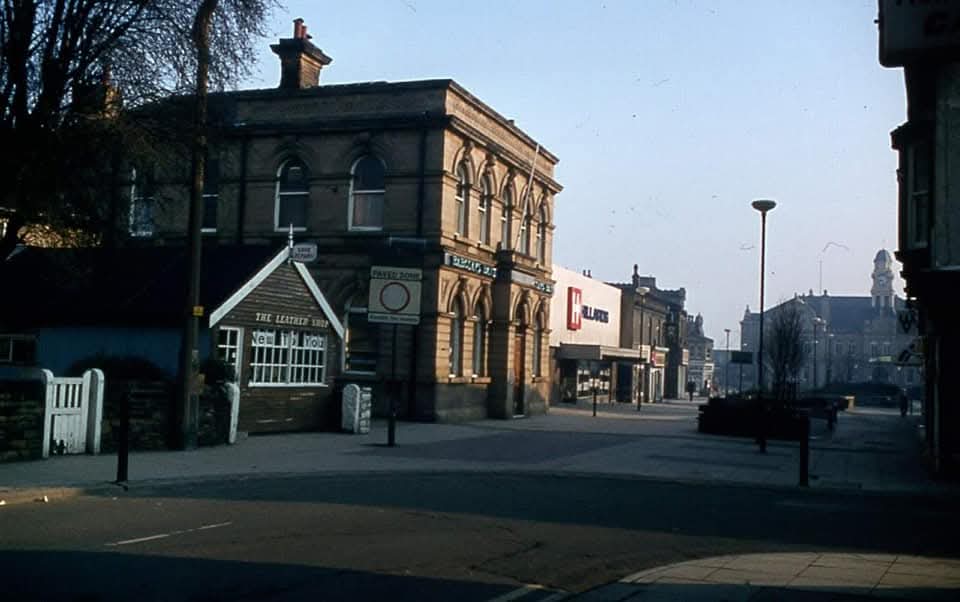
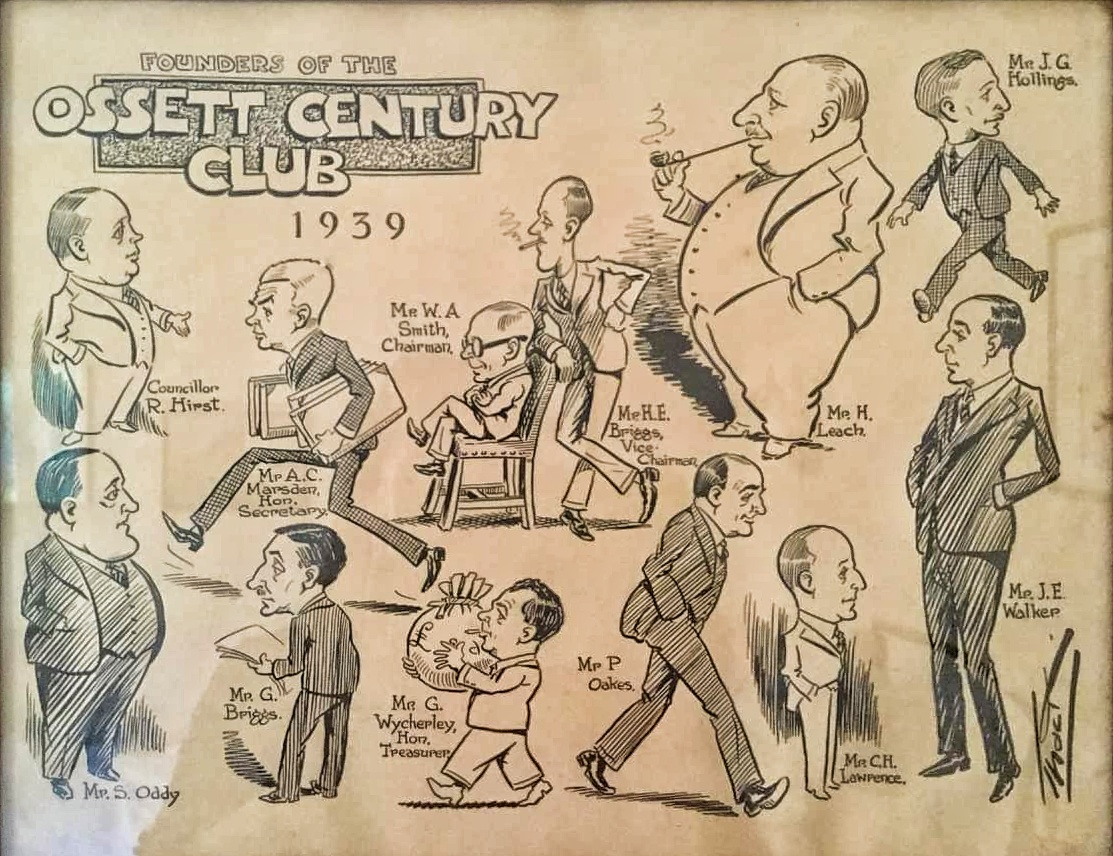

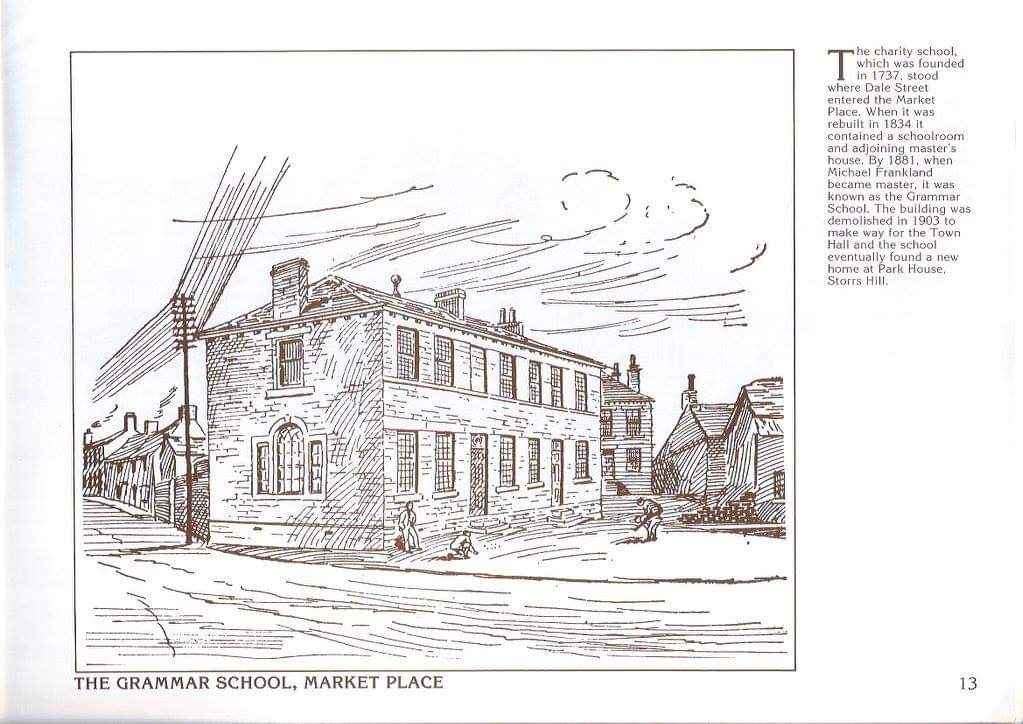
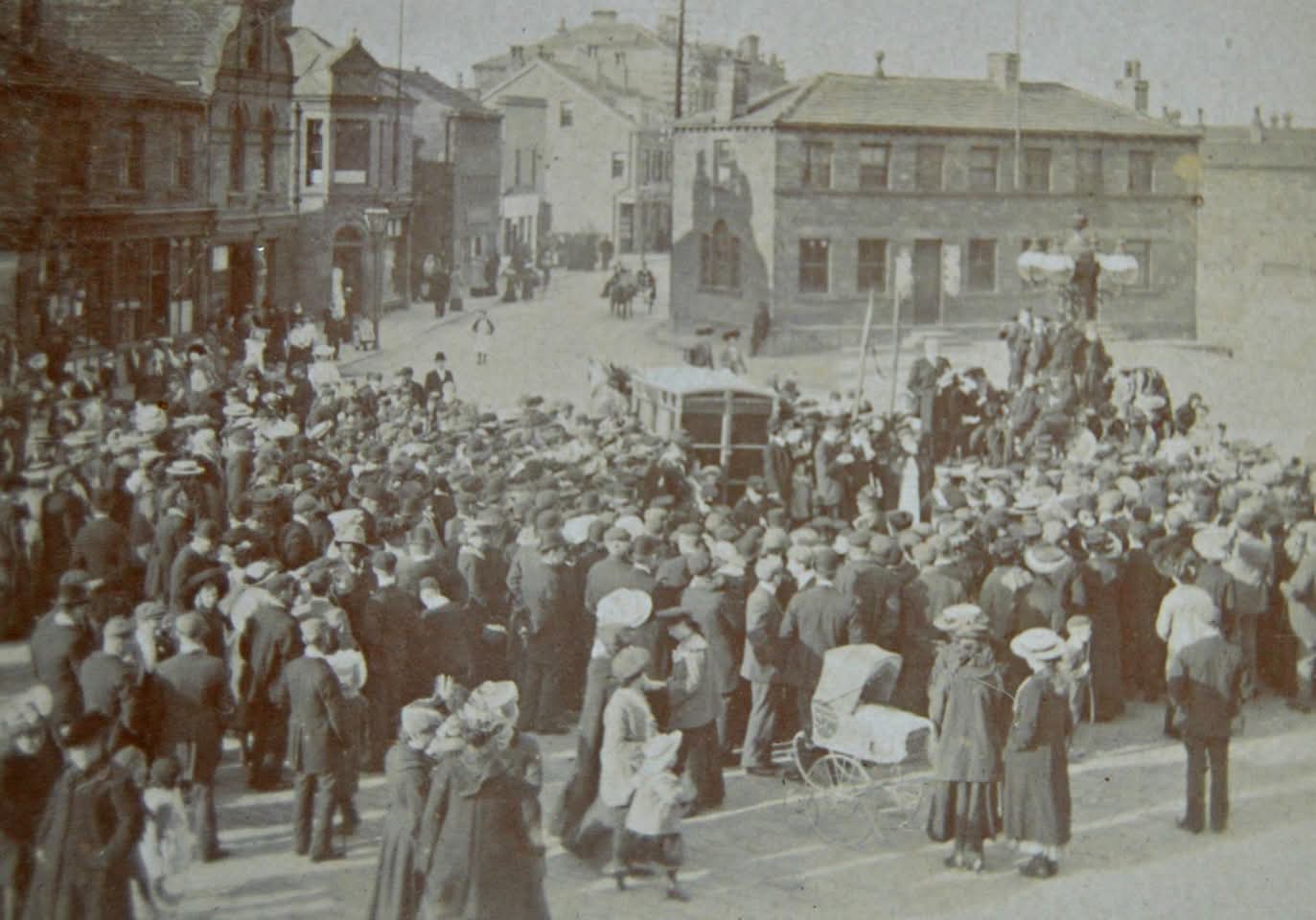
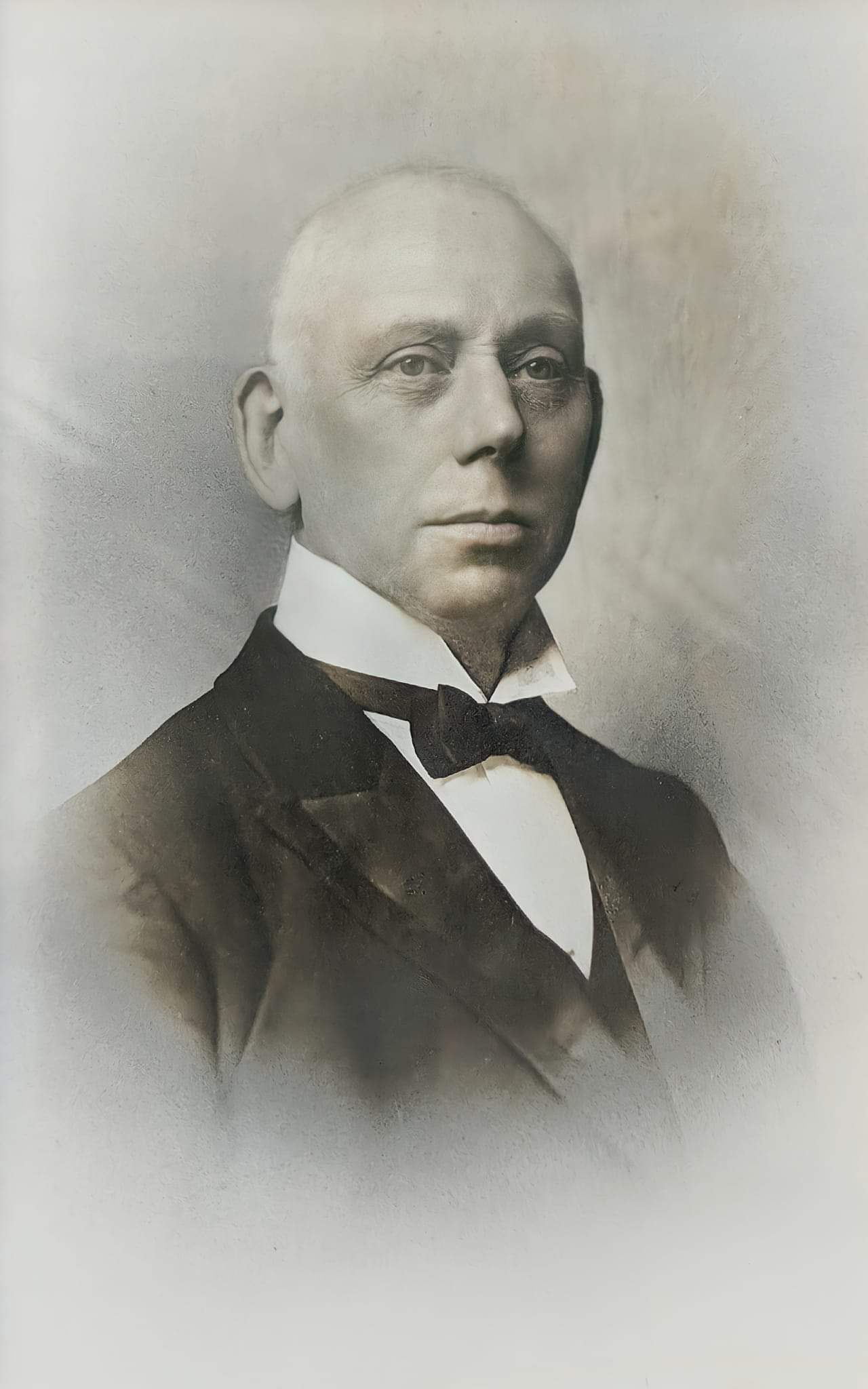
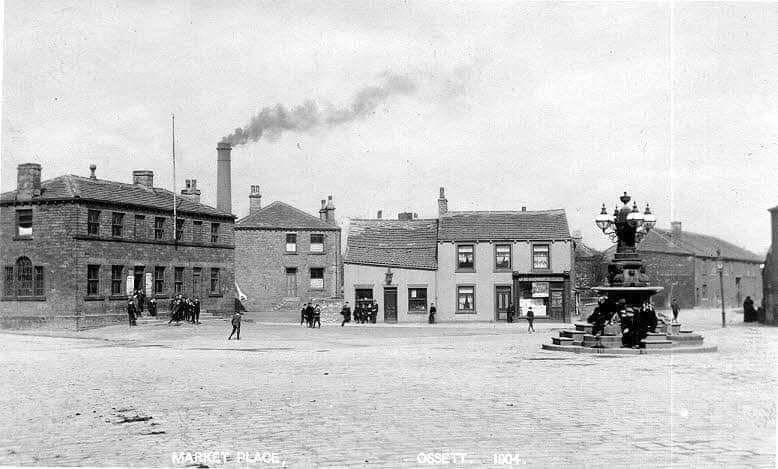
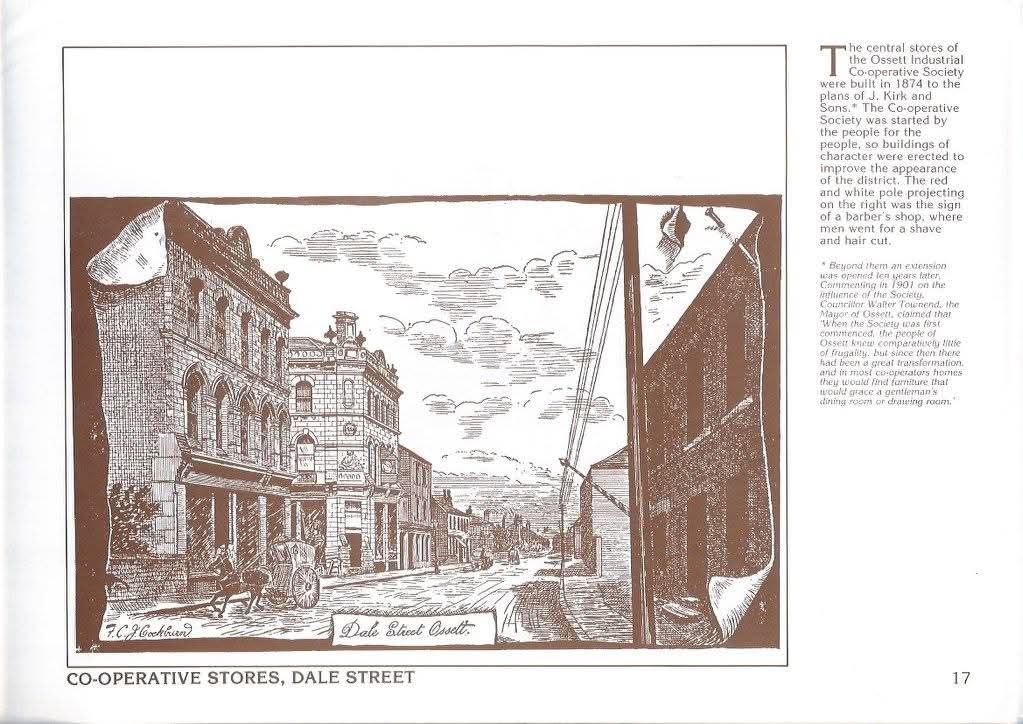
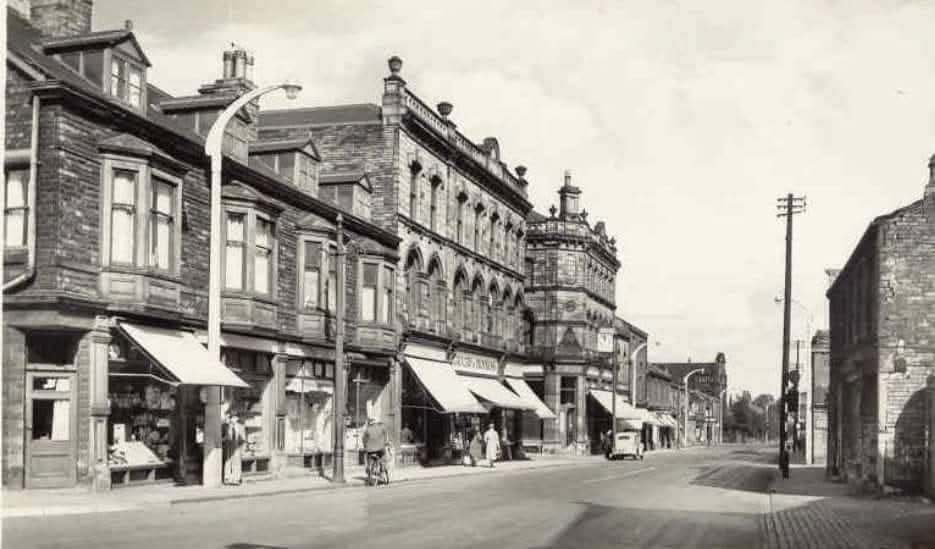
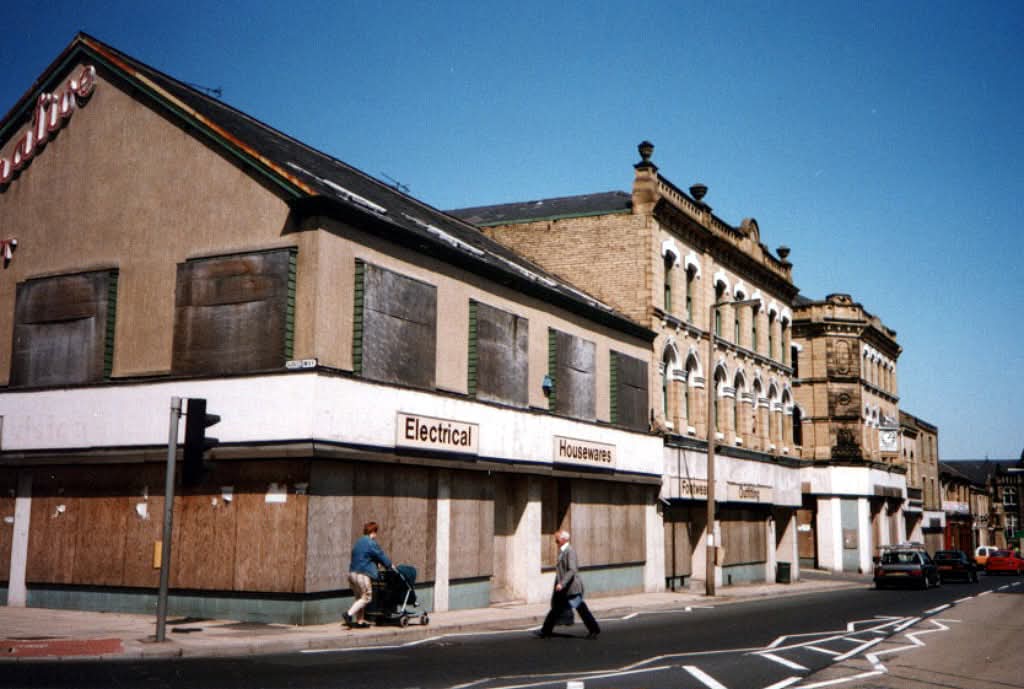
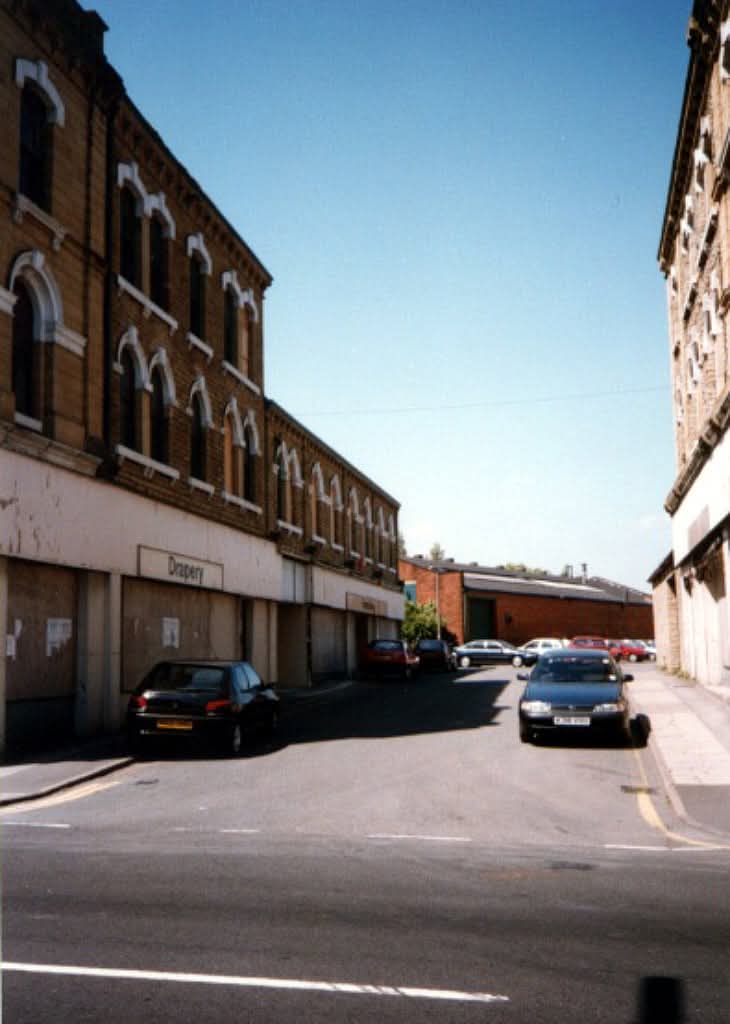

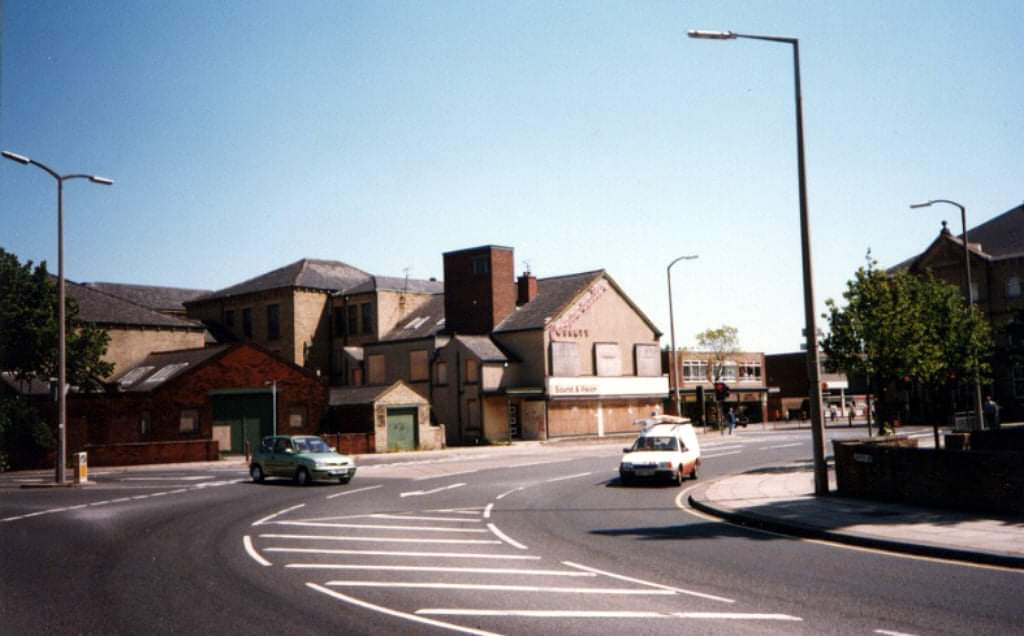
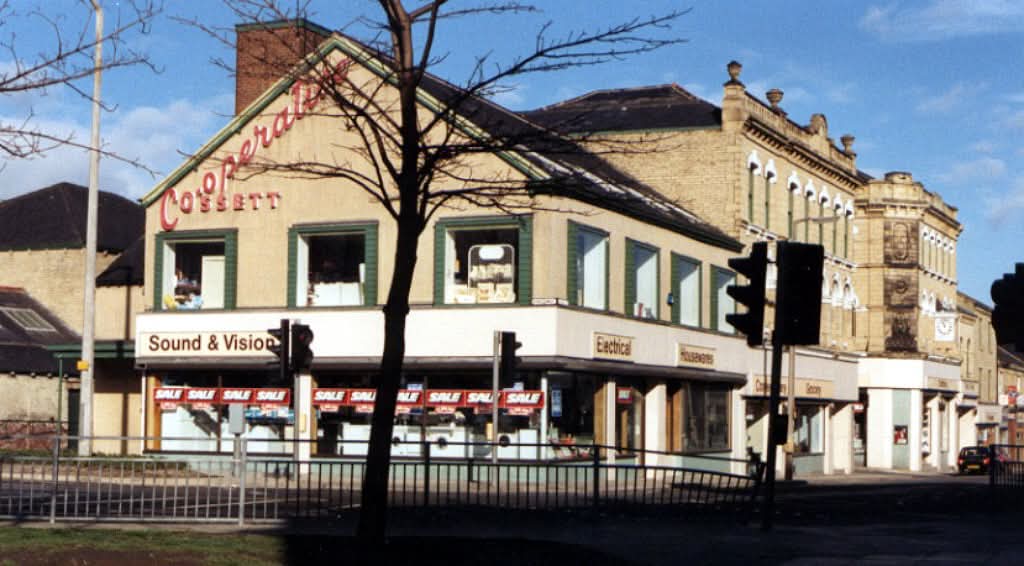
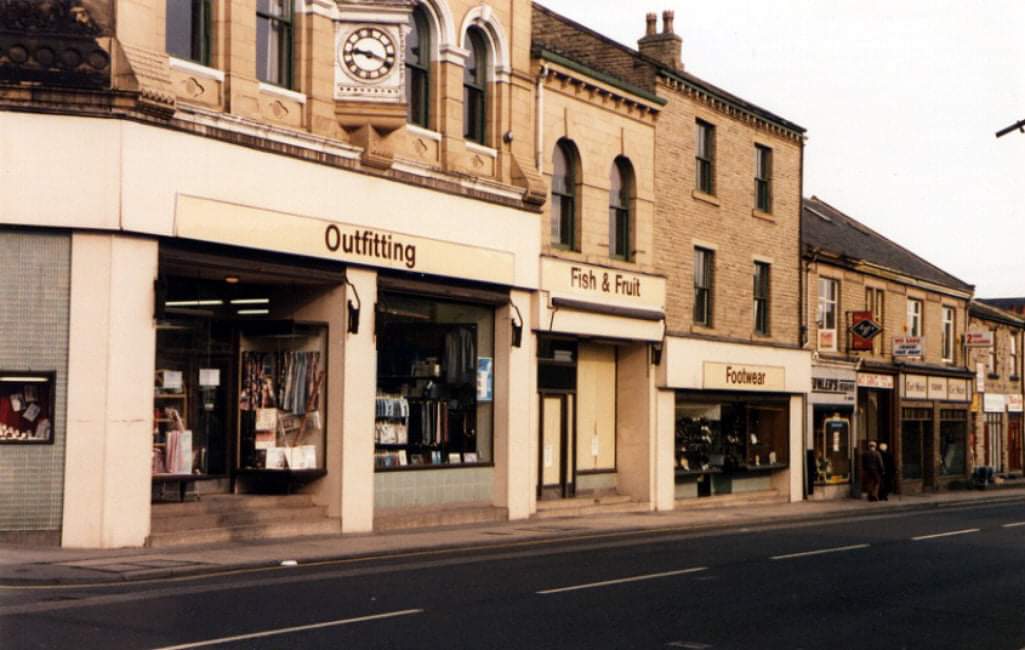

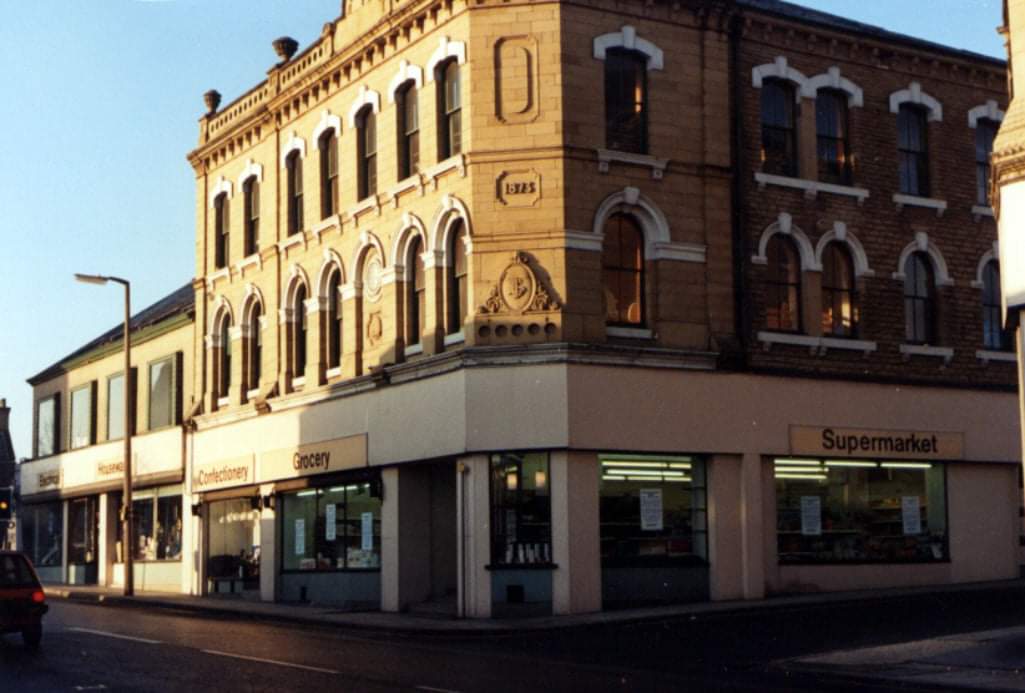

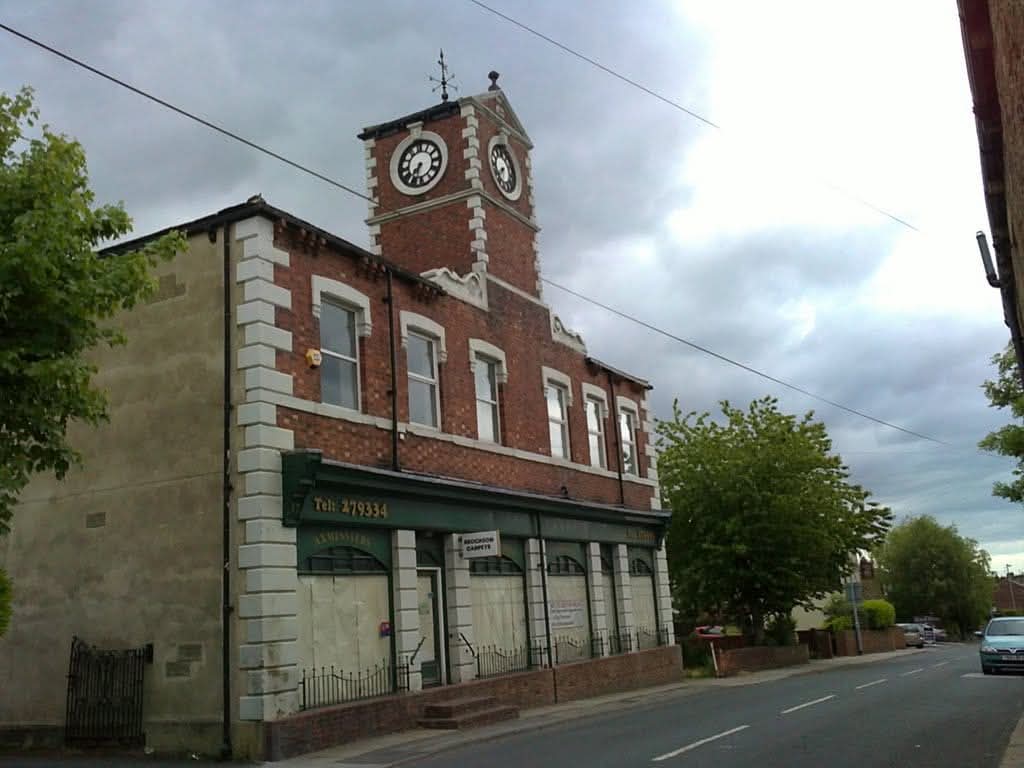
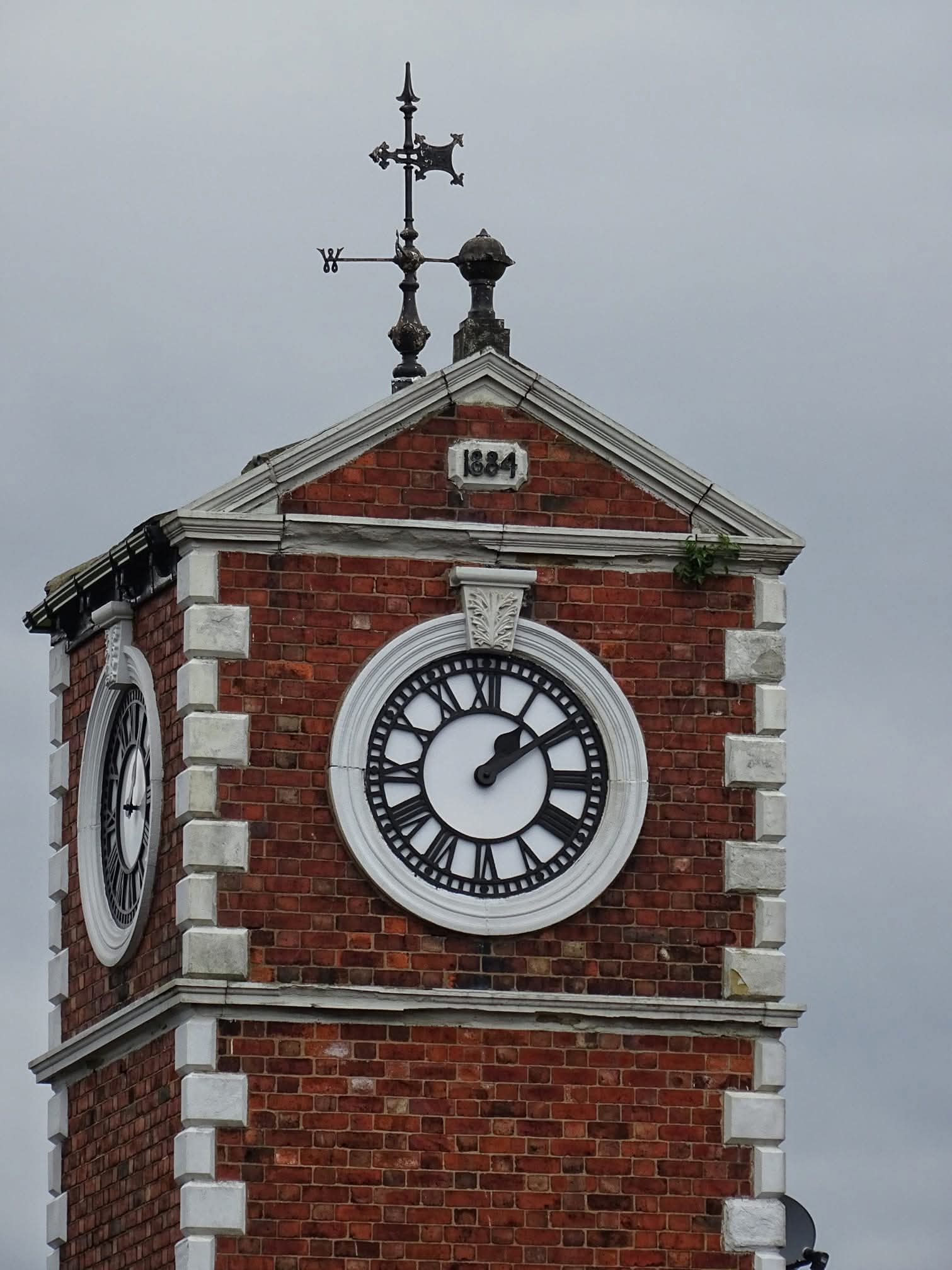
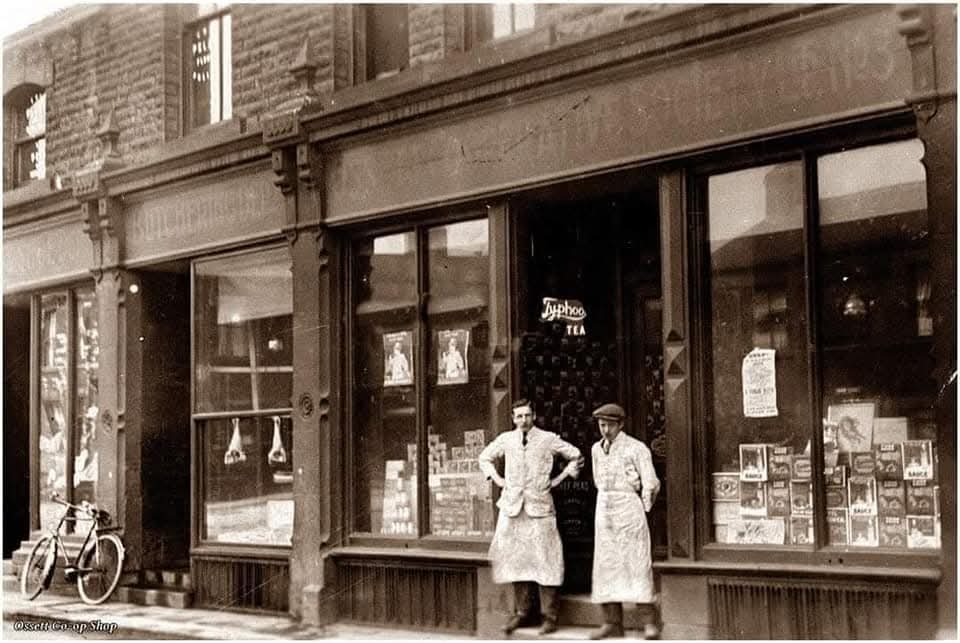
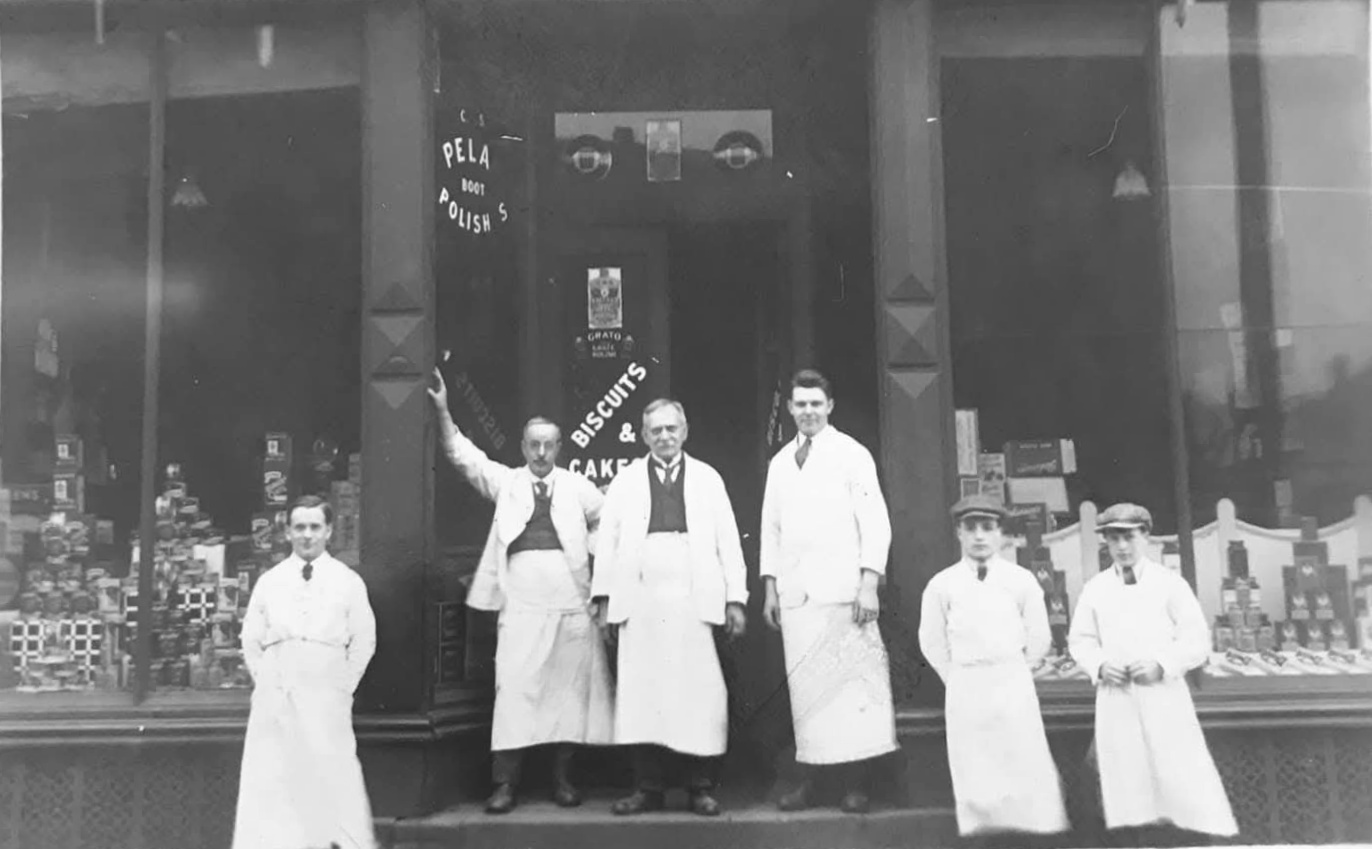
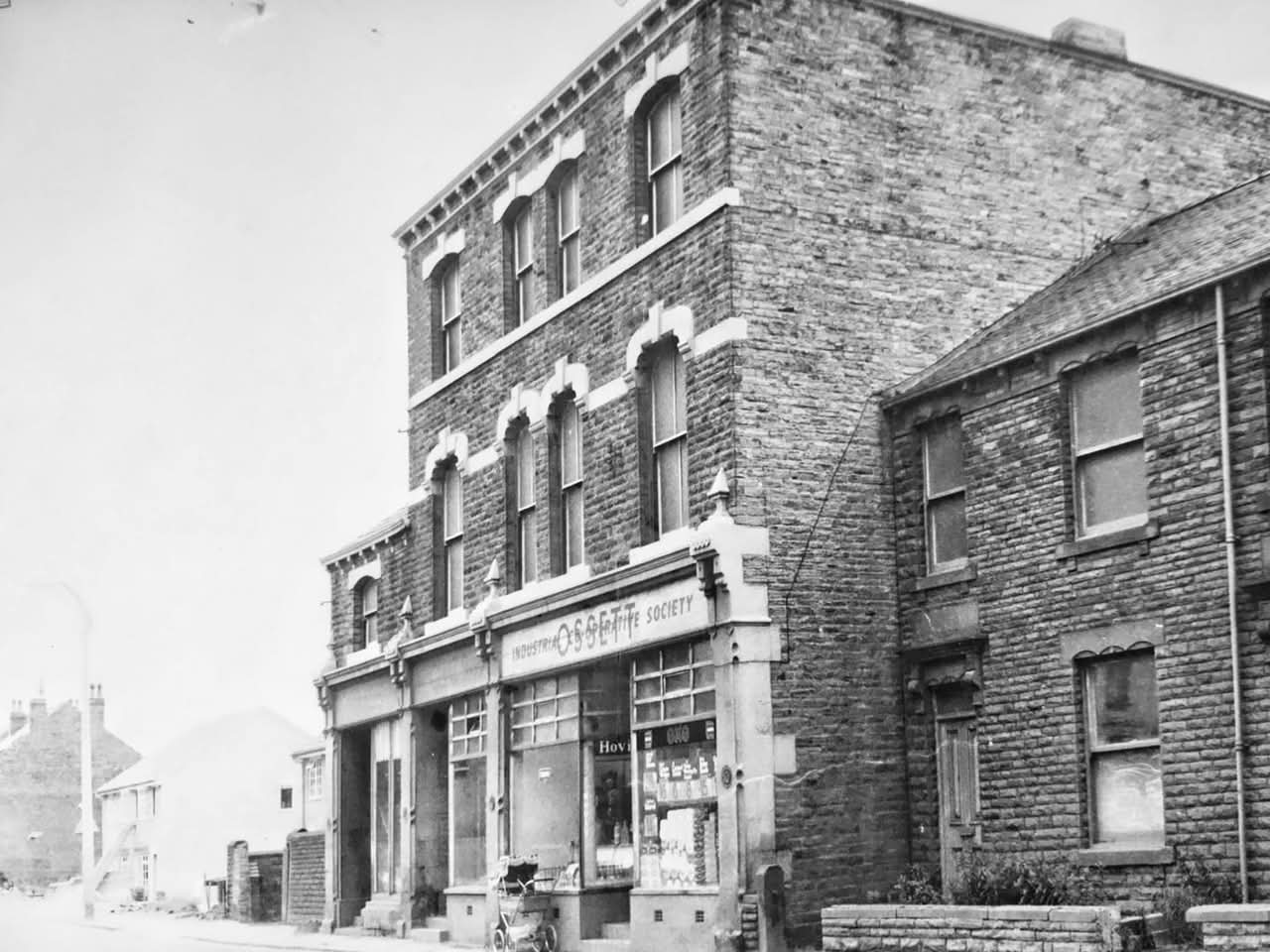
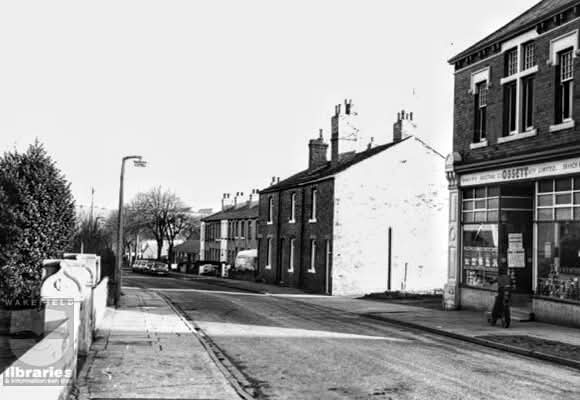
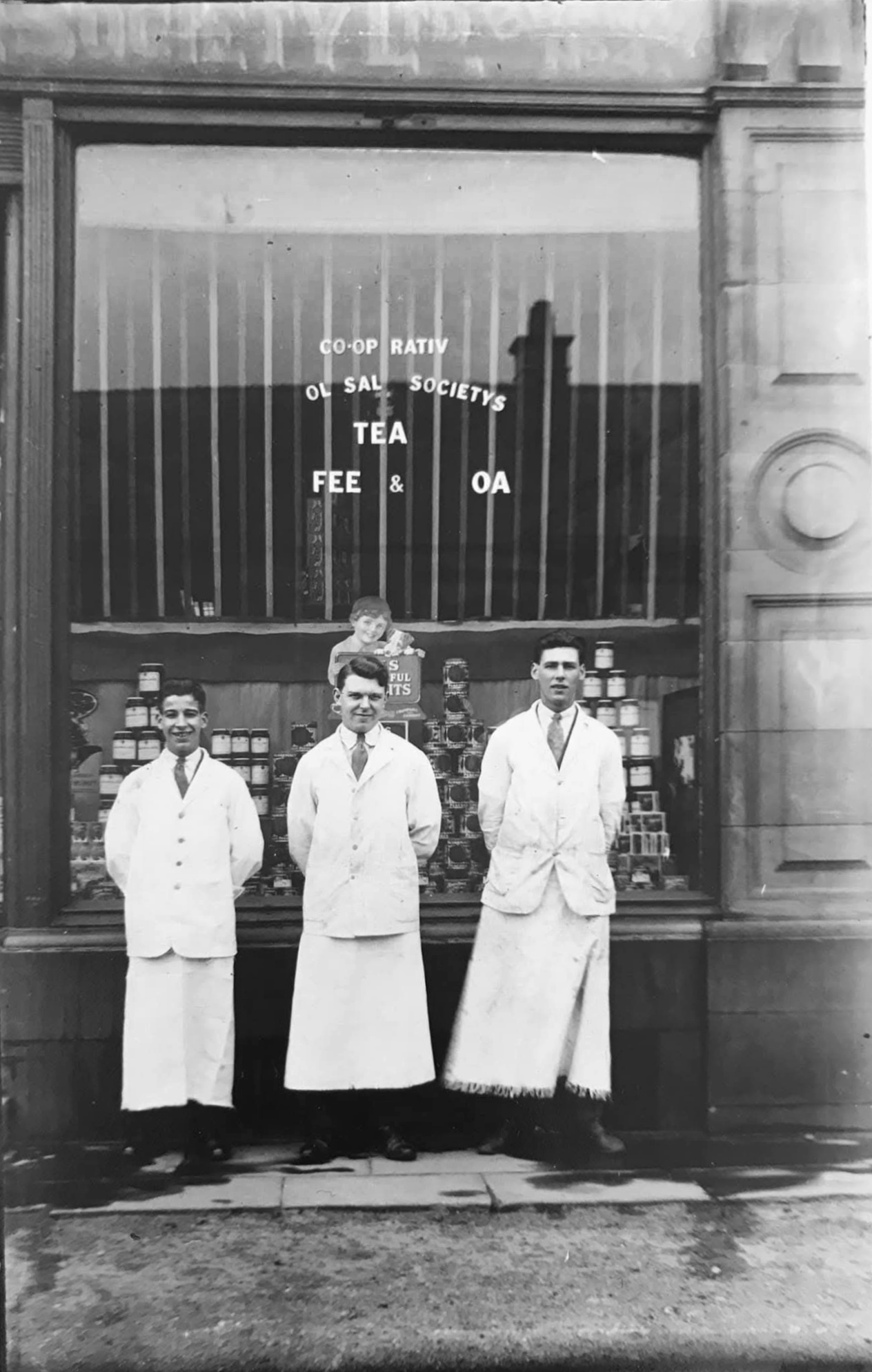
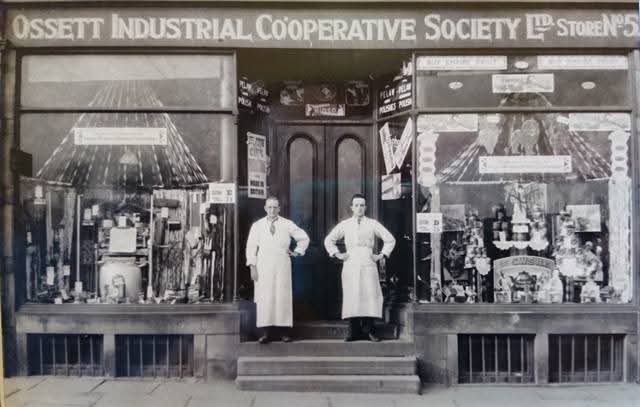
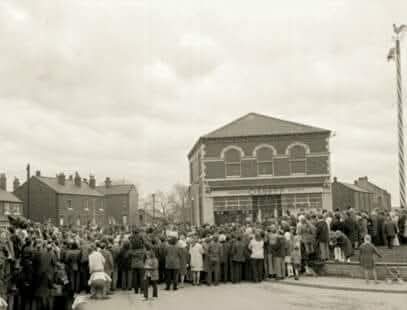
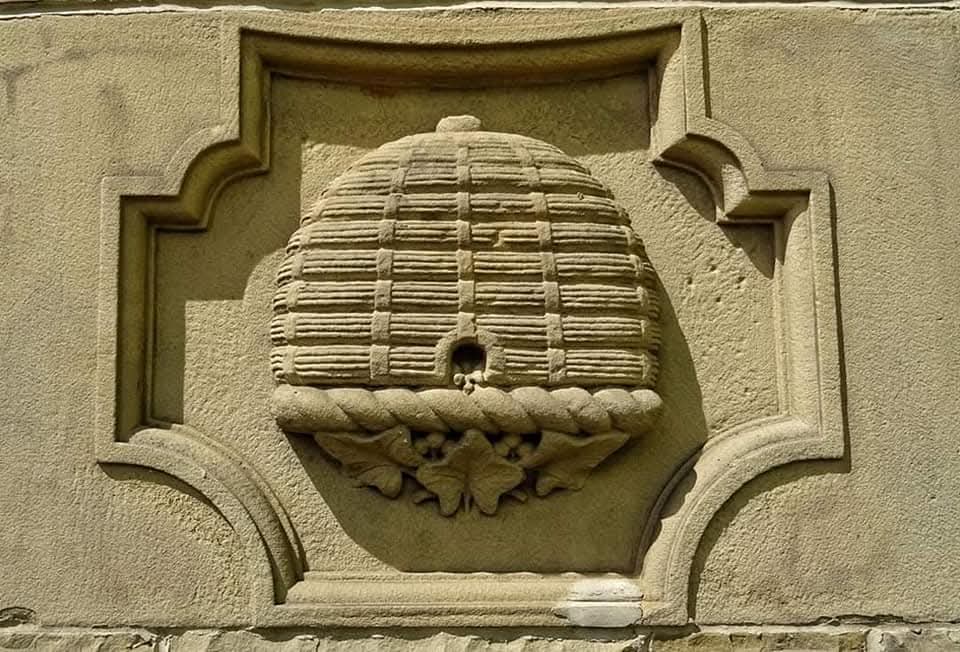
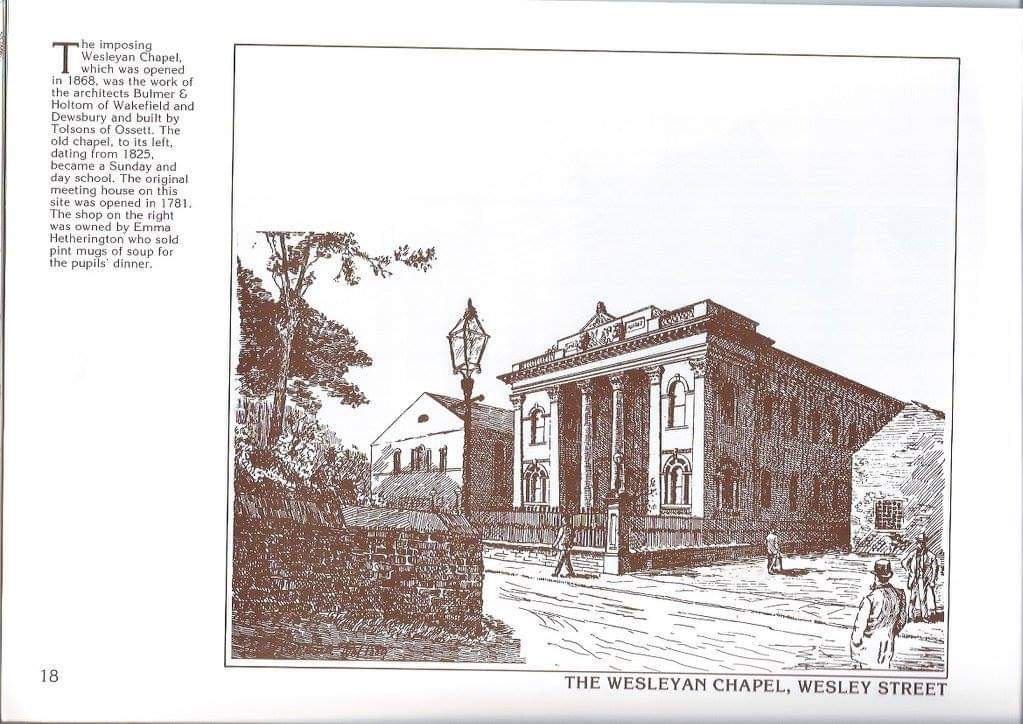
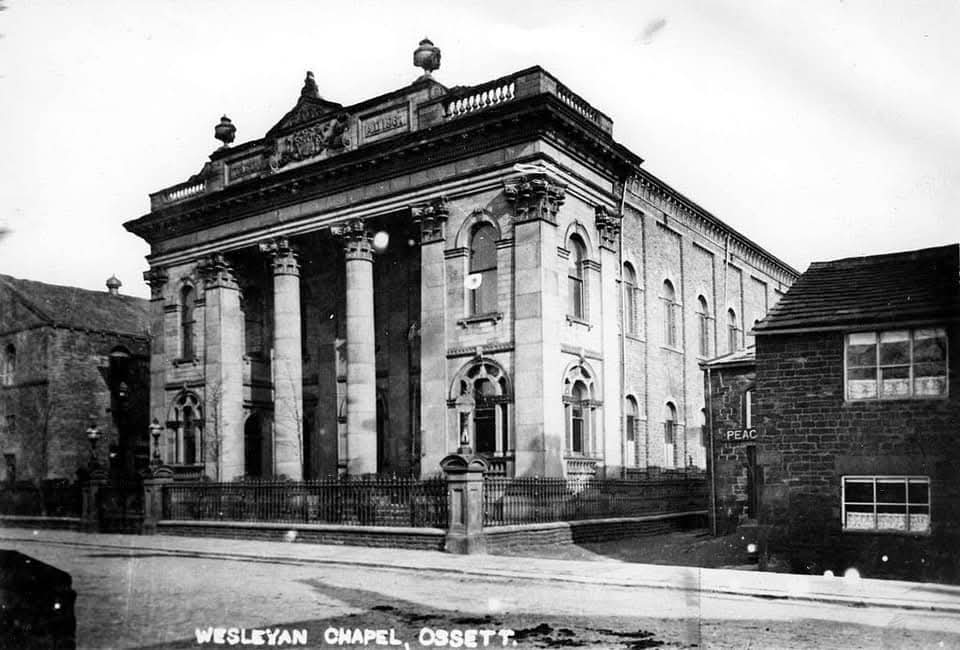
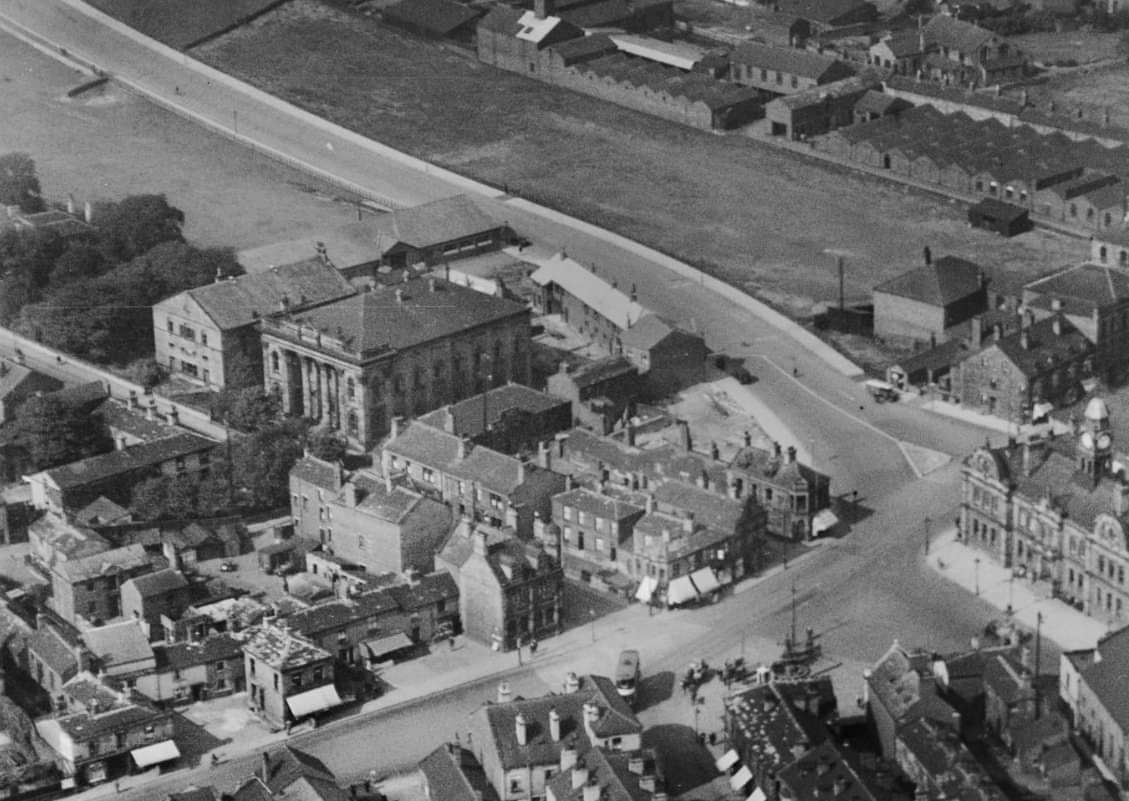

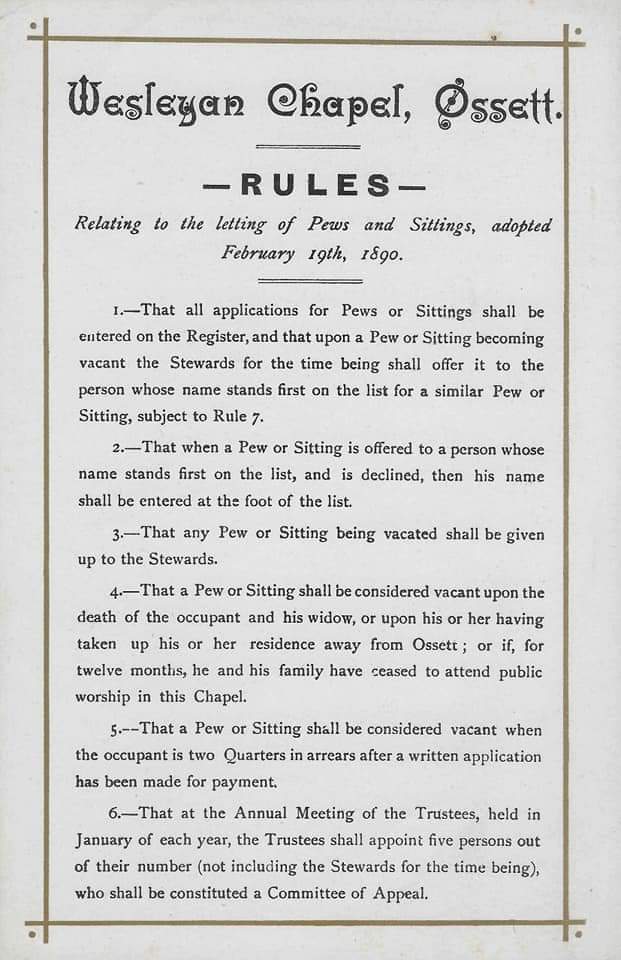
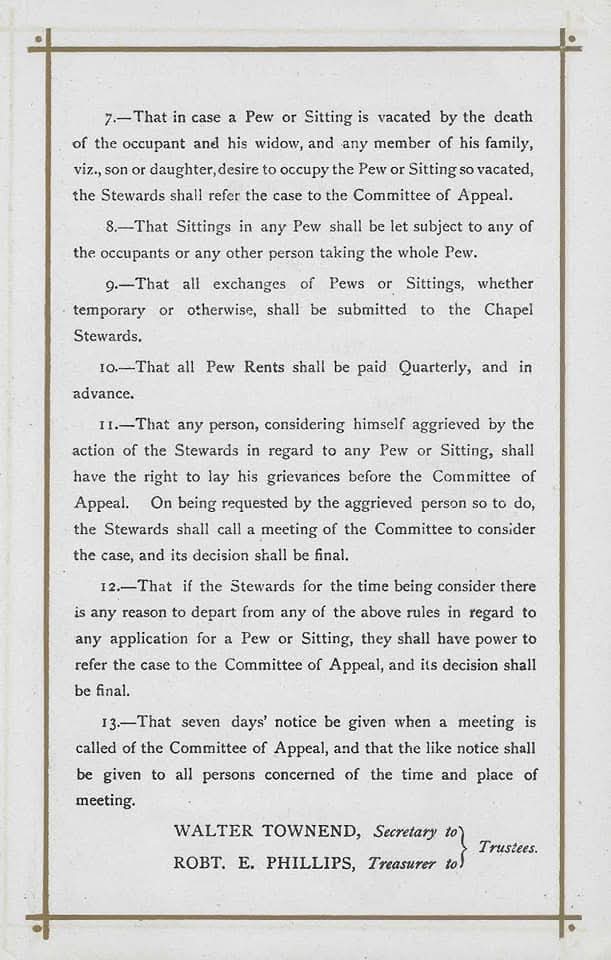
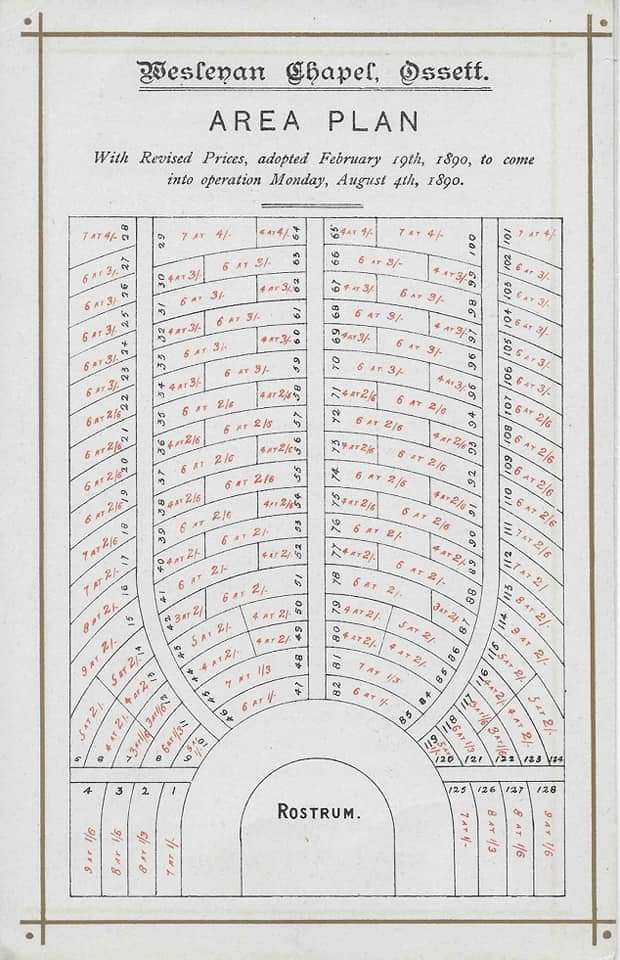
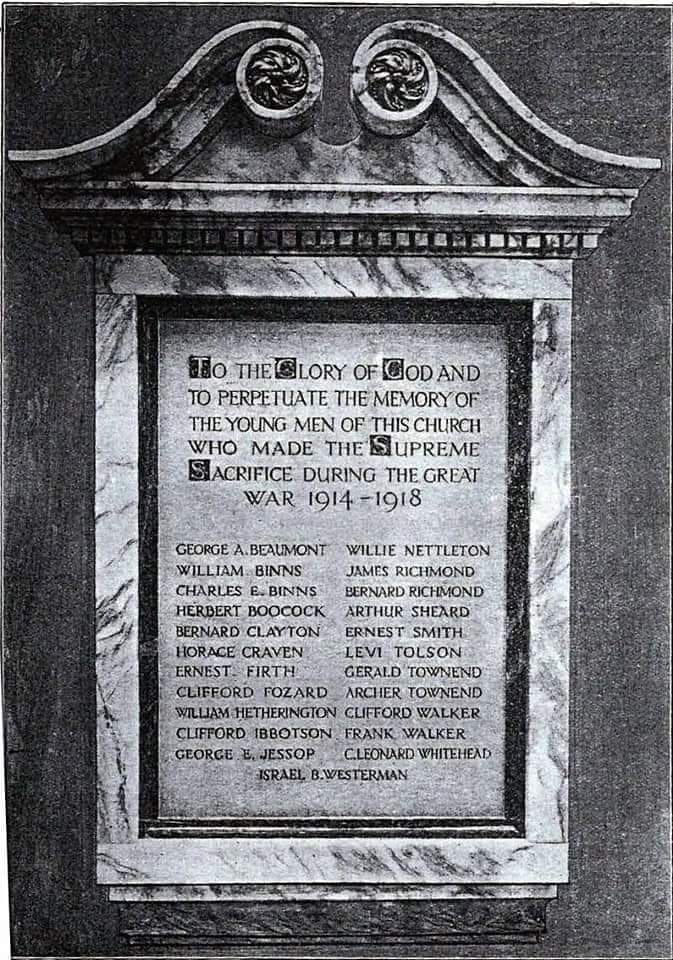

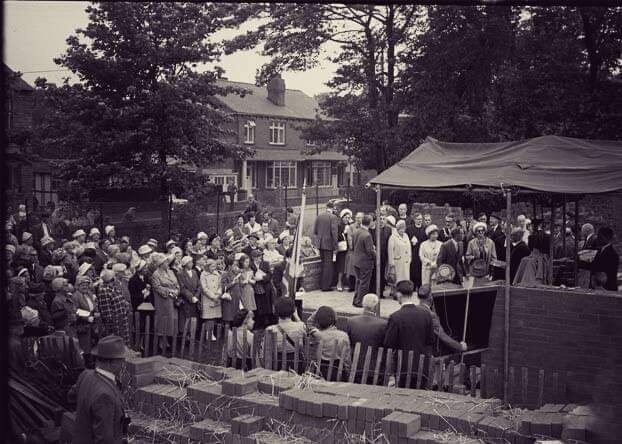
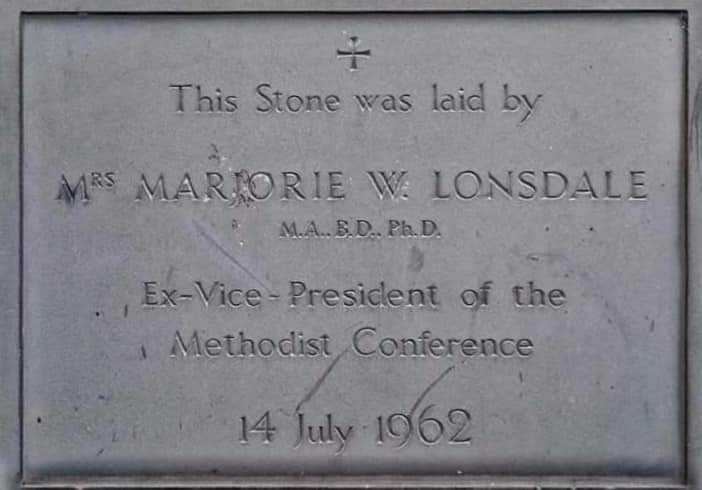
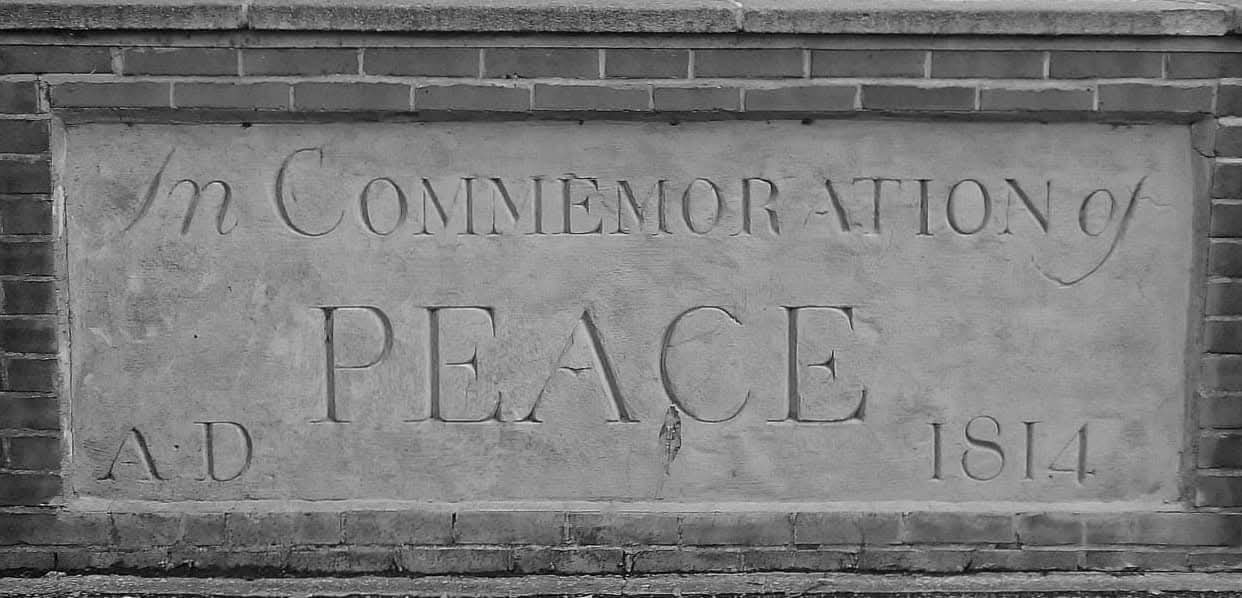
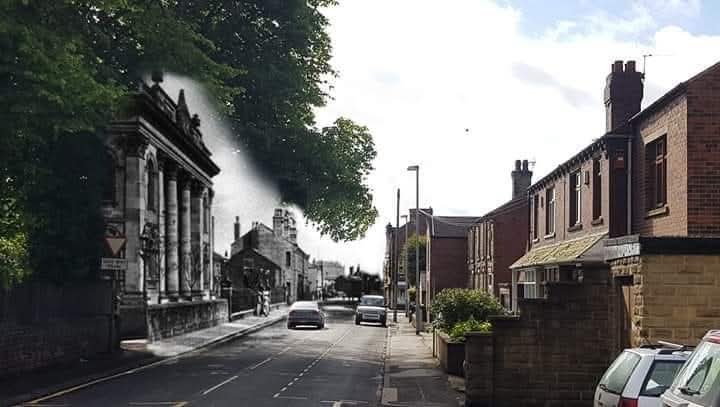
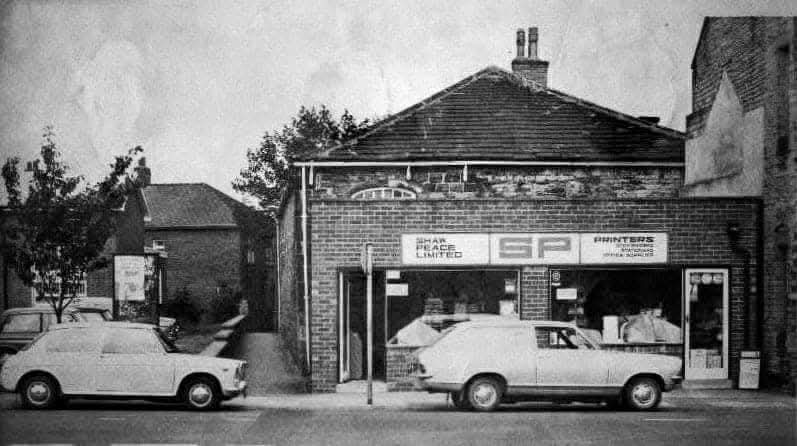
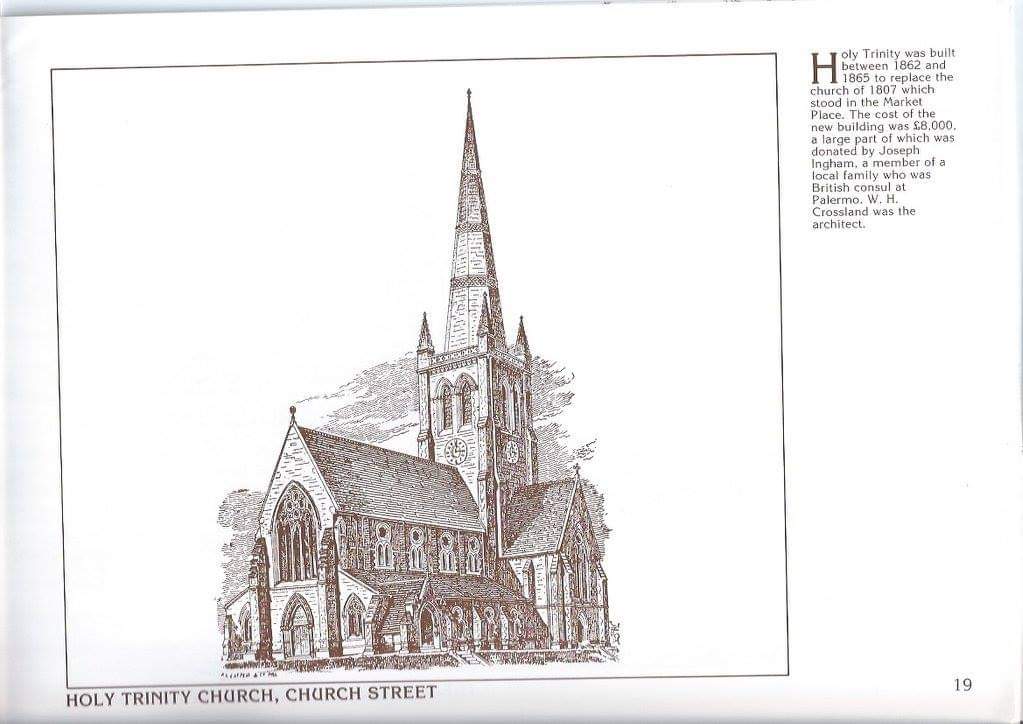
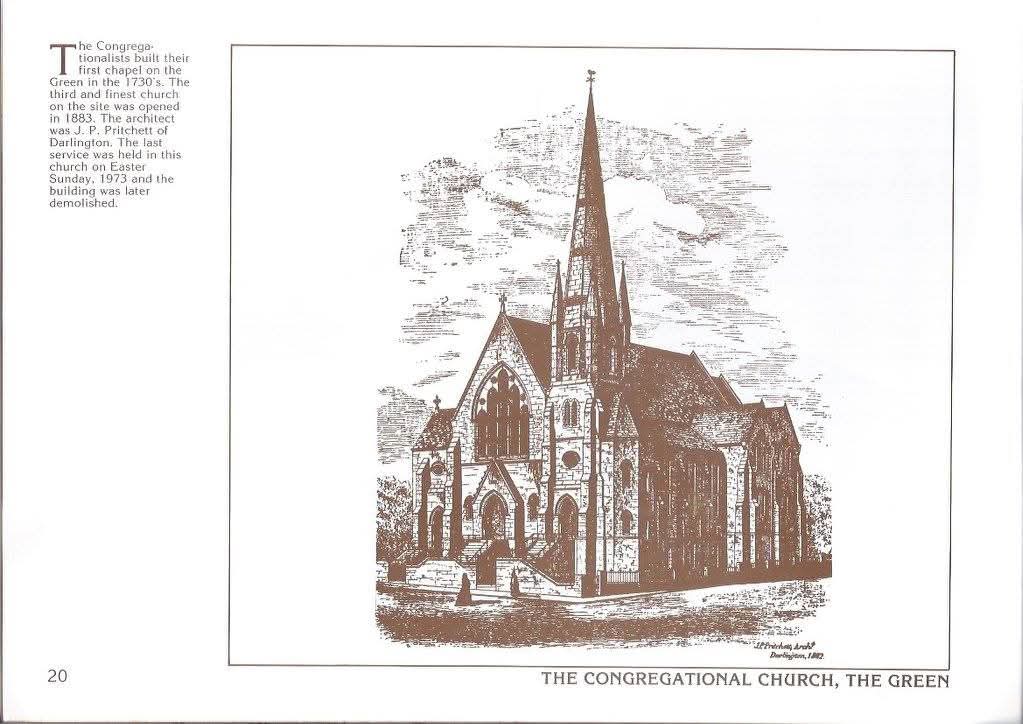


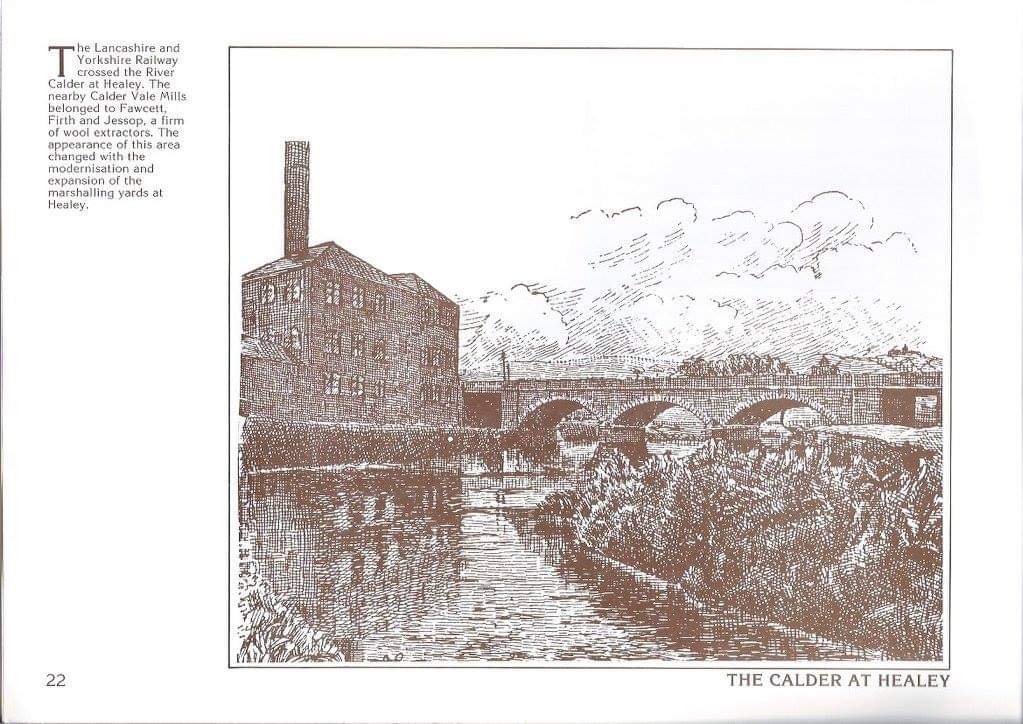
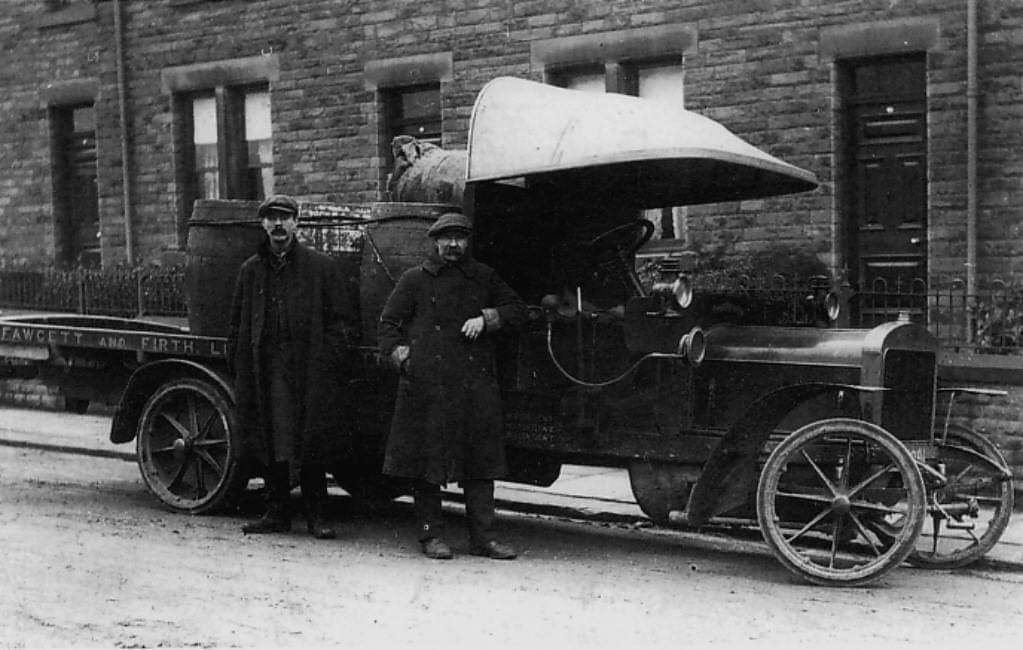
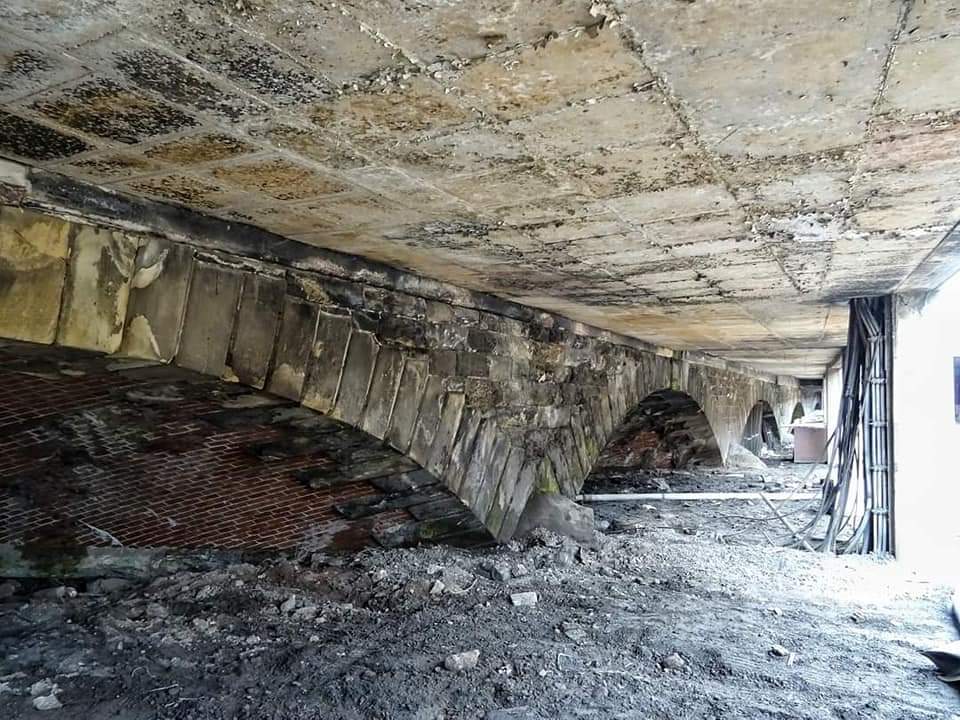
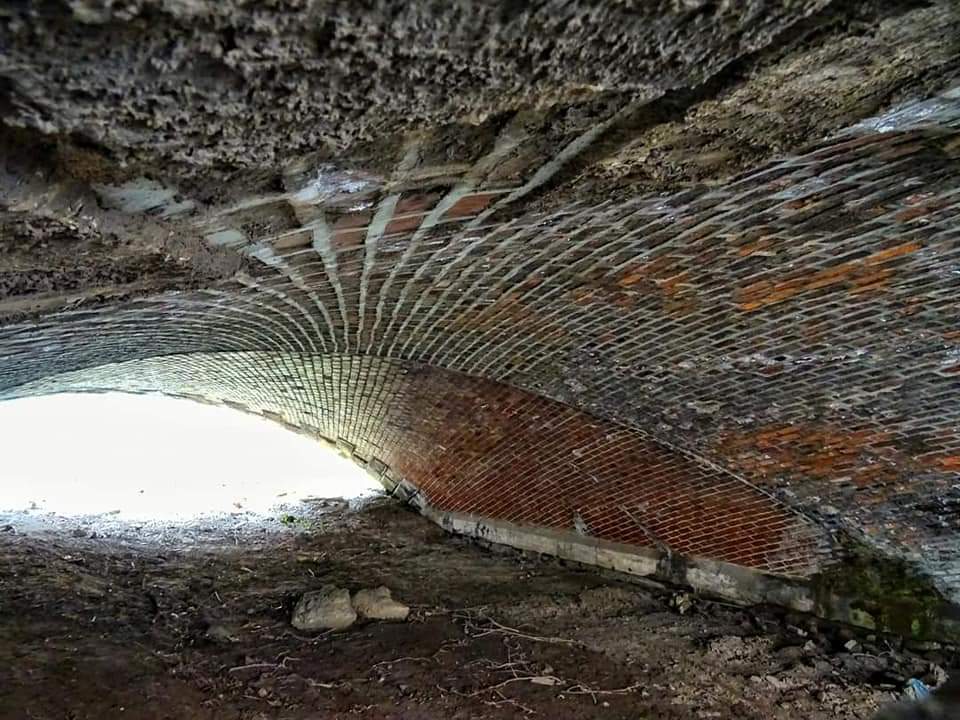
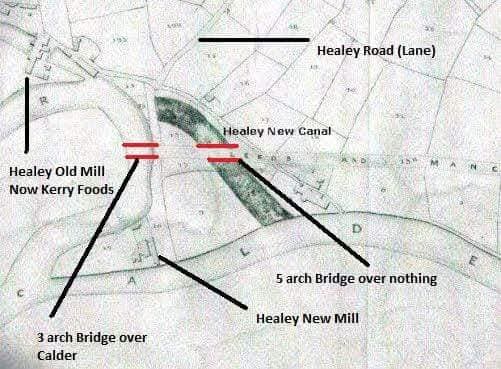
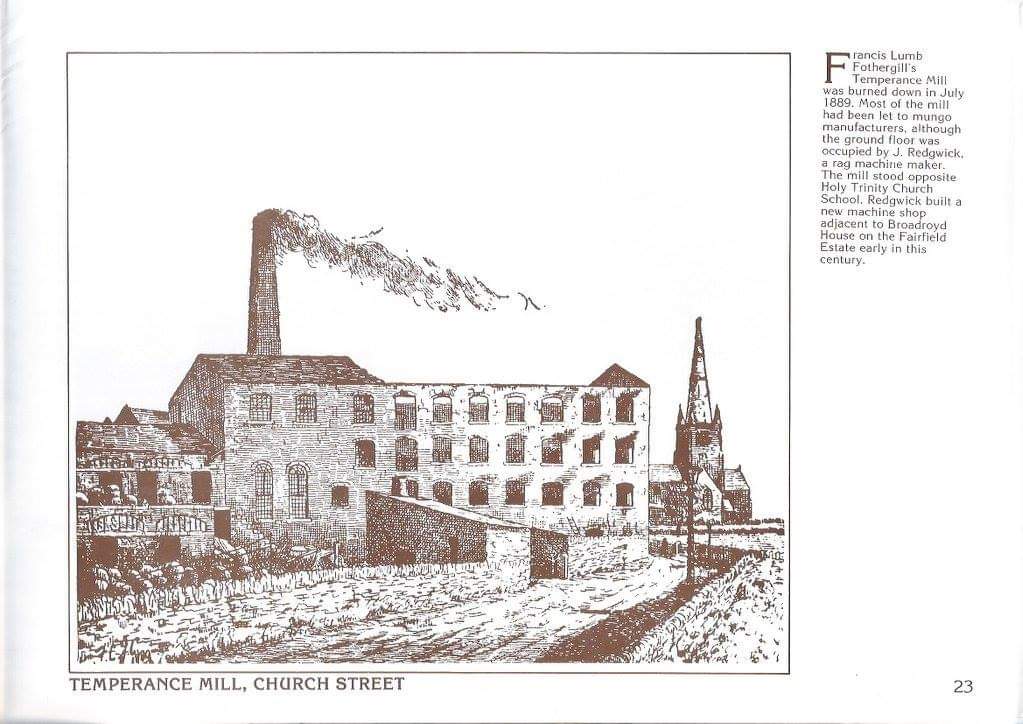
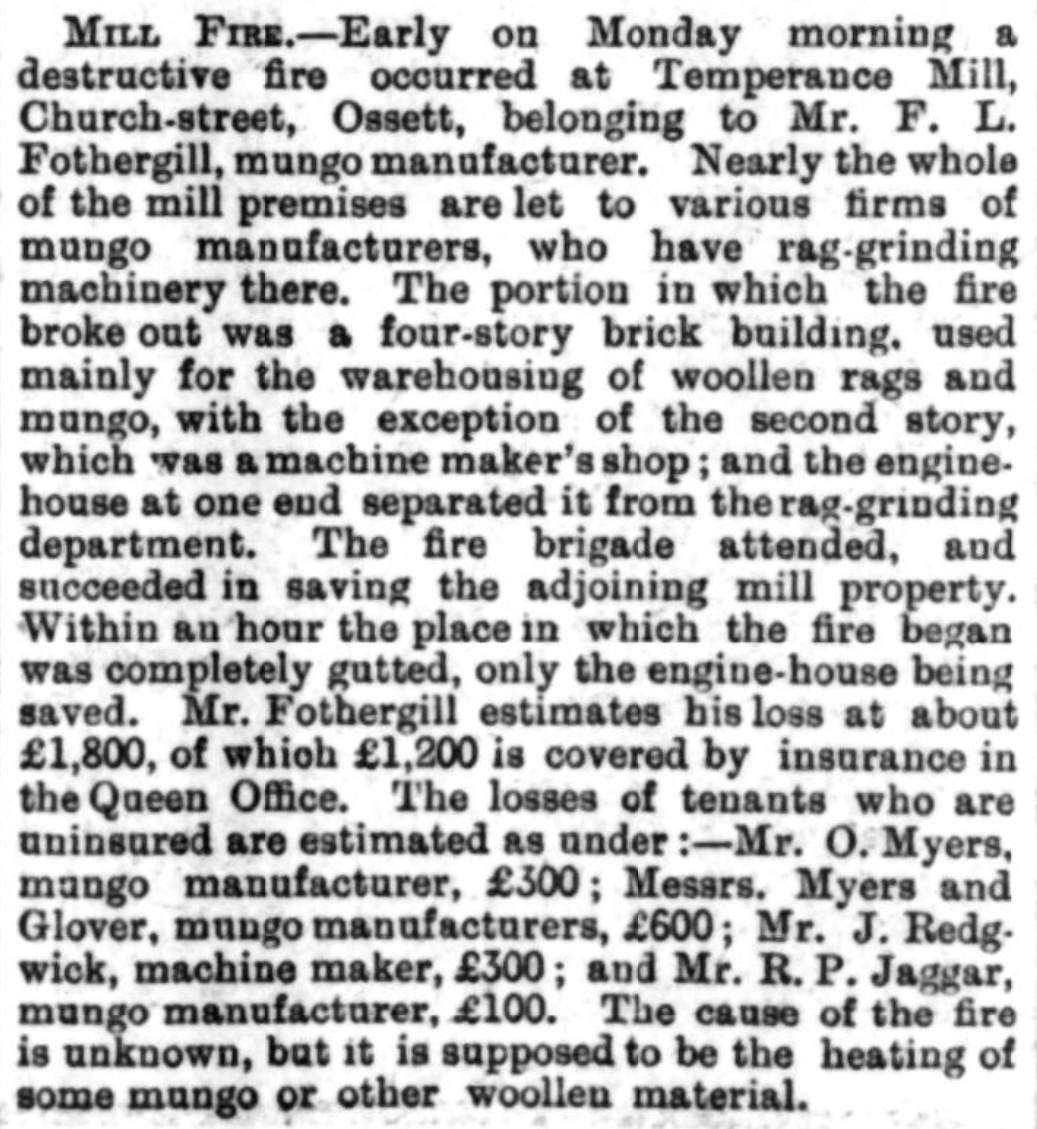
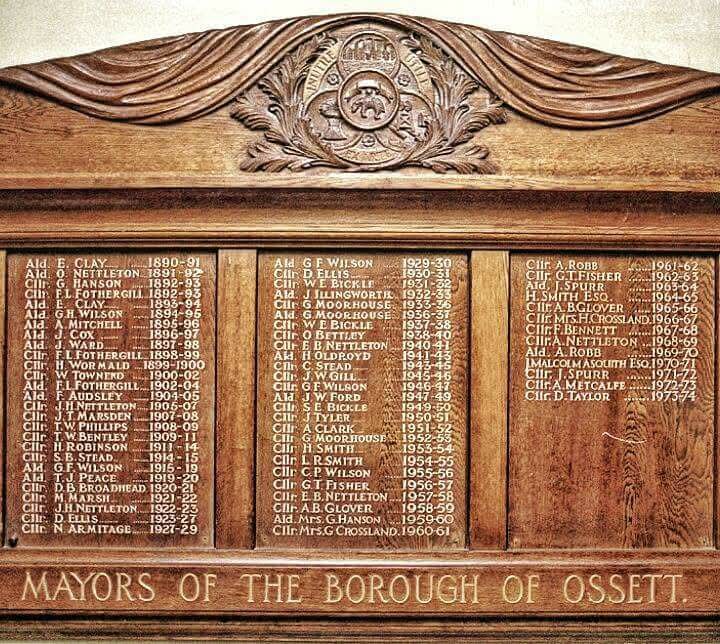

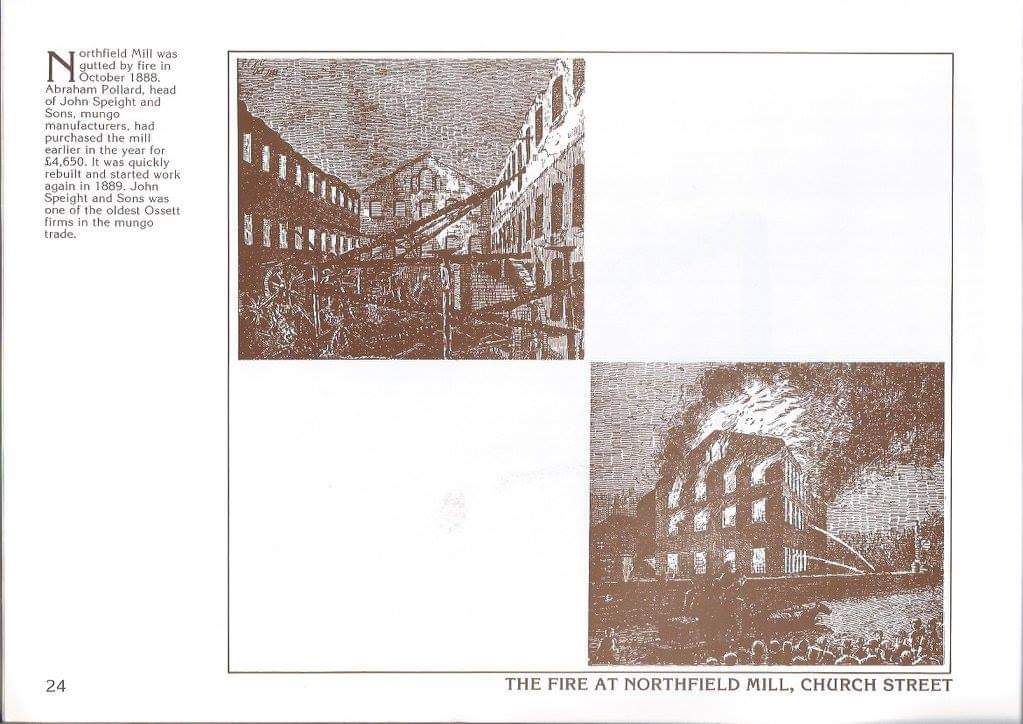
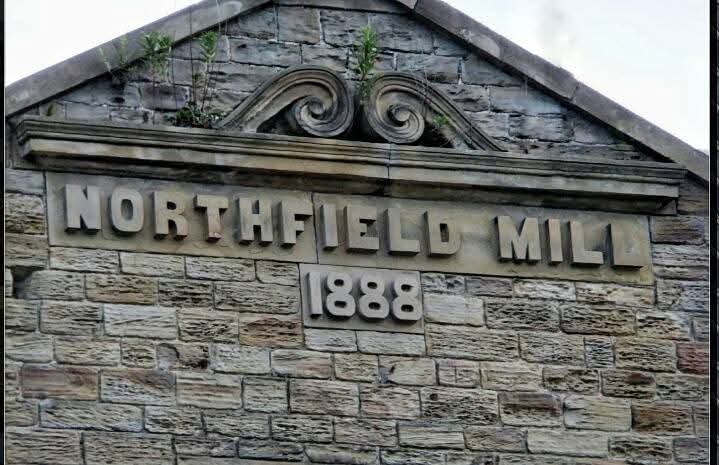
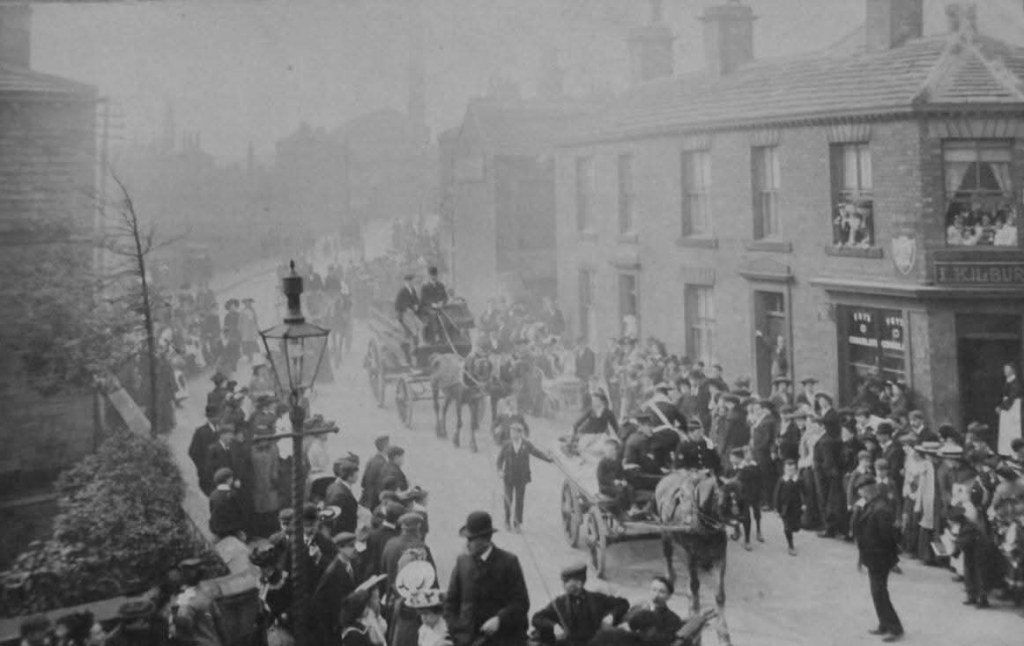
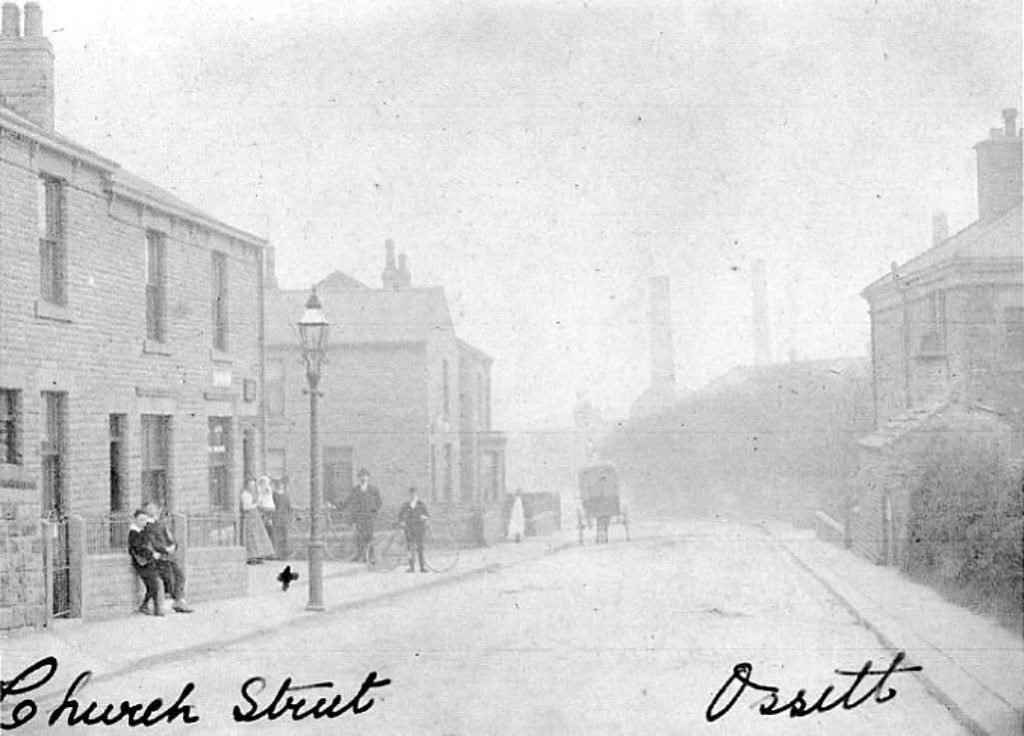

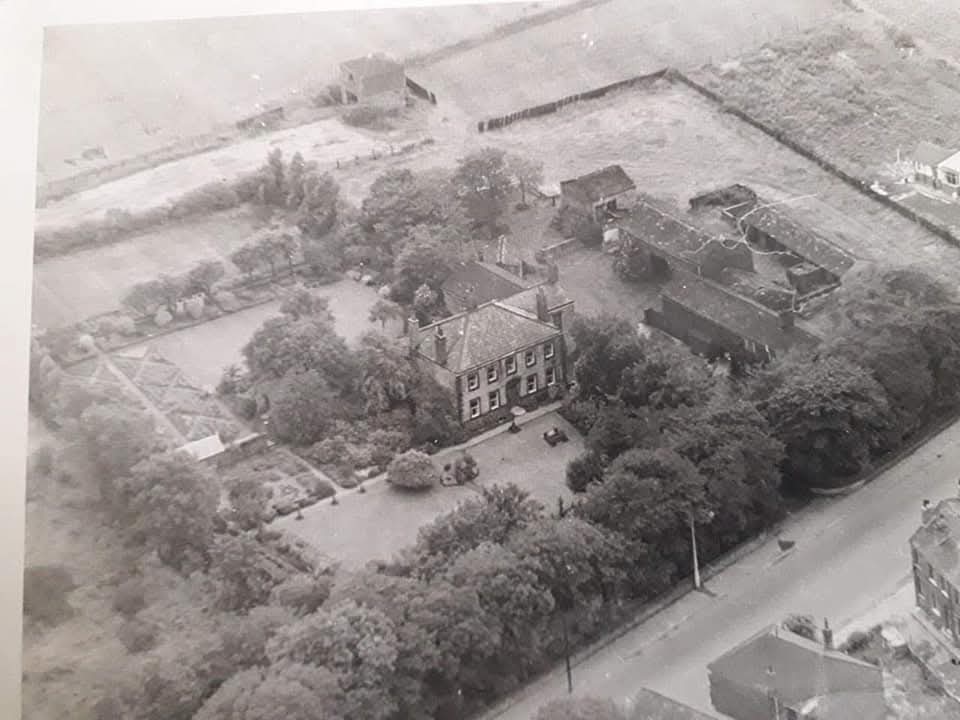


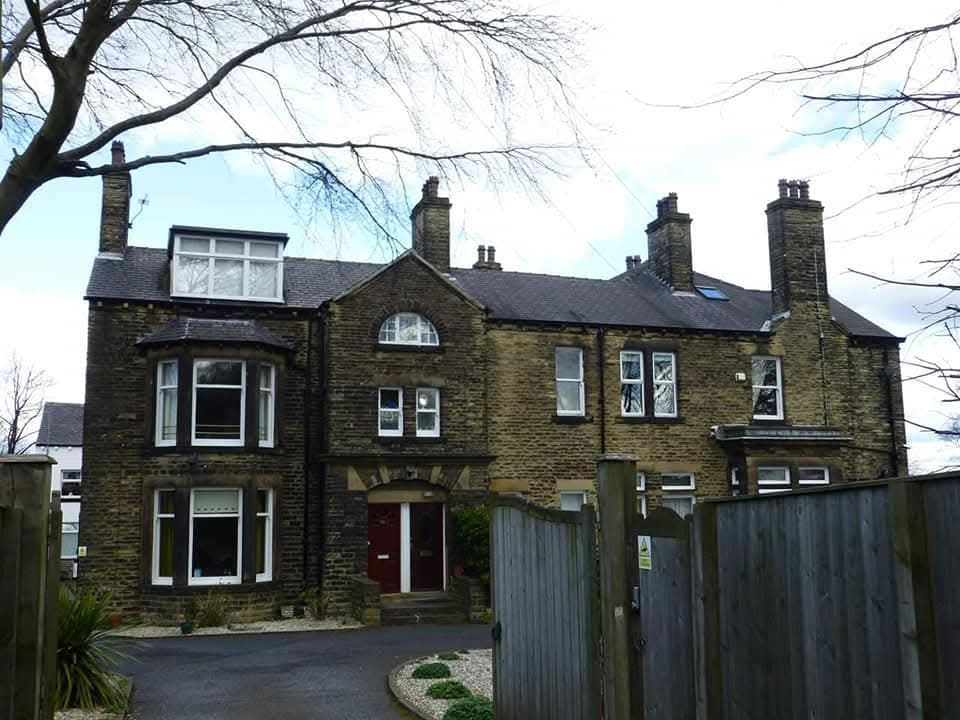
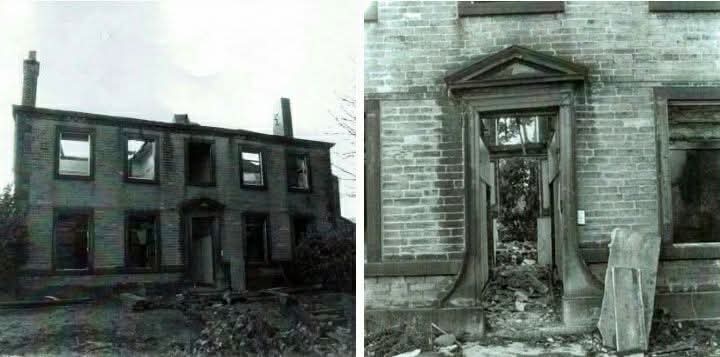
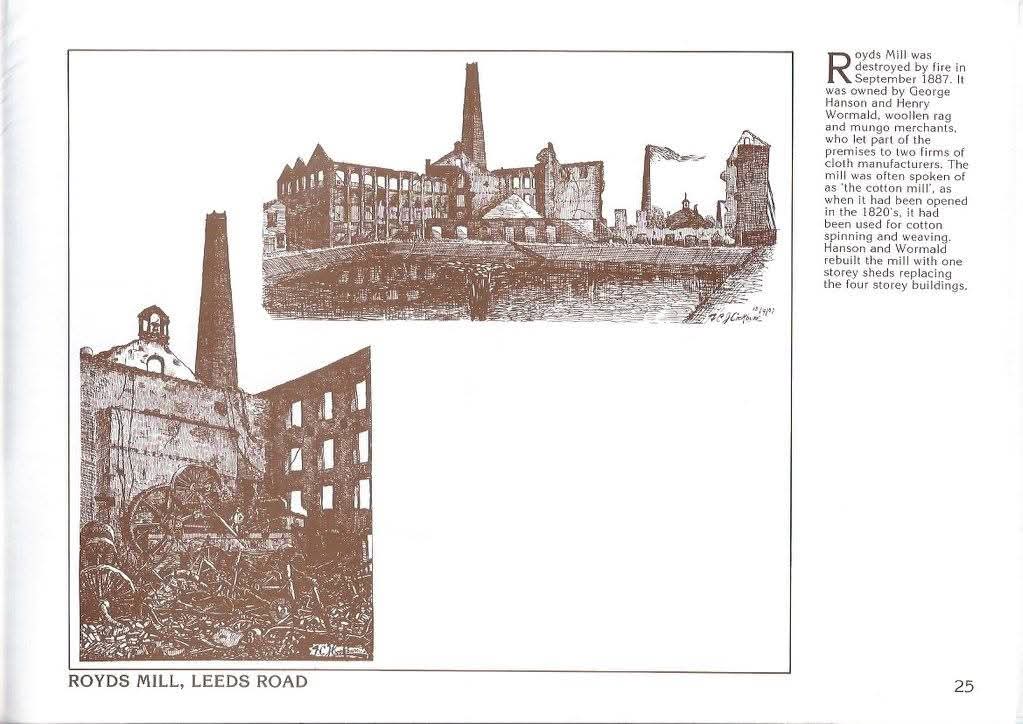

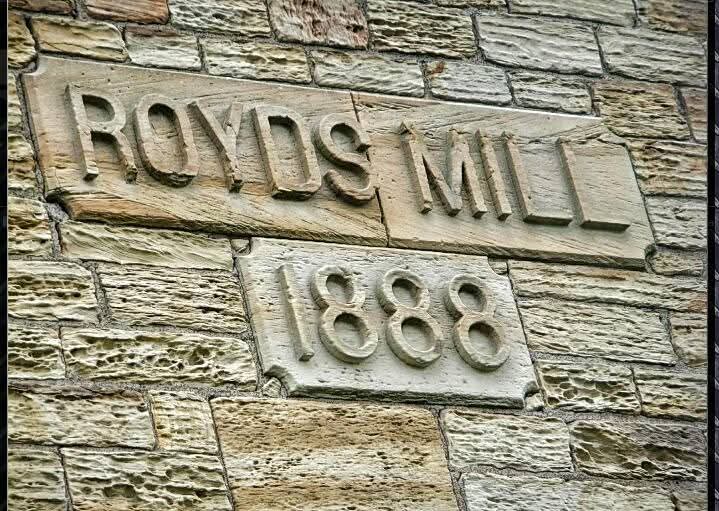
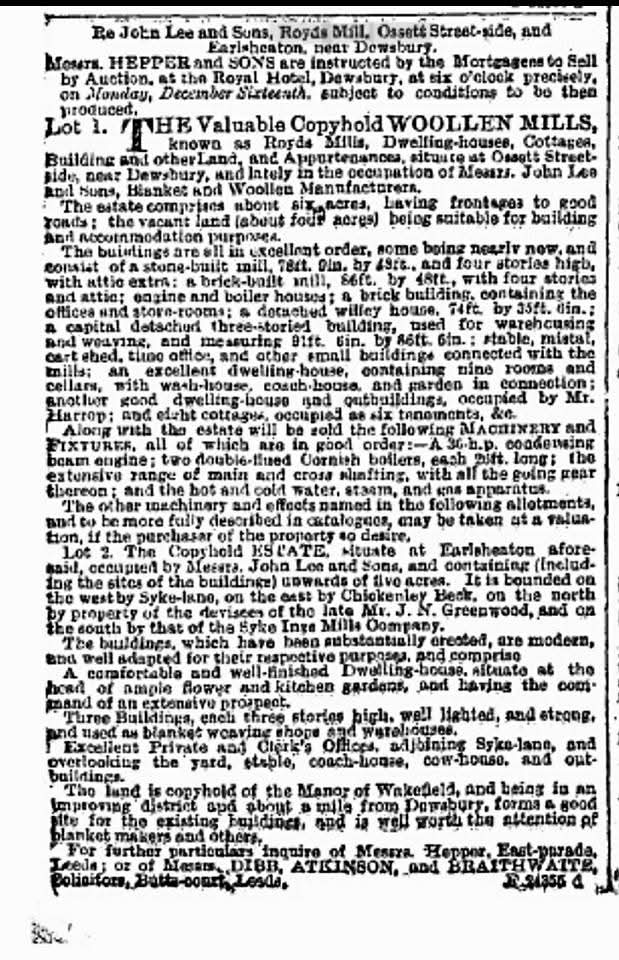

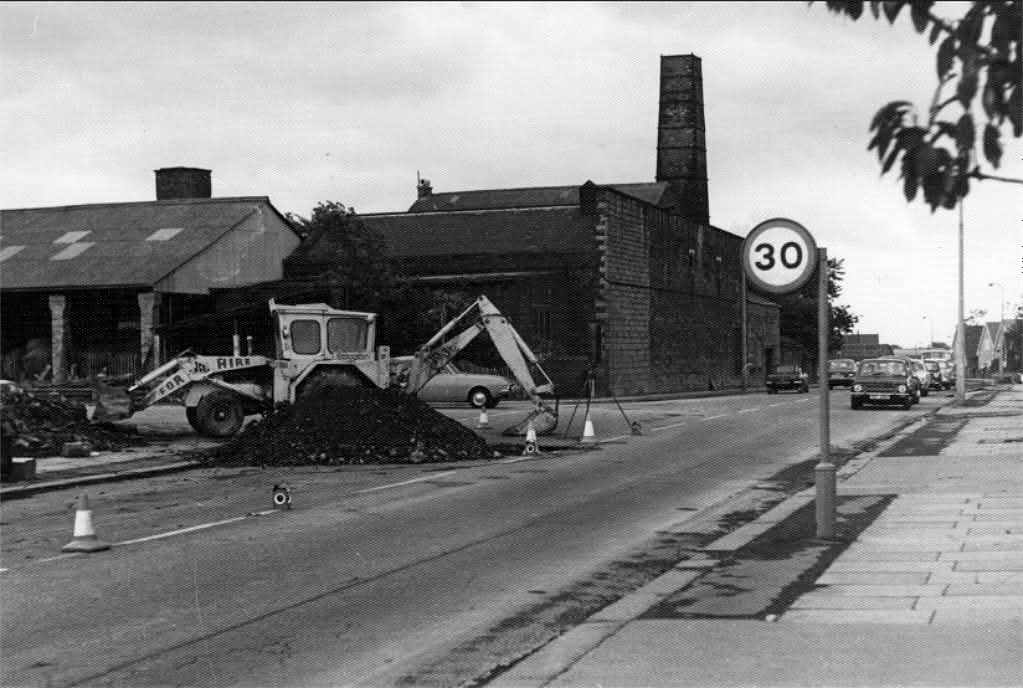
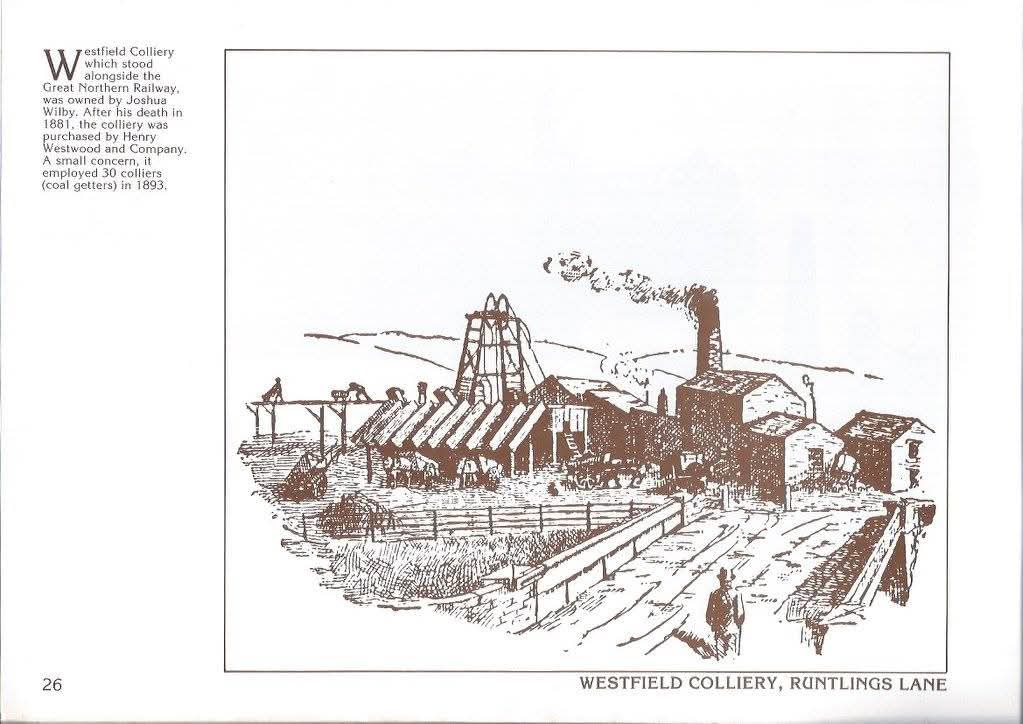
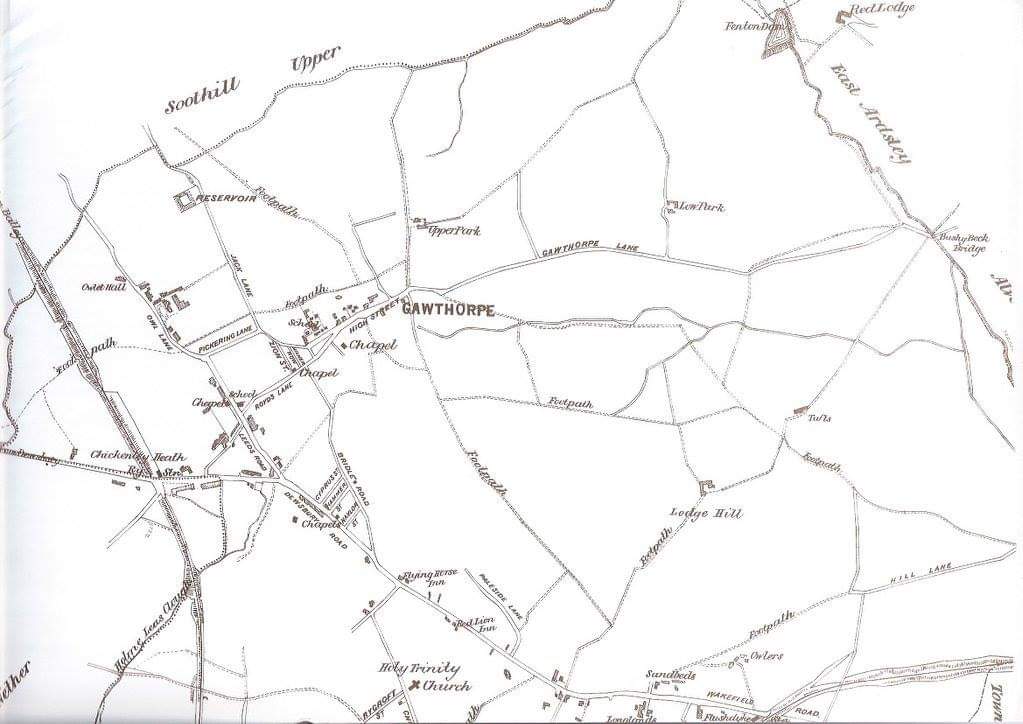
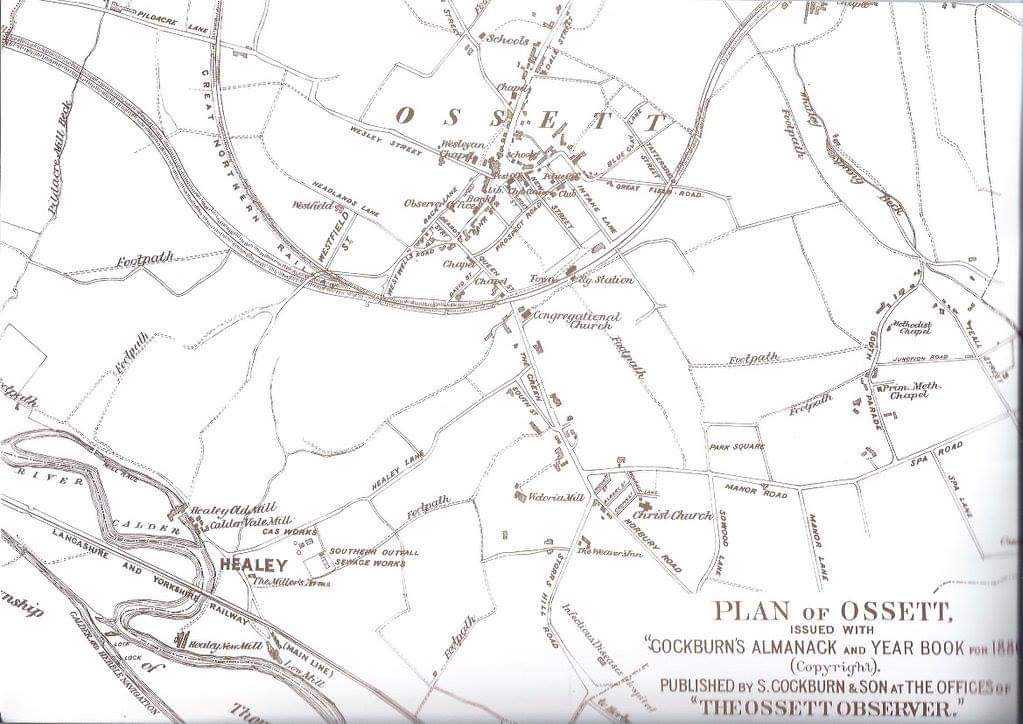



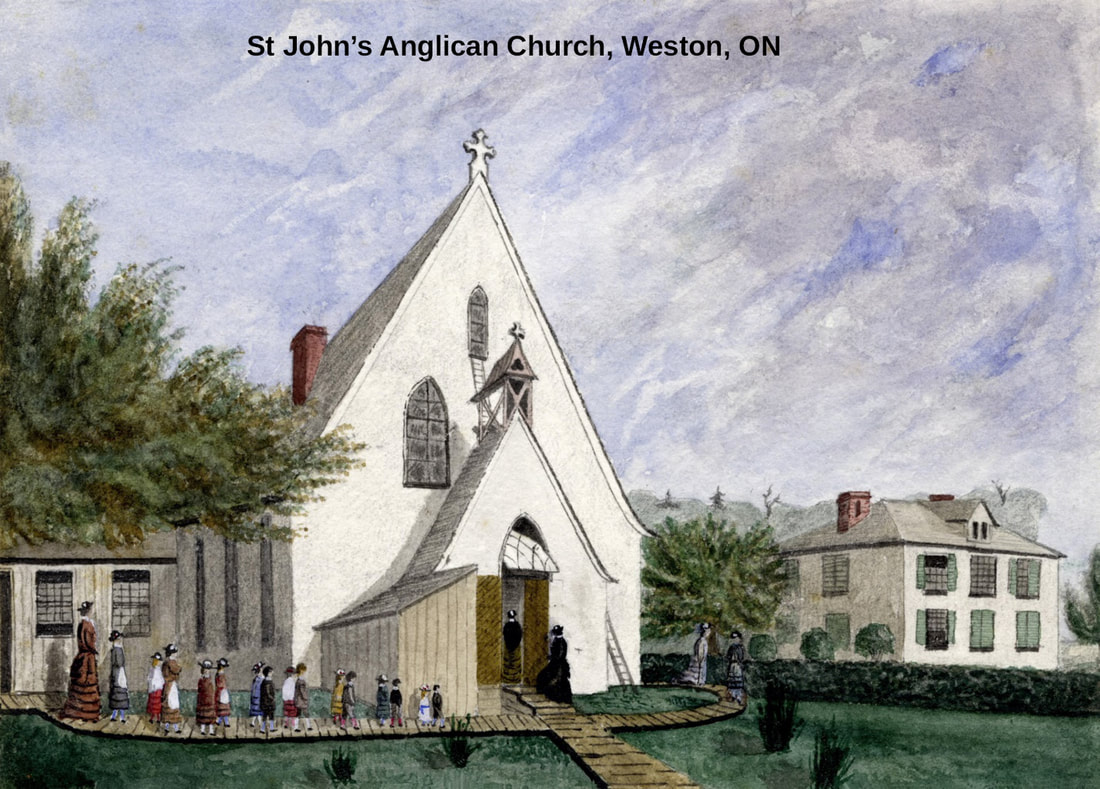


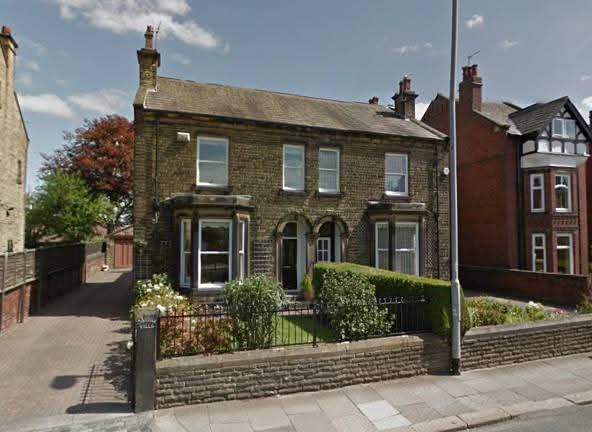


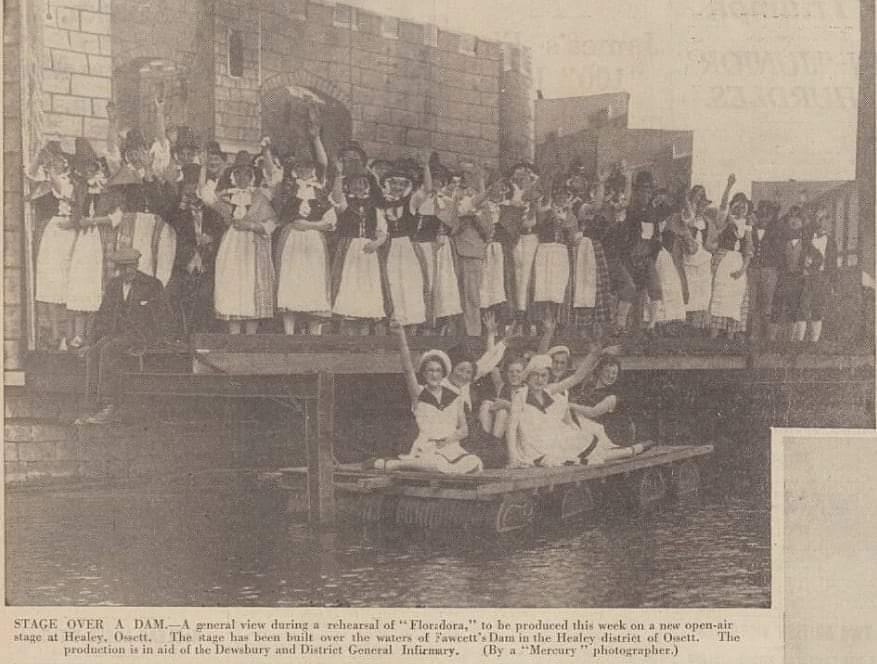

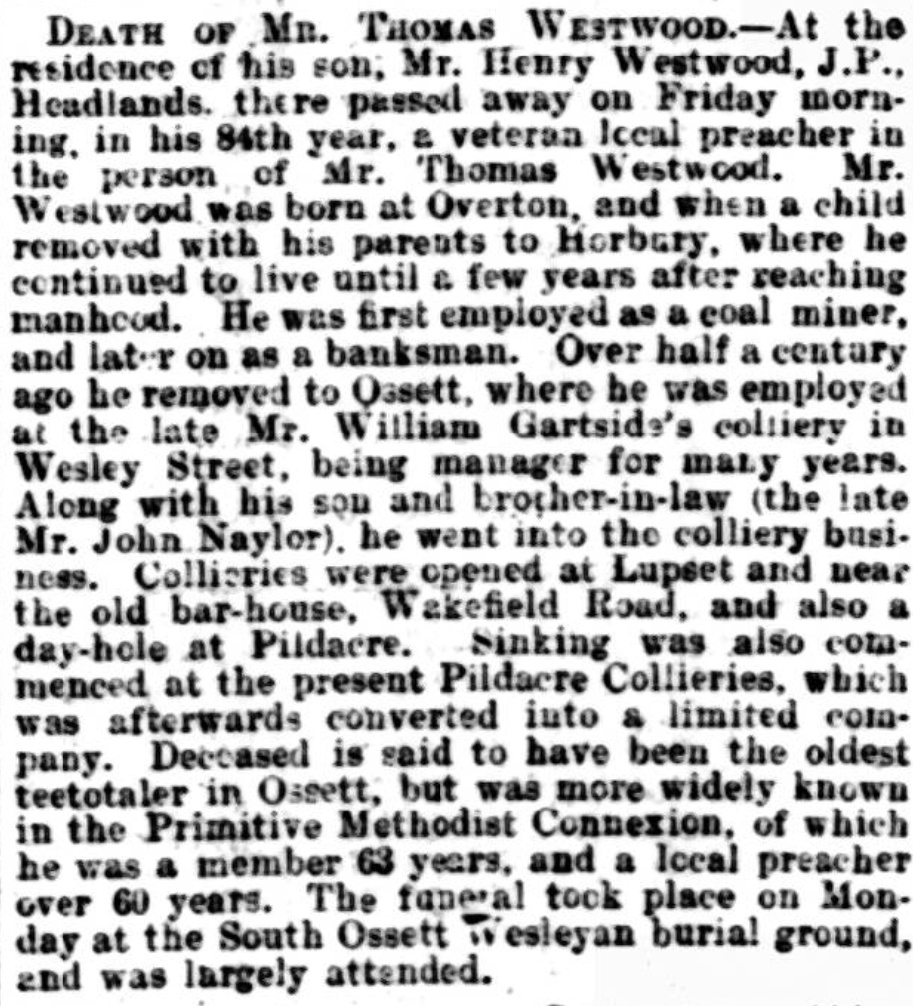


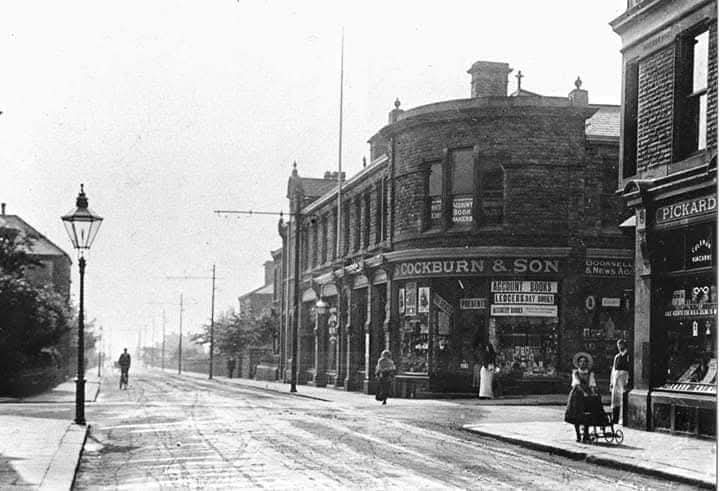
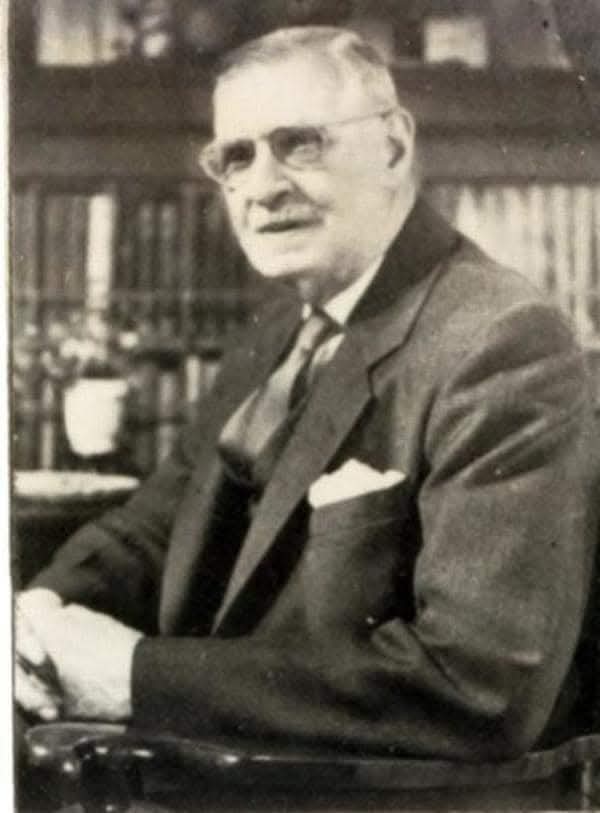


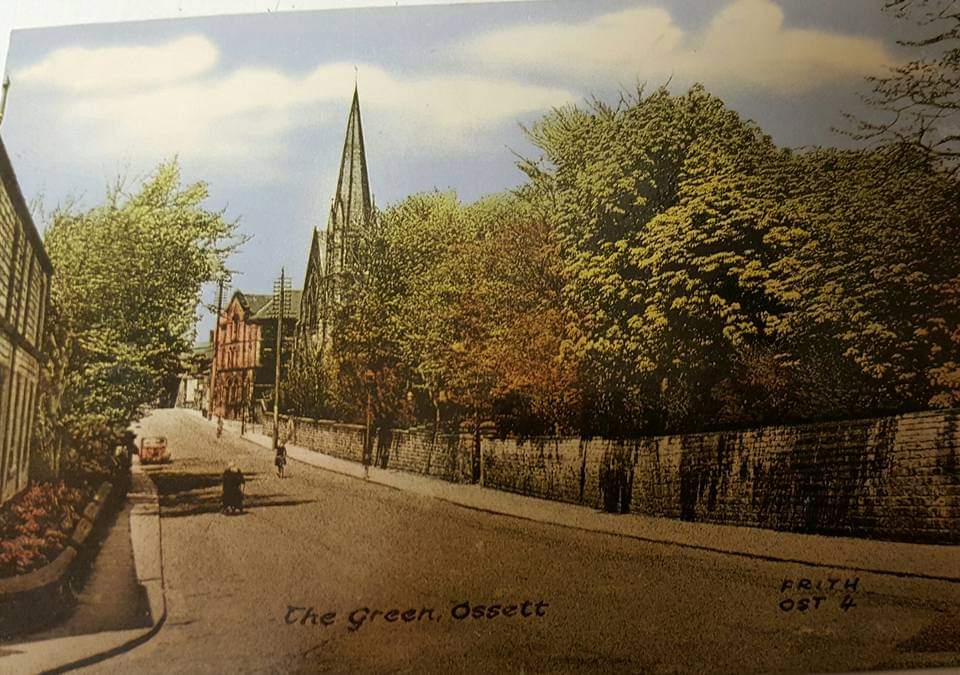

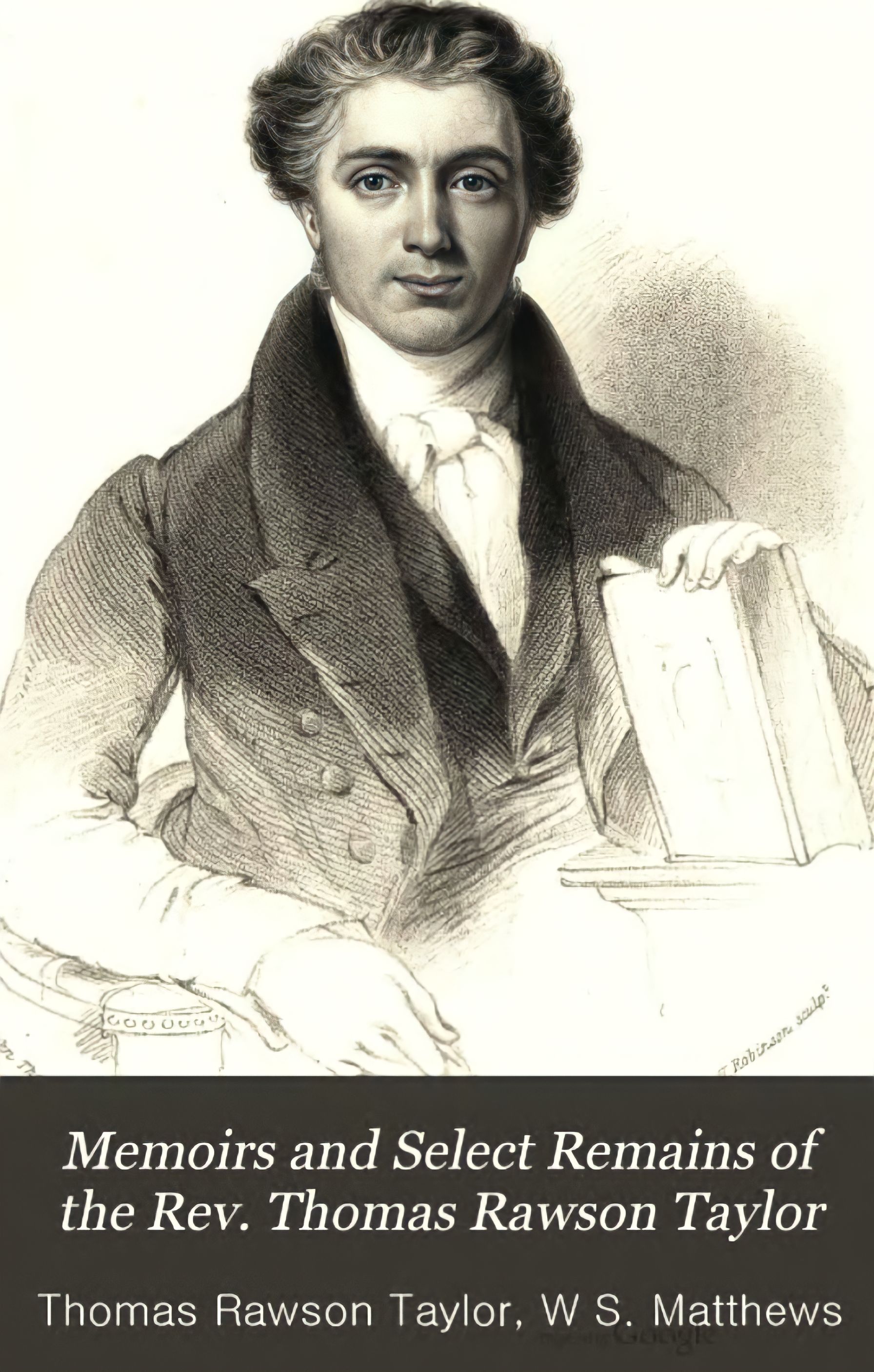

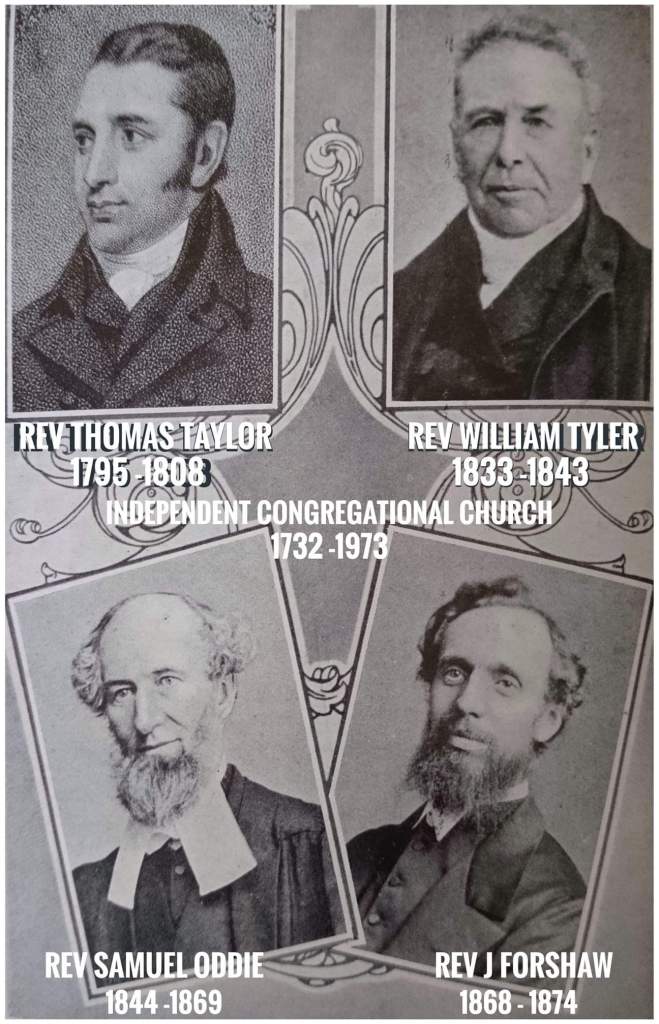
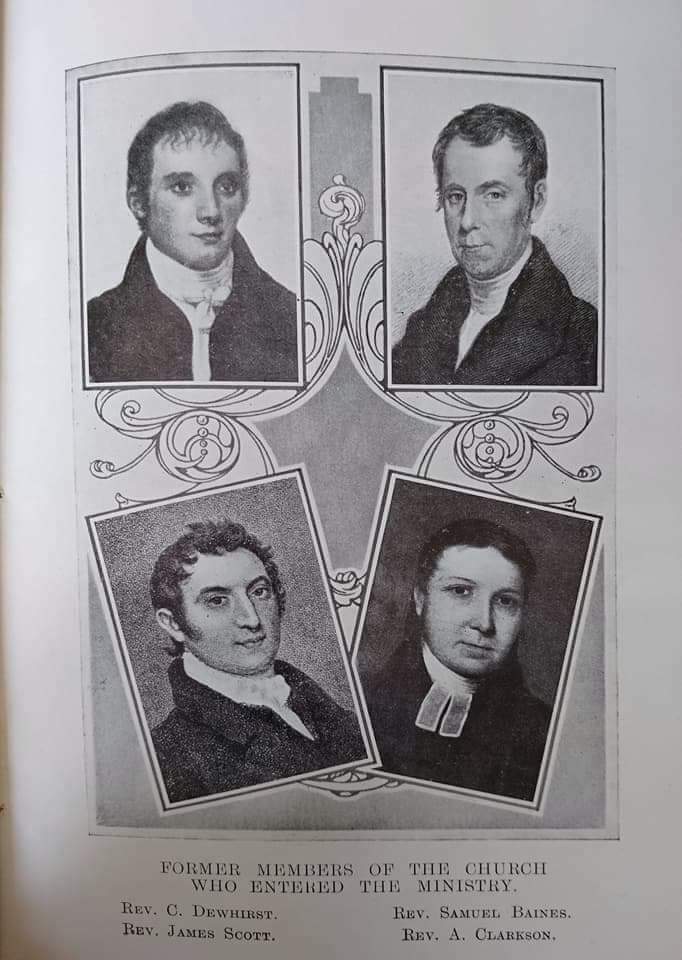

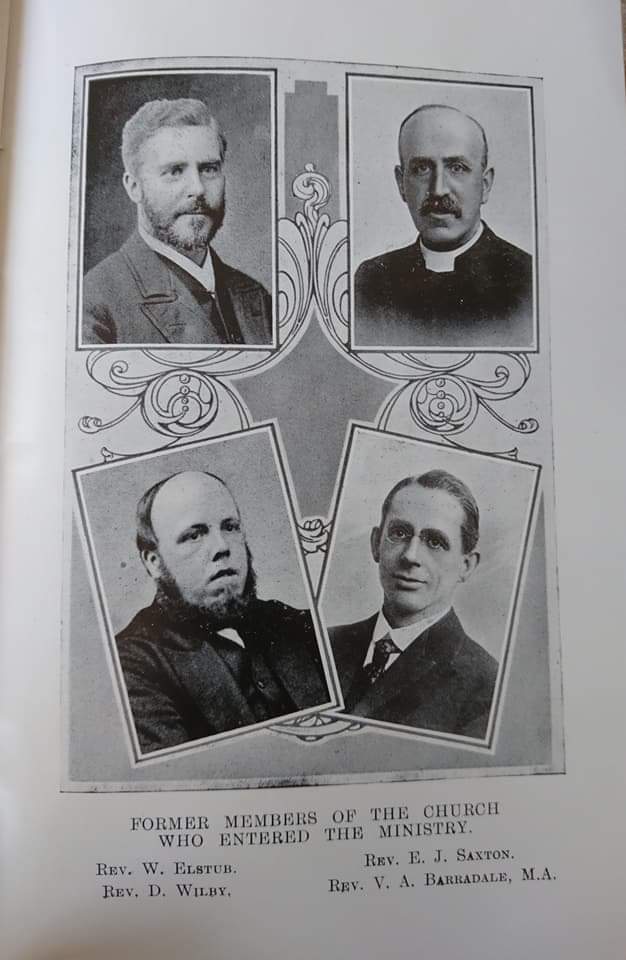


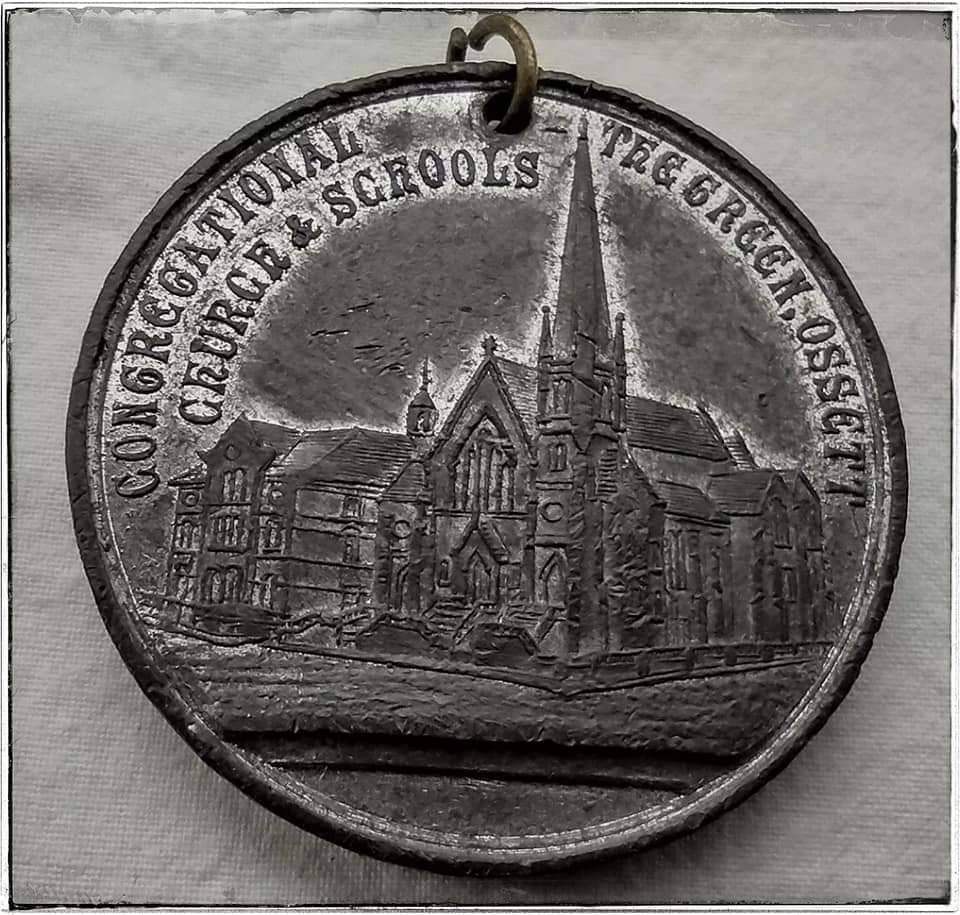


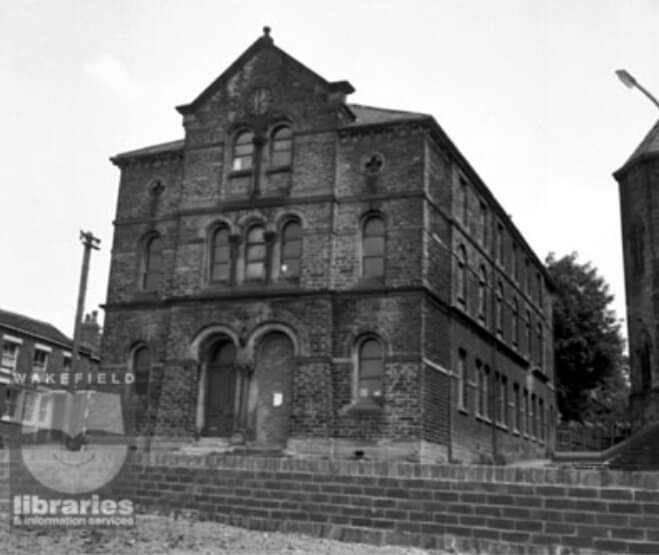
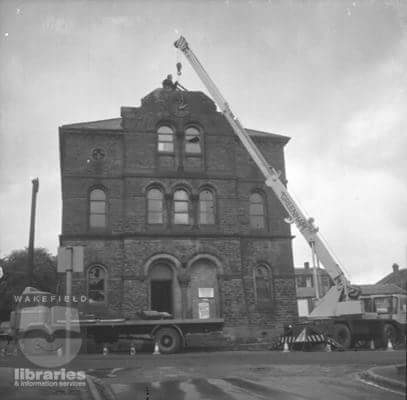
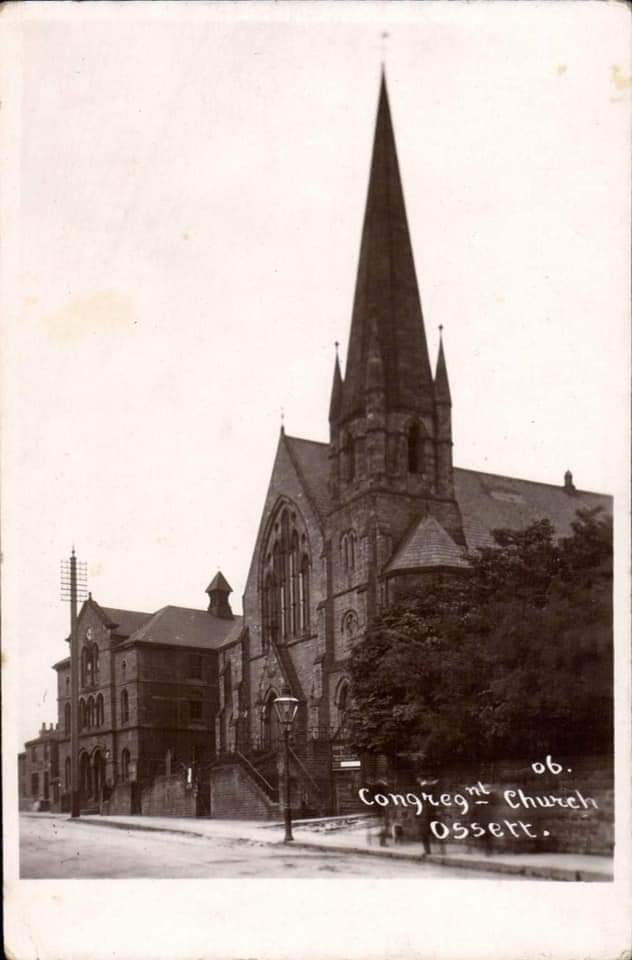
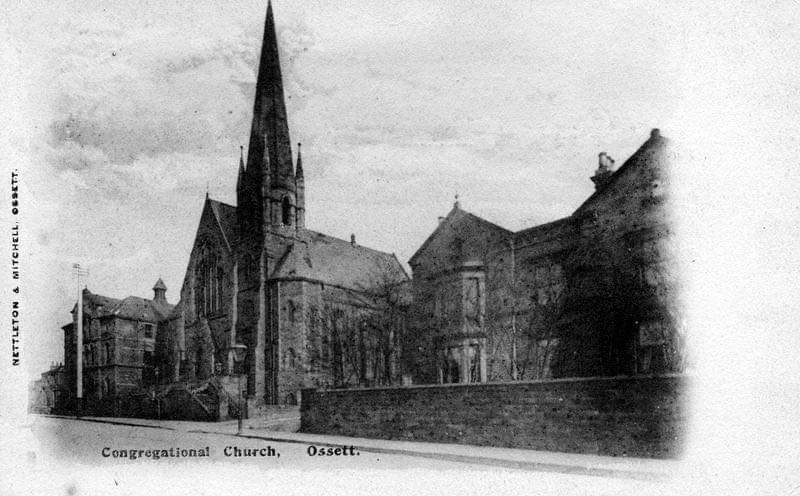

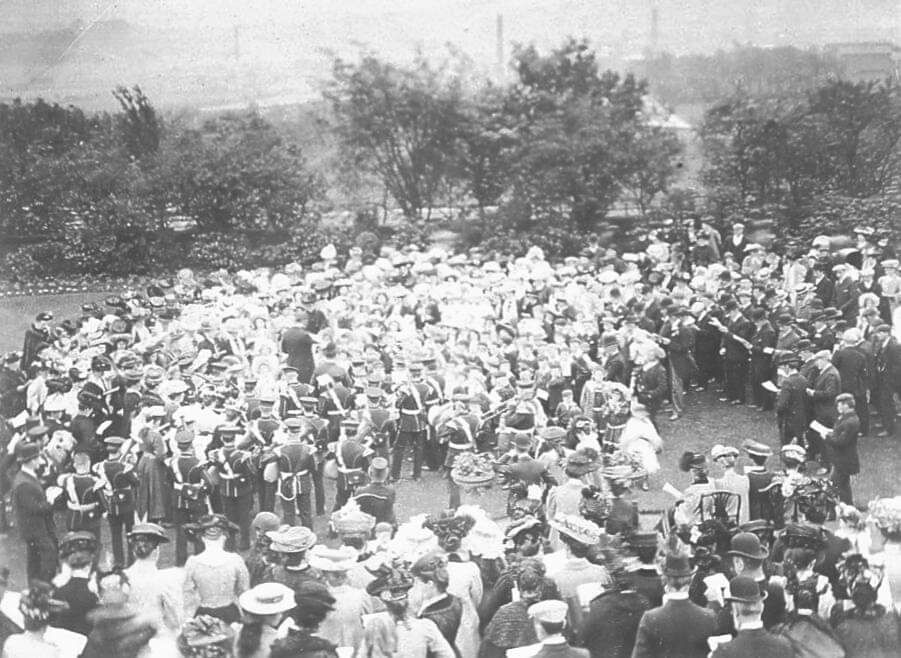


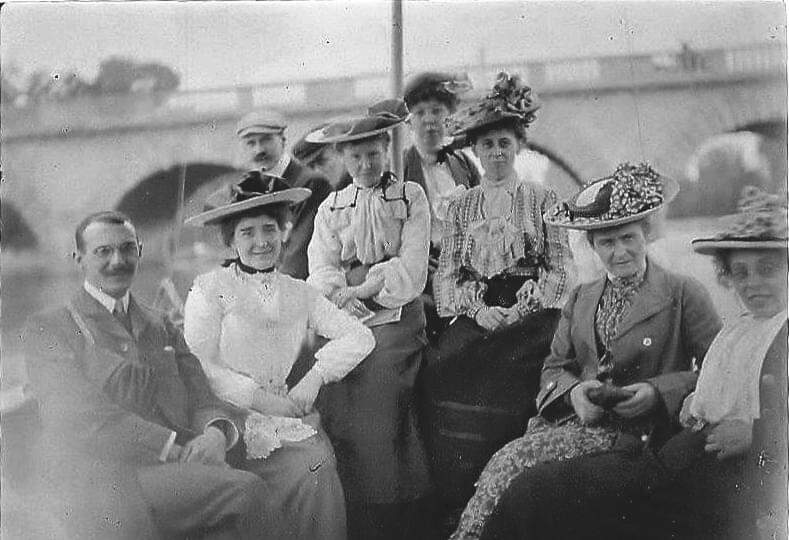

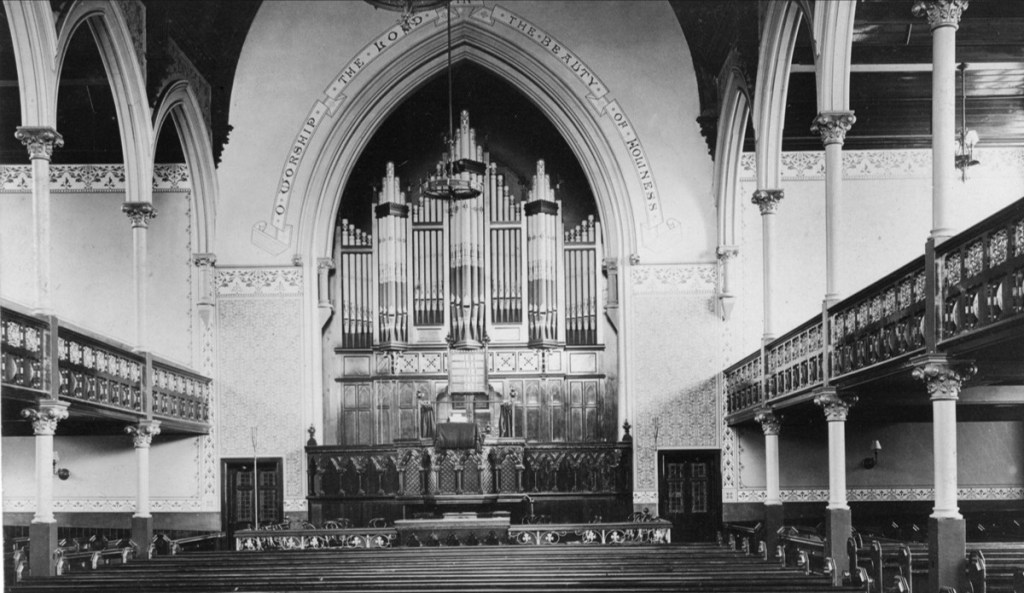

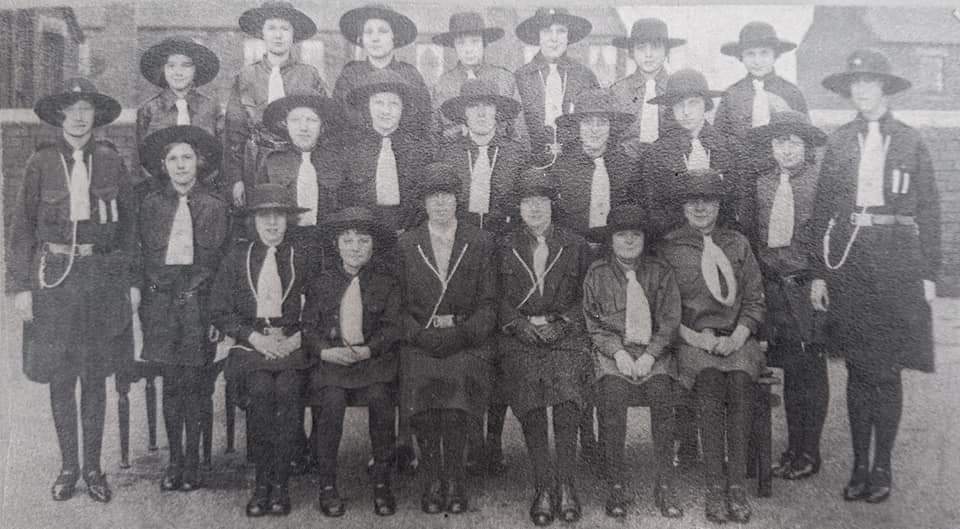

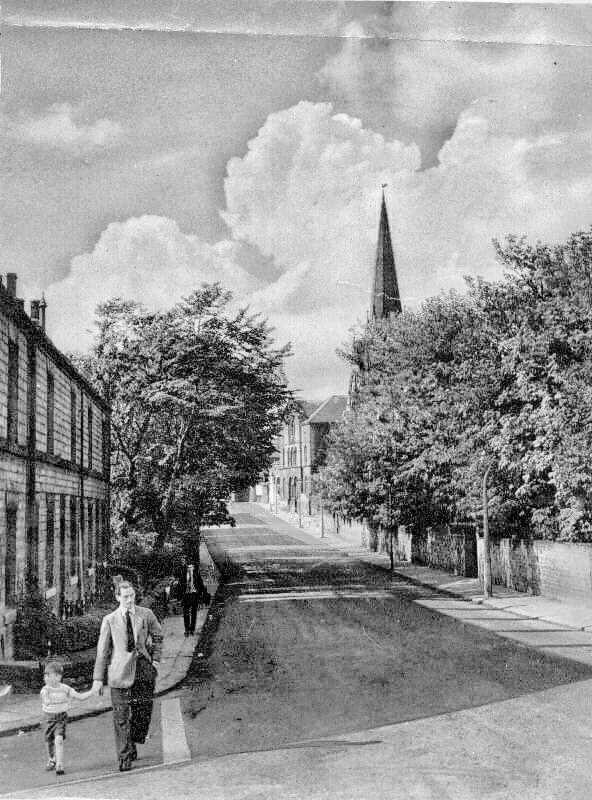
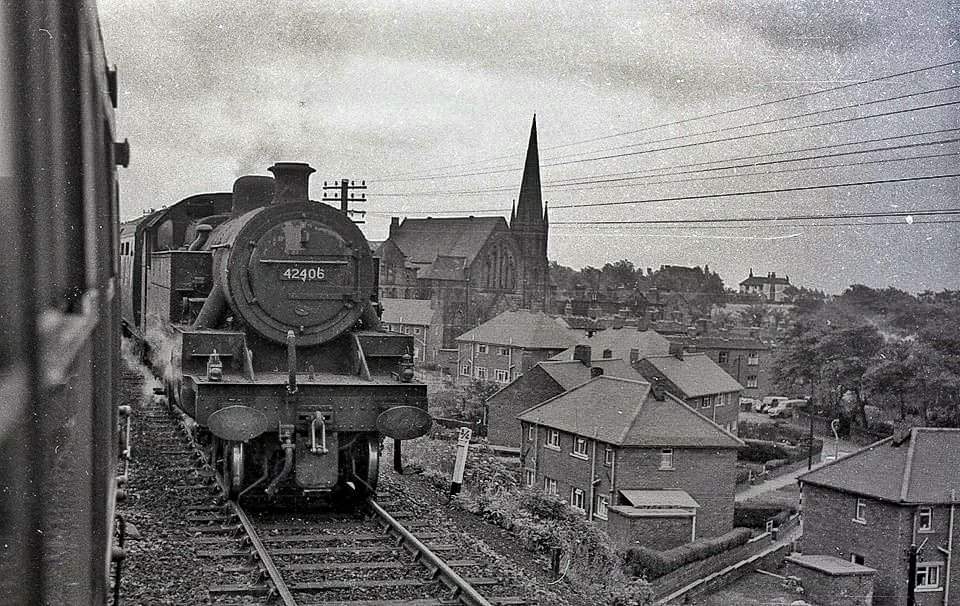
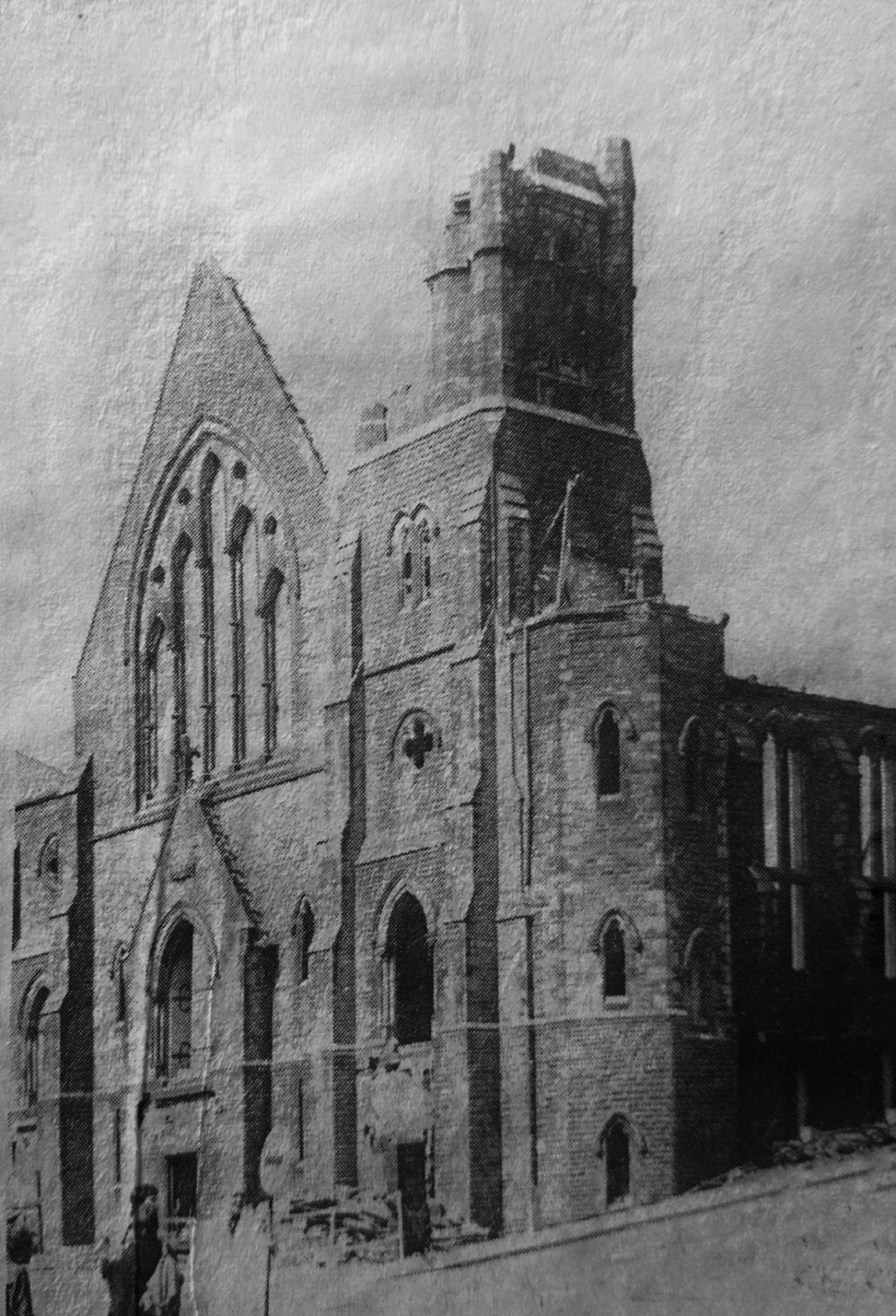
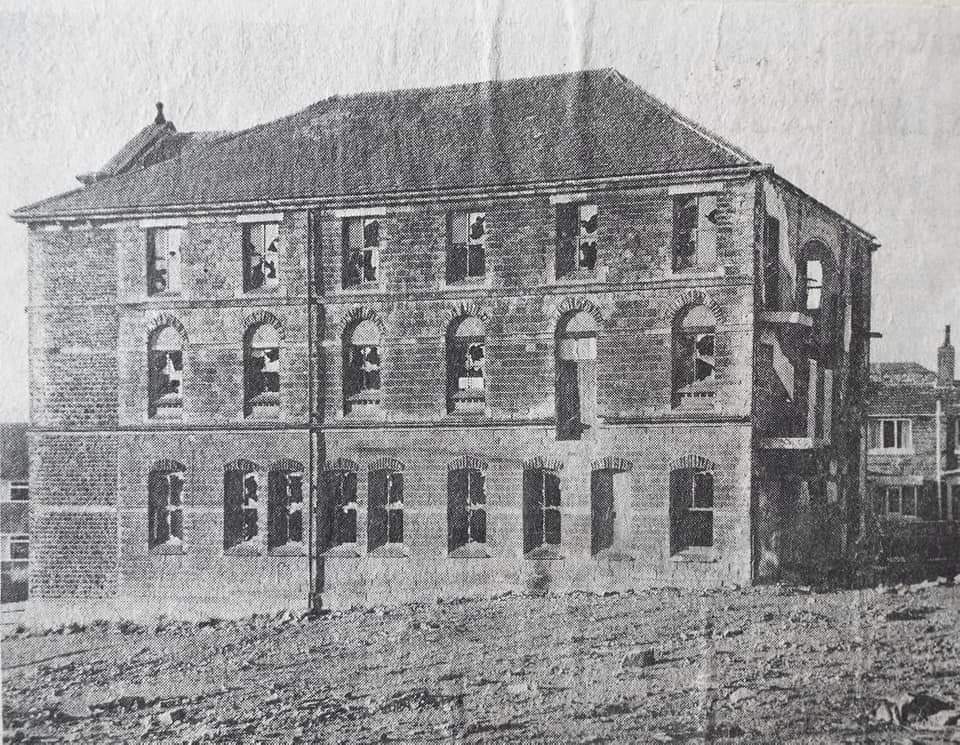
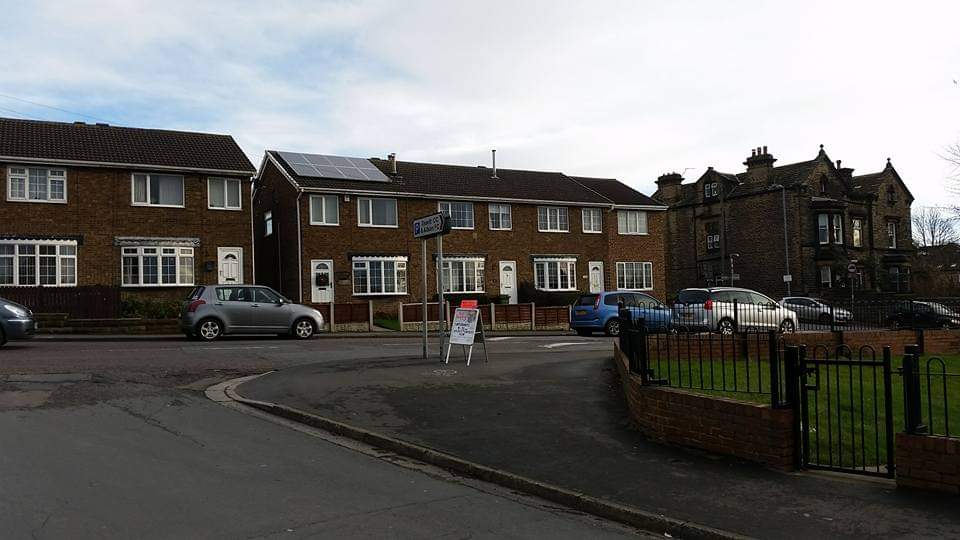


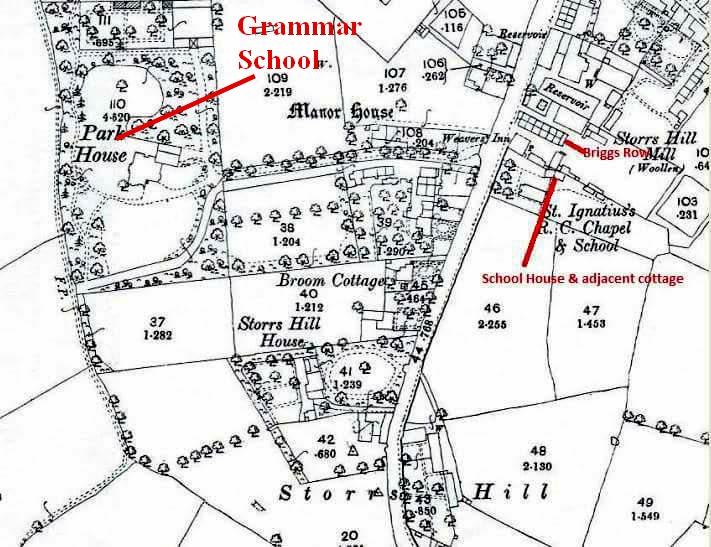

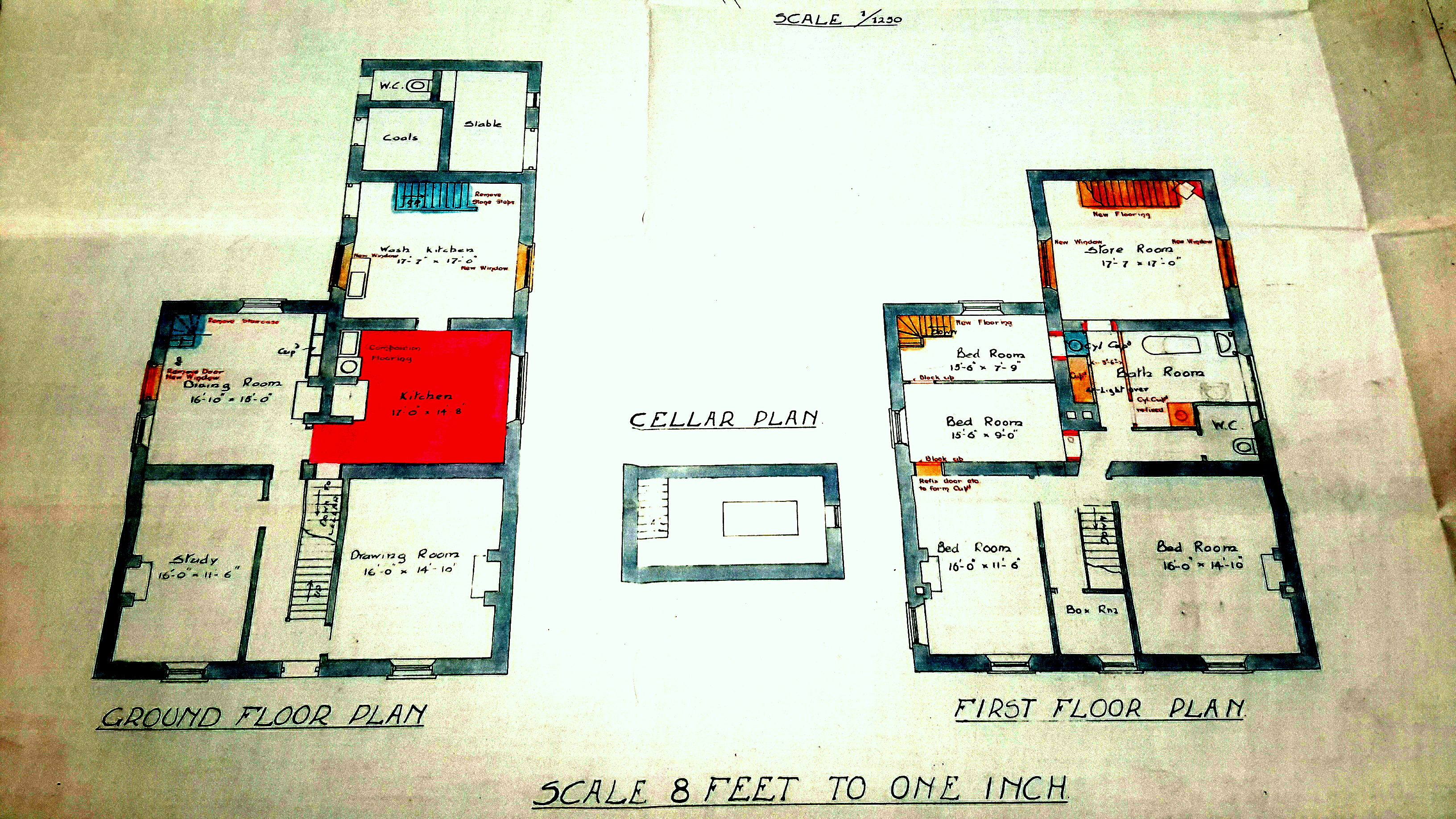



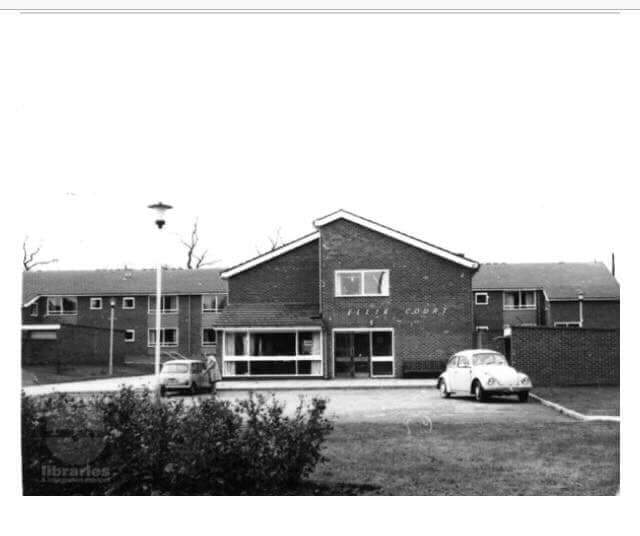
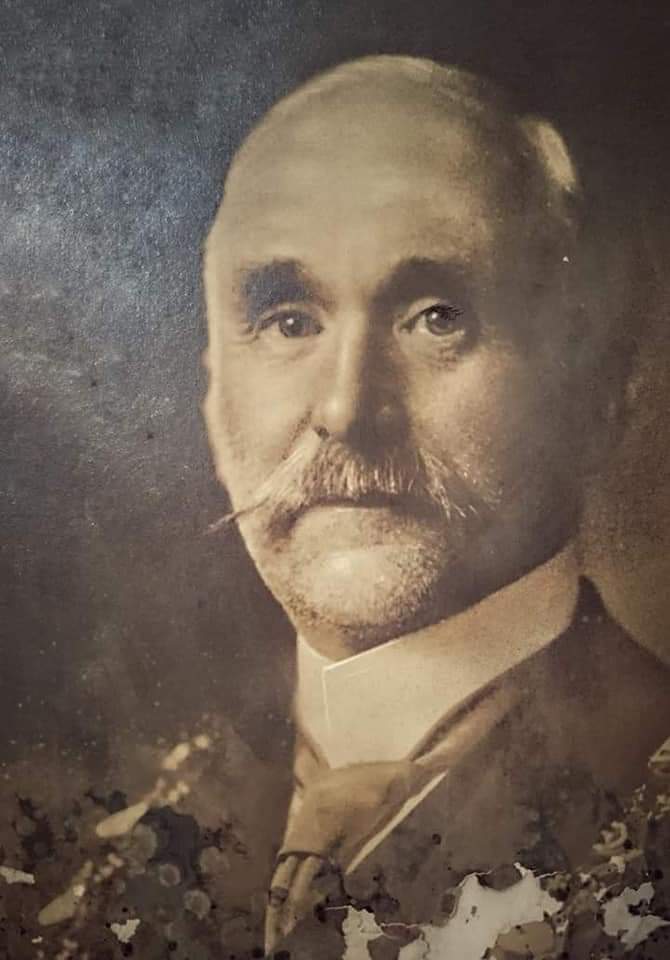
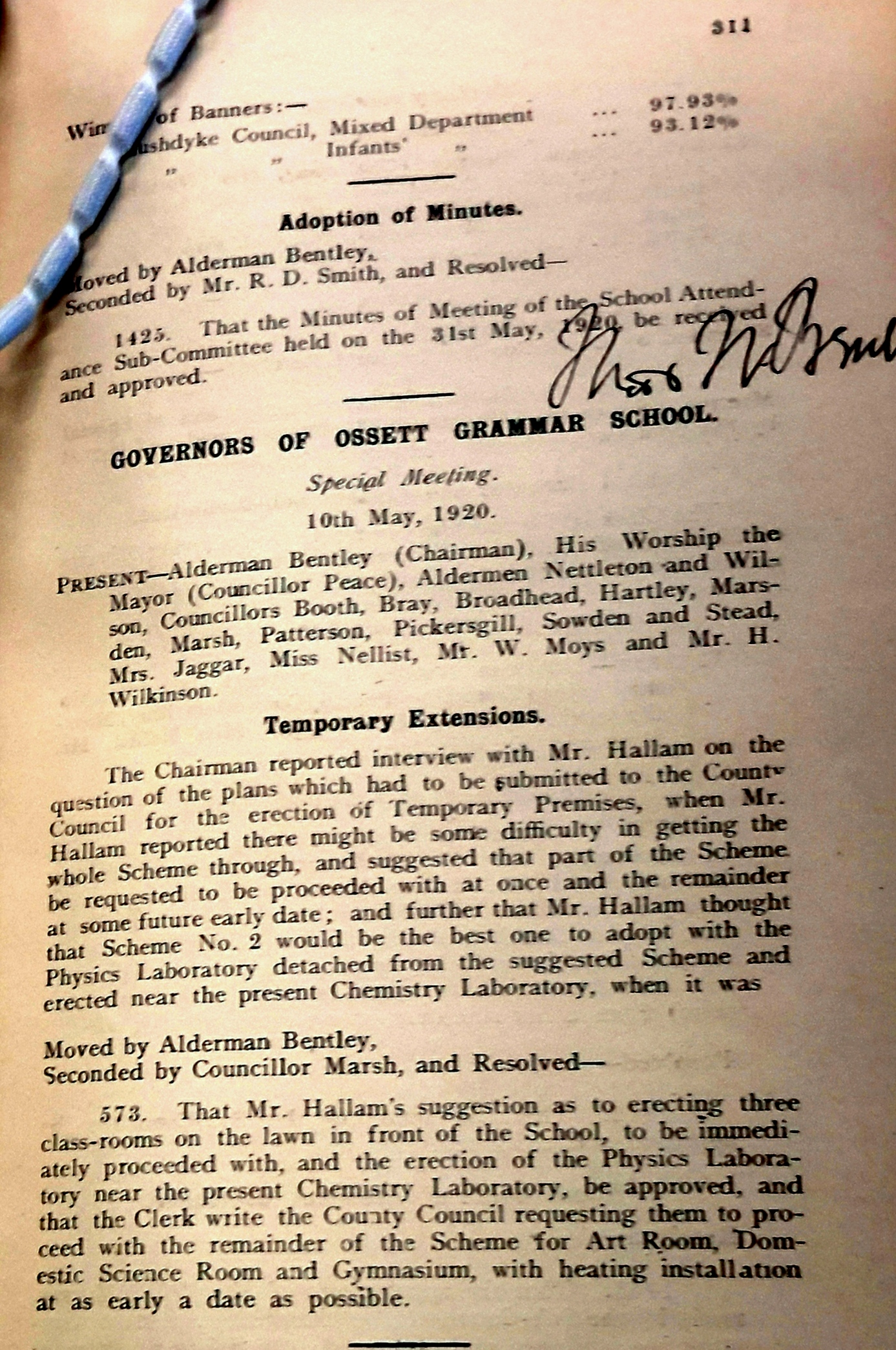
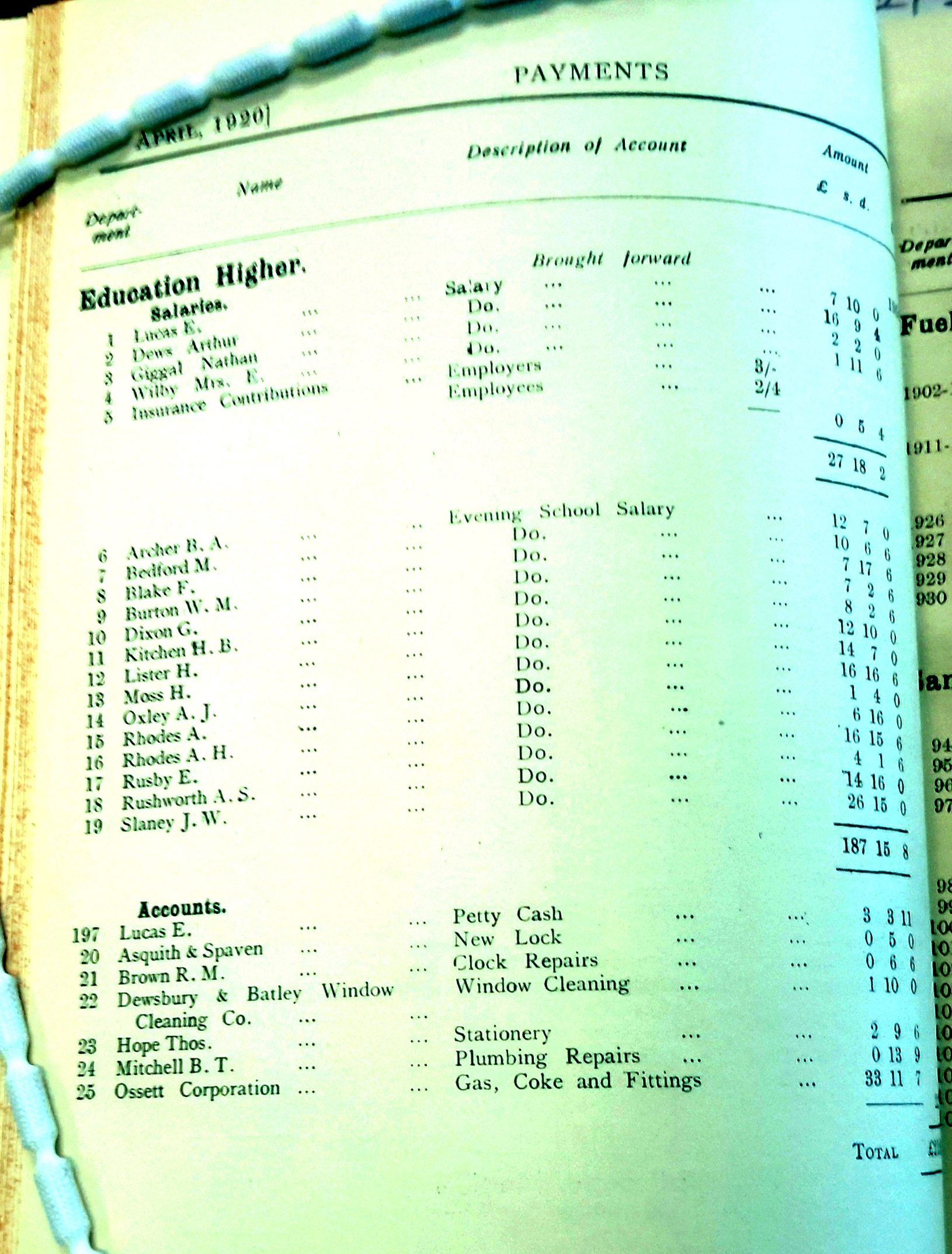

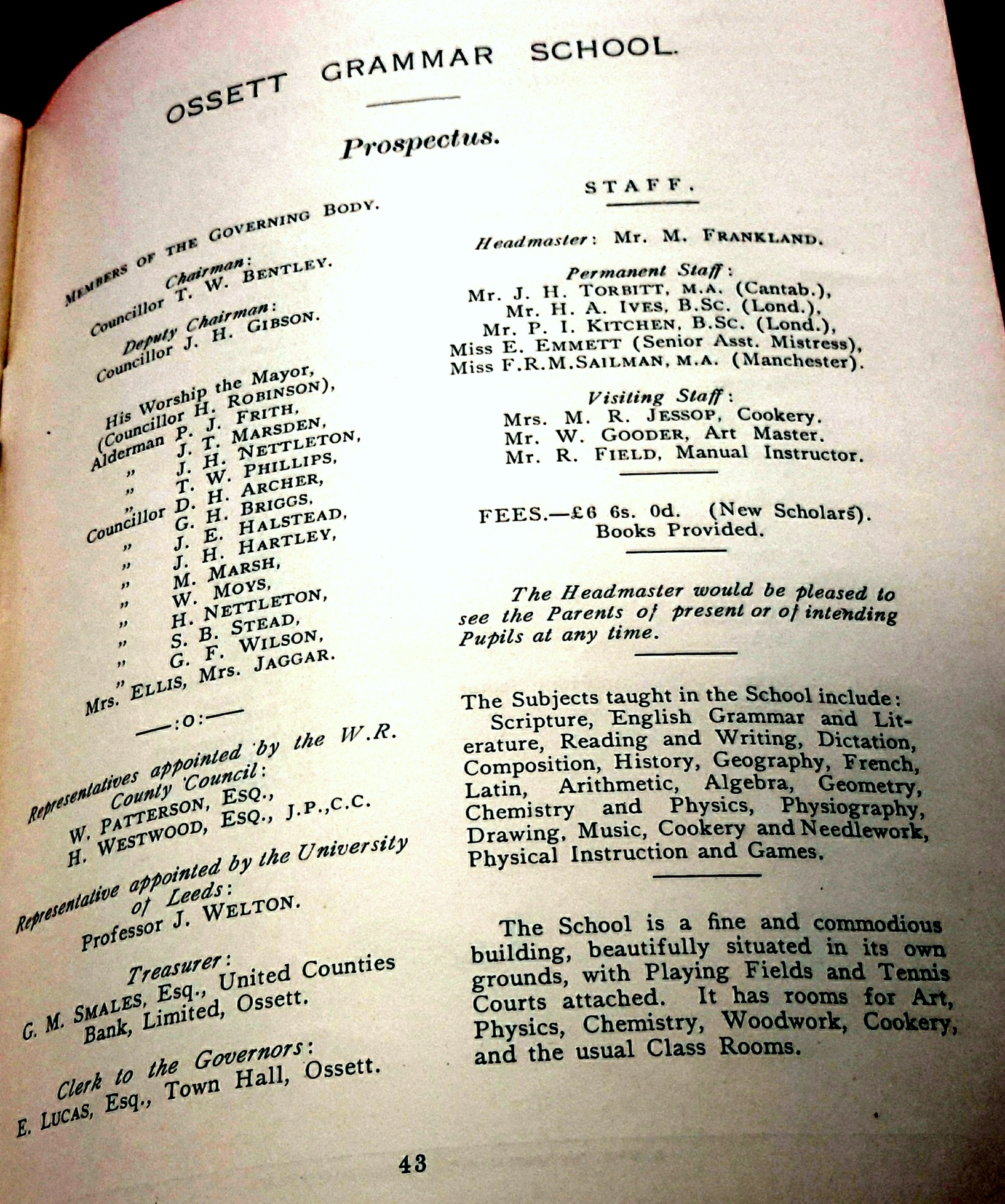
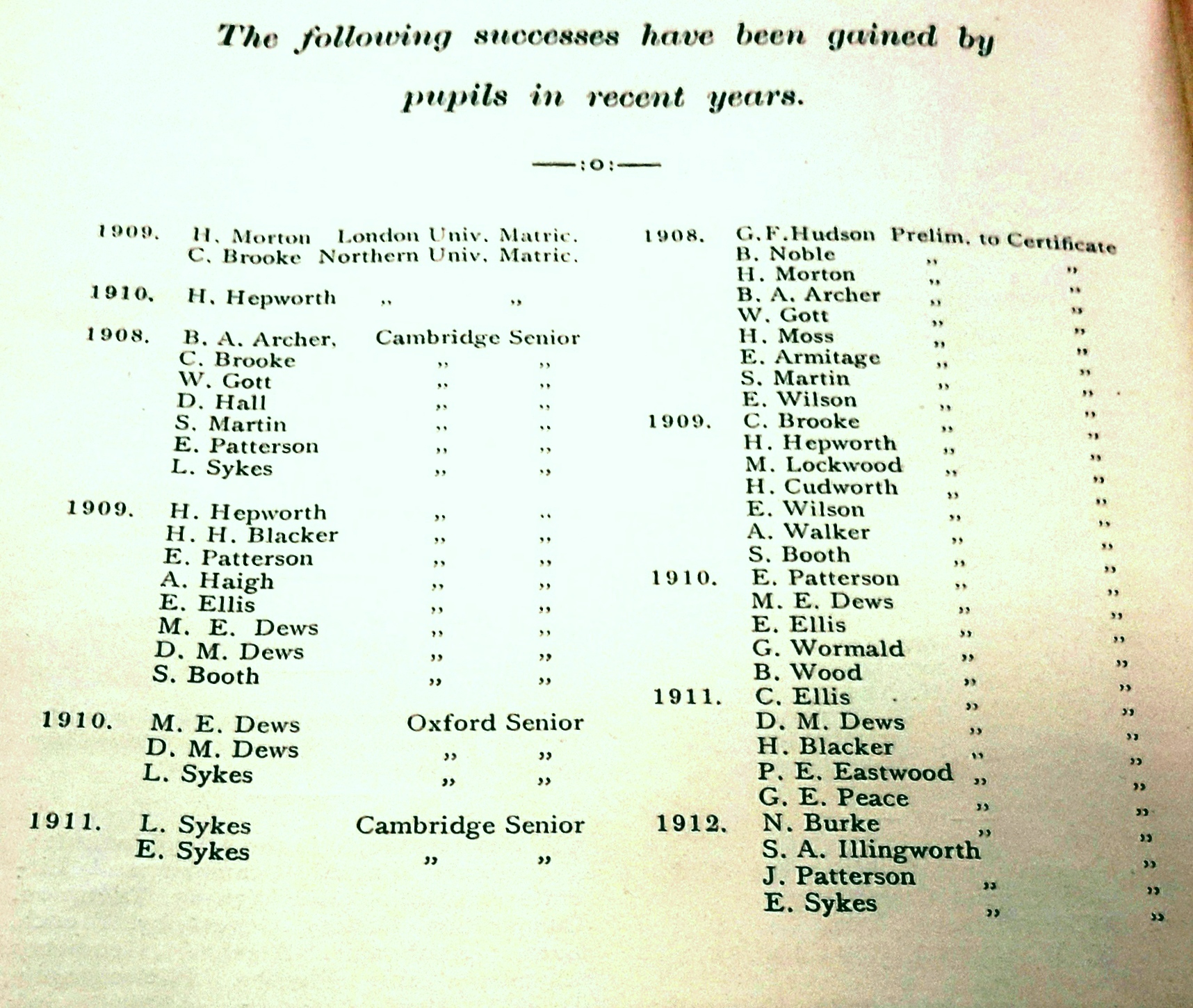
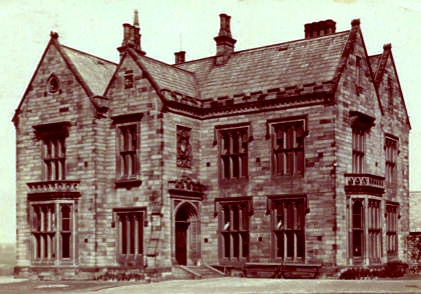
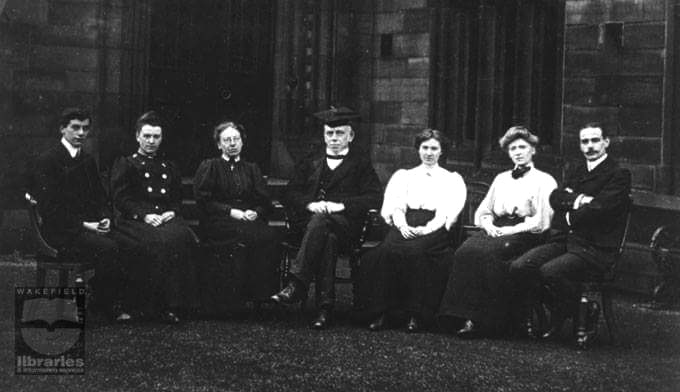
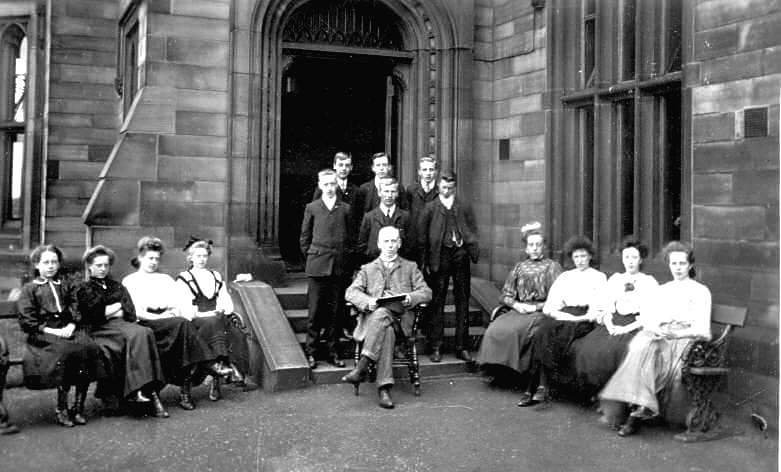
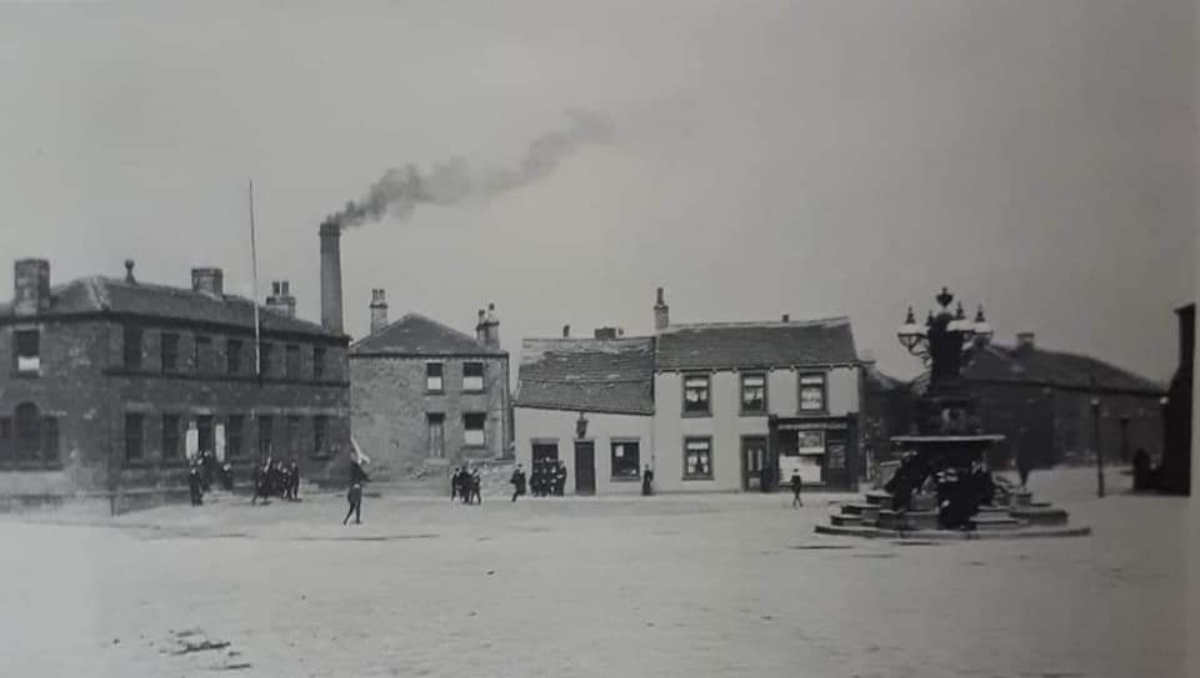

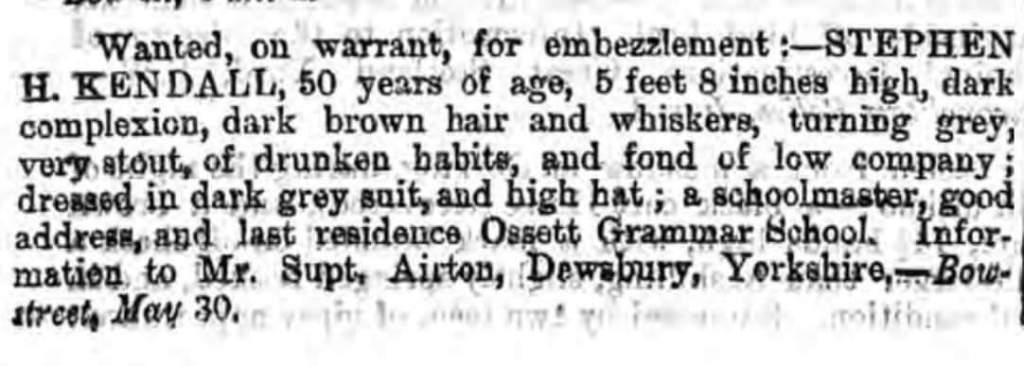
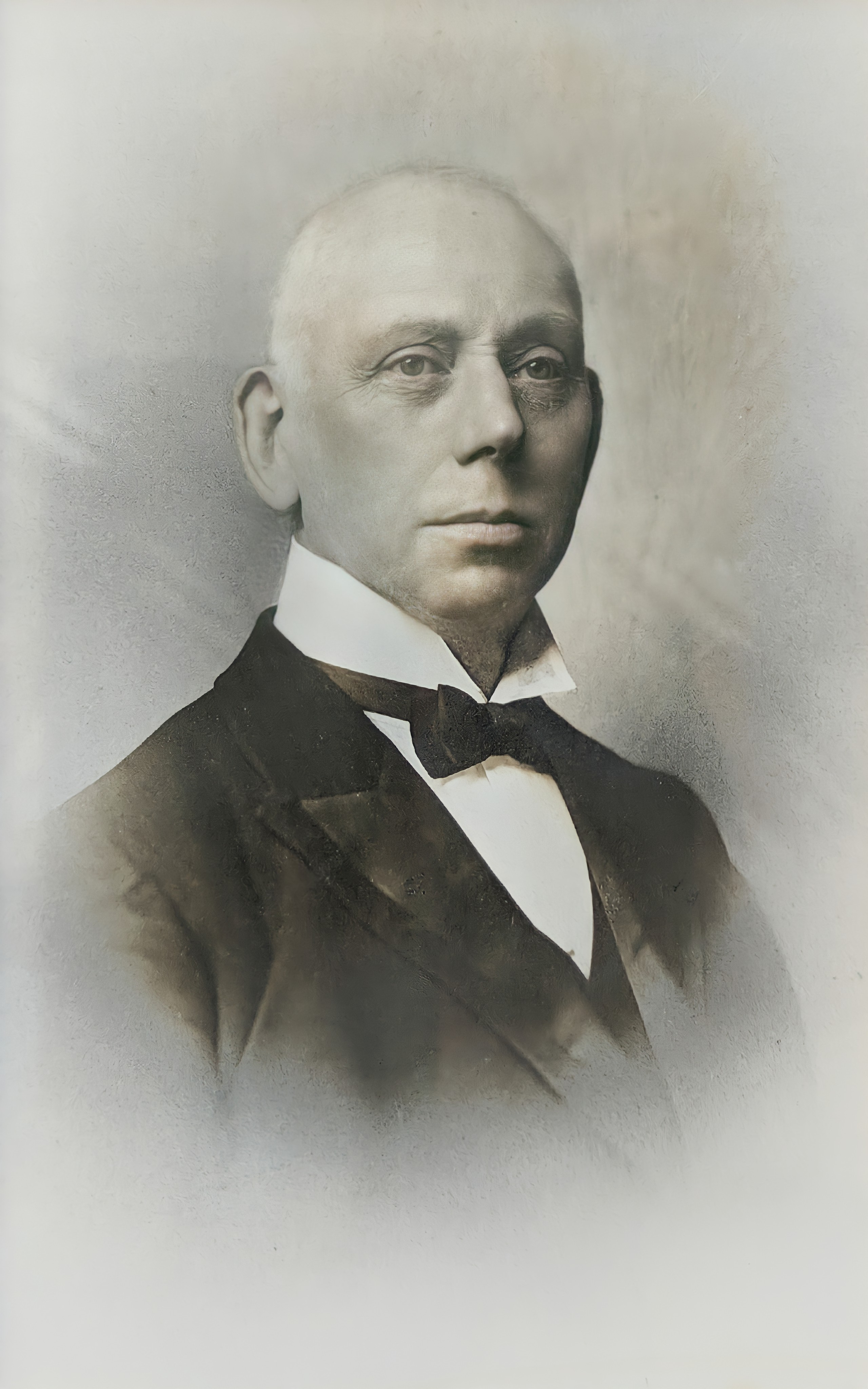
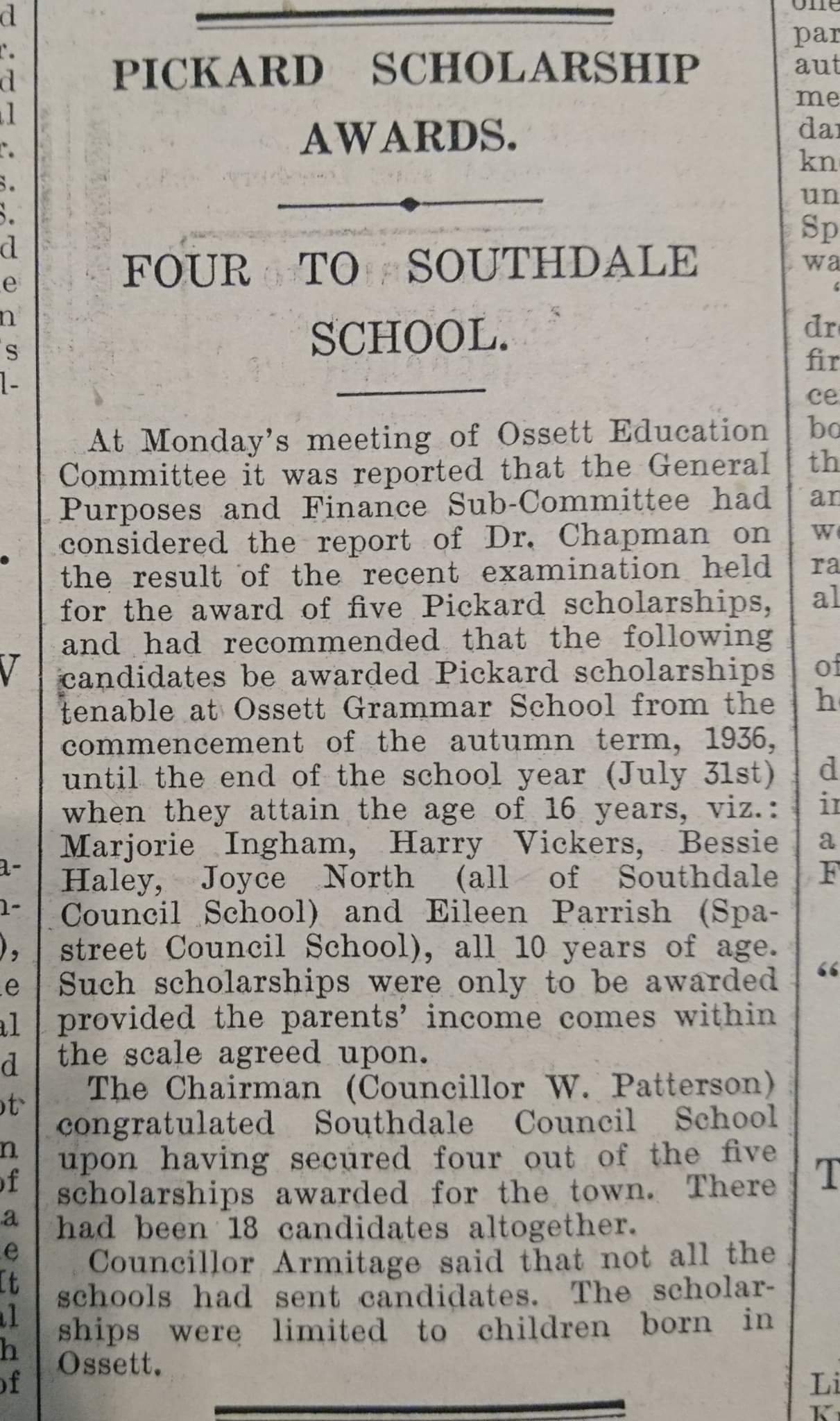
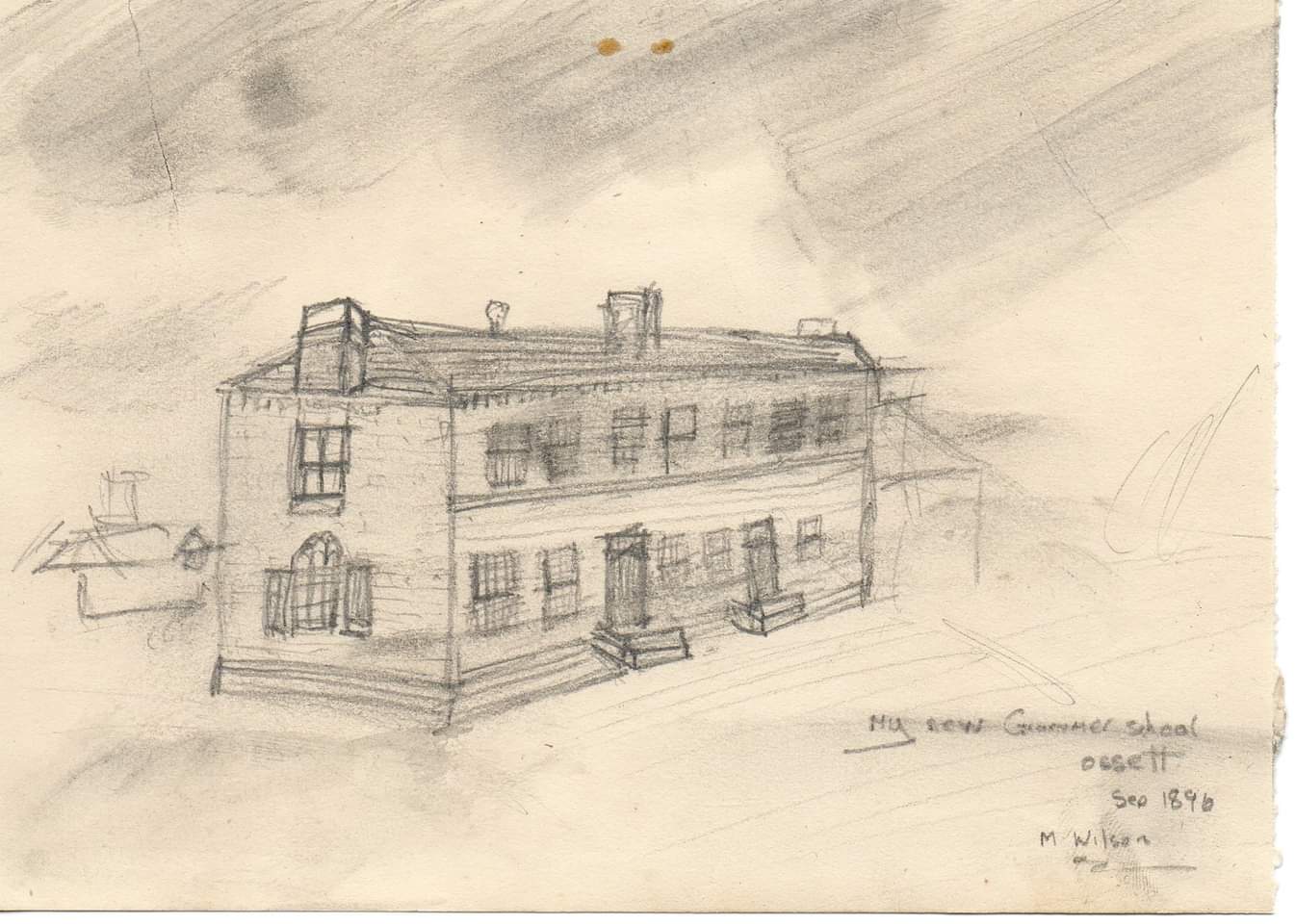

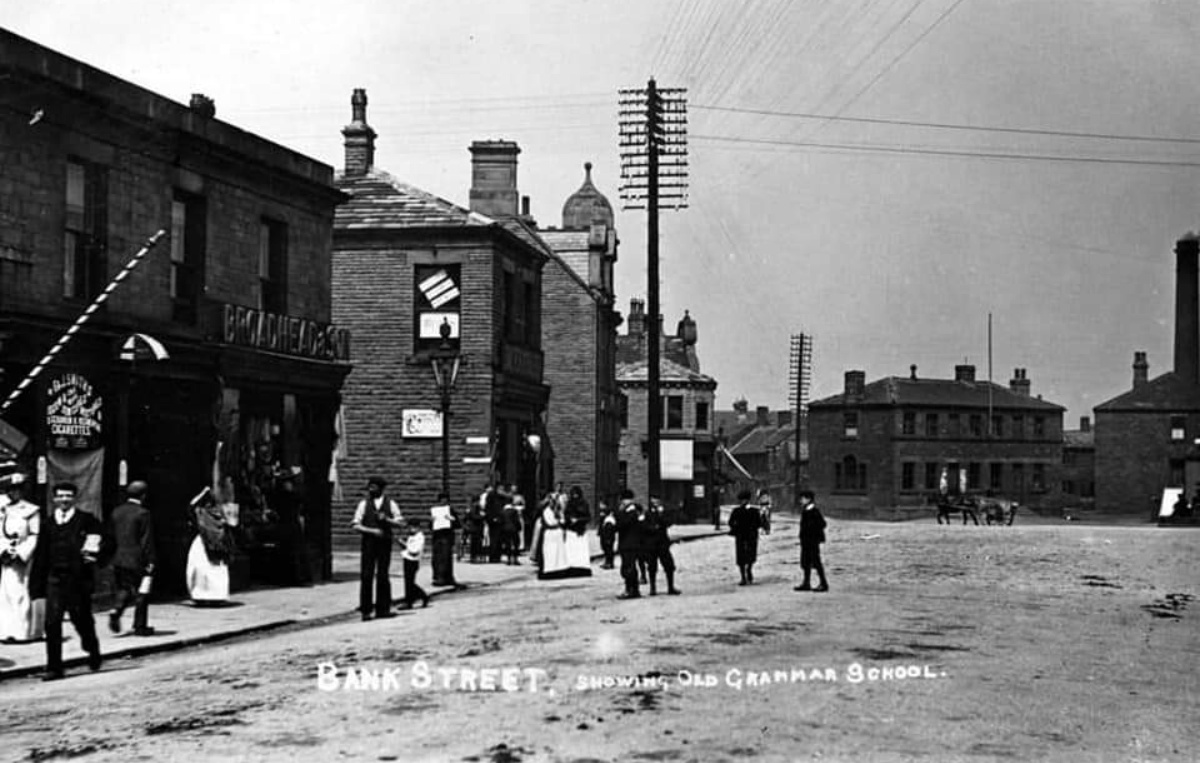
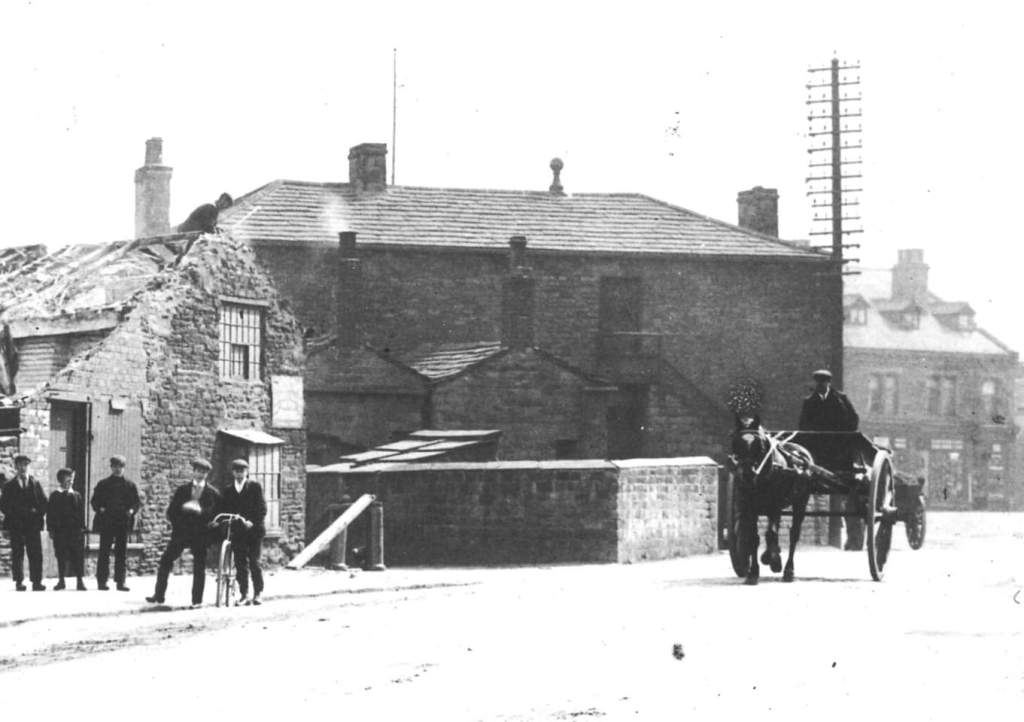
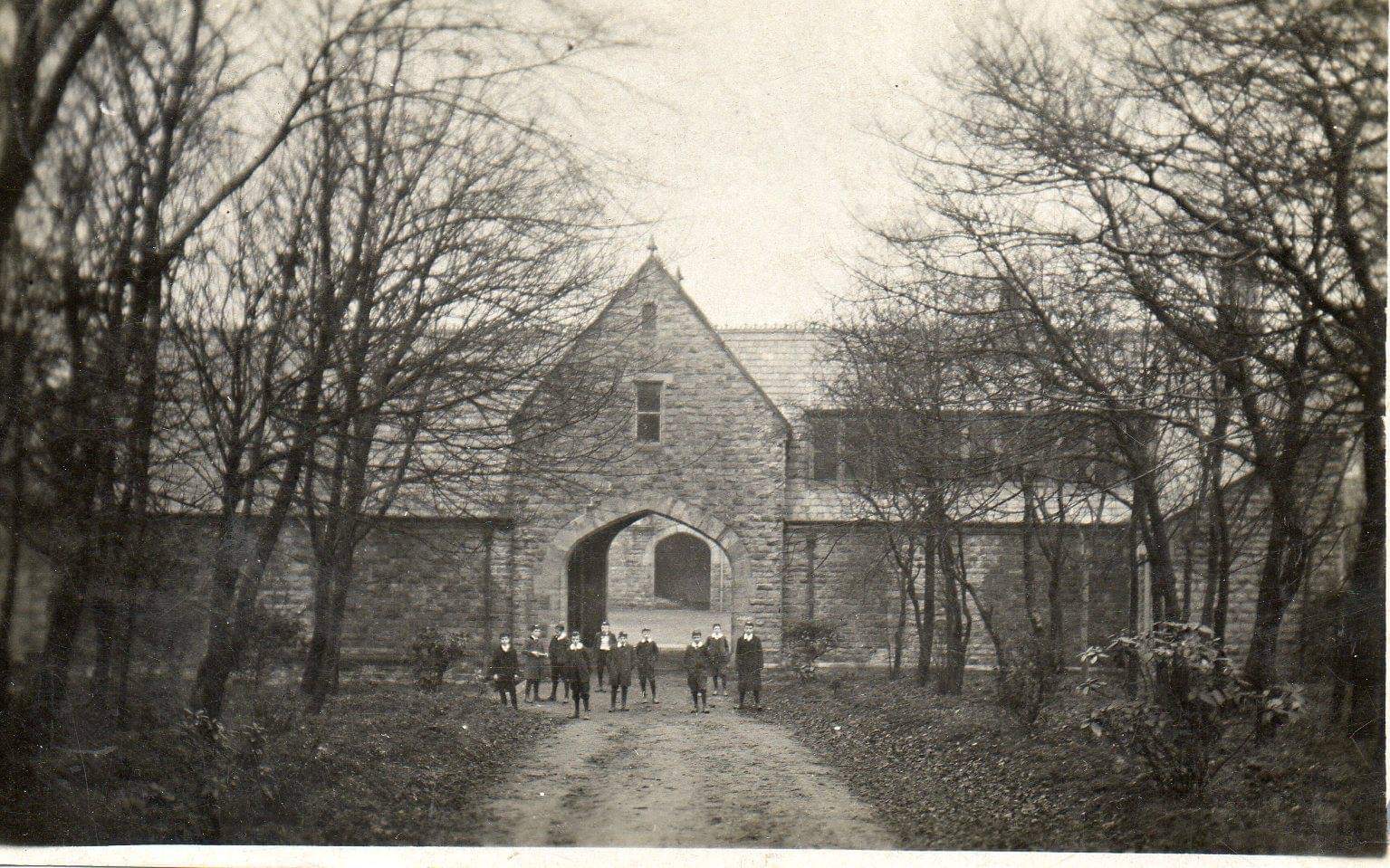

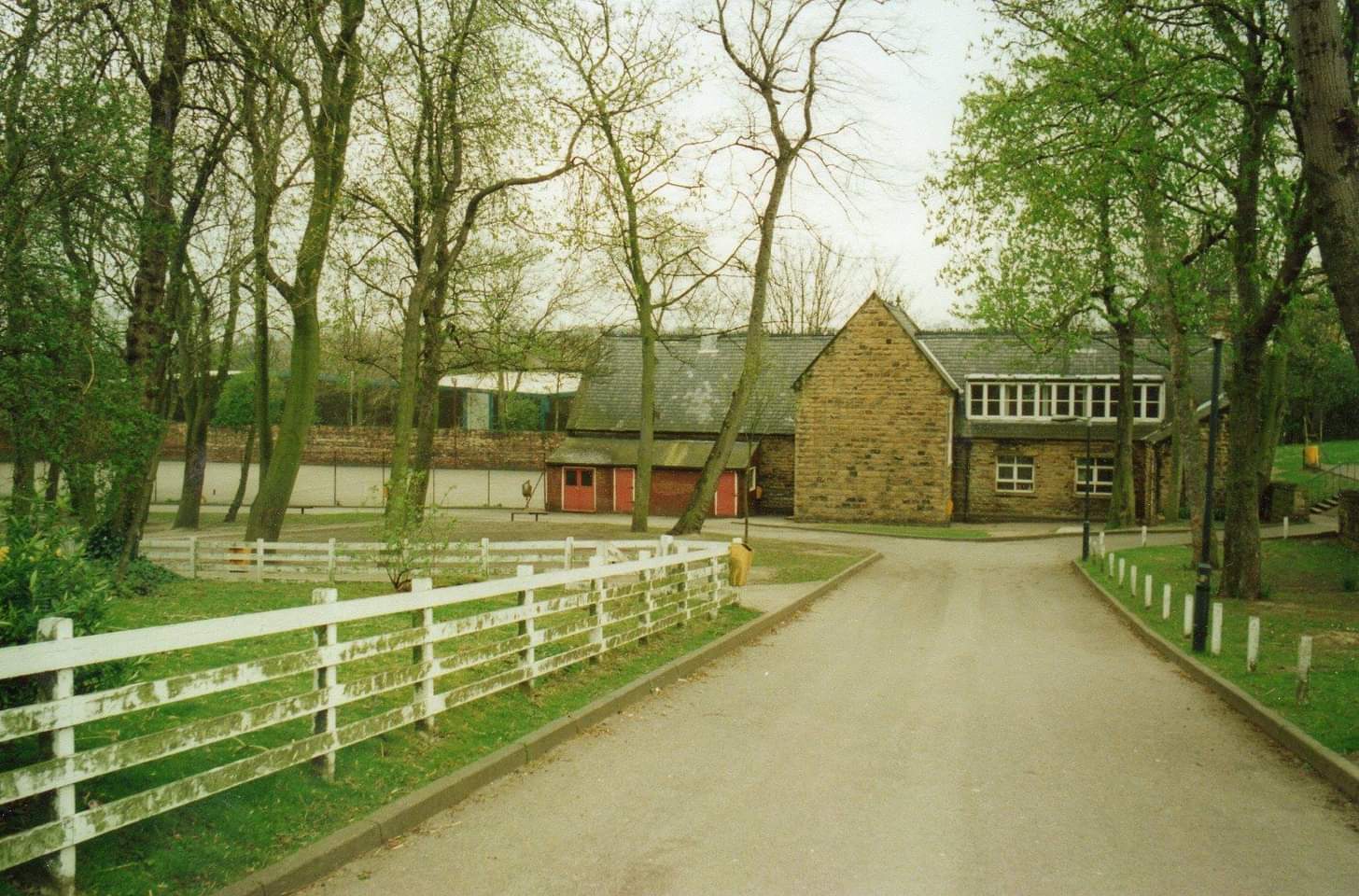


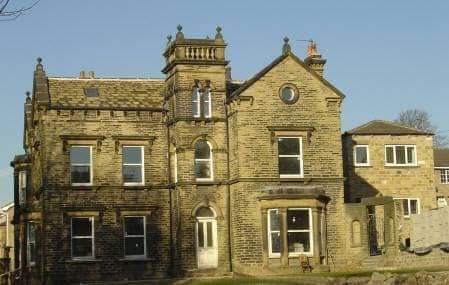
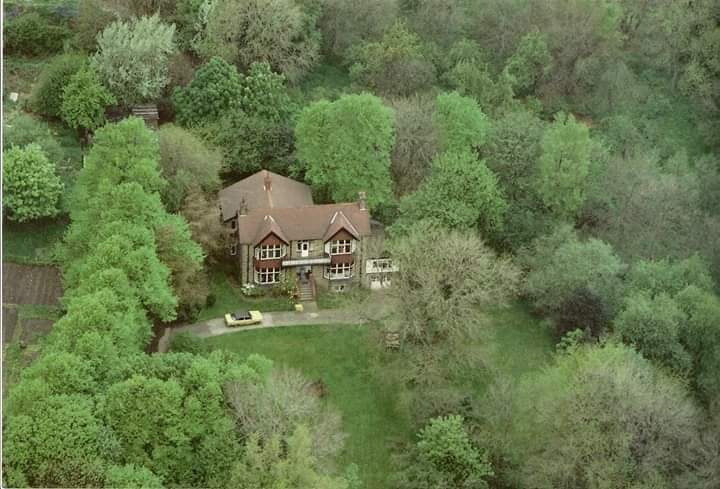
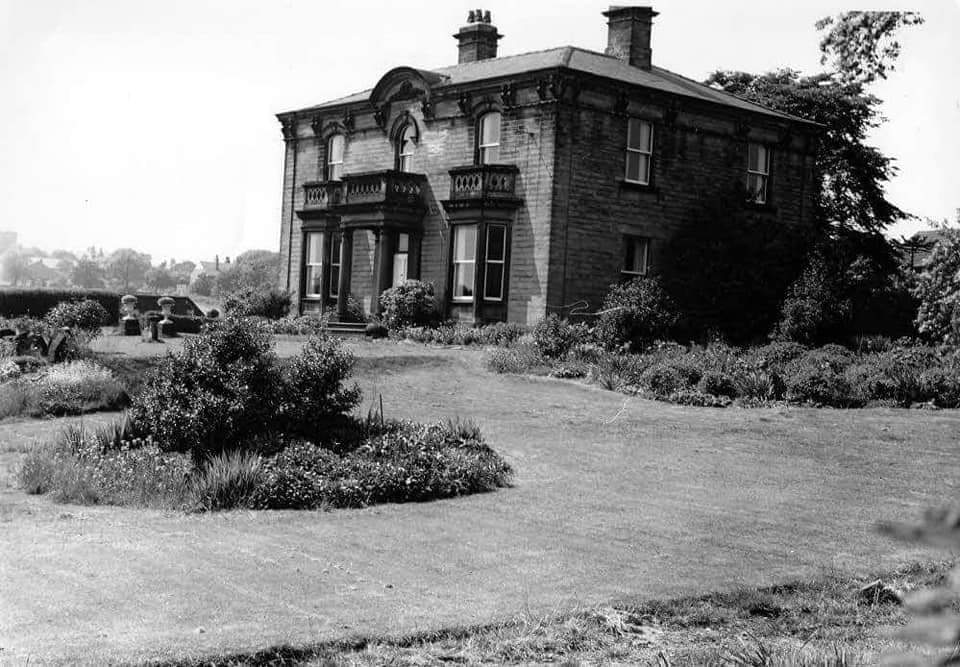
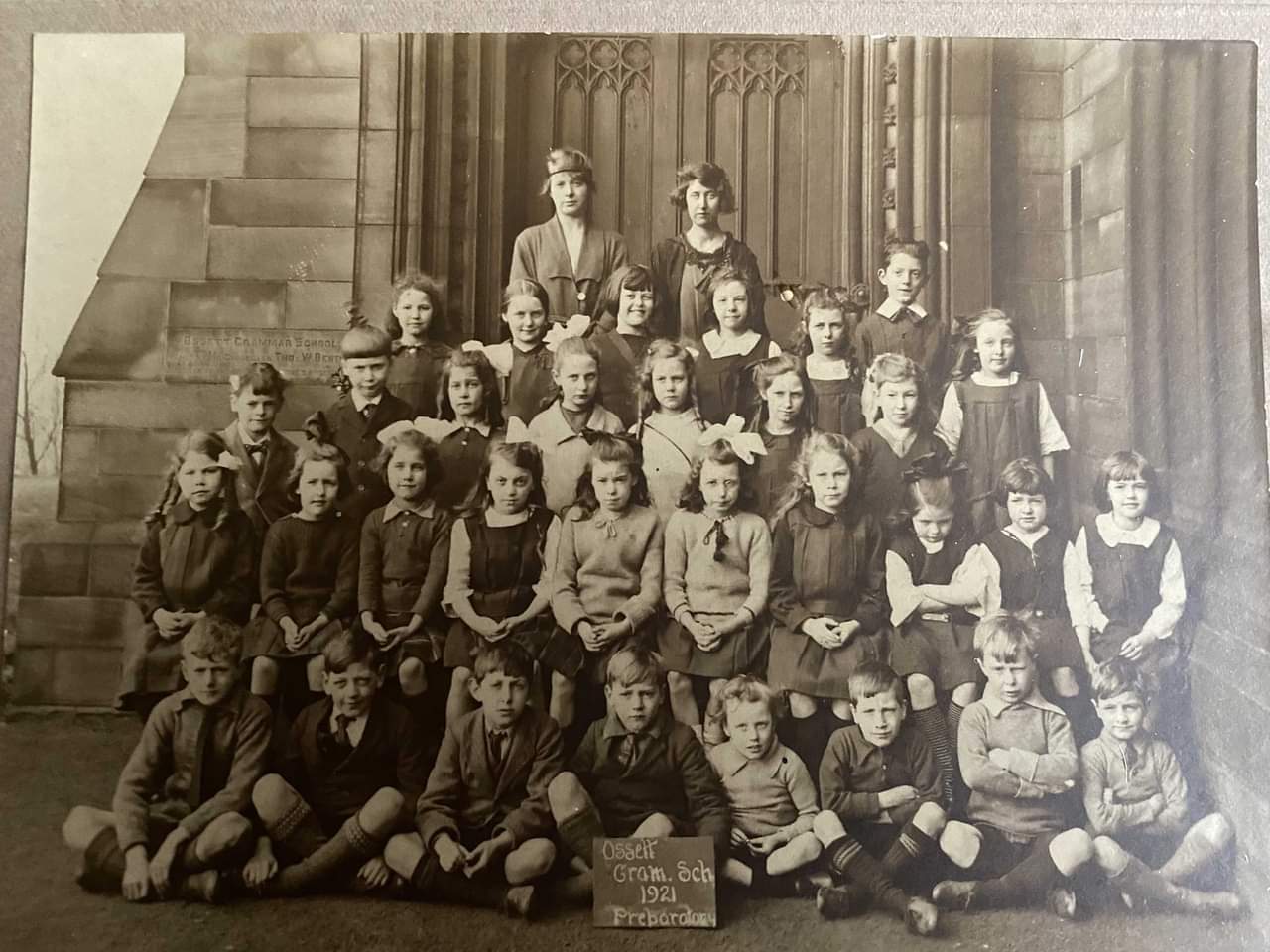
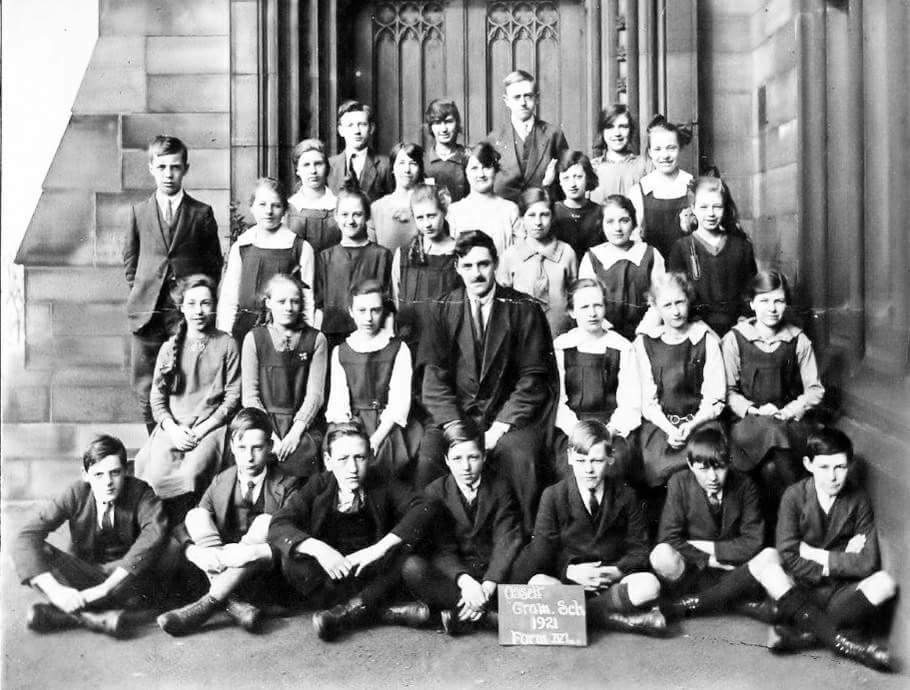
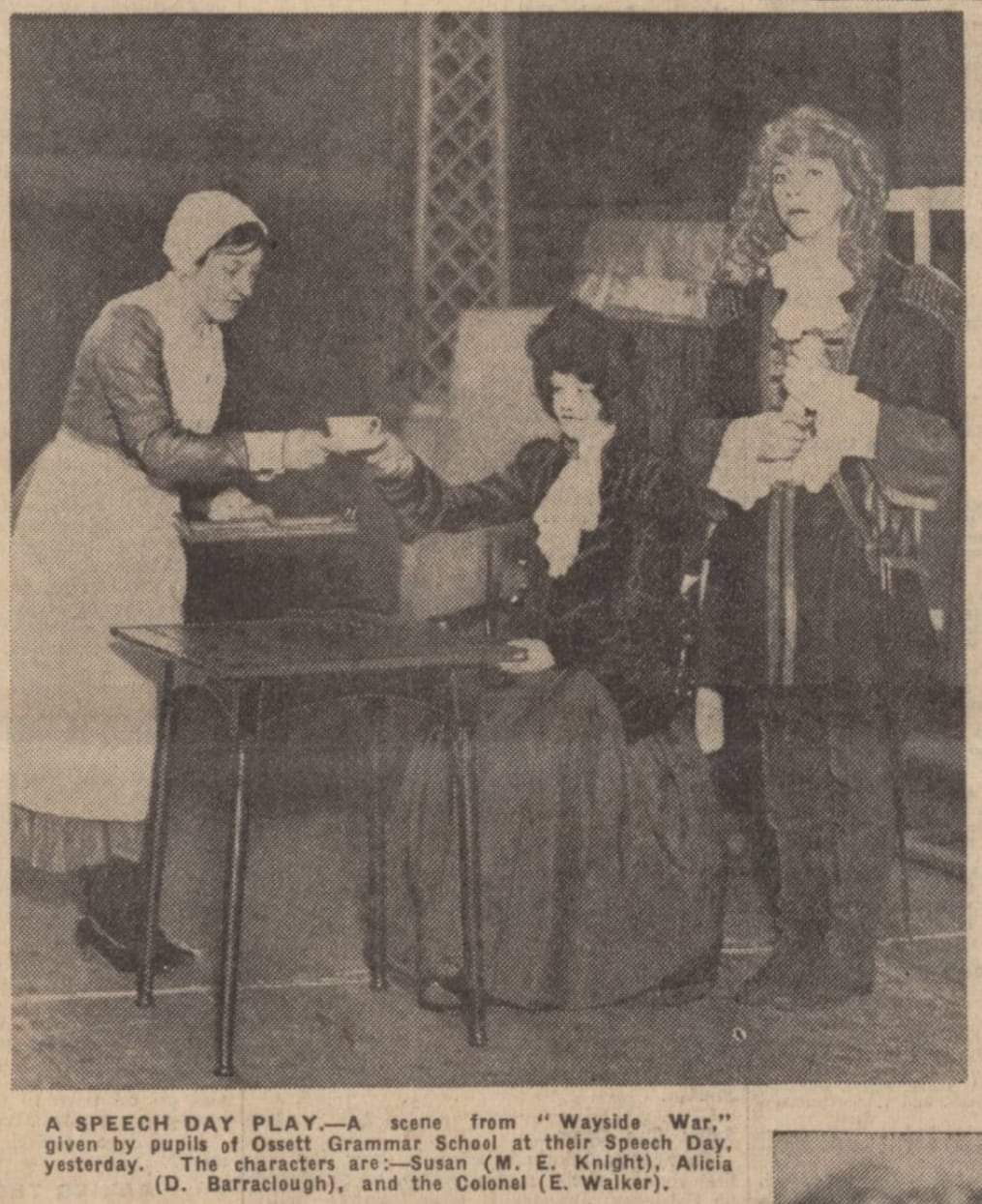


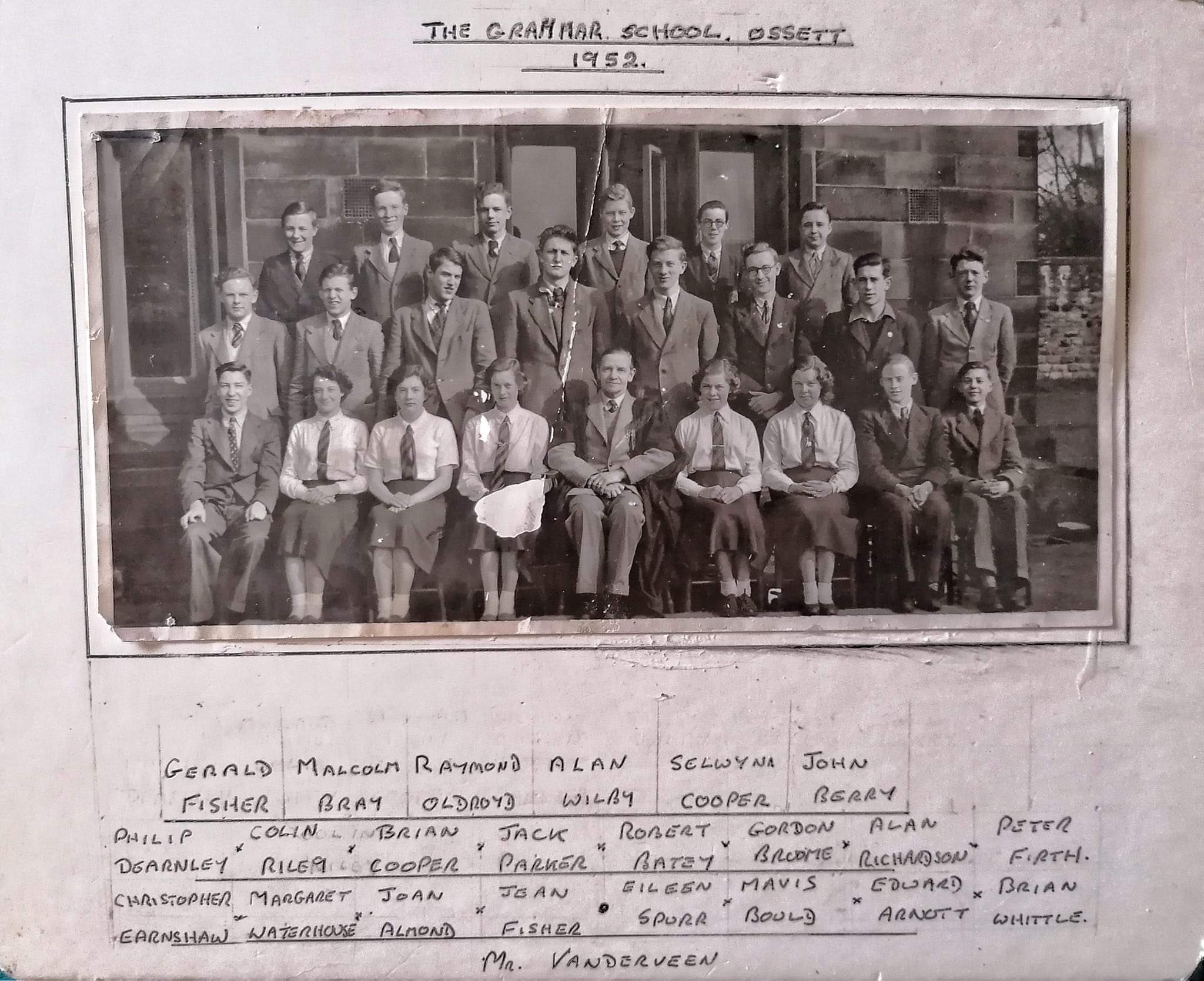
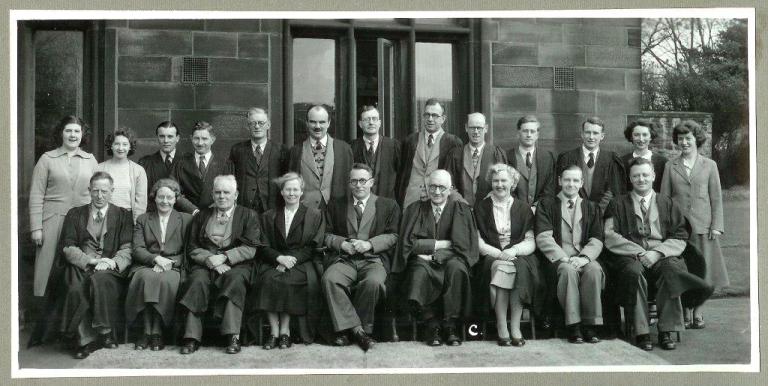

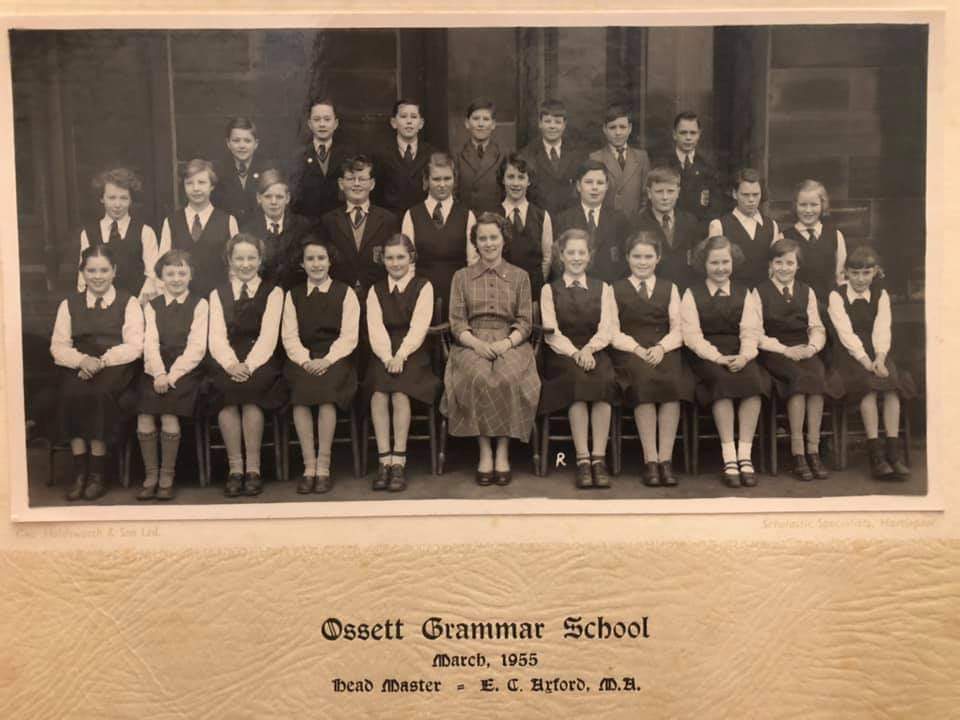
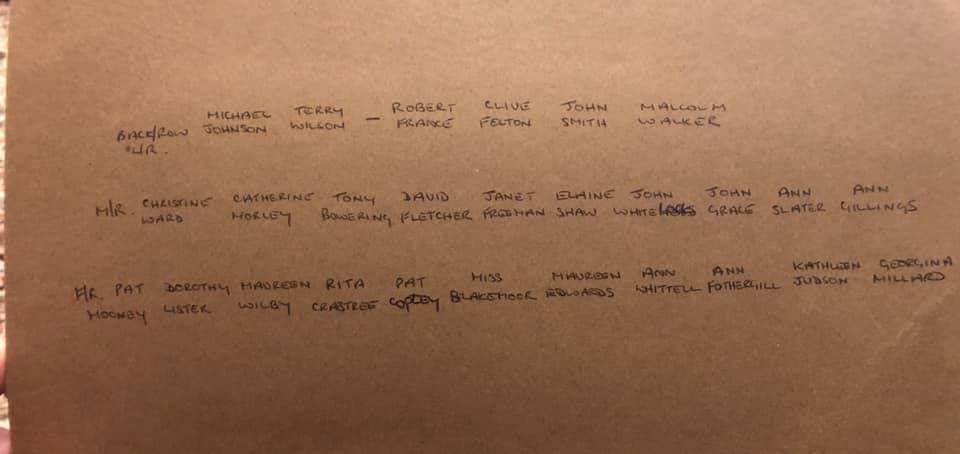
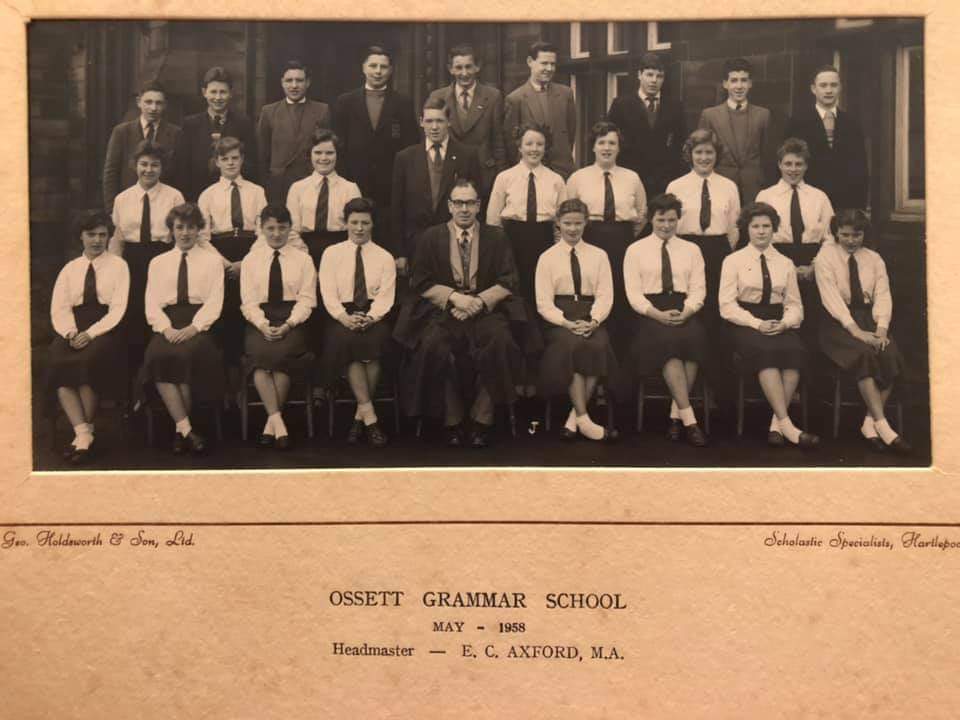


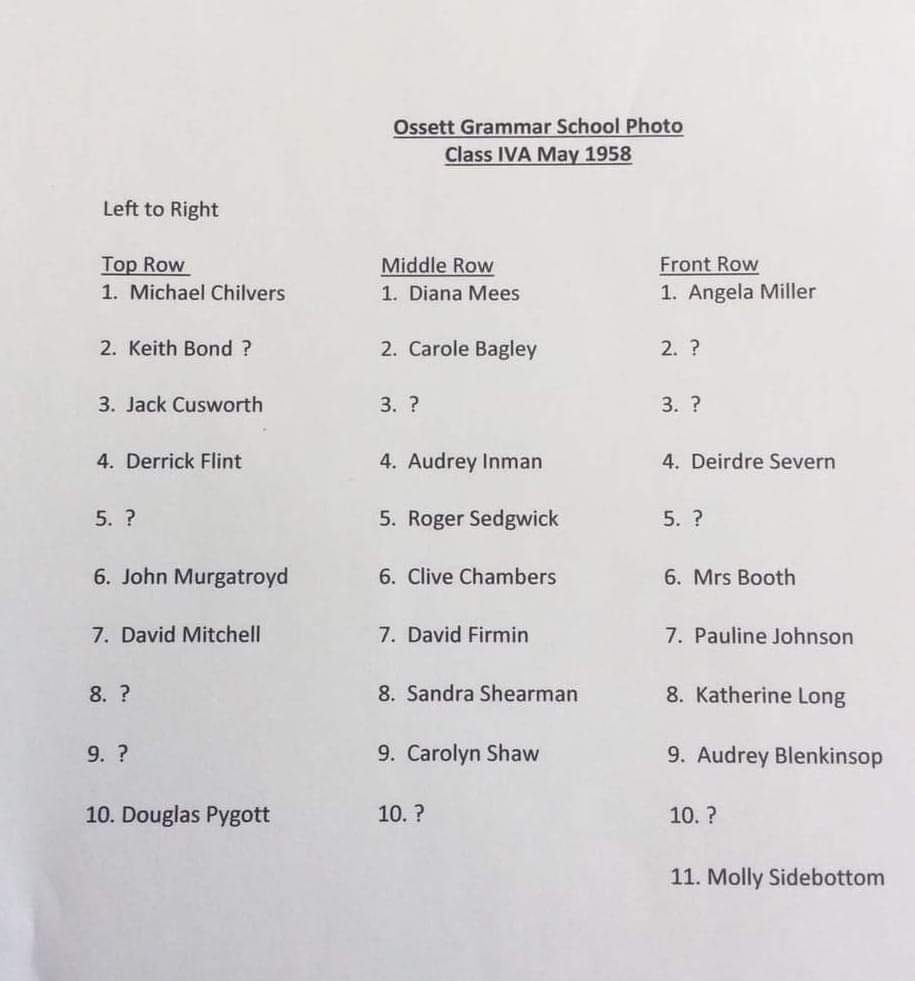
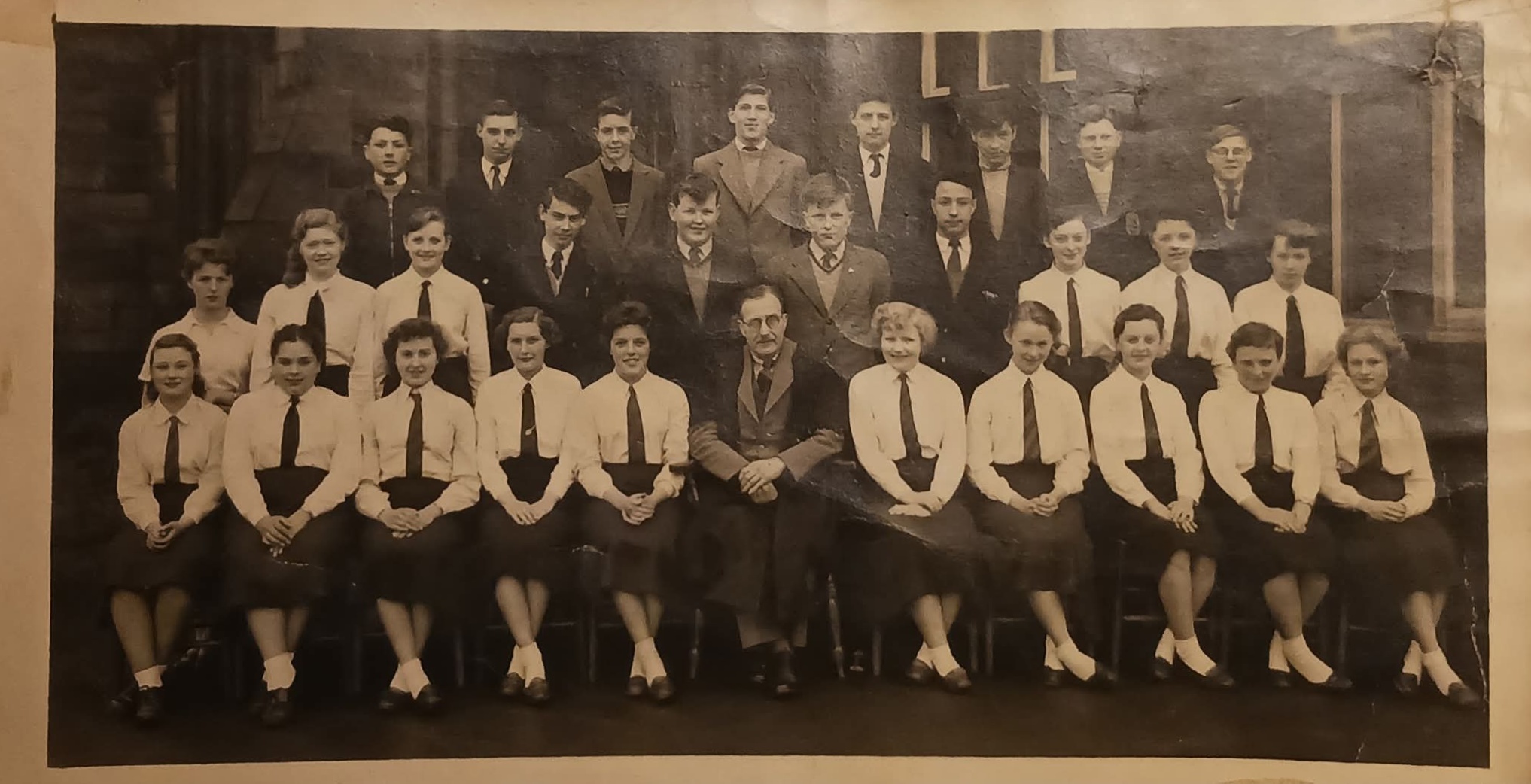
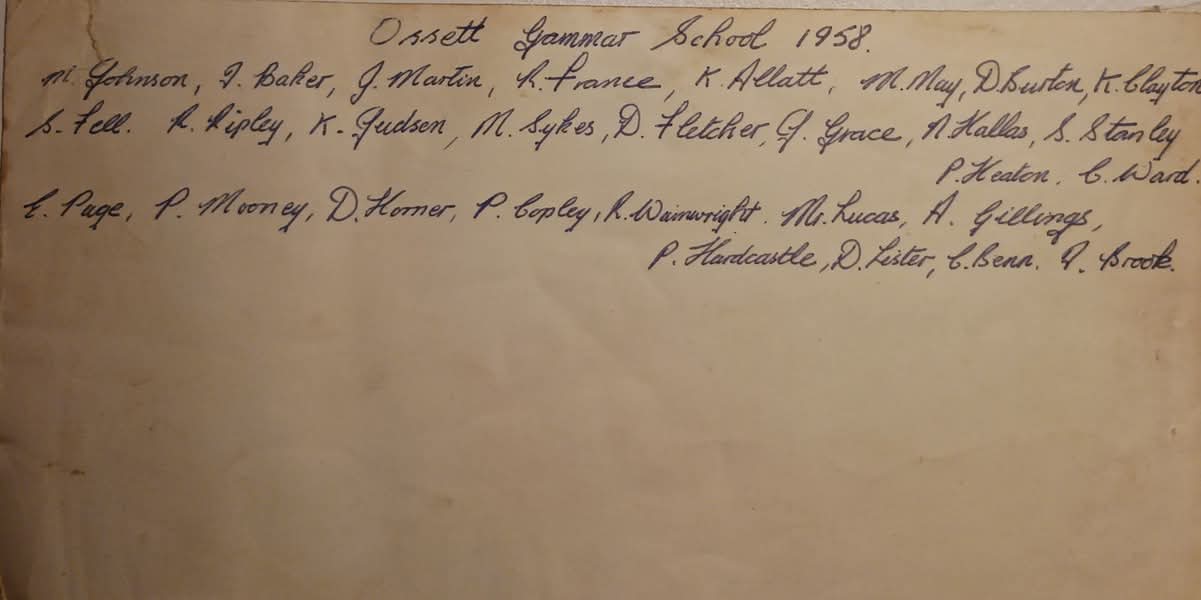
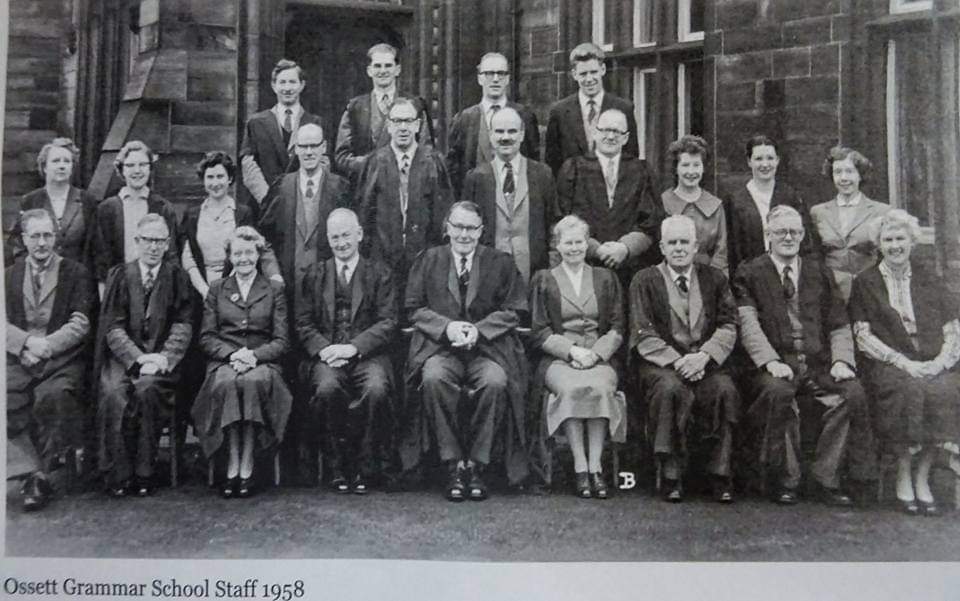
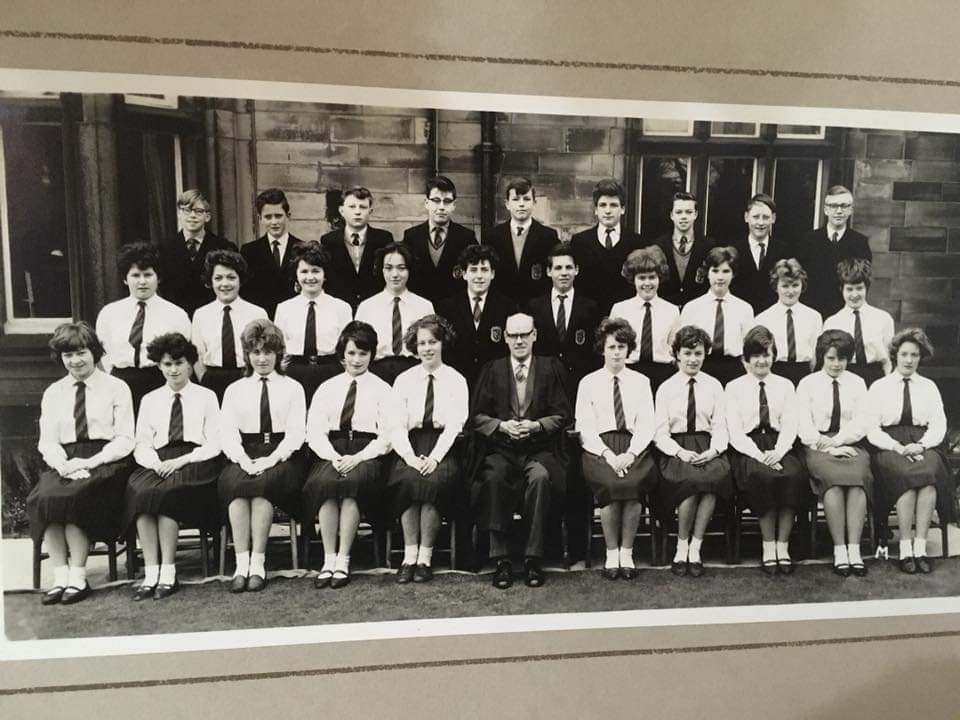
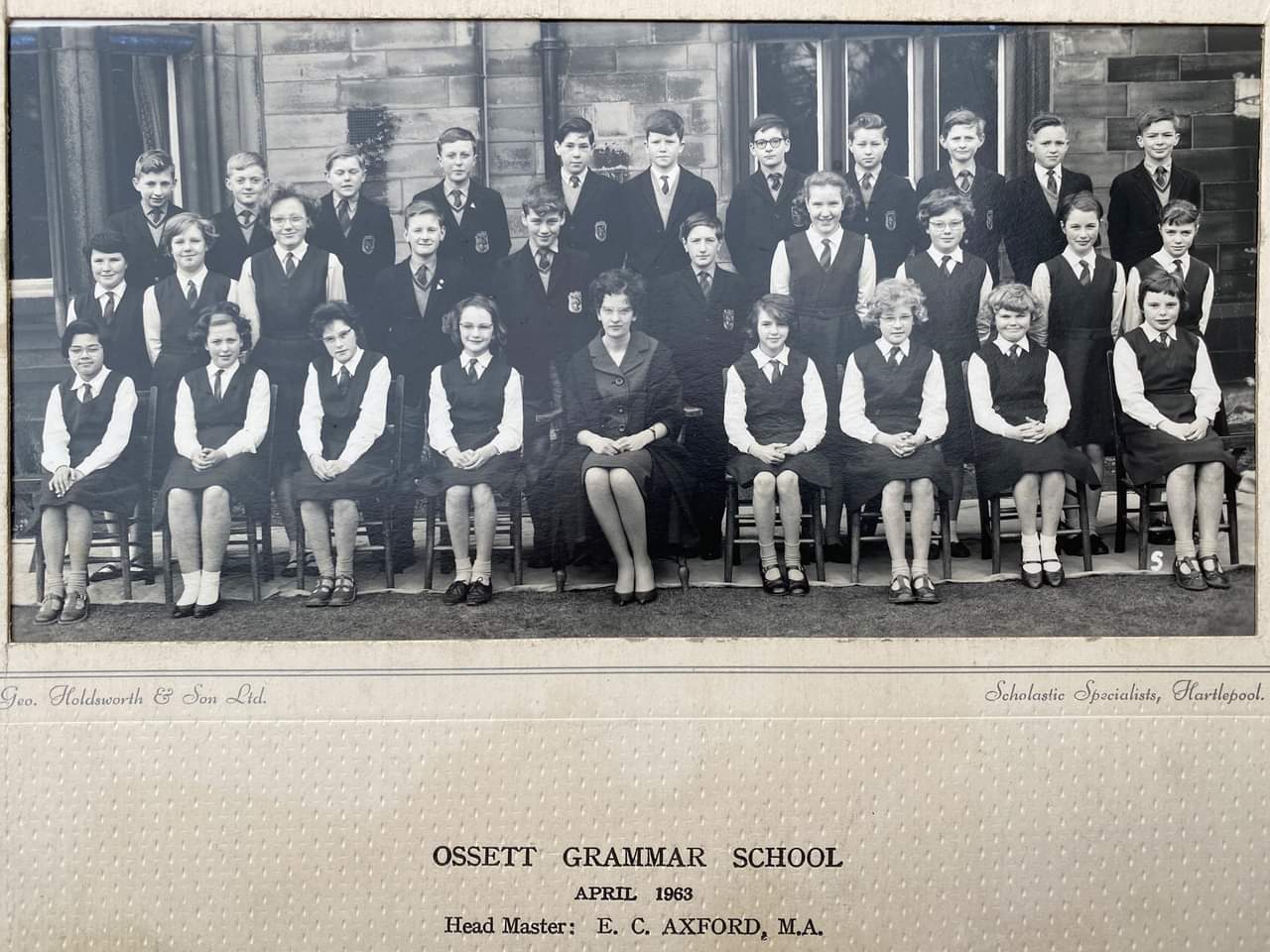
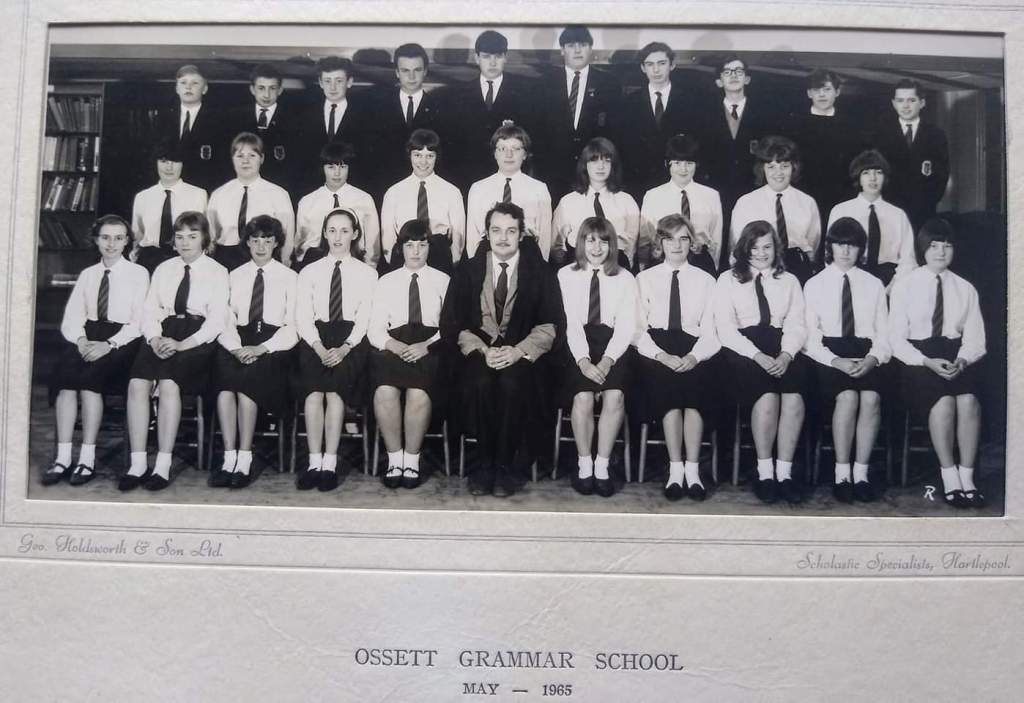
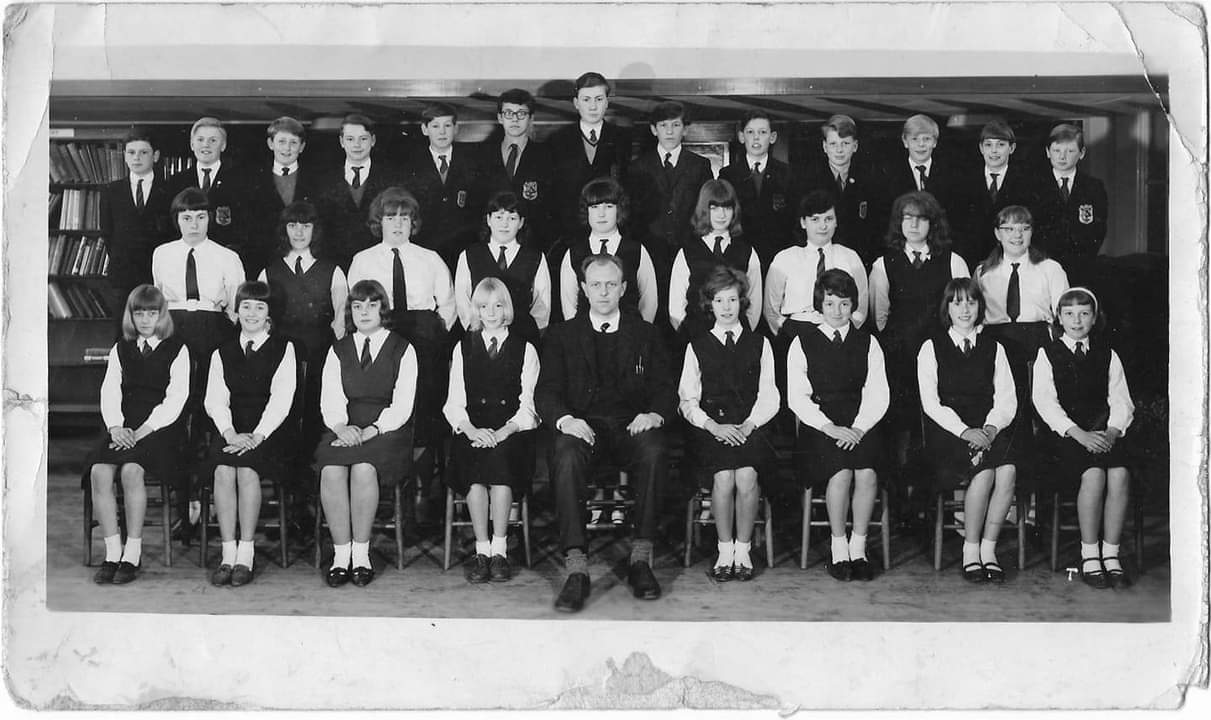

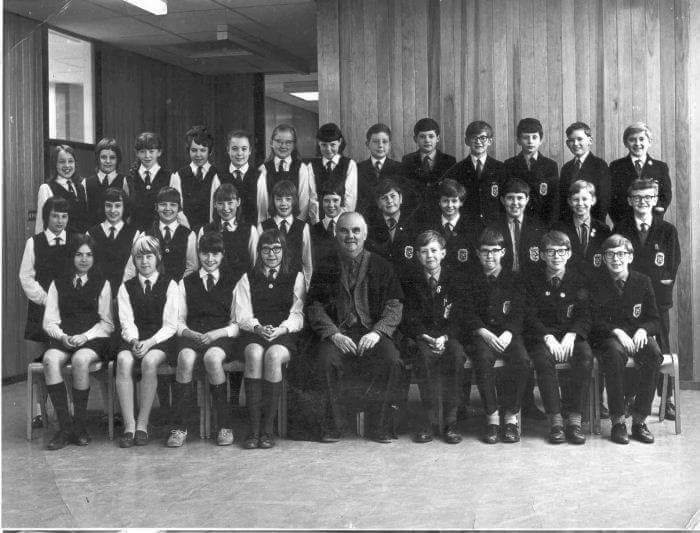
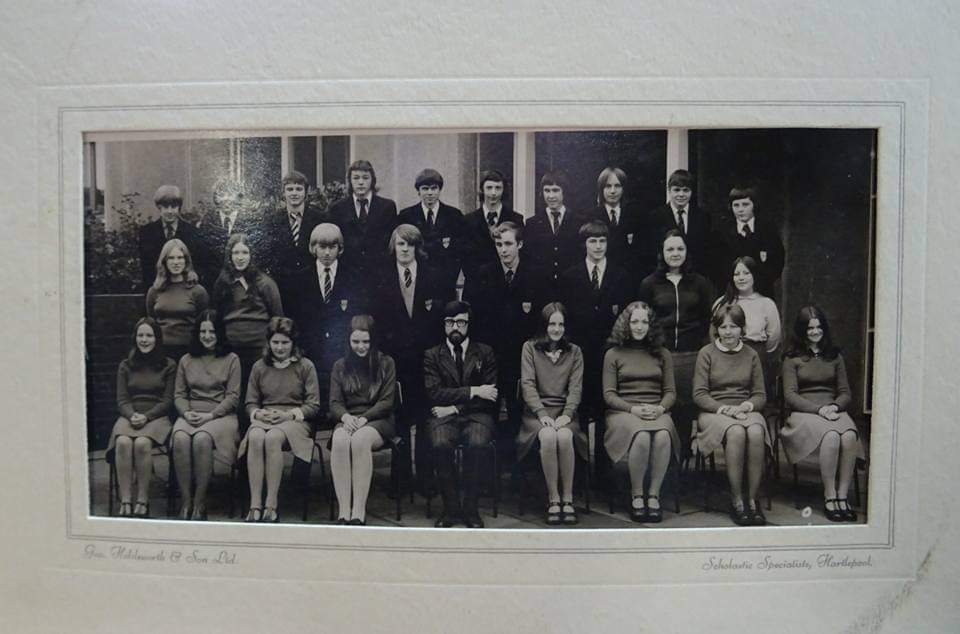
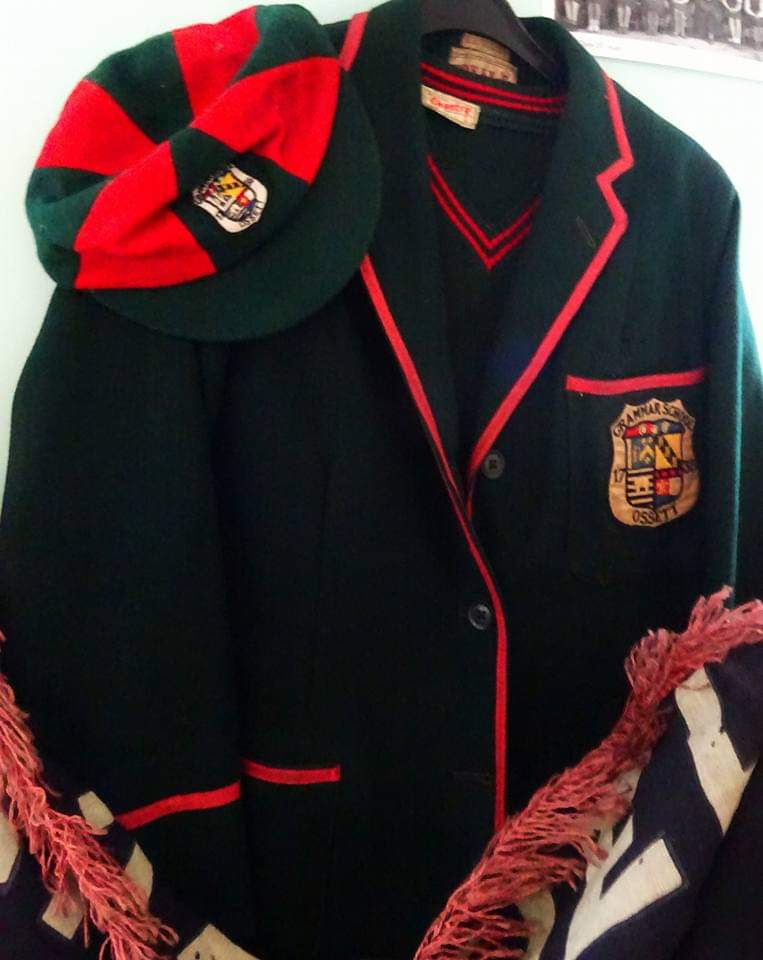
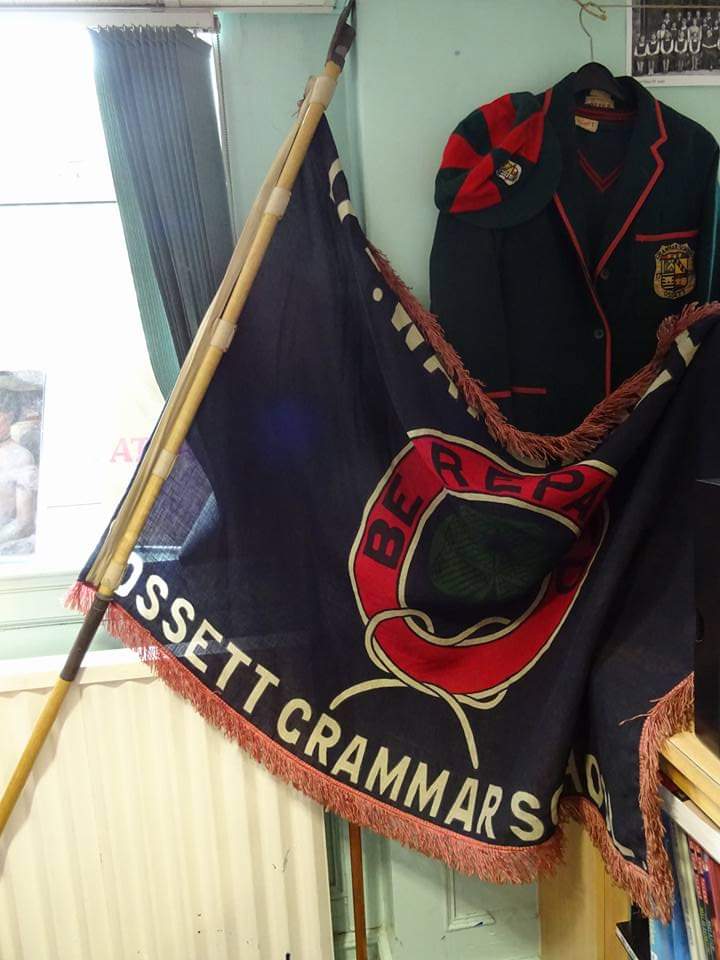
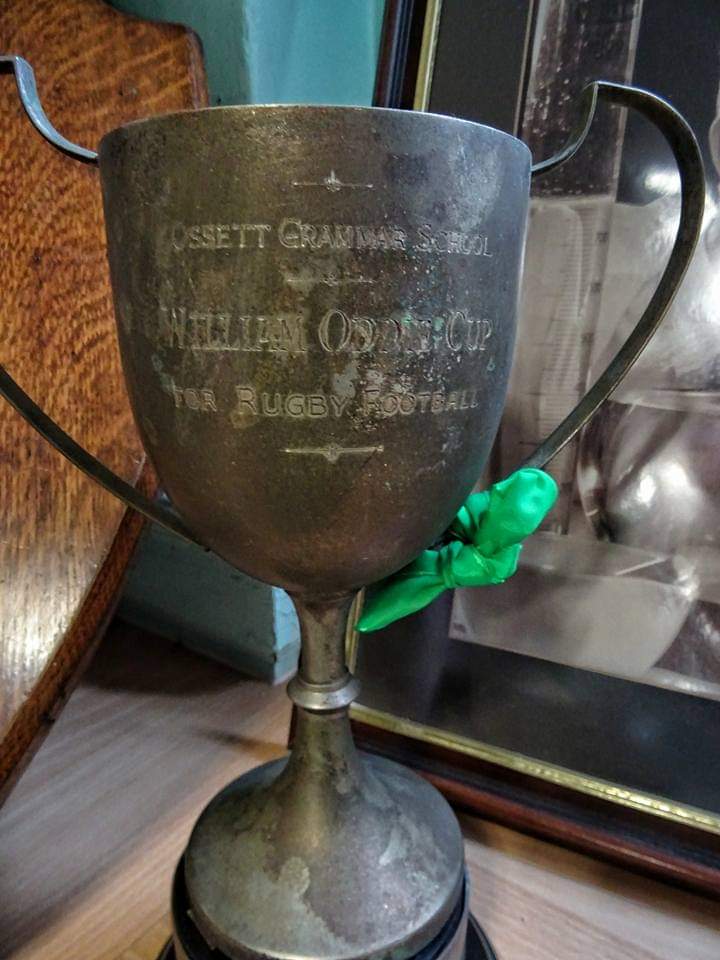
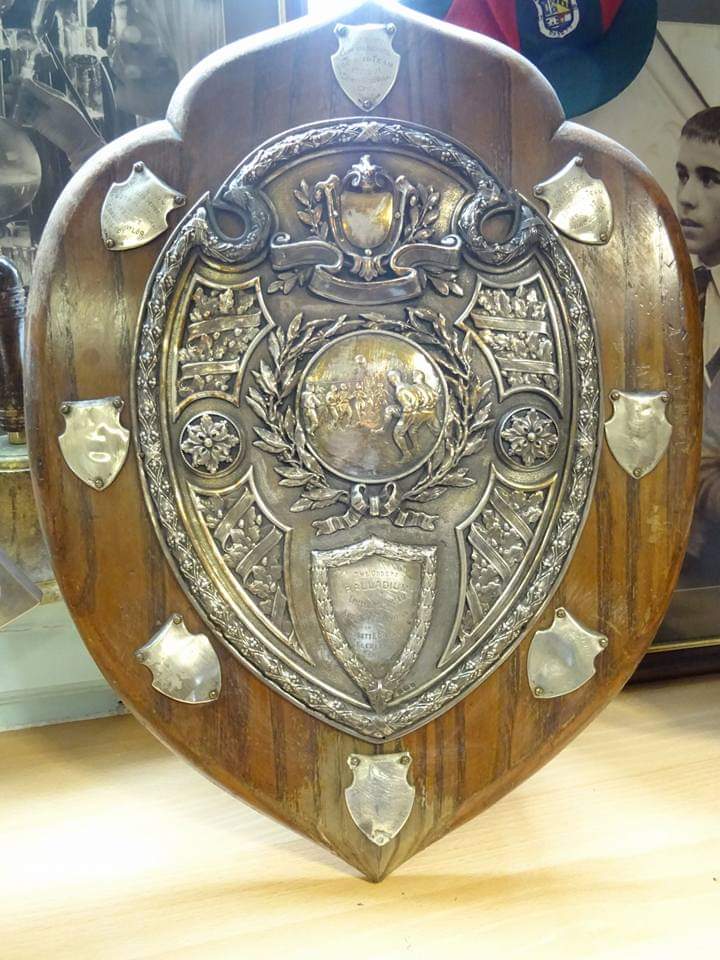
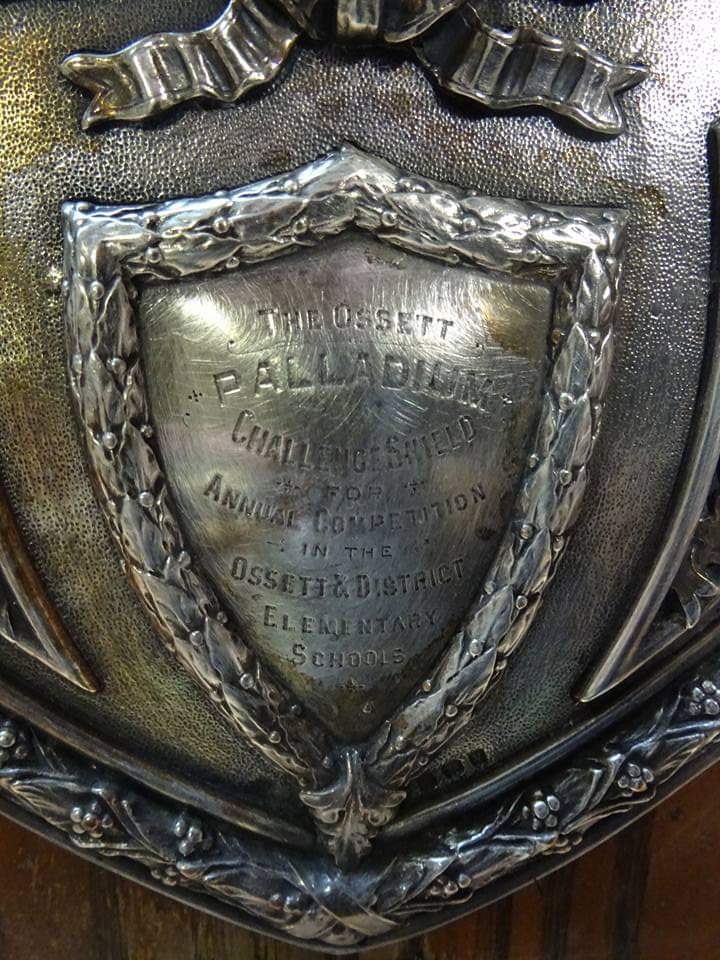
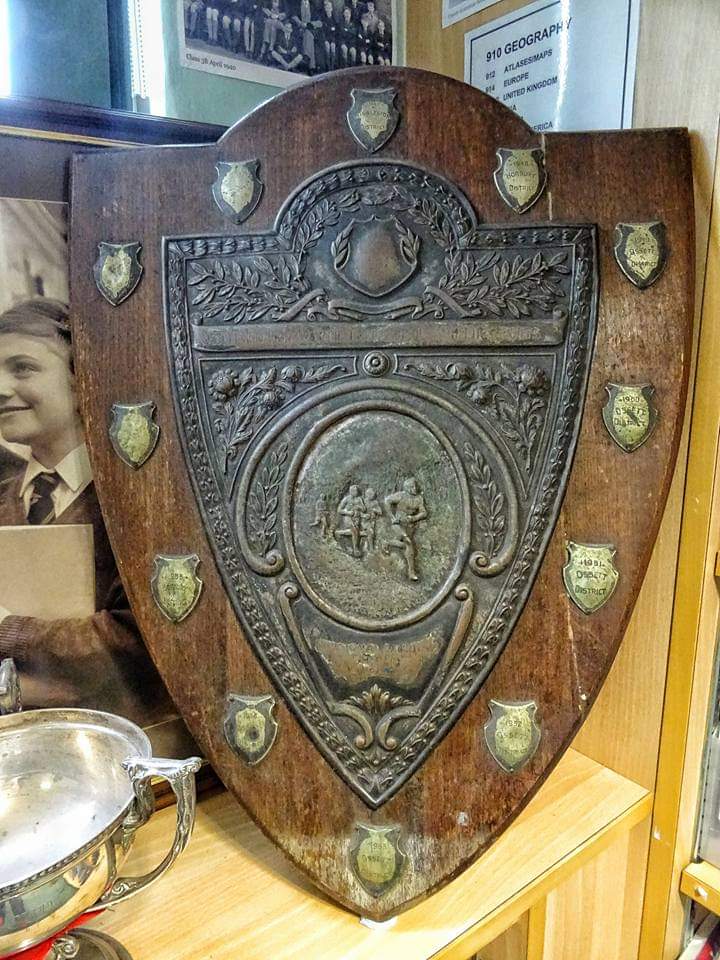
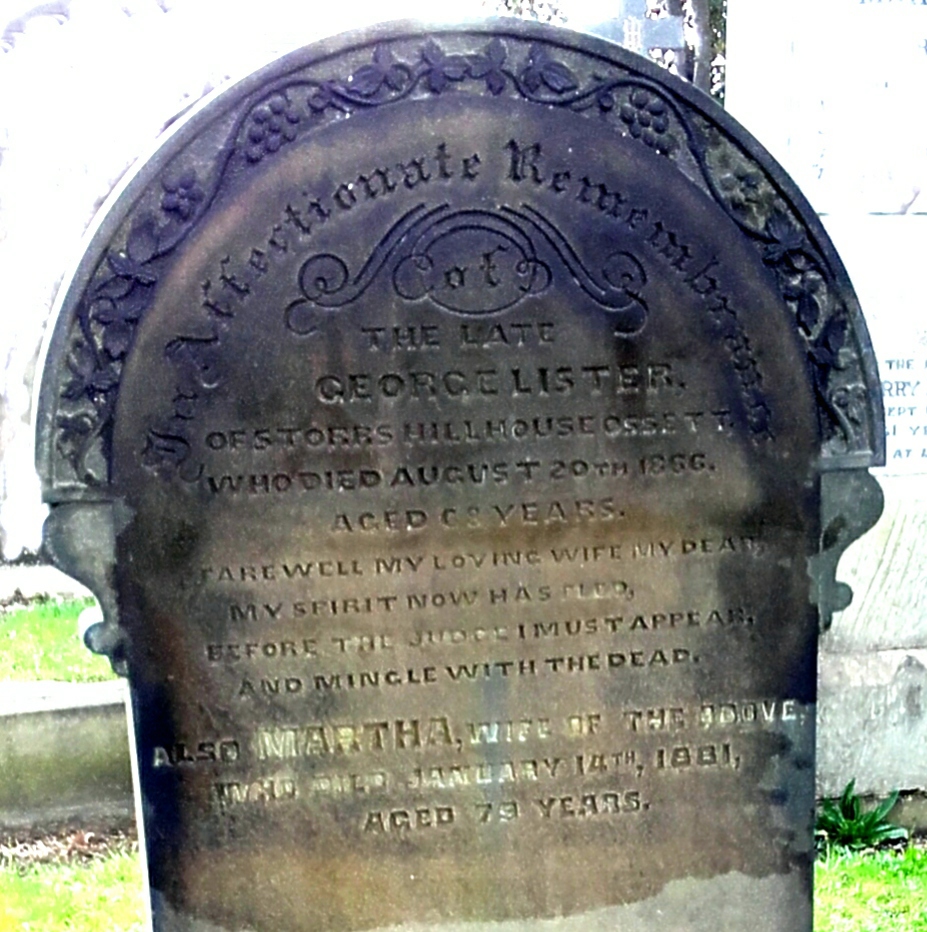

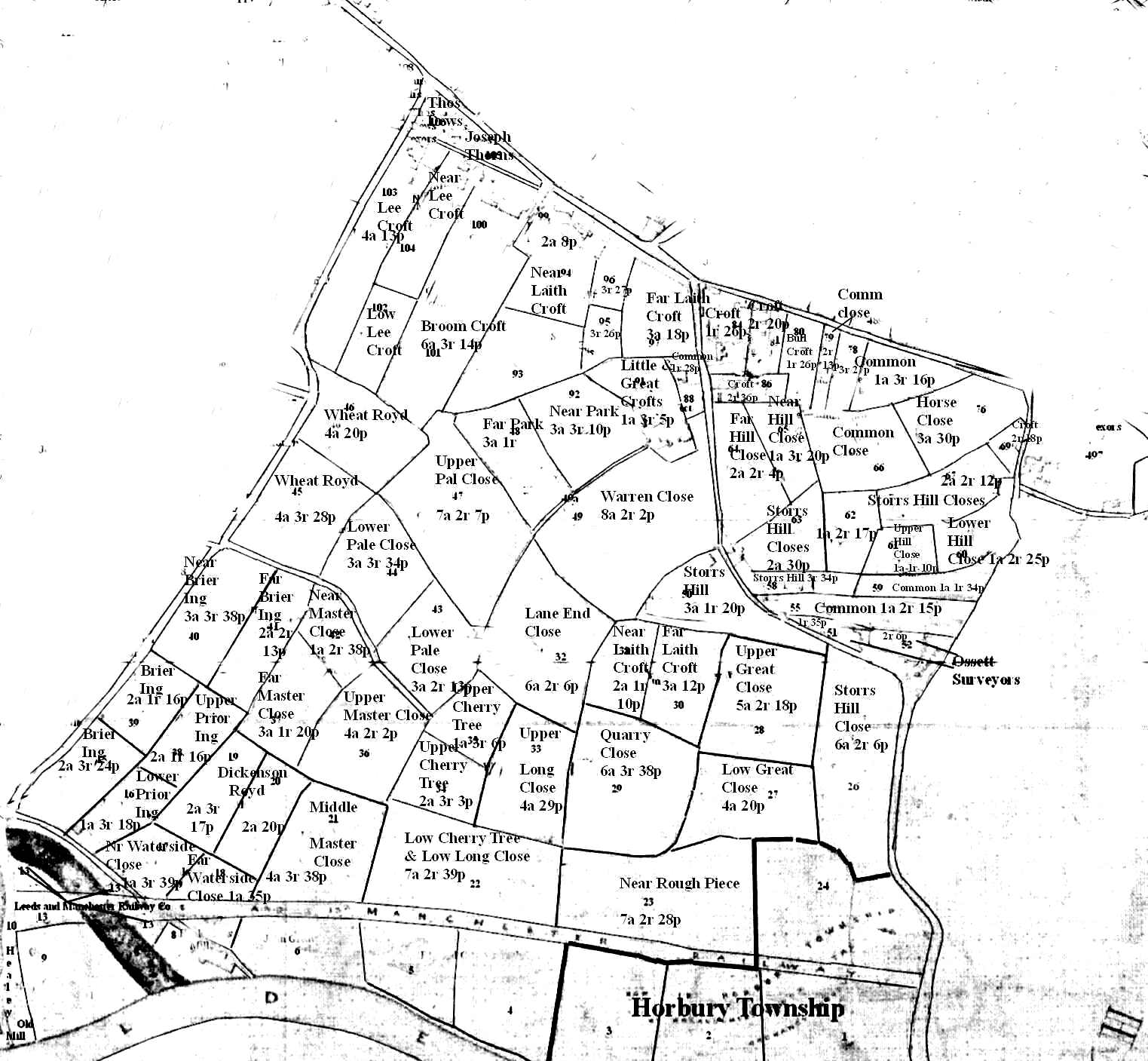
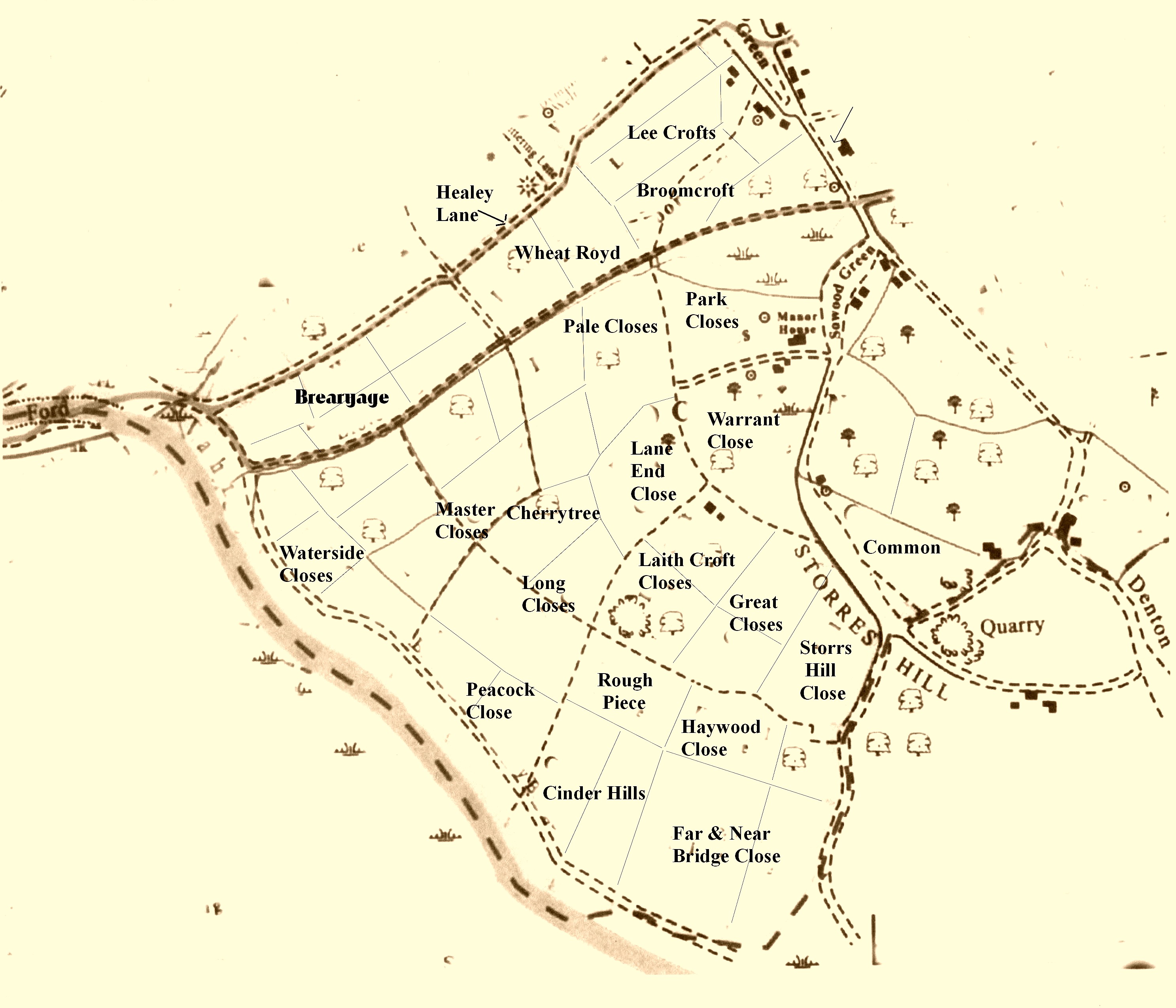
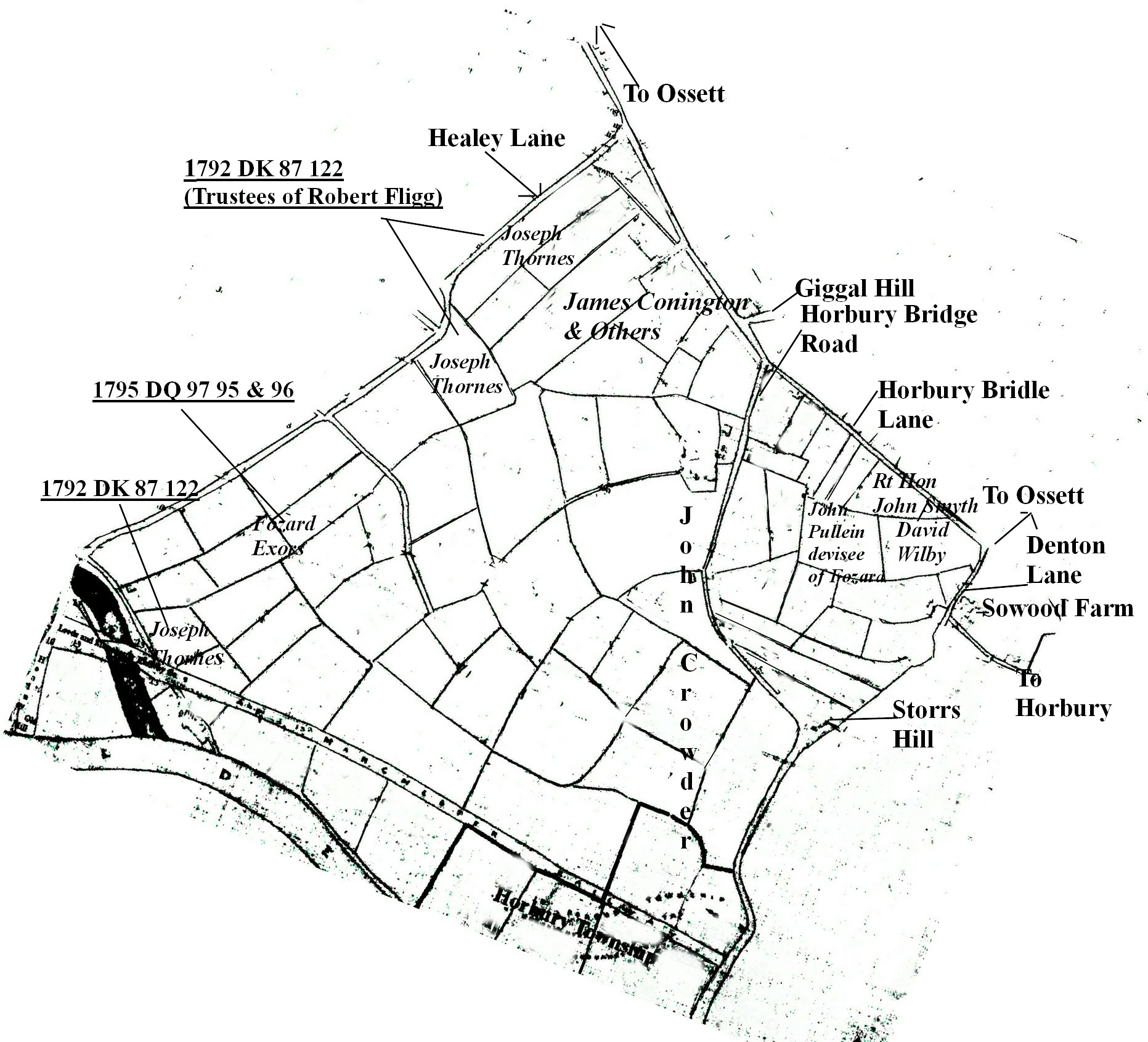
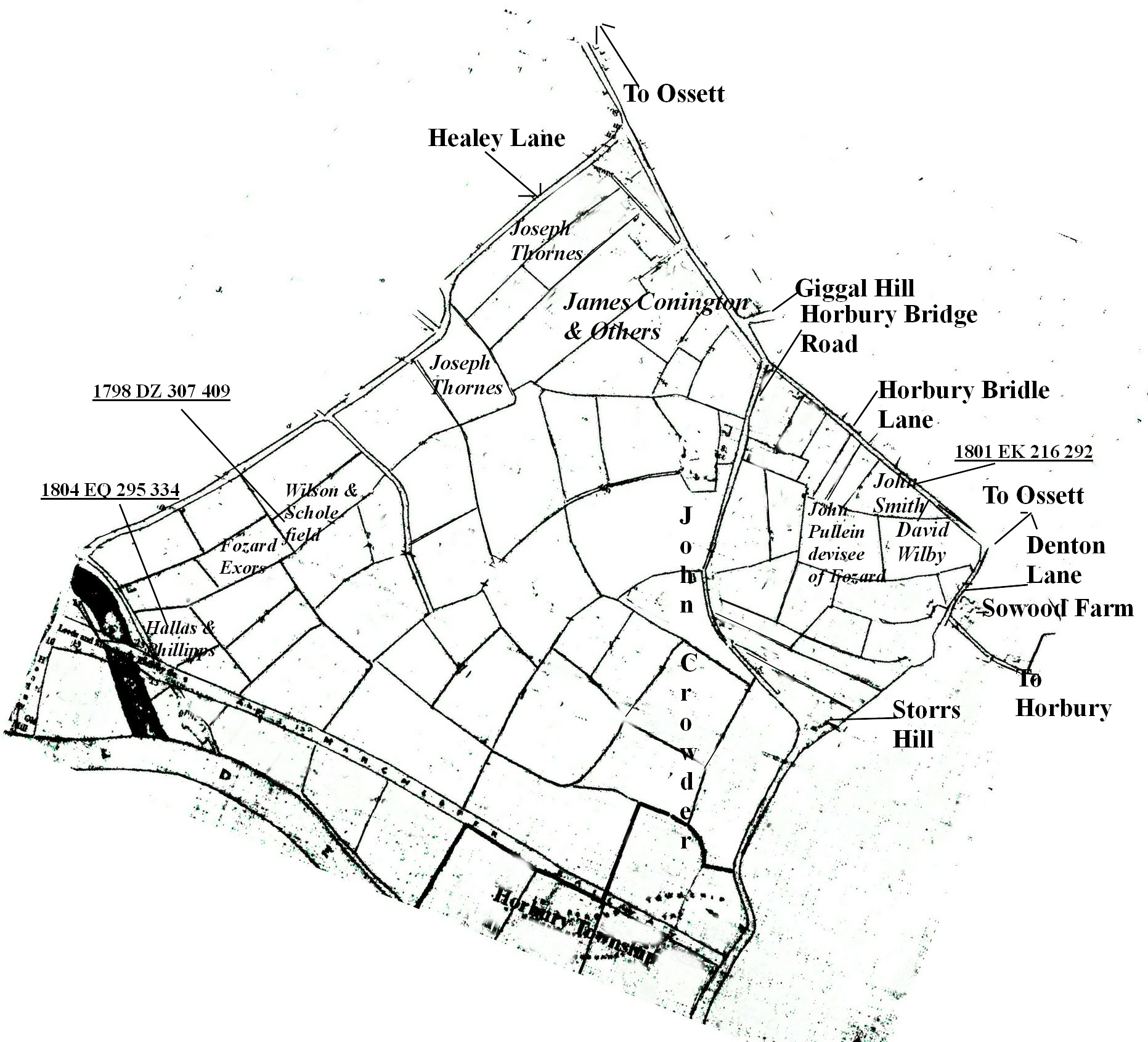



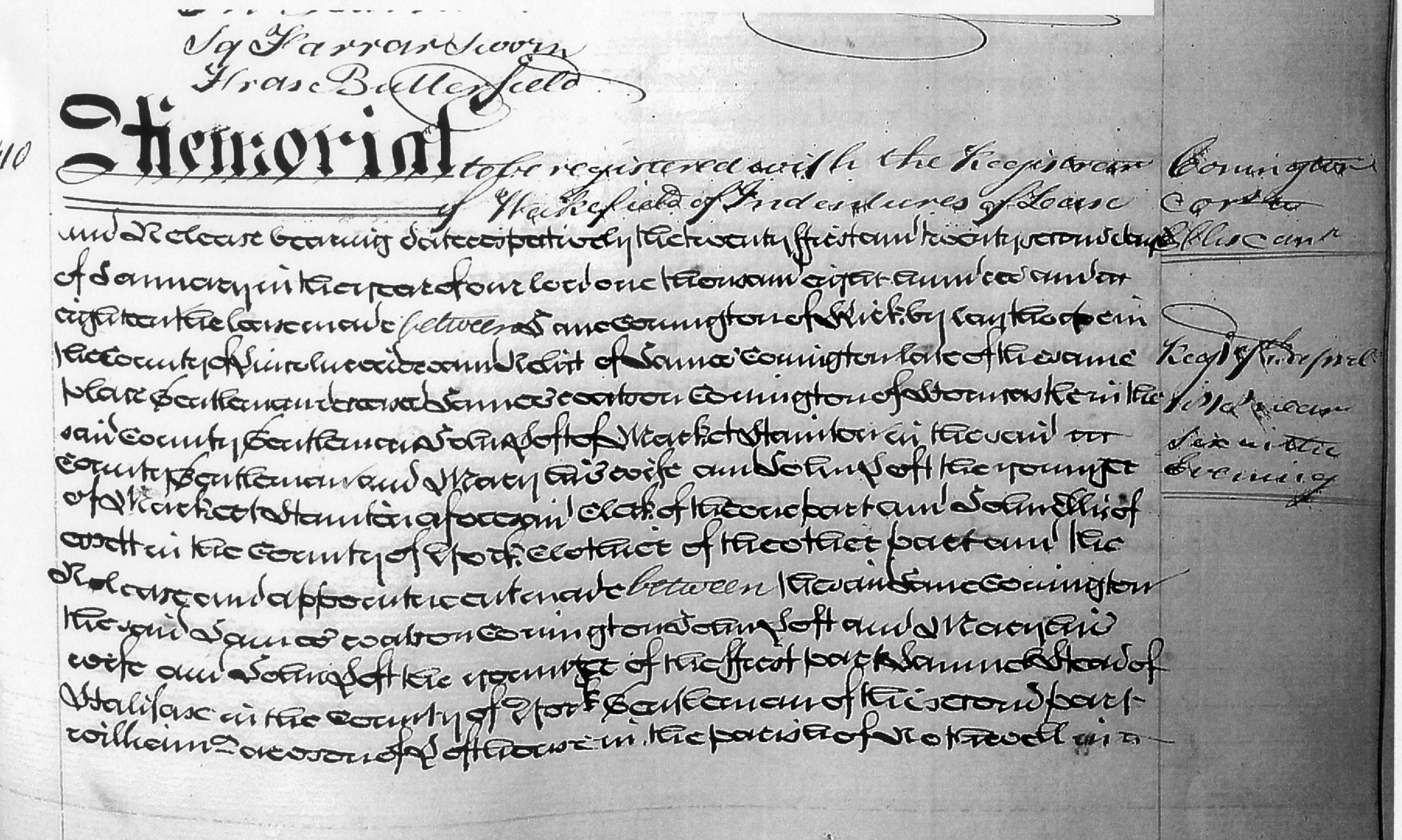
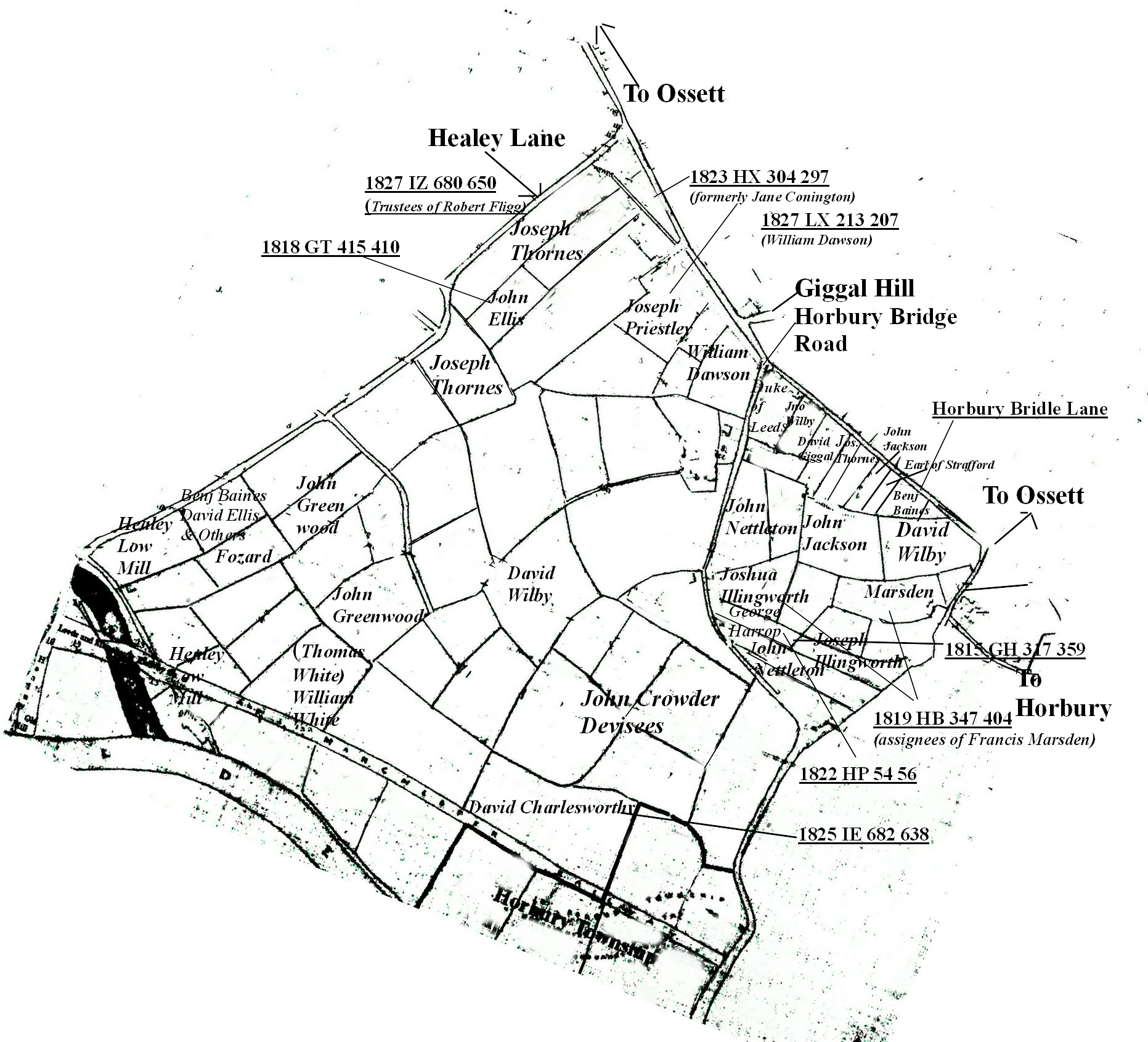

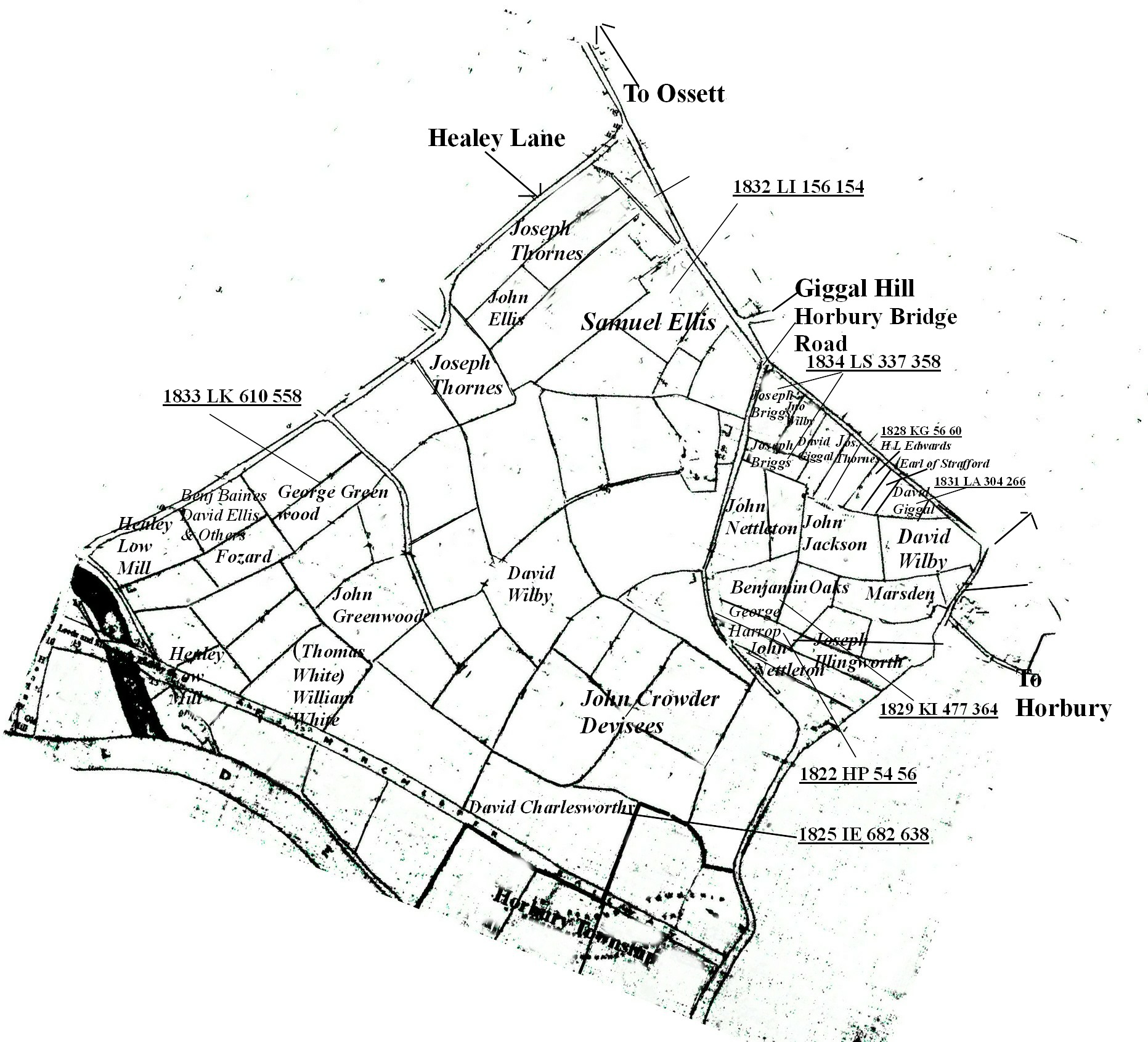


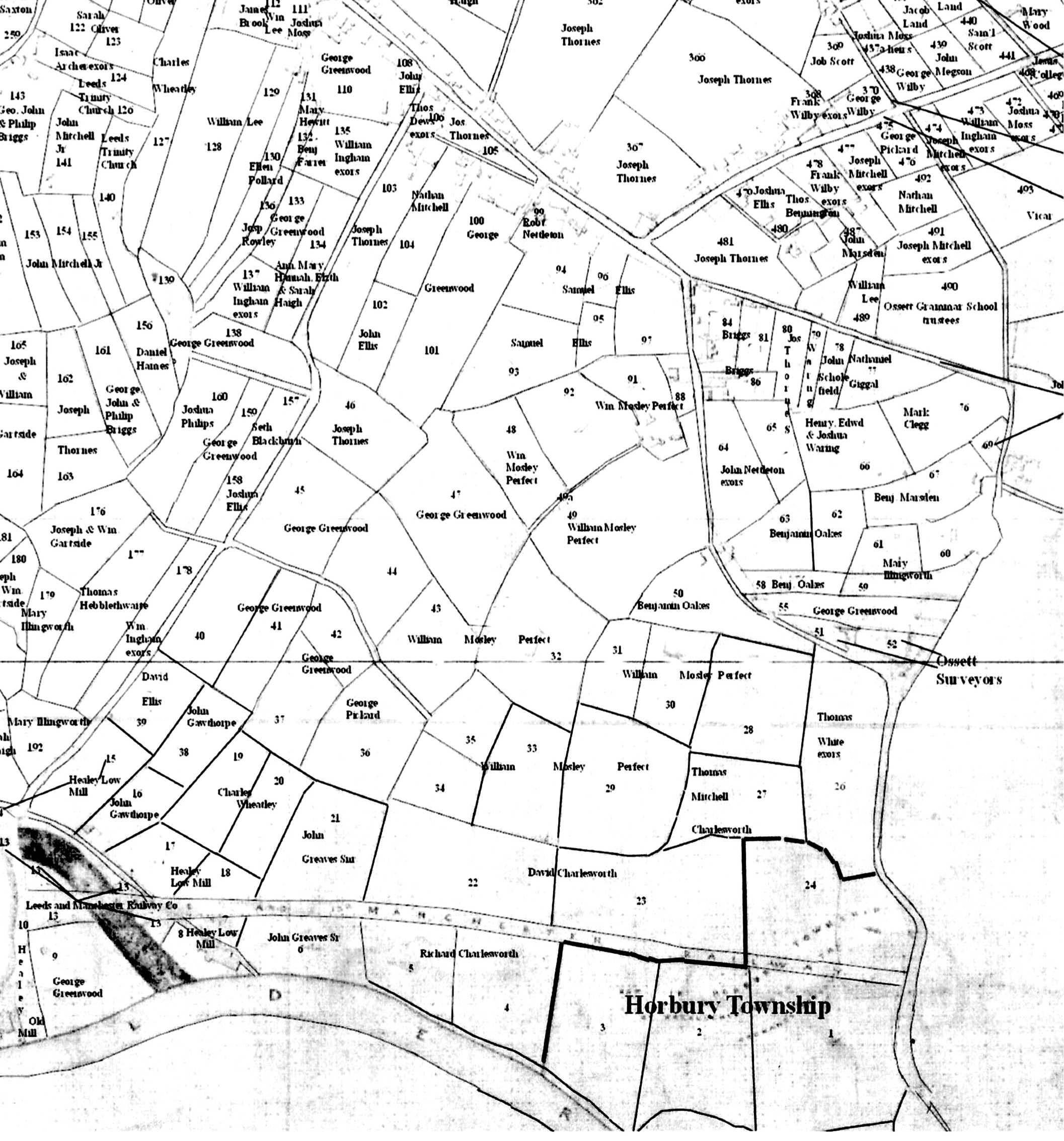
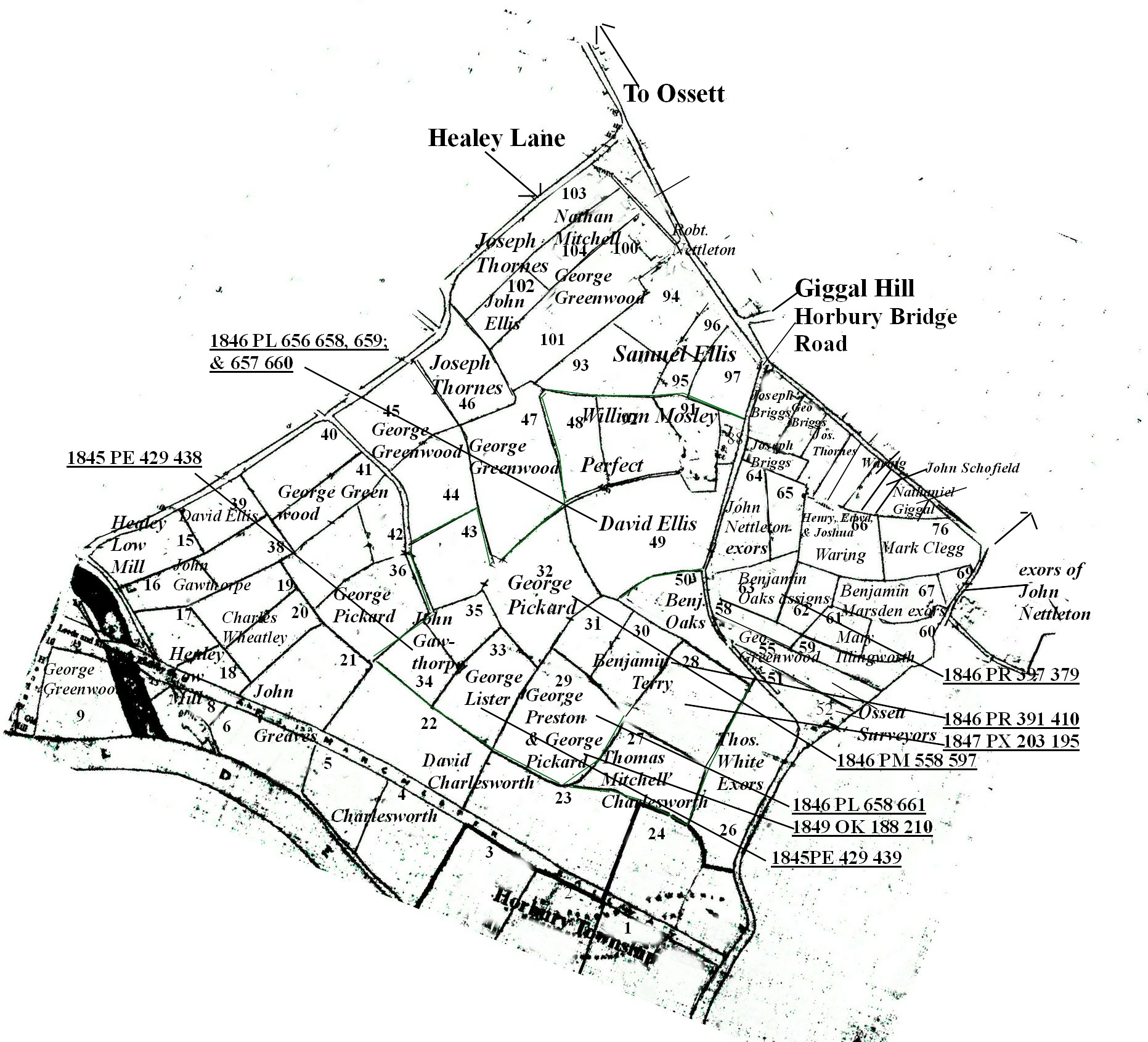
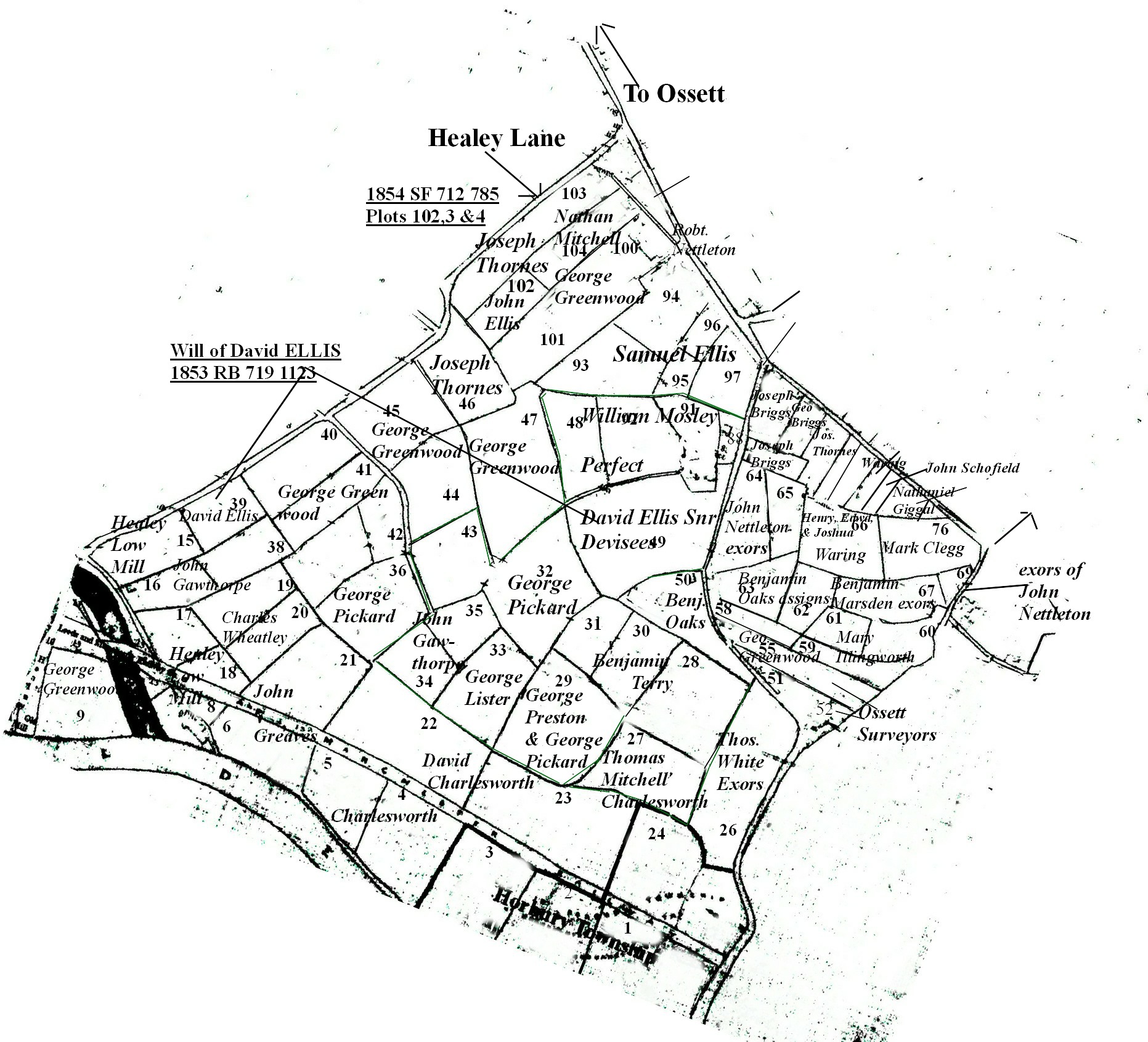

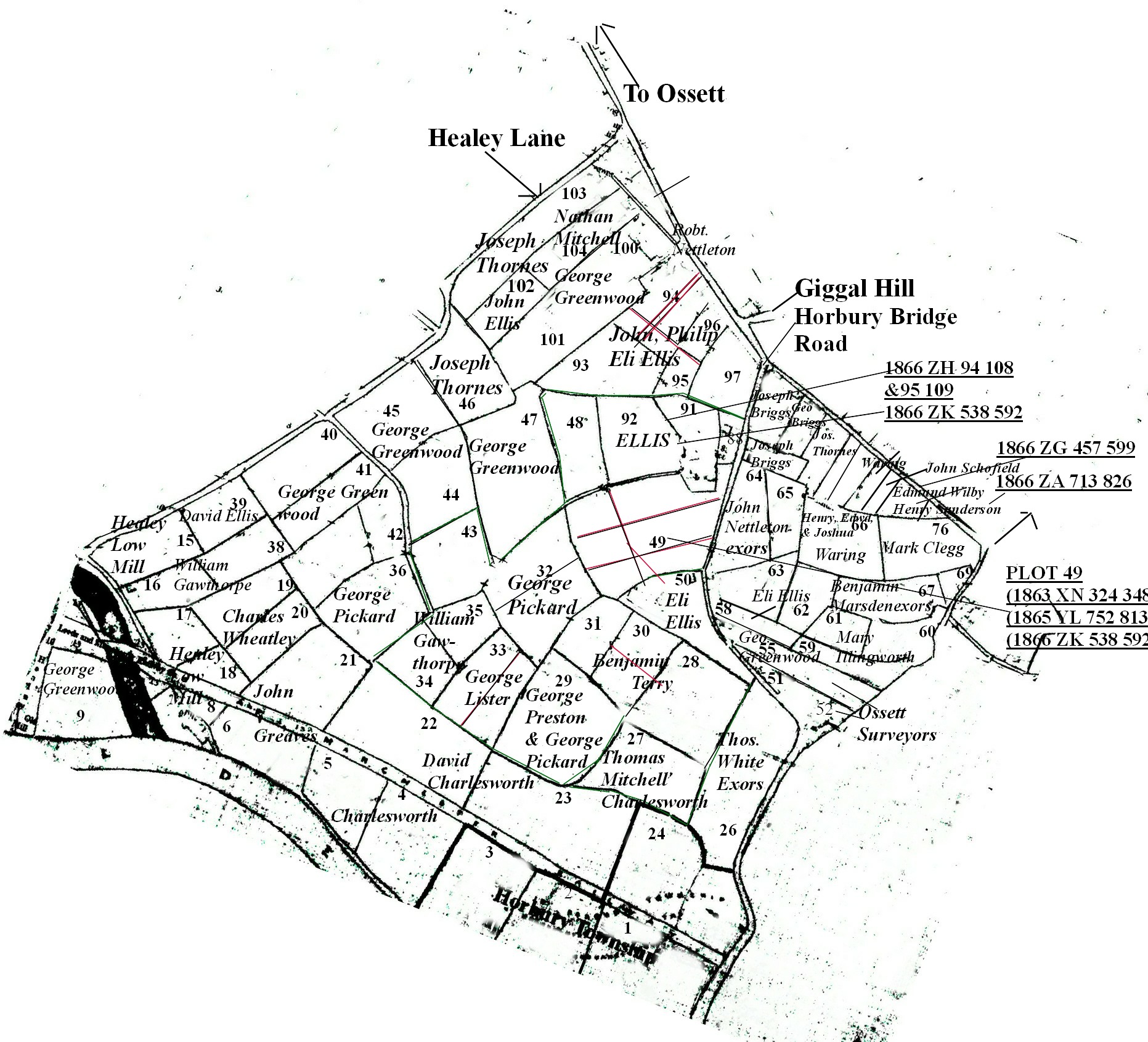

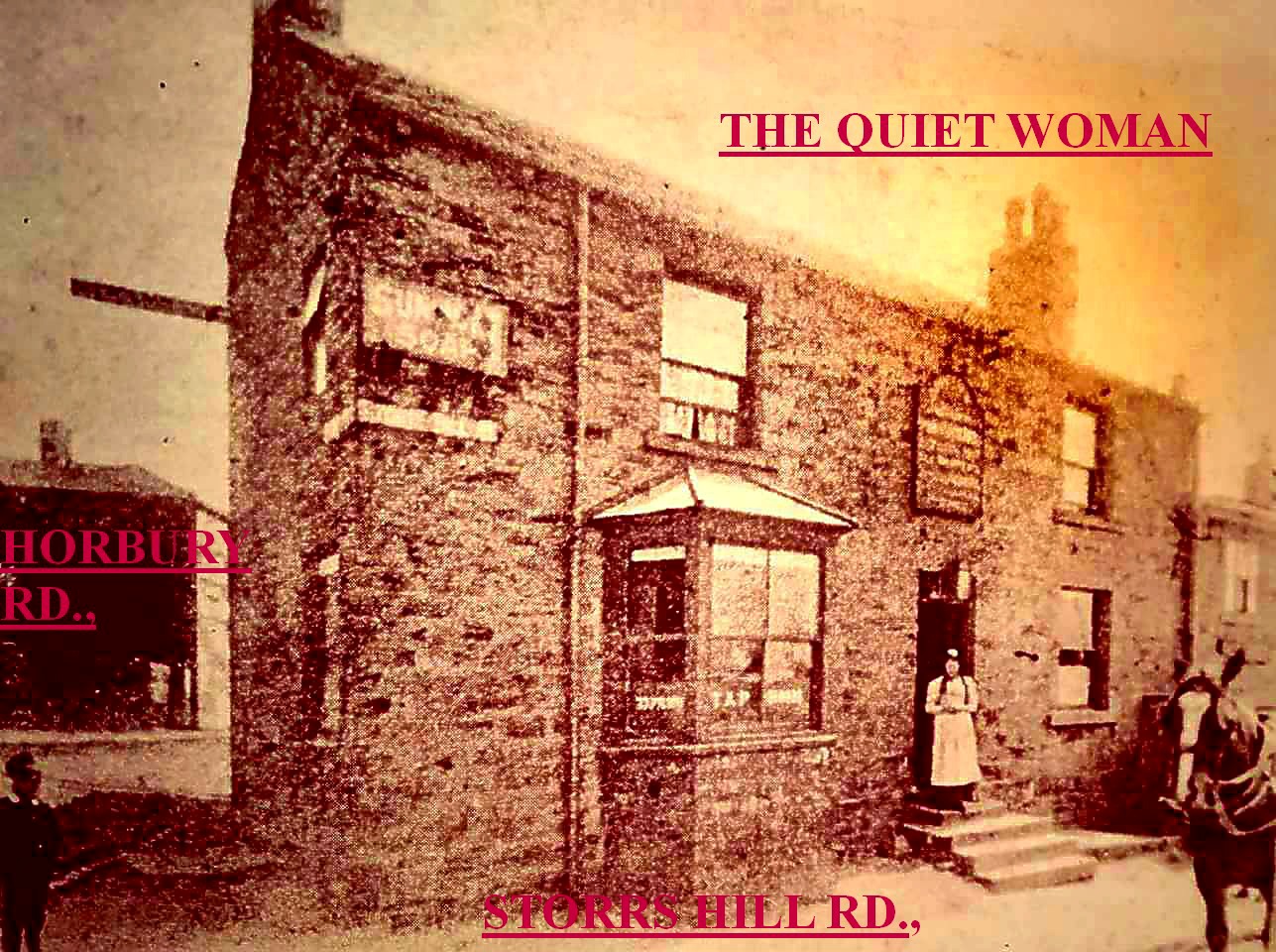
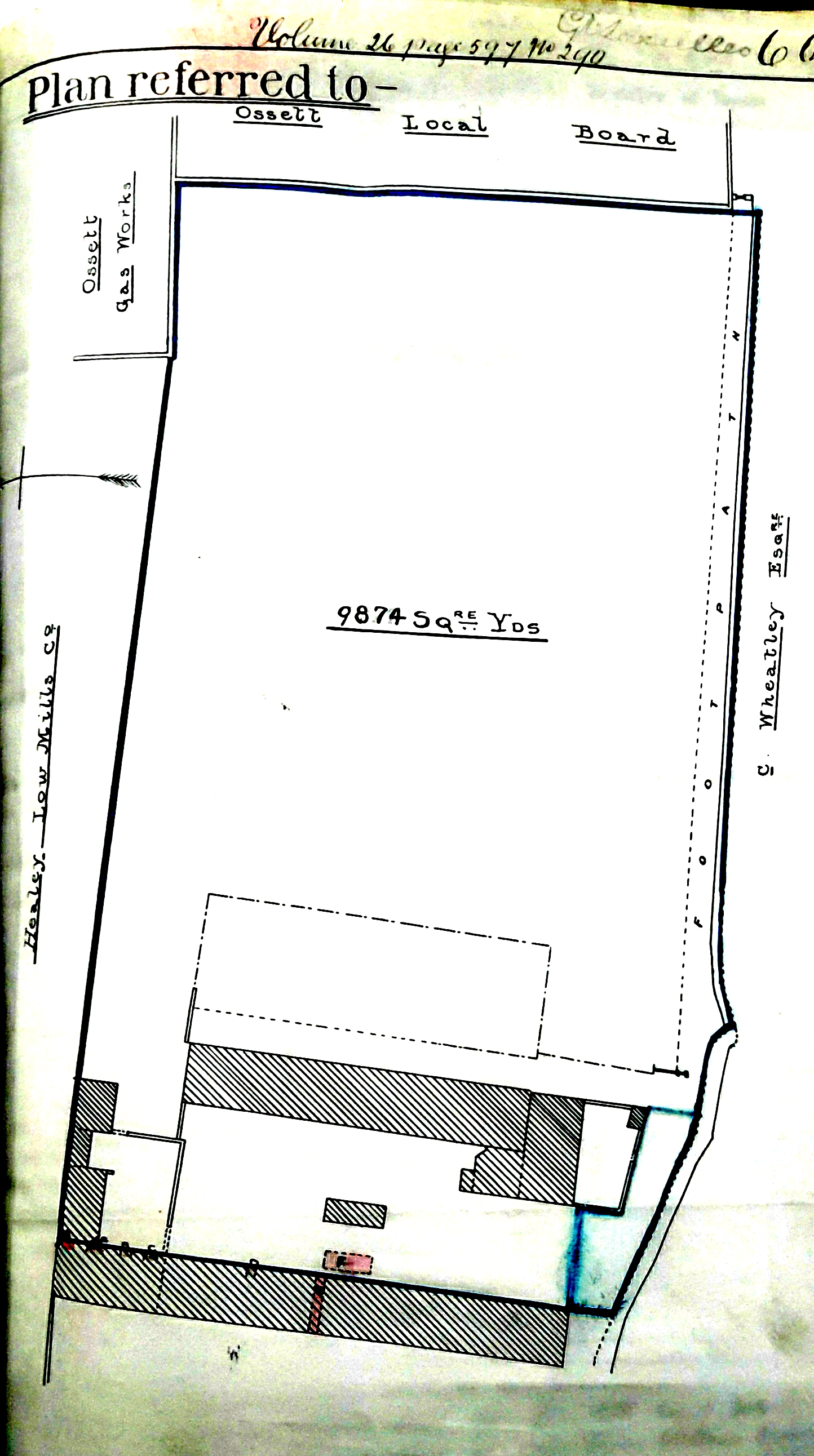
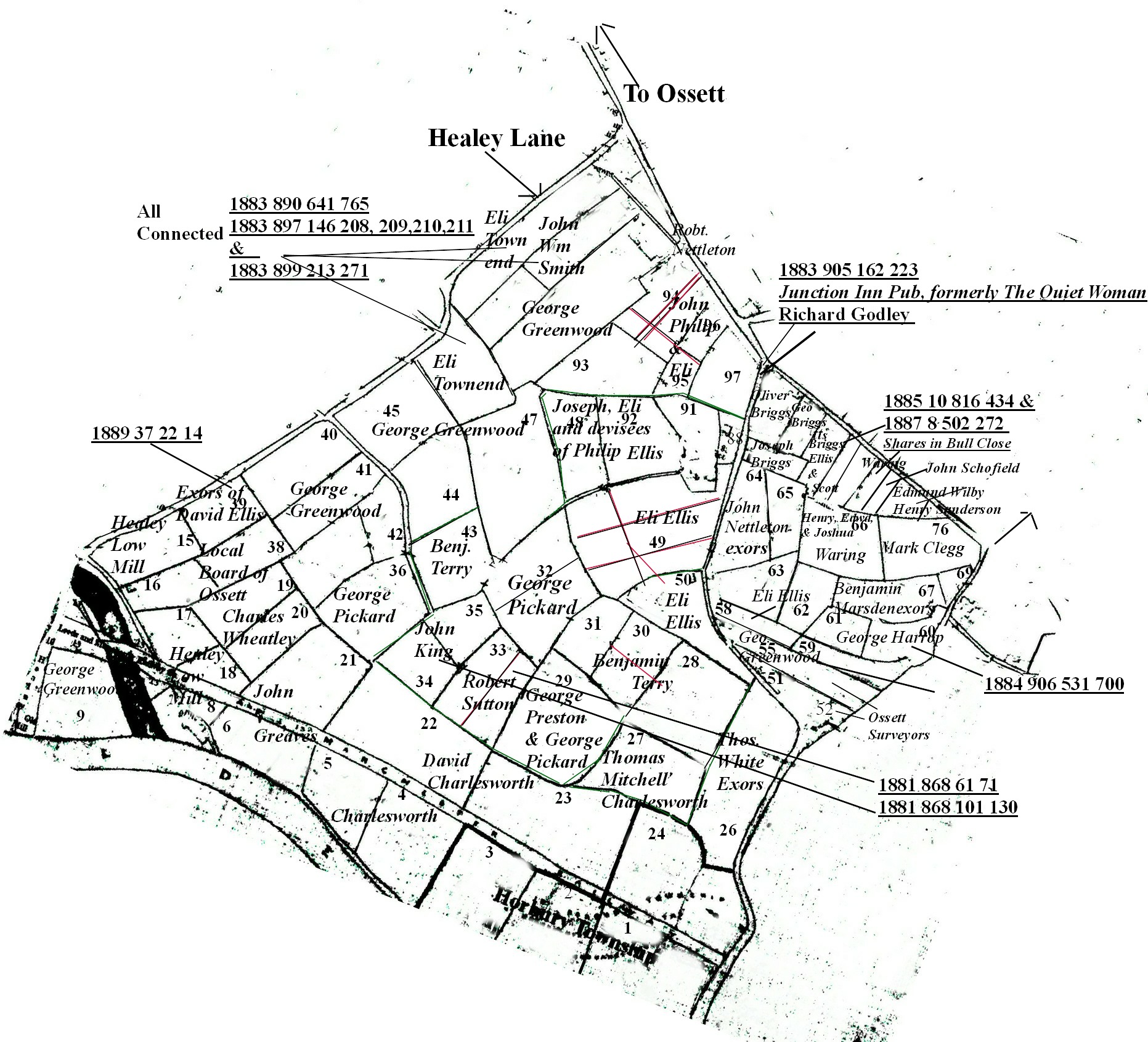

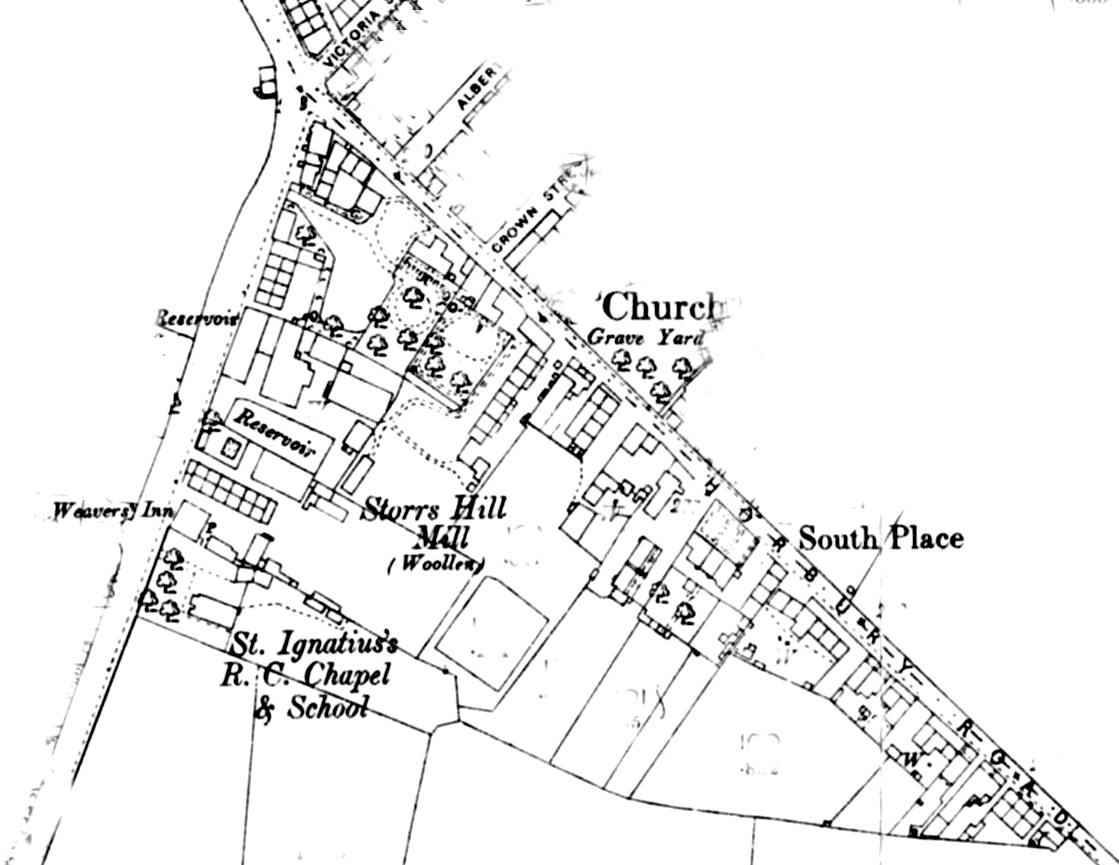
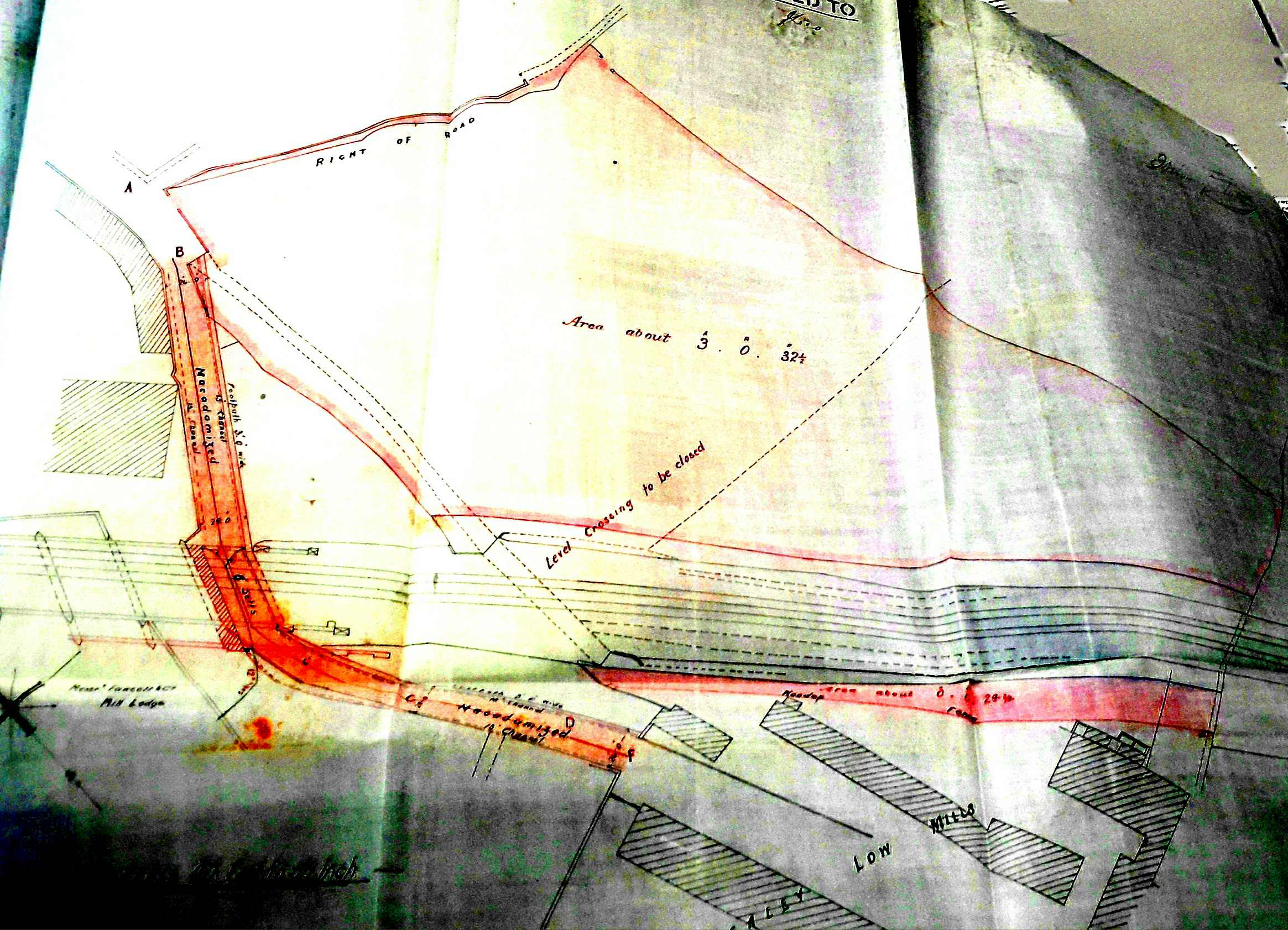
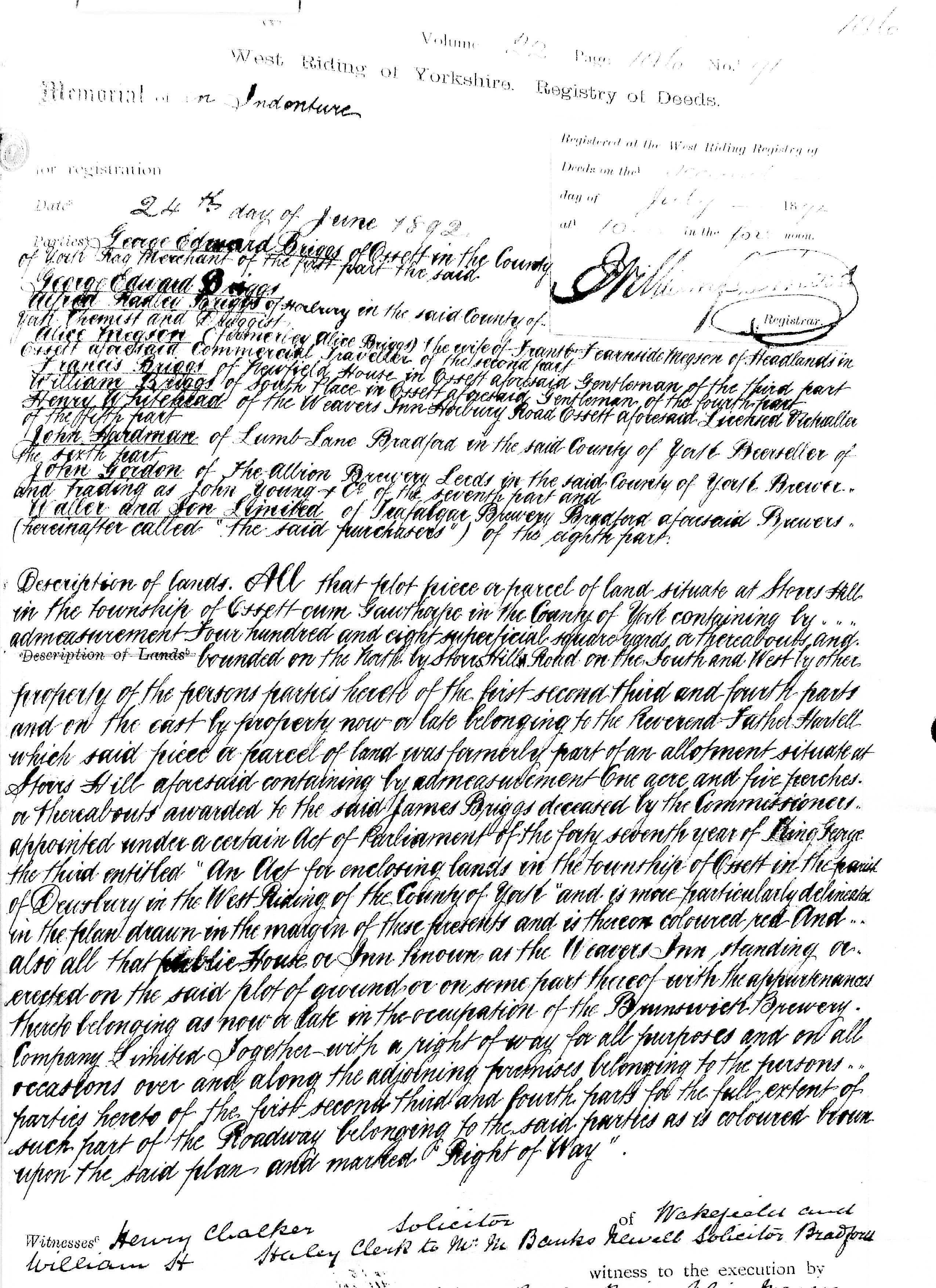

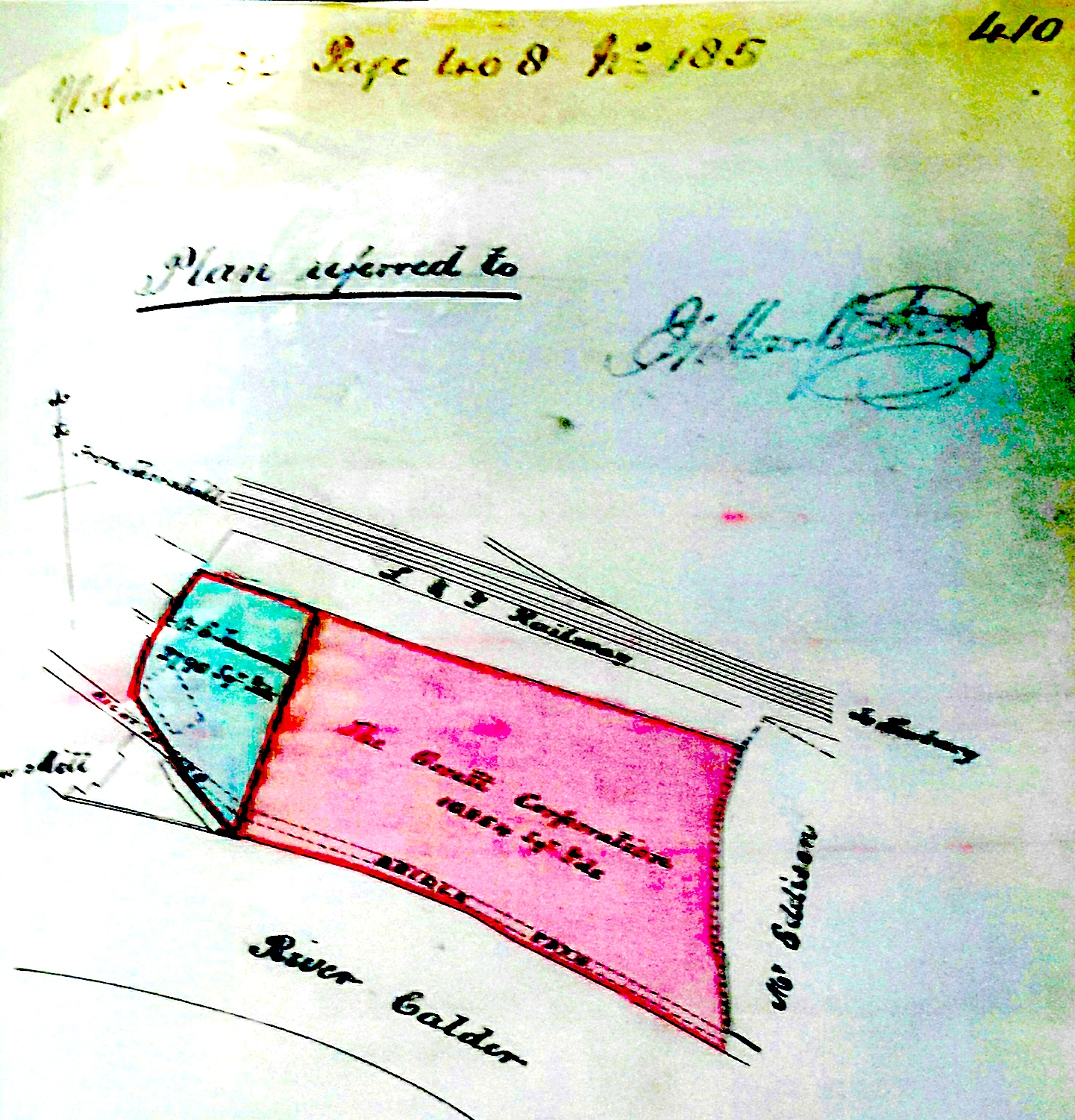

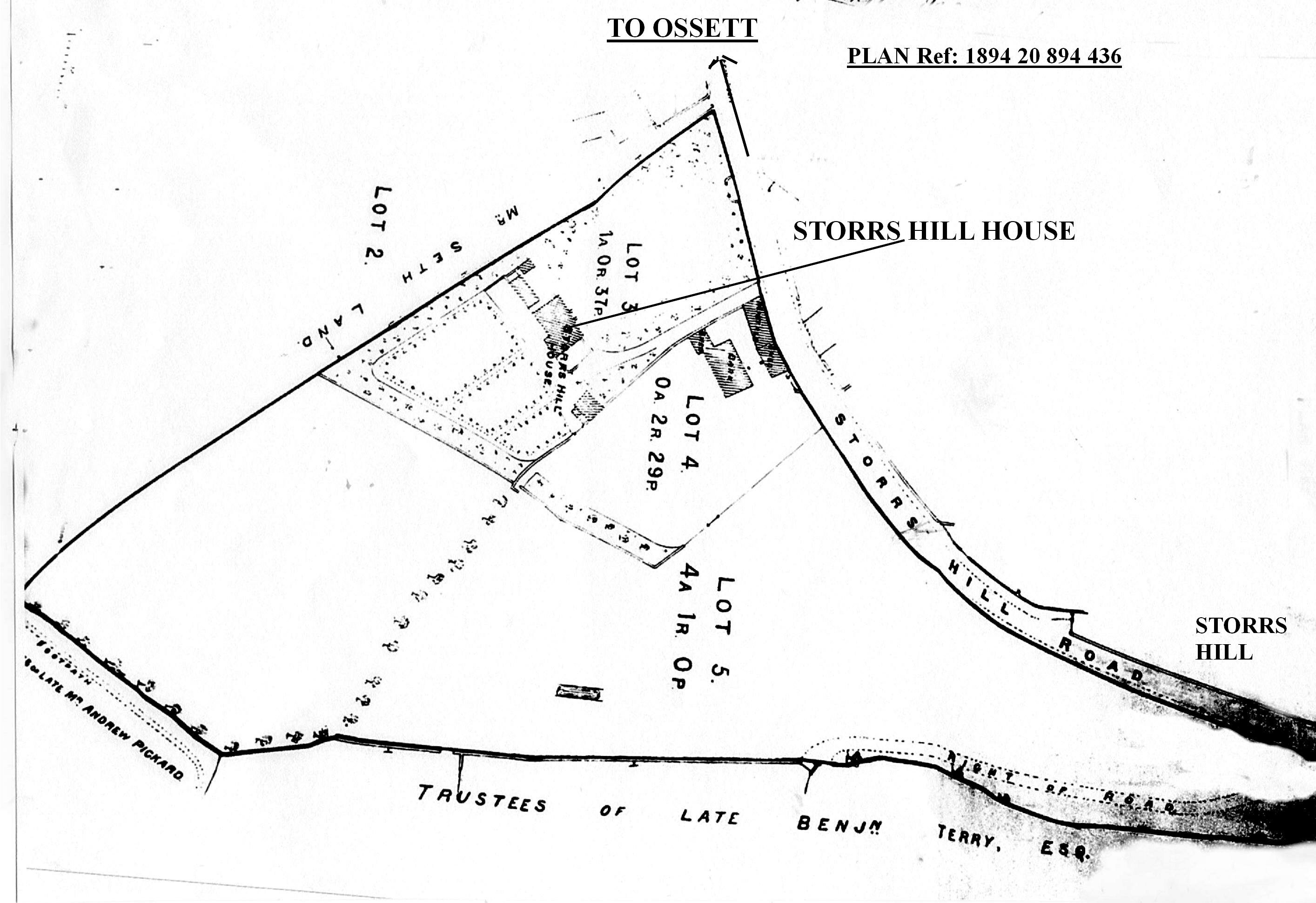
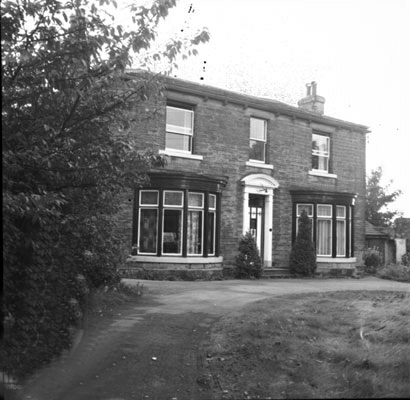
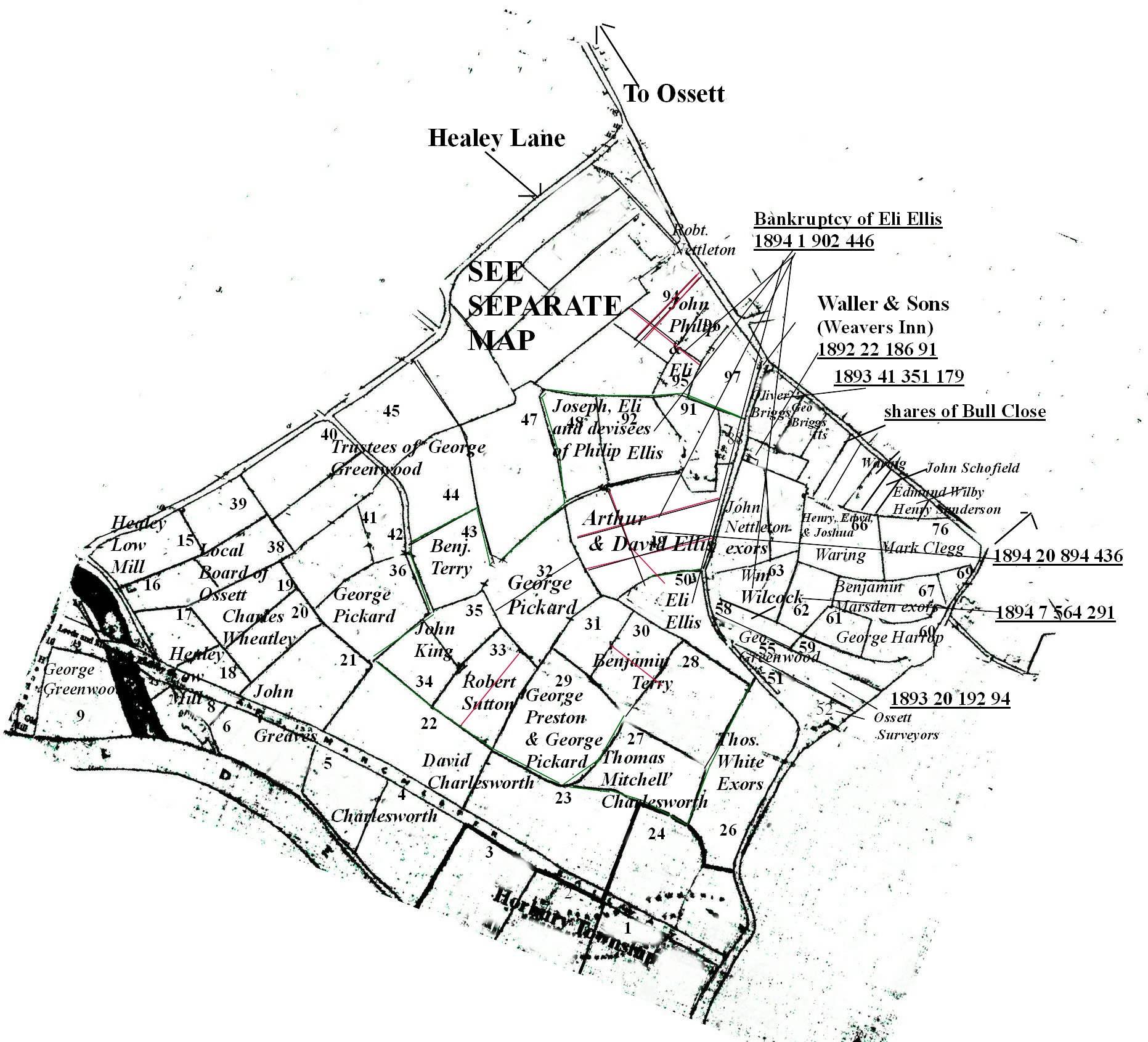
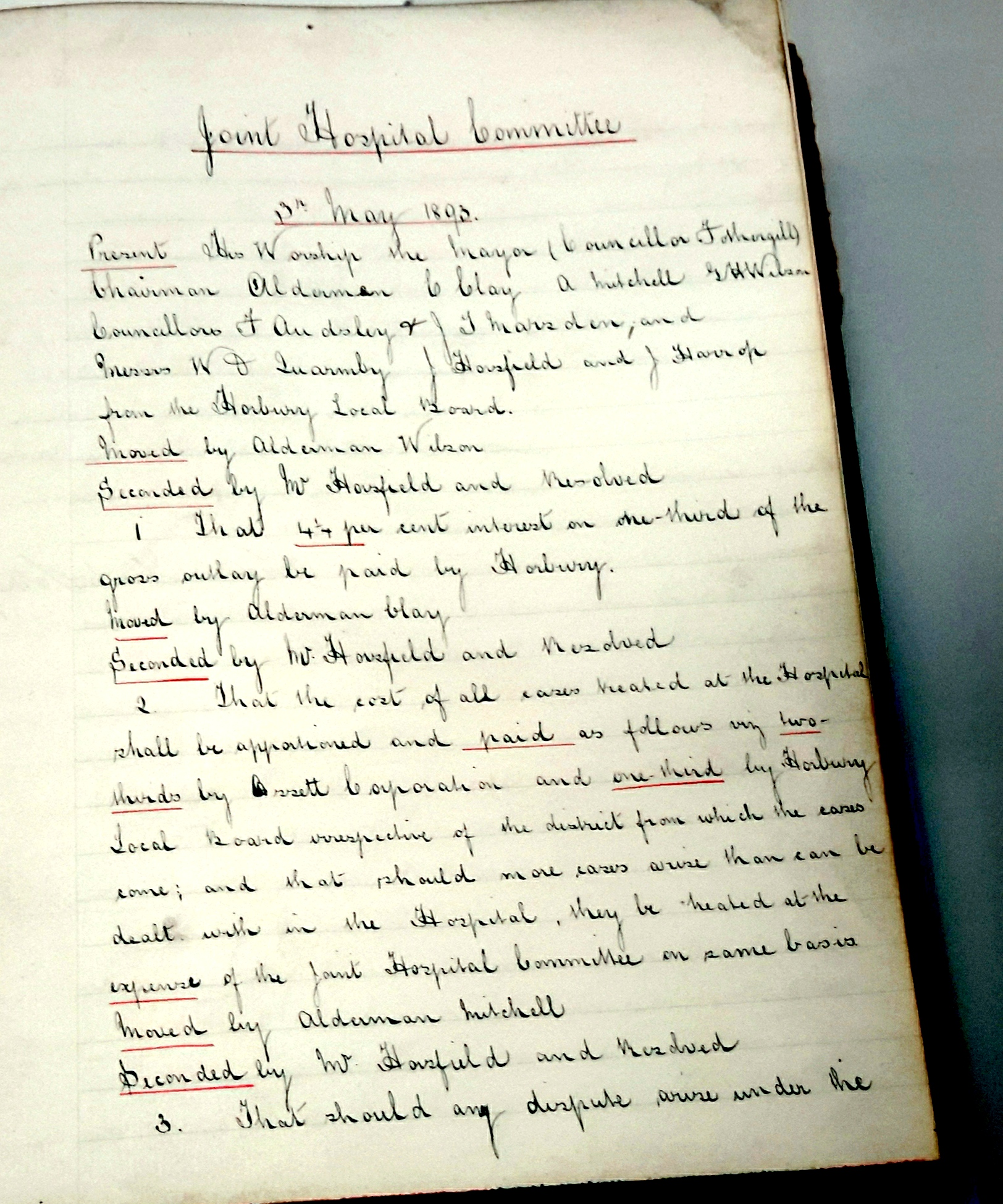
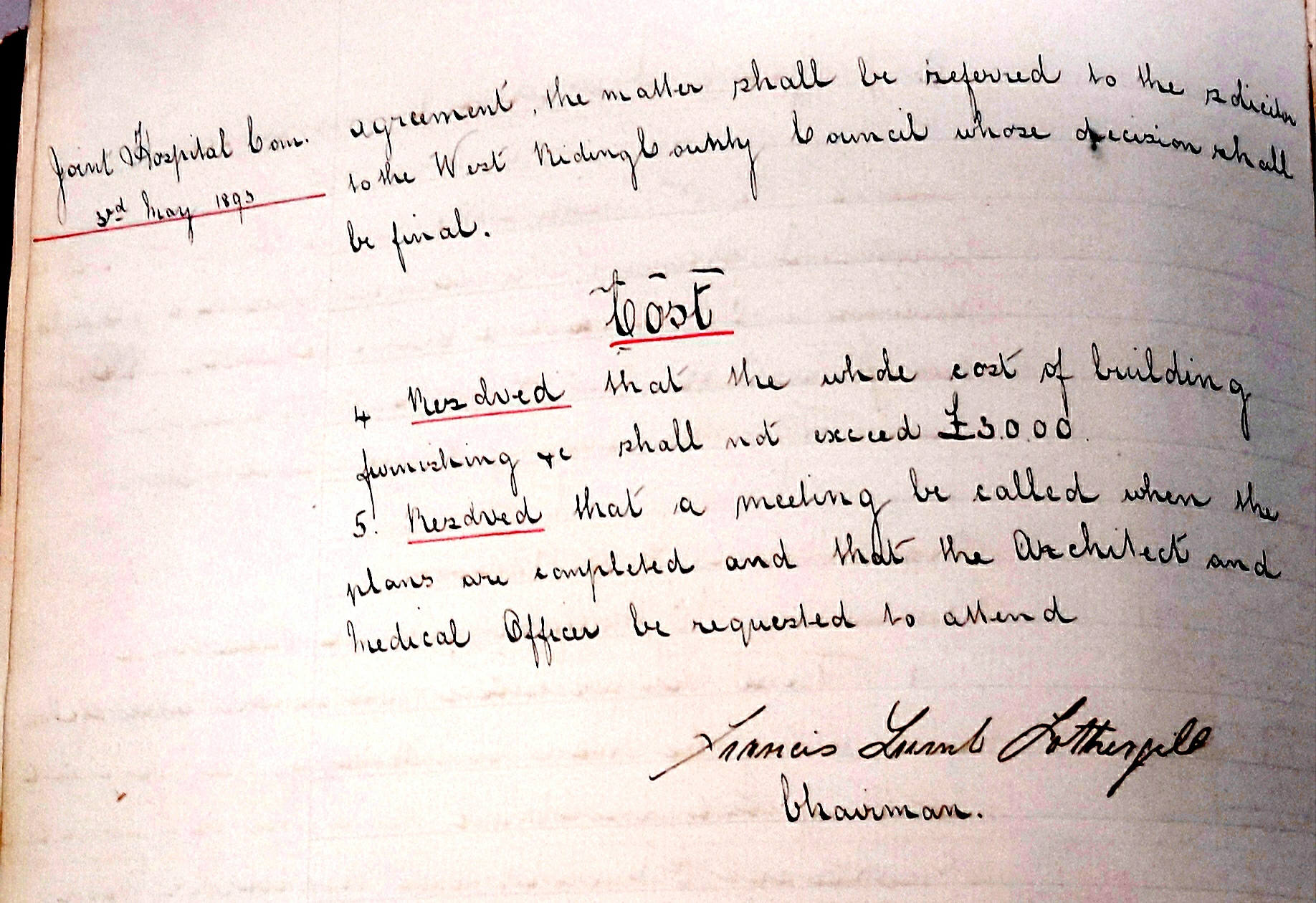
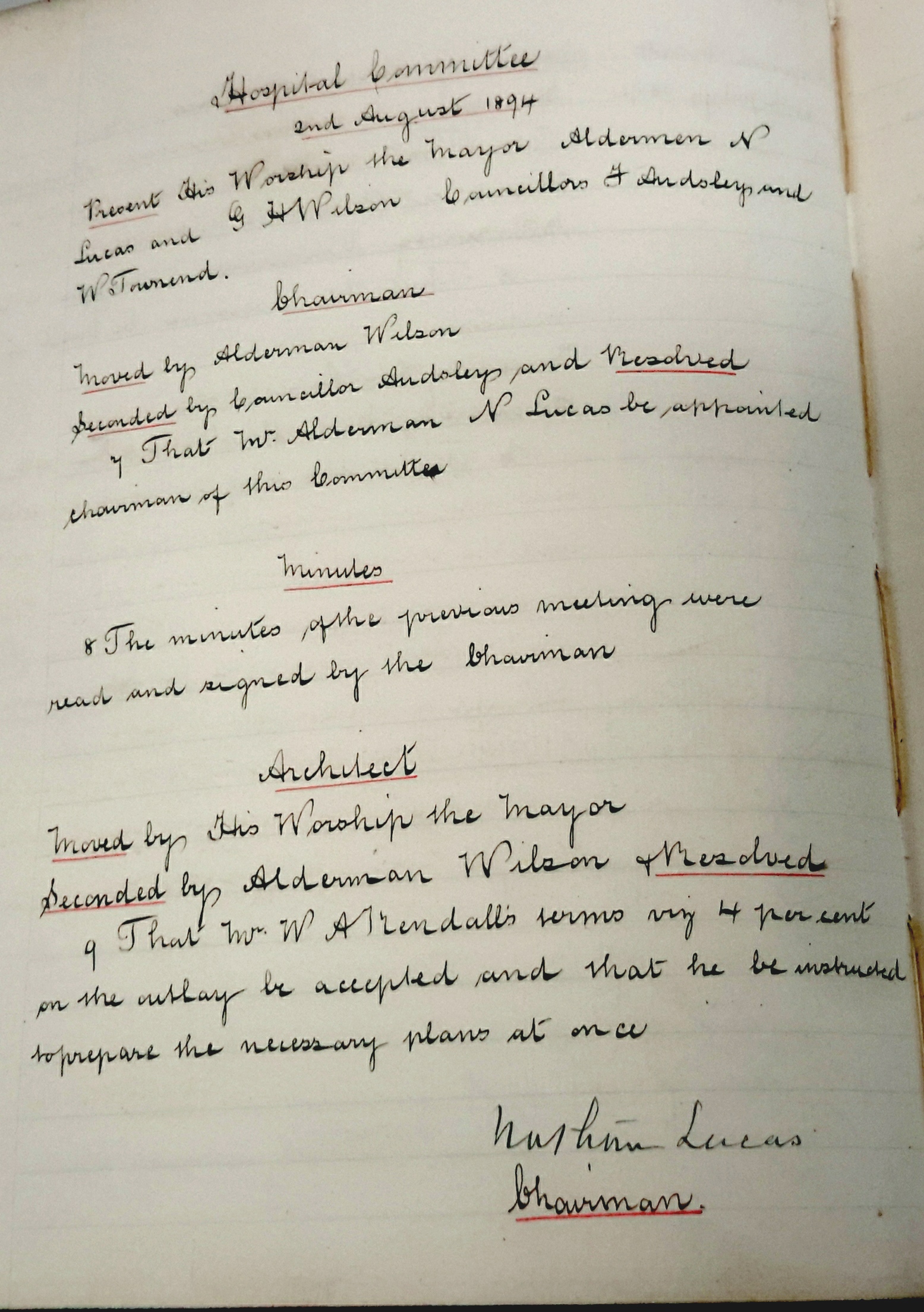
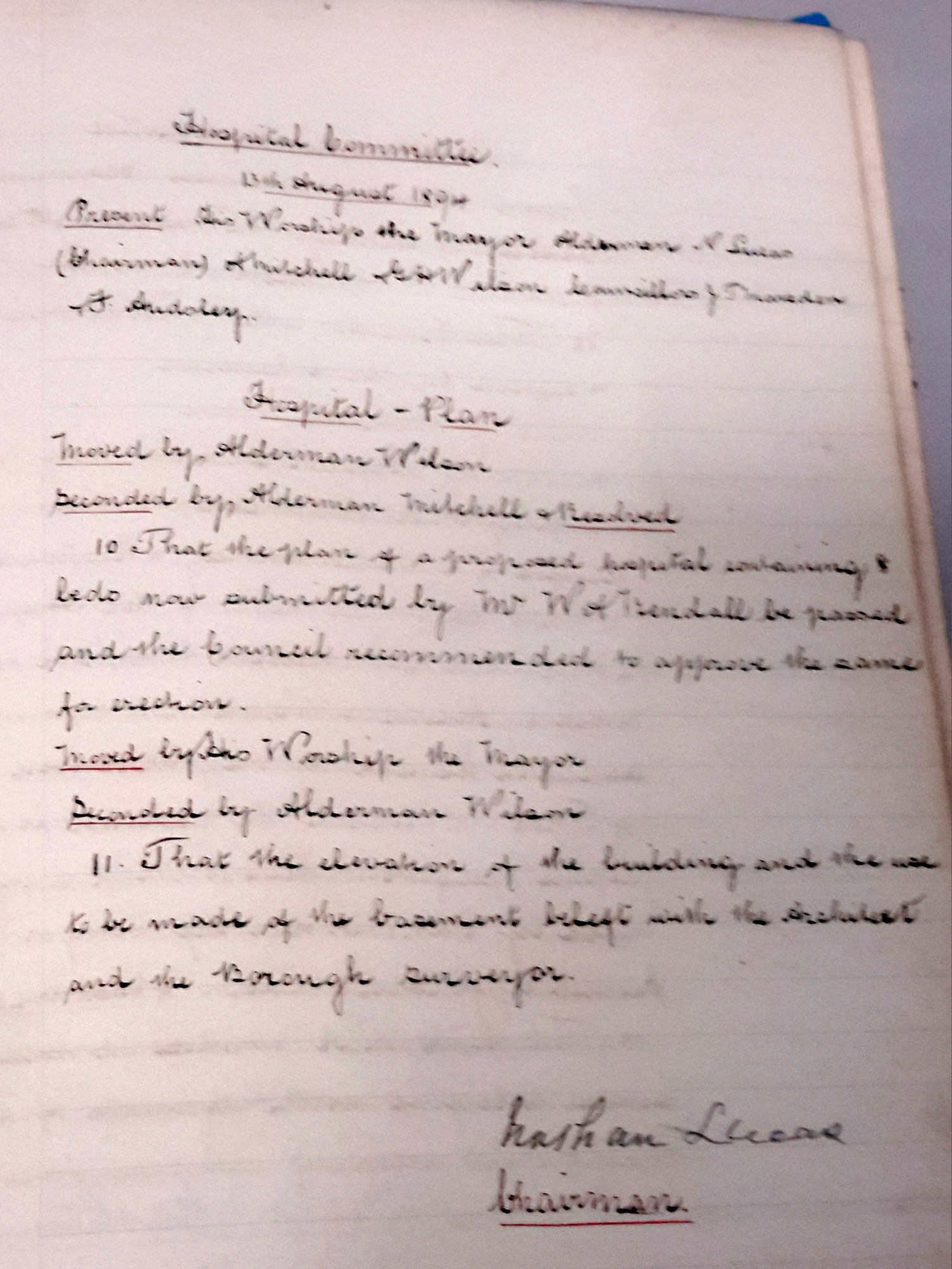
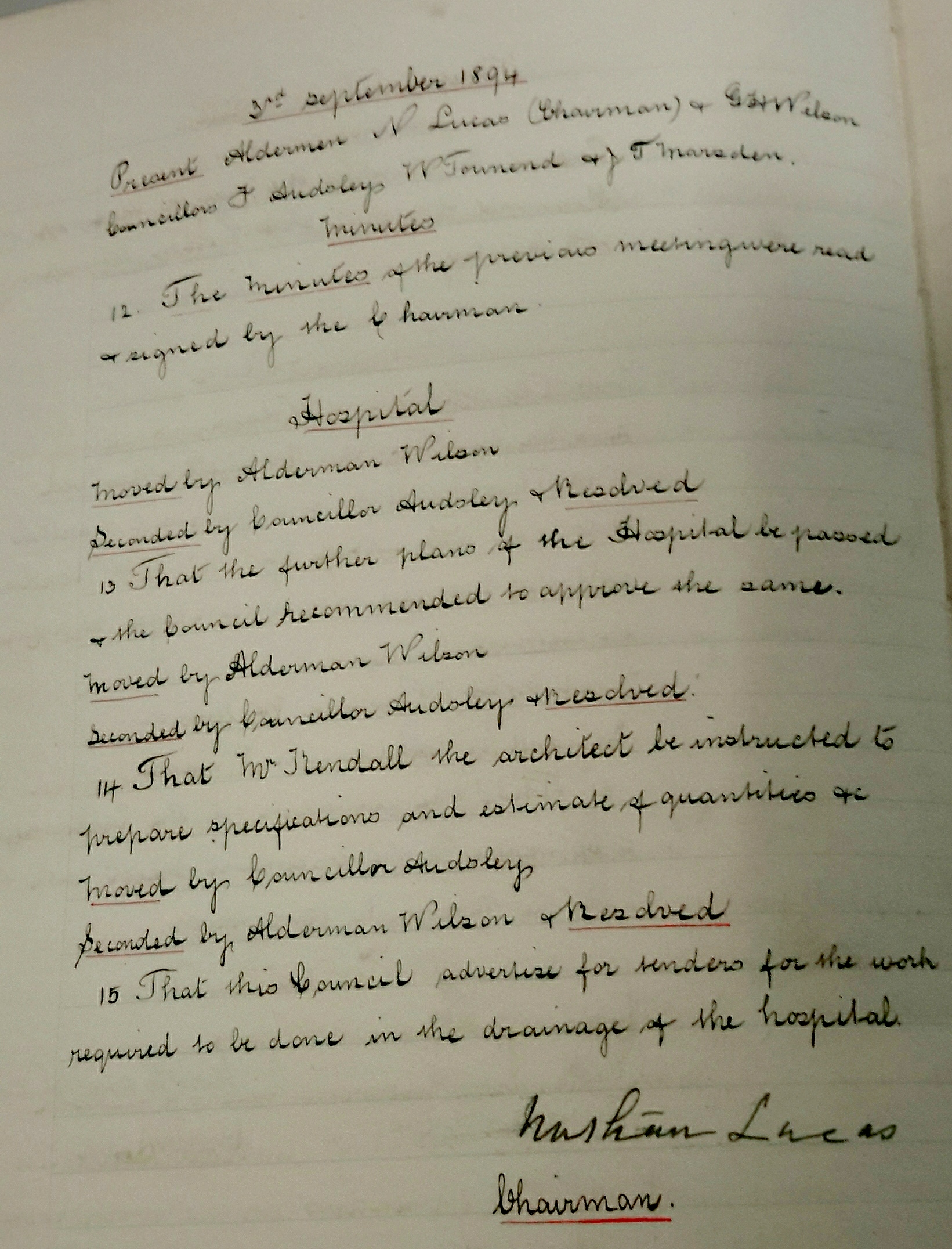
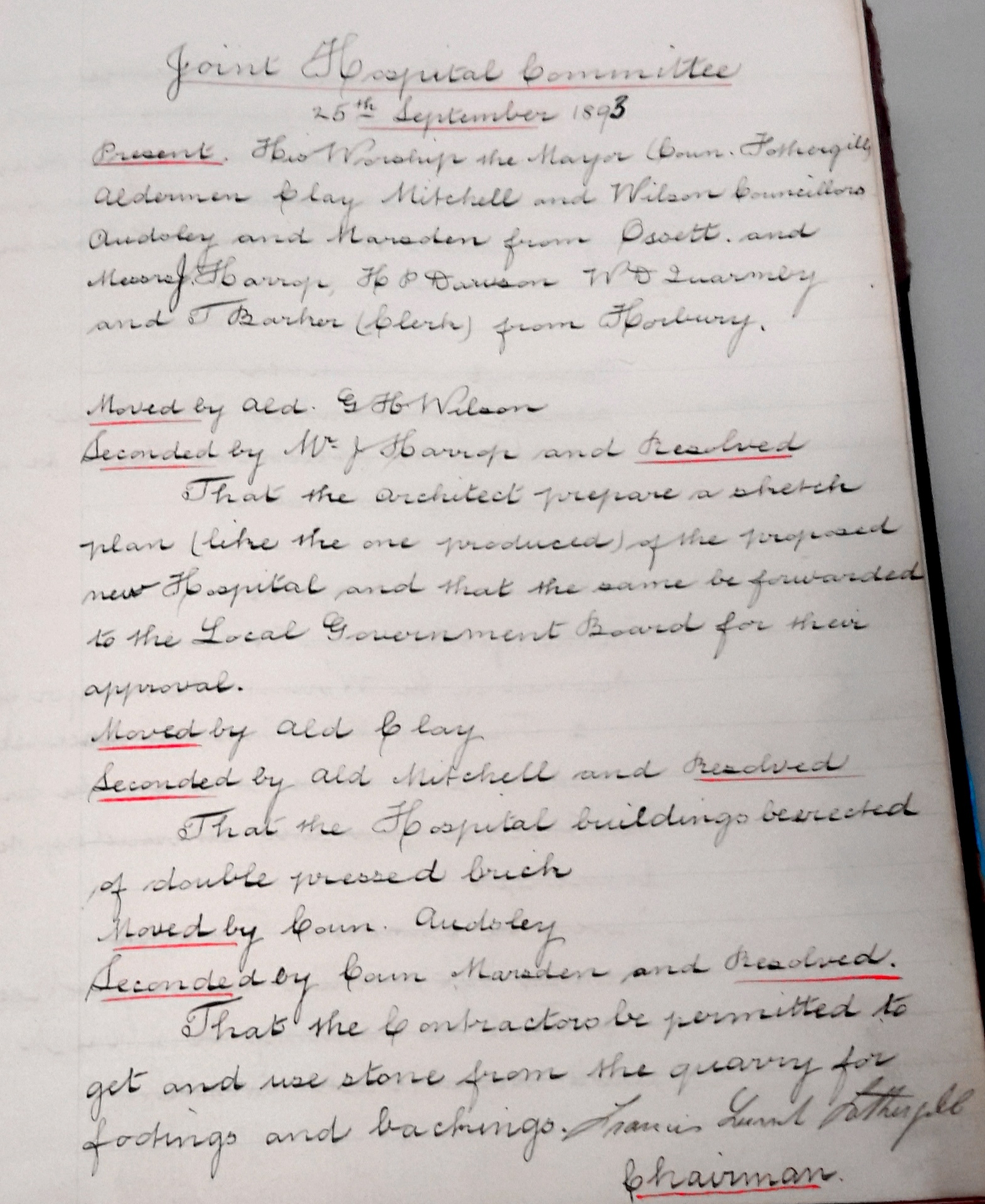
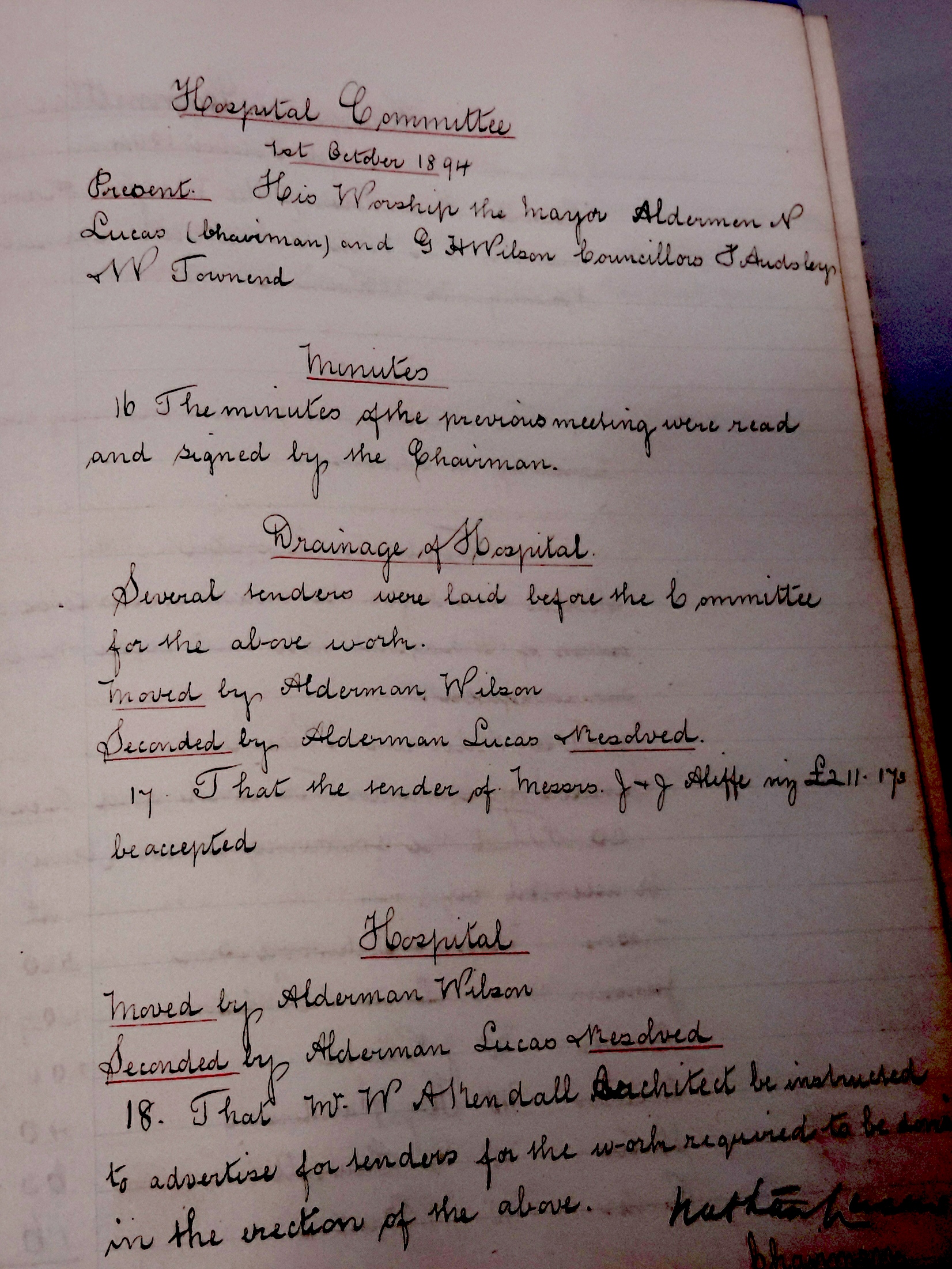
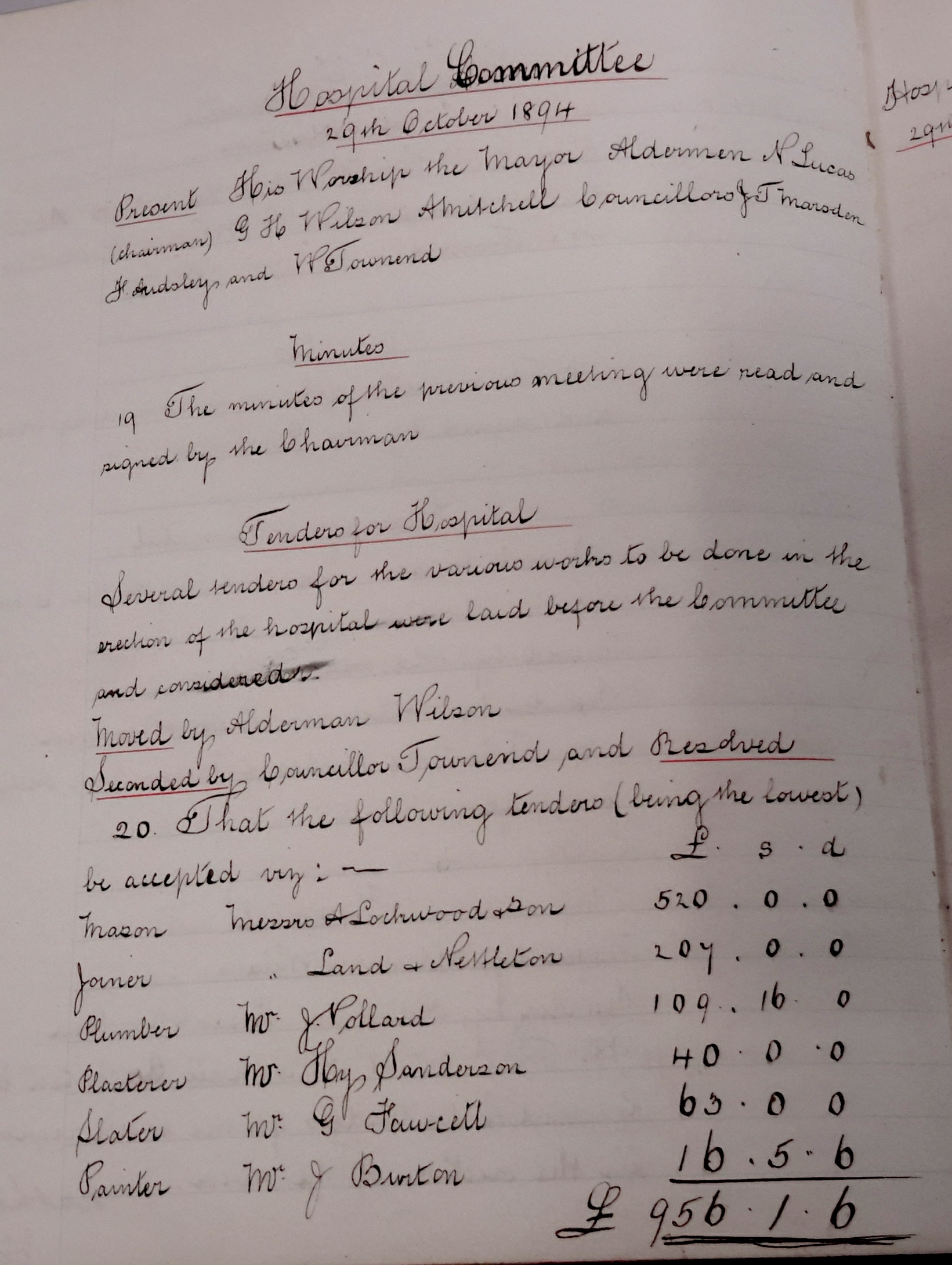
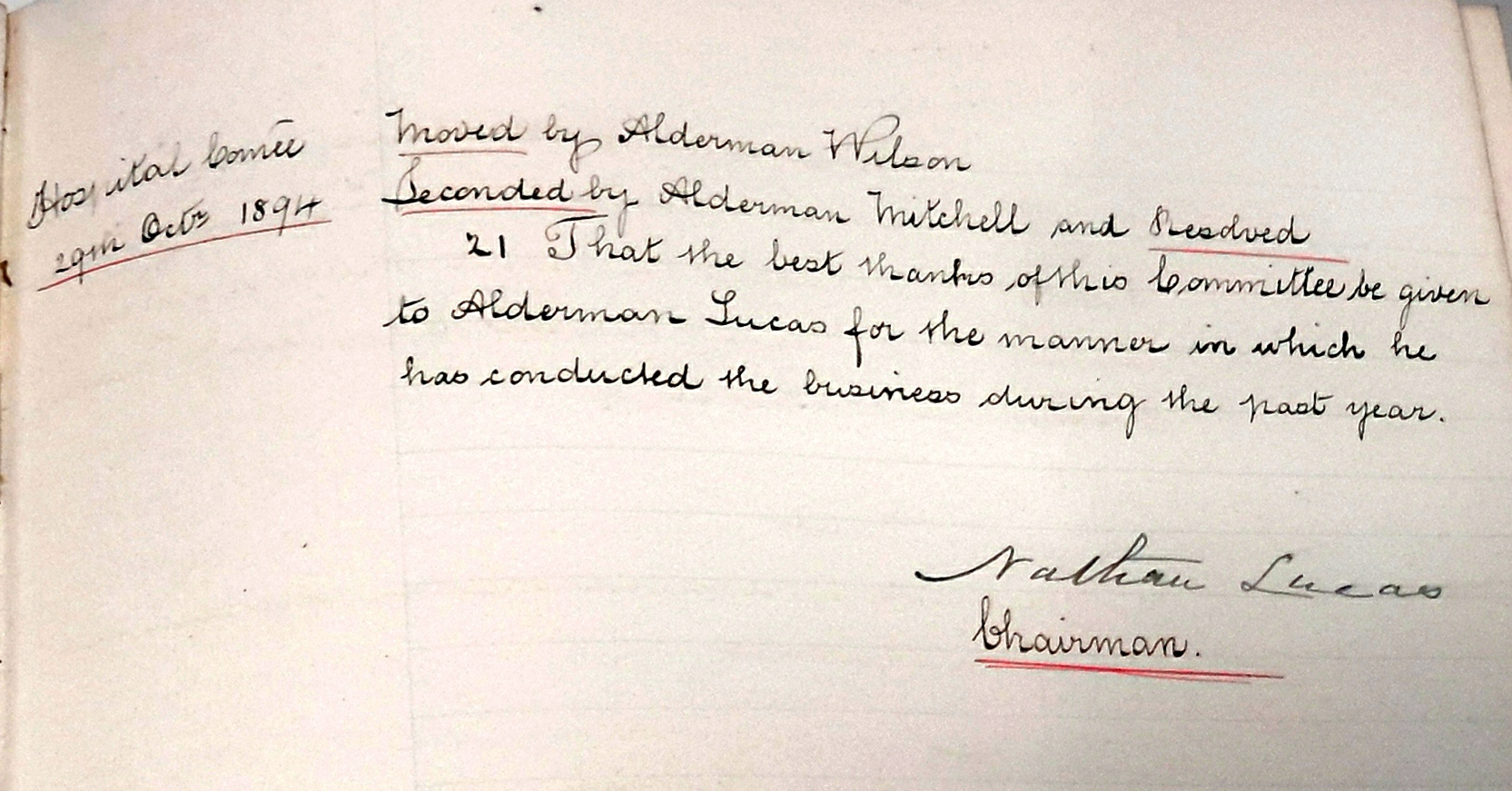
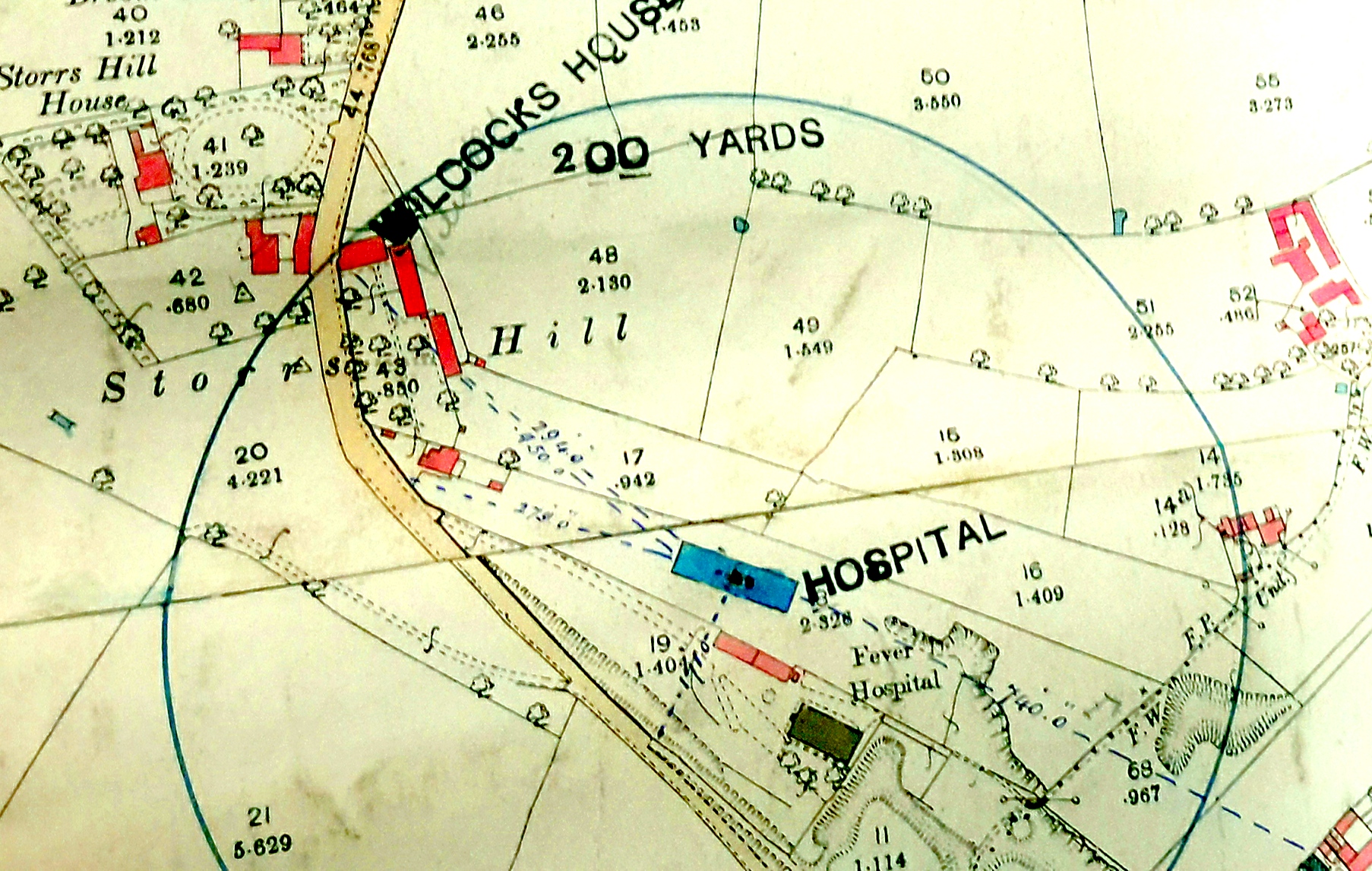
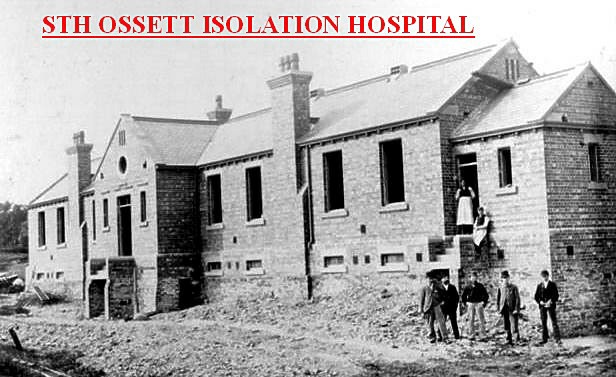

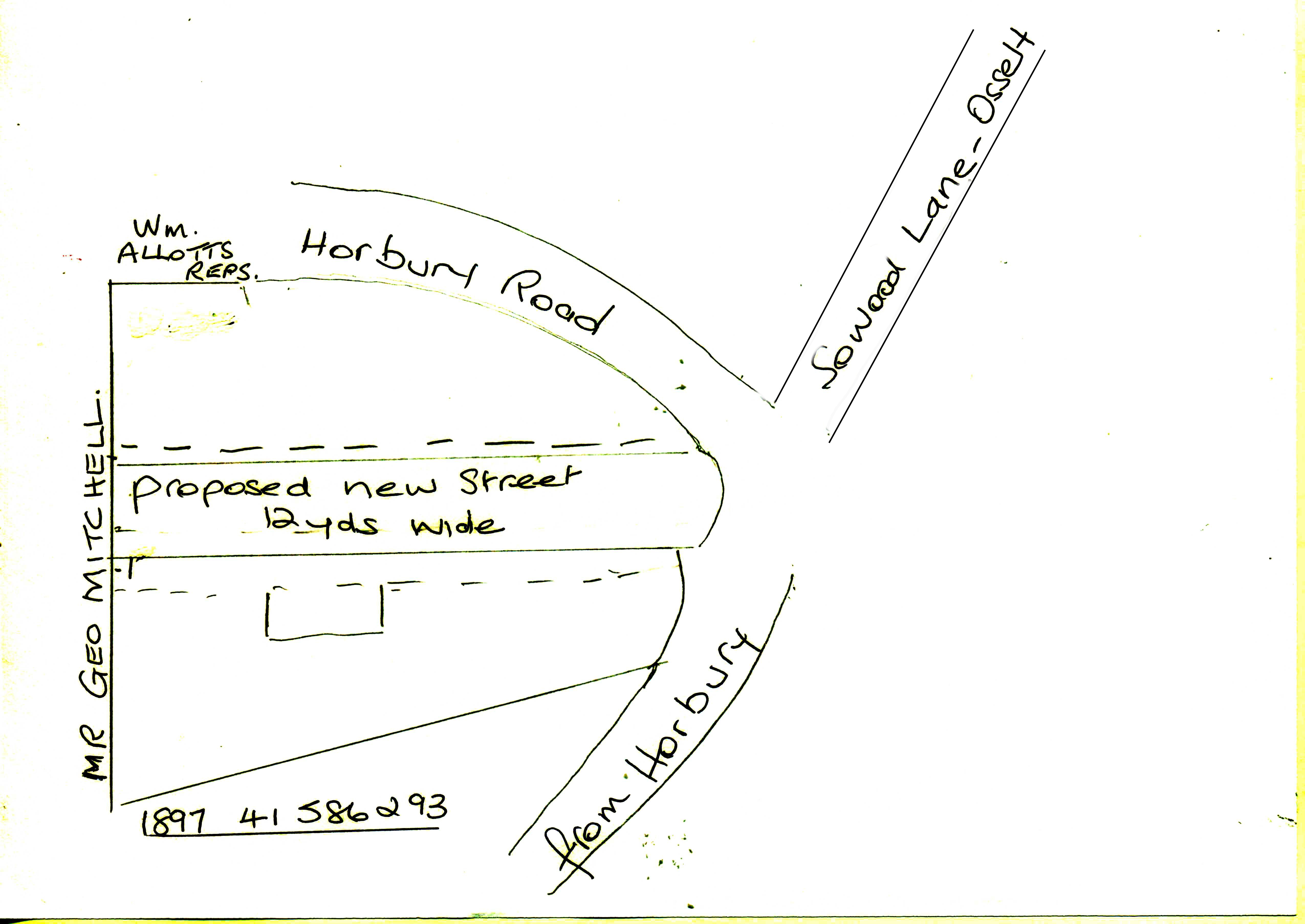

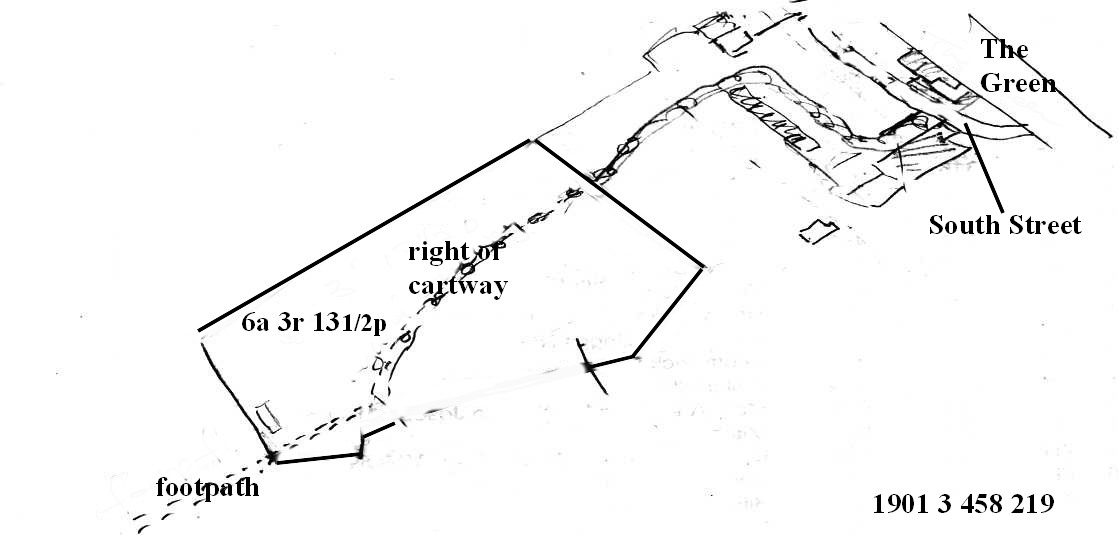
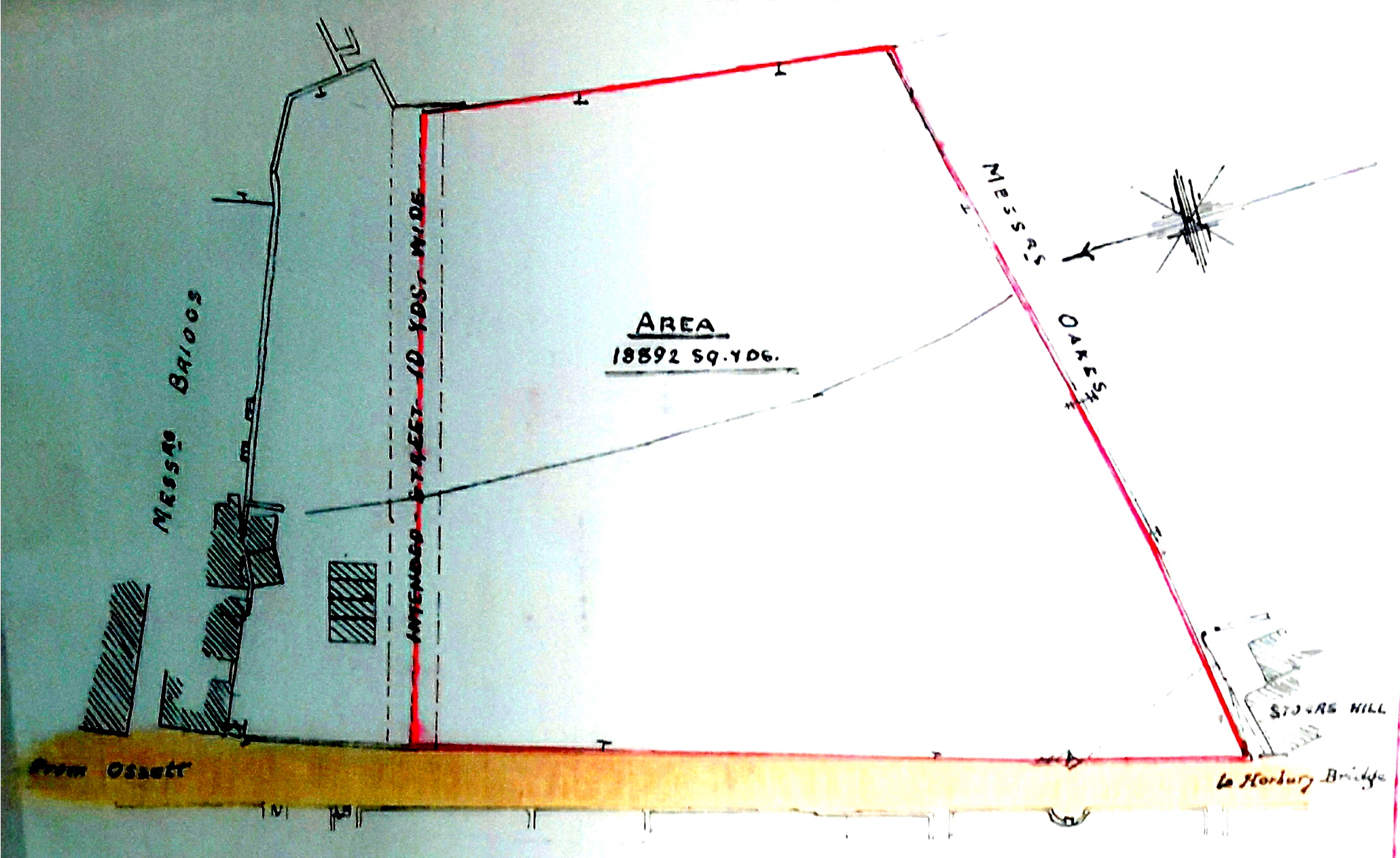
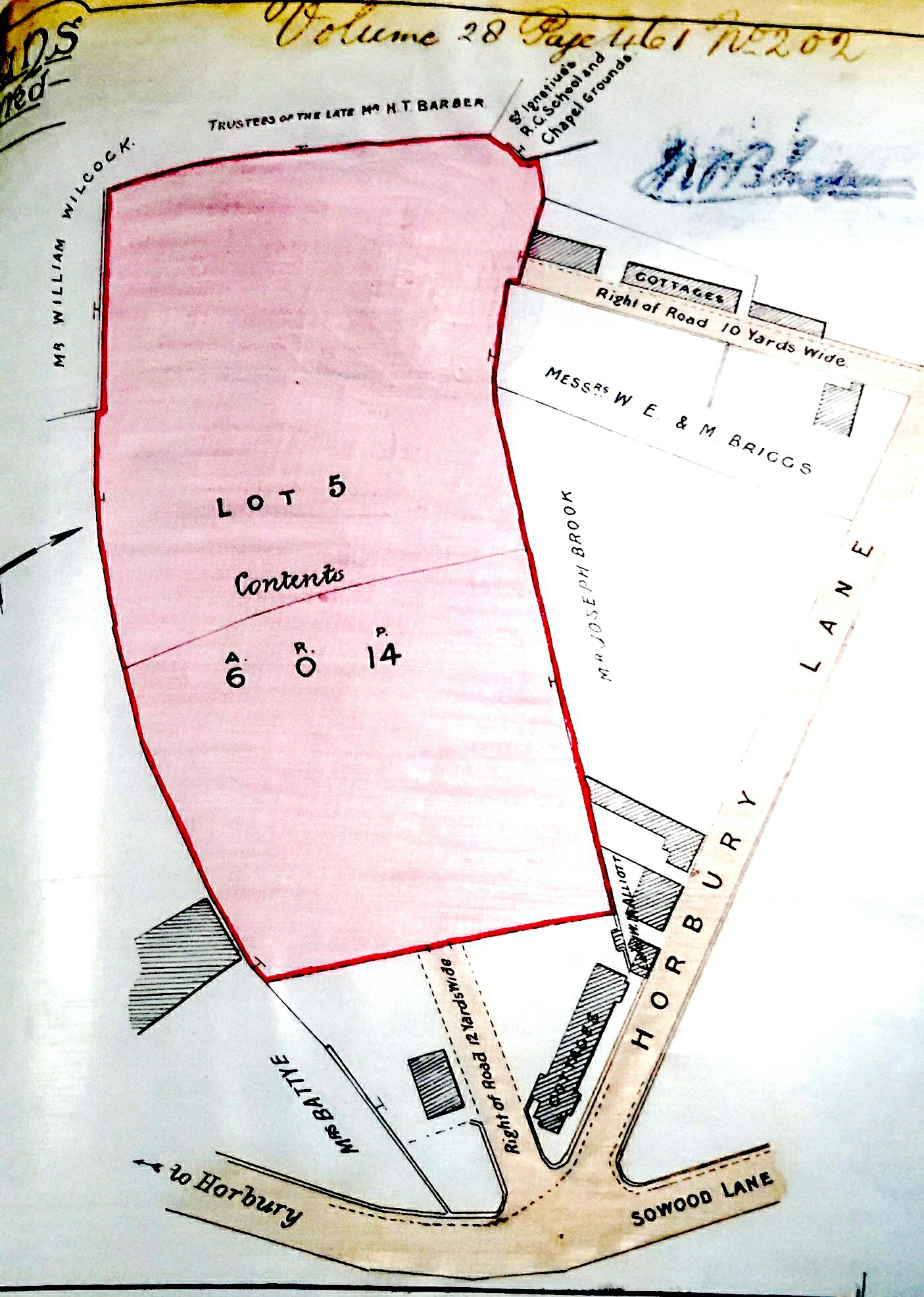
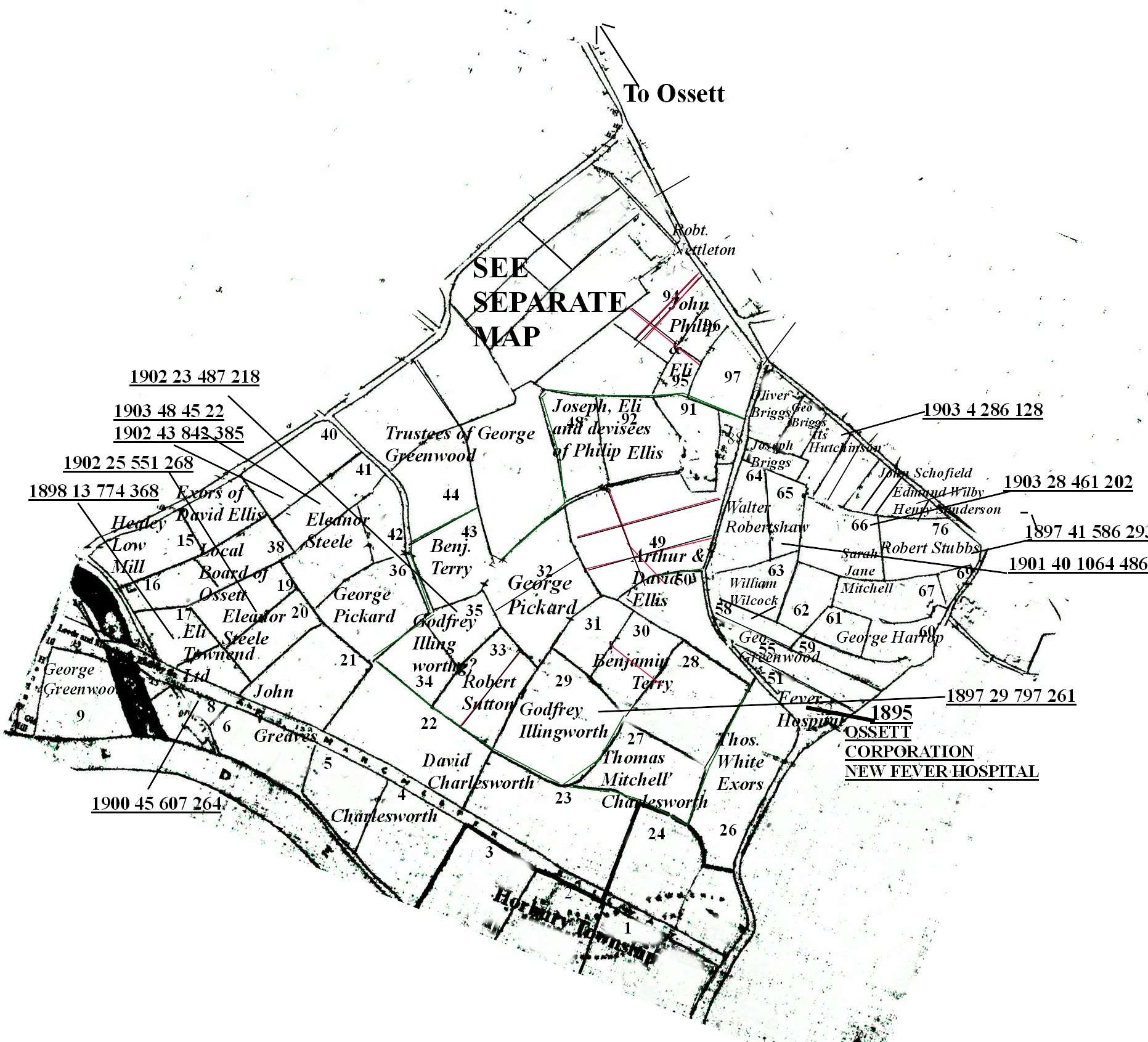

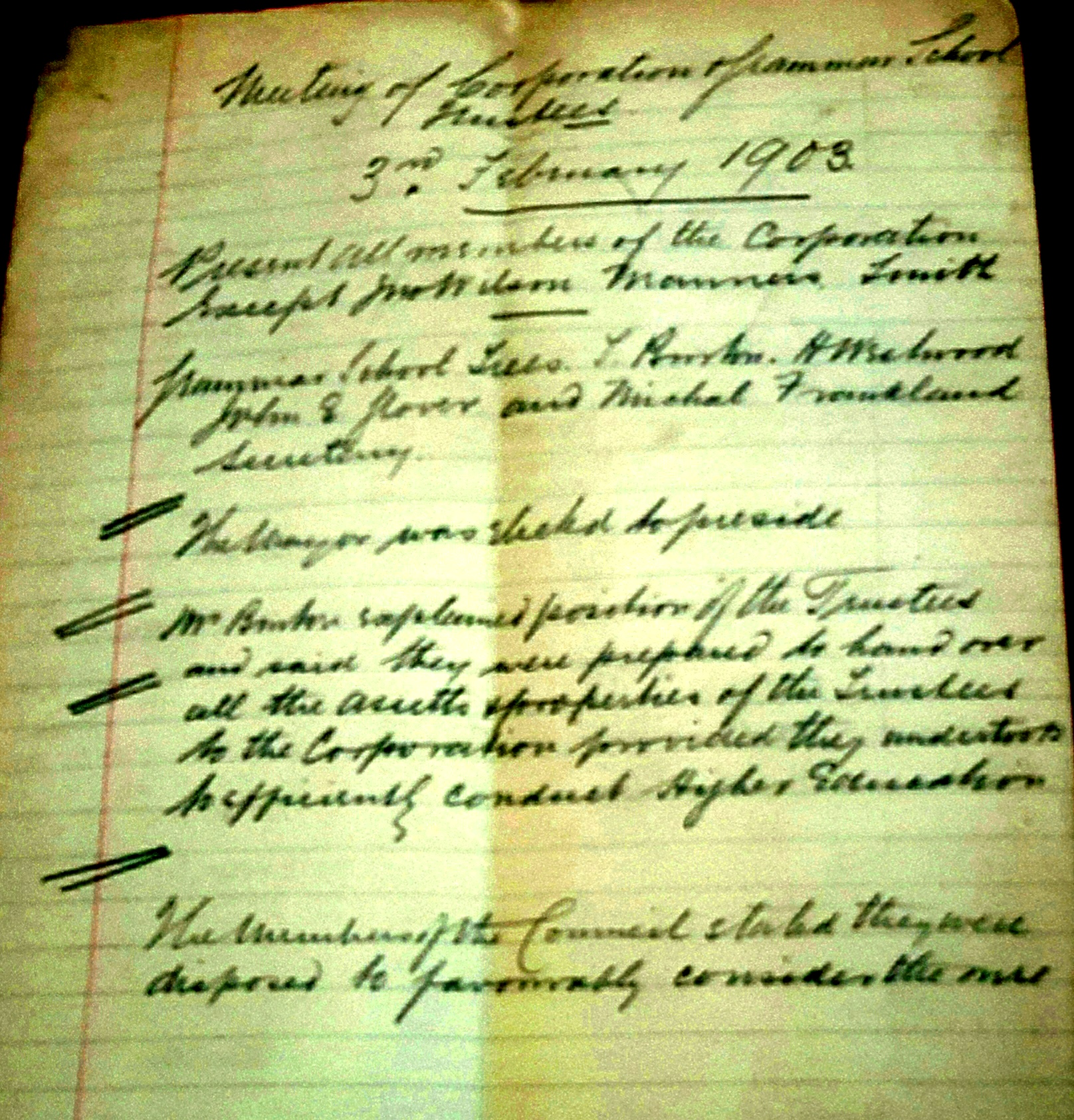
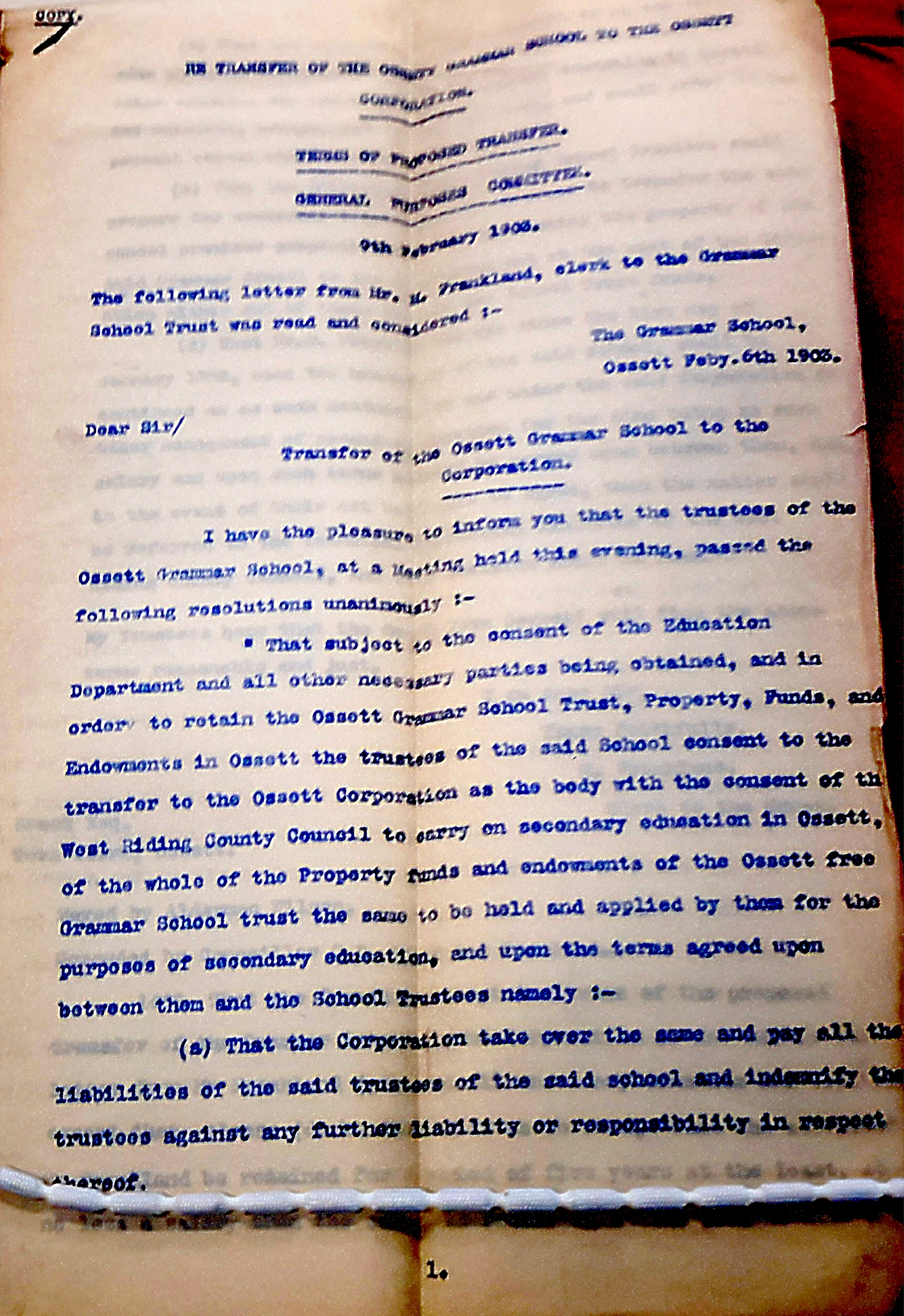

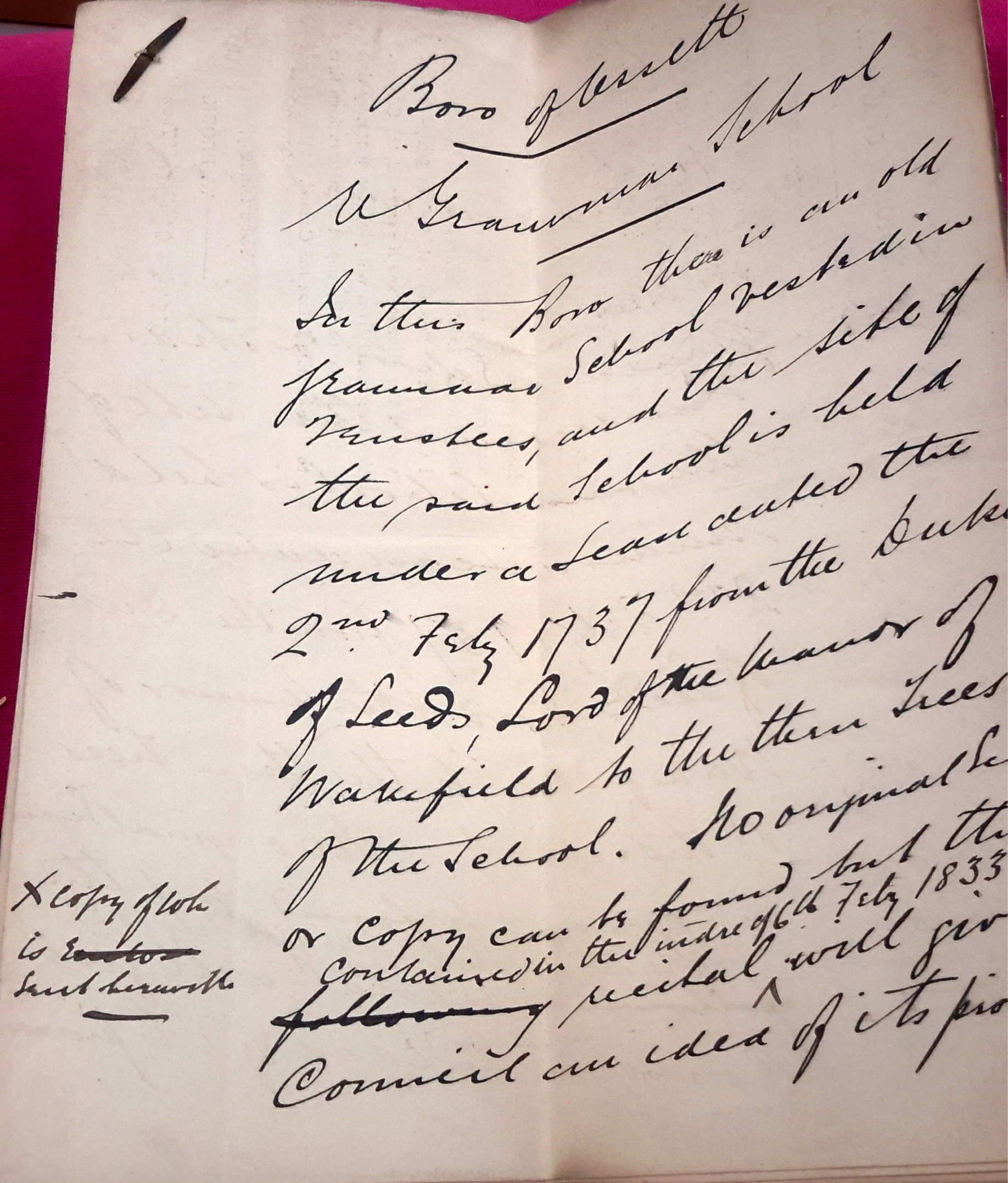

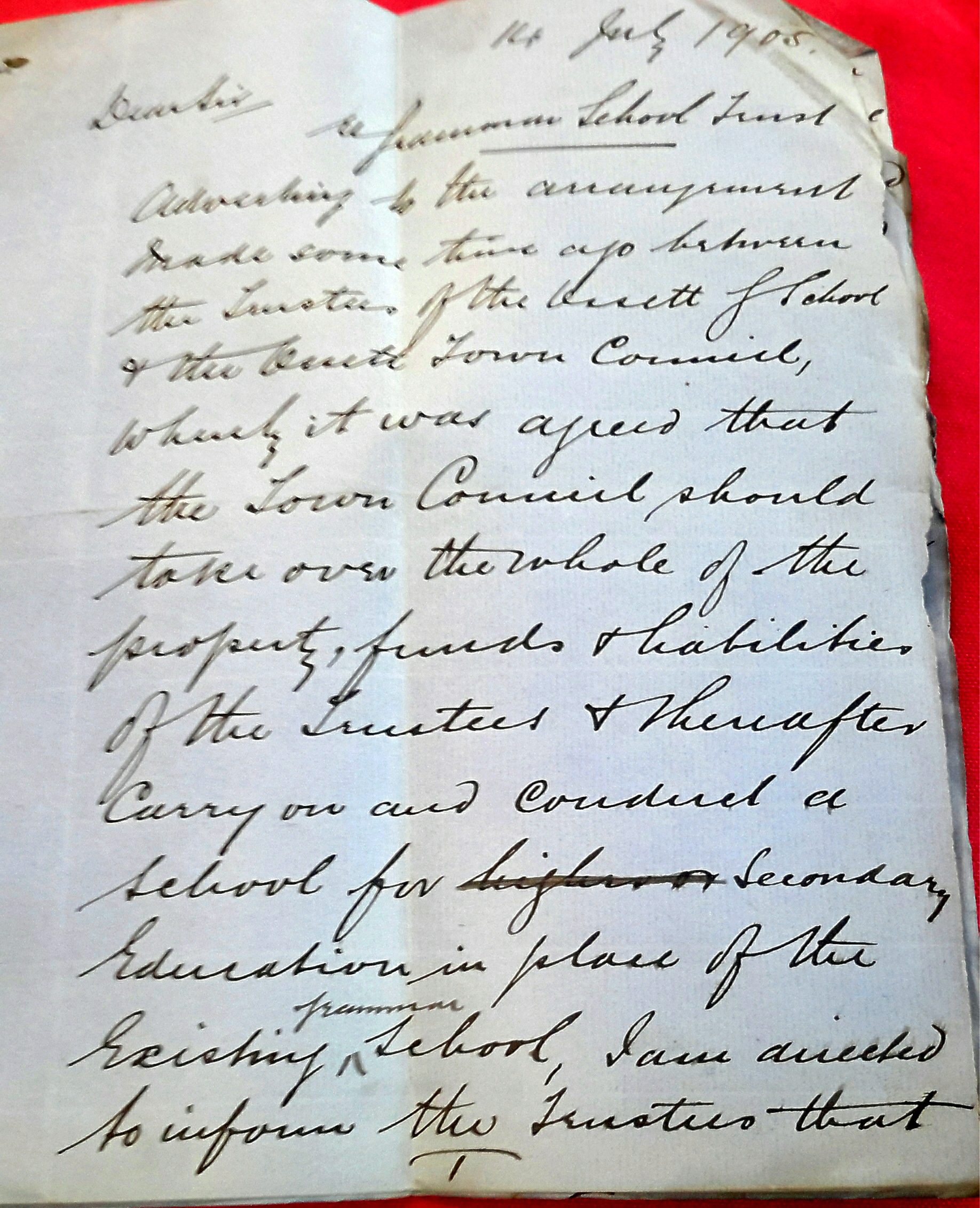


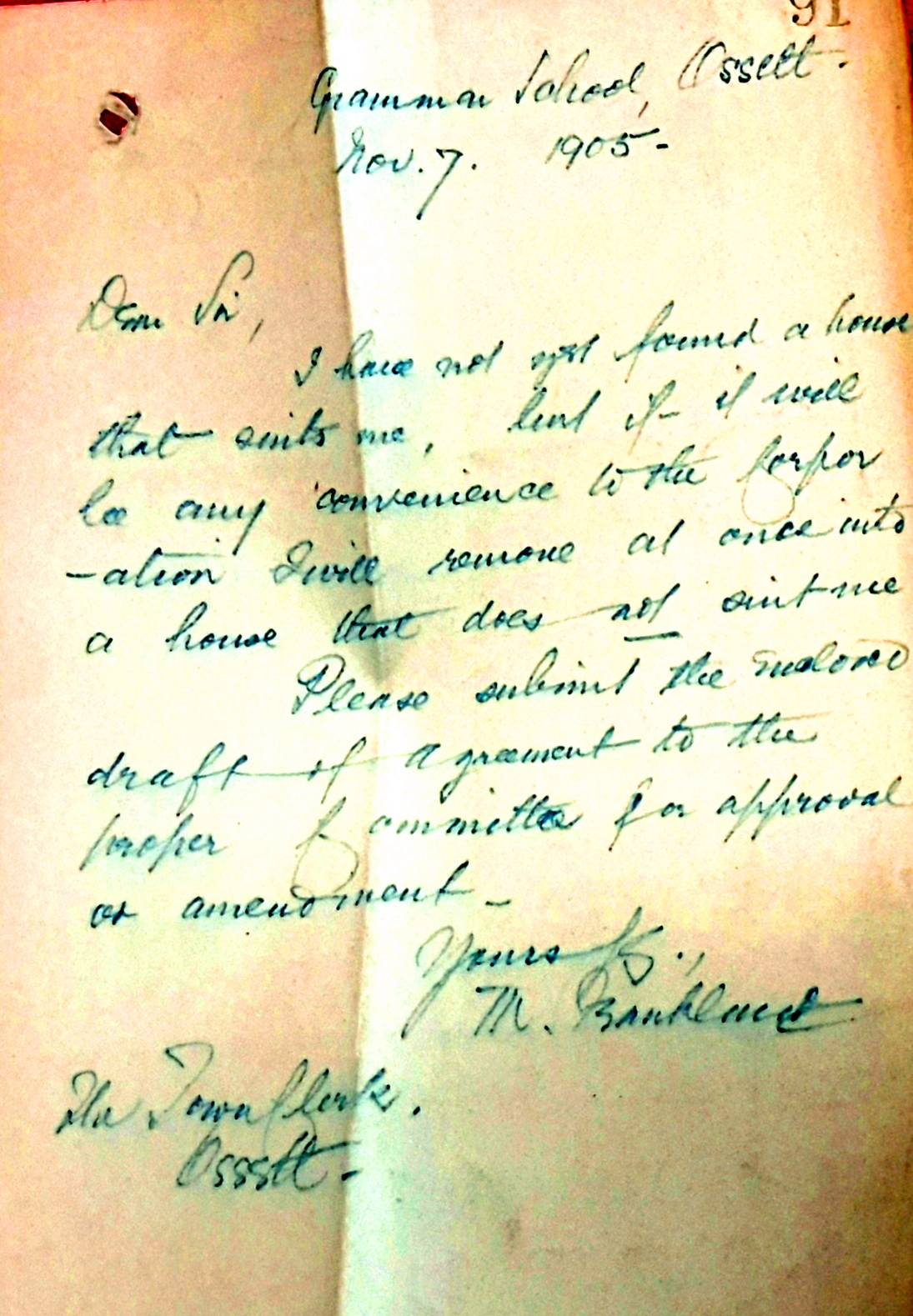

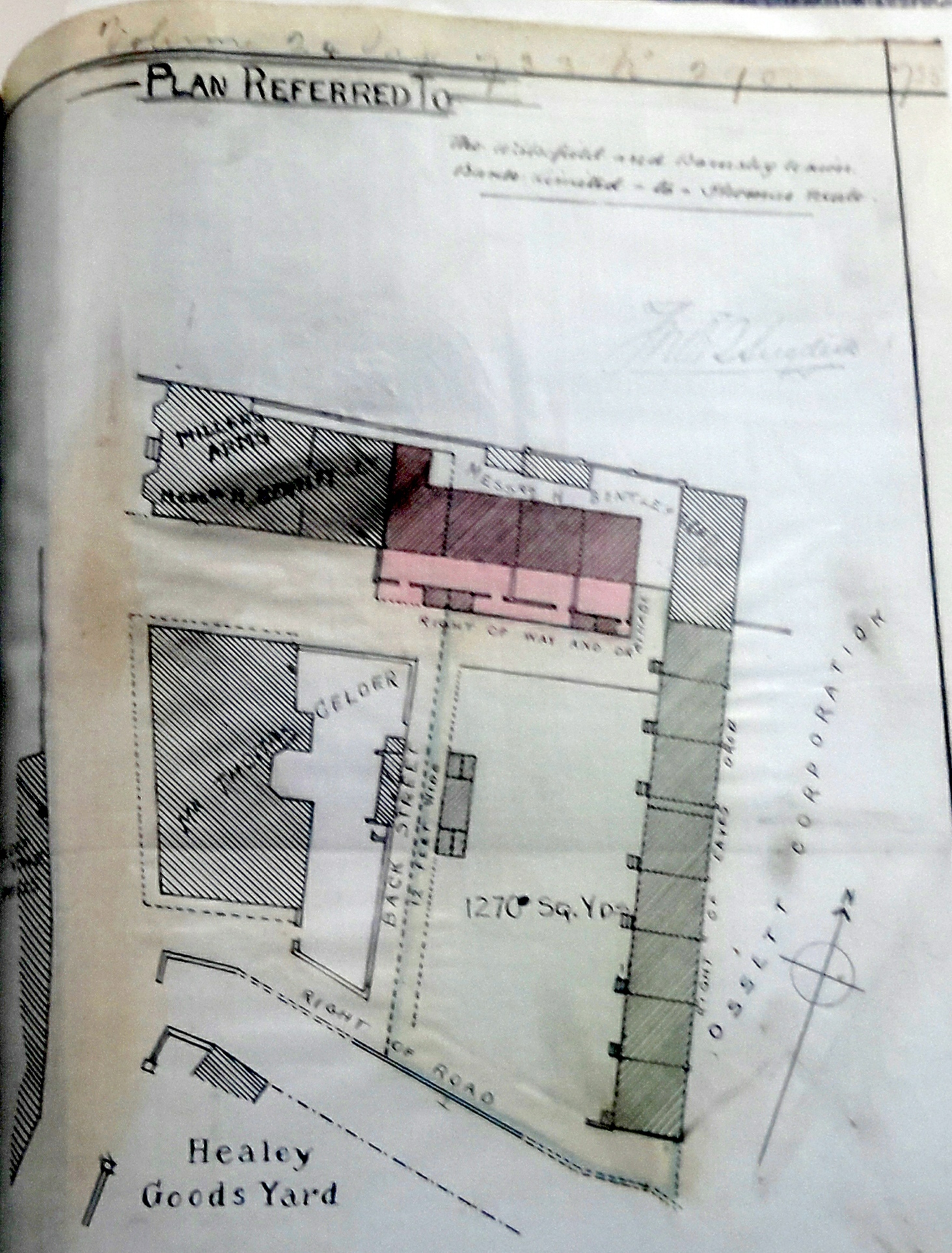

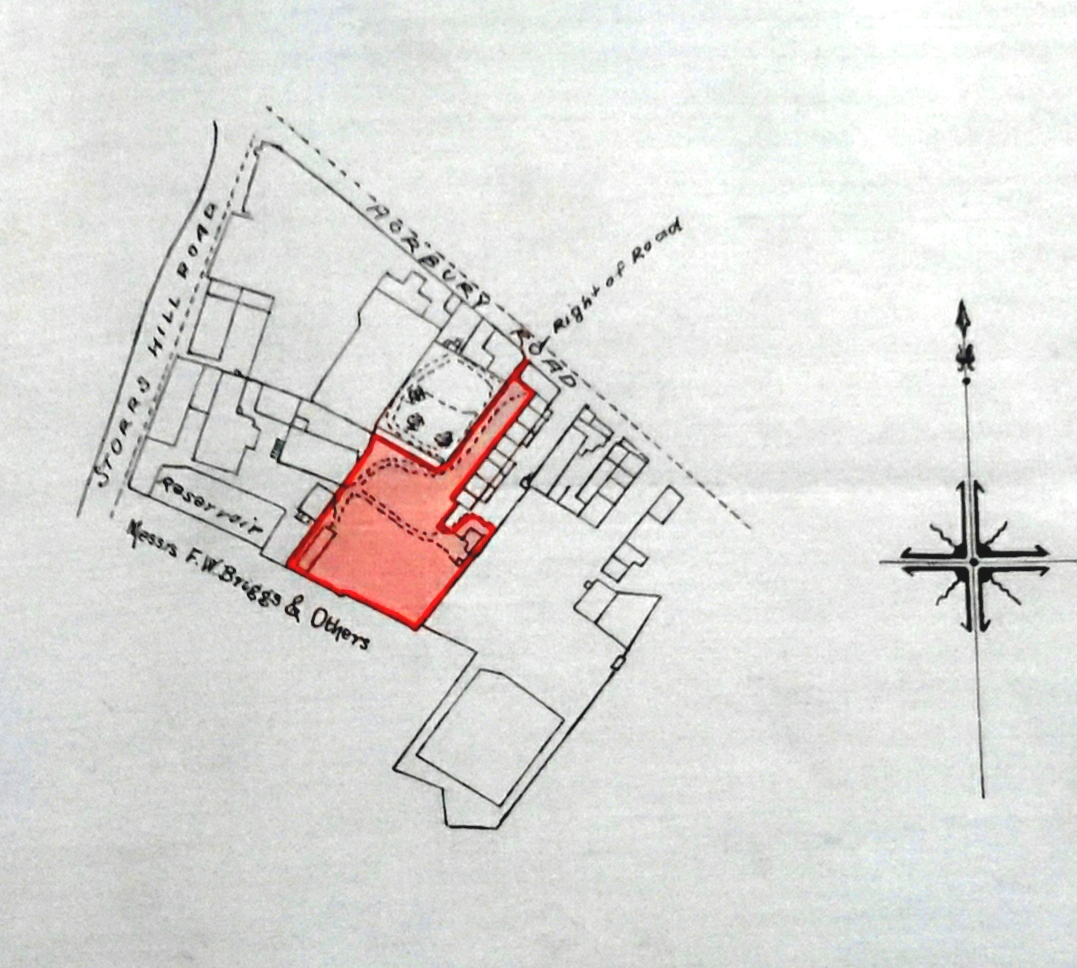

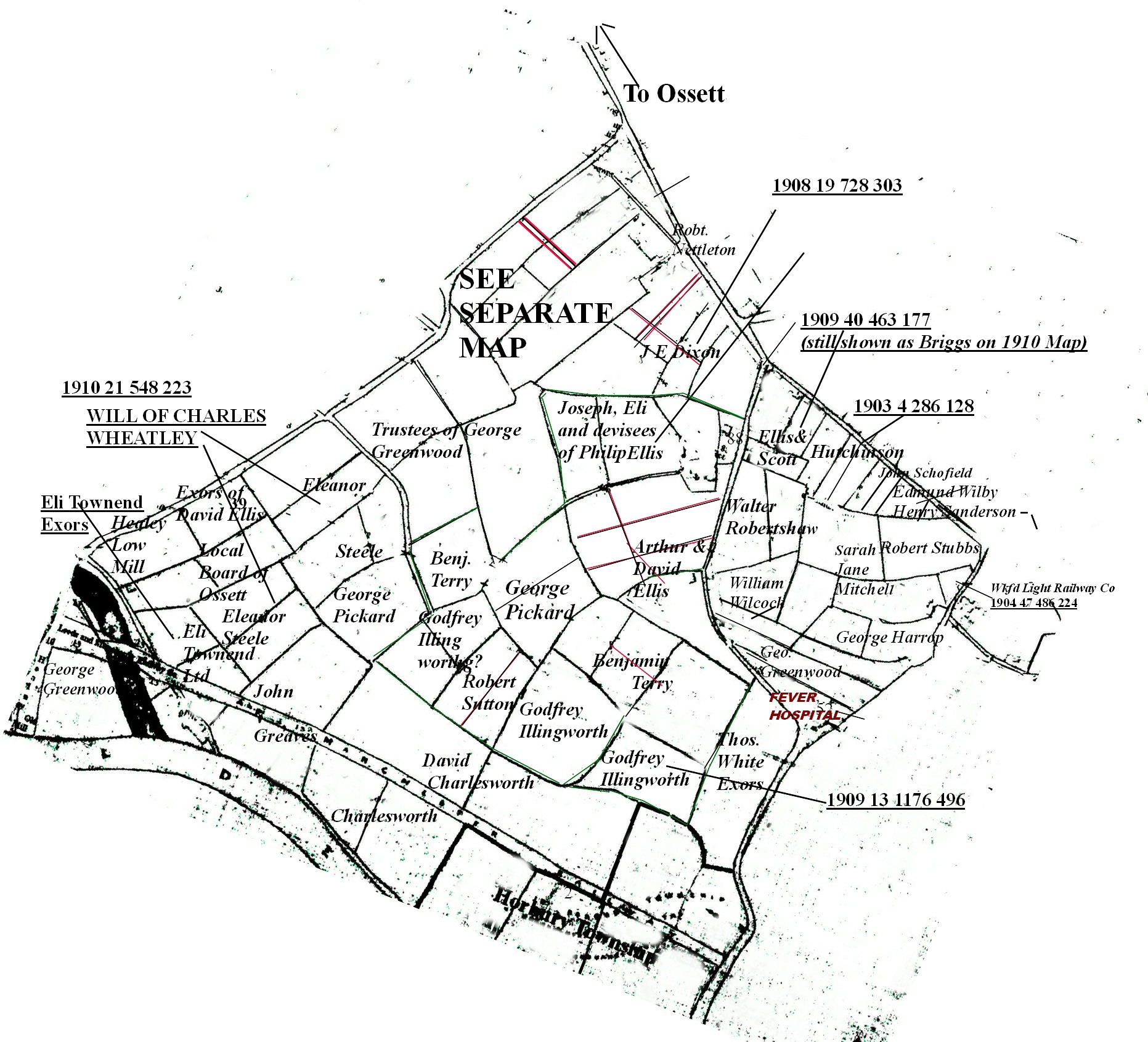
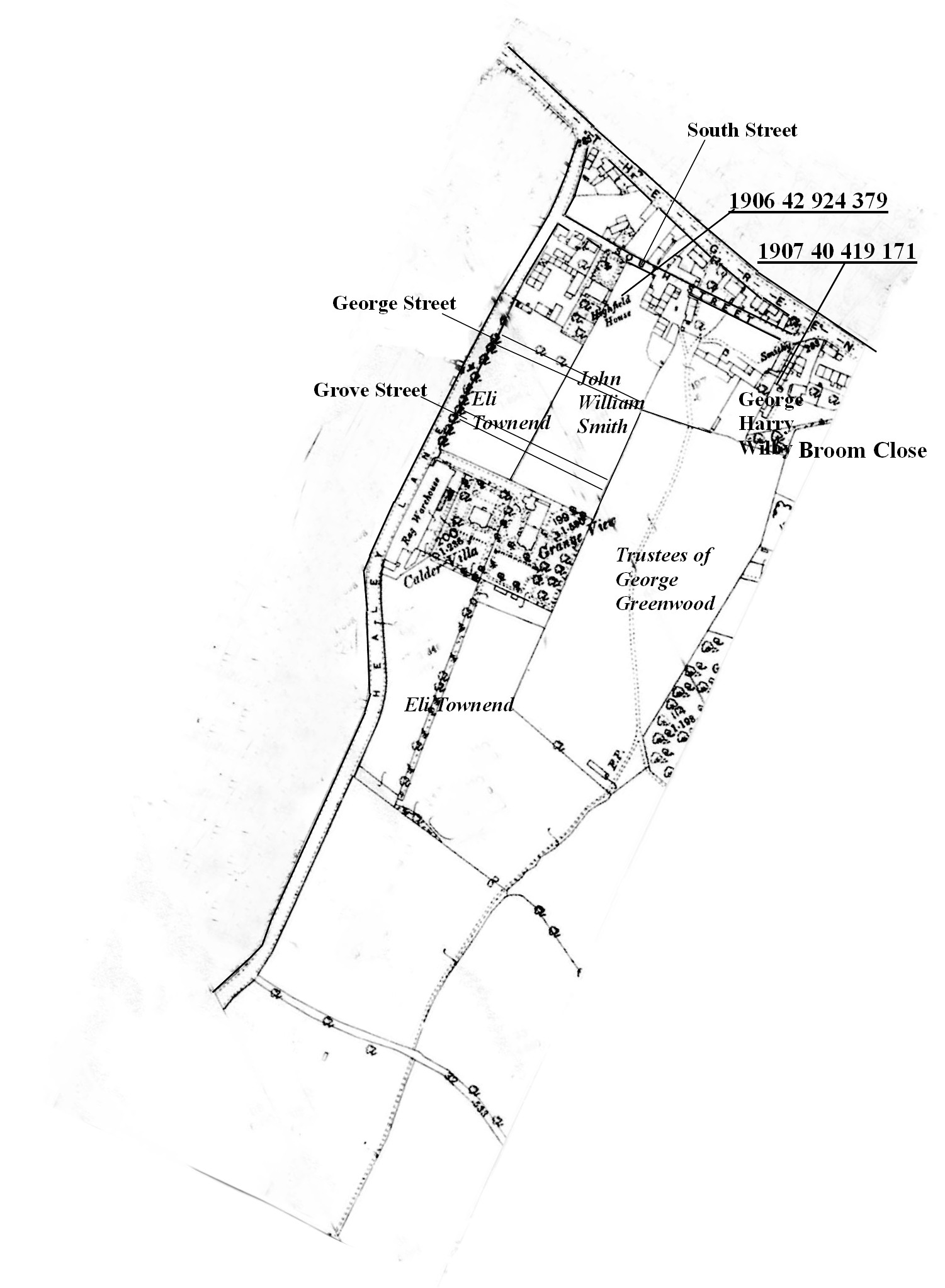

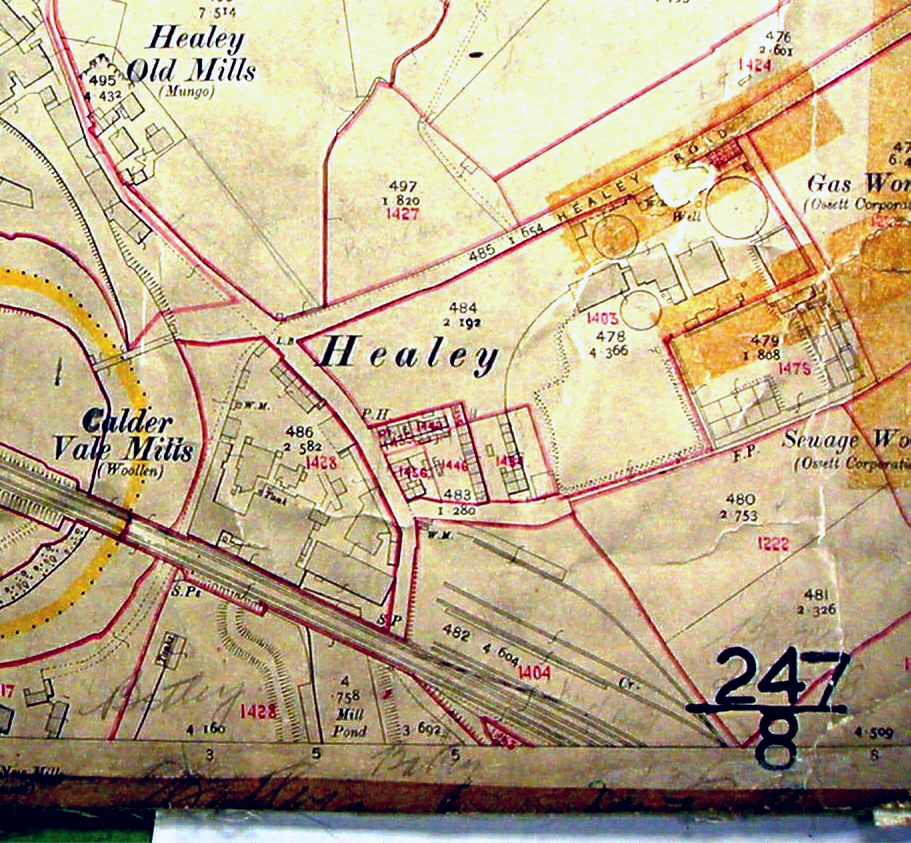
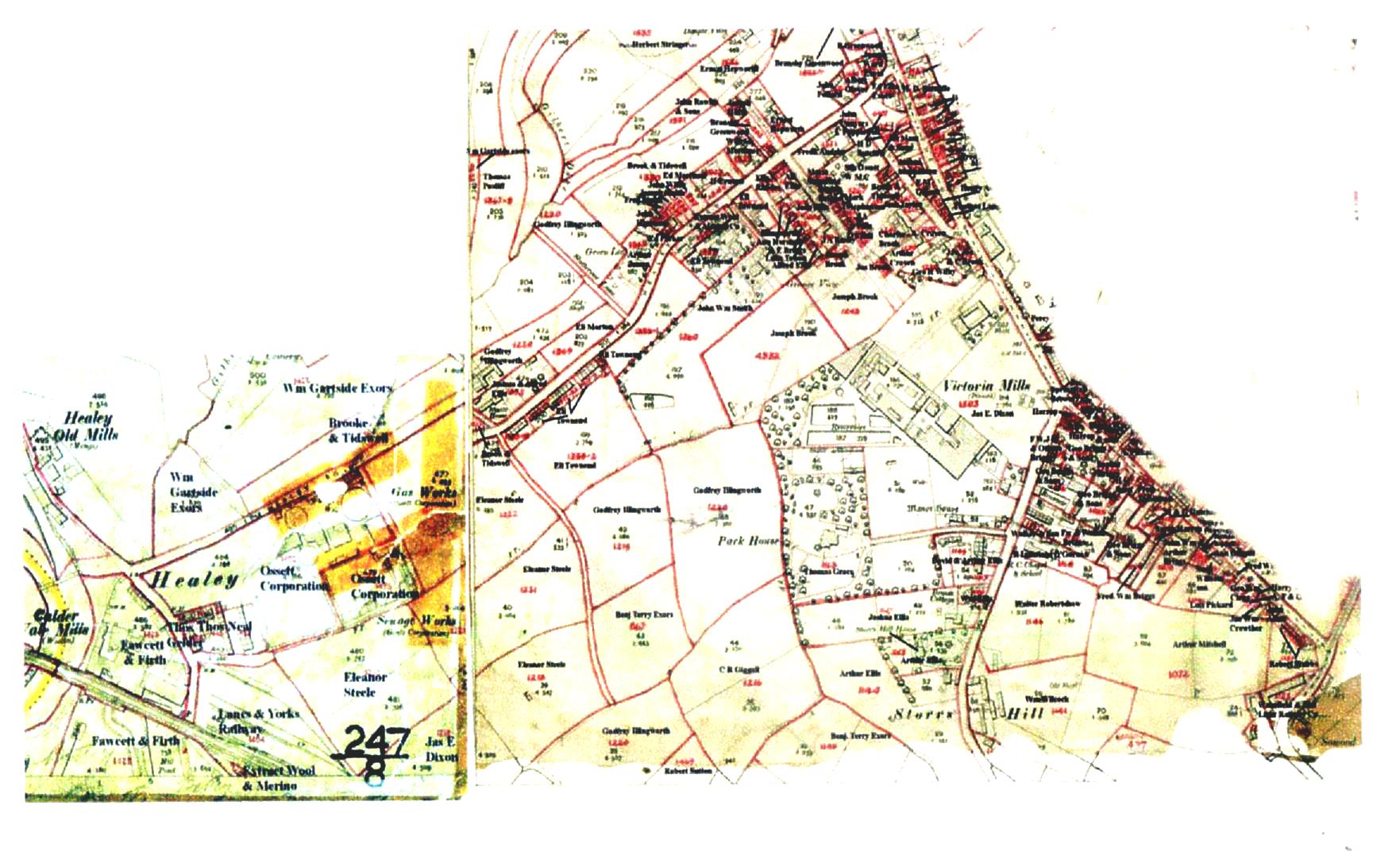
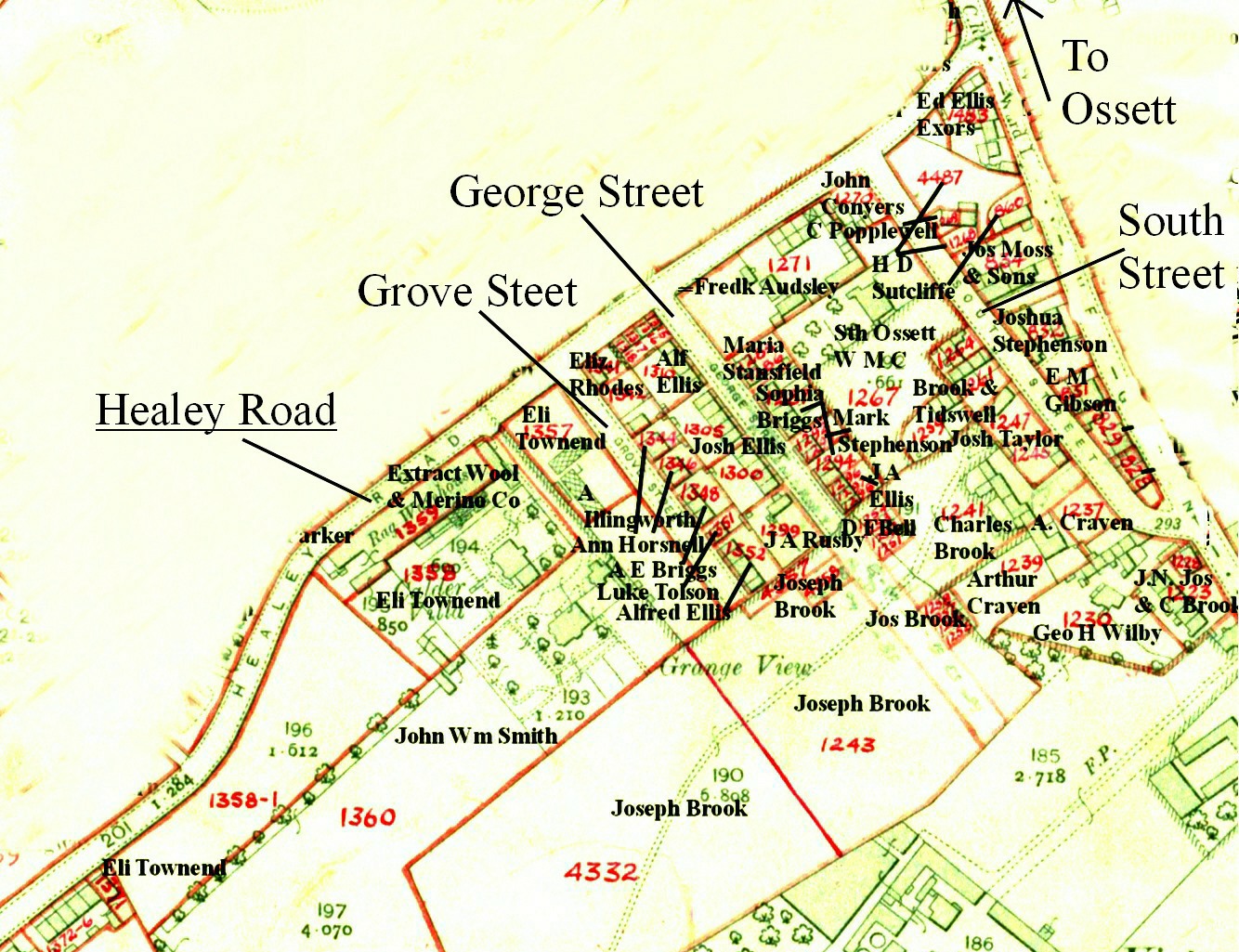
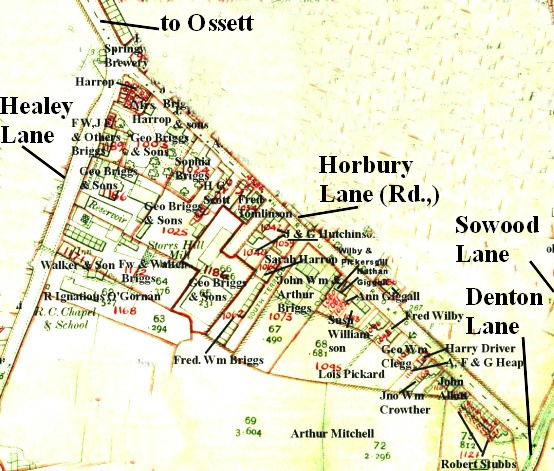
 HORBURY & OSSETT FAMILY & LOCAL HISTORY
You must be logged in to post a comment.