THE SHEPHERD’S ARMS

No ordinary inn is the Shepherd’s Arms, Cluntergate, Horbury.The “1578” chiselled on its stonework dates it back a long way. It was, indeed, formerly Nether Hall, and the time when it became an inn seems somewhat uncertain.There is a stout Yorkshire ring about the names of its former owners, from the earliest known, which was Binnes, to Horrocks, Coppendale, Allott, and Scholefield, the last-named marrying the widow of Joseph Bayldon, who built Carr Lodge, Horbury. Owner today is Captain Battye, a Scholefield descendant. The inn was tenanted for 60 years by a family of Ripleys.

The present landlord, Mr. F. Woodhall, has reason to be proud of the old place. Even the low-ceilinged bar with its oak panelling challenges attention, and other rooms have this feature.
One finds that the Shepherd’s Arms has a framework of solid oak beams locked together with wooden pegs. A bedroom has a fine ceiling, said to be Italian, ornamented with the fleur-de-lis, with Queen Elizabeth’s Coat-of- Arms and her initials. “E.R..” in the centre. In each corner of the ceiling is the date., 1593.


In an upper room there is a huge, open brick fireplace, and the floor slopes into the centre, to rise again toward the door- apparently a common method of constructing floors three centuries ago, that the heat from the fire might be thrown upwards. On the ground floor there are several small and peculiarly shaped rooms, each having an oak door, and some small passages, with which the house abounds, have been blocked up. The building is in a good state of preservation.
Bradford Observer – Thursday 31 October 1946


The Shepherd’s Arms 1963. Photographer William Fowler.

The Shepherd’s Arms 1964 ©️ Brian Davidson
This is The Shepherds Arms, Horbury in 1964. You can see why it needed a rebuild to put everything right. The work was so intrusive the landlord at the time had to live in a caravan out in the yard. When I took this the landlord was Fred Woodhall, a giant of a man who was 25 to 30 stone. His barstaff could not pass him behind the bar and he had to step outside – not a very practical arrangement. During the alterations they found the tudor fireplace and mummified cats and the original walls which were animal dung and straw. There was something new every time we visited.
Brian C Davidson 2016
ST LEONARD’S HOSPITAL
The building, at the top of Tithe Barn Street near the junction with Northgate in Horbury, formerly known as St Leonard’s Hospital stands on the site of a house, left in 1731 by Richard WORMALD, a Horbury yeoman and divided into rooms for use by needy people. It was then known as Wormald’s Almshouses. The Charity Commissioners Report of 1899 stated that only one of the rooms was occupied, by a man chosen by the vicar and churchwardens. The other rooms were then so dilapidated as to be uninhabitable.
Canon John SHARP, then the Vicar of Horbury raised money for the demolition of the property and the erection of four one bedroom houses, behind which there was a dwelling for a parish nurse. The site was enlarged by about 500 yards and commemorated Queen Victoria’s Jubilee and the old nickname, Bedlam, dropped in favour of St Leonard’s Hospital. Canon Sharp laid the foundation stone and the building was dedicated by William Walsham Howe, the first Bishop of Wakefield (1888 – 97). The Parish Nurses’ house was never used for that purpose but as a cookery school and later let at 2/6 per week to a private tenant.
One of the tenants was reported as complaining of damp (probably Nehemiah Eastwood, my Gt Gt Granddad)!) and the Charity Commissioners noted that the only advantage of living in St Leonard’s Hospital for tenants was that the residents paid no rent. The Church received only £7.50 per year towards their upkeep, and as none of the houses had a bathroom and only one outside toilet between the four, the Commissioners agreed to their closure. In 1969 they were used as a Youth Centre and then converted into a Parish Room to replace facilities lost when the old vicarage in Northgate was demolished.
(information from “Some Horbury Yesterdays by R D Woodhall)
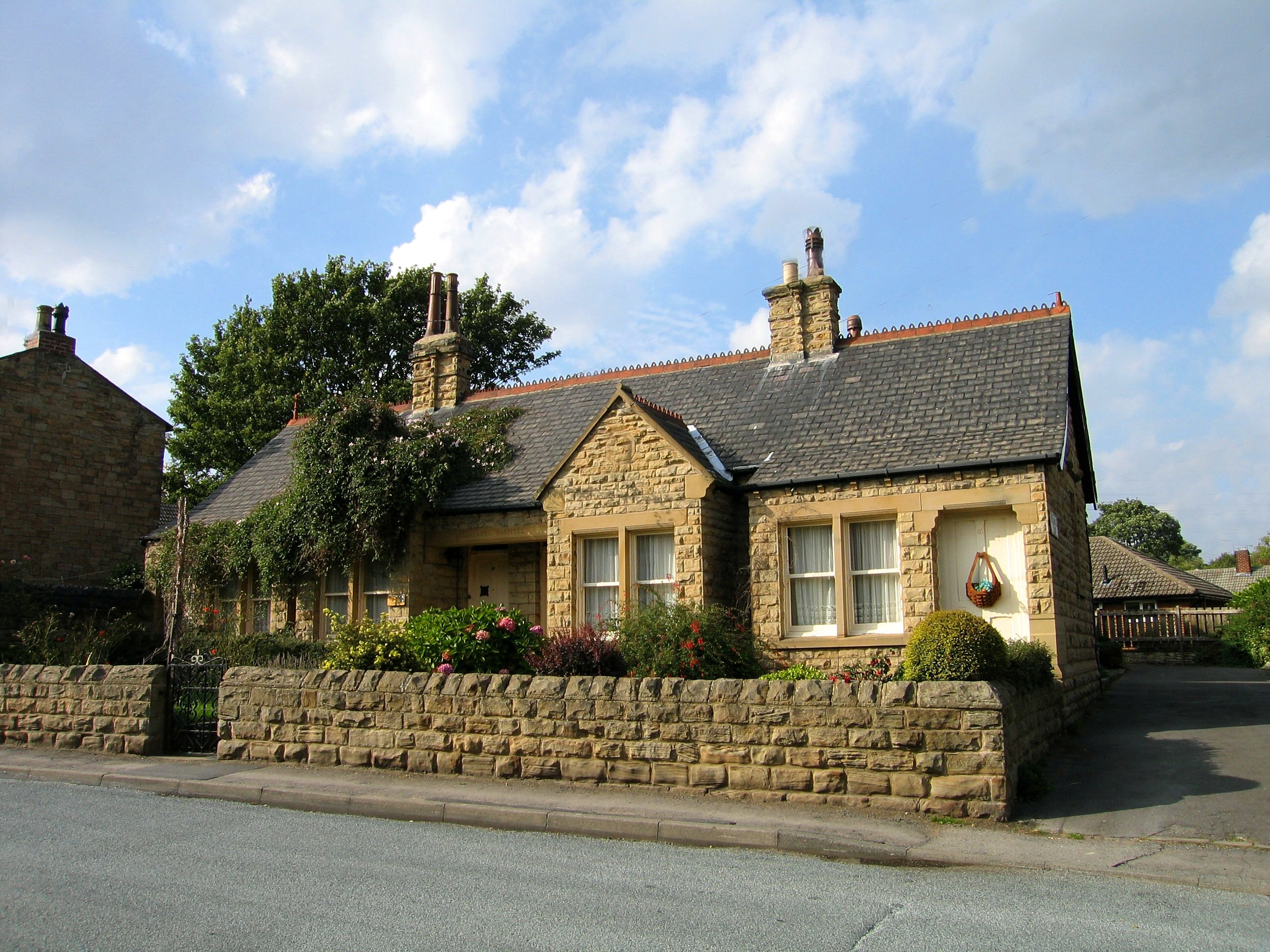
St Leonard’s Hospital as it is today.
Photos: Elsie Walton

The Commemoration Plaque in honour of Queen Victoria’s Jubilee.

At the top of Tithe Barn Street On the right was the Old Graveyard.
.
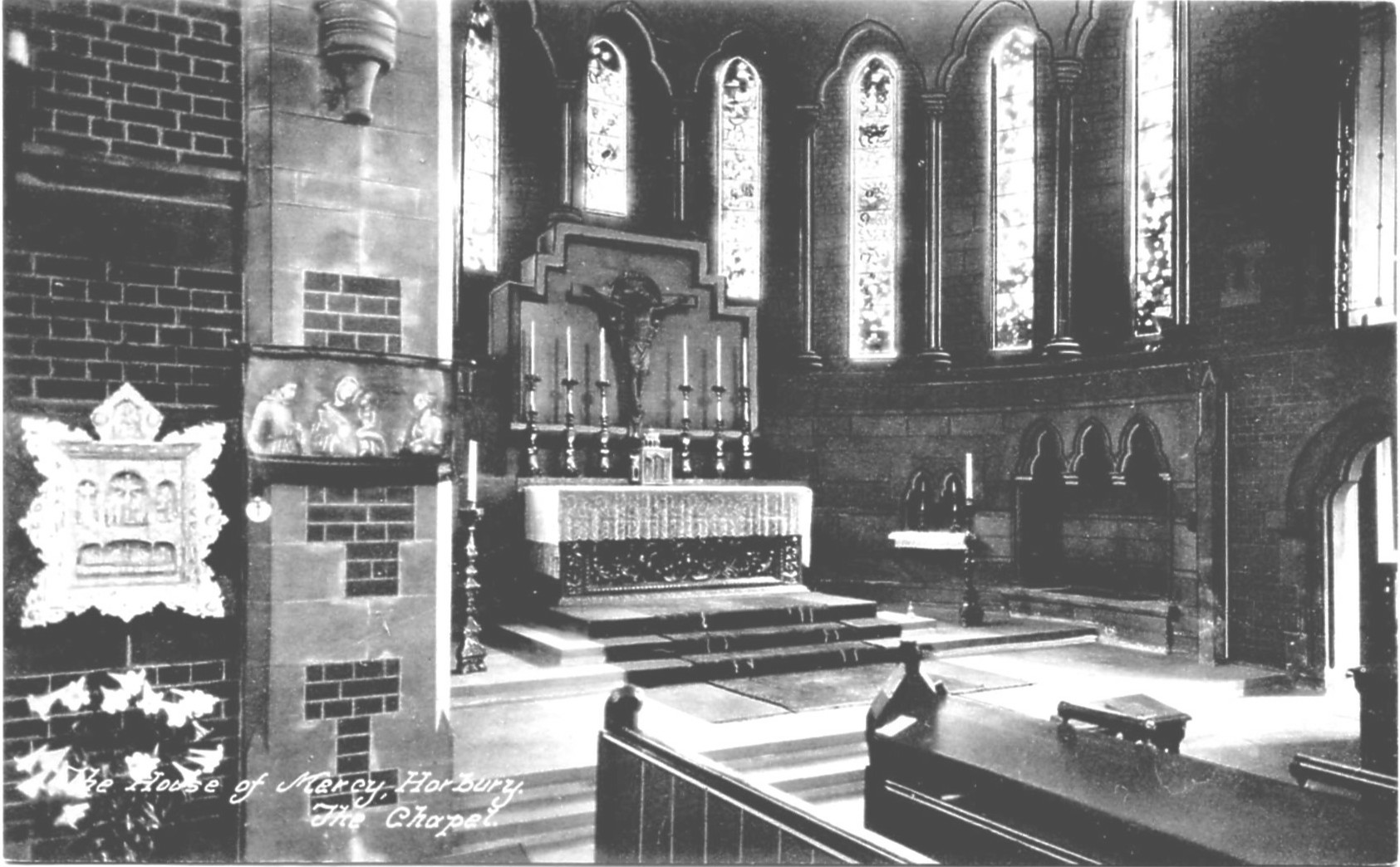
THE HOUSE OF MERCY

The House of Mercy was established in 1858. It occupied a spacious building of mediaeval appearance, which was erected in 1863, at a cost of about £13,000, situated on Dovecote Lane in Horbury near to the Cemetery. It was managed by the sisters of St. Peter the Apostle, who in 1880 conducted a high school for girls in the House. (White’s Directory 1887)
The foundation stone was laid by Dr Bickersteth, Bishop of Ripon, on July 19 1862. The new House of Mercy was opened on September 14 1864.
Steve Wilson has already researched this part of Horbury, so I’ll not repeat it. His research is available here.
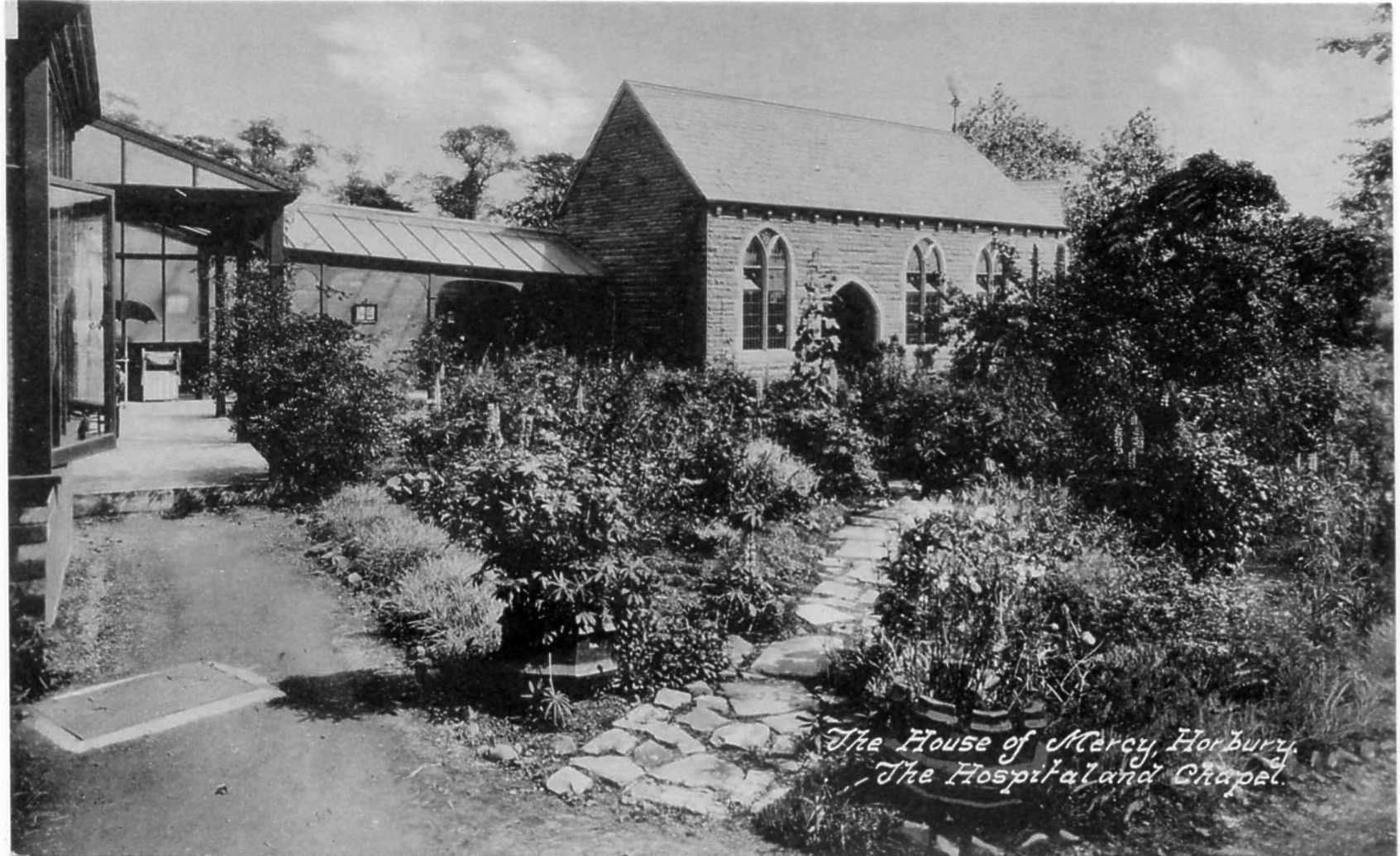

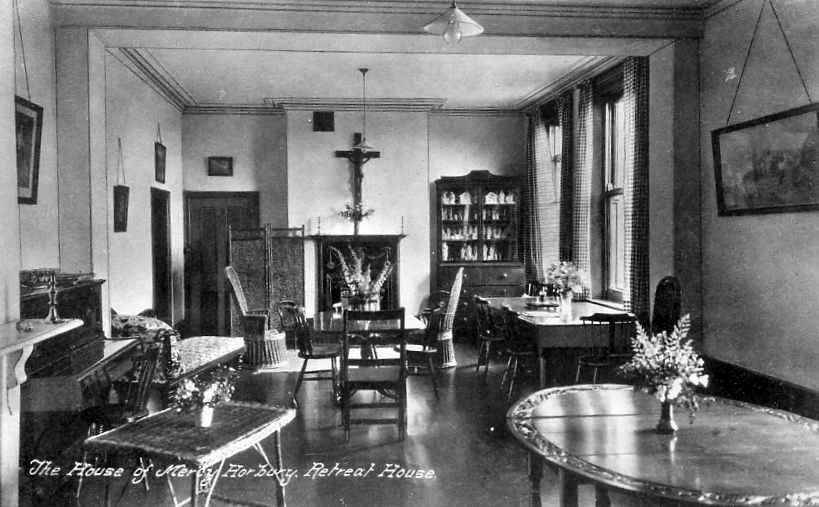
The following is transcribed from the Leeds Intelligencer, dated Saturday 16 September 1865.
Through the efforts of some philanthropic and benevolent persons, what has been called a House of Mercy, for the reclamation of fallen women, has existed at Horbury, in the West Riding of this county ; but it was too small to accommodate more than a limited number – some 14 or 15 – of such penitents, and exertions, which have been attended with success, have been made to open a new building. That opening took place on Thursday last, so far as the new House of Mercy is intended to be proceeded with at present. There was a benedictory service, in which no less than 55 clergy from different parts of England, took part. The Lady Superior of the Clewer House of Mercy, near London, which is the largest refuge of the sort in the land, was also present. When finished, the Horbury House of Mercy will not be far behind it in size, and in the extent of the accommodation it will afford, even if it do not exceed it in these two things. As intended, there will be buildings to form four sides of a quadrangle. As it stands at present only one side is really completed; two other sides not going out to their full extent. The useful and really absolutely necessary departments, such as the culinary departments, the laundry, and the dormitories, are included in the building now erected; but such matters as committee rooms, offices of various kinds, the chapels, and extra accommodation for the sisters, who are to have the control of the inmates, are left for a future day ; —not that there is not at present a chapel, but this has been extemporised on the third story of the west wing, which when the whole arrangements shall have been made, will be turned into dormitories.

The old building will be vacated in a fortnight, and the new building taken possession of, and then the number of penitents who will be received will be limited to 30., although there is room for rather more. The estimates for the whole building are roughly calculated at 10,000 ; about 5,000 has been received already, and expended, and several hundreds more than this sum are required to pay off debt now incurred. The institution is never expected to become self-supporting one, but the liberality with which all the appeals of the Rev. Mr. Sharp, vicar of Horbury, have been responded to, leaves him no doubt as to obtaining the wherewithal to successfully carry out the work set before him, he being the chief promoter of the institution. The proceedings connected with the opening ceremony began by the celebration of the Holy Communion, at eight a.m. At 11.45 there was morning prayer, with celebration of the Sacrament ; and a sermon by the Very Rev. the Dean of York. The congregation was a large one. Prayers were read by Rev. W. Davis, curate of Horbury, and Rev. Mr. Fleetwood Shepperd ; the lessons by Rev. Hepworth Hall and Rev. Canon Boyd. The musical part of the services, which were sung by the excellent choir of the Church, aided by extra help from Wakefield, was from Helmore’s Manual of Plain Sotoi and Hymns Ancient anu Modern. The Very Rev. Dean preached an earnest and appropriate sermon, taking for his text Mark 5, xxviii., “If I may touch but his clothes I shall be healed.” The collection, which brought the service to an end, amounted to £203.

On reaching the building a short prayer was offered up, and then the choir and clergy entered. As no one else, not even the reporters, were allowed to follow, we cannot say what took place therein : but from the published order of service, it seems that the procession went through the house, stopping at the store rooms, the kitchen, the dining hall, the dormitories, and finally in the chapel, and offered up prayer in each.
On emerging from the place the procession was reformed, and proceeded to the Church school rooms, where a sumptuous luncheon had been provided by Mr. Oliver, of the Woolpacks Inn. The lunch was admirably laid, and was well served, and did Mr. Oliver much credit. After the usual loyal toasts. The Rev. John Sharp, who occupied the chair, rose and said they were greatly indebted on that joyous gathering to the extreme kindness of the Dean of York in coming to preach to them the excellent sermon which they had heard that morning. Therefore he now rose to propose that they drink his very good health, and give him their best thanks for what he had done.
Before sitting down, Mr. Sharp took the opportunity of referring to a budget of letters he had received from friends who had been unable to attend that day, but had desired him to express their sorrow that such was the case. Amongst the rest he mentioned that he had letters from the Bishop of Ripon, the Rural Dean, and the Bishop of Lichfield, the latter of whom had sent a token of his regard in the shape of a cheque.There were “checks” of various kinds; there were some which were not agreeable ; but he was happy to say, so far, they had a fair share of the agreeable cheques at Horbury. (Cheers.] He was open to receive any quantity of the same kind. (Renewed cheers.).
The Very Rev. the Dean of York, in responding, thanked all very siucerely for the mark of their kindness, and said it had given him great and sincere pleasure to be amongst then on that very interesting occasion. It did him good to see so many hearts working on behalf of the beloved Church of England (Cheers.) There were few spots in their northern county which could be more favourably referred to than Horbury. (Cheers.) But they did not forget to whom this was due. (Cheers.) Mr. Sharp had entrusted to him the duty of proposing success to the Horbury House of Mercy. All who had visited the building that day must have seen that there was work which required the assistance and help of all. He would be brief in his observations, and he would not prevent anybody sending a cheque to that work. (Loud cheers.) The Rev. W. Neville, although a stranger among them for many years, could not allow the opportunity to pass without proposing the health of his old schoolfellow, John Sharp ; aud this he did with a heartiness which called forth a true Yorkshire cheer from the company.

In conformity with Mr. Sharp’s closing remarks, the company on separating proceeded to the building, in which as he intimated a sale of fancy work was held. The stalls were presided over by Miss Goodenough, Miss Holdsworth, Miss Becket, Miss E. Sanderson, Mrs. Knight, Mrs. Capt. Armytage, Miss Phillips, Miss Wilkes, &c. As Mr. Sharp said of fancy works there was an embarrass de rich-esses ; and his urgings to buy seemed to be well attended to, as the dining hall in which the sale took place was filled through-out the afternoon. The throwing open of the building was taken advantage of by the public, and the lobbies, and spacious rooms and conveniences which the building consisted of, were gone through by large numbers. Much admiration was expressed at the general excellence of the internal arrangements, and the manner in which the architect, Mr. Woodyer, of Guildford, had planned them, and the way in which the contractors, under the careful superintendence of Mr. Salmon, the clerk of the works, had carried them out. The sum of £81 was received from the sale of fancy work on Thursday.
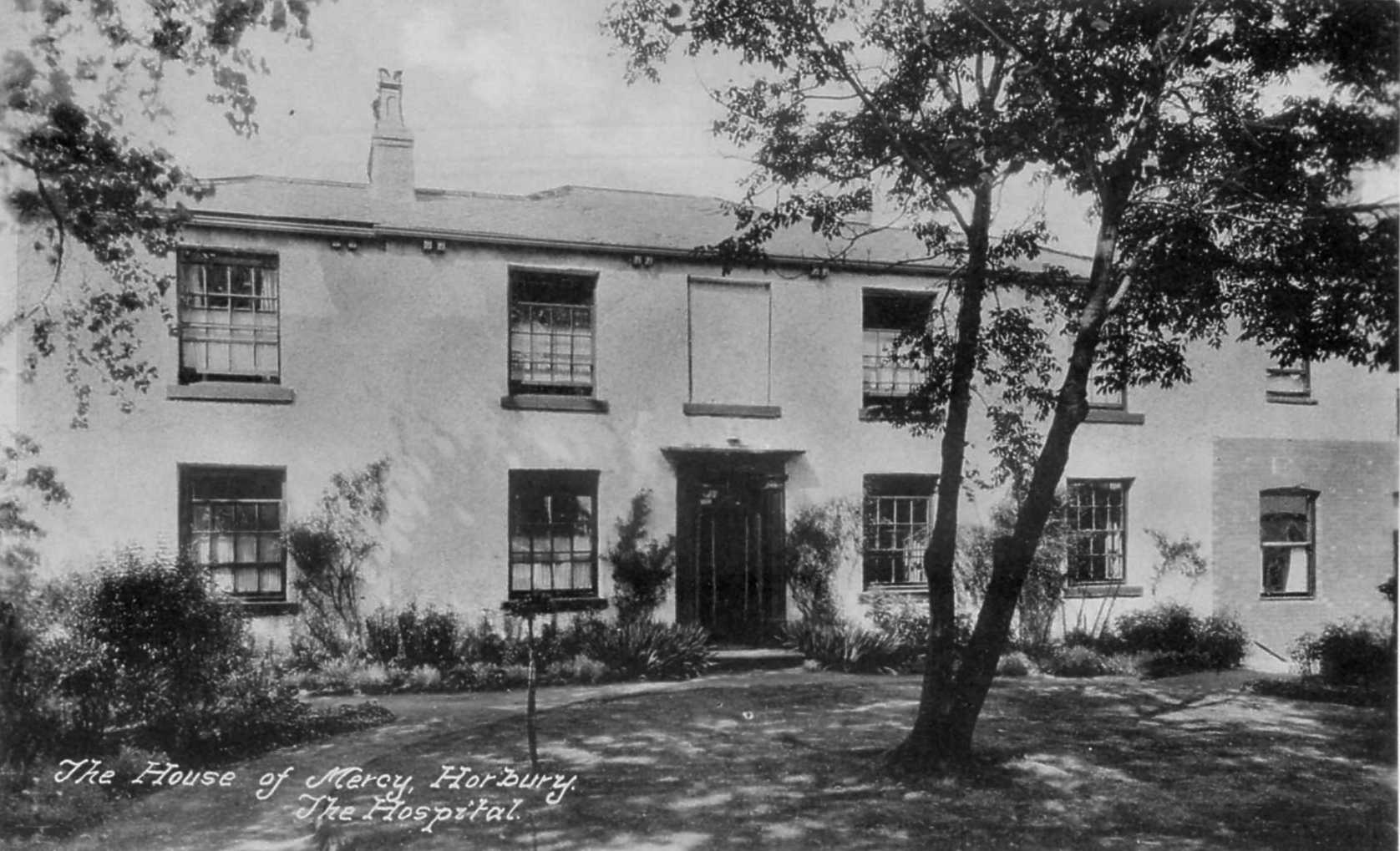
The following is transcribed from the Leeds Mercury, dated Friday 05 August 1870
The institution at Horbury known as the House of Mercy has succeeded so well, has done so great an amount of good for the unfortunate women whose morals it seeks to improve, and whose return to a virtuous life it endevours to promote, that it has been found advisable to set about an enlargement of the building, and in particular to erect a chapel in which the innates may assemble for worship. The foundation stone of this chapel was laid yesterday by Earl Bcauchamp, and as the anniversary of the House also took place yesterday, special services were held in the parish church.

The following is transcribed from the Yorkshire Post and Leeds Intelligencer, dated Friday 01 July 1881.
The report which has been issued and contains facts which will be read with interest. It commences by saying that the year 1880, the twenty second year of its age, will long be remembered by those who are most interested, as being one of its brightest on account of the completion of great work, viz., the entire freedom from debt of all its large pile of new buildings. total cost of these buildings, including the chapel, together with the purchase of the site of four acres, the erection of its fence walls, has amounted £15,477 10s. 4d. This amount is exclusive of furnishing. Last year a debt of £450 still remained, but exertions of the associates and others, aided by two legacies which have been received, not only has this debt been entirely cleared off, but the sum £280 6s. 2d. has been carried to the building account, towards the completion of the portion which yet remains to built.
Two legacies have been received during the year. One of £100 left by the late Miss Wheatley, of Cote Wall, and another of £5O, by the late John Bayldon, The Crofts, Horbury, who had been from the commencement of the institution one of its treasurers and most zealous friends.
A small high school for girls was opened last May, in a building erected by the sisters in the garden. It is conducted by one their own number, who is now certificated, and it is going very successfully. Some applications have been made to receive boarders, but as yet there is only accommodation for day scholars.

The following is transcribed from the Dewsbury Chronicle and West Riding Advertiser, dated Saturday 30 June 1883.
The annual festival in connection with the Horbury House of Mercy was held on Tuesday last, and the occasion was additionally celebrated by the laying of the foundation stone of a new wing. The home has now been established nearly 25 years, and a large number of patients have passed through it during that period. The new wing will enable the managers to find room for 25 more inmates. The estimated cost is £3,070 ; and the contractors for the work, Messrs. Longley, of Hunslet-lane, Leeds, Messrs. Fallas and Chapel, of Horbury, have also bean appointed to improve and extend the laundries at a cost of about £350. Mr. J. T. Micklethwaite, 15, Deans-yard, Westminster, London, is the architect. During the last five years the following percentage of cases have been decidedly satisfactory:- 71, 80, 78, 82, and 80. On the first of January last year there were 50 inmates, and 37 were admitted during that year. Of that number 35 left, and on the Ist January last the number in the house was 52.

THE HORBURY HOUSE OF MERCY. To the Editor of The Yorkshire Evening Post. Sir, —My attention has been drawn to a recent paragraph in The Yorkshire Evening Post reflecting very seriously on the reputation of the Horbury House of Mercy, and the language there used not only highly exaggerated, but such to cause serious pain to the Mother Superior and Sisters, who have devoted their life and private means to the rescue of fallen women. I claim, therefore, that you allow me through your column to give the true version of the case Gertrude Street, made unnecessarily prominent in them, and then your readers can see for themselves whether, to use your own words, “the quality of the mercy dealt out is very much strained.”
Gertrude Street, aged 21, was sent here last August from a Refuge in London. The account given stated that she had been recently rescued from the streets, had no friends, and that this occasion was not the first time of her having led a bad and immoral life. When she arrived inquiries were made, and she admitted that her friends had cast her off—gone to Canada— and refused to take her because of her bad behaviour; also, subsequently, that she had been in prison. After a few days she turned sulky, refused to work, went her bedroom, barricaded herself in, smashed her bed and the panels of the door, and did further mischief, then next day begged to be forgiven. I interviewed her myself, told her she might stay, but that the property of the House of Mercy could not be destroyed again, and if she did so she was liable to handed over to the police.
On an average once every three or four days during three months a violent outbreak took place. She frequently incited the other inmates to rebel, tore portions her clothes into ribands, refused to do any work whatever, threw hot coffee in the face of one of the Sisters who had taken it to her and tried to quieten her, also frequently threw crockery about, damaged seriously the walls and other property, and threatened violent personal damage to any one who crossed her will. And yet the “quality of mercy was strained’ and she was forgiven ; finally, after having for the third time destroyed the house clothes which she had on (after few hours previously asking to be forgiven and not to be sent away), she was handed over to the police, it being impossible either otherwise to get rid of or maintain the discipline of the Home if she remained.
After being a few days in prison she re-appeared and asked to be taken in, saying the Wakefield police had sent her. We naturally refused, but fed her well, and, as it was a bitter day, gave her good warm winter jacket to wear, and sent her back on our cart to the police, who again sent her to us saying we were bound to take her in, and should be exposed in court if we did not.
Now, sir, I put it to you. or any of your readers: Could we take her in and upset the discipline of the whole place? We have between 60 and 70 fallen women to keep quiet and tame, and in 15 years have only twice had to ask for the help of the police in such a case. Had we taken her in I hardly like to think of the consequences to the rest. There has been peace and quietness since she left. Everyone knew what she had done, and to take her in again would have ended in many leaving, and a total upset of the whole place.
We sent her back again by train under proper care, and the result is after having borne patiently with a most rowdy, violent, strong woman for over three months, after having forgiven her some twelve times, given her a chance in every part of the home, fed her, clothed her, sent her in comfortably (the police let her walk) from here to Wakefield, we are held up to the scorn and indignation of the thousands of your readers, who naturally take your version of the affair, and are finally told that a painful evidence of the rarity of Christian charity this case is unique.”
I think it is, but not in the sense you meant it. Perhaps some of the said readers will kindly send contribution to pay for the damage the woman has done, and so help to pay off the debt which sorely cripples us helping the many fallen women under our care who are really anxious to lead a respectable life. I have had experience of some thousands of fallen women here, and Gertrude Street is about the worst. Trusting to your well-known fairness insert this letter, and so do your best to take away the slur cast upor us.
I beg to remain, yours. &c., A. T. Micklethwaite, Chaplain, Horbury, Dec. 19, 1891

Yorkshire Post and Leeds Intelligencer – Thursday 12 June 1902

Sheffield Daily Telegraph – Tuesday 12 July 1921
The following is transcribed from the Yorkshire Post and Leeds Intelligencer , dated Thursday 02 June 1932
HOUSE OF MERCY New Management of the Horbury Home The House of Mercy, Horbury, which was founded more than seventy years ago for preventive and rescue work the North England, was the subject of an important statement by Mr. C. A. Rhodes, one of the trustees, at a meeting of the Knaresborough and Harrogate Preventive and Rescue Association, at the Church House, Harrogate, yesterday
At the time the House was founded, said Mr. Rhodes, the religious community of St. Peter, Horbury, was constituted to manage the work of the House, and to assist the clergy in parochial work. For some time back,” he continued, “ the Trustees of the House of Mercy have been gravely dissatisfied with the management the House by the Community of St. Peter, and the Bishop of Wakefield, in whose diocese the House is situated, has had reason to be equally dissatisfied.“ The Trustees early this year made certain regulations for the better management of the House of Mercy, which were accepted by the Reverend Mother. But, almost immediately after, the Reverend Mother informed the Bishop that she intended moving the Head House of the Community from Horbury (the original Mother House of the Community), to some premises belonging to the Community in Eccleston Square, London, and so managing the House of Mercy from London.
The Trustees considered such an arrangement highly undesirable, and informed the Reverend Mother that in that case the whole community of St. Peter should also leave the House of Mercy, and give up the management altogether. In consequence, the Community of St. Peter, Horbury, will shortly be leaving Horbury, and will become the Community of St. Peter, Eccleston Square, London, and, with the cordial assent of the Bishop of Wakefield, the community of St. Peter’s Chains at present working in Manchester, will take over the charge and management of the House of Mercy, Horbury. The Community of St. Peter’s Chains was founded a short time ago by certain Sisters of the Horbury Community, who have been released from their vows by the Community of St. Peter at the request of the Bishop of Wakefield. These Sisters, in number some 14 or 15, left the Community, and, with the consent and patronage of the Bishop of Manchester, opened premises in Manchester for carrying out rescue work, under the name of the Community of St. Peter’s Chains. These Sisters are now shortly retuming to Horbury to carry on the work of the House of Mercy.”
Mr. Rhodes added that the Trustees were faced with formidable difficulties, financial and other, and he appealed for support. Mrs. Temple, wife of the Archbishop York, who gave an address on rescue work, said she was familiar with the work of the Community of St. Peter’s Chains, and she was very happy to think that these Sisters were going to take charge at Horbury.
HORBURY HOUSE OF MERCY New Community Continuing Laundry It is desired to correct an impression that the laundry of the Horbury House of Mercy has been closed. On the Community of St. Peter leaving some weeks ago, the care of the institution was given into the hands of the Community of St. Peter’s Chains, who are continuing all the former activities of the House of Mercy. The laundry is an essential part of the work of the House, but because of the impression that it had ceased to function, the work of this necessary feature in connection with the institution has declined. The Sister Superior would be glad to receive the names and addresses of old customers who may have been wrongly Informed about the situation.
Yorkshire Post and Leeds Intelligencer – Tuesday 30 August 1932
QUARRY HOUSE

Photo provided by Bob Allott
Originally known as Quarry House. This building was on the main Wakefield to Huddersfield road (Wakefield And Austerlands turnpike road). When the railway was built in 1840 the road was diverted slightly and carried over the new line by a bridge, along the route we use today.
Nev Ashby 2024

This c1850 map illustrates it well.
Nev Ashby 2024

The extensions on either side were built in the 1920s.
Photo provided by Bob Allott. Information Nev Ashby.
 HORBURY & OSSETT FAMILY & LOCAL HISTORY
