I first featured this connection on Ossett Through The Ages (OTTA)

Ernest Wilby was a designer and architect who worked for various architects in London, Toronto, New York City, and Detroit. He was the originator of the concrete pier and steel sash type of industrial construction, the fundamental development that led to the construction of sky-scrapers, first exemplified in the Ford plant at Highland Park, built about 1910..
The Ossett Connection
The Wilbys lived in Ossett for hundreds of years, and continue to do so, establishing deep roots in the community and contributing to its rich history through various means, including local businesses and civic service. Their stories have been passed down through generations, creating a legacy that still resonates today.
Ernest Wilby was born on June 6 1868, in Ossett. His father, Oliver Wilby (1838-1904), was born at Giggal Hill (now Manor Road), South Ossett. The family’s roots in this area ran deep, as evidenced by Ernest’s grandfather, George Wilby (1792-1879), a well-known woollen manufacturer who played a significant role in the local economy.
Canadian Pioneers
Ernest left Ossett when only a small boy and in 1873 he sailed for Canada with his mother Martha (née Wilson 1842-1930), his older brother Wilson Wilby (18671910) and his brother Percy (1870-1943). Their journey was filled with anticipation, as they were following in the footsteps of their father, Oliver, who had left for Canada in 1871, seeking new opportunities in a land filled with promise.
Oliver Wilby became a partner in a water-powered blanket weaving mill nestled in the picturesque village of Weston, about eight miles from Toronto. His partner withdrew from the concern in 1879, leaving Oliver the sole proprietor. Business was good, until the mill burned down. It was rebuilt but burned down twice more, leaving Oliver bankrupt and devastated. Unable to recover from the relentless setbacks that plagued his once-thriving enterprise, he is said to have drunk himself to death, seeking solace in the depths of a bottle. Not much else was ever said about him by members of the family.

Along with their son Donald (1877-1962), Martha Wilby migrated to Heatherdown, Alberta, after Oliver’s death in 1904 and took up a homestead.
A homestead, in its simplest definition, is a home and the adjoining land on which a family makes its primary residence. The practice of living off the land and being self-sufficient on a piece of property has its roots in the Dominion Lands Act of 1872, a significant piece of legislation that was passed by the Parliament of Canada to encourage the settlement of western Canada by offering free land to settlers who were willing to improve it.
Homesteading was not without its challenges, as settlers faced a harsh and unpredictable climate and limited resources. Martha and Donald, determined to make a life for themselves, spent the first winter on their homestead living in a tent, braving the biting cold and fierce winds that swept through the area.
Ernest’s Career
Having returned to England to continue his education, when he was 17 Ernest graduated from Wesley College in Harrogate. In 1887 he returned to Canada and, with the family weaving business in ruins, he joined the firm of Langley & Burke. In 1890, he became a draftsman at Knox, Elliot & Jarvis, but left later that year for Darling & Curry.
In 1891 he returned to England to work with Thomas E. Collcutt, one of the most influential late-Victorian and Edwardian architects. Responsible for designing several well-known London buildings, including the Savoy Hotel, Wigmore Hall, and the Palace Theatre, Cambridge Circus, in 1877 Thomas E Collcutt won a competition to design Wakefield Town Hall. Another local connection.
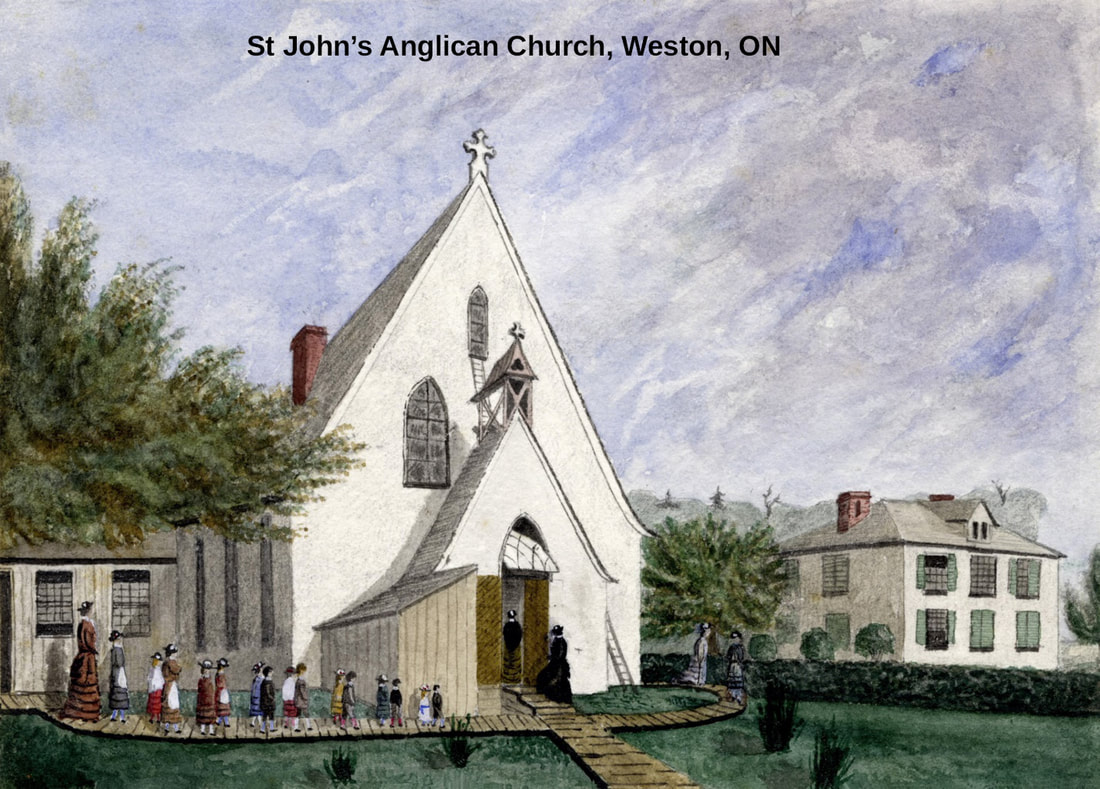
Ernest was back in Toronto in 1893, where he designed St. John’s Anglican Church in Weston, West Toronto (1894).
By 1895, he had moved on again, this time to the United States where, in Buffalo, N.Y., he formed a partnership with one of the city’s leading designers, Carlton Strong. In 1897, Ernest relocated to New York for a job in the office of Turner & Killian.
.
The Ford Motor Company Connection
In 1902 Ernest moved to Detroit and it was here that he met Albert Kahn. It is reported that the firm of Albert Kahn & Associates, at the time, hired designers with good reputations and an ability to work as a team with other designers. Ernest became Kahn’s chief designer, a position he held from 1903 until 1918. During this time he was associated with at least three stunning homes in the Grosse Pointe community between 1905 and 1911. Sadly all three homes have now been demolished.
During his fifteen years as Albert Kahn’s right hand man. Ernest collaborated with Kahn on many key projects in Detroit and Windsor. It was Ernest Wilby who supervised the construction of the Highland Park, Michigan Plant in 1910 where Ford Motor Company helped to put the world on wheels. I’m stunned by this Ossett connection!
Of the many buildings he designed in association with the Kahn office, Ernest listed his favourites as the Hill Auditorium in Ann Arbor and The Detroit News.
In 1920 Ernest sailed from Québec to Southampton. Less than a year later (17 March 1921), at the age of 53, he married 30 year old Kathleen Olga Hirst (1891-1982) in Harrogate and together they returned to Canada.
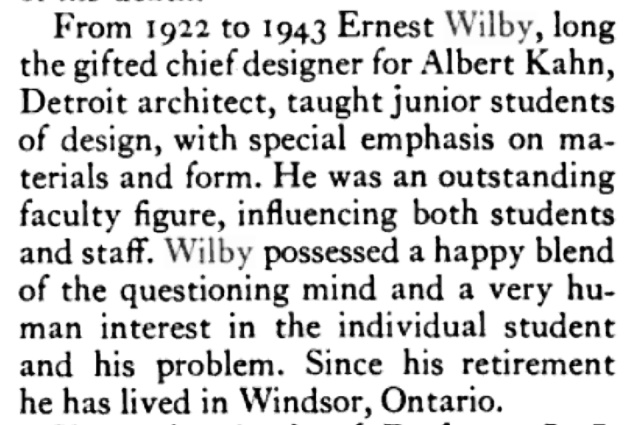
In 1922 Ernest joined the faculty at the University of Michigan School of Architecture, serving there until 1943. He was said to be an outstanding faculty figure, influencing both students and staff. In 1941 he was awarded a fellowship in the Royal Architectural Institute of Canada where he received the citation, “For his achievement in design, science of construction, education and literature. His successful efforts to obtain originality and avoid the commonplace, where opportunity offered in the use of modern materials and modern methods of construction, have been notable in their resultant beauty of form and proportion. From 1924 to 1929 he was successively Teacher and Professor of Architecture, University of Michigan. Upon his retirement from teaching, he was honored by the University by appointment as Lecturer, as a token of appreciation. In 1936, he was appointed a Fellow of the Royal Society of Arts and Science, London, England.”
One of the best investments I made early in my professional career was the engagement of Ernest Wilby. I flatter myself at having had the courage to engage him at a salary considerably higher than what I expected to earn for myself—but it proved a wise move. For some fifteen years we remained associated—Mr. Wilby’s influence playing an important part in the work of the firm. Possessed of the highest ideals, excellent judgment and a rare sense of the practical, such acclaim as our work subsequently received was in a large measure due to Mr. Wilby. We were doing residential work mainly at the time, though his first work with us was in connection with the old Engineering Building at Ann Arbor. Presently we entered the industrial field which gradually brought us the Evening News Building—perhaps our most successful structure of the kind, in the design of which Mr. Wilby played an all important part.
It was quite natural, with a man of his strong convictions, that differences of opinion would arise occasionally. Most of them we were able to iron out—but it did happen one day that we failed to see eye to eye on a detail which to both of us appeared important at the time, with the result that Mr. Wilby decided to withdraw from the firm . I confess I am somewhat stubborn about some things. I have been accused by others that I dominate the office too much, but be that as it may, I am very proud of the continued friendship that has existed between us. Mr. Wilby’s connection with our office during the many years evoked the highest regard of every member of the organization, warmest admiration for his rare talent and real affection for his kindly and helpful personality. What was our loss proved to be a real gain for the Architectural Department of the University of Michigan, where his fine work among the students has been such an inspiration. ” I am happy at the Fellowship in The American Institute of Architects about to be conferred upon Mr. Wilby. The Institute is honoring itself in so doing.”
ALBERT KHAN MAY 20 1941

Ernest Wilby died on December 10 1957. His obituary stated that he died at his home at the age of 89. It also credits him with designing and building his house on Ouellette Avenue in 1930. Although the house was placed on the Windsor Municipal Heritage Register in September 2010, in 2011 Windsor City Council approved its demolition.

Ernest was buried in St. Mary’s Church Graveyard in Walkerville, a building he personally supervised the construction of.
After his death, Kathleen Olga Wilby gave provision in her will to the Royal Architectural Institute of Canada for the Ernest Wilby Memorial Scholarship to be awarded annually as a memorial to her late husband.
A man with roots in Ossett.
More Wilbys

Oliver’s brother, Mark Wilby, was born in 1827 and baptised at Holy Trinity Church on June 10 that year. On March 20 1851 he married Martha Clegg. Manor Villa (often referred to as Manor House) was built in the late 1860s for the Wilbys, and was close by to Manor Mill, where Mark was in business with David Pickard.
Manor Mill has long since been demolished and replaced by housing, but Manor Villas still exists and is now divided into apartments. You’ll find it at Cavewell Gardens where, if you look closely, you’ll see ‘MW’ carved above the grand doorway. Is it Mark’s monogram or is it Martha’s?
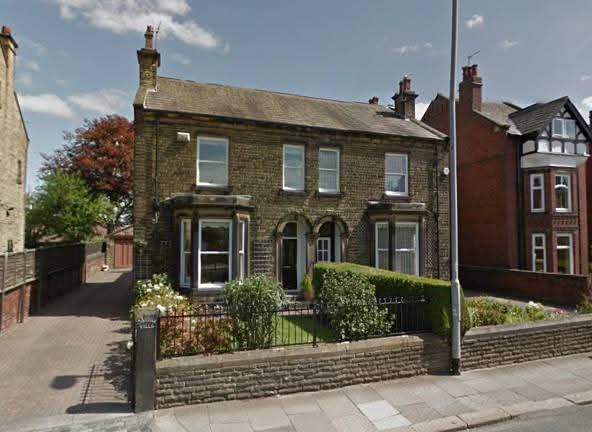
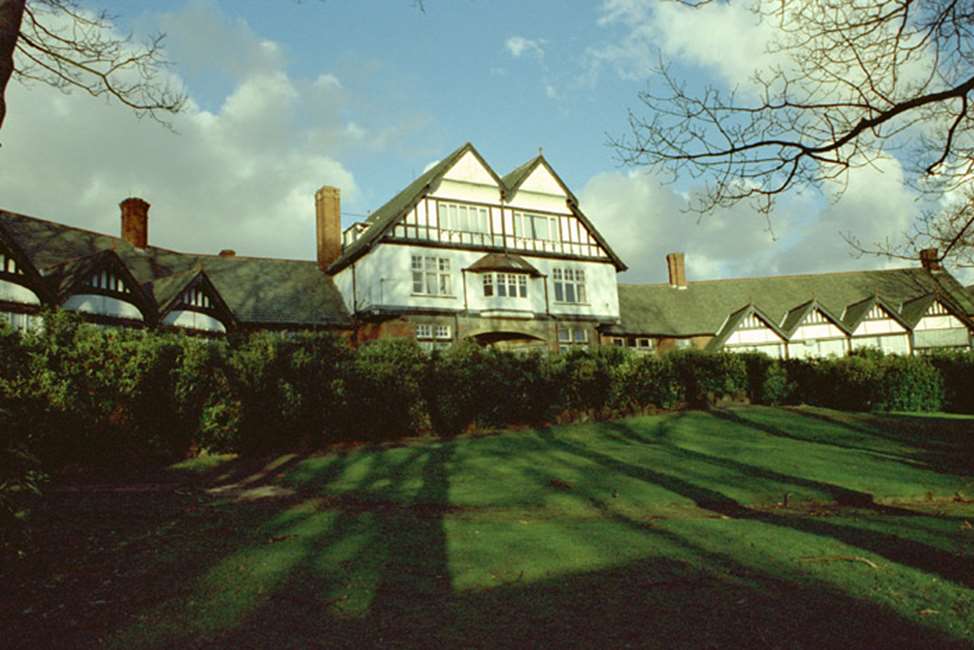
Another of Oliver’s brothers, Charles Henry Wilby was baptised on September 30 1832 at Holy Trinity, Ossett. Charles Henry was 44 when he married Ann Briggs 45, on February 13 1877 at South Ossett Church.
By 1901 Charles and Ann were living at Canadian Villas on Station Road. I’ve often wondered how it got its name. A connection to the Wilbys in Canada seems likely.
Sources:
History of Toronto and County of York, Ontario






 HORBURY & OSSETT FAMILY & LOCAL HISTORY
You must be logged in to post a comment.